GOQii

Blog

  • HOME
  • HEALTHY LIVING
  • FITNESS
  • HEALTHY RECIPES
  • USER STORIES
  • KARMA
  • BUY GOQii

Search Results for: heart health

July 20, 2019 By GOQii Leave a Comment

“It’s My Duty To Give It Back!” – Paramdeep Singh Ghuman

user journeyDoes health really need to take a backseat when you chase your professional goals? And if you do recover, work on your health, get active and fitter, how do you take it to the next level? Do you train harder or do you influence those around you to be better? Our GOQii Player and Champion of Chandigarh Paramdeep Singh Ghuman found the answers to these questions!

Life Before GOQii 

As with every high profile working professional, Paramdeep Singh Ghuman was unable to focus on his health. He used to actively participate in sports during his college days but once he began working, everything else took a backseat.

He became a workaholic and immersed himself into work without thinking about his health, diet or sleep. As a result of neglecting his health, he was diagnosed with high blood pressure (140/100) and cholesterol (250). To add to this, he suffered from constipation and disturbed sleep.

His doctor advised him to start with some physical activity and lifestyle changes. Taking his doctor’s advice, he started walking for 20 minutes a day at a nearby park. After a while, he became inconsistent and fell back to his old habits. As soon as that happened, the fear of heart-related ailments crept in. He began exploring other options to track his activity, steps and someone who could monitor his eating habits.

He was determined to change!

Enter GOQii

Paramdeep Singh Ghuman’s friend, who was employed with Axis Bank, introduced him to GOQii in February 2017. This proved to be a turning point for him. His journey began with a little bit of myth-busting and a lot of hard work! Paramdeep believed that a heavy breakfast like paratha with ghee and curd was ideal to keep him going throughout the day. This, along with his other perceptions on nutrition was corrected by his coach.

He was asked to drink lemon with warm water in the morning and eat nuts that were soaked overnight. After his morning exercise, he ate muesli with milk. Once he reaches office, he had to eat either raw paneer or boiled eggs. He began including salads in his lunch and dinner, fruits for mid-morning snacks and an apple or banana milkshake in the evening.

On the exercise front, he was advised to start walking again. Initially, he did complain of pain but his coach reassured him that it was because his body is still getting used to being active. After 3-4 months, he began running for a kilometre which gradually increased to 5km and further to 10km. He improved his stamina with strength training and HIIT.

Changes and Champion of Good Health! 

As of today, Paramdeep’s blood pressure, as well as cholesterol, are both under control. He is completely off medication. His sleep has improved and his constipation issues are now a thing of the past!

His weight has reduced from 90kg to 83kg. He feels stress-free, happy and content with his life and the changes introduced by his GOQii Coach. He regularly attends Dr. Paramjeet, Coach Parwage Alam and other nutrition classes on GOQii Play.

After seeing the impact of the changes that he made to his lifestyle, Paramdeep wanted to do the same for others. He now encourages community members and office colleagues to be physically fit – with many of them joining GOQii.

He says, “I feel it is my duty to give back to society, prep young guns to participate in some or the other activity, stay fit and healthy. I want to emphasize the importance of physical exercise and mindful eating to them.”

He is currently a GOQii Champion and heads the Chandigarh Chapter and thoroughly enjoys his assignments.

Did you find this story inspiring? Do you have a story to tell? Click here and we’ll reach out to you!

#BeTheForce 
July 3, 2019 By Navnee Garg Leave a Comment

Liquorice Root: The Magical, Medicinal Herb You Need Today

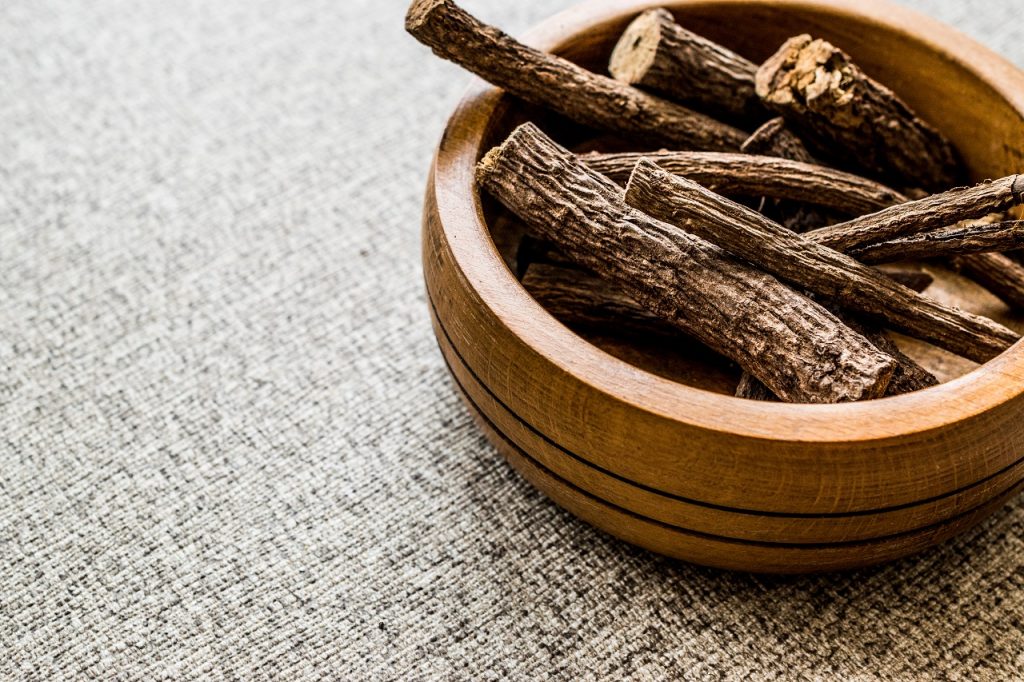
liquoriceSome spices and herbs from our grandmother’s stockpot are so precious that even today they are used in several households as home remedies. One such ayurvedic, age-old herb is Mulethi or Liquorice (also spelt as Licorice).

Liquorice is widely known for its exceptional flavor and is also used in several medicines as it claims to be anti-diabetic and antioxidant in nature, providing many health benefits.

Nutritional Value

Liquorice has an enticing scent, this comes from a variable and complex combination of compounds out of which anethole makes up 3% of the entire plant. Most of the sweetness comes from a substance called glycyrrhizin, it is generally 30 to 50 times sweeter than sugar.

7 Health Benefits of Liquorice

  • Combats Digestive Issues: Mulethi is a magical root when it comes to curing digestive issues like acid reflux, stomach inflammation, ulcers, heartburn, acidity and constipation. It also acts as a mild laxative to regulate bowel movements.Dosage: Directly taken by mouth (chewing of the root) post meals, especially after dinner.
  • Keeps The Respiratory Tract Healthy: It aids in easing a sore throat, asthma, cold, cough and other respiratory issues. Chewing on Liquorice sticks is an age-old remedy for a sore throat. It thins and loosens the mucus inside the airways and eases coughing and congestion.Dosage:  If you want to avoid chewing on the sticks, you can also mix ginger juice to Liquorice tea. (Boiling Liquorice sticks in water)
  • Helps in Weight Reduction: Liquorice oil helps to reduce visceral fat and body fat to a great extent in overweight people. Infact, Liquorice supplements have proven to help people achieve lower BMI and Low Density Lipoprotein.
  • Improves Immunity: Regular use is helpful in boosting immunity due to the enzymes present in the root plant. It helps the body produce lymphocytes and macrophages that protect the body from microbes, pollutants, allergens. It is helpful to prevent microbial infections and also improve the defense mechanism of the body.Dosage: Directly taken by mouth (chewing of the root).
  • Protects the Liver: Liquorice roots help to treat certain disorders like Non Alcoholic Fatty Liver Disease (NAFLD), Hepatitis, Liver damage and Jaundice. It also has an anti-inflammatory property that soothes the liver.Dosage: Mixing Mulethi in a cup of warm tea twice a day for a couple of weeks can purify the liver and make it immune to diseases.
  • Improves Oral Health: Its anti-microbial and anti-bacterial properties also reduce the growth of bacteria which causes cavities. It also combats bad breath, reduces plaque and keeps the gums and teeth healthy and strong.Dosage: Dried Mulethi powder to be used for brushing teeth and mouthwash, or try gargling with the cooled mulethi tea.
  • Hormonal Regulation: The multipurpose herb also helps in correcting hormonal imbalances in the body and eases menopausal symptoms like hot flashes, insomnia, depression, mood swings, and sweating, etc. It is also useful in relieving menstrual cramps, and regulating flow during menstruation.Dosage: Mulethi tea twice a day.

If you have been familiar with any of the issues listed above, you should definitely give Liquorice Root a try!

Was this article helpful? Want to know more about Liquorice Root? Type your queries down in the comments below!

#BeTheForce 

April 18, 2019 By Dr. Viral Thakkar 1 Comment

Epitome of Climax: The Big “O”

know your orgasmWhat is an Orgasm?

The climax of coitus, the mountaintop of making love and the ultimate, the almighty orgasm! Yes! This is what this article is about. You will agree that the pleasure of an orgasm is so heightened, it is difficult to know what is happening; but knowing what’s going on inside of us may heighten that.

Orgasm is the sudden discharge of accumulated sexual excitement resulting in rhythmic muscular contractions in the pelvic region of men and women. It is controlled by the involuntary or autonomic nervous system & associated with other  involuntary actions, including muscular spasms in multiple areas of the body, a general euphoric sensation and, frequently, body movements and vocalizations due to intense pleasure.

How Does it Happen?

I believe it is extremely essential to be attracted to your partner before indulging in any sexual activity. In fact, I would go ahead and say, indulge only if you love the person, else do not! More about this in another article.

If you are in this wonderful state, the continual stimulation of erogenous zones, such as the genitals, anus, nipples, or perineum by your partner might lead to an orgasm. Many believe that orgasms actually happen in the brain. Hence, one can reach an orgasm through masturbation as well. Physiologically, orgasms occur following two basic responses to continual stimulation:

  • Vasocongestion: The process whereby body tissues fill up with blood, swelling in size as a result
  • Myotonia: The process whereby muscles tense, including both voluntary flexing and involuntary contracting

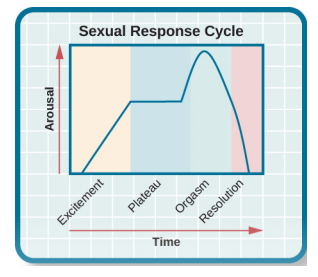
If you thought having an orgasm is just a minute’s game, then you are in for a surprise. The body undergoes a long process to reach that state through the sexual response cycle, which is the sequence of physical and emotional changes that occur as a person becomes sexually aroused and participates in sexually stimulating activities, including intercourse and masturbation.

the epitome of climaxPhase 1: Excitement

As the name suggests, this is the stage when you blush and breath heavily in the hope of your coitus. In this stage:

  • Skin may become flushed
  • Muscle tension will increase
  • Heart rate quickens and breathing is accelerated
  • Nipples become hardened or erect
  • Vaginal lubrication begins
  • Blood flow to the genitals increases, resulting in swelling of the woman’s clitoris and labia minora (inner lips), and erection of the man’s penis
  • The woman’s breasts become fuller and the vaginal walls begin to swell
  • The man’s testicles swell, his scrotum tightens, and he begins secreting a lubricating liquid

Phase 2: Plateau

This is the phase when you are about to get an orgasm, but haven’t yet! The part of the brain that controls sensations – the primary somatosensory cortex – sees an increase in activity and the parts of the brain that control alertness and anxiety – the amygdala and hippocampus – dropped off.

Several other areas of the prefrontal cortex all show a decrease in activity. In other words, having an orgasm shuts the parts of your brain that make you worry.  No wonder all of mankind is crazy about having orgasams! It’s a great stress buster! It’s in the way our bodies are built!

The general characteristics in this stage are:

  • The changes of phase 1 are intensified
  • The vagina continues to swell from increased blood flow, and the vaginal walls turn a dark purple
  • The woman’s clitoris becomes highly sensitive (may even be painful to touch) and retracts under the clitoral hood to avoid direct stimulation from the penis
  • The man’s testicles are withdrawn up into the scrotum
  • Breathing, heart rate, and blood pressure continue to increase
  • Muscle spasms may begin in the feet, face, and hands
  • Muscle tension increases

Phase 3: Orgasm

The climax – It is the shortest of the phases and generally lasts only a few seconds. Both sexes feel the contractions in a variety of places from the head (that explains funny faces) to the feet (that explains clenched toes). You cannot control these contractions as they are involuntary and cannot be contained… kind of like when you sneeze. The loss of control can be messy, but it is ultimately why we enjoy our orgasms so much.

General characteristics of this phase include the following:

  • Involuntary muscle contractions begin
  • Blood pressure, heart rate, and breathing are at their highest rates, with a rapid intake of oxygen
  • Muscles in the feet spasm
  • There is a sudden, forceful release of sexual tension
  • In women, the muscles of the vagina contract. The uterus also undergoes rhythmic contractions
  • In men, rhythmic contractions of the muscles at the base of the penis results in the ejaculation of semen

Phase 4: Resolution

This is the feeling of “Oh my! What was that?” In this stage, the man enters a temporary recovery phase where further orgasms are not possible. This is known as the refractory period, and its length varies from person to person. It can last from a few minutes to a few days, and this period generally grows longer as a man ages. During this phase, the man’s penis and testicles return to their original size. The rate of breathing will be heavy and fast, and the pulse will be fast.

Orgasms are an inbuilt mechanism of human body (mammals). Our brain, emotions, and physiology are wired so that a person can experience it. In the second part of my article, I will elaborate on the benefits of orgasms, and why it is important to have a few now and then!

Want to know more? Drop a comment below!

#BeTheForce

Disclaimer: Reader discretion is advised. This content is for an older, mature audience who seek to improve their health and wellness. GOQii is not responsible for any misrepresentation of this information.

February 26, 2019 By Satish Kurapaty 9 Comments

Hair Loss & Foods To Prevent It

Hair Loss & Foods To Prevent It
After a long and tiring day when I reached home late at night, I had this good idea to get a head massage to be able to sleep well. I started massaging my head gently with oil. After a while I was shocked to see a mop of hair in my hand. I was losing a lot of hair…

More often than not, we are unaware of hair loss. We are so busy with our daily routine and hectic work schedules that we do not pay attention to these matters. However, let me tell you that it is very important to be aware of everything that is happening within us. We need to understand the reason for hair loss. Anybody can experience hair loss. It is not peculiar to men alone. Women and children can also go through hair loss.

Everyone loses hair. It is normal to lose about 50-100 hair every day. But, if you see bald patches or lots of thinning, you may be experiencing hair loss. There are many causes of hair loss. Women may notice hair loss after giving birth. People under lot of stress can see noticeable hair loss. Some diseases and medical treatments can cause hair loss. Even how you style and care for your hair can cause hair loss.

It may be temporary or permanent, and the most common cause of hair loss is a medical condition called hereditary hair loss. Hair loss can happen in many different ways, depending on the problem that’s causing it. It can come suddenly or gradually and affect your scalp.

Let us take a detailed look at the some of the reasons that cause hair loss:

  • Hormonal Changes: The most common hair loss is a hereditary condition called male pattern baldness or female pattern baldness. Genetically susceptible people and certain sex hormones trigger a particular pattern of permanent hair loss. Most common in men, this type of hair thinning can begin as early as puberty. Hormonal changes and imbalance can also cause temporary hair loss. This could be found in women due to child birth or the onset of menopause.
  • Medical Conditions that can lead to hair loss are thyroid problems, skin infections or other skin disorders. Hair loss can also be caused by Alopecia Areata, which is a condition that starts suddenly and causes patchy hair loss in children and young adults. This condition may result in complete baldness (Alopecia Totalis) but in about 90% of people with the condition, the hair returns within a few years.
  • Medications can also cause hair loss. Drugs used to treat cancer, arthritis, depression, heart problems and blood pressure are some of them.
  • Physical or Mental Shock: Many people experience a general thinning of hair several months after a physical or emotional shock.
  • Hair Pulling Disorder: Mental illness causes people to have an irresistible urge to pull out their hair whether it’s from the scalp, eyebrows or other areas of the body. Hair pulling from scalp often leaves patchy bald spots on the head.
  • Certain Hair Styles: Traction hair loss can occur if the hair is pulled too tightly into hairstyles such as pigtails and cornrows.

For some types of hair loss, hair may grow without any treatment while for other types of hair loss treatment may help the hair grow back.

It is very important to understand the causes of hair loss. You should make a note of all the possible changes that happen in your day to day life. Understand the cause and work towards it. Few tips such as eating healthy, nutritional and balanced food may help. Avoid tight hairstyles and avoid compulsive twisting, rubbing or pulling of your hair.

Here are a few tips that I have chalked out that will help you maintain healthy hair. Certain foods in our diet will keep your scalp healthy. Foods that contain proteins, iron, silica and zinc help preventing hair loss.

  • Protein: Hair is primarily made of protein and therefore, it makes sense to eat a protein rich diet. Stick to leaner proteins such as fish, chicken, calf’s liver, low fat cheese, eggs, almonds, beans and yogurt. Soy milk and tofu are also smart options to add to your diet as they are high in protein and low in bad fats.
  • Iron: Iron plays a key role in manufacturing hemoglobin, the part of blood that carries oxygen to your body‘s organs and tissues. Adding more iron to your diet doesn’t mean you have to feast on liver, day in and day out, but when you are craving for something sweet, remember that dried fruits and cherry juice are packed with iron. Try eggs, dates, raisins, dark green leafy vegetables such as Kale and whole grain cereals. Vitamin C improves the absorption of iron, so fruits such as orange, strawberries and lemons should be in your grocery list of foods that prevent hair loss.
  • Silica: Add silica to your daily menu and see the difference because body uses silica to help it absorb vitamins and minerals. If you are not consuming silica, eating vitamins might not help much. Silica can be found in bean, sprouts and skin of cucumber. You will also find it in red and green peppers and potatoes.
  • Zinc: Many men who suffer from hair loss are found to have zinc deficiencies. Zinc plays a key role in many of the body’s functions, from cell reproduction to hormonal balance, which in turn affects hair growth. Zinc manages the glands that attach to your hair follicles. Eat Zinc-heavy foods such as red meats, poultry, mussels, shrimp, nuts, and oysters.

Just as your overall health will improve from eating a balanced diet, so should the health of your hair. Do not eat things that speed up hair loss. You may be experiencing a thinning on top already, but you can counteract this problem (or at least slow it down) by eating from every food group daily — concentrating on foods that are rich in protein, iron, silica, and zinc.

  • « Previous Page
  • 1
  • …
  • 107
  • 108
  • 109
  • 110
  • 111
  • …
  • 136
  • Next Page »

Search

Recent Posts

  • Healthy Eating: Vegetable Stuffed Ragi Paratha
  • Sustaining the “GLP-1 Glow”: Nutrition for Skin and Tissue Elasticity
  • Nutritional Deficiencies That Can Cause Hair Loss (And How to Fix Them)
  • The Recovery Gap: Sleep Debt, Overwork and Silent Burnout Are Ageing You Faster
  • Sleep Well, Live Better: Lifestyle Habits That Improve Sleep Quality

Stay Updated

Archives

  • March 2026 (10)
  • February 2026 (14)
  • January 2026 (14)
  • December 2025 (19)
  • November 2025 (15)
  • October 2025 (20)
  • September 2025 (6)
  • August 2025 (6)
  • July 2025 (12)
  • June 2025 (18)
  • May 2025 (16)
  • April 2025 (22)
  • March 2025 (23)
  • February 2025 (22)
  • January 2025 (25)
  • December 2024 (22)
  • November 2024 (23)
  • October 2024 (21)
  • September 2024 (24)
  • August 2024 (30)
  • July 2024 (21)
  • June 2024 (26)
  • May 2024 (31)
  • April 2024 (27)
  • March 2024 (27)
  • February 2024 (25)
  • January 2024 (21)
  • December 2023 (15)
  • November 2023 (11)
  • October 2023 (19)
  • September 2023 (22)
  • August 2023 (18)
  • July 2023 (22)
  • June 2023 (24)
  • May 2023 (24)
  • April 2023 (23)
  • March 2023 (23)
  • February 2023 (19)
  • January 2023 (15)
  • December 2022 (11)
  • November 2022 (15)
  • October 2022 (15)
  • September 2022 (12)
  • August 2022 (10)
  • July 2022 (17)
  • June 2022 (11)
  • May 2022 (10)
  • April 2022 (6)
  • March 2022 (6)
  • February 2022 (13)
  • January 2022 (11)
  • December 2021 (7)
  • November 2021 (3)
  • October 2021 (6)
  • September 2021 (3)
  • August 2021 (8)
  • July 2021 (7)
  • June 2021 (15)
  • May 2021 (16)
  • April 2021 (10)
  • March 2021 (7)
  • February 2021 (4)
  • January 2021 (4)
  • December 2020 (3)
  • November 2020 (4)
  • October 2020 (10)
  • September 2020 (3)
  • August 2020 (3)
  • July 2020 (2)
  • June 2020 (4)
  • May 2020 (10)
  • April 2020 (12)
  • March 2020 (10)
  • February 2020 (4)
  • January 2020 (4)
  • December 2019 (3)
  • November 2019 (7)
  • October 2019 (5)
  • September 2019 (4)
  • August 2019 (9)
  • July 2019 (9)
  • June 2019 (11)
  • May 2019 (4)
  • April 2019 (8)
  • March 2019 (8)
  • February 2019 (9)
  • January 2019 (8)
  • December 2018 (9)
  • November 2018 (3)
  • October 2018 (3)
  • September 2018 (5)
  • August 2018 (10)
  • July 2018 (6)
  • June 2018 (13)
  • May 2018 (8)
  • April 2018 (18)
  • March 2018 (9)
  • February 2018 (8)
  • January 2018 (15)
  • December 2017 (12)
  • November 2017 (19)
  • October 2017 (13)
  • September 2017 (15)
  • August 2017 (4)
  • July 2017 (8)
  • June 2017 (7)
  • May 2017 (6)
  • April 2017 (8)
  • March 2017 (6)
  • February 2017 (7)
  • January 2017 (9)
  • December 2016 (10)
  • November 2016 (7)
  • October 2016 (7)
  • September 2016 (7)
  • August 2016 (11)
  • July 2016 (9)
  • June 2016 (9)
  • May 2016 (12)
  • April 2016 (17)
  • March 2016 (17)
  • February 2016 (8)
  • January 2016 (6)
  • December 2015 (2)
  • November 2015 (9)
  • October 2015 (7)
  • September 2015 (9)
  • August 2015 (11)
  • July 2015 (9)
  • June 2015 (12)
  • May 2015 (9)
  • April 2015 (13)
  • March 2015 (8)
  • February 2015 (5)
  • January 2015 (12)
  • December 2014 (14)
  • November 2014 (11)
  • October 2014 (6)
  • September 2014 (13)
  • August 2014 (12)
  • July 2014 (6)
  • June 2014 (2)
  • May 2014 (7)
  • April 2014 (4)

From “Laddu Nawin” to Fit and Fierce: How a 25-Year-Old Insurance Advisor Shed 20 Kilos and Gained His Life Back

When 25-year-old Nawin Yadav from Hyderabad walked into his office every morning, he carried more than just his files and policy papers. He had the weight of fatigue, sluggish energy, and an ever-growing belly that was becoming the butt of jokes. “People … [Read More...]

“I’ve Challenged Myself to Live 100 Years” – The Story of Chandubhai Savani’s Second Chance at Life

At 67, most people start slowing down. Not Chandubhai Savani. A resident of Surat, Chandubhai, thought life was on track. “My life was going well till I had my bypass surgery,” he says. That surgery, back in 2021, was a wake-up call.  Medication was routine, but exercise wasn’t. His diet? What he calls ‘normal.’ “I […]

From Shimla’s Slopes to Chandigarh’s Sidewalks: Surinder Kaur Bhalla’s Journey from Chaos to Control

Some journeys start with a plan. Others begin with a stumble literally. Surinder Bhalla, a government professional, born and raised in the scenic hill town of Shimla, had always lived a life of movement. “In Shimla, you walked everywhere,” she reflects. “Walking was never an exercise. It was just life.” But after shifting to Chandigarh, […]

Ananda Mukherjee Health Story

From Terminal Illness To Complete Wellness! Ananda Mukherjee Health Story

As we observe World Cancer Day under the powerful theme ‘United by Unique’ (2025-2027)**, we are reminded that every individual’s journey with cancer is distinct, yet united by shared resilience, hope, and the collective fight against this disease. This theme places people at the centre of care and their stories at the heart of the […]

  • HOME
  • HEALTHY LIVING
  • FITNESS
  • HEALTHY RECIPES
  • USER STORIES
  • KARMA
  • BUY GOQii

Copyright ©2016 GOQii