GOQii

Blog

  • HOME
  • HEALTHY LIVING
  • FITNESS
  • HEALTHY RECIPES
  • USER STORIES
  • KARMA
  • BUY GOQii

Search Results for: ginger

June 6, 2025 By Luke Coutinho 6 Comments

Digestion: The Secret to Losing Weight

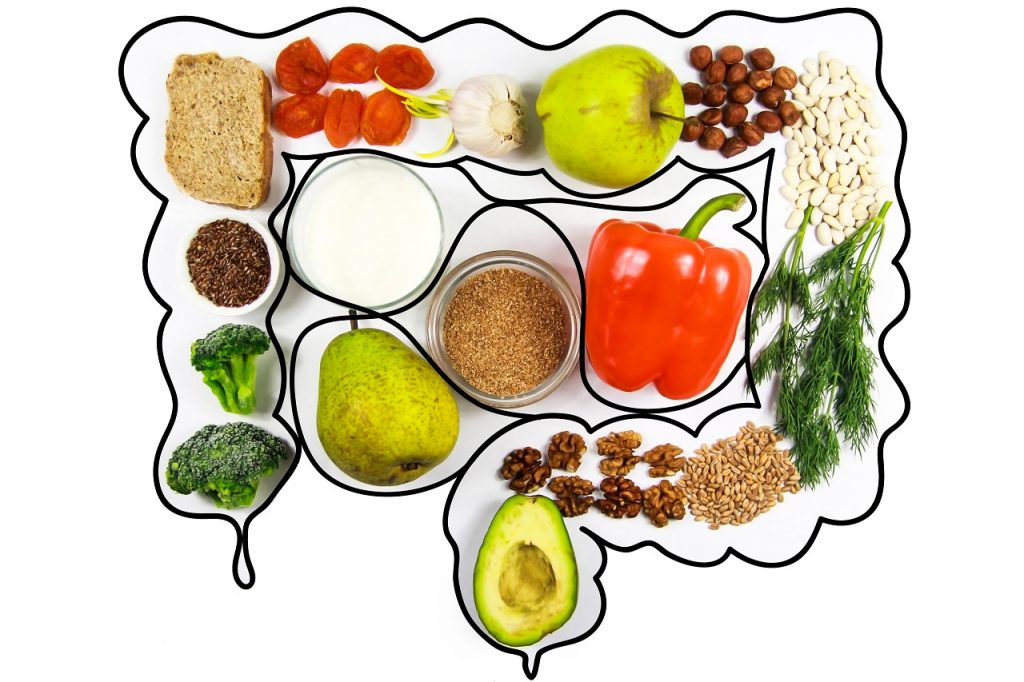
digestionHow often are you worried about that sneaky fat creeping up around your mid-section, a bloated belly after meals or low energy sabotaging your workout? What do all of these have in common? They reflect the direct relationship between sluggish digestion, slow metabolism, and weight gain. Overeating during the holidays and less physical activity means this process can really snowball in the winter.

The Good News!

By increasing digestive efficiency through diet, lifestyle and targeted supplements, we can effectively shed excess fat, boost metabolism and support nearly every other aspect of health in the process.

Good digestion goes beyond the idea that “You are what you eat”.

Digestion is at the very centre of our core health. It lays the foundation for health, happiness, and wellbeing. We now have greater insight into the many roles digestion plays in immunity, hormone balance and even mental and emotional health.

Traditional healing systems, especially those from Asia, have long recognised these relationships. In fact, many Eastern medical systems treat nearly every condition by first addressing the digestive system. Often, when we optimise it, everything else falls into place – especially the bathroom scale.

Herbs & Supplements For Digestion 

The relationship between herbs and supplements is clear – many nutrients and herbs that support digestion also boost metabolism. They do this by promoting mitochondrial function while improving the breakdown and absorption of nutrients.

Some digestive-supporting herbs and ingredients also increase enzyme activity, improve circulation, and help soothe inflammation in the digestive tract and beyond.

Black Pepper & Other Spices

Pungent culinary herbs and spices have long been recognised as digestive aids. Their strong aromas and spicy flavours stimulate the production of digestive enzymes for better food breakdown. They also bring warmth and circulation to the system, helping to reduce stagnation.

Their antimicrobial properties help maintain a healthy digestive environment. Researchers now confirm that these long-cherished spices also support healthy weight. For example, black pepper, known for aiding digestion, has been found to block the formation of fat cells at a genetic level – helping to manage weight. It’s often paired with curcumin (from turmeric) to further support metabolism and fat burning.

Probiotics

Another key factor in digestive health is probiotics. These friendly bacteria have evolved with us and offer countless benefits — especially for digestion. New research continues to uncover their broader role in health.

Around the world, fermented probiotic foods such as sauerkraut, kimchi and miso have been consumed for their health benefits. In the UK, kefir, live yoghurt (unsweetened), and kombucha are increasingly popular options.

Probiotics help break down food into usable nutrients, manage inflammation, support immunity, and produce digestive enzymes. A specific probiotic strain — Lactobacillus gasseri — has even been shown to reduce visceral fat by up to 9% over three months.

Cinnamon, Cardamom, Turmeric (Curcumin) & Ginger

These spices have long been used in traditional medicine to support digestion, metabolism, and reduce inflammation. In Asian systems, ginger is commonly used for stomach discomfort and is generally safe in small amounts (1–3 grams daily).

These herbs help warm the digestive system, ease occasional discomfort, and enhance nutrient absorption.

Stress, Exercise & Eating Habits

Because digestion and metabolism are connected to other body systems, a holistic approach is key for healthy weight management. Stress can severely disrupt both digestion and metabolism.

Mind-body practices like yoga, Tai Chi, or regular meditation can reduce inflammation, boost energy, and improve digestive efficiency. In fact, any consistent physical activity contributes to better digestion.

Our mothers were right — don’t skip breakfast. Doing so can disrupt metabolism and trigger fat storage.

Chew Slowly

Chewing food thoroughly and eating at a relaxed pace supports digestion and weight in two ways. First, it helps break food down more effectively, improving nutrient absorption. Second, it allows time for satiety signals to register — preventing overeating.

The Bottom Line

Whether you eat to live or live to eat, better digestion brings ripple effects across all aspects of health – not just weight. Improved energy, reduced bloating, less water retention, more regular elimination, and a general sense of wellbeing are among the first signs that your digestion is on track.

If this article helped you, let us know your thoughts in the comments below! Find more articles on weight loss here or get these tips directly from a GOQii Coach by subscribing to Personalised Health Coaching here.

#BeTheForce

Disclaimer: The information provided in this blog is for general awareness and educational purposes only. It is not intended to replace professional medical advice, diagnosis, or treatment. Always consult a qualified healthcare provider for personalised medical guidance or concerns related to your health. Images shown are for representation purposes only and may not depict the exact recommendations or outcomes.
April 5, 2025 By GOQii Leave a Comment

Reversing Type 2 Diabetes Through a Low-Carbohydrate Lifestyle

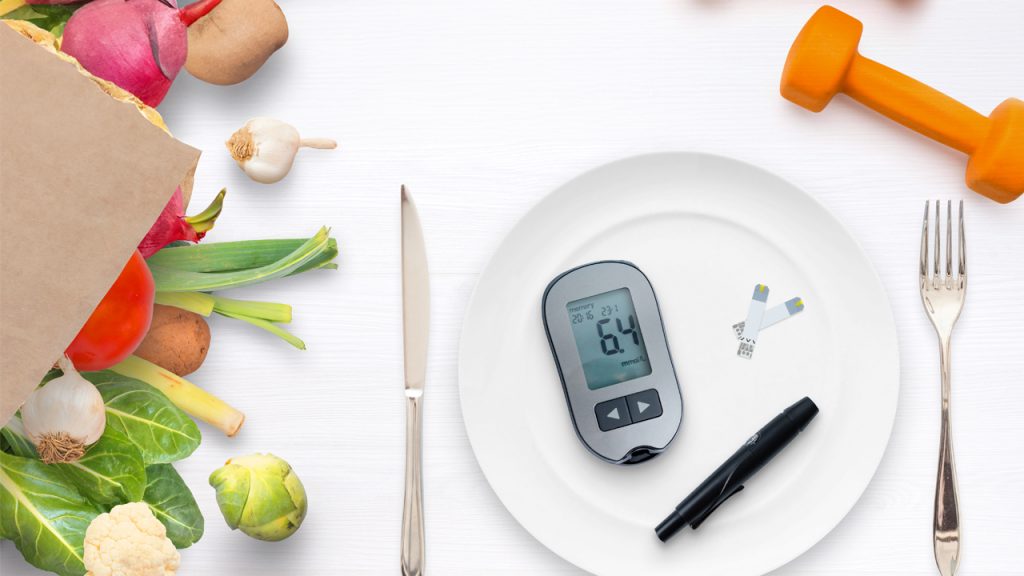
Type 2 diabetes is often seen as a lifelong condition, but research and real-world experience show that it can be managed—and even reversed—with the right dietary approach. One of the most effective strategies is adopting a low-carbohydrate lifestyle, which not only helps regulate blood sugar levels but also improves insulin sensitivity.

Unlike traditional high-carb diets that lead to frequent glucose spikes, a low-carb approach stabilises energy levels, reduces cravings, and supports long-term health. If you’re looking for a sustainable way to take control of your diabetes, reducing your carbohydrate intake might be the key.

Why Reduce Carbohydrates?

Carbohydrates break down into glucose in the bloodstream. For individuals with type 2 diabetes, the pancreas struggles to produce enough insulin to move glucose into cells for energy. This results in persistently high blood sugar levels, which can eventually lead to complications such as nerve damage, kidney issues, and cardiovascular disease.

By reducing carbohydrate intake to 60–130g per day, you prevent large spikes in blood glucose after meals, easing the pressure on your pancreas. Over time, this can allow your pancreatic beta cells to recover and improve insulin sensitivity, helping your body regulate blood sugar more effectively.

The Ideal Process:

  1. Carb-controlled meals → lower glucose load
  2. Less strain on pancreas → beta cells recover
  3. Improved insulin sensitivity → glucose absorbed into cells
  4. Stable, healthy blood sugar levels

Which Carbohydrates to Avoid?

Starchy foods are typically high in carbohydrates and should be limited:

  • Bread (white, whole grain, multigrain)
  • Pasta
  • Rice (white, brown, basmati)
  • Potatoes (including sweet potatoes)
  • Grains (wheat, oats, barley, corn, quinoa)

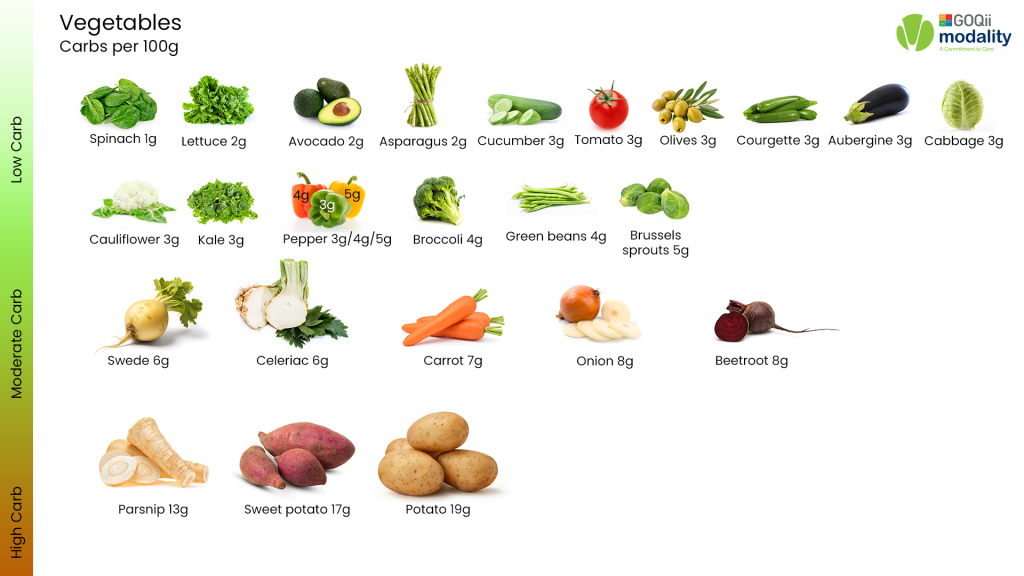
The general rule: vegetables that grow underground (e.g., potatoes, carrots) contain more carbs than those that grow above ground.

Best Low-Carb Vegetables (per 100g)

Leafy Greens
Lettuce (2g), Spinach (1g), Arugula (1.6g), Kale (3g), Swiss Chard (1.8g)

Cruciferous Vegetables
Broccoli (4g), Cauliflower (3g), Brussels Sprouts (5.1g), Cabbage (3g)

Other Non-Starchy Vegetables
Asparagus (2g), Courgette (3g), Aubergine (3g), Tomatoes (3g),
Mushrooms (3.3g), Bell Peppers (4.6g), Onions (8g), Garlic (33.1g),
Radishes (3.4g), Cucumbers (3g), Celery (3g), Green Beans (4g), Artichokes (10.5g)

Focus on nutrient-dense, high-fibre, low-carb vegetables to meet your nutritional needs while keeping carbohydrate intake low.

What Are Net Carbs?

You may come across the term “net carbs,” which refers to the total carbs minus fibre and sugar alcohols—the carbs that actually raise blood sugar.

Net Carbs = Total Carbs – Fibre – Sugar Alcohols

While this can offer a more accurate reflection of how food impacts blood glucose, we recommend focusing on total carbohydrate intake for now, as calculating net carbs can be confusing in the early stages.

Protein: An Essential Nutrient

Protein supports muscle maintenance, satiety, and metabolism. On a low-carb diet, protein should be moderate, not excessive.

Target: 1.5–2.0g per kg of body weight per day

Portion Guide:

  • Women: ~85g cooked meat/tofu, 1 cup Greek yoghurt/cottage cheese, 2 whole eggs
  • Men: ~115g cooked meat/tofu, 1 cup Greek yoghurt/cottage cheese, 2 whole eggs

Low-Carb Dairy Options

Milk (per 240 ml / 1cup):

  • Whole or Semi-Skimmed: 12g carbs
  • Unsweetened Almond Milk: 1g carbs

Cheese (30g / 1oz):

  • Cheddar: 0.4g, Brie: 0.1g, Feta: 0.8g, Cream Cheese: 0.8g

Yoghurt (170g / 6oz):

  • Full-Fat Greek: 5g, Low-Fat Greek: 7g

Cream (30ml/ 1fl oz):

  • Double Cream: 0.6g, Single Cream: 0.7g

Butter (14g / 1 tbsp):

  • Salted/Unsalted: 0.1g

Avoid flavoured yoghurts and sweetened milk which can have hidden sugars.

Alcohol on a Low-Carb Diet

You can enjoy alcohol occasionally by choosing low-carb options:

Wines (per 5oz glass):

  • Dry White (e.g., Sauvignon Blanc, Pinot Grigio): 2–4g carbs
  • Dry Red (e.g., Merlot): 2–4g carbs

Beers (per 12oz):

  • Bud Light: 4.6g, Michelob Ultra: 2.6g, Beck’s Premier Light: 3.9g, Brewdog Pale Ale: 7 g

Spirits (per 1oz):

  • Gin, Vodka, Rum, Tequila, Whisky: 0g (when consumed neat)
  • Add low-carb mixers like soda water, diet tonic, diet ginger ale

Low-Carb Cocktails:

  • Vodka Soda with lime, Gin & Diet Tonic, Whisky Ginger with diet ginger ale, Rum & Diet Coke

❗ Note: Avoid beer and cider unless opting for very light versions. Also, steer clear of sugary mixers, juices, and syrups which can add a substantial carb load to your drink.

Don’t Forget to Keep a Food Diary

Tracking what you eat helps in:

  1. Increasing awareness and mindfulness
  2. Identifying hidden sugars and carbs
  3. Tracking progress over time
  4. Identifying behavioural patterns
  5. Ensuring accountability and better food choices

You can use your phone, an app, or even a journal to keep track. Share it with your nutritionist or coach to get tailored guidance.

A low-carbohydrate lifestyle, when well-planned, can help reverse type 2 diabetes by addressing the root causes—excessive glucose and insulin resistance.

By:
✔ Lowering carbs to 60–130g per day
✔ Prioritising non-starchy vegetables and whole foods
✔ Including moderate protein and healthy fats
✔ Avoiding sugary, starchy, and processed foods
✔ Tracking food intake and blood sugar

…you can achieve stable glucose levels, improved insulin sensitivity, and potentially reduce or eliminate medication.

It’s not about perfection—it’s about consistency and sustainability. And remember: you’re not alone on this journey.

💬 Have you tried a low-carb approach to manage your diabetes or weight? Share your experience in the comments below!

#BeTheForce

March 24, 2025 By GOQii Leave a Comment

TIPS TO MANAGE SIDE EFFECTS – Helpful guidance to manage common treatment related side eects.

Understanding Side Effects During Your Journey

When starting USEMA, some people may experience mild side effects, especially during the early weeks or when the dose is increased.

These effects are common, temporary, and usually improve as your body adjusts to the treatment.

The most common symptoms include:

  • Nausea
  • Vomiting
  • Constipation
  • Diarrhoea
  • Bloating or acidity

This happens because GLP-1 medicines slow digestion and help you feel full with smaller portions of food.

The good news is that simple food habits and lifestyle adjustments can help manage these symptoms comfortably.

Managing Nausea

Nausea may occur during the early weeks of treatment.

  • Eat small, frequent meals instead of large portions
  • Choose light and easy-to-digest foods
  • Try soothing foods like mint, apple, or ginger-based drinks
  • Avoid strong smells or oily foods
  • Stop eating once you feel comfortably full

Managing Vomiting

Vomiting may occur if the stomach feels overly full.

  • Eat smaller meals more often
  • Drink fluids throughout the day to stay hydrated
  • If nausea or vomiting persists, avoid drinking water during meals
  • Drink fluids 30–60 minutes before or after meals

If vomiting continues, consult your doctor.

Managing Diarrhoea

Loose stools may occur as the digestive system adjusts to treatment.

What helps

Drink more fluids such as:

  • Water
  • Lemon water
  • ORS
  • Buttermilk

Eat gentle foods like:

  • Plain rice
  • Vegetable or chicken soup
  • Cooked carrots
  • Ripe fruits without skin

Avoid

  • Sugary drinks
  • Alcohol
  • Soft drinks
  • Very hot or very cold foods
  • Foods containing sugar alcohols (sorbitol, xylitol)

Reduce high-fibre foods temporarily if symptoms persist.

Managing Constipation

Some people may experience slower bowel movement.

  • Eat foods rich in dietary fibre such as fruits, vegetables, and whole grains
  • Drink plenty of fluids throughout the day
  • Stay physically active (daily walking helps digestion)
  • Eat balanced meals at regular times

Managing Bloating & Belching

These symptoms can improve with simple eating habits.

  • Eat slowly and chew food well
  • Choose smaller portion sizes
  • Avoid lying down for 30 minutes after meals
  • Eat regular meals instead of skipping meals
  • Avoid drinking with a straw, which increases air intake
  • Keep a 2–3 hour gap between dinner and bedtime

With the right food habits, hydration, and healthy lifestyle practices, many people are able to continue treatment comfortably and achieve meaningful health benefits.

If symptoms persist or worsen, always consult your doctor.

#BeTheForce

References:
Almandoz JP, Wadden TA, Tewksbury C, et al. Nutritional considerations with anti-obesity medications. Obesity (Silver Spring). 2024;32(9):1613–1631. doi:10.1002/oby.24067
Leidy HJ, Armstrong CL, Tang M, Mattes RD, Campbell WW. The inuence of higher protein intake and greater eating frequency on appetite control in overweight and obese men. Obesity (Silver Spring). 2010;18(9):1725–1732. doi:10.1038/oby.2010.45
Bodnaruc AM, Prud’homme D, Blanchet R, et al. Nutritional modulation of endogenous glucagon-like peptide-1 secretion: a review. Nutrition & Metabolism.2016;13:92. https://doi.org/10.1186/s12986-016-0153-3
Ohio State University. How to Activate GLP-1 Naturally. Accessed February 21, 2026.
Joslin Diabetes Center. Healthy Plate Method. Accessed December 29, 2025.
Gentinetta S, Sottotetti F, Manuelli M, Cena H. Dietary recommendations for the management of gastrointestinal symptoms in patients treated with GLP-1 receptor agonists. Diabetes, Metabolic Syndrome and Obesity. 2024;17:4817–4824. doi:10.2147/DMSO.S494919
American Diabetes Association. What Can I Eat? Healthy Eating Away from Home (WCIE Participant Guide, Class 3).
https://professional.diabetes.org/sites/default/les/media/wcie_participant_guide_class_3_lr.pdf

Disclaimer:
The information provided herein is prepared based on articles provided under reference and reviewed by a qualified dietitian intended for bringing general awareness and are/is not intended to replace professional medical advice. Seek advice from the qualified health care professional before adopting the suggestions or if you have a doubt regarding your health condition. USV Private Ltd., (“USV”) disclaims all liabilities or damages arising directly or indirectly from the advisory services. Copying, circulation and distribution of this content is strictly prohibited.

February 27, 2025 By Shikha Singh 28 Comments

Why Does Your Body Need Antioxidants?

antioxidantsAntioxidants—also known as “free radical fighters”—have been making waves in the health and wellness industry. But what exactly do they do? Are they genuinely beneficial, or are they just another marketing buzzword? More importantly, is it better to get them from food or supplements? Let’s break it down.



Why Do We Need Antioxidants?

Free radicals are natural by-products produced by the body when processing food, particularly refined and processed foods, trans fats, artificial sweeteners, and certain additives. They are also generated due to environmental factors like pollution, smoking, exposure to pesticides, and even medical treatments such as chemotherapy.

If free radicals build up faster than the body can remove them, they cause oxidative stress, which can lead to cell damage, inflammation, and long-term health issues. This is where antioxidants come in—they help neutralise free radicals and protect cells from damage.

Best Natural Sources of Antioxidants

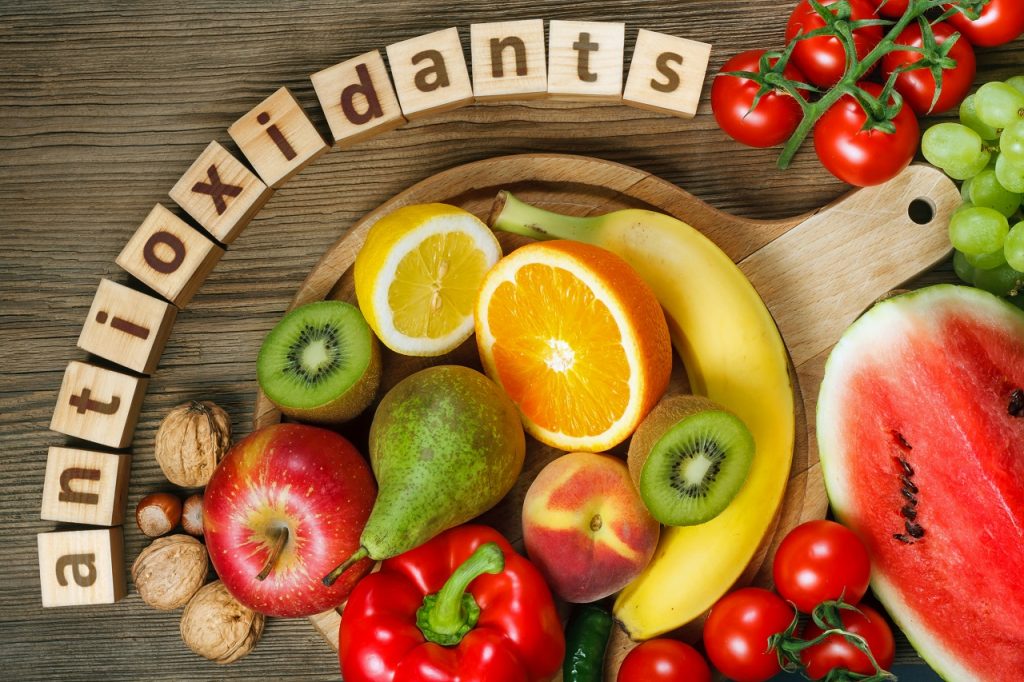
Different antioxidants serve different functions, so eating a varied diet is key. The best sources come from plant-based foods, particularly brightly coloured fruits and vegetables.

To naturally boost your antioxidant intake, try these simple dietary changes:

  • Eat a variety of fruit and veg – Include a portion in every meal and snack.
  • Sip on green or matcha tea – Packed with polyphenols that support cell health.
  • Spice it up – Turmeric, cumin, oregano, ginger, cloves, and cinnamon enhance flavour and antioxidant content.
  • Snack wisely – Opt for unsalted nuts and seeds, especially Brazil nuts, sunflower seeds, and almonds.
  • Don’t forget protein sources – Eggs, dairy, liver, and mushrooms contain key antioxidants such as selenium and vitamin A.

Should You Take Antioxidant Supplements?

While supplements may seem like a quick fix, they aren’t always necessary—and in some cases, they can do more harm than good.

The National Institutes of Health (NIH) advises caution with high doses, as they can be harmful or interfere with medications. If you’re considering supplements, it’s essential to consult a healthcare professional first.

There are some potential benefits for people at risk of age-related macular degeneration, but again, this should be discussed with a doctor. The best way to get antioxidants is through food. If your diet is lacking in fruit and veg, try starting with two servings of fruit and three servings of vegetables daily before considering supplements.

Antioxidants play a crucial role in cell protection and overall health, but balance is key. Instead of relying on supplements, aim to eat a colourful, whole-food diet that provides a wide range of natural antioxidants.

Do you prioritise antioxidant-rich foods in your diet? Share your thoughts in the comments below!

#BeTheForce 

Disclaimer: The information provided in this blog is for general awareness and educational purposes only. It is not intended to replace professional medical advice, diagnosis, or treatment. Always consult a qualified healthcare provider for personalised medical guidance or concerns related to your health.

  • « Previous Page
  • 1
  • …
  • 3
  • 4
  • 5
  • 6
  • 7
  • …
  • 45
  • Next Page »

Search

Recent Posts

  • Top 10 Foods For Diabetics: What to Eat to Manage Blood Sugar
  • Why Good Nutrition Before Conception Is Crucial For Your Baby’s Health
  • 6 Tricks To Help You Make Exercise A Habit
  • World Parkinson’s Day 2026: Bridging the Care Gap & Supporting Caregivers
  • Inflammation: The Hidden Fire Behind Most Chronic Disease

Stay Updated

Archives

  • April 2026 (11)
  • March 2026 (18)
  • February 2026 (14)
  • January 2026 (14)
  • December 2025 (19)
  • November 2025 (15)
  • October 2025 (20)
  • September 2025 (6)
  • August 2025 (6)
  • July 2025 (12)
  • June 2025 (18)
  • May 2025 (16)
  • April 2025 (22)
  • March 2025 (28)
  • February 2025 (22)
  • January 2025 (25)
  • December 2024 (22)
  • November 2024 (23)
  • October 2024 (21)
  • September 2024 (23)
  • August 2024 (30)
  • July 2024 (21)
  • June 2024 (25)
  • May 2024 (30)
  • April 2024 (27)
  • March 2024 (27)
  • February 2024 (24)
  • January 2024 (21)
  • December 2023 (14)
  • November 2023 (11)
  • October 2023 (19)
  • September 2023 (22)
  • August 2023 (18)
  • July 2023 (22)
  • June 2023 (23)
  • May 2023 (24)
  • April 2023 (22)
  • March 2023 (23)
  • February 2023 (19)
  • January 2023 (15)
  • December 2022 (11)
  • November 2022 (15)
  • October 2022 (15)
  • September 2022 (12)
  • August 2022 (10)
  • July 2022 (17)
  • June 2022 (11)
  • May 2022 (10)
  • April 2022 (6)
  • March 2022 (6)
  • February 2022 (13)
  • January 2022 (11)
  • December 2021 (7)
  • November 2021 (3)
  • October 2021 (6)
  • September 2021 (3)
  • August 2021 (8)
  • July 2021 (7)
  • June 2021 (15)
  • May 2021 (16)
  • April 2021 (10)
  • March 2021 (7)
  • February 2021 (4)
  • January 2021 (4)
  • December 2020 (3)
  • November 2020 (4)
  • October 2020 (10)
  • September 2020 (3)
  • August 2020 (3)
  • July 2020 (2)
  • June 2020 (4)
  • May 2020 (10)
  • April 2020 (12)
  • March 2020 (10)
  • February 2020 (4)
  • January 2020 (4)
  • December 2019 (3)
  • November 2019 (7)
  • October 2019 (5)
  • September 2019 (4)
  • August 2019 (9)
  • July 2019 (9)
  • June 2019 (11)
  • May 2019 (4)
  • April 2019 (8)
  • March 2019 (8)
  • February 2019 (9)
  • January 2019 (8)
  • December 2018 (9)
  • November 2018 (3)
  • October 2018 (3)
  • September 2018 (5)
  • August 2018 (10)
  • July 2018 (6)
  • June 2018 (13)
  • May 2018 (8)
  • April 2018 (18)
  • March 2018 (9)
  • February 2018 (8)
  • January 2018 (15)
  • December 2017 (12)
  • November 2017 (19)
  • October 2017 (13)
  • September 2017 (15)
  • August 2017 (4)
  • July 2017 (8)
  • June 2017 (7)
  • May 2017 (6)
  • April 2017 (8)
  • March 2017 (6)
  • February 2017 (7)
  • January 2017 (9)
  • December 2016 (10)
  • November 2016 (7)
  • October 2016 (7)
  • September 2016 (7)
  • August 2016 (11)
  • July 2016 (9)
  • June 2016 (9)
  • May 2016 (12)
  • April 2016 (17)
  • March 2016 (17)
  • February 2016 (8)
  • January 2016 (6)
  • December 2015 (2)
  • November 2015 (9)
  • October 2015 (7)
  • September 2015 (9)
  • August 2015 (11)
  • July 2015 (9)
  • June 2015 (11)
  • May 2015 (9)
  • April 2015 (13)
  • March 2015 (8)
  • February 2015 (5)
  • January 2015 (12)
  • December 2014 (14)
  • November 2014 (11)
  • October 2014 (6)
  • September 2014 (13)
  • August 2014 (12)
  • July 2014 (6)
  • June 2014 (2)
  • May 2014 (7)
  • April 2014 (4)

From “Laddu Nawin” to Fit and Fierce: How a 25-Year-Old Insurance Advisor Shed 20 Kilos and Gained His Life Back

When 25-year-old Nawin Yadav from Hyderabad walked into his office every morning, he carried more than just his files and policy papers. He had the weight of fatigue, sluggish energy, and an ever-growing belly that was becoming the butt of jokes. “People … [Read More...]

“I’ve Challenged Myself to Live 100 Years” – The Story of Chandubhai Savani’s Second Chance at Life

At 67, most people start slowing down. Not Chandubhai Savani. A resident of Surat, Chandubhai, thought life was on track. “My life was going well till I had my bypass surgery,” he says. That surgery, back in 2021, was a wake-up call.  Medication was routine, but exercise wasn’t. His diet? What he calls ‘normal.’ “I […]

From Shimla’s Slopes to Chandigarh’s Sidewalks: Surinder Kaur Bhalla’s Journey from Chaos to Control

Some journeys start with a plan. Others begin with a stumble literally. Surinder Bhalla, a government professional, born and raised in the scenic hill town of Shimla, had always lived a life of movement. “In Shimla, you walked everywhere,” she reflects. “Walking was never an exercise. It was just life.” But after shifting to Chandigarh, […]

Ananda Mukherjee Health Story

From Terminal Illness To Complete Wellness! Ananda Mukherjee Health Story

As we observe World Cancer Day under the powerful theme ‘United by Unique’ (2025-2027)**, we are reminded that every individual’s journey with cancer is distinct, yet united by shared resilience, hope, and the collective fight against this disease. This theme places people at the centre of care and their stories at the heart of the […]

  • HOME
  • HEALTHY LIVING
  • FITNESS
  • HEALTHY RECIPES
  • USER STORIES
  • KARMA
  • BUY GOQii

Copyright ©2016 GOQii
