GOQii

Blog

  • HOME
  • HEALTHY LIVING
  • FITNESS
  • HEALTHY RECIPES
  • USER STORIES
  • KARMA
  • BUY GOQii

Search Results for: ginger

July 28, 2016 By Bansi Mehta Vora 7 Comments

Quick healthy dinner recipes

1459236715_1286756711_Khichadi

In today’s fast paced life, we are constantly chasing our goals and in the process neglecting our health and body’s needs such as rest, sufficient sleep, lots of nutrition and water. Only when we listen to our body’s needs, will it help us in return, to achieve our targets and support our daily activities.

There are innumerable reasons for not eating nutritious foods. Some of the reasons are lack of time, cooks at home or sometimes its sheer lack of knowledge on what to buy from the market, how to match two ingredients and what to do with the leftovers etc.

Well, I have tried to easy your difficulty by sharing some of the quick and easy recipes which may help you sort out dinners for all your 5 busy working days! I am sure you will love these dishes! Enjoy it guilt free! These dishes will not only do justice to your workouts but, also ensure good nutrition supply for a healthy and energetic you!

DAL KHICHDI

dk
Serves 1; preparation time 15 minutes

Ingredients:

  • 15gms Daliya
  • 10gms Yellow moong dal
  • 10gms Chana dal
  • 25gms Bottle gourd
  • 25gms Cauliflowerv  25gms French beans
  • 10gms Green peas
  • 1 Tomato
  • 2-5 curry leaves
  • 2 big green chilies
  • A tiny piece of cinnamon
  • 2 cloves
  • 1tbsp oil/ghee
  • 1tsp cumin seeds
  • 1tsp mustard seeds
  • 1/2tsp hing
  • 1tsp red chili powder
  • 1tsp turmeric powder
  • ½ tsp garam masala
  • 1tsp kitchen king masala
  • Salt to taste
  • Coriander for garnishing

Method:

  • Wash and soak the mentioned dal and daliya for about 10 minutes
  • Chop bottle gourd, cauliflower and French beans to medium sized cubes.
  • In a pan, put some oil, let it heat, then add mustard seeds, hing, cumin seed, curry leaves and green chilies. Let it simmer for a few minutes. Add red chili powder, turmeric powder, garam masala and the kitchen king masala. Mix well.
  • Add the chopped veggies and green peas. Mix well.
  • Now drain and add the soaked dal and daliya mixture. Mix well.
  • Add about 250 ml water, mix well for a few minutes. Add salt to taste
  • Now transfer this into a pressure cooker vessel and let it cook for 15 minutes.
  • Once the cooker is done, you will notice the ingredients have been cooked leaving no water behind, if there is some water left, let it cook for another 5 minutes.
  • Transfer it in a serving plate, garnish with fresh coriander leaves and serve with chilled curd.

PAV BHAJI

pav-bhaji

Serves 1; preparation time: 20 minutes

Ingredients:

  • 10gms Yellow moong dal
  • 10gms green moong dal
  • 15gms white peas
  • 10gms red gram dal
  • 25gms cauliflower
  • 25gms green peas
  • 20gms green capsicum
  • 2 tomatoes
  • 1tbsp ghee
  • 1tsp cumin seeds
  • 1tsp hing
  • 1tsp turmeric powder
  • 1tsp red chili powder
  • 2tsp Pav Bhaji masala (or add as per your taste preference)
  • Salt to taste

Method:

  • Wash and soak the pulses and legumes for 10 minutes in hot water.
  • Chop cauliflower in small pcs. Mix it with green peas.
  • In a pressure cooker vessel, mix the pulses, legumes, cauliflower and green peas, with water and add some salt. Let it cook in the pressure cooker for 15 minutes.
  • In the meantime, finely chop green capsicum and grate the tomatoes and make a puree. In a pan, add some ghee and let it heat. Add cumin seeds, hing, and let it simmer. Now add green capsicum and tomato puree, let it cook. Add red chili powder, turmeric powder, salt, and pav bhaji masala. Cook this on low flame.
  • Check if the pressure cooker is done. If yes, remove the pulses mixture and mash it lightly.
  • Now add the pulses mixture to the cooked tomato puree mixture. Mix well until everything blends well and let it simmer for a few minutes.
  • Transfer in a serving bowl. Garnish it with fresh coriander leaves and serve with multigrain breads and piece of lemon.


BESAN PANCAKES:

a979c8eccc4e54dee23ee0ed8b52261a

Makes 3-4 pancakes, preparation time: 10 minutes

Ingredients:

  • 100gms besan flour
  • 1 big tomato, shredded
  • 1 big cucumber, shredded
  • 30gms bottle gourd, shredded
  • Coriander leaves, finely chopped
  • 2 green chilies (optional)
  • 1tsp red chili powder
  • 1tsp turmeric powder
  • 2tsp ginger + chilies paste (if available, to make it spicy)
  • 2tbsp curd
  • Salt to taste

Method:

  • In a bowl, take besan flour. Add shredded tomato, cucumber, bottle gourd and coriander leaves.
  • Add salt, red chili powder, turmeric powder, ginger chilies paste and curd. Mix well. Add very little water if required. We need a slightly flowing consistency of the batter to make pancakes.
  • In a pan, heat 1tsp oil, spread the batter, top it with some green chilies and some coriander leaves.
  • Let it cook on both sides on medium flame.
  • Serve it with green mint chutney mixed with some curd.

ANEER FRANKIE:

maxresdefault

Makes 3 Frankies.

Ingredients:

  • 15gms pearl millet flour (bajra)
  • 15gms white millet flour (jowar)
  • 10gms whole wheat flour
  • Salt to taste
  • 60gms Paneer, shredded or crushed
  • 30gms Yellow capsicum, finely chopped
  • 30gms red capsicum, finely chopped
  • 30gms green capsicum, finely chopped
  • Coriander leaves, finely chopped
  • 2-3tsp Kapol’s Frankie masala
  • 1tsp jeera masala
  • Salt to taste
  • Ginger chilies paste (if available and to make it spicier)

Method:

  • Make a roti dough by mixing all the three flours with water, some oil and salt. Cover it and keep it aside
  • In a bowl mix all the capsicums and coriander.
  • Add salt, ginger chili paste, Frankie masala and some jeera masala. Mix well. You may add come dry mango powder if you like it tangier. Add the shredded paneer to this mixture.
  • Mix well and make (3) rolls of this mixture.
  • Using a rolling pin, make 3 rotis of the dough.
  • In a pan heat some oil and cook a roti. Let it cook properly front and back. As the texture changes, add some green phudina chutney (optional) and spread it over the roti. Then keep a paneer roll on one end of the roti, and gently roll the entire roti. Let it stay on the pan if you like it crispy.
  • Serve it with ketchup, green phudina chutney or chilled curd.

STUFFED MOONG DAL DOSA

Coriander Moong Dal Dosa

Makes 7-8 dosas

Ingredients

    • 10gms Green moong dal
    • 10gms Yellow moong dal
    • 10gms Urad dal
    • 10gms Red gram dal
    • 10gms Lentils
    • 10gms Bengal gram dal

For the stuffing:

  • 40gms Paneer, shredded
  • 40gms corn kernels
  • Coriander leaves
  • 15gms coconut, shredded
  • 2 green chilies, finely chopped (optional)
  • Ginger chili paste
  • Salt to taste
  • Grounded black pepper
  • 1tsp garam masala
  • Dried mango powder (aamchur) to taste

Method:

  • Wash and soak all the dals in 3 cups hot water for 15 minutes.
  • In a bowl, mash the paneer, corn and coriander leaves.
  • Add salt, ginger chili paste, garam masala, some grounded black pepper, dried mango powder and finely chopped chilies (optional). Mix well.
  • The soaked dals must have become tender. Grind this in a mixture with minimal water. We need the batter to be dense and have flowing consistency.
  • In the batter add some salt and grounded black pepper.
  • In a pan, heat some ghee, pour a spoon full of batter and spread it in round motion.
  • Let it cook on the bottom. Flip it, and let it cook for a few minutes. Flip it again and check if it’s slightly brown.
  • Then add some of the paneer and corn stuffing on the dosa. Let it cook for a few minutes.
  • Fold the dosa in two, or you can roll it all the way. Cut in pieces and serve with green phudina chutney or some tamarind chutney.


June 24, 2016 By Trupti Hingad 2 Comments

Best Yoga Asanas for Hypothyrodism

3

One of the biggest battle for most people is ‘Weight Loss’. 90 % of the people are stressed and spend sleepless nights over not losing weight. The question in most individual’s mind is despite doing exercise and eating right why is it that I am unable to lose weight or maintain it?

Healthy foods, controlled portion sizes, regular exercise and peaceful sleep — these are the ingredients for losing weight.

One of the reason for not being able to lose weight could also be –Hypothyroidism, a condition where your thyroid gland function is impaired. Underactive thyroid gland plays a vital role in affecting the weight reduction journey.

It’s difficult for someone with hypothyroidism to lose or maintain a healthy weight balance as T3, the active thyroid hormone is low. T3 is a powerful hormone that regulates the body’s metabolism. The most important thing you can do for weight loss and for your overall health —is to get proper treatment for your hypothyroidism.

Losing weight is never easy, but, people can control it and shouldn’t struggle to lose weight. However, making a few dietary changes and regular exercise or Yoga may help in weight loss.

Here are some of the important yoga asanas which boosts the function of your thyroid gland and helps in weight loss.

To learn more about making positive changes in life get GOQii Subscription.

1.  VIPRITKARNI:

It is a Mudra.Viprit means: reverse and karni means “by which”. Viparitakarni helps to balance the functioning of thyroid and eases the complication caused by hypoactive thyroid. This is also one of the important Asanas for thyroid disorder. This can be done for 2minutes maximum.It is also called as half shoulder stand.

Method: 

Lie down on your back. Arms alongside of the body. As you inhale bend your knees and raise the legs and buttocks. Bring the palms under your hips to support the buttocks. Elbows remain on the floor. Straighten the legs vertically upwards. Relax the muscles of feet, legs, and hips. Shoulder and neck relaxed on the mat. Breathe normal. Remain in the position for few seconds and gradually increase it to 1-2min. Exhale, bend the knees towards your forehead and slowly lower the buttocks and legs and return to the starting position.

Limitation: Avoid with High BP and dizziness

viparita_karani_mudra-184x300

2. SETUBHANDASANA (BRIDGE POSE)

This asana provides appropriate stretch on the back and suitable massage to the neck. It helps to regulate the functions of thyroid gland thereby helpful in releasing thyroxin hormone.This can be done for 2-3 min maximum.

Lie flat on your back with arms at your sides, palms down. Bend your knees and place your feet flat on the floor. Keep your feet hip width apart, parallel to each other, and as close to the buttocks as possible. Simultaneously, press your upper arms and feet into the floor and begin lifting your hips towards the ceiling. Try to distribute your weight equally on the inside and outside of your feet.

Now, move your breastbone towards your chin, keeping your chin lifted only slightly as not to flatten the back of the neck. Firm your tailbone in towards the pubis and move your pubis slightly towards the belly. In order to keep the lower back extended, keep the knees over the ankles, perpendicular to the floor. Your buttocks should be firm, but not clasped.

Lift your hips as high as you are able without breaking position. If you are having trouble holding posture, you can clasp your hands behind your back and firm you arms into the floor, shoulder blades shifted down along the spine. Hold this pose for 5 to 15 breaths.

To come out of Bridge Pose, release on an exhalation, rolling your spine slowly down onto the floor.

Limitations: Avoid doing this pose if you are suffering from neck and back injuries.

setu-bandhasana

3. MATSYASANA (Fish pose):

Matsya means fish, in the final pose, the asana take the form of fish. Hence the name is Matsyasana. Matsyasana provides adequate stretching to the neck region thereby stimulate the thyroid gland. It increases blood supply to trunk and neck region.

This can be done for 1-2 minute maximum

Method:

Sit in Padmasana, lean back,using elbow and arms to help balance yourself, until your had rest comfortably on the mat and your body forms a low arc. Use a low cushion for comfort at first, if necessary. Now extend your arms and grasp your toes on either side. Breathe normal. Rest till you can hold the posture. Exhale using the support of elbow come to the original position.

Limitations: Knee joint problems, piles, dislocation of knee joints.

5732d9a9ab3cd

4. USTRASANA (Camel pose): This can be done maximum for 2 minutes.

Method: This asana also give stretch to the neck.

Assume a sitting posture as in kneeling. Support the body on the toes and knees and gradually lean backward, after having fixed the arms from behind, the palms to the ground, the fingers pointing outward and the thumbs towards the toes. Keep arms straight then slowly life the pelvis while taking in the breath. Press the body above the waist slowly both outward and upward, throwing the neck downward. Breathe normal. Exhaling slowly come back to original position.

Limitations: Those who have undergone any recent operation at the chest or abdomen, people with hernia problems, severe hypertension and low back must be cautious.

MG_8461-as-Smart-Object-1

5.  SARVANGASANA (Shoulder stand pose): Sarvangasana is the most important pose to stimulate thyroid gland and control thyroxin. This is the most effective yoga pose where blood flow from legs to head region due to its inverted condition thereby helps in curing of thyroid. This can be done maximum for 3 minutes.

Method:

Lie flat on the back with the feet together, the arms by the sides, and palms flat on the ground.Using the arms as levers, raise the legs and back to a vertical position.

Bend the elbows and use the arms as props to steady the back by pressing it with the palms.The trunk and legs should extend straight up, forming a right angle with the neck, the chest pressing against the chin.

Limitations: Excess obesity, Myopia, severe spinal problems, pregnancy.

sarvangasana9

6. SIMHASANA: Simhasana or the Lion Pose resembles a squatting lion in the final pose. In Sanskrit, ‘Simha’ means ‘Lion’ and ‘asana’ means ‘pose. It is an excellent pose for thyroid gland.

Sit in the kneeling position or Vajrasana. Move the knees apart so that they make almost a right angle between them.Tuck your palms, under your thighs. The palms should face downwards and point towards the body. An alternate way is to keep the palms on the knees stretched and spread wide apart.

Bend forward slightly, resting the weight of the body on the arms.Now, tilt the head backwards. Keep the eyes wide open. Open your mouth and draw the tongue forward and downwards as much as you can.

Gaze at the space between the eyebrows with eyes wide open. This is called Bhrumadhya Drishti. In Hatha Yoga Pradeepika, an alternate gaze for the eyes is given as Nasikagra Drishti or gazing at the tip of the nose.

Breathe normally and deeply in this position. During exhalation make a sound ‘ahhh…’, to imitate the breathing of a lion with tongue outside. You may also roar like a lion, few times in this position. Relax your muscles in the back, abdomen and chest in the final position.

Remain in this final position for as long as comfortable.In some variations, the tongue can also be moved from side to side making the sound ‘ahhh…’

Limitations: For those with weak knee or ankle joints, this asana should be practiced with caution.

This can be practiced for maximum 3 minutes.

Diet is equally important and utmost care should be paid to it. I have herewith chalked out diet tips which is a mix of yogic and modern diet.

Simhasana-yoga-pose

Yogic Diet tips for thyroid disorders

  • Diet with high fiber content should be taken.
  • Avoid excess eating of fats and carbohydrates.
  • Give more and more thrust on green and leafy vegetables.
  • Focus on eating seasonal fruits.
  • Ginger greatly enhances thyroid function. Chew ginger or have ginger tea.
  • Black walnut contains iodine, which nourishes the thyroid gland.
  • Foods like curd, fish, meat, eggs, radish, and oatmeal contain good amount of iodine. So take these foods regularly to control thyroid problems
  • It is recommended that you have Gomutra (Cow urine):Its anti-inflammatory, Anti- Bacterial, antibiotic and antimicrobial. It acts as an antidote. 10-15drops can be taken on an empty stomach in the morning. It works best if taken with Ashwagandha.
  • Bask in Sun: take sunlight /sun bath between 7am -8am.
  • Have 1 tbsp cold pressed virgin Coconut oil. It improves the function of thyroid hormone
  • Take foods such as carrots, pumpkin, sprouts, spinach, wheat grass seaweeds because of its iodine content.

Thyroid diet prevention & precaution

  • Cruciferous veggies can be eaten in limited quantity and should be cooked.Non veg foods such as fish —healthy omega 3 fatty acids present in oily fishes like salmon, tuna, sardines can be eaten. Even eggs are healthy protein rich options to be taken in meals.
  • Spicy foods should by far be avoided as they are tamasic and interferes with keeping the mind calm and in a balance state which is very necessary to deal emotionally with the people having thyroid.
  • Refined and Preserved foods should be avoided to keep the weight in check.
  • Caffiene should be avoided because it hampers the healing properties of thyroid medications. 

Begin with these yoga practices and maintain your thyroid hormones function and achieve a successful weight loss. Bring on a “new you” with these yoga Asanas.

Please Note: Sarvangasana and Vipritkarni needs to practice under guidance.

June 17, 2016 By Sushma Tharanth 2 Comments

The 6 tastes- the balanced nutrition in your diet

How to have a balanced diet

Did you know that the taste has a direct energetic effect on digestion?

The sense of tasteis a natural guide towards proper nutrition.For ages, humans relied largely upon taste to discover healthy foods in nature and avoid toxicity. Every taste has a long term effect on our metabolism after digestion is complete, and all the nutrients have been assimilated in the tissue. There are six tastes in nature by which all foods can be categorized. These are sweet,salty,bitter, pungent and astringent. These six tastes are unique and naturally guide us towards body’s nutritional needs. Each taste has its own therapeutic effects and changing impact on our body from the time it enters the body till it is absorbed.

taste 2

Let us know these tastes in detail…….

Sweet- The sweet taste is highly nourishing, infact the most nourishing of all tastes. Sweet food is excellent for building the bodies seven vital tissuesplasma, blood, fat, muscles, bones, marrow and reproductive fluids. Sweet food also increases the saliva, soothes mucous membranes and burning sensations, relieves thirst and has beneficial effects on skin, hair, voice and fertility. Sweet taste is found in milk and milk products, legumes like beans and lentils, sweet fruits like mango, banana, and certain cooked vegetables such as carrots, sweet potatoes and beets. The source being carbohydrates, protein and fat.

Sour- The sour taste wakes people up and ensures their thoughts and emotions become clear. Sour food stimulates and boosts digestion, helps circulation and elimination, strengthens the heart, maintains acidity, sharpens the senses, and helps to extract the iron from food.Sour taste is commonly found in citrus fruits like lemon and oranges, yoghurt, cheese and sour creams and fermented foods like wine and vinegar. The source being organic acids, ascorbic acid, citric acid and acetic acid.

Salty-The salty taste provides solidity and structure to people, improves digestion, liquefies the mucous, maintains mineral balance, aids in elimination of waste and calms the nerves. It also improves the radiance of the skin and promotes overall growth in the body. Salt is mainly found in minerals and not in plants, such as sea salt, rock salt, sea vegetables like sea weed and kelp. The source being mineral salt.

Pungent- The pungent tasteis the hottest of all six tastes. The pungent taste in food stimulates our digestion, boosts food intake and makes sure our waste products are burnt. Pungent food ensures that we think quickly and clears the sinuses, promotes sweating, aids circulation, improves metabolism and relieves muscle pain. The pungent taste is found in certain vegetables such as chilly peppers, garlic and onions, and in spices like black pepper, ginger and cayenne. The source being essential oils.

Bitter- Bitter is a dehydrating taste, thus increasing the strength and vigor in an individual. Though the bitter taste is often not an appealing one, it stimulates the appetite and helps to bring out the flavor of other tastes. It is a powerful detoxification agent, and has antibiotic, anti-parasitic and antiseptic qualities. It is also helpful in reducing the weight, skin rashes, burning sensation and nausea. Bitter taste is found in green leafy vegetables such as spinach, green cabbage, bitter guard, herbs and spices like fenugreek and turmeric, coffee, tea, and certain fruits such as grapefruit, olives and bitter melon. The source being alkaloids.

Astringent-Astringent taste is classified more in relation to its effect on the tongue than its actual taste. It has a very cooling effect on the body. Astringent taste is found in legumes like beans and lentils, fruits such as cranberries, pomegranate, pears, vegetables such asbroccoli, cauliflower, asparagus andturnip. Grains such as rye and quinoa, spices such as turmeric, coffee and tea. The source being Tannins.

One should incorporate all these six tastes in each meal, which keeps one balanced and satisfy each of the major dietary building blocks. This can thus avoid food cravings and over consumption of certain foods.

May 21, 2016 By Arooshi Garg Leave a Comment

Tips to prepare quick and nourishing meals

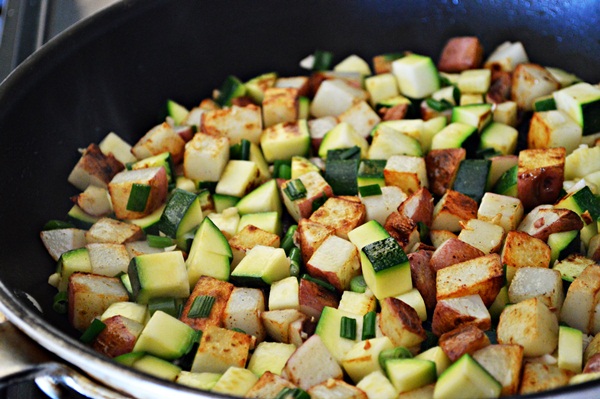
Sauteing Vegetables

In today’s competitive world every human being is striving for a good career combined with a good healthy lifestyle and this can be achieved through exercise, proper sleep and above all good nourishing and healthy nutrition. Managing work and home for both men and women with dwindling time is increasingly becoming difficult. The last thing that we want to compromise is our health. With little planning, ingenuity, and organization in advance can make cooking a pleasurable experience.

It has been said many times that all tasty and nutritious meals need not require too much of elaborate cooking, too much time and usage of lot of spices or oil.

Try these life saving hacks for a week and enjoy yummy and ready in minutes recipes!

-Pre-preparations: If there are some recipes that are time consuming and elaborate then these can be pre-prepared during the weekends when one has some extra time to spare. During the weekend you can mentally plan the foods, dishes that you intend to make during the week. Pre-preparation of these dishes help a great deal thus saving lot of time during week days.

-Learn to Deep Freeze!!! A good size freezer compartment always comes in handy.

Cutting onions every time is very cumbersome. The much used mixture of tomato and onionin most Indian dishes can be cooked in bulk, and tucked away in freezer. Whenever needed take a few spoonful out and cook it with your vegetables. This paste comes handy for pasta as well. Similarly, Indians use lot of ginger and garlic in their food. You can pre prepare this paste as well and deep freeze it. This will save a whole lot of time when you’re cooking next.

-Partly cooked vegetables like roasted Brinjal or Aubergine or also called Eggplant, Okra (Lady’s Finger), Bitter Gourd, pressure cooked pulses such as, Kidney Beans, white chick peas, black eyed beans etc can be partly cooked and tucked away in the freezer(for fresh taste prepare the seasoning at the time of serving).

-Leafy vegetables Preparations: Leafy vegetablescan take a lot of time to clean, wash and chop. With a tight work schedule this might get difficult. To make it easy for you, wash, clean and chop the leafy vegetables in advance and store them in containers and keep them in the fridge. Add these to your daily wheat dough to make nutritious breads or in battersfor other preparations etc.

-Meats can be marinated, half cooked and frozen:These can be freshly pressure cooked with additional spices or baked to get perfectly cooked dishes.

– One thing that I very often do is make large batch of rice-pulse batter. This batter can be conveniently stored in refrigerator, and can be used for over a week for make steamed rice cakes.Try mixing some oats powder to this mixture for healthy alternatives top up the batter with chopped vegetables for greater variety.

-Other than freezing, vegetables can also be washed, cut up, cleaned and stored in airtight containers for a busy morning. Use these to make healthy multigrain sandwiches, subs, etc.

So no more will you have morning blues of cooking and rushing to work if you follow these easy tips.

Start your GOQii Lifestyle today!

  • « Previous Page
  • 1
  • …
  • 40
  • 41
  • 42
  • 43
  • 44
  • 45
  • Next Page »

Search

Recent Posts

  • Top 10 Foods For Diabetics: What to Eat to Manage Blood Sugar
  • Why Good Nutrition Before Conception Is Crucial For Your Baby’s Health
  • 6 Tricks To Help You Make Exercise A Habit
  • World Parkinson’s Day 2026: Bridging the Care Gap & Supporting Caregivers
  • Inflammation: The Hidden Fire Behind Most Chronic Disease

Stay Updated

Archives

  • April 2026 (11)
  • March 2026 (18)
  • February 2026 (14)
  • January 2026 (14)
  • December 2025 (19)
  • November 2025 (15)
  • October 2025 (20)
  • September 2025 (6)
  • August 2025 (6)
  • July 2025 (12)
  • June 2025 (18)
  • May 2025 (16)
  • April 2025 (22)
  • March 2025 (28)
  • February 2025 (22)
  • January 2025 (25)
  • December 2024 (22)
  • November 2024 (23)
  • October 2024 (21)
  • September 2024 (23)
  • August 2024 (30)
  • July 2024 (21)
  • June 2024 (25)
  • May 2024 (30)
  • April 2024 (27)
  • March 2024 (27)
  • February 2024 (24)
  • January 2024 (21)
  • December 2023 (14)
  • November 2023 (11)
  • October 2023 (19)
  • September 2023 (22)
  • August 2023 (18)
  • July 2023 (22)
  • June 2023 (23)
  • May 2023 (24)
  • April 2023 (22)
  • March 2023 (23)
  • February 2023 (19)
  • January 2023 (15)
  • December 2022 (11)
  • November 2022 (15)
  • October 2022 (15)
  • September 2022 (12)
  • August 2022 (10)
  • July 2022 (17)
  • June 2022 (11)
  • May 2022 (10)
  • April 2022 (6)
  • March 2022 (6)
  • February 2022 (13)
  • January 2022 (11)
  • December 2021 (7)
  • November 2021 (3)
  • October 2021 (6)
  • September 2021 (3)
  • August 2021 (8)
  • July 2021 (7)
  • June 2021 (15)
  • May 2021 (16)
  • April 2021 (10)
  • March 2021 (7)
  • February 2021 (4)
  • January 2021 (4)
  • December 2020 (3)
  • November 2020 (4)
  • October 2020 (10)
  • September 2020 (3)
  • August 2020 (3)
  • July 2020 (2)
  • June 2020 (4)
  • May 2020 (10)
  • April 2020 (12)
  • March 2020 (10)
  • February 2020 (4)
  • January 2020 (4)
  • December 2019 (3)
  • November 2019 (7)
  • October 2019 (5)
  • September 2019 (4)
  • August 2019 (9)
  • July 2019 (9)
  • June 2019 (11)
  • May 2019 (4)
  • April 2019 (8)
  • March 2019 (8)
  • February 2019 (9)
  • January 2019 (8)
  • December 2018 (9)
  • November 2018 (3)
  • October 2018 (3)
  • September 2018 (5)
  • August 2018 (10)
  • July 2018 (6)
  • June 2018 (13)
  • May 2018 (8)
  • April 2018 (18)
  • March 2018 (9)
  • February 2018 (8)
  • January 2018 (15)
  • December 2017 (12)
  • November 2017 (19)
  • October 2017 (13)
  • September 2017 (15)
  • August 2017 (4)
  • July 2017 (8)
  • June 2017 (7)
  • May 2017 (6)
  • April 2017 (8)
  • March 2017 (6)
  • February 2017 (7)
  • January 2017 (9)
  • December 2016 (10)
  • November 2016 (7)
  • October 2016 (7)
  • September 2016 (7)
  • August 2016 (11)
  • July 2016 (9)
  • June 2016 (9)
  • May 2016 (12)
  • April 2016 (17)
  • March 2016 (17)
  • February 2016 (8)
  • January 2016 (6)
  • December 2015 (2)
  • November 2015 (9)
  • October 2015 (7)
  • September 2015 (9)
  • August 2015 (11)
  • July 2015 (9)
  • June 2015 (11)
  • May 2015 (9)
  • April 2015 (13)
  • March 2015 (8)
  • February 2015 (5)
  • January 2015 (12)
  • December 2014 (14)
  • November 2014 (11)
  • October 2014 (6)
  • September 2014 (13)
  • August 2014 (12)
  • July 2014 (6)
  • June 2014 (2)
  • May 2014 (7)
  • April 2014 (4)

From “Laddu Nawin” to Fit and Fierce: How a 25-Year-Old Insurance Advisor Shed 20 Kilos and Gained His Life Back

When 25-year-old Nawin Yadav from Hyderabad walked into his office every morning, he carried more than just his files and policy papers. He had the weight of fatigue, sluggish energy, and an ever-growing belly that was becoming the butt of jokes. “People … [Read More...]

“I’ve Challenged Myself to Live 100 Years” – The Story of Chandubhai Savani’s Second Chance at Life

At 67, most people start slowing down. Not Chandubhai Savani. A resident of Surat, Chandubhai, thought life was on track. “My life was going well till I had my bypass surgery,” he says. That surgery, back in 2021, was a wake-up call.  Medication was routine, but exercise wasn’t. His diet? What he calls ‘normal.’ “I […]

From Shimla’s Slopes to Chandigarh’s Sidewalks: Surinder Kaur Bhalla’s Journey from Chaos to Control

Some journeys start with a plan. Others begin with a stumble literally. Surinder Bhalla, a government professional, born and raised in the scenic hill town of Shimla, had always lived a life of movement. “In Shimla, you walked everywhere,” she reflects. “Walking was never an exercise. It was just life.” But after shifting to Chandigarh, […]

Ananda Mukherjee Health Story

From Terminal Illness To Complete Wellness! Ananda Mukherjee Health Story

As we observe World Cancer Day under the powerful theme ‘United by Unique’ (2025-2027)**, we are reminded that every individual’s journey with cancer is distinct, yet united by shared resilience, hope, and the collective fight against this disease. This theme places people at the centre of care and their stories at the heart of the […]

  • HOME
  • HEALTHY LIVING
  • FITNESS
  • HEALTHY RECIPES
  • USER STORIES
  • KARMA
  • BUY GOQii

Copyright ©2016 GOQii