GOQii

Blog

  • HOME
  • HEALTHY LIVING
  • FITNESS
  • HEALTHY RECIPES
  • USER STORIES
  • KARMA
  • BUY GOQii

Search Results for: doctor

July 23, 2024 By Disti Shah 7 Comments

Why You Should Exercise To Manage Diabetes

exercise to manage diabetesThe facts and myths about diabetes are plenty, especially on the kind of foods one should have or not have, whether one should exercise to manage diabetes, etc. But, it’s when I saw my dad exercising one day, a thought struck me – is it not important to test a diabetic before exercise? Is diet all that one needs to focus on?

What if he exercises vigorously and his sugar levels drop down? At what sugar levels should we allow or not allow a person to exercise? What should be the intensity and frequency of the exercise? What type of exercise should a diabetic do?

These questions obviously led me to explore and research more about diabetes and exercise. I would like to share some information about what Diabetes is, what are its types and how regular exercise can control your Diabetes.

What is Diabetes?

Diabetes is a chronic disease where there’s a high level of sugar in the blood, either due to less insulin sensitivity or because of low insulin secretion or no insulin levels in the body.

There are three major types of diabetes. The causes and risk factors are different for each type:

  • Type 1 diabetes: can occur at any age, but it is most often diagnosed in children, teens, or young adults. In this type, the body makes little or no insulin. Daily injections of insulin are needed. The exact cause is unknown.
  • Type 2 diabetes: makes up for most of the diabetes cases. It often occurs in adulthood, but teens and young adults are now being diagnosed because of high obesity rates. In such cases, either the body becomes less sensitive to insulin or insulin secretion decreases.
  • Gestational diabetes: is high blood sugar that develops at any time during pregnancy in a woman who does not have diabetes, and disappears once the pregnancy is over.

Can You Exercise To Manage Diabetes? 

We all know that exercise provides multiple benefits but does it help diabetics as well? In fact, it does! Here are some of the changes you can experience if you exercise to manage diabetes:

  • Exercise helps lower blood sugar levels
  • It helps you feel better
  • Helps maintain proper body weight
  • Keeps the heart rate and blood pressure lower
  • Keeps blood fat levels normal
  • Improves insulin sensitivity
  • Helps in maintaining normal blood circulation in the feet

Now that we know a few of many reasons why exercise is important for a person with diabetes, let’s see which exercises can benefit diabetics.

Which kinds Of Exercise Are Best For Diabetics?

To help manage diabetes, you can try:

  1. 30 minutes of “moderate intensity” aerobic activity – 5 days a week.
  2. “Vigorous intense” aerobic activity for 20 minutes or more a day – 3-5 days a week.

In addition, you should add flexibility and strength training to your routine.

  1. Flexibility activities 5-7 days a week.
  2. Strength training 8-10 exercises, 10-15 repetitions of each exercise, 2-3 days a week.

Calories Per hour and the types of moderate and vigorous exercises

Moderate physical activity for one hour Calorie burnt per hour
Hiking 370
Light gardening / Yard work 330
Dancing 330
Golf (walking and carrying clubs) 330
Bicycling (<10mph) 290
Walking  (3.5mph) 280
Weight lifting (light workout) 220
Stretching 180
Vigorous physical activity for one hour 
Running / Jogging (5mph) 590
Bicycling (>10mph) 590
Swimming (Slow freestyle laps) 510
Aerobics 480
Walking (4-5 mph) 460
Heavy Yard work (chopping wood) 440
Weight lifting (vigorous effort) 440
Basket ball (vigorous) 440

Source – Dietary Guidelines for Americans – 2005 *(These values are derived from American journals and may not be specific to other populations).

When Should One Exercise?

The best time to exercise will vary with the schedule. Preferably, one should pick the same time for exercise each day so that if one is on insulin, the adjustment of insulin dosage is manageable.

  1. Morning exercise may cause your blood glucose to drop less than if you exercised later.
  2. If you are on insulin or taking pills that work by making more insulin, evening exercise may result in low blood glucose while you sleep.

Remember – Your Diabetes Management can be adjusted to suit your lifestyle. Your lifestyle does not have to be adjusted to fit your diabetes.

After knowing what kind of exercise and at what time we should do them, let’s see what precautions should be taken while doing them.

Safety Tips for Active Diabetics

1. Get your doctor’s okay before you start exercising.
This is especially important if you are older than age 35, have had diabetes for more than 10 years, have any complications of diabetes, have not exercised in a long time, or have heart disease. Exercise has the same effect on blood glucose as insulin. It lowers blood glucose, making you more sensitive to insulin. This is a benefit of exercise that can also pose a problem if it lowers your blood glucose too much.

2. Avoid low blood sugar levels
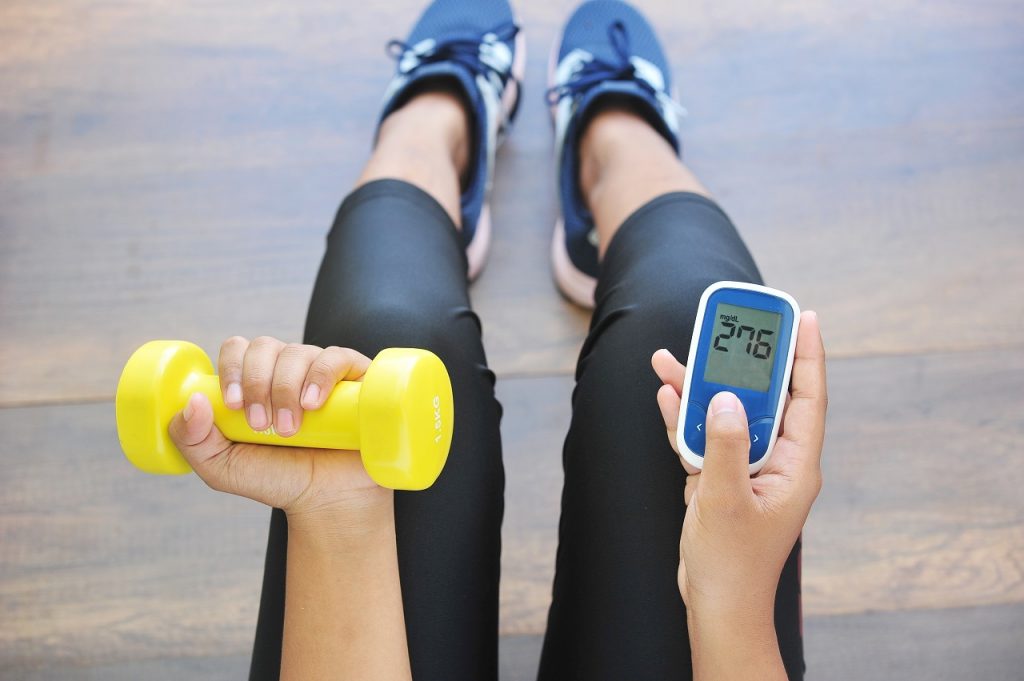
Low blood sugar levels are when the glucose levels dip below <70mg/dl. Common symptoms include shakiness, weakness, abnormal sweating, and anxiety, tingling of mouth and hunger, headache, visual disturbance, confusion, seizures, coma. Monitor your blood glucose before and after working out, especially when beginning or modifying the exercise program. Always keep a 15g of fast-acting carbohydrate (powdered sugar/Glucose tablets 3-4) with you to treat Hypoglycemia.

3. Check your blood glucose levels pre and post workout
If you blood glucose is below 70 –

  1. Take 5g of carbohydrate right away
  2. Wait for 15 minutes
  3. Check again – if still below 70, then have another 15 grams.

It should work now.

If the blood glucose is high – Fasting is>250 and ketosis is present.

Or >300 with or without ketosis. Avoid exercise with such high blood sugar levels.

4. Eat before heavy exercise
If you’re going to exercise around mealtime, you should eat the meal first. When possible, allow half an hour for digestion. Solid foods, such as whole grains, vegetables, etc. are digested slowly than liquids. They provide protection for at least 2-3 hours. When it is possible to choose the exercise time, try to begin the exercise 30-60 minutes after a meal or snack.

Remember – Nothing works better than experience and frequent blood glucose testing. 

5. Diabetic complications 

  • Retinopathy: Patients with retinopathy are at risk for retinal detachment and vitreous hemorrhage associated with vigorous-intensity exercise. For those with retinopathy, vigorous aerobic and resistance, weight-bearing exercises should be avoided.
  • Nephropathy: Should not indulge in vigorous-intensity exercise as protein excretion increases post-exercise.
  • Peripheral Neuropathy: Should take proper care of feet to prevent foot ulcers. Feet should be kept dry. Avoid the wrong type of socks and shoes. Avoid tight elastic bands and ill-fitted shoes (they reduce circulation). Avoid wearing thick or bulky socks (they can fit poorly and irritate the skin). Rather wear light colored cotton socks that dissipate heat faster. Moisturize your feet – but not between your toes- that could encourage a fungal infection. Use a moisturizer daily to keep dry skin from itching or cracking. Consider non-weight bearing activities as they may be better tolerated and aid healing.

6. Stay hydrated
Proper hydration is essential during exercise. Exercising during hot weather requires special attention. Drinking extra fluids should begin an hour or two before you begin exercise to manage diabetes. A general rule is to drink 8 ounces of fluid for every 30 minutes of vigorous activity. 

7. Check your pulse rate
It’s important to check the pulse periodically to see if you are exercising within your target zone. Right after you exercise, take your pulse – count your pulse for 10 secs and multiply the no by 6.

Compare the numbers on the right grouping in the table below.

Age Target Heart range zone
20 years 100-150 beats/min
25 years 98-146 beats/min
30 years 95-142 beats / min
35 years 93-138 beats/ min
40 years 90-135 beats/min
45 years 88-131 beats/min
50 years 85-127 beats/ min
55 years 83-123 beats/min
60 years 80-120 beats/min
65 years 78-116 beats/ min
70 years 75-113 beats / min

Source: Exercise and Your Heart, National Heart, Lung, and Blood Institute/American Heart Association, NIH Publication No. 93-1677.

The good news is that if someone regularly exercises, these benefits can be permanent, and for someone with diabetes, it can mean reducing medication. If younger members of families with a predisposition to diabetes exercise regularly, they could avoid diabetes altogether.

A single bout of exercise can benefit the body’s sensitivity to insulin for 16-18 hours and have positive effects on blood glucose control (glucose absorption) for 24-48hours.

But these effects wear off between 60-72 hours. Hence, staying active most of the time is imperative.

I just want to convey that Diabetes cannot take your hope, faith, attitude, courage and happiness away from you. We are the authors of our own health. Let’s overcome it, no matter what type or what level of disease it is.

Now that you know why you should exercise to manage diabetes, get out there and begin your journey! To read more on Diabetes, check out Healthy Reads.

For further guidance and motivation by certified experts, join the GOQii Diabetes Care program. It’s India’s only diabetes program that is driven by Smart Science and Personal Coaching to improve Fasting Blood Sugar (FBS), Postprandial Blood Sugar (PP), reduce HbA1c levels and let you win gold! You can subscribe here: https://store.goqii.com/diabetescare.

#BeTheForce

July 14, 2024 By Sweta Karia Leave a Comment

All you need to know about DENGUE

fever

How often do you come across people suffering from Dengue? Recently, I encountered many cases, promoting me to pen down some valuable information that can help you prevent and recover from Dengue.

Most of us know dengue is associated with fever, but there’s much more to understand.

The name ‘dengue’ originated from the Swahili word for “bone-breaking fever” or the Spanish phrase for “the walk of a Dandie.” The dengue virus belongs to family Flaviviridae and has four serotypes transmitted by mosquitoes of Aedesaegypti species.

In recent years, the spread of unplanned urbanization, with associated substandard housing, overcrowding, and deteriorating water, sewage and waste management systems, has created ideal conditions for increased transmission of the dengue virus in tropical urban centers.

According to the World Health Organization (WHO), approximately 50 to 100 million dengue infections occur each year worldwide.

Symptoms of Dengue Fever:

Dengue causes a wide spectrum of illness, from mild asymptomatic cases to severe, fatal dengue hemorrhagic fever/dengue shock syndrome.

Symptoms, which usually begin four to six days after infection and last for up to 10 days, may include sudden high fever, severe headaches, severe joint and muscle pain, fatigue, nausea, vomiting, skin rash, mild bleeding (such as bleeding nose or gums), blood pressure drops down as the circulation of blood in the vessels is also affected.

A decrease in platelet count is often observed 3 days after the fever starts.

In severe cases, the virus reproduces rapidly, affecting vital organs like the bone marrow and liver.

As the old adage goes “PREVENTION IS BETTER THAN CURE”!!

Here are some of the preventive measures:

1) Avoid heavily populated residential areas, if possible.

2) Use mosquito repellents, vaporizing mats, and mosquito coils.

3) Wear appropriate clothing: Minimize exposed skin by wearing long-sleeved shirts and long pants tucked into socks.

4) Use bed nets during sleeping and tuck them properly under the mattress.

5) Make sure window and door screens are secure and free of holes.

6) Eliminating or avoiding stagnant, standing water where the mosquitoes can reproduce are some of the effective strategies to prevent it.

7) Maintain proper Hygiene and Sanitation.

Treatment:

Dengue is a self-limiting viral disease, meaning it typically resolves on its own with adequate hydration and pain control. Severe cases may require hospitalization and intensive care. Many doctors also recommend home remedies to manage symptoms and speed recovery.

Home remedies for Dengue:

There is no specific diet for dengue, but the following home remedies can help alleviate symptoms and aid in recovery:

1) Water: This is of utmost important as extreme dehydration is very prominent in Dengue. Water can heal symptoms like headache, muscle cramps and furthermore help to eliminate toxins from the body.

2) Papaya leaf juice or Papaya leaf extract: They have an ability to increase the platelets in bone marrow. Here is the way to use them:  Wash the leaves, take out the center vein and crush leaves in a grinder with adding little bit of water and consume  every 6 hours daily.

3) Neem leaves: Steeping the leaves and drinking its brew helps to increase the platelet and WBC count thereby improving the body’s immunity.

4) Carrot Juice: Taking 2-3 spoons of carrot juice having mixed with beetroot juice twice a day helps to boost up the count of platelet count very soon.

5) Omega 3 rich foods like walnuts, flaxseeds, fish boost your immune system.

6) Fresh Fruits and Veggies typically orange juice, amla juice, and grapefruit can promote the antibody production, release the toxins, stimulates cellular repair because of Vitamin C content.

7) Eating Garlic: Chewing two cloves of garlic or drinking hot garlic vegetable soup can decrease the multiplication of viruses.

8) Eating a well- balanced diet with majorly focusing on green leafy veggies can ward off the infection.

9) Also a simple solution to the monsoon Illness is to boost up our immunity by our popularly known

“Dadjiji ka Kadha- Grandma’s home remedy concoction”. You can check out this link on how to prepare the concoction:

Homemade Remedy For Monsoon Illnesses – Decoction Syrup or Kadha Recipe

10) Most importantly REST. The more your rest, the better the production of platelets.

11)  Since it is an Infection, have cooked vegetables instead of raw.

Foods to be avoided:

First and foremost, stay away from unhealthy food like refined sugars, junk food and processed food. Having these foods can cause drop in platelet count.

Secondly, try to avoid the food which is oily, spicy and salty. I know it may spoil the taste of your mouth, but lime juice plays the trick here.

Thirdly, caffeine and alcohol should be avoided to prevent dehydration.

Lastly, avoid meat as it is difficult to digest.

So let’s prevent ourselves from Dengue before we catch hold of it! For further information or guidance, reach out to our certified experts by subscribing to GOQii’s Personalised Health Coaching here.

#BeTheForce

July 12, 2024 By Pradnya Shinde Leave a Comment

Dealing with Bone Problems in Menopause!!

The other day one of my patients who is in her 60s fell while walking and she got a hip fracture. When I asked what the reason for your fracture was? She said it’s my old age. I asked if you would have fallen like this 30 years back, would you have got a fracture? She said No.

As we age, naturally our bones start becoming weaker. But there are certain milestones we need to be aware of. And menopause is one important milestone in women’s life.

The menopause is NOT JUST the end of your period cycle. A lot more changes happen in your body before, during and after menopause. And changes in your bones are very important because bone is NOT JUST a hard and brittle skeleton but it’s a living organ, alive with cells. Bones are constantly renewed. And during menopause women may lose bone mass rapidly for several years.

Why is Bone Health Important During Menopause?

Oestrogen hormone is crucial for bone formation. During menopause, oestrogen levels decrease, leading to rapid bone density loss and increasing the risk of osteoporosis, which weakens bones and heightens fracture risk. Bone loss begins 1-3 years before your last period, accelerating rapidly after menopause and continuing for the next 5-10 years, with an average annual bone density loss of 2%.

What to Check for Osteoporosis Risk?

Be aware of conditions that increase osteoporosis risk, aside from menopause:

  • Low Bone Mass: High risk if you had lower bone mass in your younger years.
  • Early Menopause: Increased risk if menopause occurs before age 45.
  • Lifestyle Factors: Smoking and alcohol use elevate risk.
  • Medications: Taking depression medicine or steroids adds further risk.

Steps for healthy Bone Life

  1. Seek Medical Help: Osteoporosis is often called a silent disease because it has no symptoms until a fracture occurs. Don’t wait for a fracture to find out about your bone health. Talk to your doctor about the need for osteoporosis screening. Hormone treatments can also be used to help manage bone density.
  2. Do Weight-Bearing Exercises: Exercise is crucial in preventing osteoporosis. Weight-bearing activities like walking, running, and lifting weights help strengthen bones. Start with light exercises for about 30 minutes daily and include strength training 2-3 times a week. Activities like brisk walking, cycling, swimming, and controlled dancing can be very beneficial.
  3. Eat Calcium and Vitamin D: 50-70% of your bones are made up of calcium. Vitamin D is essential for calcium absorption. Include dairy products, green leafy vegetables, almonds, fish with bones, and soy in your diet. Exposure to sunlight is the primary source of Vitamin D, but dietary sources include egg yolk, fatty fish like mackerel, salmon, tuna, and fortified foods. If necessary, consult your doctor about supplements.

Additional Tips

  • Quit Smoking: Smoking increases the risk of osteoporosis.
  • Limit Alcohol: Reducing alcohol intake can help protect your bones.
  • Reduce Caffeine: Switch to decaf drinks to minimize the impact of caffeine on bone health.
  • Maintain a Healthy Weight: Both overweight and underweight conditions can increase the risk of osteoporosis.

If you or someone you know is at risk for osteoporosis, it’s crucial to take preventive steps before a fracture affects the quality of life. By following a triangle of exercise, diet, and medical help, you can continue to enjoy activities like hiking, dancing, or playing with your grandkids. Take care of your bone health as soon as possible to avoid osteoporosis from becoming a significant issue in your life. For further information or guidance, reach out to our certified experts by subscribing to GOQii’s Personalised Health Coaching here.

#BeTheForce

Disclaimer: The information provided in this blog is for general awareness and educational purposes only. It is not intended to replace professional medical advice, diagnosis, or treatment. Always consult a qualified healthcare provider for personalised medical guidance or concerns related to your health.

July 4, 2024 By Neha Sharma 3 Comments

12 Amazing Home Remedies To Reduce Acidity

reduce acidityAcidity can literally be a pain to deal with but before we move on to home remedies to reduce acidity, it’s important to know its origin, symptoms and causes. Hydrochloric Acid (HCL) is produced in the stomach to digest food and it plays an important role in digestion but sometimes, HCL is produced when there is no food inside the stomach and it leads to the eruption of the lining of the stomach, giving rise to acidity. 

Sometimes, the acid finds its way to the esophagus and you experience inflammation and a burning sensation in the food pipe. This needs to be treated as soon as possible as it may lead to ulcers. Meal timings, physical activity, proper sleep, no stress, less consumption of tea or coffee, moderate intake of alcohol and modification in cooking are some of the key points which help keep acid under permissible limits.

Simple and Effective Home Remedies to Reduce Acidity 

Let’s look at some simple but amazing home remedies to reduce acidity which can be easily included in your daily routine: 

  1. Basil Leaves: are easily available. One can chew a few leaves of basil or can have basil tea as its calming and soothing properties help reduce acidity. 
  2. Fennel Seeds: can be chewed after meals to increase the rate of digestion and they help in reducing acidity. Fennel tea can be taken 1-2 times a day or it can be infused with water and taken on an empty stomach to curb acidity from morning itself.
  3. Curd: are always considered important for digestion and lactic acid present in them normalizes the acidity in the stomach. You can also add roasted cumin powder, a pinch of black pepper and a few leaves of mint & coriander to ease digestion.
  4. Ginger: Grated Ginger can be boiled with water and that water can be taken the whole day or before and after meals to increase the rate of digestion. Ginger tea with honey can be taken without milk to reduce acidity.
  5. Banana: gives instant relief from acidity. It can be taken during morning or mid morning and can also be combined with curd.
  6. Carom Seeds (Ajwain): Ajwain water can be taken on an empty stomach (1 tsp of ajwain can be soaked in a glass of water overnight) or ½ tsp of ajwain with a pinch of black salt can be taken after meals to ease digestion.
  7. Cumin Seeds: 1 tsp of cumin seeds can be soaked overnight in a glass of water or can be boiled in water and its water can be taken after meals to increase the rate of digestion.
  8. Cold Milk: gives instant relief from acidity and one can have a cup of cold milk to neutralize gastric acids in the stomach. For those who are lactose intolerant, other options should be taken into consideration.
  9. Cardamom: Chewing 1 cardamom pod after meals prevents acidity, flatulence and aids in digestion.
  10. Coconut Water: turns the pH of the stomach alkaline and thereby prevents acidity and the lining of the stomach from getting ruptured.
  11. Aloe Vera: Always go for fresh aloe vera! Mix the pulp with some water and have it 2-3 times a day. Otherwise, you have to go for organic aloe vera juice.
  12. Lemon Juice: Have some lemon juice in lukewarm water on an empty stomach the first thing in the morning. It helps a lot in reducing acidity.

These are a few home remedies which you can use to reduce acidity. Last but not the least, positive lifestyle modifications also go a long way. Before you switch to any of these foods, consult your doctor, coach, nutritionist or dietitian. 

We hope this article helps you. Do leave your thoughts in the comments below. For more on acidity, digestion, nutrition and other lifestyle issues, check out Healthy Reads or ask a GOQii Coach by subscribing for Personalised Health Coaching here.

#BeTheForce 

  • « Previous Page
  • 1
  • …
  • 21
  • 22
  • 23
  • 24
  • 25
  • …
  • 85
  • Next Page »

Search

Recent Posts

  • ALL ABOUT VERTIGO!
  • PCOS and Anxiety: Discover Relief with the 54321 Technique
  • Navigating the Maze of Nutrition: Finding Clarity Amidst Confusion
  • Get children active and keep them healthy
  • What Gestational Diabetes Can Do To You & Your Unborn Child

Stay Updated

Archives

  • December 2025 (5)
  • November 2025 (15)
  • October 2025 (20)
  • September 2025 (6)
  • August 2025 (6)
  • July 2025 (12)
  • June 2025 (18)
  • May 2025 (16)
  • April 2025 (23)
  • March 2025 (23)
  • February 2025 (22)
  • January 2025 (26)
  • December 2024 (26)
  • November 2024 (25)
  • October 2024 (22)
  • September 2024 (24)
  • August 2024 (31)
  • July 2024 (21)
  • June 2024 (26)
  • May 2024 (31)
  • April 2024 (27)
  • March 2024 (29)
  • February 2024 (26)
  • January 2024 (25)
  • December 2023 (15)
  • November 2023 (11)
  • October 2023 (22)
  • September 2023 (22)
  • August 2023 (20)
  • July 2023 (22)
  • June 2023 (24)
  • May 2023 (24)
  • April 2023 (24)
  • March 2023 (23)
  • February 2023 (20)
  • January 2023 (16)
  • December 2022 (12)
  • November 2022 (15)
  • October 2022 (15)
  • September 2022 (12)
  • August 2022 (10)
  • July 2022 (17)
  • June 2022 (11)
  • May 2022 (10)
  • April 2022 (6)
  • March 2022 (6)
  • February 2022 (13)
  • January 2022 (12)
  • December 2021 (7)
  • November 2021 (3)
  • October 2021 (6)
  • September 2021 (3)
  • August 2021 (8)
  • July 2021 (7)
  • June 2021 (15)
  • May 2021 (16)
  • April 2021 (10)
  • March 2021 (7)
  • February 2021 (4)
  • January 2021 (4)
  • December 2020 (3)
  • November 2020 (4)
  • October 2020 (10)
  • September 2020 (3)
  • August 2020 (3)
  • July 2020 (2)
  • June 2020 (4)
  • May 2020 (10)
  • April 2020 (12)
  • March 2020 (10)
  • February 2020 (4)
  • January 2020 (4)
  • December 2019 (3)
  • November 2019 (7)
  • October 2019 (5)
  • September 2019 (4)
  • August 2019 (9)
  • July 2019 (9)
  • June 2019 (11)
  • May 2019 (4)
  • April 2019 (9)
  • March 2019 (8)
  • February 2019 (9)
  • January 2019 (8)
  • December 2018 (9)
  • November 2018 (3)
  • October 2018 (3)
  • September 2018 (5)
  • August 2018 (10)
  • July 2018 (6)
  • June 2018 (13)
  • May 2018 (8)
  • April 2018 (18)
  • March 2018 (9)
  • February 2018 (8)
  • January 2018 (15)
  • December 2017 (12)
  • November 2017 (19)
  • October 2017 (13)
  • September 2017 (15)
  • August 2017 (4)
  • July 2017 (8)
  • June 2017 (7)
  • May 2017 (6)
  • April 2017 (8)
  • March 2017 (6)
  • February 2017 (7)
  • January 2017 (9)
  • December 2016 (10)
  • November 2016 (7)
  • October 2016 (7)
  • September 2016 (7)
  • August 2016 (11)
  • July 2016 (9)
  • June 2016 (9)
  • May 2016 (12)
  • April 2016 (17)
  • March 2016 (17)
  • February 2016 (8)
  • January 2016 (6)
  • December 2015 (2)
  • November 2015 (9)
  • October 2015 (7)
  • September 2015 (9)
  • August 2015 (11)
  • July 2015 (9)
  • June 2015 (12)
  • May 2015 (9)
  • April 2015 (13)
  • March 2015 (8)
  • February 2015 (5)
  • January 2015 (12)
  • December 2014 (14)
  • November 2014 (11)
  • October 2014 (6)
  • September 2014 (13)
  • August 2014 (12)
  • July 2014 (6)
  • June 2014 (2)
  • May 2014 (7)
  • April 2014 (5)

From “Laddu Nawin” to Fit and Fierce: How a 25-Year-Old Insurance Advisor Shed 20 Kilos and Gained His Life Back

When 25-year-old Nawin Yadav from Hyderabad walked into his office every morning, he carried more than just his files and policy papers. He had the weight of fatigue, sluggish energy, and an ever-growing belly that was becoming the butt of jokes. “People … [Read More...]

“I’ve Challenged Myself to Live 100 Years” – The Story of Chandubhai Savani’s Second Chance at Life

At 67, most people start slowing down. Not Chandubhai Savani. A resident of Surat, Chandubhai, thought life was on track. “My life was going well till I had my bypass surgery,” he says. That surgery, back in 2021, was a wake-up call.  Medication was routine, but exercise wasn’t. His diet? What he calls ‘normal.’ “I […]

From Shimla’s Slopes to Chandigarh’s Sidewalks: Surinder Kaur Bhalla’s Journey from Chaos to Control

Some journeys start with a plan. Others begin with a stumble literally. Surinder Bhalla, a government professional, born and raised in the scenic hill town of Shimla, had always lived a life of movement. “In Shimla, you walked everywhere,” she reflects. “Walking was never an exercise. It was just life.” But after shifting to Chandigarh, […]

Ananda Mukherjee Health Story

From Terminal Illness To Complete Wellness! Ananda Mukherjee Health Story

As we observe World Cancer Day under the powerful theme ‘United by Unique’ (2025-2027)**, we are reminded that every individual’s journey with cancer is distinct, yet united by shared resilience, hope, and the collective fight against this disease. This theme places people at the centre of care and their stories at the heart of the […]

  • HOME
  • HEALTHY LIVING
  • FITNESS
  • HEALTHY RECIPES
  • USER STORIES
  • KARMA
  • BUY GOQii

Copyright ©2016 GOQii