GOQii

Blog

  • HOME
  • HEALTHY LIVING
  • FITNESS
  • HEALTHY RECIPES
  • USER STORIES
  • KARMA
  • BUY GOQii

Search Results for: disease

June 3, 2025 By Ranveer Allahbadia 1 Comment

How many eggs can you eat in a day?

Firstly, forget everything you’ve read all your life. When it comes to controversial diet topics like this, people have their pre-conceived notions. So when a fitness blogger contradicts that opinion, people refuse to accept it. Therefore, I NEVER express my opinion. I only speak SCIENCE.

“EGG YOLKS INCREASE YOUR CHOLESTEROL”

Let’s consider the word cholesterol first. People throw around this word without actually even understanding the meaning of it. THE FIRST thing you need to know is that there are 2 kinds of Cholesterol – Good and Bad Cholesterol.

1)LDL

2)HDL

LDL is the BAD cholesterol – it causes heart disease and it’s what people think of first when we say the words “High cholesterol”.

LDL contributes to clogging your arteries and blood vessels

HDL is the good cholesterol. It’s the phoebe to LDL’s Ursula. And HDL actually contributes to reducing the clogging caused by LDL cholesterol.

Now coming to eggs. Eggs are an awesome source of HDL cholesterol. The FEARED “high cholesterol” egg is only going to help de-clog your arteries IF used smartly.

It’s giving you a lot of Phoebe. 70% of humans have no change in LDL or bad cholesterol levels even if they have 3-4 whole eggs a day.

The remaining 30% – diabetics, people with bad lifestyles and people who are genetically challenged respond badly.

So let’s get to the point. Should you be consuming whole eggs? Yes if you’re a normal human being without any major health issues. It should definitely be a part of your diet.

Eggs are such awesome protein sources, that they’re rated as the best natural protein in the world when it comes to being absorbed by your body.

All the proteins in the world are rated according to their “biological value” or BV.

Soya – 74

Beef – 80

Cow Milk – 91

Eggs – 100

The BV scale is created using the humble whole egg as a reference. THAT is the power of the whole egg.

According to science, it’s the best food to put on muscle mass.

And if you do any form of exercise – Yoga, Pilates, Zumba but most importantly if you do resistance training, you aren’t a normal human being. Your body is being activated often, your muscles are getting damaged often and you need to refuel them with PROTEIN. That’s the only way you get stronger.

Whether I’m bulking up or cutting to get ripped, I make sure whole eggs are a part of my diet. As a male lifter, it helps naturally increase your testosterone levels which in turn help make you stronger.

Even if you’re a woman, eggs are super crucial. Every month you lose a bit of the iron content in your blood during your periods. And one of the best sources of iron is egg yolks!

So the ground rule is that if eggs settle well in your system, have at least a couple everyday.

But if you lift, how many should you be having? So this is where the topic becomes a bit subjective. This answer is different for different people.

My ideology is that I consume everything in moderation or how well it suits my body. Eggs are such a nutritionally dense food that I recommend lifters at least to have a minimum of 4 whole eggs a day. If you can, you should definitely try experimenting and going even further.

Some people tend to get acne or bloating with eggs, so if you fall in that category don’t be afraid. Don’t go mad with your eggs but at least see where you can eat eggs comfortably. Till the point where your body and your calorie cap is accepting it.

The ground rule – eggs are a damn superfood! Nutritionally dense, superb for building muscle & above all, so delicious.

We hope this article sheds light on the benefits of including eggs in your diet and clarifies how many you can safely consume daily. How do you incorporate eggs into your meals? Share your thoughts in the comments below! For more nutritional insights and personalised health advice, check out Healthy Reads or speak to a certified expert by subscribing to GOQii’s Personalised Health Coaching here.

#BeTheForce

June 2, 2025 By Meenakshi Sharma 2 Comments

What Is Visceral Fat & Why It Is Dangerous

visceral fat

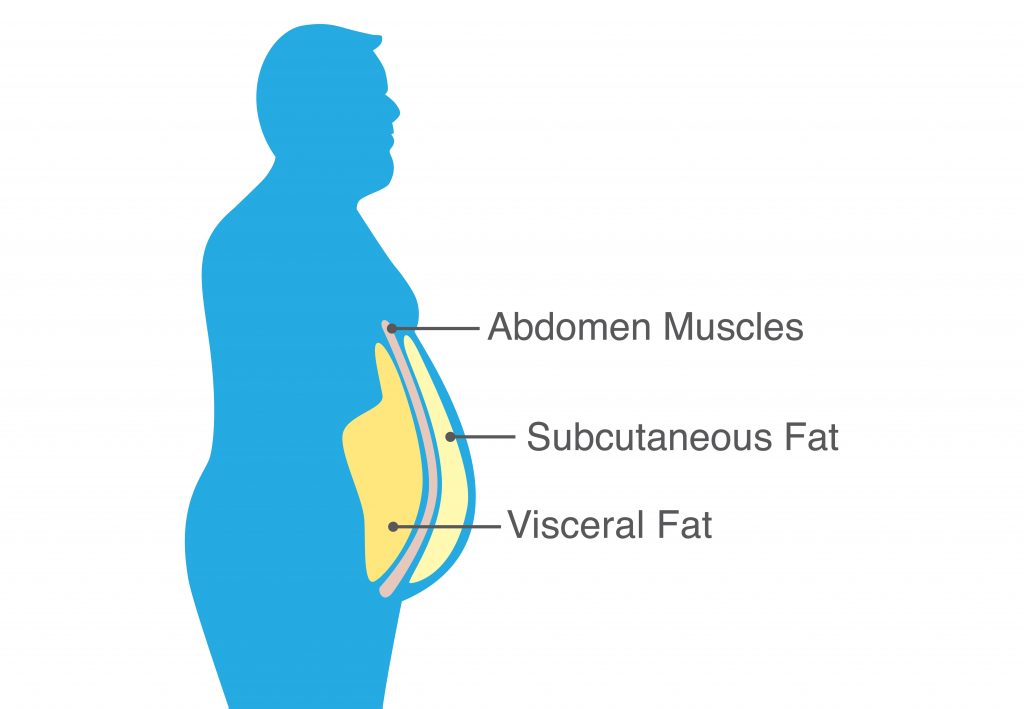
You might have heard of the term belly fat, but you might not be aware of terms like subcutaneous and visceral fat. Subcutaneous fat is the kind you can grasp with your hand on any part of your body. It sits under the skin. Belly fat, or what experts call visceral fat, is a particularly dangerous type of fat that forms inside the abdomen. It surrounds internal organs like the liver and intestines, and is also known as ‘active fat’ because it influences how hormones function in the body.

You can have too much belly fat even with a normal BMI. So, pay attention to your waist circumference rather than the number on the scale.

How To Measure It

  1. Waist size: This is an easy way to get a rough estimate. Wrap a tape measure around your waist over your belly button (don’t suck in your stomach). For women, 35 inches or more is a sign of visceral fat. For men, it’s 40 inches.
  2. BMI: Body mass index is a formula for how much you weigh relative to your height. A BMI of 30 or higher is overweight. That could be a sign of visceral fat. In Asia, a BMI of 23 or higher could be a concern.
  3. Waist-to-hip ratio: Divide your waist size by your hip size. Some doctors think this gives a good indication of your risk for visceral fat. But studies suggest it may be no better than a simple waist measurement.
  4. Body shape: Look in the mirror. If you’re an apple – a big trunk and slimmer legs – it often means more visceral fat, which is more common among men. Women are more likely to be pears with bigger hips and thighs. Research shows that upper body fat is more dangerous to your health, which might be one reason why women usually live longer than men.
  5. Imaging tests: These scans are the only way to check the exact amount of visceral fat you have. If your doctor orders a CT scan or an MRI for another medical condition, they can also assess your visceral fat.

Risks & Dangers Of Excess Visceral Fat

  • Increased Inflammation: If you have more fat stored than needed, especially around visceral organs like the liver, heart, kidneys, pancreas, and intestines, your body becomes inflamed. This fat stores inflammatory white blood cells and is linked with cognitive decline, arthritis, diabetes, and more.
  • Higher Risk of Diabetes: Visceral fat plays a significant role in insulin resistance, heightening the risk of developing diabetes. Abdominal fat is viewed as a bigger health risk than hip or thigh fat. While men are more likely to store visible visceral fat, women are also at risk.
  • Makes It Harder to Lose Weight: Stored body fat, especially visceral fat, affects hunger levels. Leptin, a hormone released by stored fat, regulates appetite, metabolism, and weight. When you eat refined carbs such as white flour and sugar, fat-storing hormones are produced in excess, raising your body’s “set point” and making it hard to follow a moderate, healthy diet.
  • Higher Risk for Heart Disease and Strokes: Inflammatory cytokines produced by fat contribute to heart disease and other inflammatory disorders. Visceral fat is linked to cardiovascular risk factors like high triglycerides, high blood pressure, and high cholesterol.
  • More Likely to Battle Dementia: Studies show that people with larger waistlines have a higher risk of dementia. In fact, many experts believe visceral fat levels (rather than BMI) are a more relevant risk factor in dementia development.
  • Increased Risk of Depression and Mood Disorders: Visceral fat is metabolically active and can interfere with hormones and neurotransmitter function. Depression is especially associated with greater fat storage in women. In one study, visceral fat – not subcutaneous belly fat or waist circumference – was linked with depressive symptoms in women over 50.

How Can You Reduce Visceral Fat? 

  • Exercise: A mix of cardiovascular exercise (e.g. running, cycling, swimming, aerobics, circuit training) and strength training (e.g. squats, weights, push-ups) helps reduce visceral fat.
  • Manage Stress: Chronic stress raises cortisol, which increases fat storage around the abdomen. Relaxation techniques like meditation, deep breathing, and other stress management practices can support fat loss.
  • Balance Diet: Focus on whole foods—fruits, vegetables, whole grains (quinoa, millets, oats), and lean proteins (skinless chicken, fish, eggs, beans). Calcium and Vitamin D are also associated with lower visceral fat. Include leafy greens, tofu, sardines, and low-fat dairy products.

Boiling, steaming, baking, and grilling are healthier cooking methods. Avoid trans fats (often found in processed foods and deep-fried items) and reduce sugar intake. Check labels for ingredients like “partially hydrogenated oils” or “high-fructose corn syrup.”

We hope this article helps you! If you are keen on losing weight in a healthy, sustainable way, you can reach out to an expert by subscribing for Personalised Health Coaching here.

For more articles on weight loss, check out Healthy Reads.

#BeTheForce 

Disclaimer: The information provided in this blog is for general awareness and educational purposes only. It is not intended to replace professional medical advice, diagnosis, or treatment. Always consult a qualified healthcare provider for personalised medical guidance or concerns related to your health. Images shown are for representation purposes only and may not depict the exact recommendations or outcomes.

May 29, 2025 By GOQii Leave a Comment

GLP-1 Explained: The Science Behind the Wellness Buzz

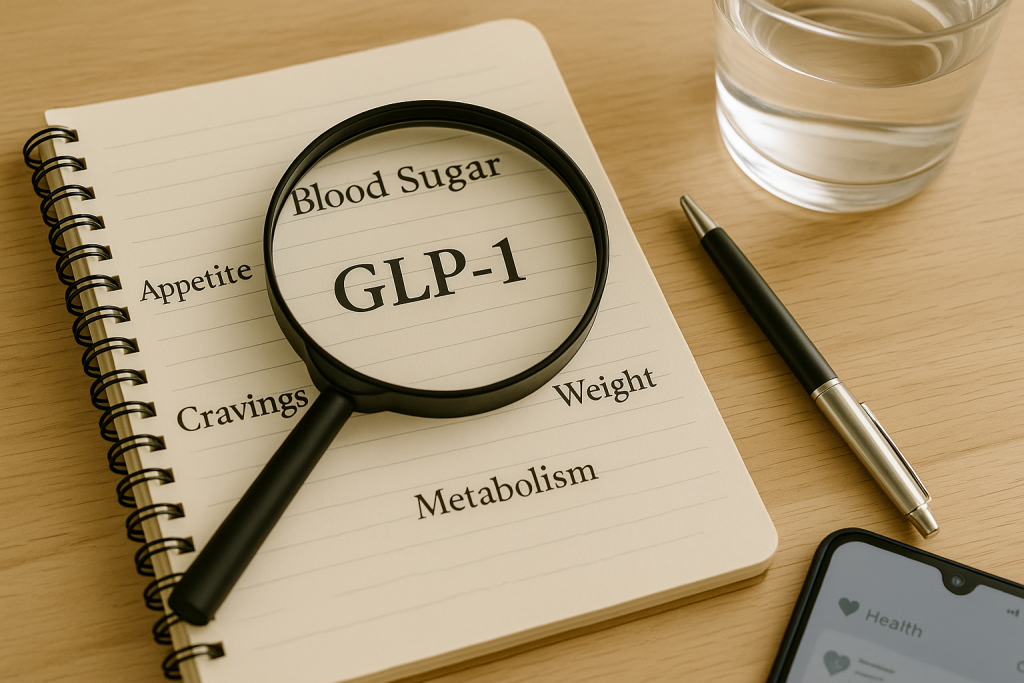
GLP-1 is an abbreviation for Glucagon-Like Peptide-1, which is linked to decreased blood sugar levels.

Does anyone know about a hormone that regulates your blood sugar, suppresses your cravings, and aids weight loss, all at once? Say hello to GLP-1 — also known as Glucagon-Like Peptide-1. And it’s quite literally becoming game-changing not just for weight loss, but in the broader conversation around metabolic health as well.

Not that it’s particularly glamorous-sounding, but this gut hormone is making waves for all the reasons that matter. From redefining type 2 diabetes care to aiding weight control and even supporting cardiovascular health, GLP-1 is taking centre stage.

Let’s get to the basics — no hype, no jargon — just what you need to know.

What Exactly Is GLP-1?

GLP-1 is normally synthesised within your body and is found in the small intestine, particularly after you’ve eaten. It acts as one of your behind-the-scenes assistants in keeping your metabolism running smoothly.

Here’s what it does:

  • Stimulates insulin (the hormone that lowers blood sugar)
  • Suppresses glucagon (a hormone that increases blood sugar)
  • Slows down digestion, helping you feel full for longer
  • Signals the brain to feel satisfied, reducing appetite

Sounds like a multitasker, doesn’t it? That’s why it’s considered an important regulator of metabolic diseases.

Why Is Everyone Suddenly Discussing GLP-1?

Around the world, we’re facing a full-blown metabolic health crisis. From the U.S., UK  and Europe to parts of Asia and Latin America, rates of type 2 diabetes, obesity, PCOS, and lifestyle-related heart disease are rising at an alarming pace.

And in the midst of this, one class of medications is creating a buzz like never before: GLP-1 receptor agonists.

Your body naturally produces GLP-1 (glucagon-like peptide-1), a hormone that helps regulate appetite, insulin response, and blood sugar. But scientists have now developed synthetic versions of this hormone—GLP-1 receptor agonists—that mimic its function and offer powerful metabolic benefits.

What started as a treatment for type 2 diabetes has now become a breakthrough tool in managing obesity and insulin resistance.

The results speak for themselves:

  • Better blood sugar control
  • Reduced cravings and appetite
  • Sustainable weight loss
  • Improved energy and mental clarity

And it’s not just about the physical outcomes. For many users, stabilised blood sugar has also meant improved focus, mood, and mental sharpness—a reminder that metabolic health is deeply tied to overall well-being.

As the science evolves, one thing is clear: GLP-1 isn’t just a trend—it’s a turning point in how we think about weight, energy, and long-term health.

But Is It a “Weight Loss Drug”?

No. While GLP-1 medications do support weight loss, their primary goal is to improve metabolic health. Weight loss is often a secondary outcome — a result of stabilised hormone levels and reduced appetite — rather than a quick fix or diet fad.

More importantly, these medications are prescribed and monitored by doctors. They’re not magic pills. They work best when combined with healthy eating, physical activity, and long-term lifestyle changes.

GLP-1 Is Used For:

  • People with type 2 diabetes
  • Individuals who are overweight or obese
  • Patients with conditions like PCOS or metabolic syndrome, under medical supervision

These are not everyday or cosmetic-use drugs. They’re medical tools — typically recommended when lifestyle changes alone aren’t enough to improve health outcomes.

The Larger Picture: Recasting Metabolic Health

What’s most remarkable about GLP-1 isn’t just what it does — it’s what it represents. It marks a shift in how we think about metabolic health.

It’s no longer just about willpower. It’s about understanding our biology, our hormones, and how modern science can help us lead more balanced lives.

For years, people struggling with sugar cravings or weight gain have blamed themselves. But what if your body was just asking for help — and now science is finally listening?

GLP-1 may be small, but it’s making a big impact on health and wellbeing. Whether you have diabetes, are exploring ways to support your metabolism, or simply want to understand the buzz — getting familiar with GLP-1 is a smart place to begin.

As always, speak with your doctor before making any decisions about your health. But learning more? That’s always worthwhile.

#BeTheForce

Disclaimer: The information provided in this blog is for general awareness and educational purposes only. It is not intended to replace professional medical advice, diagnosis, or treatment. Always consult a qualified healthcare provider for personalised medical guidance or concerns related to your health. Images shown are for representation purposes only and may not depict the exact recommendations or outcomes.

May 7, 2025 By GOQii Leave a Comment

A Guide to Managing Diabetes with Everyday Foods

Diabetes is becoming an increasingly common health condition across Saudi Arabia. Many individuals and families are learning to manage this lifestyle challenge, which is marked by high blood sugar levels.



While medication and regular medical check-ups are essential, one of the most powerful tools for managing diabetes lies in your hands your food choices.

The Carbohydrate Challenge

For those living with diabetes, carbohydrates are a major concern. When we eat them, our body breaks them down into sugar. Simple carbs — like white bread, sugary drinks, juices, and sweets — are digested too quickly, leading to sharp spikes in blood sugar levels.

The Solution: Slow-Release, High-Fibre Foods

To manage blood sugar effectively, focus on foods that are digested slowly — often referred to as low glycaemic index (GI) foods.

These are typically high in fibre, which helps the body absorb sugar more gradually, offering major benefits:

✅ Improves insulin sensitivity, allowing your body to manage sugar better

✅ Lowers bad cholesterol (LDL), protecting your heart

✅ Reduces risk of cardiovascular disease

Everyday Foods That Support Diabetes Management

The good news? Many slow-release, diabetes-friendly foods are already part of Saudi kitchens and traditions. You don’t need expensive or foreign superfoods — just a few smart swaps and mindful portions.

Here’s what to add to your daily meals:

Food Why It’s Good Portion Tip
Foul Medames High in fibre and protein; keeps blood sugar stable and supports fullness for hours ~1 cup per serving
Hummus & Chickpeas Slow-digesting legume that’s great as a dip or in salads 2–4 tbsp hummus or ½ cup chickpeas
Lentil Soup Nourishing and gentle on blood sugar; packed with plant protein and iron 1 medium bowl
Jareesh & Harees Traditional wheat-based dishes rich in fibre and slow carbs — but watch preparation Avoid excess ghee/oil or fatty meat; keep portions moderate
Whole-Wheat Bread Higher fibre than white bread; helps prevent sugar spikes 1-2 small pieces (e.g. khubz or pita size)
Barley (Sha’ir) Known for stabilising blood sugar; try in soups or as Talbina Use unsweetened Talbina; ~½–1 cup

A Special Note on Dates (Tamr)

Dates are a cultural symbol of generosity and tradition in Saudi Arabia — and you don’t need to give them up.

However, they do contain natural sugars, so moderation is key:

  • Eat 1 to 3 dates at a time
  • Pair them with a handful of nuts (like almonds or walnuts) or a spoon of yoghurt — this slows down sugar absorption

Don’t Forget Fruits & Veggies

Non-starchy vegetables and low-GI fruits (like cucumbers, lettuce, spinach, apples, and berries) are your best friends. Include a variety in your meals to support overall health, digestion, and blood sugar control.

Your Health Starts at Home

With a few mindful swaps and a return to traditional whole foods, you can take charge of your health — right from your kitchen.

🟢 Choose wisely
🟢 Eat mindfully
🟢 Stay consistent

And always work closely with your doctor or registered dietitian for personalised care.

Disclaimer: This information is for educational purposes only. Always consult your doctor or a licensed dietitian before making changes to your diet.

  • « Previous Page
  • 1
  • …
  • 9
  • 10
  • 11
  • 12
  • 13
  • …
  • 131
  • Next Page »

Search

Recent Posts

  • 4 Reasons Why Affirmations Are Not Working For You
  • The Social Side of GLP-1: Navigating “Food Culture” and Peer Pressure
  • Leaky Gut: Symptoms and Causes
  • Muscle Is Your Insurance Policy: Why Strength Predicts Lifespan More Than Cardio
  • The Fiber Gap: Managing Digestion on GLP-1 Therapy

Stay Updated

Archives

  • March 2026 (1)
  • February 2026 (14)
  • January 2026 (14)
  • December 2025 (19)
  • November 2025 (15)
  • October 2025 (20)
  • September 2025 (6)
  • August 2025 (6)
  • July 2025 (12)
  • June 2025 (18)
  • May 2025 (16)
  • April 2025 (22)
  • March 2025 (23)
  • February 2025 (22)
  • January 2025 (25)
  • December 2024 (22)
  • November 2024 (23)
  • October 2024 (21)
  • September 2024 (24)
  • August 2024 (30)
  • July 2024 (21)
  • June 2024 (26)
  • May 2024 (31)
  • April 2024 (27)
  • March 2024 (29)
  • February 2024 (25)
  • January 2024 (21)
  • December 2023 (15)
  • November 2023 (11)
  • October 2023 (19)
  • September 2023 (22)
  • August 2023 (18)
  • July 2023 (22)
  • June 2023 (24)
  • May 2023 (24)
  • April 2023 (23)
  • March 2023 (23)
  • February 2023 (19)
  • January 2023 (15)
  • December 2022 (11)
  • November 2022 (15)
  • October 2022 (15)
  • September 2022 (12)
  • August 2022 (10)
  • July 2022 (17)
  • June 2022 (11)
  • May 2022 (10)
  • April 2022 (6)
  • March 2022 (6)
  • February 2022 (13)
  • January 2022 (11)
  • December 2021 (7)
  • November 2021 (3)
  • October 2021 (6)
  • September 2021 (3)
  • August 2021 (8)
  • July 2021 (7)
  • June 2021 (15)
  • May 2021 (16)
  • April 2021 (10)
  • March 2021 (7)
  • February 2021 (4)
  • January 2021 (4)
  • December 2020 (3)
  • November 2020 (4)
  • October 2020 (10)
  • September 2020 (3)
  • August 2020 (3)
  • July 2020 (2)
  • June 2020 (4)
  • May 2020 (10)
  • April 2020 (12)
  • March 2020 (10)
  • February 2020 (4)
  • January 2020 (4)
  • December 2019 (3)
  • November 2019 (7)
  • October 2019 (5)
  • September 2019 (4)
  • August 2019 (9)
  • July 2019 (9)
  • June 2019 (11)
  • May 2019 (4)
  • April 2019 (8)
  • March 2019 (8)
  • February 2019 (9)
  • January 2019 (8)
  • December 2018 (9)
  • November 2018 (3)
  • October 2018 (3)
  • September 2018 (5)
  • August 2018 (10)
  • July 2018 (6)
  • June 2018 (13)
  • May 2018 (8)
  • April 2018 (18)
  • March 2018 (9)
  • February 2018 (8)
  • January 2018 (15)
  • December 2017 (12)
  • November 2017 (19)
  • October 2017 (13)
  • September 2017 (15)
  • August 2017 (4)
  • July 2017 (8)
  • June 2017 (7)
  • May 2017 (6)
  • April 2017 (8)
  • March 2017 (6)
  • February 2017 (7)
  • January 2017 (9)
  • December 2016 (10)
  • November 2016 (7)
  • October 2016 (7)
  • September 2016 (7)
  • August 2016 (11)
  • July 2016 (9)
  • June 2016 (9)
  • May 2016 (12)
  • April 2016 (17)
  • March 2016 (17)
  • February 2016 (8)
  • January 2016 (6)
  • December 2015 (2)
  • November 2015 (9)
  • October 2015 (7)
  • September 2015 (9)
  • August 2015 (11)
  • July 2015 (9)
  • June 2015 (12)
  • May 2015 (9)
  • April 2015 (13)
  • March 2015 (8)
  • February 2015 (5)
  • January 2015 (12)
  • December 2014 (14)
  • November 2014 (11)
  • October 2014 (6)
  • September 2014 (13)
  • August 2014 (12)
  • July 2014 (6)
  • June 2014 (2)
  • May 2014 (7)
  • April 2014 (5)

From “Laddu Nawin” to Fit and Fierce: How a 25-Year-Old Insurance Advisor Shed 20 Kilos and Gained His Life Back

When 25-year-old Nawin Yadav from Hyderabad walked into his office every morning, he carried more than just his files and policy papers. He had the weight of fatigue, sluggish energy, and an ever-growing belly that was becoming the butt of jokes. “People … [Read More...]

“I’ve Challenged Myself to Live 100 Years” – The Story of Chandubhai Savani’s Second Chance at Life

At 67, most people start slowing down. Not Chandubhai Savani. A resident of Surat, Chandubhai, thought life was on track. “My life was going well till I had my bypass surgery,” he says. That surgery, back in 2021, was a wake-up call.  Medication was routine, but exercise wasn’t. His diet? What he calls ‘normal.’ “I […]

From Shimla’s Slopes to Chandigarh’s Sidewalks: Surinder Kaur Bhalla’s Journey from Chaos to Control

Some journeys start with a plan. Others begin with a stumble literally. Surinder Bhalla, a government professional, born and raised in the scenic hill town of Shimla, had always lived a life of movement. “In Shimla, you walked everywhere,” she reflects. “Walking was never an exercise. It was just life.” But after shifting to Chandigarh, […]

Ananda Mukherjee Health Story

From Terminal Illness To Complete Wellness! Ananda Mukherjee Health Story

As we observe World Cancer Day under the powerful theme ‘United by Unique’ (2025-2027)**, we are reminded that every individual’s journey with cancer is distinct, yet united by shared resilience, hope, and the collective fight against this disease. This theme places people at the centre of care and their stories at the heart of the […]

  • HOME
  • HEALTHY LIVING
  • FITNESS
  • HEALTHY RECIPES
  • USER STORIES
  • KARMA
  • BUY GOQii

Copyright ©2016 GOQii