GOQii

Blog

  • HOME
  • HEALTHY LIVING
  • FITNESS
  • HEALTHY RECIPES
  • USER STORIES
  • KARMA
  • BUY GOQii

Search Results for: carb

April 24, 2015 By Hardika Vira 3 Comments

5 WAYS TO BOOST METABOLISM

Fibre-Rich-Diet

In so many years of my practice as a dietician consultant, I have seen people literally starving themselves to lose weight. But, what if I could convince you that without starving and just by eating healthy and your heart felt or more than what you generally eat, you can lose fats/ look more toned and reduce weight at the same time? You can achieve this by improving your basal metabolism.

What is basal metabolism?

It is the rate at which our body burns calories when even at rest. It includes calories burnt for the process of digestion, and carrying out basic functions of the body. Basically when you are not being physically active.

We have an assumption that exercising is the only way to improve metabolism. It is true but, there is loads to add to the list of foods that help improve metabolism like having small frequent meals i.e every 2.5-3 hours, quantity and quality of food consumed etc.

Today I will share 5 of easiest ways for the same

  1. CONSUMING MORE FIBER RICH FOODS

Fiber is the undigestible material of the plant that provides bulk and adds satiety levels. When we include more fiber in the meals, our body takes more time and effort to break those fiber molecules thus spending/ burning more calories. There are 2 kinds of fibers, soluble and insoluble.

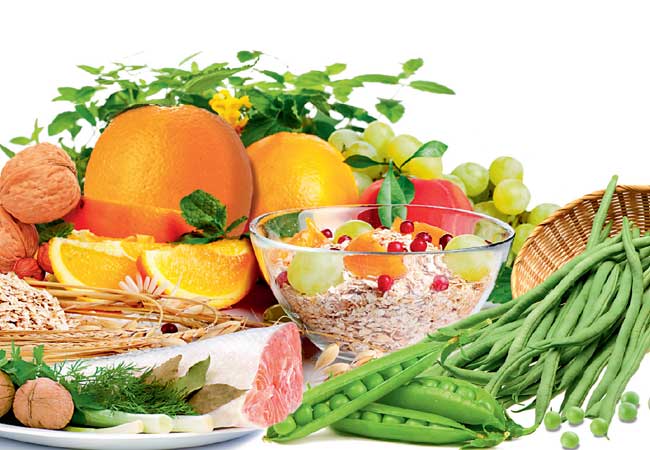
Here is a list of fiber rich foods: whole grains, bran, whole fruits, vegetables like carrots, cucumber, green leafy vegetables, cabbage, bell peppers, broccoli, etc., beans, nuts,

  1. INCLUDE PROTEINS IN EACH MEAL

Proteins take more time to digest than carbs and hence the thermic effect of food i.e the calories that are burned during the digestion of proteins increases. Proteins also aids in functions of growth and development i.e. building muscles, growth and for wear and tear of the tissues used throughout the day this requires a lot of energy. Higher the muscle content in the body, higher is the metabolism.

Sources of proteins: Milk, paneer (cottage cheese), plain yoghurt, buttermilk, pulses, sprouts, soya, tofu, eggs, chicken, fish. Also lente carbs in chick peas (chhole) and kidney beans (rajma) keep you full for long time and helps increase the metabolis

  1. DRINK PLENTY OF WATER

2/3rd of your body is water. Muscles are approx 75% water and cells, bones, blood hold water and float in it.Basically it is required to carry out each and every biological function in the body. Thus when the body is in the state of dehydration, the metabolism slows down as the ability to generate energy and body’s ability to utilize fat as fuel is severely inhibited.

  1. INCORPORATE SPICES IN THE MEALS-

Ginger (gingerols and capsaicin), garlic (allicin), cinnamon, pepper and chillies (capsaicin), turmeric(curcumin) etc. also known as hot spices are known to improve metabolism and also help in carrying other antioxidant functions.

  1. OPT FOR GREEN TEA-

Green tea is rich in polyphenols like catechins and flavonoids which are antioxidants. It also contains caffeine in small amounts. Through few studies, it has been seen that green tea increases metabolism and rate of fat burning. But ensure that you consume a glass of water after every cup of green tea as the caffeine present in the green tea helps in dehydration of cells apart from giving a boost to metabolism.

The above ways are the some of the simplest ones which can be controlled/ practiced without any difficulty. Apart from these as mentioned above exercise helps improve metabolism. But, do you really know which one is more effective?

Combining strengthening exercises in the schedule will really help improve the metabolic rate for a longer duration until the repair/wear and tear of the broken muscles occur as compared to the cardio exercises which raises metabolic rate only for a limited period. It is always better to practice each on alternate days. Afterall, every exercise has its own benefits.

April 16, 2015 By Shimpli Patil Leave a Comment

Play smart with your insulin to maintain your weight!

diabetes to maintain weight loss


Most often we have heard about insulin only in the context of diabetes. That’s because diabetes is a condition characterized by insulin deficiency. Insulin is a hormone secreted by the beta cells of Pancreas in response to glucose released in the blood after the carbohydrate breakdown in the body. Insulin’s role is to pick up the glucose from blood and take it to the cells to feed them. Since there’s lack of insulin in a diabetic situation, the blood glucose isn’t drawn from blood to cells and therefore its levels remain high.

Insulin is barely talked about in the weight loss/weight gain segment despite it playing a huge role in it.

To understand the link between insulin and weight, we first need to understand the relationship between carbs, blood sugar and insulin. It is this connection that has massive bearing on weight loss.

There are 2 kinds of carbs- Simple and Complex. Simple carbs are the ones which are quickly broken down to glucose and result in rapid spike in blood sugar, whereas complex carbs are the slow glucose releasing carbs (do not cause blood sugar spike unlike the simple ones)

Let’s check out the mechanism of insulin and weight gain:

  • Simple carbs cause a prompt response of insulin which takes care of the sugar spike and restores the blood sugar levels. It carries the glucose to the cells where it is used for energy (fuel), and the extra is stored as glycogen in the liver (storage form of glucose). The excess glucose, over and above, gets converted into FAT!
  • When we eat a lot of simple carbs at a time, our pancreas tries its best to keep up with the massive surges in blood glucose by producing large amounts of insulin, resulting in a quick drop in blood glucose levels (i.e. hypoglycemia). This is then followed by a feeling of dizziness and weakness. It doesn’t end here, it further leads to hunger pangs and crazy cravings for sweets/refined carbs in an attempt to normalize the blood glucose level. This eventually leads to a vicious circle of eating foods high in sugar, which ultimately end up getting converted into fat.
  • If the above cycle continues for a prolonged period, and our pancreas repeatedly and constantly produces insulin in huge amounts, there will be a point when our cells start getting immune or insensitive to insulin, this state is called Insulin Resistance. The cells no longer accept glucose that insulin carries along with it. Hence, the glucose levels in the blood stay up, ultimately leading to fat storage. This fat storage mainly occurs because insulin also activates a fat storage enzyme called lipoprotein lipase.

These are exactly the reasons why Insulin is tagged as a “Lipogenic Hormone”- One that results in fat gain!

If you are keen on preventing yourself from the not-so-appealing weight/fat gain, then it’s important for you to play wisely with your insulin by doing the right thing when it comes to carb consumption.

How can we assure this? All that we have to take care is that we keep the refined and simple carb intake on the lower side. This category includes bread and bakery stuff, pizzas, burgers, sweets and desserts, polished rice and noodles, etc. Believe me, when you are busy enjoying these foods, your body is getting ready to store it as fat.

Focus more on complex carbs which include the whole grain based stuff like oatmeal, whole wheat bread, whole wheat pasta, brown/red rice, fibrous green vegetables, starchy vegetables such as potatoes, beans, peas and lentils, etc.

As the complex carbs are slow moving, they lead to slow secretion of insulin which does its job at its own sweet pace, hence there’s no issue of fat storage in this case. This allows you to feel fuller for a longer period of time, typically for up to 3 hours and thereby preventing hunger pangs and unnecessary binging.

The overall connection is a bit tricky but, once we decode this puzzle, we are sorted!

April 15, 2015 By Ami Shah 1 Comment

TRANS FAT-The biggest enemy of your heart

heart
I have friends who binge all the time on deep fried chips/wafers.. Its their way to satisfy their hunger. I asked them if they were aware that of why these chips feel scrumptious and crispy. Their reply was who cares we are just happy that it tastes so good.

This is not the case with only my friends, most people never bother to find out what the chips is made of, what goes into make it so tasty and crispy. Instead of creating nutrition awareness, the gimmicks around it entice people and children to buy these crispies.

Nutritional labels are overlooked. Many people don’t know how to read the nutritional label and what do the fancy ingredients mean? Even if they know they will only look for major component such as carbs, proteins, fat what about the breakdown of these macro nutrients like sugars/fiber comes under carbs.

Likewise, saturated fats/trans fat/MUFA/PUFA is also part of the Fat group. These lip smacking wafers which most people and kids gorge on area red alert for your heart! That’s because of the TRANS FAT (Bad fat). Caution- It’s a major enemy of heart!

First let’s understand what is trans fat??

Most trans fat are artificially synthesized through an industrial process that adds hydrogen molecule to vegetable oil, which causes the oil to become solid at room temperature. This partially hydrogenated oil is less likely to spoil, so foods made with it have a longer shelf life. Some restaurants use partially hydrogenated vegetable oil in their deep fryers, because it doesn’t have to be changed as often as do other oils. These fats are used in making c akes/pastries/puffs/rolls, margarine, doughnuts/wafers/chip/butter/margarine etc which provides empty calories (only calories and no nutrients).

Trans fat are inexpensive and gives a desired texture and taste to the item. (yes, you got it right.. the secret behind all these irresistible things is TRANS FATS!).

What does this trans fat do in the body?

Trans fat gets deposited in the arteries making them clogged. Clogged arteries are a sign of heart disease; they increase your risk of both heart attack and stroke. Here’s how it works: Trans fats raise low-density lipoprotein (LDL) or “bad” cholesterol levels. This contributes to the buildup of fatty plaque in arteries and lowering of your good (HDL) cholesterol levels. Eating trans fats increases your risk of developing heart disease and stroke. It’s also associated with a higher risk of developing type 2diabetes by increasing insulin resistance!

How can you limit your intake of Trans Fat?

Checking the nutrition label is very important.. When the Nutrition Facts label says a food contains 0 g of trans fat, but includes partially hydrogenated oil in the ingredient list, it means the food contains trans fat, but less than 0.5 grams of trans fat per serving.  The daily limit intake of trans fat should be zero. If you are buying any fod packet, please check the nutritional label for trans fat.

Here are some alternative to Trans fat:

    • Keep the usage of butter/margarine at bay. Instead use ghar ka desi Ghee. 🙂
    • Choose to eat foods that contain healthier fats, such as nuts ( walnuts and almonds), seeds (sunflower, pumpkin, watermelon, flax seeds), olives and avocados.
    • Opt for Rice bran oil, Oilve oil, Soyabean oil and mustard oil. They are a good source of MUFA (good quality fat)
    • Choose low-fat or fat-free dairy products and lean cuts of meat and skinless poultry. Keep red meat at bay.
    • Get plenty of foods that are naturally low in fat and high on fiber, such as whole grains, fruits and vegetables.

So, next time when you grab a packet of chips or wafers, remember the above points.

March 25, 2015 By Aqsa Shaikh 9 Comments

Food Pyramid – Did you Know? A guide to healthy eating with the Food Pyramid

food pyramidGood food after a day’s hard work is always a pleasure and there is no substitute to good wholesome and nutritious food. But, more often than not, we are so engrossed in our work that we fail to think about our health which in turn means that we neglect good food.

And most think it’s a cumbersome task to deal with all these nitty gritties, think about nutrition, good food etc.. It’s so complicated. The idea ultimately is to just eat whatever is available when hungry.

But, it’s not difficult as it seems. Well, while you are in a restaurant you always think about ordering something tasty and compromise often with the nutritional aspects, here is a simple food pyramid tips which can be followed easily without any complications. This can be followed in restaurants or while you are out and at home.

So in the food pyramid, there is a cereal and grains group, followed by fruits and vegetable group, dairy products and non-veg, and then oil fat and sugary foods,

1.Cereal and grains group.
These are mostly staple foods which is consist of nutrients like carbohydrates ( Complex carbs ), proteins, fibre, minerals, calcium and B-complex vitamins. An individual should have 6-11 servings of this portion in a day. Common food items in this group- Whole grain cereals, millets, rice, Jowar, Bajra, Makai (Corn), Barley Oats, Poha (Puffed Rice) and Upma. These foods are rich in nutrients and good to provide the necessary fuel for our body to run all day long

One serving of this equals
-1 cup of rice, Poha or Upma
-1 cup of oats
-1 Paratha
-2 Phulka
-1 Jowar, Bajra or Makai roti.

2.Vegetables and Fruits group (Protective Food Group)

These foods are a must eat and should be added to our food plate daily. A person should have at least 3-5 servings of vegetables and 2-4 servings of fruits each day. They contain vital nutrients like vitamins, minerals, antioxidants, folate, iron and potassium and many more nutrients. These foods consist fiber help our digestive system and also gives us different types of nutrients, phytochemicals and are also rich in antioxidants.

One serving of vegetables consists of:

1 cup of leafy vegetables ( Lettuce, spinach, Fenugreek, Dil, spring onions)
1 medium potato/yam, ½ medium sweet potato ( cooked )
1/2 cup of other vegetables, cooked or raw ( You can also include some of them as salads too )
3/4 cup of vegetable juice(vegetables like Bottle gourd, carrot, beetroot, French beans, green peas, are good to grind and have as smoothe with a pinch of salt and pepper)

In fruits one serving is:
One small apple, orange or banana or any other fruit
1/2 cup of chopped, cooked or canned fruit

3.Dairy products and non-veg food items 

These foods are the main protein building group because it is important to maintain the strength of our bones and muscles. Apart from providing proteins these food items also provide B-complex vitamins, invisible fat, fibre, calcium, vitamin A, riboflavin, vitamin B12, iron and iodine. You should ideally have 4-6 servings of this group each day. These foods are mainly important to build up our muscles and help to recover the wear and tear that might occur during the hectic day

One serving of this group consists of:
1 cup of milk, curd
40g (2 slices) cheese, paneer
1 cup dal, pulses, sprouts
1 handful of dry fruits, nuts like groundnuts
1 Egg
65-100gm cooked meat/chicken (½ cup mince, 2 small chops, or 2 slices roast meat)
80-120g cooked fish fillet

4. Oils, fats and sugar:

There are certain good fats which are useful and beneficial for our body, as the cell membrane around our brain are made up of good fats, These are the foods which should be eaten by keeping the portion control in mind and even the time of the day should be noticed as its important.

Some good source of sweetners are Raw honey/Jaggery/Dates/Prunes, these are the healthy sweetners, But, because of today’s lifestyle some unhealthy sweetners have sadly become the staple diet in our lifestyle. Ideally this should not have happened. Choose Any of the junk food item and it will contain these ingredients – burgers, pizza, vada pav, samosa, fizzy drinks, alcohol, instant noodles, chips, frankies etc.

These are not bad to have but, at the same time we should keep our portion in control. We shouldn’t have more than 3-4 servings of these food items in a day. Some common basic sources are vegetable oils, butter, sugar, jaggery and honey.
One serving is defined as 1 tsp of oil, ghee or butter and also 1 tsp of sugar, jaggery and honey.

Now last but the least…WATER:. Water is one of the most important component that cannot be ignored in this entire pyramid. We should have at least 8 glasses of water, as it is very important to keep our cells well hydrated and alive. The above given quantity is for a non-active person, but an active person needs at least 10 to 12 glasses of water average..

  • « Previous Page
  • 1
  • …
  • 86
  • 87
  • 88
  • 89
  • 90
  • …
  • 94
  • Next Page »

Search

Recent Posts

  • India Leads in Longevity: GOQii Sanjeevini Named Top 40 in $101M XPRIZE
  • The Importance Of Knowing If You’re Thirsty Or Hungry
  • Best Foods To Alleviate Irritable Bowel Syndrome
  • ALL ABOUT VERTIGO!
  • PCOS and Anxiety: Discover Relief with the 54321 Technique

Stay Updated

Archives

  • December 2025 (8)
  • November 2025 (15)
  • October 2025 (20)
  • September 2025 (6)
  • August 2025 (6)
  • July 2025 (12)
  • June 2025 (18)
  • May 2025 (16)
  • April 2025 (23)
  • March 2025 (23)
  • February 2025 (22)
  • January 2025 (26)
  • December 2024 (26)
  • November 2024 (25)
  • October 2024 (22)
  • September 2024 (24)
  • August 2024 (31)
  • July 2024 (21)
  • June 2024 (26)
  • May 2024 (31)
  • April 2024 (27)
  • March 2024 (29)
  • February 2024 (26)
  • January 2024 (25)
  • December 2023 (15)
  • November 2023 (11)
  • October 2023 (20)
  • September 2023 (22)
  • August 2023 (20)
  • July 2023 (22)
  • June 2023 (24)
  • May 2023 (24)
  • April 2023 (24)
  • March 2023 (23)
  • February 2023 (20)
  • January 2023 (16)
  • December 2022 (12)
  • November 2022 (15)
  • October 2022 (15)
  • September 2022 (12)
  • August 2022 (10)
  • July 2022 (17)
  • June 2022 (11)
  • May 2022 (10)
  • April 2022 (6)
  • March 2022 (6)
  • February 2022 (13)
  • January 2022 (12)
  • December 2021 (7)
  • November 2021 (3)
  • October 2021 (6)
  • September 2021 (3)
  • August 2021 (8)
  • July 2021 (7)
  • June 2021 (15)
  • May 2021 (16)
  • April 2021 (10)
  • March 2021 (7)
  • February 2021 (4)
  • January 2021 (4)
  • December 2020 (3)
  • November 2020 (4)
  • October 2020 (10)
  • September 2020 (3)
  • August 2020 (3)
  • July 2020 (2)
  • June 2020 (4)
  • May 2020 (10)
  • April 2020 (12)
  • March 2020 (10)
  • February 2020 (4)
  • January 2020 (4)
  • December 2019 (3)
  • November 2019 (7)
  • October 2019 (5)
  • September 2019 (4)
  • August 2019 (9)
  • July 2019 (9)
  • June 2019 (11)
  • May 2019 (4)
  • April 2019 (9)
  • March 2019 (8)
  • February 2019 (9)
  • January 2019 (8)
  • December 2018 (9)
  • November 2018 (3)
  • October 2018 (3)
  • September 2018 (5)
  • August 2018 (10)
  • July 2018 (6)
  • June 2018 (13)
  • May 2018 (8)
  • April 2018 (18)
  • March 2018 (9)
  • February 2018 (8)
  • January 2018 (15)
  • December 2017 (12)
  • November 2017 (19)
  • October 2017 (13)
  • September 2017 (15)
  • August 2017 (4)
  • July 2017 (8)
  • June 2017 (7)
  • May 2017 (6)
  • April 2017 (8)
  • March 2017 (6)
  • February 2017 (7)
  • January 2017 (9)
  • December 2016 (10)
  • November 2016 (7)
  • October 2016 (7)
  • September 2016 (7)
  • August 2016 (11)
  • July 2016 (9)
  • June 2016 (9)
  • May 2016 (12)
  • April 2016 (17)
  • March 2016 (17)
  • February 2016 (8)
  • January 2016 (6)
  • December 2015 (2)
  • November 2015 (9)
  • October 2015 (7)
  • September 2015 (9)
  • August 2015 (11)
  • July 2015 (9)
  • June 2015 (12)
  • May 2015 (9)
  • April 2015 (13)
  • March 2015 (8)
  • February 2015 (5)
  • January 2015 (12)
  • December 2014 (14)
  • November 2014 (11)
  • October 2014 (6)
  • September 2014 (13)
  • August 2014 (12)
  • July 2014 (6)
  • June 2014 (2)
  • May 2014 (7)
  • April 2014 (5)

From “Laddu Nawin” to Fit and Fierce: How a 25-Year-Old Insurance Advisor Shed 20 Kilos and Gained His Life Back

When 25-year-old Nawin Yadav from Hyderabad walked into his office every morning, he carried more than just his files and policy papers. He had the weight of fatigue, sluggish energy, and an ever-growing belly that was becoming the butt of jokes. “People … [Read More...]

“I’ve Challenged Myself to Live 100 Years” – The Story of Chandubhai Savani’s Second Chance at Life

At 67, most people start slowing down. Not Chandubhai Savani. A resident of Surat, Chandubhai, thought life was on track. “My life was going well till I had my bypass surgery,” he says. That surgery, back in 2021, was a wake-up call.  Medication was routine, but exercise wasn’t. His diet? What he calls ‘normal.’ “I […]

From Shimla’s Slopes to Chandigarh’s Sidewalks: Surinder Kaur Bhalla’s Journey from Chaos to Control

Some journeys start with a plan. Others begin with a stumble literally. Surinder Bhalla, a government professional, born and raised in the scenic hill town of Shimla, had always lived a life of movement. “In Shimla, you walked everywhere,” she reflects. “Walking was never an exercise. It was just life.” But after shifting to Chandigarh, […]

Ananda Mukherjee Health Story

From Terminal Illness To Complete Wellness! Ananda Mukherjee Health Story

As we observe World Cancer Day under the powerful theme ‘United by Unique’ (2025-2027)**, we are reminded that every individual’s journey with cancer is distinct, yet united by shared resilience, hope, and the collective fight against this disease. This theme places people at the centre of care and their stories at the heart of the […]

  • HOME
  • HEALTHY LIVING
  • FITNESS
  • HEALTHY RECIPES
  • USER STORIES
  • KARMA
  • BUY GOQii

Copyright ©2016 GOQii