GOQii

Blog

  • HOME
  • HEALTHY LIVING
  • FITNESS
  • HEALTHY RECIPES
  • USER STORIES
  • KARMA
  • BUY GOQii

Search Results for: breathing

June 13, 2025 By Urvi Gohil 3 Comments

5 Fat Loss Mistakes You Might Be Making

fat loss mistakes

The internet can be useful – there’s no denying that. Those fun DIY tricks and tutorials that help you pick up a new skill-set are pretty brilliant, aren’t they? But, like all things, the internet has a downside. While it helps you discover something new every day, it can also lead you down a rabbit hole of misinformation – particularly when it comes to health.

Take for example: Quick Fat Loss Tips or Lose Fat in 10 Days. While these headlines grab attention, they often promote unrealistic, unsustainable, and even harmful methods. So if you’re on a fat loss journey, here are 5 common mistakes you might be making – along with why it’s time to ditch the myths.

1. Starving for Fat Loss 

Research shows that chronic starvation reduces muscle mass and organ size by up to 20%. Weight loss through starvation can also lead to lower bone density, making you more injury-prone.

It doesn’t stop there. Starving slows down your metabolism and hampers overall body function. Worst of all, once you return to eating normally, your body may store more calories as fat—undoing all your efforts.

Golden rule: Eat healthy, balanced meals at the right time. Nourishment, not restriction, is key.

2. No Rest Day 

Think over-training equals faster fat loss? Think again.

Rest days are crucial to avoid muscle overuse and allow your body to recover. Lifting weights causes tiny muscle tears that can only repair – and grow – during rest. Over-training can actually stall fat loss, disturb your hormonal balance, and even cause amenorrhoea (loss of menstrual periods).

Tip: Take one rest day a week. Try light activity like walking, yoga, or deep breathing exercises.

3. Excess Protein Doesn’t Mean Better Fat Loss

Yes, protein helps you feel fuller and supports muscle maintenance – but more is not always better.

A high-protein diet alone won’t do the trick. Too much protein can strain digestion. What you really need is balance – enough fruits, vegetables, and complex carbs alongside your protein to support healthy fat loss.

4. Lack of Optimum Sleep

Getting fewer than six hours of sleep reduces leptin (the satiety hormone) and increases ghrelin (the hunger hormone). Translation? You’ll feel hungrier and less satisfied.

Studies show that people who sleep 7+ hours a night lose more fat and preserve more muscle mass. Lack of sleep also spikes cortisol – body’s stress hormone – which hinders fat breakdown and increases muscle loss.

So if you’re waking up early to squeeze in a workout but skipping sleep, it might be time to rethink your schedule.

5. Keeping Unrealistic Expectations

Setting tangible goals is great – but aiming too high, too soon, can backfire.

Studies show that people with overly ambitious expectations, especially those who are overweight or obese, are more likely to drop out of fat loss programmes within 6–12 months due to disappointment.

Instead: Set modest, achievable goals with the guidance of a certified coach. Progress that’s steady is progress that sticks.

Want to stop guessing and start getting real results? Speak to a GOQii Coach by subscribing to Personalised Health Coaching here.

Did this article help you? Share your thoughts in the comments! And for more tips, check out our Healthy Reads on weight loss here.

#BeTheForce 

Disclaimer: The information provided in this blog is for general awareness and educational purposes only. It is not intended to replace professional medical advice, diagnosis, or treatment. Always consult a qualified healthcare provider for personalised medical guidance or concerns related to your health. Images shown are for representation purposes only and may not depict the exact recommendations or outcomes.

June 2, 2025 By Meenakshi Sharma 2 Comments

What Is Visceral Fat & Why It Is Dangerous

visceral fat

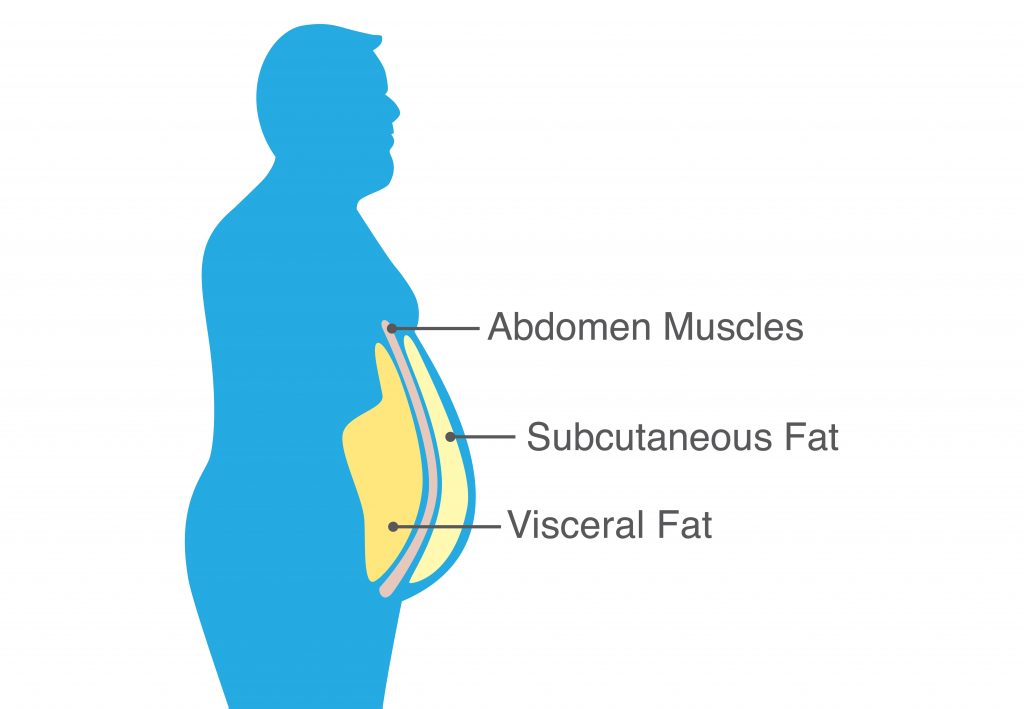
You might have heard of the term belly fat, but you might not be aware of terms like subcutaneous and visceral fat. Subcutaneous fat is the kind you can grasp with your hand on any part of your body. It sits under the skin. Belly fat, or what experts call visceral fat, is a particularly dangerous type of fat that forms inside the abdomen. It surrounds internal organs like the liver and intestines, and is also known as ‘active fat’ because it influences how hormones function in the body.

You can have too much belly fat even with a normal BMI. So, pay attention to your waist circumference rather than the number on the scale.

How To Measure It

  1. Waist size: This is an easy way to get a rough estimate. Wrap a tape measure around your waist over your belly button (don’t suck in your stomach). For women, 35 inches or more is a sign of visceral fat. For men, it’s 40 inches.
  2. BMI: Body mass index is a formula for how much you weigh relative to your height. A BMI of 30 or higher is overweight. That could be a sign of visceral fat. In Asia, a BMI of 23 or higher could be a concern.
  3. Waist-to-hip ratio: Divide your waist size by your hip size. Some doctors think this gives a good indication of your risk for visceral fat. But studies suggest it may be no better than a simple waist measurement.
  4. Body shape: Look in the mirror. If you’re an apple – a big trunk and slimmer legs – it often means more visceral fat, which is more common among men. Women are more likely to be pears with bigger hips and thighs. Research shows that upper body fat is more dangerous to your health, which might be one reason why women usually live longer than men.
  5. Imaging tests: These scans are the only way to check the exact amount of visceral fat you have. If your doctor orders a CT scan or an MRI for another medical condition, they can also assess your visceral fat.

Risks & Dangers Of Excess Visceral Fat

  • Increased Inflammation: If you have more fat stored than needed, especially around visceral organs like the liver, heart, kidneys, pancreas, and intestines, your body becomes inflamed. This fat stores inflammatory white blood cells and is linked with cognitive decline, arthritis, diabetes, and more.
  • Higher Risk of Diabetes: Visceral fat plays a significant role in insulin resistance, heightening the risk of developing diabetes. Abdominal fat is viewed as a bigger health risk than hip or thigh fat. While men are more likely to store visible visceral fat, women are also at risk.
  • Makes It Harder to Lose Weight: Stored body fat, especially visceral fat, affects hunger levels. Leptin, a hormone released by stored fat, regulates appetite, metabolism, and weight. When you eat refined carbs such as white flour and sugar, fat-storing hormones are produced in excess, raising your body’s “set point” and making it hard to follow a moderate, healthy diet.
  • Higher Risk for Heart Disease and Strokes: Inflammatory cytokines produced by fat contribute to heart disease and other inflammatory disorders. Visceral fat is linked to cardiovascular risk factors like high triglycerides, high blood pressure, and high cholesterol.
  • More Likely to Battle Dementia: Studies show that people with larger waistlines have a higher risk of dementia. In fact, many experts believe visceral fat levels (rather than BMI) are a more relevant risk factor in dementia development.
  • Increased Risk of Depression and Mood Disorders: Visceral fat is metabolically active and can interfere with hormones and neurotransmitter function. Depression is especially associated with greater fat storage in women. In one study, visceral fat – not subcutaneous belly fat or waist circumference – was linked with depressive symptoms in women over 50.

How Can You Reduce Visceral Fat? 

  • Exercise: A mix of cardiovascular exercise (e.g. running, cycling, swimming, aerobics, circuit training) and strength training (e.g. squats, weights, push-ups) helps reduce visceral fat.
  • Manage Stress: Chronic stress raises cortisol, which increases fat storage around the abdomen. Relaxation techniques like meditation, deep breathing, and other stress management practices can support fat loss.
  • Balance Diet: Focus on whole foods—fruits, vegetables, whole grains (quinoa, millets, oats), and lean proteins (skinless chicken, fish, eggs, beans). Calcium and Vitamin D are also associated with lower visceral fat. Include leafy greens, tofu, sardines, and low-fat dairy products.

Boiling, steaming, baking, and grilling are healthier cooking methods. Avoid trans fats (often found in processed foods and deep-fried items) and reduce sugar intake. Check labels for ingredients like “partially hydrogenated oils” or “high-fructose corn syrup.”

We hope this article helps you! If you are keen on losing weight in a healthy, sustainable way, you can reach out to an expert by subscribing for Personalised Health Coaching here.

For more articles on weight loss, check out Healthy Reads.

#BeTheForce 

Disclaimer: The information provided in this blog is for general awareness and educational purposes only. It is not intended to replace professional medical advice, diagnosis, or treatment. Always consult a qualified healthcare provider for personalised medical guidance or concerns related to your health. Images shown are for representation purposes only and may not depict the exact recommendations or outcomes.

May 23, 2025 By GOQii Leave a Comment

The Emotional Rollercoaster of ADHD

Woman holding cards with different facial expressions, symbolising ADHD emotionsWhy Emotions Feel Intensified – and How to Regulate Them

Living with ADHD isn’t just about being forgetful, distracted, or full of energy. There’s another side that often flies under the radar — the emotional side. If you’ve ever felt like your emotions are turned up to full volume, you’re not imagining things. For many people with ADHD, feelings hit harder, last longer, and can swing wildly in a matter of moments. It’s like being strapped into an emotional rollercoaster you never quite agreed to ride.

Why Emotions Feel So Intense

At its core, ADHD affects how the brain manages attention, impulses, and executive function. But here’s the catch: those same brain circuits also help regulate emotions. When they don’t work as efficiently, it’s not just thoughts that race — emotions do too.

Here are a few reasons why:

  • Delayed emotional regulation: People with ADHD may struggle to “hit the brakes” on emotional reactions. So frustration, excitement, anger or sadness can feel overwhelming and all-consuming.
  • Rejection Sensitivity: Many with ADHD experience what’s called Rejection Sensitive Dysphoria — an extreme emotional response to perceived criticism or failure. A small comment can feel like a personal attack.
  • Low dopamine levels: Dopamine, the brain’s “feel-good” chemical, plays a big role in mood. ADHD brains often have lower baseline levels, which can make mood dips feel sharper and harder to bounce back from.

Hyperfocus on feelings: While people often associate ADHD with distraction, it can also cause someone to hyperfocus — and yes, that includes hyperfocusing on negative emotions, which can be mentally exhausting.

Common Emotional Struggles

If this sounds familiar, you’re not alone. Many people with ADHD report:

  • Sudden anger or irritability that feels out of proportion
  • Emotional outbursts, followed by guilt or confusion
  • Feeling overwhelmed by stress or change
  • Anxiety that spirals quickly
  • Mood swings that can make relationships feel like walking on eggshells

And let’s not forget the emotional hangover that often follows these episodes — that lingering exhaustion after an intense surge of feelings.

Learning to Regulate Emotions

The good news? You can learn to ride the emotional waves without being tossed around by them. Here are a few strategies that help:

  1. Name It to Tame It

Labelling your emotion — “I’m feeling anxious,” or “I’m annoyed right now” — helps activate the rational part of your brain and can give you a small pause to regain control.

  1. Breathe Like You Mean It

Deep, slow breathing (especially using techniques like box breathing or 4-7-8 breathing) can calm your nervous system and reduce emotional intensity in the moment.

  1. Pause Before Reacting

This one takes practice, but try counting to five before responding during a heated moment. That brief delay can help shift your brain out of “reaction” mode.

  1. Keep a Mood Journal

Tracking your emotions can help you identify triggers and patterns. Are there certain people, situations or times of day that set you off? Awareness is half the battle.

  1. Work With a Therapist or Coach

Cognitive Behavioural Therapy (CBT), Emotional Regulation Coaching, or ADHD-specific counselling can help you build tools tailored to your brain’s wiring.

  1. Prioritise Sleep, Food, and Movement

It sounds basic, but if you’re hungry, sleep-deprived or haven’t moved your body in hours, emotions can spiral faster. Build in routines that keep your physical and emotional energy steady.

You’re Not “Too Much”

Being emotionally intense doesn’t make you broken, dramatic, or weak. It makes you human, just one with a slightly more sensitive emotional dial. Many with ADHD are deeply empathetic, creative, and passionate, partly because they feel things so strongly.

So the next time the emotional rollercoaster feels too much, remind yourself — you’re learning how to steer. And with time, awareness, and the right tools, you can ride the highs and lows with more ease.

#BeTheForce

Disclaimer: This blog is for informational purposes only and is not a substitute for professional medical advice, diagnosis, or treatment. Please consult a doctor for personalised guidance and recommendations related to ADHD.

May 8, 2025 By GOQii Leave a Comment

Finding Inner Strength: 12 Ways to Manage Health and Stress

Managing a medical condition such as diabetes or hypertension can be both mentally and physically taxing. Whether you’re navigating daily health challenges or recovering post-surgery, it’s essential to find ways to support your overall well-being. Embracing these practices is about nurturing both body and spirit.



Incorporating relaxation techniques into your daily routine can significantly enhance your quality of life and empower you to manage your health more effectively. Here are some practical strategies to help you feel stronger and more in control:

  1. Tailor Your Diet to Your Mood: When you’re feeling low, it’s tempting to reach for sugary snacks. Instead, opt for protein-rich foods like lean meats, eggs, cheese, and seeds. These have a minimal impact on blood sugar and aid in producing dopamine and serotonin—chemicals in the brain that promote well-being.
  2. Embrace ‘Good Enough’: Striving for perfection can lead to burnout. Recognise that doing your best is sufficient. Allowing yourself to accept ‘good enough’ frees up mental energy, enabling you to focus more on self-care. This aligns with the value of approaching life’s challenges with balance and patience (Sabr).

  3. Prioritise Quality Sleep: Restorative sleep is crucial for healing. Aim for 7-9 hours of quality sleep each night to help your body repair, reduce inflammation, and strengthen your immune system.
  4. Soak Up Some Sunlight: Exposure to natural light, especially in the morning, can boost your mood and provide a healthy dose of vitamin D. A gentle stroll can also help regulate your body clock, leading to better sleep.
  5. Incorporate Physical Activity: Engaging in activities like yoga or deep-breathing exercises can reduce stress hormones and increase endorphins, enhancing both physical healing and mental well-being.
  6. Dedicate Time to Relaxation Daily: Set aside moments each day for activities that relax you, such as engaging in prayer or Dhikr (remembrance), listening to calming sounds, practising mindfulness, or meditating. These practices can alleviate anxiety and improve concentration.
  7. Combine Music with Movement: Dancing or moving to your favourite tunes can make exercise enjoyable. Whether it’s stretching at home or walking to a lively playlist, combining music with movement can enhance your exercise experience.
  8. Plan Enjoyable Activities: Having events to look forward to can provide motivation. Arrange coffee catch-ups with friends or plan a movie night to break the routine and uplift your spirits.
  9. Laugh Often: Laughter is a natural stress reliever. It reduces stress hormones, strengthens the immune system, and fosters connections with others. Share a joke or watch a comedy.
  10. Explore New Hobbies: Trying something new can stimulate your mind and boost confidence. Whether it’s learning a skill or experimenting with a new recipe, novelty can elevate your mood.
  11. Consider Pet Companionship: If circumstances allow, having a pet can offer companionship, structure, and unconditional love—all of which can reduce stress and enhance emotional well-being.
  12. Practise Gratitude: Each day, reflect on three things you’re grateful for. This practice is at the heart of the powerful Islamic concept of Shukr, which deepens our connection to blessings. This simple exercise can shift your focus from challenges to positives, fostering a more hopeful outlook.

No matter the medical condition you’re facing, managing stress can profoundly impact your health. These strategies are about thriving, finding joy, and empowering yourself to live fully. Take small steps, cultivate supportive habits, and remember: you’re not alone on this journey. Find strength in your faith, your community, and your own resilience.

Disclaimer: The information provided in this blog is for general awareness and educational purposes only. It is not intended to replace professional medical advice, diagnosis, or treatment. Always consult a qualified healthcare provider for personalised medical guidance.

  • « Previous Page
  • 1
  • …
  • 6
  • 7
  • 8
  • 9
  • 10
  • …
  • 55
  • Next Page »

Search

Recent Posts

  • India Leads in Longevity: GOQii Sanjeevini Named Top 40 in $101M XPRIZE
  • The Importance Of Knowing If You’re Thirsty Or Hungry
  • Best Foods To Alleviate Irritable Bowel Syndrome
  • ALL ABOUT VERTIGO!
  • PCOS and Anxiety: Discover Relief with the 54321 Technique

Stay Updated

Archives

  • December 2025 (8)
  • November 2025 (15)
  • October 2025 (20)
  • September 2025 (6)
  • August 2025 (6)
  • July 2025 (12)
  • June 2025 (18)
  • May 2025 (16)
  • April 2025 (23)
  • March 2025 (23)
  • February 2025 (22)
  • January 2025 (26)
  • December 2024 (26)
  • November 2024 (25)
  • October 2024 (22)
  • September 2024 (24)
  • August 2024 (31)
  • July 2024 (21)
  • June 2024 (26)
  • May 2024 (31)
  • April 2024 (27)
  • March 2024 (29)
  • February 2024 (26)
  • January 2024 (25)
  • December 2023 (15)
  • November 2023 (11)
  • October 2023 (20)
  • September 2023 (22)
  • August 2023 (20)
  • July 2023 (22)
  • June 2023 (24)
  • May 2023 (24)
  • April 2023 (24)
  • March 2023 (23)
  • February 2023 (20)
  • January 2023 (16)
  • December 2022 (12)
  • November 2022 (15)
  • October 2022 (15)
  • September 2022 (12)
  • August 2022 (10)
  • July 2022 (17)
  • June 2022 (11)
  • May 2022 (10)
  • April 2022 (6)
  • March 2022 (6)
  • February 2022 (13)
  • January 2022 (12)
  • December 2021 (7)
  • November 2021 (3)
  • October 2021 (6)
  • September 2021 (3)
  • August 2021 (8)
  • July 2021 (7)
  • June 2021 (15)
  • May 2021 (16)
  • April 2021 (10)
  • March 2021 (7)
  • February 2021 (4)
  • January 2021 (4)
  • December 2020 (3)
  • November 2020 (4)
  • October 2020 (10)
  • September 2020 (3)
  • August 2020 (3)
  • July 2020 (2)
  • June 2020 (4)
  • May 2020 (10)
  • April 2020 (12)
  • March 2020 (10)
  • February 2020 (4)
  • January 2020 (4)
  • December 2019 (3)
  • November 2019 (7)
  • October 2019 (5)
  • September 2019 (4)
  • August 2019 (9)
  • July 2019 (9)
  • June 2019 (11)
  • May 2019 (4)
  • April 2019 (9)
  • March 2019 (8)
  • February 2019 (9)
  • January 2019 (8)
  • December 2018 (9)
  • November 2018 (3)
  • October 2018 (3)
  • September 2018 (5)
  • August 2018 (10)
  • July 2018 (6)
  • June 2018 (13)
  • May 2018 (8)
  • April 2018 (18)
  • March 2018 (9)
  • February 2018 (8)
  • January 2018 (15)
  • December 2017 (12)
  • November 2017 (19)
  • October 2017 (13)
  • September 2017 (15)
  • August 2017 (4)
  • July 2017 (8)
  • June 2017 (7)
  • May 2017 (6)
  • April 2017 (8)
  • March 2017 (6)
  • February 2017 (7)
  • January 2017 (9)
  • December 2016 (10)
  • November 2016 (7)
  • October 2016 (7)
  • September 2016 (7)
  • August 2016 (11)
  • July 2016 (9)
  • June 2016 (9)
  • May 2016 (12)
  • April 2016 (17)
  • March 2016 (17)
  • February 2016 (8)
  • January 2016 (6)
  • December 2015 (2)
  • November 2015 (9)
  • October 2015 (7)
  • September 2015 (9)
  • August 2015 (11)
  • July 2015 (9)
  • June 2015 (12)
  • May 2015 (9)
  • April 2015 (13)
  • March 2015 (8)
  • February 2015 (5)
  • January 2015 (12)
  • December 2014 (14)
  • November 2014 (11)
  • October 2014 (6)
  • September 2014 (13)
  • August 2014 (12)
  • July 2014 (6)
  • June 2014 (2)
  • May 2014 (7)
  • April 2014 (5)

From “Laddu Nawin” to Fit and Fierce: How a 25-Year-Old Insurance Advisor Shed 20 Kilos and Gained His Life Back

When 25-year-old Nawin Yadav from Hyderabad walked into his office every morning, he carried more than just his files and policy papers. He had the weight of fatigue, sluggish energy, and an ever-growing belly that was becoming the butt of jokes. “People … [Read More...]

“I’ve Challenged Myself to Live 100 Years” – The Story of Chandubhai Savani’s Second Chance at Life

At 67, most people start slowing down. Not Chandubhai Savani. A resident of Surat, Chandubhai, thought life was on track. “My life was going well till I had my bypass surgery,” he says. That surgery, back in 2021, was a wake-up call.  Medication was routine, but exercise wasn’t. His diet? What he calls ‘normal.’ “I […]

From Shimla’s Slopes to Chandigarh’s Sidewalks: Surinder Kaur Bhalla’s Journey from Chaos to Control

Some journeys start with a plan. Others begin with a stumble literally. Surinder Bhalla, a government professional, born and raised in the scenic hill town of Shimla, had always lived a life of movement. “In Shimla, you walked everywhere,” she reflects. “Walking was never an exercise. It was just life.” But after shifting to Chandigarh, […]

Ananda Mukherjee Health Story

From Terminal Illness To Complete Wellness! Ananda Mukherjee Health Story

As we observe World Cancer Day under the powerful theme ‘United by Unique’ (2025-2027)**, we are reminded that every individual’s journey with cancer is distinct, yet united by shared resilience, hope, and the collective fight against this disease. This theme places people at the centre of care and their stories at the heart of the […]

  • HOME
  • HEALTHY LIVING
  • FITNESS
  • HEALTHY RECIPES
  • USER STORIES
  • KARMA
  • BUY GOQii

Copyright ©2016 GOQii
