GOQii

Blog

  • HOME
  • HEALTHY LIVING
  • FITNESS
  • HEALTHY RECIPES
  • USER STORIES
  • KARMA
  • BUY GOQii

Search Results for: home workout

August 5, 2026 By GOQii 2 Comments

Quick No-Equipment Indoor Workout to Stay Active During the Monsoon

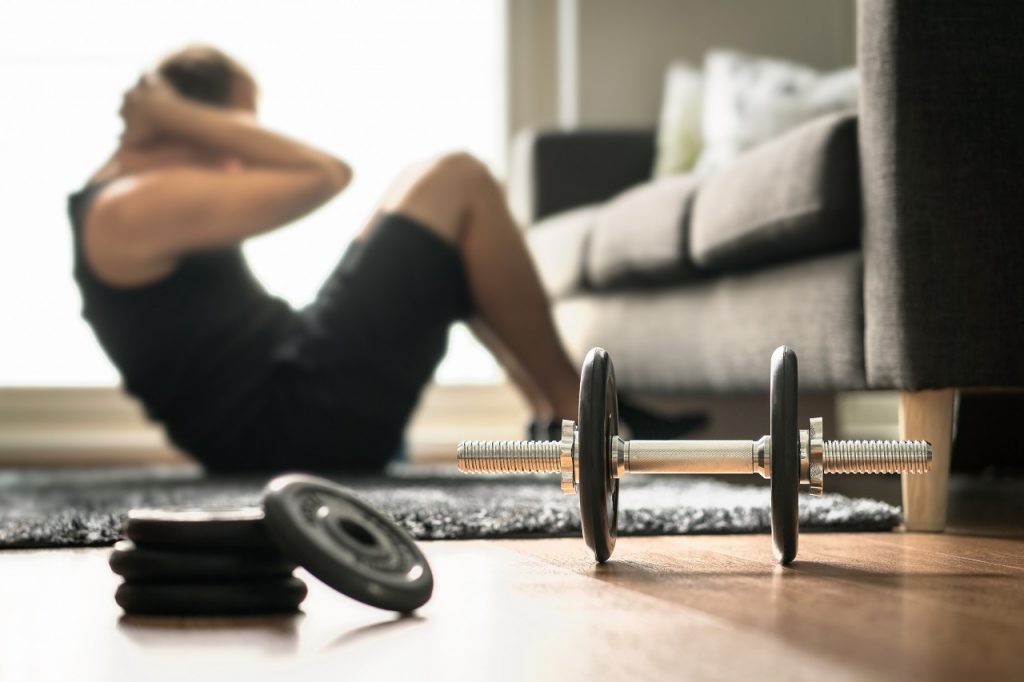
Indoor HIITThe Big Question – Has the rainy season disrupted your workout routine?

Monsoon weather often makes it difficult to head outdoors. Waterlogged roads, cancelled gym sessions, slippery parks and unpredictable showers can quickly derail even the most consistent fitness habits.

The good news? You don’t need a gym or any equipment to stay active.

A short bodyweight workout performed at home can elevate your heart rate, strengthen your muscles and help you maintain your fitness until the weather clears.

Whether you’re a beginner or already exercise regularly, this quick indoor workout can help you stay on track throughout the rainy season.

Quick Answer – What is the best indoor workout without equipment?

A simple 15–20 minute bodyweight HIIT (High-Intensity Interval Training) workout combining movements like jumping jacks, squats, planks, mountain climbers and high knees can improve cardiovascular fitness, build muscular endurance and burn calories all without leaving your living room.

Why Indoor Workouts Matter During the Monsoon

Rain shouldn’t become an excuse to stop moving.

Indoor workouts help you:

  • Stay consistent with your fitness routine
  • Avoid slippery roads and outdoor injuries
  • Reduce exposure to mosquitoes and waterborne infections
  • Maintain cardiovascular fitness
  • Improve mood and energy on gloomy days

Remember, consistency beats perfection.

Even 20 minutes of movement is far better than doing nothing.

What Is HIIT?

HIIT (High-Intensity Interval Training) alternates short bursts of higher-intensity exercise with brief recovery periods.

This style of training can help:

  • Improve cardiovascular fitness
  • Increase calorie expenditure
  • Build muscular endurance
  • Save time compared to longer workouts

The best part?

HIIT can easily be adapted for beginners by reducing speed, intensity or impact.

Before You Begin

A few minutes of preparation can reduce your risk of injury and improve workout quality.

Warm Up (3–5 Minutes)

Spend a few minutes preparing your muscles and joints with:

  • Neck rolls
  • Shoulder circles
  • Hip rotations
  • Ankle mobility exercises
  • Marching in place
  • Bodyweight squats
  • Arm swings

A proper warm-up gradually increases your heart rate and prepares your body for exercise.

Wear Proper Footwear

Supportive training shoes help absorb impact and reduce stress on your ankles and knees, especially during jumping exercises.

Prioritise Good Technique

Move with control.

Proper form is always more important than speed or repetitions.

Choose Your Workout Level

The workout takes approximately 15–20 minutes, depending on your chosen level and rest periods.

Level

  Workout Time  

  Sets  

  Rest Between Sets   

Beginner

10–15 min

3–4

Up to 1 minute

 Intermediate

15–20 min

2–3

Up to 2 minutes

Advanced

15–20 min

2–3

Up to 2 minutes

Beginner Workout

Focus on learning proper movement patterns and maintaining steady breathing.

Exercise            Duration Coaching Tip
Jumping Jacks 20 sec Land softly and keep your core engaged.
Marching in Place 20 sec Lift your knees comfortably without rushing.
Spot Jogging 20 sec Stay light on your feet.
Wide Squats 20 sec Keep your chest lifted and knees aligned with your toes.
Jumping Jacks 20 sec Maintain a comfortable rhythm.

Rest: Up to 1 minute

Repeat: 3–4 rounds

Intermediate Workout

Increase intensity while improving core stability.

Exercise Duration Coaching Tip
Jumping Jacks 20 sec Maintain steady breathing.
Plank 20 sec Keep your body in a straight line from head to heels.
Jumping Jacks 20 sec Stay light on your feet.
Plank 20 sec Avoid letting your hips sag.
High Knees 20 sec Lift knees toward hip height while pumping your arms.
Plank 20 sec Keep shoulders directly above wrists.
Mountain Climbers 20 sec Drive your knees forward without bouncing your hips.
Plank 20 sec Engage your core throughout.
Mountain Climbers 20 sec Maintain a controlled pace.

Rest: Up to 2 minutes

Repeat: 2–3 rounds

Advanced Workout

Challenge your strength, endurance and coordination.

Exercise Duration Coaching Tip
Jump Squats 20 sec Land softly with bent knees.
Shadow Boxing 20 sec Rotate through your torso rather than only your arms.
Jump Squats 20 sec Drive through your heels.
Burpees 20 sec Maintain control throughout each repetition.
Plank Crunches 20 sec Keep your hips level.
Burpees 20 sec Move smoothly without rushing.
High Knees 20 sec Maintain quick but controlled steps.
Shadow Boxing 20 sec Keep your core engaged.
High Knees 20 sec Finish strong while maintaining good posture.

Rest: Up to 2 minutes

Repeat: 2–3 rounds

Cool Down (5 Minutes)

Recovery is just as important as the workout itself.

Spend 5 minutes:

  • Walking slowly around the room
  • Stretching your calves
  • Stretching your hamstrings
  • Stretching your quadriceps
  • Stretching your chest and shoulders
  • Practising slow, deep breathing

Cooling down helps your heart rate gradually return to normal and reduces muscle stiffness.

Recovery Tips

To maximise the benefits of your workout:

  • Drink water after exercising.
  • Eat a balanced meal containing protein and complex carbohydrates within a couple of hours.
  • Aim for 7–9 hours of quality sleep each night.
  • Allow your muscles time to recover between HIIT sessions.

Recovery is where your body adapts and becomes stronger.

Who Should Modify or Avoid HIIT?

HIIT may not be suitable for everyone.

Speak with your healthcare provider before starting if you:

  • Are pregnant
  • Have uncontrolled high blood pressure
  • Have severe arthritis
  • Have a recent injury or surgery
  • Have uncontrolled heart disease
  • Experience dizziness during exercise

If any movement causes pain, stop immediately and choose a lower-impact alternative.

Rainy weather doesn’t have to interrupt your fitness journey.

A quick indoor bodyweight workout can help maintain your strength, improve cardiovascular fitness and keep your momentum going even when stepping outside isn’t an option.

Remember, fitness isn’t built through occasional intense workouts it’s built through consistency.

Move a little every day, and your body will thank you.

Pro Tip: Want expert guidance without leaving home? Join live GOQii PRO fitness classes through the GOQii App and work out alongside certified trainers who can help you improve your technique, stay motivated and safely progress your fitness journey.

Frequently Asked Questions (FAQs)

  1. How often should I do HIIT?

Most adults benefit from 2–3 HIIT sessions per week, allowing at least one recovery day between sessions.

  1. Can beginners do HIIT?

Yes. Beginners should start with shorter sessions, lower-impact modifications and focus on proper technique rather than speed.

  1. Does sweating more mean I’m burning more fat?

No. Sweat is your body’s cooling mechanism and does not accurately reflect calorie or fat burn.

  1. Which burns more calories walking or HIIT?

HIIT generally burns more calories per minute due to its higher intensity. However, both walking and HIIT contribute to overall health, and the best exercise is the one you can perform consistently.

  1. Can I combine this workout with other activities?

Absolutely. On non-HIIT days, consider walking, yoga, mobility exercises or strength training to maintain an active lifestyle.

#BeTheForce! 

Disclaimer: This workout is intended for educational purposes only and should not replace personalised medical or fitness advice. Consult your healthcare provider before starting a new exercise programme, particularly if you have an underlying medical condition, are pregnant or are recovering from an injury. Stop exercising immediately if you experience chest pain, dizziness, severe breathlessness or sharp pain.

May 6, 2026 By Trishala Chopra 11 Comments

Hot vs. Cold Shower After a Workout: Which is Better?

Man ShowerWhat is the first thing you want to do after getting home from a grueling gym session, a long run, or an intense home workout?

Your mind might scream, “Drink water!” while your body begs, “Please, go take a shower!” Nobody likes sitting around in their own sweat, but when you step into the bathroom, a common dilemma arises: should you turn the dial to hot or cold? Many fitness enthusiasts swear by an ice-cold plunge, while others prefer the soothing comfort of a hot shower.

Does the temperature of your bathing water actually impact your health and recovery? Yes, it does. Let’s break down the science behind what happens to your body when you choose a hot versus a cold shower post-workout.

The Case for the Cold Shower

Taking a cold shower after a hot, sweaty workout is a shock to the system, but it is a shock with highly specific benefits.

When cold water hits your skin, it causes vasoconstriction, the rapid constriction (narrowing) of your blood vessels. This immediate drop in surface temperature directs blood flow inward toward your vital organs.

The Benefits:

  • Acts Like a Full-Body Ice Pack: Cold water prevents severe swelling and numbs the typical pain associated with strenuous, high-impact workouts.
  • Reduces Inflammation: If you suspect you have slightly tweaked a muscle or are dealing with a minor post-workout injury, cold water helps cool down the damaged tissue and mitigate acute inflammation.

⚠️ Important Precautions for Cold Showers:

  • High Blood Pressure Caution: Because vasoconstriction naturally increases blood pressure, individuals with hypertension should generally avoid extreme post-workout cold showers.
  • Keep it Reasonable: You do not need freezing water to get the benefits; room temperature or comfortably cool water is often enough to aid recovery without shocking your heart.

The Case for the Hot Shower

If cold water causes vasoconstriction, warm water does the exact opposite: vasodilation. This means the warm temperatures cause your blood vessels to dilate (widen), which decreases blood pressure and invites blood to rush back toward your skin and muscles.

The Benefits:

  • Soothes Muscle Tension: Hot water stimulates rich, oxygenated blood flow directly to your fatigued muscles.
  • Flushes Metabolic Waste: This increased blood circulation helps disperse metabolic waste (like lactic acid) that accumulates during exercise, significantly reducing general post-workout soreness and physical uneasiness.
  • Promotes Relaxation: A warm shower acts as a natural muscle relaxant, easing the nervous system after a highly stimulating workout.

⚠️ Important Precautions for Hot Showers:

  • Not for Acute Injuries: If you have pulled a muscle, sprained a joint, or damaged tissue during your workout, do not use hot water. Heat will increase inflammation and swelling in the damaged area. Go for cold water and an ice pack instead.
  • Keep it Warm, Not Boiling: Scalding hot water will strip your skin of its natural oils and can cause dizziness after a workout. Stick to a soothing, warm temperature just above room level.

The Verdict: Which Should You Choose?

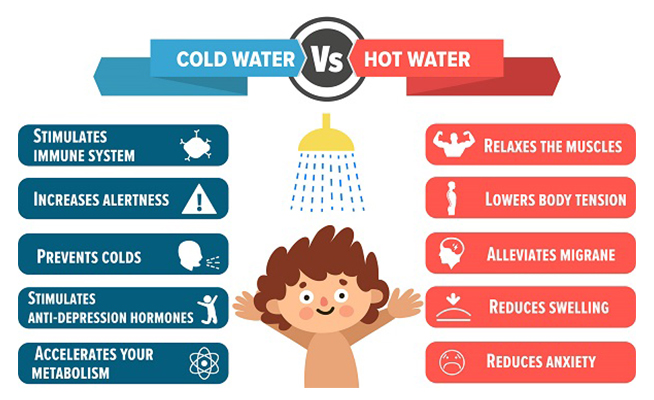
Hotvs ColdThe debate between hot and cold will always exist, but the right choice depends entirely on your current physical condition.

  • Choose COLD if you want to reduce inflammation, soothe a potential minor injury, or quickly bring your core temperature down after a very sweaty, high-intensity session.
  • Choose HOT if you want to relax stiff, tense muscles, reduce general delayed onset muscle soreness (DOMS), and wind down.

Listen to your body, choose what suits your specific recovery needs for the day, and enjoy that well-deserved post-workout cleanse!

Need help optimizing your fitness and recovery routine? Reach out to our certified experts by subscribing to GOQii’s Personalised Health Coaching in the GOQii App today.

Frequently Asked Questions (FAQs)

  1. Can I switch between hot and cold water?
    Yes! This is known as “contrast therapy.” Alternating between hot water (to open blood vessels and clear out waste) and cold water (to flush the blood back out) can be an excellent way to speed up muscle recovery.
  1. Should people with high blood pressure take cold showers?
    No, it is generally advised that individuals with high blood pressure avoid sudden cold showers, especially after a workout, as the sudden constriction of blood vessels can temporarily spike blood pressure levels. 
  1. How soon after a workout should I shower?
    It is best to wait about 15 to 20 minutes after your workout before jumping into the shower. This gives your body time to naturally lower its heart rate and stop the active sweating process.

#BeTheForce 

Disclaimer: This article is intended for educational and informational purposes only and should not be considered a substitute for professional medical advice, diagnosis, or treatment. Always consult with your doctor or a qualified healthcare provider regarding recovery protocols, especially if you have pre-existing conditions like hypertension or cardiovascular disease.

February 19, 2026 By GOQii 4 Comments

Top 10 Weird Excuses We Make To Skip A Workout

excuses to skip a workoutPulling someone out of bed for a workout can really be a task! In the field of health and fitness, we have come across people giving some very fickle excuses that are just not valid. We are writing this article not to help you make those excuses, but to convey the fact that these excuses are invalid. We need to get stronger and workout harder!

Top 10 Excuses We Make To Skip A Workout 

  1. I Just Ate A Meal: We agree there should be a good 2 hour gap between your meal and workout but does this qualify as a reason to not workout? If you have just eaten your lunch, schedule your workout towards late noon or evening. But, include it in your “to-do” list. Do not skip it.
  2. I am not going to wear my “brand new” shoes for a run: If you aren’t wearing them, then why did you buy them? To walk the ramp or just look at it and feel good? Unless you are heading for some mud run or splash in a mucky puddle, they are going to remain the same. Shoes are meant to get dirty. It is very important you wear the new shoes and run as you need to break into them as well.
  3. I Can’t Afford a Gym: One doesn’t need to go to the gym to be fit. The roads are your playground and your coach is your motivator. Running, trekking, walking and stair climbing are some accessible and free ways to get fit. In fact, you can even tune in to GOQii Play sessions or subscribe for GOQii Pro classes for one-on-one coaching from fitness experts. The sessions are pretty affordable too and you can do it from the comfort of your home!
  4. I Don’t Have the Time: This one is probably the most common excuse. A workout does not need to last for an hour. 15-20 minutes is also good enough. If that too sounds like a lot to spare for your health, then you should definitely be working out because such a thought itself is an indicator of stress. Set your priorities right! Break into some HIIT‘s (High Intensity Interval Training).
  5. I Feel Sick: Now this sounds like a genuine one. A viral fever, dizziness or any condition that requires extra care are excused. But, days when you suffer from a mild headache, feel heavy, PMS or just not feel a 100%, a little exercise will actually help. Your body needs to get rid of the toxins.
  6. I’m Too Tired: Next time, tell yourself, “10-15 minutes of a quick workout and I shall head home for a nap”. As a result of this you shall end up taking a nap with more satisfaction and contentment.
  7. Blame My Crazy Travel Schedule: This is the time when Tabata, body-weight exercises, living-room workouts and other HIIT’s will make more sense to you. Most hotels already have the facility of an in-house gym. Avail that. Or else, take a brisk walk and explore your new surroundings. One more tip that comes handy is to book your room above the 3rd floor, so that you get a chance to climb the stairs.
  8. I Worked Out Yesterday: One bite of pizza doesn’t harm you. Similarly, one day of activity is not going to help the goals you have set for yourself. We need to be consistent for at least 21 days till it becomes a habit (rest days included). It’s a lifestyle change. The old saying, ‘Tomorrow never comes’ still holds true.
  9. My Buddy Did Not Turn Up: OK! This is serious! You need some serious motivation. Go solo, that’s alright. More often than not, we are so dependent on our friends for any outdoor activities and this holds true for workouts as well. You can’t always wait for company to workout.  You are your own individual and cannot allow someone else to impact your fitness goals.
  10. Bad Day at Work/Home: This calls for some “me” time then. Trust me, a workout will definitely make you feel better. It will refill your confidence, relieve your stress and elevate your mood. Whenever you feel like ‘it wasn’t your day’, get your favorite workout into the picture and work off that tension.

Remember that the only person standing in your way is ‘YOU’. Go ahead and take a step towards a healthier lifestyle. Your body will thank you for it! Did we miss out on anything? What are the most common excuses you have heard? Share them with us in the comments below!

Find more articles on getting fit and living a healthier lifestyle here. To never skip a workout and stay motivated at all times, join a live and interactive GOQii PRO class conducted by a certified expert. Book a class now from the GOQii App.

#BeTheForce

Disclaimer: The information provided in this blog is for general awareness and educational purposes only. It is not intended to replace professional medical advice, diagnosis, or treatment. Always consult a qualified healthcare provider for personalised medical guidance or concerns related to your health. Images shown are for representation purposes only and may not depict the exact recommendations or outcomes.

January 6, 2026 By Dr. Naina Sudarshan 1 Comment

Ideal Weekly Workout Routine For Beginners

weekly workout routine for beginners

As health is among the top priorities in our life, being healthy, immune to all types of infections, diseases and getting fit are the avenues for the same now. If you’re thinking about getting fit, and as we have stepped into the new year, don’t just take up a gym membership but work on consistency and have a plan.

As per the American College of Sports Medicine recommendation, a healthy person needs at least 30 mins of exercise every day to maintain physical health, mental health, immunity, and prevent chronic diseases for all age groups. So, here’s an ideal weekly workout routine for beginners you can follow and stick to!

Get Motivated For Your Weekly Workout Routine 

Every day of the week may not go as we plan. But if we are determined to be fit, we can set aside some time for exercise every day. If you are a beginner, creating a workout schedule for every week would be a better choice than just having a vague idea about staying active every day. Find out a strong reason for yourself as to why you need to workout every day. This should be a reminder to maintain consistency in order to achieve your goal.

Getting Started On Your Weekly Workout Routine 

Beginning a workout can be confusing and intimidating as to where and how to start. Once you find out the ideal time, duration, and location for you to exercise, think about the obstacles that can come your way. Slot a backup time to avoid missing the workout.

For example, if you set a goal to walk for 30 mins, completing about 5-6k steps, and that doesn’t happen due to some unplanned situations, walk more at work, take the steps instead of the elevator, walk while you talk over the phone just to complete the intended number of steps for the day.

Here are some points to remember before you begin:

  • Start with short duration but be consistent: It can be 15-20 mins workout rather than an hour of workout at a stretch in a day. Make sure to plan your workout for at least 5 days in a week with a short term specific, measurable goal.
  • Keep a track of how your energy levels are getting better: Notice what other benefits you are getting out of exercise like improved quality of sleep, reduced stress, and increased appetite instead of just keeping a track of numbers on your weighing scale or inch loss.
  • Plan your workout: Schedule it according to your entire week’s schedule taking into consideration your work, personal life and family time, etc.
  • Choose different types of workouts: Pick activities that you are interested in and you are comfortable doing. Make a list of physical activities that you enjoy. It can be dance, running, walking, sports like football, badminton, tennis, volleyball, basketball, cricket, weight training, or yoga.

Week 1

weekly workout routine for beginnersDay 1: Cardio exercises

  • Start with 5 minutes warm-up exercises at a slow to moderate pace to slowly increase the heart rate 
  • Switch to 20 mins of cardio exercise. It can include aerobic exercises, brisk walk, interval running outside, cycling, stationary bike, swimming, Zumba or any type of dance, or any type of sport. Pay attention to your energy level and breath. You should ideally be able to talk without going out of breath while exercising to know your comfortability. People who want to do running can begin with 1 min of running and 3 mins of walking initially. 
  • Stretch for 5 mins to cool down to gradually bring down the heart rate back to normal 

Day 2: Strength training

  • Warm-up exercises for 5 Minutes 
  • Easy Strength training exercises for 25 mins: As a beginner, it’s better, to begin with, bodyweight training initially. Some of the exercises that come under this can be jumping jacks, push-ups, squats, lunges, burpees, mountain climbers, shoulder bridge, crunches, planks and reverse lunges with just one set each and about 10 repetitions each. There can be 10 seconds of rest in between each set. 
  • Cooldown workout for 5 mins

Day 3: Yoga/Dance

  • Warm-up with 5 Surya namaskars/ jumping jacks
  • Easy Standing and sitting Yoga postures or Dance of your choice for 25 mins. It’s always better to learn yoga postures through a trainer to learn about breathing patterns and the correct postures.
  • Cooldown workout for 5 mins  

Day 4: Strength training

  • Warm-up exercises for 5 Minutes 
  • Easy Strength training exercises for 25 mins. This can be repeated the same as day 2.
  • Cooldown workout for 5 mins 

Day 5: Cardio exercises

  • Warm-up exercises for 5 Minutes 
  • Easy Cardio exercise for 25 mins. This can be repeated the same as day 1. 
  • Cooldown workout for 5 mins 

Day 6: Strength training

  • Warm-up exercises for 5 Minutes 
  • Easy Strength training exercises for 25 mins. This can be repeated the same as day 2
  • Cooldown workout for 5 mins

Day 7: Rest day 

Active rest, which means low-intensity exercise like stretching and casual walking, are suggested on this day to stay active, increase the blood flow to the muscles for good healing, and reduce soreness. 

Week 2

workout The routine of week 1 can be repeated on week 2 as well. People who are training for running can increase the duration of running to 3 mins of running and 1 min of walk.

  • Day 1: Cardio exercise for 25 mins with warm-up and cool down 
  • Day 2: Strength training exercise for 25 mins (15 reps of 1 set each) with warm-up and cool down
  • Day 3: Yoga, Pilates, dance, or stretching for 25 mins with warm-up and cool down
  • Day 4: Strength training exercises for 25 mins (15 reps of 1 set each) with warm-up and cool down
  • Day 5: Cardio exercise for 25 mins with warm-up and cool down
  • Day 6: Strength training exercise for 25 mins (15 reps of 1 set each) with warm-up and cool down
  • Day 7: Rest day

Week 3 and Week 4

kettlebellRepeat the same routine for week 3 while increasing the duration, speed, and intensity of the workout this week. Small changes can be made with your workout to keep it interesting. For strength training, 2 sets can be done with 12 repetitions. If you feel this routine is easy one can also try other workouts like HIIT, kettlebell, resistance band workout, and weight training depending on their energy level and comfortability. This can include exercises that involve different muscle groups of the body like shoulder, arms, chest, abdomen, back, hips, glutes, thigh, and legs. 

These workouts have to be done again with the combination of cardio workouts on alternate days with one day as a Rest day. People who are running can switch to 4 mins running and 1 min walking, if they are comfortable. The idea here is to gradually increase the intensity of the workout so that the body is getting adjusted to the workouts easily without any injuries and exhaustion. 

  • Day 1: Cardio exercise for 25 mins with warm-up and cool down 
  • Day 2: Strength training exercise for 25 mins (15 reps of 2 set each) with warm-up and cool down
  • Day 3: Yoga, Pilates, dance, or stretching for 25 mins with warm-up and cool down
  • Day 4: Strength training exercise/HIIT for 25 mins (15 reps of 2 sets each) with warm-up and cool down
  • Day 5: Cardio exercise for 25 mins with warm-up and cool down
  • Day 6: Strength training exercise  for 25 mins (15 reps of 2 sets each) with warm-up and cool down
  • Day 7: Rest day

Proper warm-up and cool-down exercises are critical here to prevent injuries and for better healing. Muscle soreness can be common during the first week of exercise. But don’t give up. You will slowly get over it as you continue the workouts. 

One needs to pay attention to their diet with good protein, complex carbs, and fibers. Not to forget good hydration and quality sleep. If you have any health conditions like heart problems, diabetes, back pain, neck pain, knee pain, vertigo, arthritis, post-COVID or balance-related issues, get the clearance from your doctor. Certain types of exercises can be contraindicated in some of the conditions. It’s always ideal to have a personal coach or fitness trainer to learn how to go about a proper exercise routine, balanced diet, and healthy lifestyle tailored for your health condition and body type. 

For any additional help on getting started from the comfort of your home, you can sign up for our live, interactive GOQii Pro Classes where our fitness experts will guide and motivate you. You can book a class now from the GOQii App. 

Hope this weekly workout routine for beginners helps you. Do let us know your thoughts in the comments below!  

#BeTheForce 

Disclaimer: The information provided in this blog is for general awareness and educational purposes only. It is not intended to replace professional medical advice, diagnosis, or treatment. Always consult a qualified healthcare provider for personalised medical guidance or concerns related to your health. Images shown are for representation purposes only and may not depict the exact recommendations or outcomes.

  • « Previous Page
  • 1
  • 2
  • 3
  • 4
  • …
  • 36
  • Next Page »

Search

Recent Posts

  • The Lazy Person’s Guide to Staying Healthy: 5 Micro-Habits That Take Less Than 2 Minutes
  • Healthy Eating: Comforting Chilli Bean Soup Recipe for the Monsoon
  • The Truth About the ‘Beer Belly’: What Alcohol Really Does to Your Metabolism
  • Benefits of Meditation: How One Daily Habit Can Transform Your Mental Wellbeing
  • Quick No-Equipment Indoor Workout to Stay Active During the Monsoon

Stay Updated

Archives

  • August 2026 (6)
  • July 2026 (25)
  • June 2026 (22)
  • May 2026 (20)
  • April 2026 (24)
  • March 2026 (18)
  • February 2026 (14)
  • January 2026 (14)
  • December 2025 (19)
  • November 2025 (15)
  • October 2025 (20)
  • September 2025 (6)
  • August 2025 (6)
  • July 2025 (9)
  • June 2025 (18)
  • May 2025 (16)
  • April 2025 (22)
  • March 2025 (26)
  • February 2025 (21)
  • January 2025 (25)
  • December 2024 (22)
  • November 2024 (22)
  • October 2024 (20)
  • September 2024 (22)
  • August 2024 (28)
  • July 2024 (15)
  • June 2024 (23)
  • May 2024 (26)
  • April 2024 (27)
  • March 2024 (27)
  • February 2024 (23)
  • January 2024 (21)
  • December 2023 (14)
  • November 2023 (10)
  • October 2023 (19)
  • September 2023 (21)
  • August 2023 (16)
  • July 2023 (16)
  • June 2023 (21)
  • May 2023 (20)
  • April 2023 (19)
  • March 2023 (23)
  • February 2023 (19)
  • January 2023 (15)
  • December 2022 (11)
  • November 2022 (15)
  • October 2022 (15)
  • September 2022 (12)
  • August 2022 (9)
  • July 2022 (17)
  • June 2022 (11)
  • May 2022 (10)
  • April 2022 (6)
  • March 2022 (6)
  • February 2022 (13)
  • January 2022 (11)
  • December 2021 (7)
  • November 2021 (3)
  • October 2021 (6)
  • September 2021 (3)
  • August 2021 (8)
  • July 2021 (7)
  • June 2021 (15)
  • May 2021 (16)
  • April 2021 (10)
  • March 2021 (7)
  • February 2021 (4)
  • January 2021 (4)
  • December 2020 (3)
  • November 2020 (4)
  • October 2020 (10)
  • September 2020 (3)
  • August 2020 (3)
  • July 2020 (2)
  • June 2020 (4)
  • May 2020 (10)
  • April 2020 (12)
  • March 2020 (10)
  • February 2020 (4)
  • January 2020 (4)
  • December 2019 (3)
  • November 2019 (7)
  • October 2019 (5)
  • September 2019 (4)
  • August 2019 (9)
  • July 2019 (9)
  • June 2019 (11)
  • May 2019 (4)
  • April 2019 (8)
  • March 2019 (8)
  • February 2019 (9)
  • January 2019 (8)
  • December 2018 (9)
  • November 2018 (3)
  • October 2018 (3)
  • September 2018 (5)
  • August 2018 (10)
  • July 2018 (6)
  • June 2018 (13)
  • May 2018 (8)
  • April 2018 (18)
  • March 2018 (9)
  • February 2018 (8)
  • January 2018 (15)
  • December 2017 (12)
  • November 2017 (19)
  • October 2017 (13)
  • September 2017 (15)
  • August 2017 (4)
  • July 2017 (8)
  • June 2017 (7)
  • May 2017 (6)
  • April 2017 (8)
  • March 2017 (6)
  • February 2017 (7)
  • January 2017 (9)
  • December 2016 (10)
  • November 2016 (7)
  • October 2016 (7)
  • September 2016 (7)
  • August 2016 (11)
  • July 2016 (9)
  • June 2016 (9)
  • May 2016 (12)
  • April 2016 (17)
  • March 2016 (17)
  • February 2016 (8)
  • January 2016 (6)
  • December 2015 (2)
  • November 2015 (9)
  • October 2015 (7)
  • September 2015 (9)
  • August 2015 (11)
  • July 2015 (9)
  • June 2015 (11)
  • May 2015 (9)
  • April 2015 (13)
  • March 2015 (8)
  • February 2015 (5)
  • January 2015 (12)
  • December 2014 (14)
  • November 2014 (11)
  • October 2014 (6)
  • September 2014 (13)
  • August 2014 (12)
  • July 2014 (6)
  • June 2014 (2)
  • May 2014 (7)
  • April 2014 (4)

From Burnout to Balance: How Dr. Ranjit Reclaimed His Health

Dr Ranjit Bhatt has spent years tending to others. A practising doctor in Odisha, his days were packed with patients, surgeries, and emergencies. From the outside, it looked like a life lived in service. But on the inside, something wasn’t right. “I had no … [Read More...]

From Shimla’s Slopes to Chandigarh’s Sidewalks: Surinder Kaur Bhalla’s Journey from Chaos to Control

Some journeys start with a plan. Others begin with a stumble literally. Surinder Bhalla, a government professional, born and raised in the scenic hill town of Shimla, had always lived a life of movement. “In Shimla, you walked everywhere,” she reflects. “Walking was never an exercise. It was just life.” But after shifting to Chandigarh, […]

“I’ve Challenged Myself to Live 100 Years” – The Story of Chandubhai Savani’s Second Chance at Life

At 67, most people start slowing down. Not Chandubhai Savani. A resident of Surat, Chandubhai, thought life was on track. “My life was going well till I had my bypass surgery,” he says. That surgery, back in 2021, was a wake-up call.  Medication was routine, but exercise wasn’t. His diet? What he calls ‘normal.’ “I […]

Ananda Mukherjee Health Story

From Terminal Illness To Complete Wellness! Ananda Mukherjee Health Story

As we observe World Cancer Day under the powerful theme ‘United by Unique’ (2025-2027)**, we are reminded that every individual’s journey with cancer is distinct, yet united by shared resilience, hope, and the collective fight against this disease. This theme places people at the centre of care and their stories at the heart of the […]

  • HOME
  • HEALTHY LIVING
  • FITNESS
  • HEALTHY RECIPES
  • USER STORIES
  • KARMA
  • BUY GOQii

Copyright ©2016 GOQii