GOQii

Blog

  • HOME
  • HEALTHY LIVING
  • FITNESS
  • HEALTHY RECIPES
  • USER STORIES
  • KARMA
  • BUY GOQii

April 15, 2020 By Mamta Joshi 2 Comments

Practice Yoga Indoors For Good Health During The Lockdown

yoga indoorsWith gyms, parks and usual outdoor workout spots in lockdown, it is difficult for a person to even get as much as a morning walk. So how does one meet their daily physical requirement? The best way is to do whatever workout you can do indoors. Additionally, one of the best things you can do is practice yoga indoors! Let’s look at how you can start. 

7 Basic Yoga Poses You Can Do Indoors

1. Tadasana or Mountain Pose 

  1. Stand tall with feet about 10cm apart and hands on the hips 
  2. Raise arms over head and interlock the fingers. Place hands on top of the head.
  3. Look upwards and fix the eyes at one point. 
  4. Inhale, stretch the arms with palms facing upward. 
  5. Raise the heels coming up on the toes. 
  6. Hold the pose for a few seconds. 
  7. Exhale, lower the heels and bring the hands to the top of the head.
  8. Practice six rounds.

2. Twisting Cobra Pose or Tiryaka Bhujangasana
Twisting cobra pose makes the spine flexible and strong. It improves lung capacity, tones the abdominal muscles and improves digestion.

  1. Lie flat on the stomach with the legs straight and feet apart.
  2. Place the palms flat on the floor slightly below the shoulder.
  3. Rest the forehead on the floor.
  4. Slowly raise the head, neck and shoulder.
  5. Straightening the elbow, raise the trunk as high as possible.
  6. Look over the left shoulder and gaze at the heel of the right foot.
  7. Stay for a few seconds in this pose.
  8. Face forward again and repeat the twist on the other side without lowering the trunk.
  9. Repeat all steps six times

3. Fish Pose or Matsyasana
Fish pose opens up and stretches the chest and the diaphragm. It’s a great way to beat stress.

  1. Lie down on your back with legs straight. Hands beside the body.  Palm facing down on the floor.
  2. Take the hands underneath the hip and press elbows on the floor.
  3. Lift the back and head.
  4. Bend the head down, arch back to bring the crown on floor.
  5. Raise the chin as high as possible and push the chest upward.
  6. Hold this position for a few seconds. 
  7. Repeat three times.

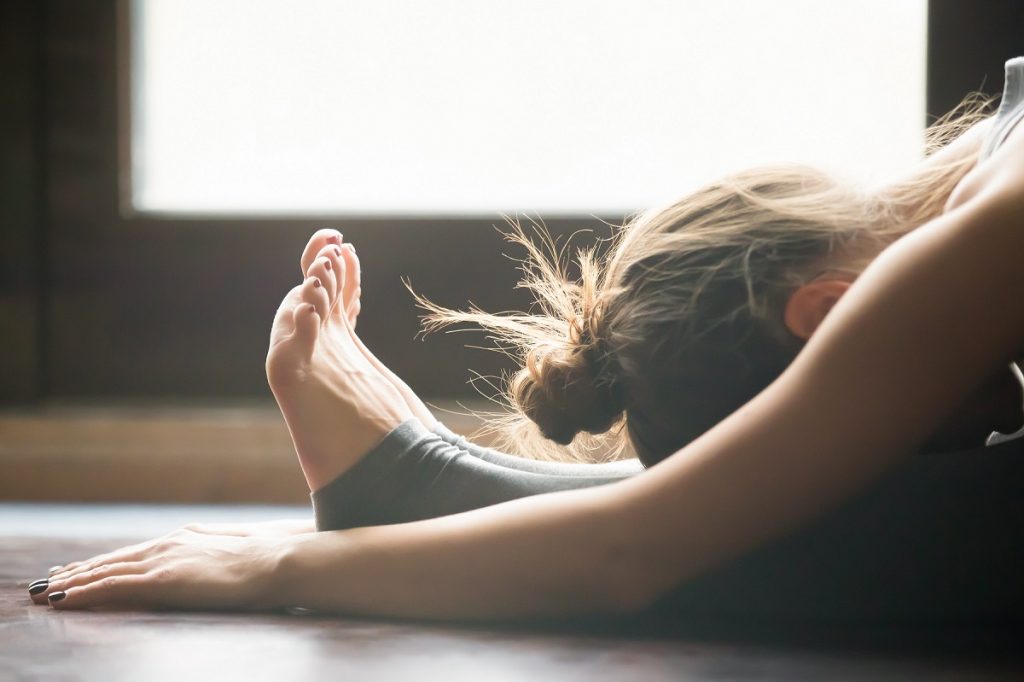
4. Seated Forward Bend Pose or Paschimottanasana
Seated forward bend pose helps to calm the brain and relieve stress. It also soothes headache, anxiety and relieves fatigue.

  1. Sit down with legs stretched out straight.
  2. Raise both the hands upwards and place the palms together.
  3. Bend slowly and touch the feet.
  4. Gently bend the head downwards with face resting on legs and breathe slowly.
  5. Repeat this up to 3 times and maintain the bend position longer after each round.

5. Wind Relieving Pose or Pawanmuktasana
Wind relieving pose helps in aiding digestion. It also helps in reducing belly fat and enhances blood circulation.

  1. Lie down on the back with feet together and hands by the side of the thighs. Inhale and raise both the legs.
  2. Exhale, hold the knee joints and bring the knees towards the chest.
  3. Press the thighs on the abdomen with clasped hands.
  4. Breathe in again. On exhalation, lift the head and chest upwards. Touch the knees to the chin or forehead.
  5. Maintain the posture as long as possible. Repeat this for at least 6 times and each time increase the span of holding this position.

6. Child’s Pose or Balasana

  1. Sit on your knees. Place your hands on the thighs and palms down.
  2. Exhale slowly and bend forward, stretching your hands
  3. Breathe gently. Hold the posture for 2 to 3 minutes or less as possible.
  4. Repeat this up to 3 times maintaining the bend position slightly longer.

7. Cat-Cow Stretch Pose

  1. Take the position of cat pose.
  2. Lower your head and raise your back towards the ceiling. 
  3. Gently exhale and contract your abdomen. Hold the breath for 3 seconds.
  4. Inhale while raising the head and bring your abdomen downwards. 
  5. Expand the abdomen fully and fill the lungs with the maximum amount of air.
  6. Hold your breath for 3 seconds. 
  7. Exhale and repeat step 2 to complete one round. Repeat 3-5 rounds.

Practising simple yoga indoors can help you stay fit and healthy during this lockdown and well after it too. Do yoga preferably on an empty stomach or 3 hours post a meal. Practice these regularly to see an improvement in your health. Before you begin, do consult your doctor, physiotherapist or health expert especially if you have any health issues. 

For more guidance into yoga, tune in to LIVE sessions by yoga specialists on GOQii Play. Do leave your thoughts in the comments below! 

Stay safe, stay indoors and #BeTheForce! 
August 9, 2018 By Parwage Alam 196 Comments

Yoga for the beginners: Some myths and benefits

Triangle-PoseCouple of months ago I had written a blog on meditation.(http://goqii.com/blog/author/parwage/). I now follow this written piece with a blog on Yoga which is also one of the ways to get stress free in your life and relax. I have been practicing Yoga for the last 8 years and have full faith in this form of exercise. Yoga can bring about positive changes in your life if practiced well. I personally feel the ‘Power of Yoga’.
Yoga is a precious gift given to us by our elders and can be practiced to better our lives. Originated in India, almost 26,000 years ago, Yoga is believed to have evolved during the period of the ‘Sat Yuga’, also called the Golden age. The term yoga can be derived from either yujir yoga (to yoke) or yujsamadhau (to concentrate).

While Yoga originated in India today, many people across the world practice yoga. Yoga in a way is helping many to achieve their physical fitness goal. Through this blog post, I would like to talk about the myths that are attached with Yoga and the benefits of Yoga for one and all.

A strong and flexible body, glowing beautiful skin, peaceful mind, good health – whatever you may be looking for, yoga has it on offer. Yoga helps you to achieve your overall fitness level. If you do follow Yoga regularly you are not just physically fit but, also mentally and emotionally balanced.

Ten minutes of yoga during the day can be a great way to get rid of stress that accumulates daily – in body and in the mind. This will also help you to achieve your inner peace. Some of yoga asanas are effective techniques to release stress.

Some myths regarding yoga :

  1. There is only one type of yoga:Vinyasa is the most popular type of yoga right now and involves using your breath with movement. Hatha yoga is slower with more static postures. Power yoga is more strengthening and cardiovascular. These are just a sampling of the many available styles today.
  2. Yoga requires time-commitment:If you give 10 min in a day daily to yoga, you can change your life.
  3. Yoga is only for women: This is not true. It has been proven by many schools of yoga that one and all can practice Yoga
  4. You have to be extremely agile: Yes, it’s true that there are some difficult yoga positions but, that doesn’t necessarily mean that you need to be super agile to practice yoga. Most postures can be modified to fit all skill levels or you can choose a position that isn’t so hard on the body.

Benefits of Yoga:

Yoga has both physical and mental benefits to the body and mind.

Health Benefits:

Physical benefits: Yoga improves flexibility and muscle joint mobility (Moving and stretching in new ways will help you become more flexible,).

Tones, strengthens and builds muscles; corrects posture; strengthens the spine (Many yoga poses require you to support the weight of your own body in new ways, including balancing on one leg (such as in Tree Pose) or supporting yourself with your arms (such as in Downward Facing Dog). Holding poses over the course of several breaths also builds strength.

Eases back pain; improves muscular-skeletal conditions such as bad knees, tight shoulders and neck, swayback and scoliosis; increases stamina; boosts immune response; stimulates the glands of the endocrine system; creates balance and grace; improves digestion and elimination; increases circulation; improves heart conditions; improves breathing disorders; decreases cholesterol and blood sugar levels.

Mental benefits:

Mental Calmness, Stress Reduction, Body Awareness

Asanas are good for developing coordination and helps to improve your concentration levels and memory. Regular practice can enable young people to keep their natural flexibility for many years. There is no age bar for Yoga.Yoga allows each and everyone who is practicing it to retain mobility and relieve problems such as arthritis and poor circulation. During pregnancy, yoga promotes good health in both mother and the unborn child. Yoga asanas lessen the effects of problems such as overweight, backache, and depression.

Here are some Yoga Asanas for the Beginners:

Mountain Pose (Tadasana) :Stand tall with feet together, shoulders relaxed, weight evenly distributed between your soles, arms on the sides.Take a deep breath and raise your hands overhead, palms facing each other with arms straight. Reach up toward the sky with your fingertips.

Downward Facing Dog (Adhomukhasvanasana): Get on all fours with your hands and knees and shoulder-and-hips-width apart. Walk with your hands a few inches forward and spread the fingers wide, pressing the palms into mat. Curl toes under and slowly press hips toward ceiling, bringing your body into an inverted V, pressing shoulders away from ears. Feet should be hip-width apart, knees slightly bent. Hold for 3-4 full breaths.

Warrior Pose (Virabhadrasana): Stand with legs 3 to 4 feet apart, turning right foot out 90 degrees and left foot in slightly. Bring your hands to your hips and relax your shoulders, then extend arms out to the sides, palms down. Bend right knee 90 degrees, keeping the knee over the ankle; gaze out over right hand. Stay for 1 minute. Switch sides and repeat.

Tree Pose (Vriksasana): Take mountain pose. Then shift your weight onto your left leg. With your hips facing forward, place the sole of your right foot inside your left thigh and find your balance. When you’re there, take a prayer position with your hands. To kick it up a notch, reach your arms up as you would in a mountain pose. Be sure to repeat with the other side.

Bridge Pose (Setubhanda): Lie on the floor with your knees bent and directly over the heels. Place the arms on your sides, palms down. Exhale, then press feet onto the floor as you lift your hips. Clasp hands under lower back and press arms down, lifting hips until thighs are parallel to the floor, bringing chest toward chin. Hold for 1 minute.
Make it easier: Place a stack of pillows underneath your tailbone.

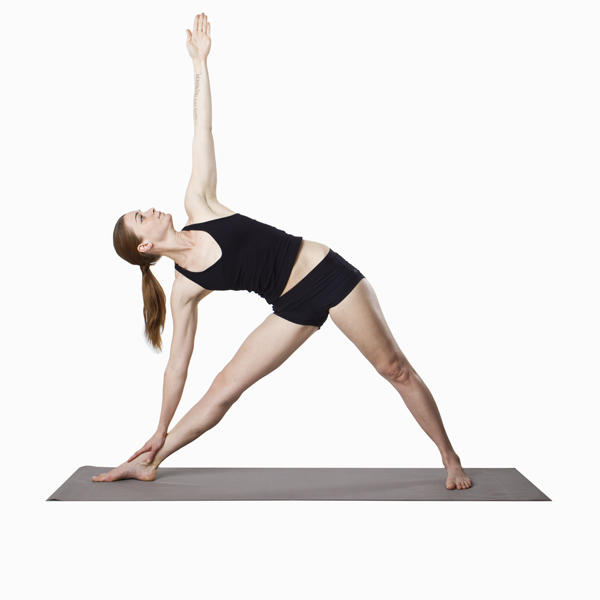
Triangle Pose (Trikonasana): Take warrior pose on your right side without lunging into your knee. Then touch the inside of your right foot with the outside of your right hand. Reach up to the ceiling with your left hand. Turn your gaze toward and pass your left hand to stretch your back. Don’t forget to repeat it on the other side.

Upward Facing Dog (Urdhvamukhasvanasana): Lie face down on the floor with your thumbs under shoulders, legs extended with the top of your feet on the floor. Tuck your hips downward as you squeeze your glutes. Keeping your shoulders down, push up and lift your chest off the ground. Relax and repeat.

Pigeon Pose (Ekapadarajakapotasana): Start in a push-up position, your palms under your shoulders. Place your left knee on the floor near your shoulders with your left heel by your right hip. Press your hands to the floor and sit back with your chest lifted. You can also lower your chest closer to the floor for a stretch. Try it on the other side.

Child’s Pose (Balasana): Sit up comfortably on your heels. Roll your torso forward, bringing your forehead to rest on the bed in front of you. Lower your chest as close to your knees as you comfortably can, extending your arms in front of you. Hold the pose and breathe.

What are you waiting for, get up, plan your day and bring Yoga into your lifestyle and stay stress-free lifelong.

June 29, 2018 By Trupti Hingad 3 Comments

Four pillars to lead a healthy and happy life

yoga-for-healthy-happy-living Recently, I had published a blog on how certain yoga asana, if followed with some attitude, can tune your behaviour and imbibe good qualities in you. If you have not read that blog here is the link to the same https://goqii.com/blog/best-yoga-poses-with-attitudes/
Having said that yoga is not about asana alone and pranayama, yoga is a way of life. Good health depends on the long-term commitment and the foundation for that needs to be built on four important pillars. According to the World Health Organization (WHO), health is state of physical, mental and social well being.

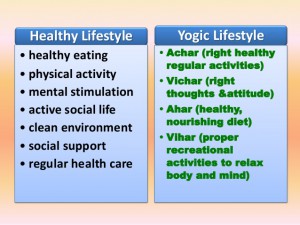
The Four Pillars of a healthy lifestyle is AHAR (Food), VIHAR (Recreation), ACHAR (Routines), VICHAR (Thoughts)

  1. The first Pillar is AHAAR

AHAR means food. “Annam Brahma—means the food is Brahman (Lord of creation). There is an old adage which says, “As the food so the mind, As the mind so the Man”. This saying depends on what you eat, how you eat and when you eat. Every bite you put in your mouth counts for your well being and lifespan, but this does not mean you start binge eating. Eating in moderation is key to maintain a healthy life.

According to Ayurveda, our food is categorized into three segments: Sattvik, Rajasic, Tamasic,

Satvik food is very simple food and gives loads of energy and keeps the mind stable. This food type includes Milk and milk products fresh fruits, dry fruits, seasonal veggies, unrefined cereals, pulses, spices like ginger, pepper, turmeric, cumin, honey, jaggery, Ghee, and oil

Rajasic food creates a restless state of mind. These foods are difficult to digest like non-veg, non-sprouted beans and pulses, garlic, onion, unseasonal veggies and salt.

Tamasic food creates a lethargic state of mind. This includes food which is stale or cooked over a long period. All refined, processed, artificial flavoured foods, deep-frozen foods, pickles, jams, beverages, deep-fried foods, liquor, tobacco, drugs.

The ancient literature says, “One should break one’s night long fast at the time of sunrise and end ones last meal at the time of sunset”. Going by what our ancient literature says, we all know BREAKFAST should be our first meal and that should be king sized. Whatever, we eat in the morning is absorbed and assimilated to the maximum. Food taken during the lunch should be easily digestible and dinner should be the lightest meal of the day.

When you eat food. Your state of mind will decide how food is going to be utilised by the body. Eat your meals with full concentration. Chew your food well and enjoy the subtle taste of each food items. Most important avoid using mobile or watch TV while eating food.

  1. The second pillar is VIHAR

Vihar means recreation. The literal meaning is moving or walking. Stress is a common factor these days. Everybody is stressed on a day to day basis and the reasons for stress can vary and spend time with oneself is a big task. Recreation, relaxation and enjoying family time rejuvenates the body and mind. It’s a kind of anti-depressant for us.

Spending some time in activities which you enjoy clears off mind, relieves depression and anxiety, elevates your mood and gives a feeling of well being.

Active creative hobbies like gardening, painting, playing musical instruments engage all sensory organs and releases pent-up emotions and recharges the mind. Playing sports is another way of relaxing body and mind.

Relaxation is the cornerstone of well-balanced personality. Maintain the relaxed attitude throughout the day. Relaxation is an art which needs to be cultivated. It is important for our body, emotions and our nervous system. Regular exercise or relaxation keeps you fit and keeps disorders at bay.

  • The Third pillar is ACHAR—(Routine)

How often is it that your day goes unplanned and you get hassled with too much work in the day? Our mental health and being are dependent on better routines (achaar). Regularity and sincerity are two major components of a good routine. The best example of following a routine is the SUN-It rises and sets daily without any excuse.

Plan your day in advance. Incorporate all necessary task for self, work, food, recreation and sleep. The solutions to many of our difficulties in life lie in setting out right habits and right routines. Dr Abdul Kalam had said, “You cannot change your future but you can change your habits and your habits will surely change your future”

  1. The fourth pillar is VICHAAR (Thoughts)

Our intellectual health is rightly dependent on how we think. Our thoughts are food for our mind. Buddha says, “Based on your thinking you become the person you are”. If you think you are weak, you will be weak. If you think you are strong, you will be strong. Manage your thought process correctly. Always develop a good attitude and enlarge your vision.

Good thoughts process can be added in daily life by reading good books, scriptures, attending Satsang (religious discourses), reciting holy mantras, observing rituals, recollecting good experiences and thinking positive in all situations.

So let me share a quick small recipe for happiness with you.  If you add this in your life this might add spark to your life.

Recipe for Happiness:

Ingredients:

2 heaped cup of patience

1 heart full of love

2 hands full of generosity

1 hand full of understanding

Method:

Mix all the ingredients, sprinkle generosity and kindness

Add faith and mix well.

Add a dash of laughter. Spread over a period of time

Serve smilingly to everyone you meet to spread happiness.

Have a healthy, Happy life ahead!


May 15, 2018 By Dr. Viral Thakkar 9 Comments

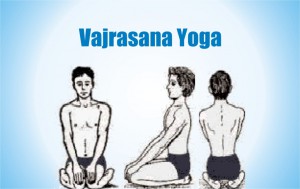
Strong as a Diamond! Vajrasana  

VAJRASANA_YOGA

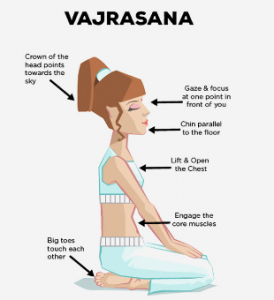
Ever wondered why zen masters sit on their knees? Karate and other martial arts masters also to sit in that “uncomfortable” position- the ‘vajrasana’.  Vajrasana is a kneeling pose; vajra is a Sanskrit word meaning diamond or thunderbolt. Asana means pose. This diamond pose is also called Adamantine Pose.

Usually, breathing exercises like Pranayama, Kapalabhati, and Anulon Vilom are done sitting in this position. Many masters also prefer this position for meditation.

vajrasana

This is how you do it..

 Kneel down, stretching your lower legs backwards and keeping them together. Your big toes should touch each other.

  1. Gently lower your body such that your buttocks are resting on your heels and your thighs on your calf muscles.
  2. Place your hands on your knees, and set your gaze forward with your head absolutely straight.
  3. Turn your attention to your breathing. Be fully aware of how you breathe and carefully observe as you inhale and exhale.
  4. You could close your eyes to concentrate on your breathing and to calm your mind.

As a beginner, when you assume this position, it is likely that your legs will pain. If this happens, all you need to do is undo the asana, and stretch your legs forward. You can try to stay in vajrasana for a minimum of 5 to 10 minutes and extend the time as per your comfort.

Work slowly and gradually on bettering the strength of the lower back muscles before you go deeper into the pose or increasing the duration. Once the lower back is strengthened, the strain on the breath is decreased. Also, do not push yourself more than your body can take, the benefits of the pose are minimized.

This asana is one of the few asanas which can and should be practised post a meal since it promotes proper digestion.

While this is one of the easiest and safest asanas to practice, however, keep the following in mind:

  1. Do not practice this asana if you have a knee problem or have undergone surgery in your knees recently; Or if you have intestinal ulcers, hernia, or any other problems related to the large or small intestine. If you are very keen, seek advice from your doctor/ yoga practitioner.
  2. If you are pregnant, keep your knees slightly apart to avoid putting pressure on your abdomen.
  3. If you are suffering from any spinal column ailments on the lower vertebrae, it is best to avoid this pose.

 Practice this asana because

  1. It improves digestion. It regulates blood circulation in the lower pelvic region. Sitting on your legs reduces the blood flow in the legs and increases it in the digestive area, therefore increasing the efficiency of the digestive system. Better digestion prevents GERD- Gastro-Esophageal Reflux Disease and acidity.
  2. With the regular practice of vajrasan one can get relief from constipation and flatulence.
  3. It strengthens the back and relieves patients suffering from lower back problems and sciatica.
  4. It strengthens the pelvic muscles too. It positively impacts the urinary and reproductive systems.

According to Ayurveda, one of the major nerves in the human body is also named Vajra Nadi (Nadi means nerve). Vajra Nadi is connected with the genitourinary system which is responsible for regulating sexual energy in human body. Hence practising this yoga pose for an extended duration of time may make a person control his/her sexual energy for spiritual aims.

  1. It strengthens muscles and nerves almost curing varicose pains.
  2. It helps to ease out labour pains and also reduces menstrual cramps. It is a safe asana to perform during pregnancy.
  3. This asana is one of the best ones to assume when you wish to go into a meditative state since it is an upright pose.
  4. According to Ayurvedic Sciences, there are marm points in our body. These points impact different parts of the body when we assume different positions. While sitting in vajrasana, katikatarun marm is stimulated. This impacts the spine and stomach releasing the pain in the spine and improves digestion.

Make a habit to practice this asana at least post your meals and become ‘diamond’ strong!


  • « Previous Page
  • 1
  • …
  • 5
  • 6
  • 7
  • 8
  • 9
  • Next Page »

Search

Recent Posts

  • PCOS and Anxiety: Discover Relief with the 54321 Technique
  • Navigating the Maze of Nutrition: Finding Clarity Amidst Confusion
  • Get children active and keep them healthy
  • What Gestational Diabetes Can Do To You & Your Unborn Child
  • Breathing – A Forgotten Art

Stay Updated

Archives

  • December 2025 (4)
  • November 2025 (15)
  • October 2025 (20)
  • September 2025 (6)
  • August 2025 (6)
  • July 2025 (12)
  • June 2025 (18)
  • May 2025 (16)
  • April 2025 (23)
  • March 2025 (23)
  • February 2025 (22)
  • January 2025 (26)
  • December 2024 (26)
  • November 2024 (25)
  • October 2024 (22)
  • September 2024 (24)
  • August 2024 (31)
  • July 2024 (21)
  • June 2024 (26)
  • May 2024 (31)
  • April 2024 (27)
  • March 2024 (29)
  • February 2024 (26)
  • January 2024 (25)
  • December 2023 (15)
  • November 2023 (11)
  • October 2023 (22)
  • September 2023 (22)
  • August 2023 (20)
  • July 2023 (22)
  • June 2023 (24)
  • May 2023 (24)
  • April 2023 (24)
  • March 2023 (23)
  • February 2023 (20)
  • January 2023 (16)
  • December 2022 (12)
  • November 2022 (15)
  • October 2022 (15)
  • September 2022 (12)
  • August 2022 (10)
  • July 2022 (17)
  • June 2022 (11)
  • May 2022 (10)
  • April 2022 (6)
  • March 2022 (6)
  • February 2022 (13)
  • January 2022 (12)
  • December 2021 (7)
  • November 2021 (3)
  • October 2021 (6)
  • September 2021 (3)
  • August 2021 (8)
  • July 2021 (7)
  • June 2021 (15)
  • May 2021 (16)
  • April 2021 (10)
  • March 2021 (7)
  • February 2021 (4)
  • January 2021 (4)
  • December 2020 (3)
  • November 2020 (4)
  • October 2020 (10)
  • September 2020 (3)
  • August 2020 (3)
  • July 2020 (2)
  • June 2020 (4)
  • May 2020 (10)
  • April 2020 (12)
  • March 2020 (10)
  • February 2020 (4)
  • January 2020 (4)
  • December 2019 (3)
  • November 2019 (7)
  • October 2019 (5)
  • September 2019 (4)
  • August 2019 (9)
  • July 2019 (9)
  • June 2019 (11)
  • May 2019 (4)
  • April 2019 (9)
  • March 2019 (8)
  • February 2019 (9)
  • January 2019 (8)
  • December 2018 (9)
  • November 2018 (3)
  • October 2018 (3)
  • September 2018 (5)
  • August 2018 (10)
  • July 2018 (6)
  • June 2018 (13)
  • May 2018 (8)
  • April 2018 (18)
  • March 2018 (9)
  • February 2018 (8)
  • January 2018 (15)
  • December 2017 (12)
  • November 2017 (19)
  • October 2017 (13)
  • September 2017 (15)
  • August 2017 (4)
  • July 2017 (8)
  • June 2017 (7)
  • May 2017 (6)
  • April 2017 (8)
  • March 2017 (6)
  • February 2017 (7)
  • January 2017 (9)
  • December 2016 (10)
  • November 2016 (7)
  • October 2016 (7)
  • September 2016 (7)
  • August 2016 (11)
  • July 2016 (9)
  • June 2016 (9)
  • May 2016 (12)
  • April 2016 (17)
  • March 2016 (17)
  • February 2016 (8)
  • January 2016 (6)
  • December 2015 (2)
  • November 2015 (9)
  • October 2015 (7)
  • September 2015 (9)
  • August 2015 (11)
  • July 2015 (9)
  • June 2015 (12)
  • May 2015 (9)
  • April 2015 (13)
  • March 2015 (8)
  • February 2015 (5)
  • January 2015 (12)
  • December 2014 (14)
  • November 2014 (11)
  • October 2014 (6)
  • September 2014 (13)
  • August 2014 (12)
  • July 2014 (6)
  • June 2014 (2)
  • May 2014 (7)
  • April 2014 (5)

From “Laddu Nawin” to Fit and Fierce: How a 25-Year-Old Insurance Advisor Shed 20 Kilos and Gained His Life Back

When 25-year-old Nawin Yadav from Hyderabad walked into his office every morning, he carried more than just his files and policy papers. He had the weight of fatigue, sluggish energy, and an ever-growing belly that was becoming the butt of jokes. “People … [Read More...]

“I’ve Challenged Myself to Live 100 Years” – The Story of Chandubhai Savani’s Second Chance at Life

At 67, most people start slowing down. Not Chandubhai Savani. A resident of Surat, Chandubhai, thought life was on track. “My life was going well till I had my bypass surgery,” he says. That surgery, back in 2021, was a wake-up call.  Medication was routine, but exercise wasn’t. His diet? What he calls ‘normal.’ “I […]

From Shimla’s Slopes to Chandigarh’s Sidewalks: Surinder Kaur Bhalla’s Journey from Chaos to Control

Some journeys start with a plan. Others begin with a stumble literally. Surinder Bhalla, a government professional, born and raised in the scenic hill town of Shimla, had always lived a life of movement. “In Shimla, you walked everywhere,” she reflects. “Walking was never an exercise. It was just life.” But after shifting to Chandigarh, […]

Ananda Mukherjee Health Story

From Terminal Illness To Complete Wellness! Ananda Mukherjee Health Story

As we observe World Cancer Day under the powerful theme ‘United by Unique’ (2025-2027)**, we are reminded that every individual’s journey with cancer is distinct, yet united by shared resilience, hope, and the collective fight against this disease. This theme places people at the centre of care and their stories at the heart of the […]

  • HOME
  • HEALTHY LIVING
  • FITNESS
  • HEALTHY RECIPES
  • USER STORIES
  • KARMA
  • BUY GOQii

Copyright ©2016 GOQii