GOQii

Blog

  • HOME
  • HEALTHY LIVING
  • FITNESS
  • HEALTHY RECIPES
  • USER STORIES
  • KARMA
  • BUY GOQii

January 7, 2015 By Shimpli Patil Leave a Comment

Phytochemicals- Why is it important to go Colourful?

colors

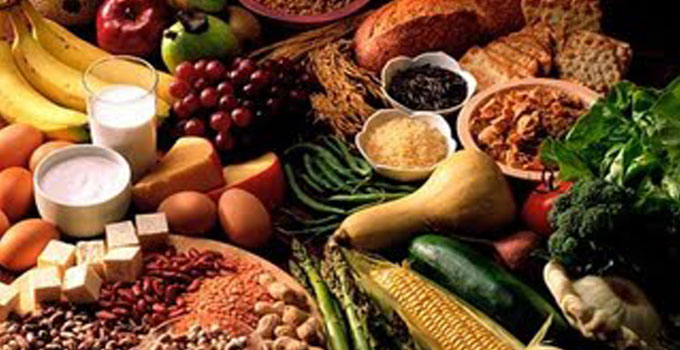
Life without colours is so boring. Black and white movies evolved into colour films just to make them more appealing. Similarly, a cupboard full of same coloured clothes does not appear that interesting.  We are constantly looking for variety and more colours. The same when applied to eating, not only breaks the monotony but also benefits your body in several ways.

I remember, as a kid, my mother always emphasized on including a variety of fruits and veggies into my meals. She’d come up with all her innovative ways to make sure my meals are as colourful. Gradually, I got to know the reason why she used those tricks. She just wanted to ensure I get the maximum benefits from these colours.

Nature has provided us with numerous colourful fruits, vegetables, grains and herbs. Ever wondered where do they derive their colours from? Well, they contain compounds called Phytochemicals (also known as phytonutrients) which are responsible for the beautiful colours that these fruits and veggies flaunt. The more colourful a fruit or vegetable is, the higher its phytochemical content, especially if they are coloured all the way through (like berries) not just on the skin (like apples).

Phytochemicals basically form plant’s immune system as they protect the plants from UV rays, diseases and fungus. These wonderful compounds are so generous that they extend their benefits to humans as well. I would say a great deal of benefits.

They are known for their antioxidant activity, anti-inflammatory activity and the ability to enhance our body’s natural detoxification system.

Let me take you through some of the best Phytochemicals and their benefits-

  • Carotenoids– Any fruit or veggie you see around which is red/orange/yellow or green in colour, contains carotenoids. They are potent antioxidants and immune boosters. Research has shown that they reduce the risk of heart disease and certain types of cancer.
  • Flavonoids– This one’s famous! Out of all the phytochemicals in fruits and vegetables, it’s the flavonoids that we eat in the largest quantity. Guess which colours it contributes to… It’s red, blue and purple pigments. Studies have shown that their antioxidant activity is lot more powerful than vitamins C and E.

One of the flavonoids called “Isoflavones” present in soy, are known to reduce the cholesterol levels and thereby reduce the risk of heart diseases.

In women, isoflavones help reduce the menopausal symptoms and are beneficial for women’s overall health.

  • Sulphur Compounds– These are found in naturally occurring whitish foods like garlic, onion, cauliflower, cabbage, mushrooms, grains etc.

These compounds also have been shown to have cancer fighting properties and are beneficial to cardiovascular health.


The incredible benefits of phytochemicals is one reason the U.S. Department of Agriculture/Health and Human Services focuses on having at least five servings of fruits and vegetables and several servings of grains every day.

So the next time you are out for shopping, make sure you load up your grocery cart with an array of fruits and vegetables to give yourself a phytochemical boost.

Since different coloured fruits and vegetables have different kinds of phytochemicals, it’s important that you choose a variety of colours in your diet so that you make the most of each phytochemical.

Get those colours and you get better health!


December 15, 2014 By Hardika Vira 2 Comments

Role of Glycemic index in day to day life


Role of Glycemic index in day to day life

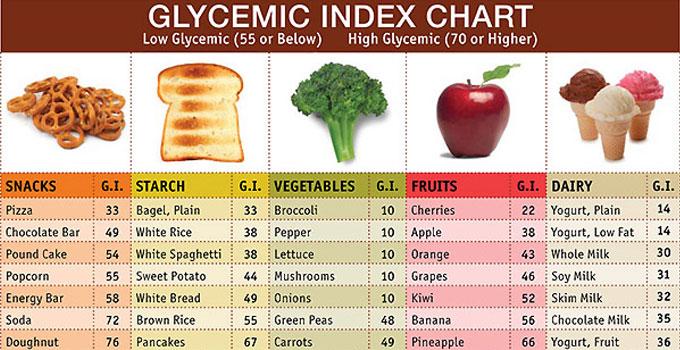
Have you ever thought of why some foods can be eaten in good quantities without worrying about the sugar rise or weight increase while in some others portion control is important? Glycemic index is the concept that helps us to choose food wisely. Are you wondering what is glycemic index and how does it help?

Glycemic index or GI is a measure of the effects of carbohydrates on blood glucose levels. Carbohydrates that break down during digestion releasing glucose rapidly  into the blood stream have a high GI; carbohydrates that break down slowly, releasing glucose gradually into the bloodstream, have a low GI.

A lower glycemic index suggests slower rates of digestion and absorption of the foods’. Carbohydrates may also indicate greater extraction from the liver and periphery of the products of carbohydrate digestion. A lower glycemic response is often thought to equate to a lower insulin demand, better long-term blood glucose control and a reduction in blood lipids.

Glycemic index of foods

Glycemic index values can be interpreted intuitively as percentages on an absolute scale and are commonly interpreted as follows:

Classification GI range Examples
Low GI 55 or less most fruit(apple, orange, peach, citrus fruits) and vegetables (except potatoes, watermelon), whole grainy breads, pasta, legumes/pulses, milk, curd products extremely low in carbohydrates (fish, eggs, meat, nuts, oils), brown rice, corn tortilla, wheat tortilla
Medium GI 56 – 69 whole wheat products, basmati rice, sweet potato, table sugar, most white rices ,Muesli,  banana, Honey
High GI 70 and above Corn flakes, baked potato, watermelon, croissant, white bread, extruded cereals (e.g., Rice crispies), straight glucose (100), peanuts

A low GI food will release glucose more slowly and steadily. A high GI food causes a more rapid rise in blood glucose levels and is suitable for energy recovery after endurance exercise or for a person with diabetes experiencing hypoglycemia.

Benefits of the Glycemic Index

Eating a lot of high GI foods can be harmful to your health as it pushes your body to extremes. This is especially true if you are overweight and sedentary. Switching to eating mainly low GI carbohydrates that slowly trickle glucose into your blood stream keeps your energy levels balanced and will feel fuller for longer between meals.

  • Low GI diets help people lose and control weight
  • Low GI diets increase the body’s sensitivity to insulin
  • Low GI carbohydrates improve diabetes control
  • Low GI carbohydrates reduce the risk of heart disease
  • Low GI carbohydrates reduce blood cholesterol levels
  • Low GI carbohydrates reduce hunger and keep you fuller for longer
  • Low GI carbohydrates prolong physical endurance
  • High GI carbohydrates help re-fuel carbohydrate stores after exercise

November 27, 2014 By TAARIKA ARYA 2 Comments

BERRY BERRY HEALTHY!

healthy-berries

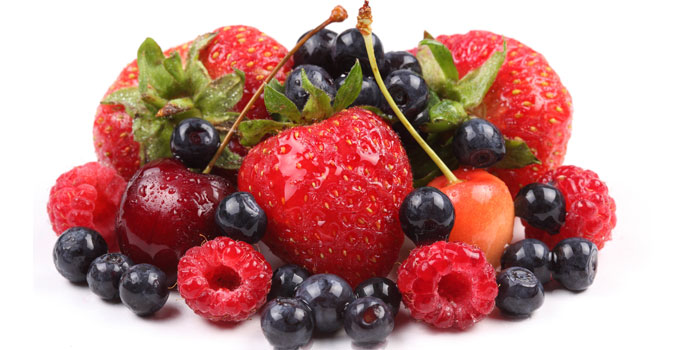
When was the last time you ate a handful of fresh berries…??? Can’t remember….Here’s the reason…. Berries are tiny, uncommon, ignored, and may be expensive.  Moreover, they are more familiar in foods such as cakes, jams, candies, etc. But, these berries overflow with numerous health benefits. They truly deserve the title of being called “real treasure in a small package”.

Not sure if you are aware but there are a variety of berries available in the market. Another trivia on berries is there is also something called the National Berry Month celebrated in July.

I found it interesting to write a blog on ‘Berries’, the not so talked about but beneficial fruit.

So what makes them a super food? Here is my list of reasons

1. The bright red, maroon or purple colour of the berries is due to the presence of pigments or natural dyes called phytochemicals which act as an anti-oxidant. These antioxidants slow down your ageing process.

2. They prevent heart diseases and cancer due to the presence of Gallic acid.

3. They are very low on sugar as compared to other fruits and rich in fibre and thus they help in weight management and improving digestion. They also keep you fuller for a longer time.

4. They contain certain organic acids which help in our body detoxification.

5. They help in fighting various bacterial and fungal infections (e.g. Urinary Tract Infection)

6. Lastly they are loaded with vitamin C, known to strength our immune system.

Now coming to the different types of berries, one good thing is that although it may not be easy to get fresh berries….even the dried or frozen ones offers many health benefits. One can find various kinds of berries in supermarkets or high end grocery stores (Natures basket, Hypercity, Chheda stores, FoodHall, etc to name a few.)

Few berries that I have been eating are listed below. You can eat them as it is, soak them, add them in your breakfast cereal/ yoghurt or make homemade sauces. In short you can literally play with them!

1. Blueberries: No wonder they are called as the “blue dynamos” due to its deep blue colour. Rich in manganese, vitamin K they provide around 4 grams of fiber. They can be eaten fresh as well as dried. Try tossing them into salads, smoothies or baked items.

2. Cranberries: These red berries are not only pretty looking but are infection fighting super berries. Packed with flavonoids, they are a great remedy to fight Urinary Tract Infections (UTI’s). It’s got a sweet as well as a tart flavor which makes them a perfect ingredient for smoothies, sprinkling them into oatmeal or salads.

3. Strawberries: These red health boosters are the most common types of berries consumed. They grow abundantly in India too. They are rich in antioxidants called phenols which help in boosting immunity. They are perfect for a mid-evening snack with just 50 calories per cup and more vitamin C than an orange. They can be relished in smoothies, frozen yoghurts, breakfast cereal and salads or just mixed with plain water.

4. Mulberries: Many of us including me have eaten a handful of these freshly plucked from the trees in our backyard. These delicate berries are packed with heart healthy phenols, Ca, iron and magnesium. A cup of these provide more potassium than half a banana! They can be enjoyed frozen, in smoothies or sorbets.

5. Acai berry: A dark coloured berry resembling grapes is a native of Brazil. They are amongst the top super foods having 19 amino acids and high levels of antioxidants. These berries have recently gained popularity since they claim to have weight loss properties. However, this is just another fad although it helps lowering bad cholesterol. These berries are very expensive since they have to be freeze dried within 24 hours of plucking to retain its nutrition.

Apart from these berries, there are a few more berries – Goji berries, Huckleberry, Maqui berry, Sea Buckthorn berry, etc to name a few which may not be that common in India but are of equal benefits to our health.

So what’s your favourite berry?  Go ahead and start including these berries in your diet as they are the “nature’s multi-vitamin”.

November 5, 2014 By Shimpli Patil 3 Comments

A Perfect Supper

supper

Since time immemorial, we have been hearing this phrase “Breakfast like a King, Lunch like a Prince and Dinner like a Pauper”. Though this phrase is very true and most of us may or may not agree to it, the question is, how many of us actually follow it?

I have come across people who eat absolutely minimal or may even skip meals during the day and then wonder why they are not shedding any weight even though they are consuming less calories. The answer lies in their ‘very much elaborate dinners’!

In today’s fast paced and busy lives, it’s become very common that people tend to have very less or almost skip their breakfast as they need to rush to work. Lunch is had at the desk more often than not, either alone or with the colleagues, which may be less enjoyable. At times, due to time constraints, lunch gets compromised. All these factors lead to a limited food intake through the day. Result: Body deprived of energy through the day -> Feels excessively hungry in the latter half of the day -> over eating/ bingeing occurs during dinner. At times, we don’t just feel hungry but we might even ‘crave’ for some junk and thereby succumb to binging on junk food items which then results in fat storage.

For majority of us, dinner is the meal which we look forward to as most of the families consider dinner as an opportunity to catch up with the family members, interact with each other, laugh and have a good time, and dinner perfectly serves the purpose! While we relish various delicacies together and get busy talking to each other, there are high chances of us eating more than we actually want to.

Isn’t this scenario exactly opposite to the saying that we discussed at the top? Oh yes! It is! This is where the root cause of weight gain lies.

You’ll be surprised to know that just getting the dinner correct has helped people get their weight under control. It works like magic! It’s very simple and quite logical. Body has enough time to metabolize the food and shed off the extra calories consumed through the day as our activity levels are at peak during the daytime. As the day ends, our activity levels drop and so does the metabolic rate. Thus, the caloric consumption should ideally taper by the end of the day. However, if we load our body with a huge amount of calories at night, it has higher chances of pushing the calories into fat storage thereby leading to weight gain.

Now how do we tackle this? The very first solution is having a heavy breakfast. If you are running short of time, carry a mid-morning snack with you e.g. A fruit/Nuts/Dry fruits/Yogurt is a good for you. Second most important factor is to have a heavy evening snack by around 5-6 pm. Consuming an evening snack keeps us full, cuts down the junk cravings and thus automatically reduces our intake during dinner. It’s very important to choose the evening snacks wisely. It could be a bowl of sprouts/a whole wheat bread veggie sandwich/boiled corn with chopped veggies and herbs/boiled egg or paneer roll with whole wheat base/a bowl of roasted chanas or nuts. I am sure dishes like these would satiate your hunger and when you would go ahead for your dinner, you wouldn’t be very much hungry.

So your dinner could be – Start with a bowl of mix veggie soup/salad, then move on to a bowl of stir-fried veggies (that covers the carb/fiber component and certain vitamins-minerals) along with a bowl of roasted paneer cubes/sprouts/grilled chicken or fish/boiled eggs (that covers the protein and fat component). In this way, we can ensure a light yet balanced meal covering all the macronutrients along with micros (vitamins-minerals). Ofcourse you can make this meal delicious in your own ways by using various herbs and spices to delight your taste buds.

Remember to keep a gap of 2 to 3 hours between your bed time and this meal to avoid gastric discomfort.

Last but not the least, eat this meal absolutely mindfully, which means, eat slower, take smaller bites, savour every bite and thoroughly enjoy it with your family, making the experience absolutely joyful!

  • « Previous Page
  • 1
  • …
  • 61
  • 62
  • 63
  • 64
  • 65
  • …
  • 68
  • Next Page »

Search

Recent Posts

  • PCOS and Anxiety: Discover Relief with the 54321 Technique
  • Navigating the Maze of Nutrition: Finding Clarity Amidst Confusion
  • Get children active and keep them healthy
  • What Gestational Diabetes Can Do To You & Your Unborn Child
  • Breathing – A Forgotten Art

Stay Updated

Archives

  • December 2025 (4)
  • November 2025 (15)
  • October 2025 (20)
  • September 2025 (6)
  • August 2025 (6)
  • July 2025 (12)
  • June 2025 (18)
  • May 2025 (16)
  • April 2025 (23)
  • March 2025 (23)
  • February 2025 (22)
  • January 2025 (26)
  • December 2024 (26)
  • November 2024 (25)
  • October 2024 (22)
  • September 2024 (24)
  • August 2024 (31)
  • July 2024 (21)
  • June 2024 (26)
  • May 2024 (31)
  • April 2024 (27)
  • March 2024 (29)
  • February 2024 (26)
  • January 2024 (25)
  • December 2023 (15)
  • November 2023 (11)
  • October 2023 (22)
  • September 2023 (22)
  • August 2023 (20)
  • July 2023 (22)
  • June 2023 (24)
  • May 2023 (24)
  • April 2023 (24)
  • March 2023 (23)
  • February 2023 (20)
  • January 2023 (16)
  • December 2022 (12)
  • November 2022 (15)
  • October 2022 (15)
  • September 2022 (12)
  • August 2022 (10)
  • July 2022 (17)
  • June 2022 (11)
  • May 2022 (10)
  • April 2022 (6)
  • March 2022 (6)
  • February 2022 (13)
  • January 2022 (12)
  • December 2021 (7)
  • November 2021 (3)
  • October 2021 (6)
  • September 2021 (3)
  • August 2021 (8)
  • July 2021 (7)
  • June 2021 (15)
  • May 2021 (16)
  • April 2021 (10)
  • March 2021 (7)
  • February 2021 (4)
  • January 2021 (4)
  • December 2020 (3)
  • November 2020 (4)
  • October 2020 (10)
  • September 2020 (3)
  • August 2020 (3)
  • July 2020 (2)
  • June 2020 (4)
  • May 2020 (10)
  • April 2020 (12)
  • March 2020 (10)
  • February 2020 (4)
  • January 2020 (4)
  • December 2019 (3)
  • November 2019 (7)
  • October 2019 (5)
  • September 2019 (4)
  • August 2019 (9)
  • July 2019 (9)
  • June 2019 (11)
  • May 2019 (4)
  • April 2019 (9)
  • March 2019 (8)
  • February 2019 (9)
  • January 2019 (8)
  • December 2018 (9)
  • November 2018 (3)
  • October 2018 (3)
  • September 2018 (5)
  • August 2018 (10)
  • July 2018 (6)
  • June 2018 (13)
  • May 2018 (8)
  • April 2018 (18)
  • March 2018 (9)
  • February 2018 (8)
  • January 2018 (15)
  • December 2017 (12)
  • November 2017 (19)
  • October 2017 (13)
  • September 2017 (15)
  • August 2017 (4)
  • July 2017 (8)
  • June 2017 (7)
  • May 2017 (6)
  • April 2017 (8)
  • March 2017 (6)
  • February 2017 (7)
  • January 2017 (9)
  • December 2016 (10)
  • November 2016 (7)
  • October 2016 (7)
  • September 2016 (7)
  • August 2016 (11)
  • July 2016 (9)
  • June 2016 (9)
  • May 2016 (12)
  • April 2016 (17)
  • March 2016 (17)
  • February 2016 (8)
  • January 2016 (6)
  • December 2015 (2)
  • November 2015 (9)
  • October 2015 (7)
  • September 2015 (9)
  • August 2015 (11)
  • July 2015 (9)
  • June 2015 (12)
  • May 2015 (9)
  • April 2015 (13)
  • March 2015 (8)
  • February 2015 (5)
  • January 2015 (12)
  • December 2014 (14)
  • November 2014 (11)
  • October 2014 (6)
  • September 2014 (13)
  • August 2014 (12)
  • July 2014 (6)
  • June 2014 (2)
  • May 2014 (7)
  • April 2014 (5)

From “Laddu Nawin” to Fit and Fierce: How a 25-Year-Old Insurance Advisor Shed 20 Kilos and Gained His Life Back

When 25-year-old Nawin Yadav from Hyderabad walked into his office every morning, he carried more than just his files and policy papers. He had the weight of fatigue, sluggish energy, and an ever-growing belly that was becoming the butt of jokes. “People … [Read More...]

“I’ve Challenged Myself to Live 100 Years” – The Story of Chandubhai Savani’s Second Chance at Life

At 67, most people start slowing down. Not Chandubhai Savani. A resident of Surat, Chandubhai, thought life was on track. “My life was going well till I had my bypass surgery,” he says. That surgery, back in 2021, was a wake-up call.  Medication was routine, but exercise wasn’t. His diet? What he calls ‘normal.’ “I […]

From Shimla’s Slopes to Chandigarh’s Sidewalks: Surinder Kaur Bhalla’s Journey from Chaos to Control

Some journeys start with a plan. Others begin with a stumble literally. Surinder Bhalla, a government professional, born and raised in the scenic hill town of Shimla, had always lived a life of movement. “In Shimla, you walked everywhere,” she reflects. “Walking was never an exercise. It was just life.” But after shifting to Chandigarh, […]

Ananda Mukherjee Health Story

From Terminal Illness To Complete Wellness! Ananda Mukherjee Health Story

As we observe World Cancer Day under the powerful theme ‘United by Unique’ (2025-2027)**, we are reminded that every individual’s journey with cancer is distinct, yet united by shared resilience, hope, and the collective fight against this disease. This theme places people at the centre of care and their stories at the heart of the […]

  • HOME
  • HEALTHY LIVING
  • FITNESS
  • HEALTHY RECIPES
  • USER STORIES
  • KARMA
  • BUY GOQii

Copyright ©2016 GOQii