GOQii

Blog

  • HOME
  • HEALTHY LIVING
  • FITNESS
  • HEALTHY RECIPES
  • USER STORIES
  • KARMA
  • BUY GOQii

September 2, 2017 By Anusha Subramanian 7 Comments

Trekking is not difficult…If you know how to walk

trekking
There are all kinds of exercises that one adheres to for fitness. For me hiking or trekking is one way to remain physically and mentally fit. My friends and colleagues who are not into adventure activities like trekking or cycling always thought I was a nerd who at the drop of a hat will leave everything to take off to the mountains for 20 to 25 days or go for long distance cycling. They would always wonder what kind of a holiday is this where you go and tax yourself again instead of relaxing and enjoying yourself on a holiday.

For most of the level-headed outsider who is  unexposed to the outdoors or wilderness – trekking is normally associated as arduous task trudging on some hard and uneven ground, climbing and walking on moraines amidst hostile environment with bare shelter, food and clothing essentials. My friends and colleagues could never fathom the fact that I would come back looking more fresh, rejuvenated and happy than ever before. One can never understand the gung-ho attitude after completing a trek until one has venture into a task of this nature.

At the outset let me tell you that trekking is fun and not laborious. That’s a myth according to me. Believe me, start slow. Begin with a small hike into the wilderness over the weekend and see how happy you come back.

So what is it about trekking that makes one so happy and rejuvenated? Is trekking so difficult that only a select few can do? These questions are best answered by experiencing a trek firsthand. For those who are still trying to make up their mind and confused whether to venture into something like this or no,  let me give you a sneak preview of what hiking or trekking is but this in no way can compensate the real experience.

trekking2

Hiking applies to shorter routes and plain walks. These are simpler & controlled environment version of trek. Trekking applies to more rigorous walking along different terrains and altitudes. If you want to get used to walking in the wilderness and getting a whiff of the outdoors one can start simple with short hikes. Although these activities leads one into unknown territories and gets the environment challenging and physically uncomfortable, it still remains safe when approached with the right guides.

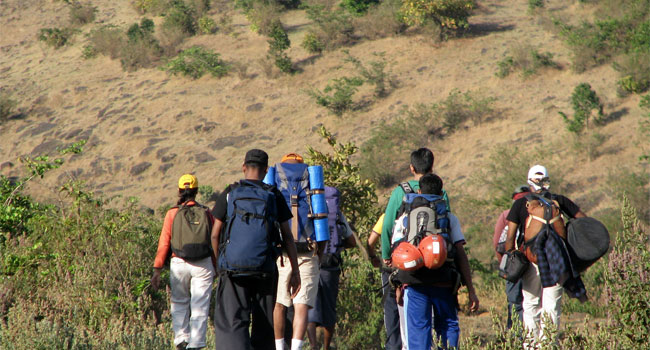
While trekking you might come across situations where you are stuck and most times hit by the sheer untouched beauty of the, a picture perfect image that embeds itself permanently in your memory as you are exposed to the wilderness for a longer duration in a day. This beauty can be seldom enjoyed while in a car. While trekking you confront complete new situations as the day progresses slowly. Every little thing through the journey becomes an important memory to be cherished all your life. Human togetherness becomes simple in the face of this challenging lifestyle for the otherwise confused and unprepared mind.

Having this let me assure you that trekking is not tough. Believe me if you know to walk then you can trek as well. When I say this it does not mean that you venture into unknown territories on your own to explore the unknown. Walking along a trail around with a backpack does not require exceptional skills but does require certain amount of physical fitness, planning, the right clothes, shoes and above all old common sense.

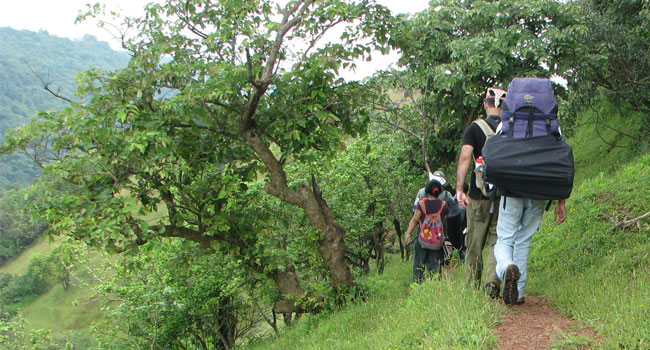
A first time trekker should start with easy effortless trails of one hour or so and then work your way up to longer, more difficult treks. The difficulty of any trek or walk depends on the hilliness of the terrain, and altitude. Most walking trips, tailored for moderately active people, cover gentle terrain at low altitudes, and many have optional shorter routes. One can also take breaks along the trails. This applies to treks in Maharashtra or anywhere in South India.

Himalayan treks where the altitude is over 8000 feet and can extend up to 18,000 feet needs mental conditioning and excellent physical fitness. Most professional outfits organizing these treks can assess your fitness levels. If in doubt, be conservative, especially when it comes to the dizziness and shortness of breath associated with high altitudes. At high altitudes, altitude sickness is one of the first and foremost things that one needs to take care of. I would recommend further reading on altitude sickness and one can also contact your organizer for the same before going on a long trek.

One basic and important thing to remember while trekking is to respect nature and environment. While on a trek you are forced to live in harmony with nature and her moods, for every pain that your limbs feel while trekking, there is this rewarding and enriching feeling of rejuvenation that you will come across due to this very harmonizing quality.

Essential Skills

Skills needed for trekking apply to any outdoor sport. A course in basic first aid wouldn’t hurt, but the least you can know is how to bandage a wound and detect the signs of dehydration and heatstroke. Learn to understand the weather conditions of the day.

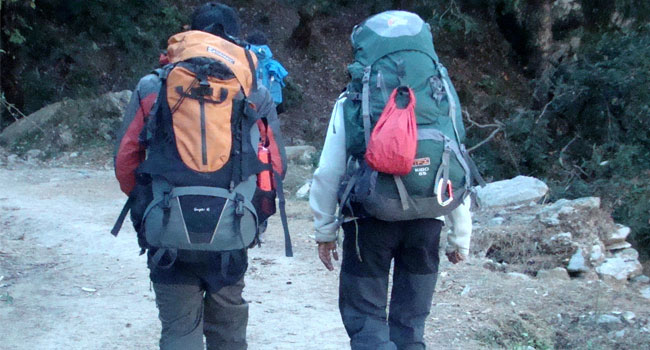
Gear Up: This is the basic that an individual should understand while trekking. The right backpack is a must. Have a backpack which fits well on your back and does not ‘hang’. Therefore choose a backpack with multiple pockets, padded shoulder straps, and large zipper closure. And make sure it’s the right size: When properly adjusted, the base should sit on your hips and the top should be at least one hand-width below the base of your neck. A fit backpack on your back is half the battle won while trekking.

The rest half of the battle is won with the right clothes and shoes. Wear loose clothes like tracks or cotton slacks or trousers with a loose T-Shirt. Avoid wearing denims especially during monsoons. If it gets wet it gets very heavy thus making it difficult for you to walk. On a Himalayan Trek a multipurpose jacket which can take the cold as well as the wind is a must.

While on a Himalayan trek it is recommended that you wear woolen or synthetic blend socks designed to wick moisture away from the feet, as wet feet is the primary cause of blisters.

Footwear designed specifically for trekking offers better support and traction. Choose a pair that’s a half-size larger than your street shoes to allow for some swelling as you walk and to accommodate slightly heavy hiking or a towel socks.

That little tingle of friction you feel on your foot before you get a blister. Don’t ignore the feeling: Take off your boot and wrap your foot with a light cloth before that tingling evolves into a full-fledged blister.

Some things to keep in your day pack: first-aid kit; water bottle; Swiss Army knife; topographic map; compass and sweater or a jacket. Jacket is advisable while trekking in the monsoons in Maharashtra and of course it is a must while on a Himalayan Trek.

On any trek avoid carrying electronic gadgets like music players or the likes. These require ample batteries and they amount to lot of weight. This is very essential to note on a Himalayan Trek. Many electronics refuse to work below freezing or in cold conditions. Cold electronics gadgets consume more battery and hence you will have to carry extra batteries and hence extra load. Each pencil cell battery will weigh about 50 gms and if you plan to carry even five extra pairs that add 500 gms, besides the problem of disposing them. Used batteries are considered to be one of the biggest environmental hazards. These also attract the attention of locals / porters and may induce them into theft. Protecting your electronics from the elements may pose another challenge.

Carry batteries only for your camera: Carry the essential amount. The rule is always that know what you want and only click those that will also save you from wasting rolls (in case you are not using a digital camera).

Benefits of Trekking

Some basics to bear in mind: 

• Walk straight and when at slopes never sit and climb down it will get more painful.
• When tired please avoid sitting down on the trail. This will only increase the tiredness further and make it difficult for you start walking again
• Always carry salt and sugar with you and mix it with your water. An easier option is to have Electoral or Glucose mixed with your bottle of water.
• Never gulp water when you halt to take a break only sip water.
• Whenever you feel uneasy immediately make it a point to tell your trek leader or your organizer. So that things do not get out of hand.
• It’s always nice to keep a small notepad with you to jot down your experiences and also details on the place.

Please Note: While most of these apply to a normal local treks, there are few specifics for Himalaya Treks. In this note I have jotted some most important things for the Himalayan Treks 

Monsoons are soon to begin and it’s the best season in Maharashtra to take to trekking in the Sahyadri ranges.
Happy Trekking!

August 2, 2017 By Dr Ashwin Nanda Leave a Comment

Understanding Autism


I have had firsthand contact with 2 children with autism in my complex and hence I wish to share my experience with these children and talk about Autism. An autistic child lives in her/his own world and finds it quite difficult to associate and relate to the external world. The child takes a long time to bond with another person, even the mother child bonding takes very long to develop. Children with autism seldom establish eye contact, do handshakes and give high fives like their counterparts. They seem extremely shy but the issue is deeper than just being plain simple shy.

Let me take you through these kids’ stories and also in the process talk about what is Autism?

This is the story of Rudraesh, 13. He is the second son and his mother recalls that when he was brought home from the maternity ward after 4 days, he cried a lot for the next 2 days. This behaviour of his was peculiar as she remembers her elder son never reacted this way. In hindsight, she says that it was typical of an autistic child to be uncomfortable in a new environment. When her son did not develop the social milestone of smiling at another person which her elder one had, she got worried and consulted the paediatrician who confirmed her fear that he was autistic.

Autism is a spectrum of disorders in which the difficulty to adapt to the world and be able to take care of oneself varies from mild to severe. Rudraesh is severely autistic since it took 12 years for him to get toilet trained and hygiene conscious. Since his elder brother is normal, his mother feels the reason for his autism is the undue emotional stress she had while she was pregnant with him.

The exact cause of autism still eludes mankind. Researchers are trying to find possible associations which lead to autism. A strong belief is that MMR vaccine (Measles, Mumps and Rubella) predisposes a child to autism. Indiscriminate use of antibiotics during pregnancy and infancy is also suspected to increase the chances of autism. It appears that autism runs in families since many extended families have more than one child affected by it.

Rudraesh has the good fortune of having a dedicated and caring mother and a father who is earning well. She has painstakingly ensured that he picks up basic survival skills and his father spares no expense in getting best possible assistance in the form of special schooling and occupational therapy. Their dream is that Rudraesh can earn a living for himself and be self-sustained. It’s a challenging dream but with the hard work that both parents are putting in, it looks like a reality albeit in distant future.

The second story is that of Madhav, 5. Madhav’smom was heartbroken when the paediatrician diagnosed him to be a mildly autistic child. Initially, she thought her son was mentally retarded. Unlike mentally retarded children, autistic children usually are gifted e.g a few of them have a drawing and painting talent and some are excellent with numbers. Remember Dustin Hoffman’s character in the epic movie Rainman?

Hoffman played an autistic adult who won his brother millions in the casino because of his mathematical gift of predicting permutations in the card deck. Madhav is a mild case because he was able to do a lot of other activities which kids his age did except that he didn’t know his name was Madhav, something a normal 8 months old definitely knows. He wouldn’t respond when his name was called out. Since his autistic trait was diagnosed in time and his parents took help from a good team of therapists who treat children with developmental delays, at age 4 years he is now at par with other normal children. The therapy involves multiple innovative ways of stimulating the child’s brain to grow and learn and catch up.

To summarize, autistic individuals need a lot of support and patience from the society so that their troubles can be minimized.Occupational and behaviour therapy specialists along with parents of these children make a lot of efforts to help them learn to integrate with the world around them and we as mature citizens also need to support them by being non-judgemental and understanding.

July 7, 2017 By Parwage Alam 9 Comments

Educating players to read Nutritional Labels

read Nutritional Labels

How many of us really read nutrition labels when we buy a food product?

Today, the market is full of fancy branded food products with fancier food labels that are very confusing and tricky to understand. To add to that, our busy schedule seldom allows us enough time to read, ponder and interpret the labels and figure what it means and how to use the products.

But, as people are getting more health conscious they have started checking out nutrition labels. Having said that, the food companies are no less and have gotten smarter than the consumers and have started choosing different ways to entice the consumers into buying products by making them believe that they are choosing healthy food. But, in reality, the consumers are just buying the same unhealthy food with fancy and attractive packaging.

Let me give you an example to explain the above better- It’s no secret that Bollywood and Cricket is a religion in this country. These stars are worshipped like a god. Probably one of the reasons why companies bring on board film stars and sports stars to endorse brands.

Stars endorse anything from perishable products like food and beverages to non-perishable items such as hair oils, cars and mobiles. The advantage of getting a film star or a sporting star on board is that they will prompt the consumers to buy the product. Anything recommended by our favourite star whether or not it’s required or beneficial to you, a consumer will buy the product only because it has been endorsed by the Star.

Take for instance beverages. Most of the Bollywood and Sports stars endorse them. The product is largely seeing sales thanks to these stars fan following.

Consumers here seldom have the habit of reading labels on food products whether be it for its expiry date or to understand its nutritious value. Therefore, the understanding of whether an aerated beverage is good for health or no is out of the question.

In reality, if one checks the label on the bottle, a half- litre aerated beverage bottle contains approximately 64gms of Sugar, which does no good for one’s health. Some adverse effects of Sugar include the rise in triglycerides, reduction in HDL (good cholesterol), suppressing your immune system, causing hyperactivity, anxiety, inability to concentrate and crankiness, especially in children.

Given the above example, you would realise how important it is for us to read the nutrition label on each product. As per my knowledge and the studies undertaken by me, here are a few tips I can safely recommend for packaged food and beverages.

Understanding food labels can help you make wise choices―if you know what to look for. Here’s a rundown of the most important elements. 

# Do not get fooled by fancy packaging. Always check the facts on the Nutrition label and ingredient list

# Always check the first ingredient in the greatest amount (by weight) in a food product. So if the first ingredient is SUGAR, you can easily conclude if the product is good or bad for you.

# Always avoid products that contain artificial flavours, partially hydrogenated oil, Trans Fat, Salts, High Fructose Corn Syrup.

# Try to choose food with the less Ingredient list because long ingredient list may hide things that your body doesn’t need. In general, foods with shorter lists tend to be closer to nature (more wholesome with more natural ingredients).

# Among the grain products try to get the product which has at least 2 grammes of fibre per serving. Beware of “whole grain imposters”. Choose whole grains and fewer refined grains.

While the above might come across as being very restrictive ideally, it is not so. You do not have to give up on the food you like; all you need to do is make the right choices. Today, there are a number of options available in the market. Therefore, you need to take care and read the nutrition label carefully and select the right option, which is good for your health.

July 4, 2017 By Neha Morche 4 Comments

Tips for Healthy Skin

healthy-skin

Having flawless skin is every girl’s dream and why not? It only adds to the beauty of her personality. Most girls and women especially try every possible thing to make their skin look healthy and glowing. However, all these efforts are only for the betterment of the outward appearance which means that the actual overall nourishment that is required for the skin is not met. Let me inform you that skin is the largest organ of the body so you can imagine the urge of nutrients that skin needs.

So many people visit a dermatologist for some or the other reason and they do prescribe medicine or foods accordingly. Every now and then you will find a column written on the skin in newspapers and magazines for every season. Still, we don’t pay heed and try to follow the artificially made or let’s say wrongly marketed products for instant results.

There are three types of skin: dry, oily and normal. So accordingly we must look after it in a natural way.

As it is said that ‘You reflect what you eat’.. quality of food does matter to the skin. Here are the precautions we can take to make our skin healthy.

  1. Drink 2.5 litres of water every day to eliminate toxins, to clear your bowel movements, to increase blood circulations.
  2. Include fresh fruits and vegetables like oranges, all types of berries, tomatoes, leafy vegetables etc, Oilseeds, green tea to get anti-oxidants, vitamin A, C, E, zinc which also protects your skin from free radicals produced in your body and from ageing.
  3. Wash your face twice a day at least to keep it clean from dirt and sweat.
  4. 15 minutes of activity daily will improve blood circulation and hence provide nutrients to the skin.

5 . Do include Amla juice, Aloe Vera juice early in the morning on empty stomach. You can revisit my             blog on Aloe Vera

  1. Try and include a variety of foods to receive a variety of nutrients.
  2. Be patient for at least 3 months to a year to see the improvement in your skin.
  3. Include first class proteins and good quality proteins in your diet like milk and it’s products, eggs, chicken etc.
  4. Include whole grains cereals to get a good amount of fibre to improve digestion.
  5. Include omega 3 food items like flax seeds, fish, walnuts, soybean etc.

Things to Avoid

  1. Avoid meat, fish, eggs, fried foods, white flour and it’s products, coffee, tea, soft drinks, alcohol, tobacco.
  2. Avoid wearing too much of make- up .and do use mineral rich products if you do have to wear make- up.
  3. Avoid long exposure to the sun (10 am to 4 pm). Do apply sunscreen even if it’s cloudy.
  4. Avoid dehydration as dryness as it leads to wrinkled skin.

You have got an idea on how to maintain healthy skin but, the most important aspect that one should not forget is ‘Keep Smiling’ the best exercise for the face because happy face will always make you look beautiful.

  • « Previous Page
  • 1
  • …
  • 55
  • 56
  • 57
  • 58
  • 59
  • …
  • 78
  • Next Page »

Search

Recent Posts

  • Navigating the Maze of Nutrition: Finding Clarity Amidst Confusion
  • Get children active and keep them healthy
  • What Gestational Diabetes Can Do To You & Your Unborn Child
  • Breathing – A Forgotten Art
  • The Incredible Benefits Of Milk You Might Not Know

Stay Updated

Archives

  • December 2025 (3)
  • November 2025 (15)
  • October 2025 (20)
  • September 2025 (6)
  • August 2025 (6)
  • July 2025 (12)
  • June 2025 (18)
  • May 2025 (16)
  • April 2025 (23)
  • March 2025 (23)
  • February 2025 (22)
  • January 2025 (26)
  • December 2024 (26)
  • November 2024 (25)
  • October 2024 (22)
  • September 2024 (24)
  • August 2024 (31)
  • July 2024 (21)
  • June 2024 (26)
  • May 2024 (31)
  • April 2024 (27)
  • March 2024 (29)
  • February 2024 (26)
  • January 2024 (25)
  • December 2023 (15)
  • November 2023 (11)
  • October 2023 (22)
  • September 2023 (22)
  • August 2023 (20)
  • July 2023 (22)
  • June 2023 (24)
  • May 2023 (24)
  • April 2023 (24)
  • March 2023 (23)
  • February 2023 (20)
  • January 2023 (16)
  • December 2022 (12)
  • November 2022 (15)
  • October 2022 (15)
  • September 2022 (12)
  • August 2022 (10)
  • July 2022 (17)
  • June 2022 (11)
  • May 2022 (10)
  • April 2022 (6)
  • March 2022 (6)
  • February 2022 (13)
  • January 2022 (12)
  • December 2021 (7)
  • November 2021 (3)
  • October 2021 (6)
  • September 2021 (3)
  • August 2021 (8)
  • July 2021 (7)
  • June 2021 (15)
  • May 2021 (16)
  • April 2021 (10)
  • March 2021 (7)
  • February 2021 (4)
  • January 2021 (4)
  • December 2020 (3)
  • November 2020 (4)
  • October 2020 (10)
  • September 2020 (3)
  • August 2020 (3)
  • July 2020 (2)
  • June 2020 (4)
  • May 2020 (10)
  • April 2020 (12)
  • March 2020 (10)
  • February 2020 (4)
  • January 2020 (4)
  • December 2019 (3)
  • November 2019 (7)
  • October 2019 (5)
  • September 2019 (4)
  • August 2019 (9)
  • July 2019 (9)
  • June 2019 (11)
  • May 2019 (4)
  • April 2019 (9)
  • March 2019 (8)
  • February 2019 (9)
  • January 2019 (8)
  • December 2018 (9)
  • November 2018 (3)
  • October 2018 (3)
  • September 2018 (5)
  • August 2018 (10)
  • July 2018 (6)
  • June 2018 (13)
  • May 2018 (8)
  • April 2018 (18)
  • March 2018 (9)
  • February 2018 (8)
  • January 2018 (15)
  • December 2017 (12)
  • November 2017 (19)
  • October 2017 (13)
  • September 2017 (15)
  • August 2017 (4)
  • July 2017 (8)
  • June 2017 (7)
  • May 2017 (6)
  • April 2017 (8)
  • March 2017 (6)
  • February 2017 (7)
  • January 2017 (9)
  • December 2016 (10)
  • November 2016 (7)
  • October 2016 (7)
  • September 2016 (7)
  • August 2016 (11)
  • July 2016 (9)
  • June 2016 (9)
  • May 2016 (12)
  • April 2016 (17)
  • March 2016 (17)
  • February 2016 (8)
  • January 2016 (6)
  • December 2015 (2)
  • November 2015 (9)
  • October 2015 (7)
  • September 2015 (9)
  • August 2015 (11)
  • July 2015 (9)
  • June 2015 (12)
  • May 2015 (9)
  • April 2015 (13)
  • March 2015 (8)
  • February 2015 (5)
  • January 2015 (12)
  • December 2014 (14)
  • November 2014 (11)
  • October 2014 (6)
  • September 2014 (13)
  • August 2014 (12)
  • July 2014 (6)
  • June 2014 (2)
  • May 2014 (7)
  • April 2014 (5)

From “Laddu Nawin” to Fit and Fierce: How a 25-Year-Old Insurance Advisor Shed 20 Kilos and Gained His Life Back

When 25-year-old Nawin Yadav from Hyderabad walked into his office every morning, he carried more than just his files and policy papers. He had the weight of fatigue, sluggish energy, and an ever-growing belly that was becoming the butt of jokes. “People … [Read More...]

“I’ve Challenged Myself to Live 100 Years” – The Story of Chandubhai Savani’s Second Chance at Life

At 67, most people start slowing down. Not Chandubhai Savani. A resident of Surat, Chandubhai, thought life was on track. “My life was going well till I had my bypass surgery,” he says. That surgery, back in 2021, was a wake-up call.  Medication was routine, but exercise wasn’t. His diet? What he calls ‘normal.’ “I […]

From Shimla’s Slopes to Chandigarh’s Sidewalks: Surinder Kaur Bhalla’s Journey from Chaos to Control

Some journeys start with a plan. Others begin with a stumble literally. Surinder Bhalla, a government professional, born and raised in the scenic hill town of Shimla, had always lived a life of movement. “In Shimla, you walked everywhere,” she reflects. “Walking was never an exercise. It was just life.” But after shifting to Chandigarh, […]

Ananda Mukherjee Health Story

From Terminal Illness To Complete Wellness! Ananda Mukherjee Health Story

As we observe World Cancer Day under the powerful theme ‘United by Unique’ (2025-2027)**, we are reminded that every individual’s journey with cancer is distinct, yet united by shared resilience, hope, and the collective fight against this disease. This theme places people at the centre of care and their stories at the heart of the […]

  • HOME
  • HEALTHY LIVING
  • FITNESS
  • HEALTHY RECIPES
  • USER STORIES
  • KARMA
  • BUY GOQii

Copyright ©2016 GOQii