GOQii

Blog

  • HOME
  • HEALTHY LIVING
  • FITNESS
  • HEALTHY RECIPES
  • USER STORIES
  • KARMA
  • BUY GOQii

March 15, 2020 By Anusha Subramanian Leave a Comment

GOQii app launches ‘Contact Tracking’ feature

To help users self-track potential virus carriers to contain the spread of COVID19

Last week in Pune when the couple and their child were tested positive, immediately, the health authorities tried and traced back all those people with whom the couple and child came in contact. Tracing helped them detect two positive cases from Mumbai including the cab driver who drove them from Mumbai airport to Pune. A statement then from the Integrated Disease Surveillance Programme of the Public Health Department, Maharashtra then said an “aggressive contact tracing activity” is in progress on a war footing after two Dubai returnees from Pune were found positive for coronavirus.

The last time, I remember reading and hearing about contact tracing was during the wild outbreak of Ebola virus disease (EVD) in West Africa. The early rollout of all measures alongside contact tracing efforts in Liberia was considered to have played a major role in the rapid decline of the country’s cases in September 2014.

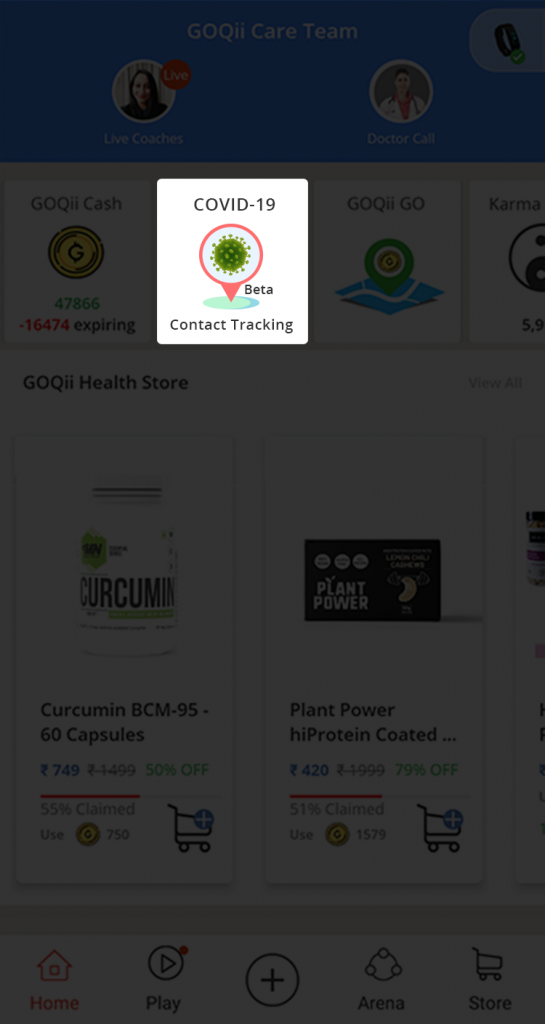
In the current scenario, Coronavirus (COVID-19) has been declared a pandemic by the WHO. The virus is fast spreading and it is imperative to act quickly, cautiously and focus on prevention given that there is no cure yet. In the wake of coronavirus and the call by PM Modi to caution and not panic, GOQii, as a preventive healthcare platform has launched a first of its kind ‘Contact Tracking’ features, to help users track every movement, activity and also track those who have been in close contact with them and this app feature will effectively help in social distancing as is recommended by the WHO.

This app will help especially in cases of a positive detection, where users can immediately backtrack every movement and individuals that one has come in contact with, in the last few days. This will ensure prevention, quick detection of virus carriers and thus curtail the spread of the virus. 

But, before we understand why such an app feature could be important for individuals and public health workers and institutions, it is important to understand What is Contact Tracing and why is it important during an outbreak is important?

Several international research and also the WHO describes that Contact tracing is an important strategy in epidemiology and refers to the identification and diagnosis of those individuals who have come in contact with an infected person. It ultimately aims to reduce the time span required to detect and treat a case of infectious disease and hence significantly minimizes the risk of transmission to the subsequent susceptible individuals. In-fact, contact tracing continues to remain an important measure, as it aids the epidemiologist in containing the infection.

Contact tracing is closely linked with case detection and investigation processes so that subsequent symptomatic patients can be effectively managed.

Contact tracing can feel like drudgery, but in an outbreak, it’s vital to public health. During this current COVID-19 outbreak, contact tracing will help make possible early diagnosis and getting care to people who need it. The information it uncovers also helps public health authorities contain epidemics.

Given this scenario, GOQii felt ‘self-tracking’ is also essential and should be followed to track one’s daily routine. Thus, it has specially updated the app to help users self-track, to the level of keeping a tab on every person one must have come in contact with, like cab sharing apps like Uber, Lyft, Ola, E-commerce and food delivery services like Amazon, Flipkart, Swiggy and Zomato. One can record the person’s name, contact number as well as photographs of course with their permission. 

COVID19 Tracking related App Features 

  1. Track Body Temperature, Weight, Heart Rate, Blood Sugar and other vitals. 
  2. Symptoms like Cough, Cold, Difficulty in breathing etc 
  3. Food and activity log with location
  4. Log contacts – time spent with people at various occasions
  5. Uber, Lyft, Ola rides with driver details
  6. Food delivery and other delivery services, name and phone number of delivery persons

You can download the app from Android Store and iOS Store 

 GOQii app follows the privacy policy. The data logged by the user is private to the user. The privacy settings in the app let the users decide whether they want to share their logs publicly, with just their friends or keep them visible only to themselves. 

 GOQii’s Founder & CEO Vishal Gondal believes that the GOQii COVID-19 related App features will help with contact tracing and remote quarantine management. We are hoping that we could play a major role in helping people take all precautions as well as help the government and health authorities, to be able to contain COVID19. We hope our combined efforts will rapidly lead to a better epidemiological understanding of COVID-19. Our goal is to improve the outcomes of the global community—as more people become infected”. “GOQii will do all within its ambit to implement caution as a clarion call by the PM. PM Modi’s efforts are being praised worldwide “as India is ahead of the curve to contain the virus,” Gondal added.

Healthcare authorities and professionals can leverage GOQii’s cutting-edge wearable, artificial intelligence & coaching ecosystem to accelerate COVID-19 surveillance and interventions. GOQii is supportive and open to helping all Government bodies in a step towards prevention and adequate health management. 

Apart from tracking daily activity, GOQii app will also enable users to track symptoms related to coronavirus and distinguishing symptoms including headache, cough, cold, flu and difficulty in breathing etc. Keeping your immunity intact is important in such a crisis situation. Users can have free access for 3 months to GOQii Play live for workouts and access to updates from experts while working out in the confines of your home to avoid social contact.


January 22, 2020 By Anusha Subramanian Leave a Comment

India’s Ikigai: Centennials know the secret sauce to Longevity

It is not just about staying physically healthy-it is also about mental, emotional and social health

Mishrilal Jain, 92 years lives in Bareli in a Madhya Pradesh and still sits in their family cloth store. He totally defies age by being active, healthy and social. Every day, he makes it a point to chat with his friends. He walks on his own with a stick and has no medical conditions or lifestyle diseases. A freedom fighter who has even been to jail in 1947, Jain has a very positive outlook towards life. His granddaughter reiterates his secret to longevity is that fact he has been active throughout his life, eats only homecooked food and is happy and content.

Dr Narsingh Gulvady, 90, lives in Navi Mumbai and is a retired MBBS doctor. He says, “do not do anything to live long. I did nothing”. Born in 1929, in then Madras, Dr Gulvady is active and spends a lot of time with his books apart from enjoying his beloved wife’s company who is also 86 years of age. Dr Gulvady attributes his longevity also to people’s love all along that has kept him happy and healthy. He also does not forget to credit his gene pool for longevity. Both he and his wife have led a very active and simple life. He maintains a diary on a daily basis and does not have any medical issues.  

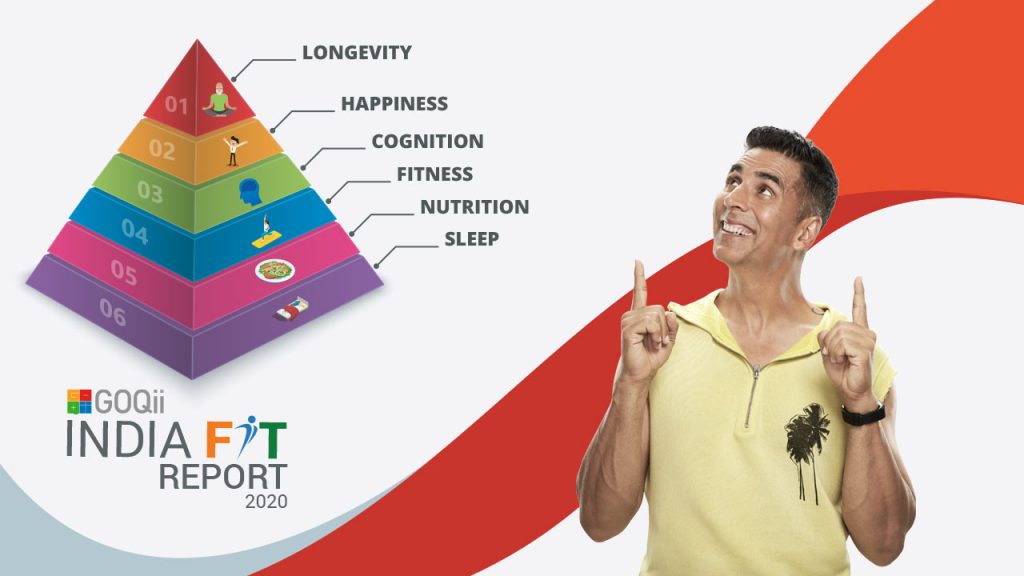
The above stories are just two of the examples of the many 90 plus people GOQii interviewed for their longevity study. Aging is a natural process and it is inevitable It is precisely the impermanence of life that renders it so precious. But, how about aging gracefully and disease-free? Is this even possible? Are some of the questions we asked and the answers we found were positive. Yes, it is very possible according to the latest India fit Report 2020 titled –– India’s Ikigai: The Old Know Better but the Young Don’t Care’.

As per the report, the above examples highlighted, the 90 plus years and above people attribute their longevity to simple living, being active, eating home-cooked nutritious food and to being socially active with friends and family. For many their years of living have been happy and content.

The India Fit report 2020 is in its 6th edition and it is a result of a year-long study of 5 million GOQii users. The report presents a holistic overview on the health and lifestyle of Indians across different parameters such as steps taken, lifestyle diseases (Diabetes, Cardiac and Hypertension), BMI (Body Mass Index), nutrition, water, stress, sleep, gut health and immunity, allergies, smoking and alcohol consumption; all of which are classified according to gender and key cities. This year India Fit report went a step further and decoded the secret to ‘India’s Ikigai-longevity of life’ from 90 years old and above across the country

Most of the centennials also lead a disease-free life while the younger age groups demonstrated a higher risk profile for lifestyle diseases, the study indicates. As per the health risk assessment (HRA) (framework of the study, 62% of people are either high risk or borderline on the Health-Risk Assessment spectrum. Only 38% of people are healthy. Young adults in the 19-30 age group have the unhealthiest habits and demonstrate a high propensity to be afflicted by lifestyle diseases.

The study indicates that people who report being happy and satisfied with their lives are more likely to enjoy a longer life span with good health and fewer long-term limiting health concerns. Bonding with family and friends appears to enhance health, and even increase longevity. At GOQii, our endeavour is to create awareness about preventive health while providing people with a platform to improve their health and fitness and move a step ahead to increase India’s average lifespan to 80 years and above.

 ALARMING RISE IN LIFESTYLE DISEASES

The report indicates that Diabetes has increased from 7.1% to 12% this year. The incidence of diabetes is highest among older adults at 23.81% and seniors at 36.82%. As per the report, 13.5% of Indians have Cholesterol issues. High Cholesterol can even occur among people who are underweight, or overweight, thin or fat thus regular monitoring is key in keeping cholesterol in check. Currently, 36% of the people who have high cholesterol have heart issues too while 51.7% of the people who have diabetes have abnormal cholesterol too. This past year Thyroid issues have increased from 6.8 to 10.7 %. The report also suggests that 13.4% of the people in India have high blood pressure.

SOME SURPRISES: Healthiest City is Chandigarh and Mumba slips to rank 15 in the list of healthy cities

The survey deep dives into city-wise parameters and has recorded Chandigarh to be the healthiest city in India while Mumbai slips far down in the list of healthiest cities, ranking 15th overall. Kolkata is at the lowest end of the spectrum. 18% of people in Kolkata are diabetic followed by Surat and Bhopal. In terms of allergies, Pune ranks lowest on the allergy index having the least amount of people suffering from allergies. Chennai has the worst BMI rank across all cities, Kolkata has the largest aging population in the country and the highest incidence of lifestyle diseases like diabetes, cholesterol, blood pressure and thyroid. About 60% of people in Lucknow fall in the unhealthy bracket which is just 2 % below the country’s average. Ahmedabad ranks 10th in the overall ranking, manages stress better than many other cities. Bhopal has overtaken all other major cities, having the highest percentage of people who consume alcohol.

The GOQii India Fit Report has been administered across 16 cities in the country and data has been collected from a cross-section of 5 million GOQii app users. The study evaluates the health of users basis the Health Risk Assessment that take and also the data recorded on a daily basis that is tracked by users on the App. HRA considers factors such as current body statistics, medical parameters, current nutrition, physical activity, stress, sleep, alcohol, smoking, current illness, lifestyle diseases, immunity levels, symptoms or health indicators. The data that is tracked by the users on a daily basis is their steps clocked, food logs, sleep, water intake and their vital parameters. This edition of the report has focused on doing in-depth interviews with India’s oldest citizens. Over 100 respondents across the length and breadth of India, between 90 and 100 plus years of age were an integral part of the study.

Download the full report from www.indiafit.org

For more topics on the health benefits of foods, check out our Healthy Reads section within the GOQii App or simply tune in to GOQii Play for LIVE sessions by experts. 

#LevelUp your winter and #BeTheForce 

November 6, 2019 By Dr. Viral Thakkar Leave a Comment

Stroke: A Few Untouched Aspects

stroke

Stroke is the sudden death of some brain cells due to lack of oxygen when the blood flow to the brain is lost by blockage or rupture of an artery to the brain. According to the WHO, it is the second leading cause of death and the third leading cause of disability. Stroke is also a leading cause of dementia and depression. For commonly known causes of stroke, please refer to the article “Stroke: Straight Dive or Pavilion” published earlier. While you might have read a number of reasons which lead to stroke, this article focuses on the importance of emotional health to prevent stroke.

 There Are 2 Main Types of Stroke  

  1. Hemorrhagic Stroke: is caused by bleeding in the brain due to a weak spot in the wall of the vessel, which can cause an aneurysm (bulging of the vessel wall). The vessels can also be weakened by chronic or very high blood pressure and break from force. When the vessel breaks, blood leaks into surrounding tissue, and the brain doesn’t get the oxygen and nutrients it needs.
  2. Ischemic Stroke: results from blocked arteries, which often occur from cholesterol build-up, called plaque. Plaques on the inside of the vessel can be fragile when blood flows past, causing the plaque to lift.  But in the blood vessel, when a plaque lifts-up and the body tries to heal it, like it would scab on your arm, it makes a clot where that plaque lifted up, which blocks blood flow and can lead to ischemic stroke.

The human body is magical. When the mind perceives a threat or stress, the body releases cortisol and adrenaline to cope with it. These hormones impact the homeostasis of the body; the other parameters get deranged and affect the healing processes of the body. Now, if your personality is to take constant stress, cortisol and level of other stress hormones will be high to ensure the body deals with stress. This could cause retention of salt which might increase blood pressure. Stress also causes an increase in blood sugar, which means the vessels can’t dilate or contract to better control blood flow. Increased cortisol is also known to disrupt sleep cycles leading to fatigue.

Anyone Can Be At Risk…

…for many reasons, not just stress. Sometimes, it just how your body responds.

While there is no concrete reason to state that positive emotions, a stress-free life or a balanced psychological state will not lead to stroke. However, there are numerous research studies to indicate that there might be a relationship between negative emotions, stress & stroke. In my practice, I have usually seen stressed people holding negative emotions fall prey to issues like stress, heart ailments, etc.  A University of Michigan study found that men who were more physiologically reactive to stress were 72% more likely to suffer a stroke.

Regardless of how your life or your job is, if you feel you are stressed, you most probably are.

If you’re still unsure, ask yourself these questions:

  • Does your significant other tell you, you seem stressed?
  • You tend to pick up fights and arguments with your family and co-workers more than normal?
  • You resort to alcohol, drugs, smoking to alleviate stress?
  • Do you find less joy in things that normally make you happy?
  • Do you find it difficult to fall or stay asleep compared to normal?
  • You don’t like to get up in the morning, especially on days you know you will come across stress causing situations

If the answer to the above is yes, then it’s time for you to work on yourself. Contemplate on the reason, give attention to the little things in life… It is the little things which lead to bigger changes! Some attitude changes like acceptance and forgiveness make a lot of difference!

Quick tip: Whenever you feel stress, start taking deep breaths. Mentally count till 5 & inhale, count another 5 and exhale. Make it as slow and steady as possible. Taking in more oxygen allows more oxygen to be available to the brain tissues. Some research suggests that deep breathing helps to rehabilitate the brain after a stroke. This style of breathing also helps to relax and calm the mind and whole being.

While everyone faces issues in life, it is the ability to cope with it, be in sync with one’s body which determines health!

#BeTheForce

October 23, 2019 By Vickel Dubey Leave a Comment

Understanding Patient Behaviour Towards Digital Therapeutics

Are we, as patients ready to pay for an app which is intended for Therapeutic Purpose & Helping us manage our lifestyle better?

Digital Therapeutics

What a Patient Thinks

Ideation of this whole article took a shape while having a discussion with my father who is a Type 2 Diabetes patient. I was actually insisting him to install an app to better manage his lifestyle specifically the dietary recommendation (Since he is a banker by profession and also manages family business, day to day life is a complete mess) given by his doctor. Initially he was in agreement but when he asked me if there is any cost associated, I nodded yes. His decision changed immediately. According to him, he knows what to eat, what not to eat and on top of it, he is taking his medication (which he often forgets) so there is no need of a digital intervention. I tried to explain to him multiple times thereafter but all in vain. According to him, it’s just a waste of money.

Patient Compliance Behaviour: Medication vs Lifestyle Recommendation

This is the story of most Chronic Disease patients for whom managing their lifestyle is a crucial need. But it’s really sad to see the poor grades when it comes to be compliant of various lifestyle aspects. According to a study conducted among Indian diabetes patients, only 24.1% were aware and have been following self-blood glucose monitoring appropriately. Similarly, only 37% of the patients are adhered to the dietary prescription made by their physicians and only 35% follow up the physical exercise recommendations.

Why is it important to talk about “Patient’s Compliance Behaviour” before getting into the “Patient’s Commercial Behaviour”? The reason is that patients need a push specifically in case of chronic diseases because it’s all about care, whether it’s done by the patient himself or by a caregiver. In case of medication, the weightage is higher since it’s coming from doctors (with serious words) while in case of lifestyle, it comes as a recommendation rather than a prescription which defines the seriousness.

So, if a patient is serious enough about his disease condition and strictly follows the testing, medication and lifestyle modification, he/she doesn’t need any intervention, traditional or digital to manage his/her lifestyle but the statistics don’t reflect the same. Hence, it becomes important for patients who are not serious or moderately serious to keep engaged and motivated to adhere with the doctor’s recommendation via a push. Digital gives that push.

Now comes the commercial behaviour. There are hundreds of apps available in the market to manage your disease conditions. Some are freely available; some are coming complementary with the devices/treatment and for some, you have to lighten your pockets. Definitely the skewness is higher towards the free ones. Most of us preferred the free apps and uninstall any paid app when it asks for a payment after the trial period. But free apps have their own limitation and for better services/attributes or features, you have to pay. Same goes with the apps which are offering lifestyle management solutions for patients.

A Preliminary Investigation

To get a deeper understanding of patient’s behaviour, I conducted a small survey among diabetes patients. The survey designed on SurveyMonkey consists of 10 questions (5 open ended, 5 close ended) and shared on a few social media & chatting platforms such as Facebook, WhatsApp etc. The key questions are:

  1. Patient’s Name
  2. Age
  3. Is he a diabetic patient?
  4. If yes, is he using any online application to manage his Lifestyle?
  5. Name of the app he is currently using
  6. Is it a paid app?
  7. Approximate cost of the app.
  8. Will he pay for an app which promises to better manage lifestyle (in case the answer of Q6 is no)?
  9. If yes, what is the approximate cost he will pay?
  10. If no, why?

There were 43 responses received in total out of which 32 were diabetics. The outcome of the survey are as follows:

  • ~80% of the total respondents are within the age group of 30 to 60 years
  • Out of total diabetes patients, only 36% are using one or another app to manage their lifestyle
  • Majority of the patients are using MySugar (45%) followed by Apollo Sugar (27%), GOQii (18%) and Wellthy (9%).
  • Only 2 out of the total patients with diabetes who are using an app have paid some amount
  • The approximate cost which they have paid is ~INR 2500
  • 77% of the patients who are using an app (and answered no for Q6) are not ready to pay even if it provides a better solution, while only 23% are ready to pay.
  • The approximate cost which most of the patients feel comfortable to pay is INR 100-200 per month.
  • Free availability, YouTube videos, Advice by friends and family, waste of money etc. are some of the major reasons why people don’t want to pay for an app.

So, if we look closely, patients are quite ignorant when it comes to pay for an app. Reason, they consider it as a waste of money. This outlook needs to be changed. This perception needs to be changed. And it can only be changed when it comes as a prescription and not just a simple recommendation.

Conclusion

If a patient can spend ~INR 9,000 (from an analysis conducted by Lady Hardinge Medical College) annually for his diabetes treatment, he can definitely spend few hundred bucks to manage his lifestyle for better outcomes. But the patient also needs support from other industry stakeholders such as Pharma, Devices and payers so that the cost can be shared and patient will have to bear minimum cost burden.

  • « Previous Page
  • 1
  • …
  • 24
  • 25
  • 26
  • 27
  • 28
  • …
  • 78
  • Next Page »

Search

Recent Posts

  • Navigating the Maze of Nutrition: Finding Clarity Amidst Confusion
  • Get children active and keep them healthy
  • What Gestational Diabetes Can Do To You & Your Unborn Child
  • Breathing – A Forgotten Art
  • The Incredible Benefits Of Milk You Might Not Know

Stay Updated

Archives

  • December 2025 (3)
  • November 2025 (15)
  • October 2025 (20)
  • September 2025 (6)
  • August 2025 (6)
  • July 2025 (12)
  • June 2025 (18)
  • May 2025 (16)
  • April 2025 (23)
  • March 2025 (23)
  • February 2025 (22)
  • January 2025 (26)
  • December 2024 (26)
  • November 2024 (25)
  • October 2024 (22)
  • September 2024 (24)
  • August 2024 (31)
  • July 2024 (21)
  • June 2024 (26)
  • May 2024 (31)
  • April 2024 (27)
  • March 2024 (29)
  • February 2024 (26)
  • January 2024 (25)
  • December 2023 (15)
  • November 2023 (11)
  • October 2023 (22)
  • September 2023 (22)
  • August 2023 (20)
  • July 2023 (22)
  • June 2023 (24)
  • May 2023 (24)
  • April 2023 (24)
  • March 2023 (23)
  • February 2023 (20)
  • January 2023 (16)
  • December 2022 (12)
  • November 2022 (15)
  • October 2022 (15)
  • September 2022 (12)
  • August 2022 (10)
  • July 2022 (17)
  • June 2022 (11)
  • May 2022 (10)
  • April 2022 (6)
  • March 2022 (6)
  • February 2022 (13)
  • January 2022 (12)
  • December 2021 (7)
  • November 2021 (3)
  • October 2021 (6)
  • September 2021 (3)
  • August 2021 (8)
  • July 2021 (7)
  • June 2021 (15)
  • May 2021 (16)
  • April 2021 (10)
  • March 2021 (7)
  • February 2021 (4)
  • January 2021 (4)
  • December 2020 (3)
  • November 2020 (4)
  • October 2020 (10)
  • September 2020 (3)
  • August 2020 (3)
  • July 2020 (2)
  • June 2020 (4)
  • May 2020 (10)
  • April 2020 (12)
  • March 2020 (10)
  • February 2020 (4)
  • January 2020 (4)
  • December 2019 (3)
  • November 2019 (7)
  • October 2019 (5)
  • September 2019 (4)
  • August 2019 (9)
  • July 2019 (9)
  • June 2019 (11)
  • May 2019 (4)
  • April 2019 (9)
  • March 2019 (8)
  • February 2019 (9)
  • January 2019 (8)
  • December 2018 (9)
  • November 2018 (3)
  • October 2018 (3)
  • September 2018 (5)
  • August 2018 (10)
  • July 2018 (6)
  • June 2018 (13)
  • May 2018 (8)
  • April 2018 (18)
  • March 2018 (9)
  • February 2018 (8)
  • January 2018 (15)
  • December 2017 (12)
  • November 2017 (19)
  • October 2017 (13)
  • September 2017 (15)
  • August 2017 (4)
  • July 2017 (8)
  • June 2017 (7)
  • May 2017 (6)
  • April 2017 (8)
  • March 2017 (6)
  • February 2017 (7)
  • January 2017 (9)
  • December 2016 (10)
  • November 2016 (7)
  • October 2016 (7)
  • September 2016 (7)
  • August 2016 (11)
  • July 2016 (9)
  • June 2016 (9)
  • May 2016 (12)
  • April 2016 (17)
  • March 2016 (17)
  • February 2016 (8)
  • January 2016 (6)
  • December 2015 (2)
  • November 2015 (9)
  • October 2015 (7)
  • September 2015 (9)
  • August 2015 (11)
  • July 2015 (9)
  • June 2015 (12)
  • May 2015 (9)
  • April 2015 (13)
  • March 2015 (8)
  • February 2015 (5)
  • January 2015 (12)
  • December 2014 (14)
  • November 2014 (11)
  • October 2014 (6)
  • September 2014 (13)
  • August 2014 (12)
  • July 2014 (6)
  • June 2014 (2)
  • May 2014 (7)
  • April 2014 (5)

From “Laddu Nawin” to Fit and Fierce: How a 25-Year-Old Insurance Advisor Shed 20 Kilos and Gained His Life Back

When 25-year-old Nawin Yadav from Hyderabad walked into his office every morning, he carried more than just his files and policy papers. He had the weight of fatigue, sluggish energy, and an ever-growing belly that was becoming the butt of jokes. “People … [Read More...]

“I’ve Challenged Myself to Live 100 Years” – The Story of Chandubhai Savani’s Second Chance at Life

At 67, most people start slowing down. Not Chandubhai Savani. A resident of Surat, Chandubhai, thought life was on track. “My life was going well till I had my bypass surgery,” he says. That surgery, back in 2021, was a wake-up call.  Medication was routine, but exercise wasn’t. His diet? What he calls ‘normal.’ “I […]

From Shimla’s Slopes to Chandigarh’s Sidewalks: Surinder Kaur Bhalla’s Journey from Chaos to Control

Some journeys start with a plan. Others begin with a stumble literally. Surinder Bhalla, a government professional, born and raised in the scenic hill town of Shimla, had always lived a life of movement. “In Shimla, you walked everywhere,” she reflects. “Walking was never an exercise. It was just life.” But after shifting to Chandigarh, […]

Ananda Mukherjee Health Story

From Terminal Illness To Complete Wellness! Ananda Mukherjee Health Story

As we observe World Cancer Day under the powerful theme ‘United by Unique’ (2025-2027)**, we are reminded that every individual’s journey with cancer is distinct, yet united by shared resilience, hope, and the collective fight against this disease. This theme places people at the centre of care and their stories at the heart of the […]

  • HOME
  • HEALTHY LIVING
  • FITNESS
  • HEALTHY RECIPES
  • USER STORIES
  • KARMA
  • BUY GOQii

Copyright ©2016 GOQii