GOQii

Blog

  • HOME
  • HEALTHY LIVING
  • FITNESS
  • HEALTHY RECIPES
  • USER STORIES
  • KARMA
  • BUY GOQii

August 4, 2025 By GOQii Leave a Comment

ADHD Brain Basics: Not Broken, Just Brilliantly Wired

Ever felt like your mind is ten steps ahead of the world, and sometimes even ten steps ahead of you? Thoughts racing, ideas bursting at the seams, yet the simplest task feels like trying to climb a mountain in flip-flops?

If that sounds familiar, you’re not alone. And no, your brain is not broken. You may just have an ADHD brain one that is wired differently, not defectively.

The ADHD Brain: A Race Car with Unpredictable Brakes

Here’s a metaphor that often hits home: think of the ADHD brain as a high-performance race car. The engine roars with power, the design is sleek, and the potential is immense. But the brakes? They can be a bit unreliable.

That’s ADHD in a nutshell. The spark, creativity, and momentum are all there in abundance. The challenge appears when it’s time to pause, shift gears, or tune into something that isn’t immediately engaging. This isn’t about laziness or a lack of discipline; it’s about the brain’s executive functions like planning, organisation, and impulse control which simply operate on a different system and require different kinds of support.

Why This Understanding Changes Everything

Many people say that when they first understand this concept, it reframes their entire life. ADHD isn’t about having less ability; it’s about having a different kind of ability.

The core issue isn’t an inability to focus. It’s that focus doesn’t always turn up on cue or for the “right” things. The same brain that can’t recall where it left the house keys can dive into hours of intense, joyful hyperfocus on something it finds meaningful, urgent, or exciting.

That’s not dysfunction. That’s divergence. And with the right approach, it’s a gift that can be channelled into incredible things.

Start with Understanding, Not Shame

When ADHD is met with curiosity instead of judgment, something powerful begins to unfold. The behaviours that once felt like personal flaws start to make perfect sense.

  • Struggling to get started? That’s not laziness; it’s often executive dysfunction causing a feeling of being overwhelmed.
  • Chronic lateness? It’s rarely rudeness; it’s more likely a different internal sense of time, sometimes called “time blindness.”
  • Forgetting things often? It’s probably not carelessness; it’s an overloaded working memory struggling to hold onto too many details at once.

The more we understand the “why” behind the behaviour, the more compassion we can build for ourselves and for the people around us who live with ADHD.

The Superpowers: Real, Tangible Strengths

Brains with ADHD can be:

  • Intensely creative and innovative problem-solvers.
  • Emotionally intuitive and empathetic.
  • Unusually perceptive, noticing things others miss.
  • Fiercely passionate and driven when engaged.

The goal isn’t to “fix” someone. It’s to help them understand their unique wiring so they can partner with their brain, not battle against it.

Not Alone, Just Wired Differently

ADHD doesn’t define you, but understanding it can be life-changing. Your brain is full of power, insight, and potential. The journey ahead isn’t about becoming someone new it’s about learning how to become more authentically you.

So stay curious. Be gentle with yourself. And know this: a whole world of insight, support, and possibility is waiting for you.

#BeTheForce

Disclaimer: This blog is for informational purposes only and is not a substitute for professional medical advice, diagnosis, or treatment. Please consult a doctor for personalised guidance and recommendations related to ADHD.

August 2, 2025 By Anusha Subramanian Leave a Comment

Why Resistance Training Matters More Than Ever on GLP-1 Therapy

Starting GLP-1 therapy can feel like a breakthrough. After years of battling weight, countless diets, and the exhausting cycle of losing and regaining weight, medications like semaglutide and liraglutide often offer something many people have never experienced before: a sense of control. Hunger fades, cravings quieten, and for once, weight starts to come down steadily. It’s not an exaggeration to say it can feel life-changing.

But here’s something most people aren’t told when they start: while the kilos may be dropping, not all that weight loss is necessarily fat. You could also be losing something your body desperately needs muscle. And this is where resistance training becomes a game-changer.

So, What’s Happening When You’re on GLP-1 Medications?

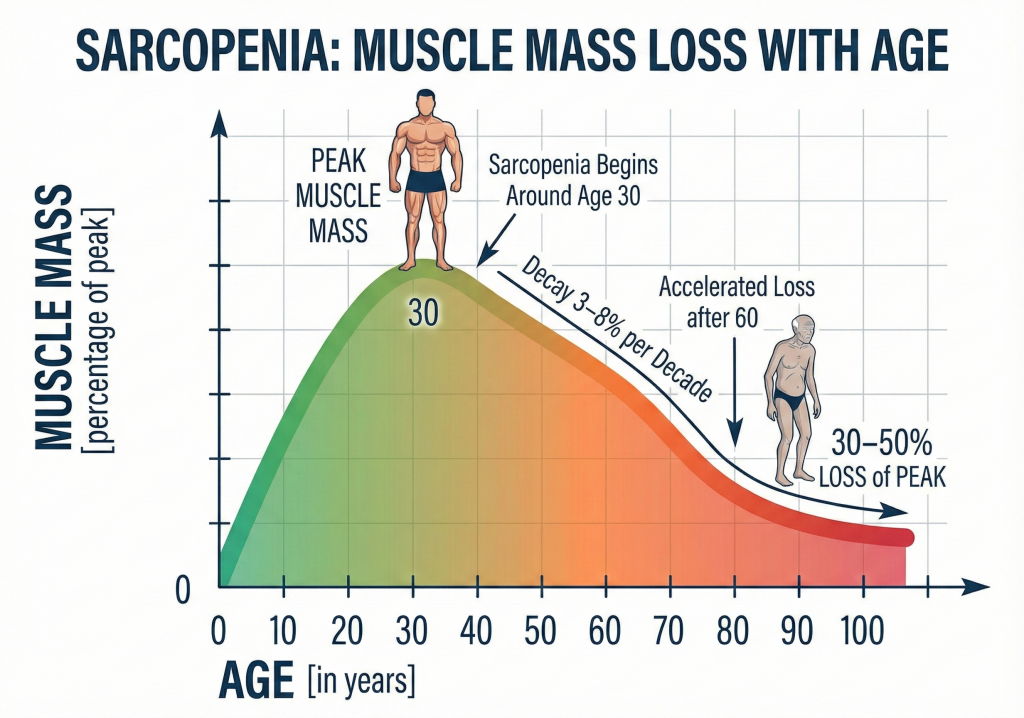
These drugs work by slowing digestion and helping you feel fuller for longer, which naturally leads to eating less. This calorie deficit drives the weight loss. But here’s the catch: when your body receives fewer calories, it doesn’t always discriminate. Yes, it burns fat but unless you’re actively working to protect it, your body may also start breaking down lean muscle for energy.

And that’s a problem worth paying attention to. Losing muscle is bad news for your metabolism, your strength, and your long-term health.

Why You Must Focus on Muscle While Losing Fat

Muscle is metabolically active tissue. Simply put:

  • It helps you burn more calories, even at rest
  • It supports posture, mobility, and everyday function
  • It protects against injury as you age
  • It’s essential for healthy ageing and longevity

When you lose weight with GLP-1 medications without strength training, your body may sacrifice muscle as well as fat. Over time, this can slow your metabolism making further weight loss harder and weight maintenance even tougher.

What Is Resistance Training?

Resistance training is all about giving your muscles a reason to stay. Every time you challenge them with weights, bands, or just your bodyweight your body gets the message: muscle matters. It says, “Don’t burn this muscle. I need it.”

That’s why resistance training is so important, especially when you’re eating less. It helps your body burn fat while preserving lean mass. Think of it as the ideal partner to your GLP-1 medication.

But What If the Gym Isn’t Your Thing?

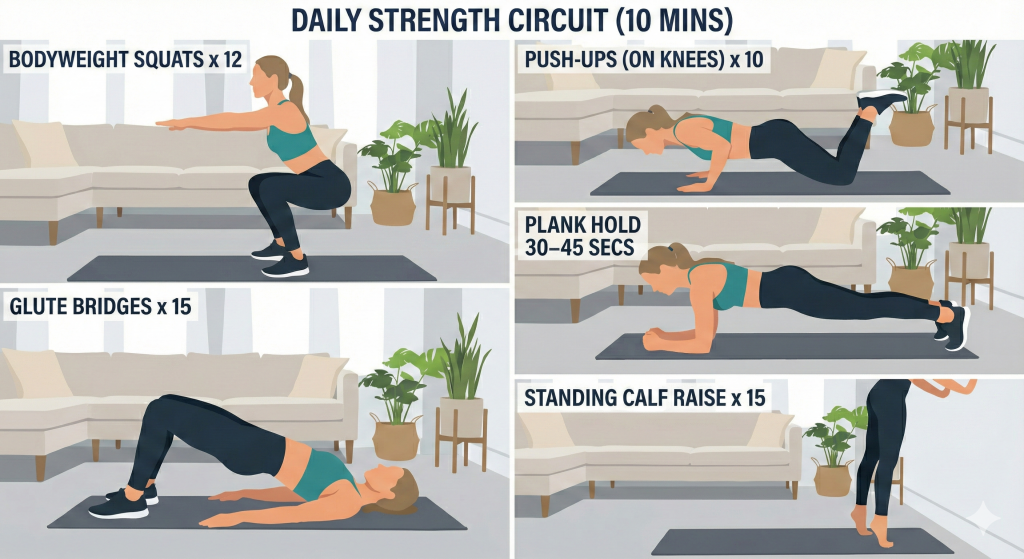
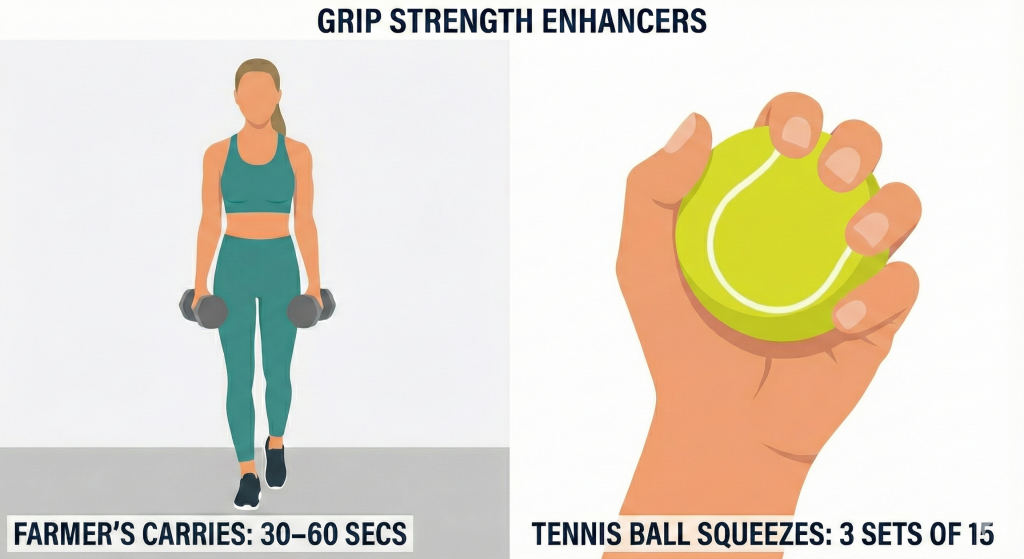
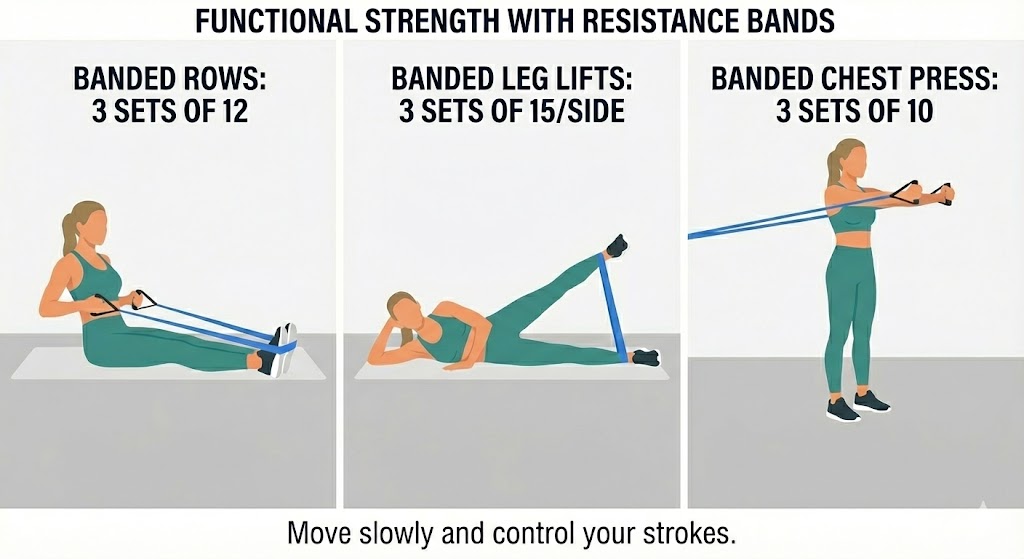
No worries. You don’t need fancy equipment or a gym membership to start building strength. Here’s how to integrate resistance training into your week:

  • Use your bodyweight

Squats, lunges, push-ups, and glute bridges are effective — and require no equipment.

  • Grab a resistance band

Lightweight, portable, and surprisingly powerful for full-body workouts.

  • Get creative


Use water bottles, backpacks, or heavy books in place of weights. Try bicep curls, shoulder presses, or loaded squats.

  • Keep it short
    Two to three sessions a week, just 15–20 minutes each, is enough to signal your body to retain muscle.

You don’t need to train like a bodybuilder. You just need to move your muscles regularly.

Benefits of Resistance Training on GLP-1 Therapy

Here’s why strength training even at home matters during your GLP-1 journey:

  • Preserves lean muscle mass
  • Prevents metabolic slowdown
  • Improves body composition (think firm and toned, not just smaller)
  • Boosts insulin sensitivity and blood sugar control
  • Enhances mood, energy, and mental clarity

Start small. Stay consistent. Focus on progress, not perfection. With resistance training, you’re not just losing weight — you’re gaining strength and long-term resilience.

Move to Protect Your Muscles

GLP-1 medications can help you lose weight but resistance training ensures you lose fat, not strength.

So if you’re on GLP-1 therapy, remember:

  • Prioritise protein
  • Move your muscles
  • Celebrate non-scale victories

Because in the long run, preserving muscle is what will keep your metabolism strong, your body capable, and your health thriving.

#BeTheForce

Disclaimer: The information provided in this blog is for general awareness and educational purposes only. It is not intended to replace professional medical advice, diagnosis, or treatment. Always consult a qualified healthcare provider for personalised medical guidance or concerns related to your health. Images shown are for representation purposes only and may not depict the exact recommendations or outcomes.

August 1, 2025 By GOQii Leave a Comment

Navigating the Anxiety and ADHD: Daily Struggles, Coping Strategies

If you’re living with ADHD, you’ve likely met its constant companion: anxiety. The two are like old acquaintances, often showing up together in the background of your daily life. ADHD brings its vibrant mix of curiosity and distraction, while anxiety adds a layer of restlessness, self-doubt, and that nagging sense that something might go wrong.

It’s no surprise, really. The unpredictable nature of ADHD – missed deadlines, impulsive decisions, and forgotten appointments—can create a daily rhythm filled with uncertainty. And uncertainty is anxiety’s favourite playground.

But here’s the hopeful part: understanding how ADHD and anxiety interact is half the battle. With the right strategies, support, and a little self-compassion, you can learn to manage both with more confidence.

Why Do ADHD and Anxiety So Often Overlap?

Think of the ADHD brain as one that’s wired for interest-based focus. This means you might find it hard to stick with tasks that don’t feel engaging or urgent. When the demands of a world designed for neurotypical processing start to pile up—misunderstood instructions, forgotten chores, a backlog of emails anxiety naturally creeps in.

You may find yourself constantly worrying about forgetting something crucial. Ruminating over past conversations. Or feeling overwhelmed at the thought of making choices that seem easy for others.

This isn’t a weakness. It’s the experience of a neurodivergent mind navigating a world that isn’t always built for it.

Common Daily Triggers for ADHD-Related Anxiety

For many with ADHD, anxiety doesn’t just come from big life events. It often bubbles up from everyday moments:

  • Feeling overwhelmed by choices, even simple ones.
  • Struggling to start a task because you don’t know where to begin.
  • Having difficulty concentrating at work or school.
  • Fearing you’ve misread social cues or said the wrong thing.
  • Feeling like you’re constantly behind, no matter how hard you try.

These moments can feel isolating, but you are not alone.

Coping Strategies That Work

Managing ADHD and anxiety takes practice and patience, but small, consistent changes can make a vast difference.

  • Establish Simple Routines

Structure can be incredibly calming for an ADHD brain. Start with small morning or evening rituals. Something as simple as making your tea the same way each morning or laying out your clothes the night before can create a reassuring sense of control.

  • Break Down Overwhelming Tasks

Instead of writing “finish report” on your to-do list, break it down into smaller steps: Open laptop, write introduction, outline key points. Clear, actionable steps reduce the feeling of being overwhelmed.

  • Use External Reminders

Don’t rely on your memory alone. Use phone alarms, sticky notes, or visual planners. These external cues can serve as gentle, non-judgmental reminders throughout the day.

  • Practice Mindful Breathing

When you feel anxiety building, just one minute of intentional breathing can help reset your nervous system. Inhale deeply, hold for a moment, and exhale slowly. Repeat.

  • Try Body Doubling

Working on a task alongside someone else (even if they’re working on something different, either in-person or remotely) can significantly improve focus and quiet the mental chatter that fuels anxiety.

  • Practice Self-Compassion

ADHD and anxiety often bring a loud inner critic. Experiment with changing that voice. “I’m doing my best with the tools I have” goes much further than, “Why can’t I just get my act together?”

You Don’t Have to Choose Between Functioning and Feeling Okay

It’s easy to fall into the trap of thinking you must push yourself endlessly to manage ADHD, or that anxiety is just something you have to live with.

But the reality is, it’s okay to slow down. It’s okay to ask for help. It’s okay to celebrate the small victories.

You’re not lazy. You’re not broken. You’re navigating a brain that works differently, and it’s okay for things to feel hard sometimes.

When it comes to managing ADHD and anxiety, there is no one-size-fits-all approach. What works for one person might not work for another and that’s okay. The most important thing is to remain curious. Experiment. And treat yourself with the same kindness you would offer to someone you truly love.

Because even though the path may feel tumultuous, it’s yours. And you’re more on track than you realise.

#BeTheForce

Disclaimer: This blog is for informational purposes only and is not a substitute for professional medical advice, diagnosis, or treatment. Please consult a doctor for personalised guidance and recommendations related to ADHD.

July 23, 2025 By Farida Gohil Leave a Comment

Late Lunching can slow Weight Loss…

Late Lunching can slow Weight Loss…
A new study suggests that if you’re trying to lose weight, it’s not just about how many calories you consume but also when you consume them. If lunch is your biggest meal of the day and you tend to eat it later, you may lose weight more slowly and lose less of it overall.

In other words, the later you eat your main meal, the harder it is to lose weight. This is the conclusion reached by researchers from Brigham and Women’s Hospital (BWH) and Tufts University in Boston (US), and the University of Murcia in Spain. Their findings were published in the International Journal of Obesity.

Frank Scheer, senior author of the study and Director of the Medical Chronobiology Program at BWH, stated:

“This is the first large-scale prospective study to demonstrate that the timing of meals predicts weight-loss effectiveness.”

He added:

“Our results indicate that late eaters displayed a slower weight-loss rate and lost significantly less weight than early eaters suggesting that the timing of large meals could be an important factor in a weight-loss programme.”

Why This Study Matters

While there is significant evidence from animal studies linking meal timing to weight regulation, there has been limited data in humans. That’s what made this study so compelling.

The researchers analysed data from 420 overweight individuals enrolled in a 20-week weight-loss programme in Murcia, Spain. Here, lunch is typically the main meal of the day, accounting for about 40% of total daily calorie intake.

Participants had an average age of 42, and the group was evenly split between men and women. About half were “early eaters” (lunch before 3 PM) and half were “late eaters” (lunch after 3 PM).

Key Findings

  • Early eaters lost significantly more weight than late eaters.
  • Late eaters experienced a slower rate of weight loss and showed lower insulin sensitivity a known risk factor for type 2 diabetes.
  • These differences were not explained by:
    • Total calorie intake
    • Energy expenditure
    • Appetite-regulating hormones (leptin and ghrelin)
    • Sleep duration
    • Presence of the “clock gene” (linked to weight management difficulty)

Interestingly, while breakfast and dinner timings made little difference, the study found that:

  • Late eaters tended to be “evening types”
  • They ate smaller breakfasts
  • They were more likely to skip breakfast altogether

What This Means for You

According to lead author Marta Garaulet, Professor of Physiology at the University of Murcia:

“Timing of food intake may play a significant role in humans. Weight-loss programmes should consider not only calorie intake and macronutrient distribution, but also the timing of food.”

This study focused on a Mediterranean-style diet where lunch is the main meal. In countries like the UK or US where snacking contributes up to 25% of daily calories applying these findings directly may be more complex.

If you’re struggling to lose weight, consider when you’re eating, not just what or how much. Eating your main meal earlier in the day could improve your metabolic health and help you shed kilos more effectively.

Want to learn more about nutrition and fat loss? Browse Healthy Reads. Or get personalised guidance from a GOQii Coach by subscribing here.

#BeTheForce 

Disclaimer: The information provided in this blog is for general awareness and educational purposes only. It is not intended to replace professional medical advice, diagnosis, or treatment. Always consult a qualified healthcare provider for personalised medical guidance or concerns related to your health. Images shown are for representation purposes only and may not depict the exact recommendations or outcomes.

  • « Previous Page
  • 1
  • …
  • 5
  • 6
  • 7
  • 8
  • 9
  • …
  • 100
  • Next Page »

Search

Recent Posts

  • Best Foods To Alleviate Irritable Bowel Syndrome
  • ALL ABOUT VERTIGO!
  • PCOS and Anxiety: Discover Relief with the 54321 Technique
  • Navigating the Maze of Nutrition: Finding Clarity Amidst Confusion
  • Get children active and keep them healthy

Stay Updated

Archives

  • December 2025 (6)
  • November 2025 (15)
  • October 2025 (20)
  • September 2025 (6)
  • August 2025 (6)
  • July 2025 (12)
  • June 2025 (18)
  • May 2025 (16)
  • April 2025 (23)
  • March 2025 (23)
  • February 2025 (22)
  • January 2025 (26)
  • December 2024 (26)
  • November 2024 (25)
  • October 2024 (22)
  • September 2024 (24)
  • August 2024 (31)
  • July 2024 (21)
  • June 2024 (26)
  • May 2024 (31)
  • April 2024 (27)
  • March 2024 (29)
  • February 2024 (26)
  • January 2024 (25)
  • December 2023 (15)
  • November 2023 (11)
  • October 2023 (22)
  • September 2023 (22)
  • August 2023 (20)
  • July 2023 (22)
  • June 2023 (24)
  • May 2023 (24)
  • April 2023 (24)
  • March 2023 (23)
  • February 2023 (20)
  • January 2023 (16)
  • December 2022 (12)
  • November 2022 (15)
  • October 2022 (15)
  • September 2022 (12)
  • August 2022 (10)
  • July 2022 (17)
  • June 2022 (11)
  • May 2022 (10)
  • April 2022 (6)
  • March 2022 (6)
  • February 2022 (13)
  • January 2022 (12)
  • December 2021 (7)
  • November 2021 (3)
  • October 2021 (6)
  • September 2021 (3)
  • August 2021 (8)
  • July 2021 (7)
  • June 2021 (15)
  • May 2021 (16)
  • April 2021 (10)
  • March 2021 (7)
  • February 2021 (4)
  • January 2021 (4)
  • December 2020 (3)
  • November 2020 (4)
  • October 2020 (10)
  • September 2020 (3)
  • August 2020 (3)
  • July 2020 (2)
  • June 2020 (4)
  • May 2020 (10)
  • April 2020 (12)
  • March 2020 (10)
  • February 2020 (4)
  • January 2020 (4)
  • December 2019 (3)
  • November 2019 (7)
  • October 2019 (5)
  • September 2019 (4)
  • August 2019 (9)
  • July 2019 (9)
  • June 2019 (11)
  • May 2019 (4)
  • April 2019 (9)
  • March 2019 (8)
  • February 2019 (9)
  • January 2019 (8)
  • December 2018 (9)
  • November 2018 (3)
  • October 2018 (3)
  • September 2018 (5)
  • August 2018 (10)
  • July 2018 (6)
  • June 2018 (13)
  • May 2018 (8)
  • April 2018 (18)
  • March 2018 (9)
  • February 2018 (8)
  • January 2018 (15)
  • December 2017 (12)
  • November 2017 (19)
  • October 2017 (13)
  • September 2017 (15)
  • August 2017 (4)
  • July 2017 (8)
  • June 2017 (7)
  • May 2017 (6)
  • April 2017 (8)
  • March 2017 (6)
  • February 2017 (7)
  • January 2017 (9)
  • December 2016 (10)
  • November 2016 (7)
  • October 2016 (7)
  • September 2016 (7)
  • August 2016 (11)
  • July 2016 (9)
  • June 2016 (9)
  • May 2016 (12)
  • April 2016 (17)
  • March 2016 (17)
  • February 2016 (8)
  • January 2016 (6)
  • December 2015 (2)
  • November 2015 (9)
  • October 2015 (7)
  • September 2015 (9)
  • August 2015 (11)
  • July 2015 (9)
  • June 2015 (12)
  • May 2015 (9)
  • April 2015 (13)
  • March 2015 (8)
  • February 2015 (5)
  • January 2015 (12)
  • December 2014 (14)
  • November 2014 (11)
  • October 2014 (6)
  • September 2014 (13)
  • August 2014 (12)
  • July 2014 (6)
  • June 2014 (2)
  • May 2014 (7)
  • April 2014 (5)

From “Laddu Nawin” to Fit and Fierce: How a 25-Year-Old Insurance Advisor Shed 20 Kilos and Gained His Life Back

When 25-year-old Nawin Yadav from Hyderabad walked into his office every morning, he carried more than just his files and policy papers. He had the weight of fatigue, sluggish energy, and an ever-growing belly that was becoming the butt of jokes. “People … [Read More...]

“I’ve Challenged Myself to Live 100 Years” – The Story of Chandubhai Savani’s Second Chance at Life

At 67, most people start slowing down. Not Chandubhai Savani. A resident of Surat, Chandubhai, thought life was on track. “My life was going well till I had my bypass surgery,” he says. That surgery, back in 2021, was a wake-up call.  Medication was routine, but exercise wasn’t. His diet? What he calls ‘normal.’ “I […]

From Shimla’s Slopes to Chandigarh’s Sidewalks: Surinder Kaur Bhalla’s Journey from Chaos to Control

Some journeys start with a plan. Others begin with a stumble literally. Surinder Bhalla, a government professional, born and raised in the scenic hill town of Shimla, had always lived a life of movement. “In Shimla, you walked everywhere,” she reflects. “Walking was never an exercise. It was just life.” But after shifting to Chandigarh, […]

Ananda Mukherjee Health Story

From Terminal Illness To Complete Wellness! Ananda Mukherjee Health Story

As we observe World Cancer Day under the powerful theme ‘United by Unique’ (2025-2027)**, we are reminded that every individual’s journey with cancer is distinct, yet united by shared resilience, hope, and the collective fight against this disease. This theme places people at the centre of care and their stories at the heart of the […]

  • HOME
  • HEALTHY LIVING
  • FITNESS
  • HEALTHY RECIPES
  • USER STORIES
  • KARMA
  • BUY GOQii

Copyright ©2016 GOQii