 Summer is here and as the weather is only going to get hotter, it’ll take a lot more effort to stay hydrated especially if you’re spending long hours outside. Continuous exposure to high temperature and humidity without any rest and fluids can lead to lack of energy, dizziness headache, weakness and sometimes severe cramps and fluid retention. Instead of eating heavy and hot food, you need something light – like some good summer salads!
But before we go over how you can make your summer salads, let’s explore the ingredients we can use!
What Can You Eat During Summer?
During this time of the year, our body needs more raw and cooling foods to help nourish and hydrate our cells. Apart from being chilled and high in water content, they also provide fiber for easy digestion and help eliminate toxins from the body.
Do you know that there are hydrating foods that provide about 20–25% of our daily water intake and it’s important to consume these during summer. Some of them include:
- Fruits: Watermelon, tomatoes (containing lycopene phytonutrient that will help protect skin from ultraviolet rays), grape fruit, pears, blueberries, pineapple (the bromelain in it has many health benefits especially in reducing cough) and cucumber.
- Leafy Greens: Spinach (Vitamin A and C) for liver detoxification with high watery lettuce, celery is brilliant.
- Carrots: They are high in water content as well as the beta carotene phytonutrient. It also makes the salad plate more colorful.
- Fresh Herbs: Parsley, mint, cilantro, coriander and basil are fabulous for reducing headaches, toothaches, calming the nerves and sore throats.
- Spices: Cinnamon, raw garlic and raw ginger will help in keeping cholesterol levels under check. Being anti-inflammatory in nature, they help you fight against high BP, cancer and diabetes. Pepper goes awesome with salad curbing acidity!
- Healthy Fatty Acids & Proteins: Nuts like almonds (vitamin E and fiber), walnuts and flaxseeds provide that much needed omega 3 fatty acid boost. You may also add peanuts, cashews, pistachios and seeds like sesame, sunflower, chia(topmost hydrator) for variations.
- Olive Oil: It is rich in MUFA (Mono Unsaturated Fatty Acids) and can be added to the salad (the best form is the cold pressed virgin oil good for thyroid which also has phytonutrients). Canola, walnuts, avocado and walnut oil are wise picks for salad dressing too.
- Lean Proteins: Quinoa, beans, chicken, legumes, chickpeas, paneer, lentils (folic acid rich providing vitamins and both soluble and insoluble fiber) should be added for muscle growth and repair.
- Do not forget to sprinkle lime to keep it alkaline!
Summer Salads You Can Try
Now that you are aware of which ingredients you can use, let’s go over on how you can use them.
1. Breakfast: Add some of the fruits mentioned above and mix them with yogurt. For breakfast, this is a great combination of carbs and proteins. If you are planning a long day out, you can combine your oatmeal with fruits like apple, pear and blueberry along with some nuts.
2. Morning snack: Apple/high watery fruit salad mixed with cinnamon, raisins and sprouts.
3. Lunch: Mix fresh fruits (carbs), vegetables (fiber), sprouts (proteins), beans and lentils.
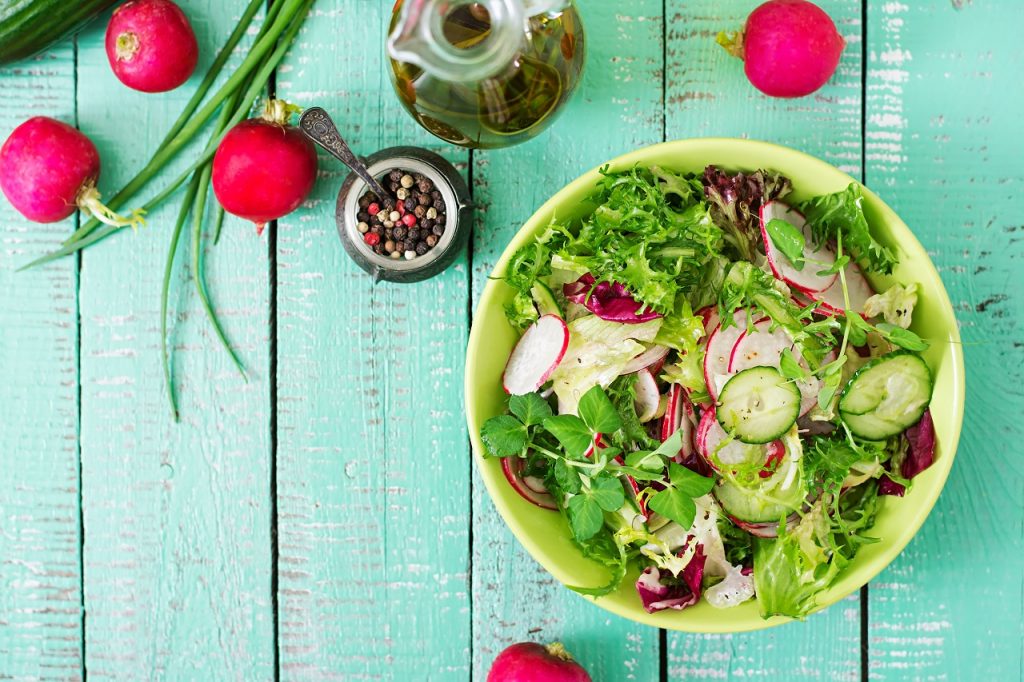
You can also try using watermelon, tomato, onion, cheese mixed with salt, vinegar oil chilled with lettuce leaves and black pepper. You can also add kale and cabbage for a calorie dense meal.
Another alternative is adding watermelon, cucumber, bell peppers, spinach, avocado, lime and quinoa. Apart from complete proteins, this dish will also provide calcium and vitamins.
The best blend of salad for lunch would be vegetables, good carbs, lean proteins (beans, chicken, shrimp, tofu, cottage cheese) and healthy fats, adding in red onions will keep it anti–inflammatory and antioxidant-rich.
4. Dinner: Mix Quinoa, beans, lentils and chicken with red bell pepper and veggies. Sprinkle lime and add in herbs according to your taste. You may also add spices to make it interesting.
The salads will not only provide water, but will also keep you full for a longer period of time, helping you keep your weight in check. You can get creative with your salads too. Try designing a different recipe for every meal. I would say grab your salad bowl and create your fun, nutritious and delicious summer salad to re-energize yourself.
We hope this article on summer salads helps you beat the heat! Read more articles on how to stay healthy during summer here. You can also ask an expert by subscribing for GOQii’s Personalised Health Coaching here.
#BeTheForce