GOQii

Blog

  • HOME
  • HEALTHY LIVING
  • FITNESS
  • HEALTHY RECIPES
  • USER STORIES
  • KARMA
  • BUY GOQii

March 24, 2025 By GOQii Leave a Comment

TIPS TO MANAGE SIDE EFFECTS – Helpful guidance to manage common treatment related side eects.

Understanding Side Effects During Your Journey

When starting USEMA, some people may experience mild side effects, especially during the early weeks or when the dose is increased.

These effects are common, temporary, and usually improve as your body adjusts to the treatment.

The most common symptoms include:

  • Nausea
  • Vomiting
  • Constipation
  • Diarrhoea
  • Bloating or acidity

This happens because GLP-1 medicines slow digestion and help you feel full with smaller portions of food.

The good news is that simple food habits and lifestyle adjustments can help manage these symptoms comfortably.

Managing Nausea

Nausea may occur during the early weeks of treatment.

  • Eat small, frequent meals instead of large portions
  • Choose light and easy-to-digest foods
  • Try soothing foods like mint, apple, or ginger-based drinks
  • Avoid strong smells or oily foods
  • Stop eating once you feel comfortably full

Managing Vomiting

Vomiting may occur if the stomach feels overly full.

  • Eat smaller meals more often
  • Drink fluids throughout the day to stay hydrated
  • If nausea or vomiting persists, avoid drinking water during meals
  • Drink fluids 30–60 minutes before or after meals

If vomiting continues, consult your doctor.

Managing Diarrhoea

Loose stools may occur as the digestive system adjusts to treatment.

What helps

Drink more fluids such as:

  • Water
  • Lemon water
  • ORS
  • Buttermilk

Eat gentle foods like:

  • Plain rice
  • Vegetable or chicken soup
  • Cooked carrots
  • Ripe fruits without skin

Avoid

  • Sugary drinks
  • Alcohol
  • Soft drinks
  • Very hot or very cold foods
  • Foods containing sugar alcohols (sorbitol, xylitol)

Reduce high-fibre foods temporarily if symptoms persist.

Managing Constipation

Some people may experience slower bowel movement.

  • Eat foods rich in dietary fibre such as fruits, vegetables, and whole grains
  • Drink plenty of fluids throughout the day
  • Stay physically active (daily walking helps digestion)
  • Eat balanced meals at regular times

Managing Bloating & Belching

These symptoms can improve with simple eating habits.

  • Eat slowly and chew food well
  • Choose smaller portion sizes
  • Avoid lying down for 30 minutes after meals
  • Eat regular meals instead of skipping meals
  • Avoid drinking with a straw, which increases air intake
  • Keep a 2–3 hour gap between dinner and bedtime

With the right food habits, hydration, and healthy lifestyle practices, many people are able to continue treatment comfortably and achieve meaningful health benefits.

If symptoms persist or worsen, always consult your doctor.

#BeTheForce

References:
Almandoz JP, Wadden TA, Tewksbury C, et al. Nutritional considerations with anti-obesity medications. Obesity (Silver Spring). 2024;32(9):1613–1631. doi:10.1002/oby.24067
Leidy HJ, Armstrong CL, Tang M, Mattes RD, Campbell WW. The inuence of higher protein intake and greater eating frequency on appetite control in overweight and obese men. Obesity (Silver Spring). 2010;18(9):1725–1732. doi:10.1038/oby.2010.45
Bodnaruc AM, Prud’homme D, Blanchet R, et al. Nutritional modulation of endogenous glucagon-like peptide-1 secretion: a review. Nutrition & Metabolism.2016;13:92. https://doi.org/10.1186/s12986-016-0153-3
Ohio State University. How to Activate GLP-1 Naturally. Accessed February 21, 2026.
Joslin Diabetes Center. Healthy Plate Method. Accessed December 29, 2025.
Gentinetta S, Sottotetti F, Manuelli M, Cena H. Dietary recommendations for the management of gastrointestinal symptoms in patients treated with GLP-1 receptor agonists. Diabetes, Metabolic Syndrome and Obesity. 2024;17:4817–4824. doi:10.2147/DMSO.S494919
American Diabetes Association. What Can I Eat? Healthy Eating Away from Home (WCIE Participant Guide, Class 3).
https://professional.diabetes.org/sites/default/les/media/wcie_participant_guide_class_3_lr.pdf

Disclaimer:
The information provided herein is prepared based on articles provided under reference and reviewed by a qualified dietitian intended for bringing general awareness and are/is not intended to replace professional medical advice. Seek advice from the qualified health care professional before adopting the suggestions or if you have a doubt regarding your health condition. USV Private Ltd., (“USV”) disclaims all liabilities or damages arising directly or indirectly from the advisory services. Copying, circulation and distribution of this content is strictly prohibited.

March 24, 2025 By GOQii Leave a Comment

How to Lower Blood Pressure Naturally Through Diet & Lifestyle

High blood pressure—also known as hypertension—affects millions of people around the world. Often called the “silent killer,” it usually has no obvious symptoms but significantly raises your risk of heart disease, stroke, and kidney issues if left unchecked.

While medication can help control blood pressure, it’s not the only way. In fact, simple, consistent changes in your diet and lifestyle can go a long way in reducing your blood pressure naturally—improving your health and overall quality of life.

Let’s explore proven, practical ways to lower your blood pressure through everyday habits.

1. Eat More Whole, Unprocessed Foods 

A balanced, nutrient-rich diet forms the foundation for blood pressure control. Focus on:

  • Fruits & Vegetables – Rich in potassium, magnesium, and antioxidants. Potassium helps balance sodium levels and relax blood vessel walls.
  • Whole Grains – Oats, brown rice, quinoa, and wholemeal bread are high in fibre, which supports heart health.
  • Lean Proteins – Include fish (especially fatty fish like salmon), chicken, tofu, lentils, and beans.
  • Healthy Fats – Avocados, nuts, seeds, and olive oil offer heart-protective fats.

🧂 Tip: Cut down on salt (sodium). Aim for less than 5g of salt (or 2g sodium) per day. Use herbs, spices, lemon, and garlic to add flavour instead.

2. Move More – Stay Active 

Regular physical activity strengthens the heart, enabling it to pump blood with less effort, lowering the pressure on your arteries.

  • Aim for at least 30 minutes of moderate exercise (like brisk walking, swimming, or cycling) on most days.
  • Incorporate strength training 2-3 times a week.

🚶‍♀️ Short on time? Even walking during breaks, taking stairs, or stretching regularly can help!

3. Watch Your Weight 

Excess weight, especially around the abdomen, puts pressure on your heart and blood vessels.

  • Losing even 5-10% of your current weight can significantly lower your blood pressure.
  • Combine a calorie-controlled diet with increased activity for sustainable weight loss.

4. Reduce Stress Levels 

Chronic stress can trigger temporary spikes in blood pressure—and over time, lead to lasting effects.

  • Practise deep breathing, meditation, or mindfulness daily.
  • Engage in hobbies, connect with loved ones, or simply take time for yourself.
  • Try journaling or spending time in nature to unwind.

5. Limit Alcohol & Quit Smoking 

  • If you drink alcohol, stick to recommended limits—no more than 14 units per week (UK guideline), spread out over several days.
  • Smoking damages blood vessels and immediately raises blood pressure—quitting can improve heart health dramatically.

6. Stay Hydrated 

Water supports kidney function and helps flush out excess sodium. Aim for 2-3 litres of water daily unless advised otherwise by a healthcare professional.

7. Cut Down on Caffeine

While moderate caffeine may be fine, too much can cause spikes in blood pressure in some individuals.

  • Limit to 1-2 cups of coffee or tea per day.
  • Monitor how your body responds and adjust accordingly.

8. Sleep Well 

Poor sleep is linked to higher blood pressure and increased risk of chronic conditions.

  • Aim for 7-9 hours of quality sleep each night.
  • Create a bedtime routine—avoid screens before bed, keep your room dark and cool, and wind down with relaxing activities.

Managing your blood pressure isn’t just about medication—it’s about taking daily actions that support your heart and overall health. Small, consistent lifestyle changes can lead to big improvements.

💬 Have you made changes to manage your blood pressure naturally? Share your experience in the comments below!

#BeTheForce

Disclaimer: The information provided in this blog is for general awareness and educational purposes only. It is not intended to replace professional medical advice, diagnosis, or treatment. Always consult a qualified healthcare provider for personalised medical guidance or concerns related to your health.

March 24, 2025 By GOQii Leave a Comment

10 Smart Habits for Better Progress

Practical lifestyle habits to help you get the best outcomes with USEMA


#BeTheForce

Disclaimer: The information provided herein is only to motivate the patients and the same shall not be considered as a substitute for medical advice. Patients should consult their registered medical practitioners before following these recommendations. USV Pvt. Ltd. disclaims all the liabilities arising from use of the information. Copying, circulation and distribution of this content is strictly prohibited.

March 24, 2025 By GOQii Leave a Comment

Instruction for use USEMA

A step-by-step guide to help you use your USEMA pen correctly and confidently.

Storage recommendations

Follow these simple steps to keep your medication safe and effective.

INSTRUCTIONS FOR USE

  • Read these instructions carefully before using your Semaglutide Injection pen.
  • Do not share your Semaglutide Injection pen with other people, even if the needle has been changed. You may give other people a serious infection, or get a serious infection from them.
  • Start by checking your pen to make sure that it contains semaglutide, then look at the pictures below to know the different parts of your pen and needle.
  • Your pen is a prefilled, single-patient-use, dial-a-dose pen.

2 mg USEMA Pen:

  • It contains 2 mg of semaglutide, and you can select doses of 0.25 mg or 0.5 mg.
  • Each prefilled pen contains 4 doses of 0.25 mg and 2 doses of 0.5 mg or contains 4 doses of 0.5 mg.

4 mg USEMA Pen:

  • It contains 4 mg of semaglutide, and you can only select doses of 1 mg.
  • Each prefilled pen contains 4 doses of 1 mg.
  • Your pen is made to be used with BD Ultra-Fine™.
  • BD Ultra-Fine™ 32G 4mm disposable needles are included with your Semaglutide Injection pen.
  • Always use a new needle for each injection.

Supplies you will need to give your Semaglutide injection:

  • Semaglutide Injection pen
  • A new BD Ultra-Fine™ needle
  • 1 alcohol swab
  • 1 gauze pad or cotton ball
  • 1 sharps disposal container for throwing away used Semaglutide Injection pen and needles.

USEMA 2 mg pen and BD Ultra-Fine™ needle

Step 1: Prepare your pen with a new needle

Important points to remember:

  • Always use a new needle for each injection. This will reduce the risk of contamination, infection, leakage of semaglutide, and blocked needles leading to the wrong dose.
  • Do not reuse or share your needles with other people. You may give other people a serious infection, or get a serious infection from them.
  • Never use a bent or damaged needle.

Step 2: Check the semaglutide flow with each new pen

Important points to remember:

  • Always make sure that a drop appears at the needle tip before you use a new pen for the first time. This makes sure that semaglutide flows.
  • If no drop appears, you will not inject any semaglutide, even though the dose counter may move. This may mean that there is a blocked or damaged needle.
  • A small drop may remain at the needle tip, but it will not be injected.
  • Only check the semaglutide flow before your first injection with each new pen.

Step 3: Select your dose

Important points to remember:

  • Always use the dose counter and the notch to see how many mg you select.
  • You will hear a “click” every time you turn the dose selector. Do not set the dose by counting the number of clicks you hear.

2 mg USEMA Pen

    • Only doses of 0.25 mg or 0.5 mg can be selected with the dose selector.
    • The black mark (••—) indicating the selected doses must appear in the notch to make sure that you get correct dose.
    • When your pen contains less than 0.25 mg or 0.5 mg, the dose counter stops before 0.25 mg or 0.5 mg is shown.

4 mg USEMA Pen

    • Only doses of 1 mg can be selected with the dose selector.
    • The black mark indicating the 1 mg must line up exactly with the dose pointer (notch) to make sure that you get the correct dose.
    • When your pen contains less than 1 mg, the dose counter stops before 1 mg is shown.
  • The dose selector may click differently when turned forward or backward.
  • The black mark (••—) indicating the selected dose must appear in the notch to make sure that you get a correct dose.
  • Do not count the pen clicks.

How much USEMA is left?

If there is not enough semaglutide left in your pen for a full dose, do not use it. Use a new Semaglutide Injection pen.

Step 4: Inject your dose

Important points to remember:

  • Always watch the dose counter to make sure you have injected your complete dose. Hold the dose button down until the dose counter shows 0.

How to identify a blocked or damaged needle?

  • If 0 does not appear in the dose counter after continuously pressing the dose button, you may have used a blocked or damaged needle.
  • If this happens you have not received any semaglutide even though the dose counter has moved from the original dose that you have set.

How to handle a blocked needle?

  • Change the needle as described in Step 5, and repeat all steps starting with Step 1: “Prepare your pen with a new needle”.
  • Never touch the dose counter when you inject. This can stop the injection.
  • You may see a drop of semaglutide at the needle tip after injecting. This is normal and does not affect your dose.

Step 5: After your injection

Important points to remember:

  • Never try to put the inner needle cap back on the needle. You may stick yourself with the needle.
  • Always remove the needle from your pen. This will reduce the risk of contamination, infection, leakage of semaglutide, and blocked needles leading to the wrong dose. If the needle is blocked, you will not inject any semaglutide.
  • Always dispose of the needle after each injection.

Disposing of used Semaglutide Injection pens and needles:

  • Put your used Semaglutide Injection pen and needle in a sharps disposal container right away after use. If you do not have sharps disposal container, you may use a house hold container that is:
    • made of a heavy-duty plastic
    • can be closed with a tight-fitting, puncture resistant lid, without sharps being able to come out
    • upright and stable during use
    • leak-resistant
    • properly labeled to warn of hazardous waste inside the container
  • When your sharps disposal container is almost full, you will need to follow your community guidelines for the right way to dispose of your sharps disposal container. There may be state or local laws about how you should throw away used needles and syringes.
  • Do not dispose of your used sharps disposal container in your household trash unless your community guideline permit this. Do not recycle your used sharps disposal container.

Important points to remember:

  • Care givers must be very careful when handling used needles to prevent accidental needle stick injuries and prevent passing (transmission) of infection.
  • Never use a syringe to withdraw semaglutide from your pen.
  • Always carry an extra pen and new needles with you, in case of loss or damage.
  • Always keep your pen and needles out of reach of others, especially children.
  • Always keep your pen with you. Do not leave it in a car or other place where it can get too hot or too cold.

Caring for your pen

Do not drop your pen or knock it against hard surfaces. If you drop it or suspect a problem, attach a new needle and check the semaglutide flow before you inject.

  • Do not try to repair your pen or pull it apart.
  • Do not expose your pen to dust, dirt or liquid.
  • Do not wash, soak, or lubricate your pen. If necessary, clean it with mild detergent on a moistened cloth.

#BeTheForce

  • « Previous Page
  • 1
  • …
  • 27
  • 28
  • 29
  • 30
  • 31
  • …
  • 94
  • Next Page »

Search

Recent Posts

  • Earth Day 2026: How Healing Yourself Heals the Planet
  • The New Annual Health Check: Tests That Actually Matter After 35
  • 10 Tips for a Blissful Night Sleep
  • World Liver Day 2026: Solid Habits, Strong Liver
  • Prebiotics and Probiotics: What’s the Difference?

Stay Updated

Archives

  • April 2026 (17)
  • March 2026 (18)
  • February 2026 (14)
  • January 2026 (14)
  • December 2025 (19)
  • November 2025 (15)
  • October 2025 (20)
  • September 2025 (6)
  • August 2025 (6)
  • July 2025 (12)
  • June 2025 (18)
  • May 2025 (16)
  • April 2025 (22)
  • March 2025 (28)
  • February 2025 (22)
  • January 2025 (25)
  • December 2024 (22)
  • November 2024 (23)
  • October 2024 (21)
  • September 2024 (23)
  • August 2024 (30)
  • July 2024 (21)
  • June 2024 (25)
  • May 2024 (30)
  • April 2024 (27)
  • March 2024 (27)
  • February 2024 (24)
  • January 2024 (21)
  • December 2023 (14)
  • November 2023 (10)
  • October 2023 (19)
  • September 2023 (22)
  • August 2023 (18)
  • July 2023 (22)
  • June 2023 (23)
  • May 2023 (24)
  • April 2023 (21)
  • March 2023 (23)
  • February 2023 (19)
  • January 2023 (15)
  • December 2022 (11)
  • November 2022 (15)
  • October 2022 (15)
  • September 2022 (12)
  • August 2022 (10)
  • July 2022 (17)
  • June 2022 (11)
  • May 2022 (10)
  • April 2022 (6)
  • March 2022 (6)
  • February 2022 (13)
  • January 2022 (11)
  • December 2021 (7)
  • November 2021 (3)
  • October 2021 (6)
  • September 2021 (3)
  • August 2021 (8)
  • July 2021 (7)
  • June 2021 (15)
  • May 2021 (16)
  • April 2021 (10)
  • March 2021 (7)
  • February 2021 (4)
  • January 2021 (4)
  • December 2020 (3)
  • November 2020 (4)
  • October 2020 (10)
  • September 2020 (3)
  • August 2020 (3)
  • July 2020 (2)
  • June 2020 (4)
  • May 2020 (10)
  • April 2020 (12)
  • March 2020 (10)
  • February 2020 (4)
  • January 2020 (4)
  • December 2019 (3)
  • November 2019 (7)
  • October 2019 (5)
  • September 2019 (4)
  • August 2019 (9)
  • July 2019 (9)
  • June 2019 (11)
  • May 2019 (4)
  • April 2019 (8)
  • March 2019 (8)
  • February 2019 (9)
  • January 2019 (8)
  • December 2018 (9)
  • November 2018 (3)
  • October 2018 (3)
  • September 2018 (5)
  • August 2018 (10)
  • July 2018 (6)
  • June 2018 (13)
  • May 2018 (8)
  • April 2018 (18)
  • March 2018 (9)
  • February 2018 (8)
  • January 2018 (15)
  • December 2017 (12)
  • November 2017 (19)
  • October 2017 (13)
  • September 2017 (15)
  • August 2017 (4)
  • July 2017 (8)
  • June 2017 (7)
  • May 2017 (6)
  • April 2017 (8)
  • March 2017 (6)
  • February 2017 (7)
  • January 2017 (9)
  • December 2016 (10)
  • November 2016 (7)
  • October 2016 (7)
  • September 2016 (7)
  • August 2016 (11)
  • July 2016 (9)
  • June 2016 (9)
  • May 2016 (12)
  • April 2016 (17)
  • March 2016 (17)
  • February 2016 (8)
  • January 2016 (6)
  • December 2015 (2)
  • November 2015 (9)
  • October 2015 (7)
  • September 2015 (9)
  • August 2015 (11)
  • July 2015 (9)
  • June 2015 (11)
  • May 2015 (9)
  • April 2015 (13)
  • March 2015 (8)
  • February 2015 (5)
  • January 2015 (12)
  • December 2014 (14)
  • November 2014 (11)
  • October 2014 (6)
  • September 2014 (13)
  • August 2014 (12)
  • July 2014 (6)
  • June 2014 (2)
  • May 2014 (7)
  • April 2014 (4)

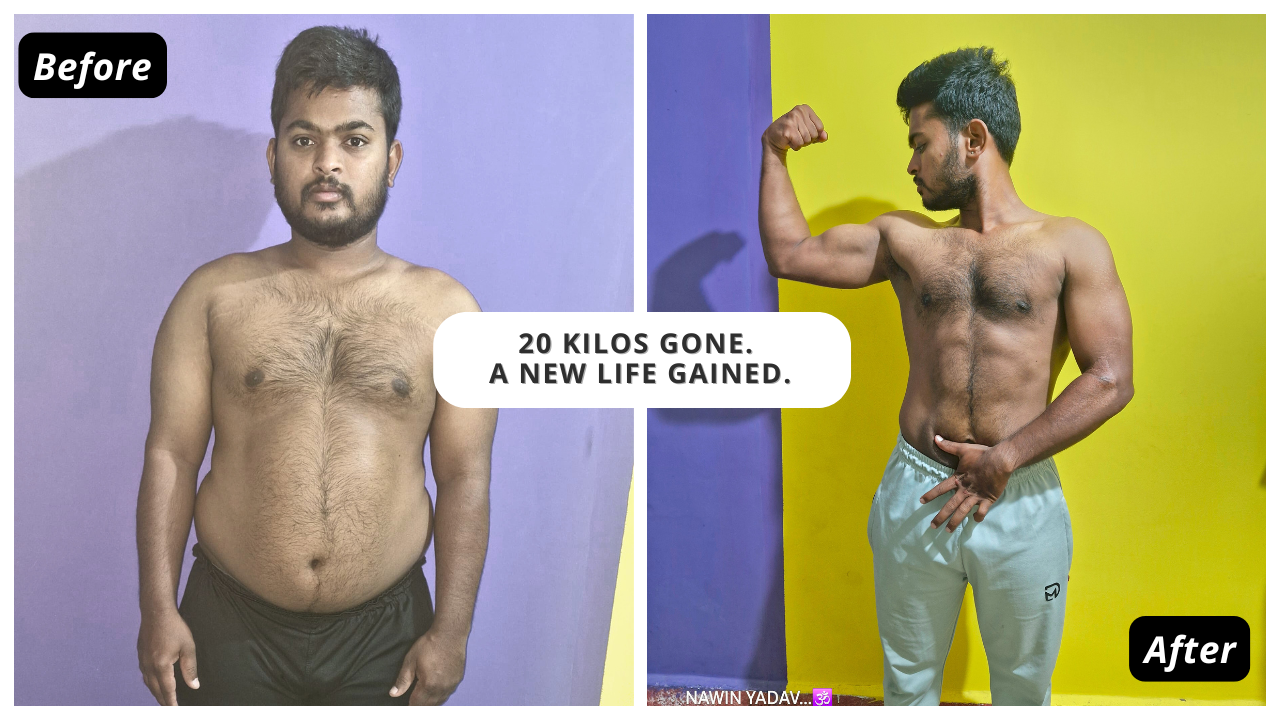
From “Laddu Nawin” to Fit and Fierce: How a 25-Year-Old Insurance Advisor Shed 20 Kilos and Gained His Life Back

When 25-year-old Nawin Yadav from Hyderabad walked into his office every morning, he carried more than just his files and policy papers. He had the weight of fatigue, sluggish energy, and an ever-growing belly that was becoming the butt of jokes. “People … [Read More...]


“I’ve Challenged Myself to Live 100 Years” – The Story of Chandubhai Savani’s Second Chance at Life

At 67, most people start slowing down. Not Chandubhai Savani. A resident of Surat, Chandubhai, thought life was on track. “My life was going well till I had my bypass surgery,” he says. That surgery, back in 2021, was a wake-up call.  Medication was routine, but exercise wasn’t. His diet? What he calls ‘normal.’ “I […]

From Shimla’s Slopes to Chandigarh’s Sidewalks: Surinder Kaur Bhalla’s Journey from Chaos to Control

Some journeys start with a plan. Others begin with a stumble literally. Surinder Bhalla, a government professional, born and raised in the scenic hill town of Shimla, had always lived a life of movement. “In Shimla, you walked everywhere,” she reflects. “Walking was never an exercise. It was just life.” But after shifting to Chandigarh, […]

Ananda Mukherjee Health Story

From Terminal Illness To Complete Wellness! Ananda Mukherjee Health Story

As we observe World Cancer Day under the powerful theme ‘United by Unique’ (2025-2027)**, we are reminded that every individual’s journey with cancer is distinct, yet united by shared resilience, hope, and the collective fight against this disease. This theme places people at the centre of care and their stories at the heart of the […]

  • HOME
  • HEALTHY LIVING
  • FITNESS
  • HEALTHY RECIPES
  • USER STORIES
  • KARMA
  • BUY GOQii

Copyright ©2016 GOQii