GOQii

Blog

  • HOME
  • HEALTHY LIVING
  • FITNESS
  • HEALTHY RECIPES
  • USER STORIES
  • KARMA
  • BUY GOQii

May 23, 2024 By Arooshi Garg 5 Comments

Jaggery and its Benefits!

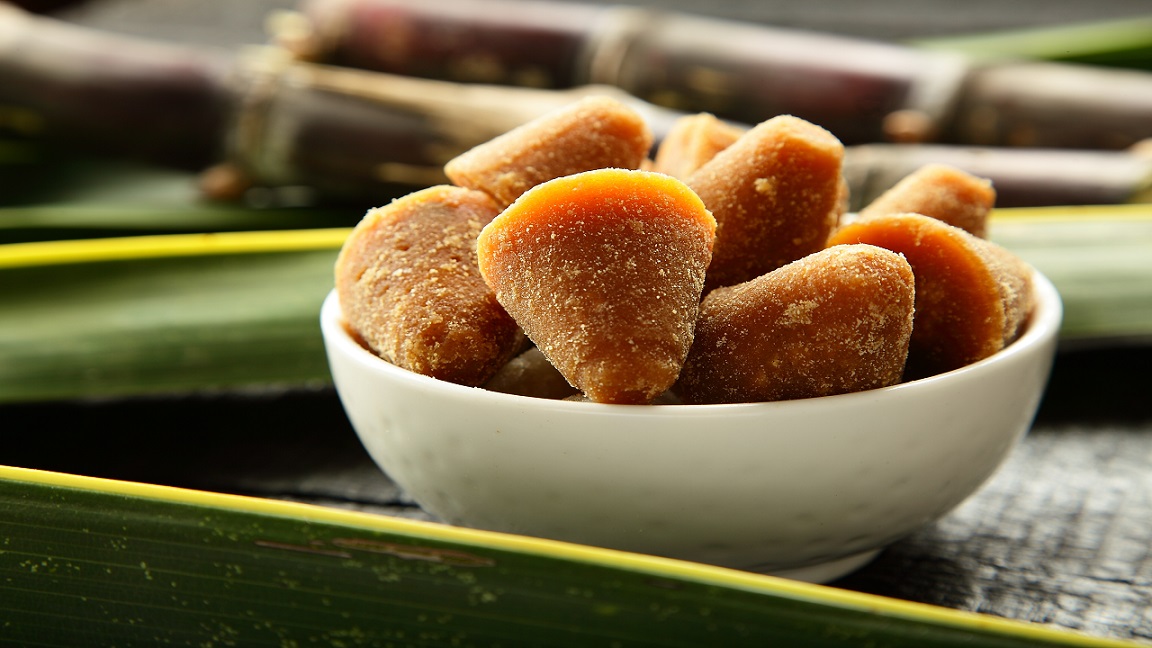
Benefits of JaggeryJaggery is one of the most common ingredients found in Indian kitchens. Apart from being one of the best natural sweeteners, it also offers a plethora of health benefits. It is good for your cardiac health, digestion, improved metabolism, blood circulation, respiratory system, menstrual cramp or pains, sexual potency and stronger immunity.

About 70-80% of the world’s Jaggery production takes place in India, where it is commonly called gur/gud. It is primarily made from Sugarcane but nowadays it can be made from coconut sap and date palm as well.

How is Jaggery Made?

Jaggery is made by first extracting juice from Sugarcane. The canes or palms are pressed to extract the sweet juice or sap. The juice is then allowed to stand in big containers so that any sediment settles to the bottom. It is then strained to produce a clear liquid.

The juice is then concentrated by placing in a very large, flat-bottomed pan and boiled. During this process, the Jaggery is stirred and the impurities are skimmed off the top until only a yellow, dough-like paste remains. This paste is then transferred to containers where it cools into Jaggery blocks.


Jaggery vs Refined Sugar

Jaggery contains more nutrients than refined sugar because of its molasses content. Molasses is a nutritious by-product of the sugar making process, which is usually removed when making refined sugar. Molasses adds plenty of micro-nutrients to the final product. Hence, it is more nutritious as compared to white refined sugar!

10 Benefits of Eating Jaggery

  1. Prevents and Treats Common Cold: Consumption of Jaggery helps fight symptoms of a cold and cough. Mixing a small piece of it in warm water or tea can help greatly.
  2. Immunity Booster: Loaded with antioxidants and minerals like zinc and selenium, which helps curb free-radicals responsible for inflammation, Jaggery helps boost resistance against infections, hence building stronger immunity.
  3. Detoxifies the Liver & Other Organs: It plays a major role in detoxifying internal organs such as liver, stomach, intestines, kidneys, etc. by flushing out harmful toxins from the body. Certain compounds present in Jaggery activate the digestive enzymes in our body, which help us digest food properly and also help reduce indigestion/bloating.
  4. Combats Menstrual Pain and PMS: It is helpful in providing relief from cramps. In case you experience mood swings, irritation before your period, you should eat a small piece as it increases the levels of hemoglobin, maintains the hydration levels in our body in heavy-flow during periods and helps in releasing more Endorphins during periods (this helps relax our body). During periods, consume a solution of a glass of lukewarm water and Jaggery. It will help you tackle period cramps for the day.
  5. Body Pain & Aches: Do you suffer from aches and pains in your joints? Eating Jaggery can provide you with immense relief. Add some grated ginger in boiling water and strain. Add a small piece of Jaggery and drink this regularly to reduce joint pain. You can even drink it with a glass of milk everyday to help strengthen the bones. This can help prevent joint and bone problems such as Arthritis.
  6. Prevents Constipation: It activates the digestive enzymes in the body, stimulates bowel movements and helps prevent as well as relieve constipation. A cup of warm water with organic Jaggery and half a lemon’s juice is one of the best home remedy to cure constipation.
  7. Prevents Anaemia: Rich in iron and folate, it helps prevent anaemia by ensuring that a normal level of red blood cells is maintained. It also helps in increasing haemoglobin content of blood. This is especially beneficial for pregnant women.
  8. Acts as a Cooling Agent: Eating a small piece of it everyday helps in maintaining normal body temperature, which helps in keeping your stomach cool. Experts recommend drinking GurSharbat (soaked in ice cold water) during the summer months to cool off.
  9. Prevents Respiratory Problems: By consuming Jaggery regularly, you can prevent many respiratory problems such as asthma, bronchitis, etc. Eating it with sesame seeds is beneficial for the respiratory system and preventing allergies related to it.
  10. Regulates Blood Pressure: Jaggery contains potassium and sodium, which play an important role in the maintenance of pH levels in the body. It ensures that a normal level of blood pressure is properly maintained.

Quick Til Ladoo/Bars Recipe

You will need:

  • 1 Cup White Sesame Seeds
  • 1 Cup Jaggery
  • 1 tbsp ghee
  • ¼ tsp Cardamom Powder
  • Nuts of your choice

Method:

  • Roast sesame seeds on medium heat till light brown
  • Heat ghee in pan and add Jaggery
  • Simmer on slow flame till it melts
  • Put off flame and add the roasted til (and crushed nuts) and mix well
  • Grease your palms with ghee and make small balls or set in a plate and cut bars out of it

We hope this article equips you with valuable insights into the amazing benefits of jaggery. Incorporating this natural sweetener into your diet can enhance your cardiac health, digestion, immunity, and overall well-being. If you found this information helpful, we’d love to hear your thoughts in the comments below. For more interesting tips on diet and nutrition, check out Healthy Reads. For further information or guidance, reach out to our certified experts by subscribing to GOQii’s Personalised Health Coaching here.

#BeTheForce

May 14, 2024 By Arooshi Garg 1 Comment

Tips to eat healthy and stay healthy while vacationing!

beach-coast-flip-flops

Summer months is at its peak and the end of school sessions and the start of holidays! Many of us opt for a vacation to unwind. Going on vacation is an exciting time! It is a time to relax and enjoy your time off. However, the change in your routine can affect your eating habits so it’s important to plan ahead. Here are some tips to fully enjoy your vacation and stay healthy on it as well:

  1. Carry healthy snacking options with you. Homemade roasted peanuts, chana, figs, dates, fresh fruits, seed trail-mix, baked soya chips, almonds, and walnuts, energy bars made with simple ingredients such as jaggery, peanuts, nuts and dates!
  2. If you can’t avoid outside food then be mindful of portion sizes and have lesser portions of calorie-rich foods like rice and pasta.
  3. Follow the plate rule. Always pick up a quarter plate for your major meals. That will ensure that you don’t overfill your plate. Follow the thumb rule: Always fill half your plate with fruits and veggies.
  4. Many restaurants/hotels have buffet food stations where food can be cooked to your liking. Ask for a stir-fry with lots of vegetables served with a tomato or garlic sauce/olive oil dressing.
  5. If your room has a mini fridge, pick up some fresh fruit and raw veggies at the local grocery store. Pack whole grain, high fibre cereal and a few re-usable/disposable cups, bowls and spoons. Now you have the ingredients for a fast and healthy meal.
  6. Always carry a bottle of cold water in your bag. Vacations can add more hours of sun-time than you are used to which can dehydrate you, having a water bottle handy helps you prevent any heat stroke, dehydration. For extra flavour, add fresh berries, mint leaves or slices of orange, lemon, lime or cucumber. Try having more of local refreshing drinks like coconut water, kokam etc.
  7. Post your meals squeeze half a lemon in plain drinking water and drink on! Will be a good digestive drink and will help you keep light!
  8. Avoid picking up salads with heavy/creamy dressings and go for simple, green salad, fresh sliced raw veggies like cucumber, tomato, beetroot and carrots.
  9. Choose the GPRS rule which opts for more of grilled, poached, roasted and steamed foods rather than picking foods which are deep fried.
  10. While eating at a buffet, browse all the items and pick only 3-4 best items that will make way to your plate and stomach for that meal. Avoid tasting too many things, or overloading your plate with more food.
  11. Enjoy fresh fruits for dessert. Try the local, seasonal fresh fruit such as mangoes, jackfruit, papayas and pineapples. Treat yourself to a sweet dessert only once in a while, or split dessert with a friend.
  12. Always enjoy the local cuisine and fresh foods available rather than choosing your preferred foods. Give a visit to local markets. They are the ideal place to get a real experience of local culture. It is also a great place to find fresh, flavorful, whole foods, traditional food items. They are always fresh and bubbling with healthy nutrients.
  13. Limit your alcohol intake and opt for more of healthier drinks. Alcohol can dehydrate you and make you lethargic the next day. Choose more of water-based drinks rather than opting for soda.
  14. After a tiring sightseeing day and lots of outside eating, de-stress your body with a cup of warm lemon water, or a cup of green tea easily available in hotel rooms. You can also carry some carom seeds with you and drink warm ajwain water (carom seeds) before dozing off!
  15. Look for sports or recreational activities around your destination. Swimming, tennis, hiking, trekking, kayaking, cycling, or a simple walk around can help you have some adventure and stay active through your holiday.

Going on a vacation is a great time to enjoy a relaxing time with friends and family. Staying on track with healthy eating is easy when you plan ahead and choose wisely. Hope these tips help you stay healthy, fit and enjoy your holidays to the max! Do let us know how you manage to stay healthy on a vacation in the comments below! You can find more tips such as this one, here. You can also get these healthy tips directly from a GOQii Coach by subscribing for Personalised Health Coaching here.

#BeTheForce 

April 22, 2024 By Arooshi Garg 2 Comments

Plastics in food and its health hazards

feature_food_packaging_mainHave you ever given a thought to all the plastic in your home/kitchen? What could be the reason for alarming concern over usage of plastics in storing/serving/eating food?

You probably have an entire cupboard full of stuff, including reusable plastic containers that you use to store and reheat leftovers. After all, plastics are handy, lightweight, they store easily, and they’re cheap. We have been enslaved to plastic usage for the last few decades, and it is a useful material with many important uses. But, food storage, reheating, and serving is not among these uses. To reduce the risk that plastic chemicals will leach into food avoid cooking, eating, storing in plastic containers, even if the label says ‘microwave safe,’ or ‘oven safe’.

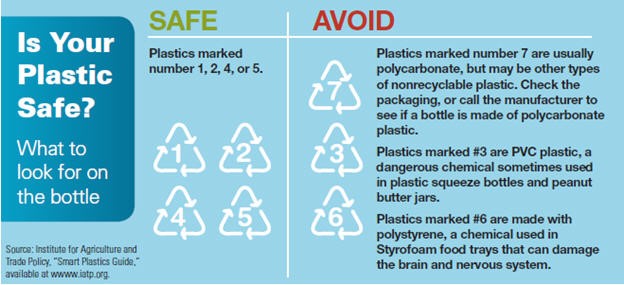
When it comes to plastic food containers, some are safer than others. You can tell what kind of plastic you have by looking at the ‘resin identification number’ located in a triangle on the product (check details in pic). Note that the triangle by itself does not mean that the plastic is recyclable. You need to look at the number in the triangle and check whether that plastic grade is safe for using or not.

  plastics in food

What is PLASTIC?

There’s no single substance called ‘plastic’. That term covers many materials made from an array of organic and inorganic compounds. Substances are often added to plastic to help shape or stabilize it. Two of these plasticizers are:

Bisphenol-A (BPA), added to make clear, hard plastic

Phthalates added to make plastic soft and flexible

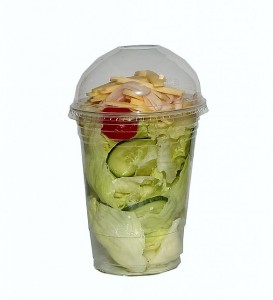
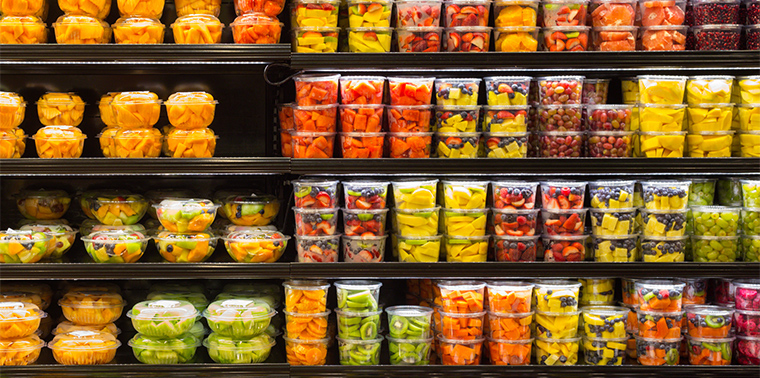
BPA and phthalates are believed to be Endocrine disrupters. These are substances that mimic human hormones, and not for the good. When food is wrapped in plastic or placed in a plastic container and microwaved, BPA and phthalates may leak into the food. Any migration is likely to be greater with fatty foods such as meats and oils than with other foods. Whenever hot food or liquid is packed in a plastic bag there is an exchange of toxic chemicals into the food. Many restaurants, small food kiosks, food delivery systems still use plastic boxes, covers and cups unsuited for keeping food as it may lead to food poisoning. These should be avoided at all costs.

The toxins and chemicals that leach from plastics into our food have shown to mimic hormones and cause diseases like – hormonal imbalances, infertility, early onset of diabetes, hypertension, cancers, especially breast cancer. Thus, it’s important to try to make reasonable efforts to replace plastic in our kitchens.

As we know plastic does not last forever. The more it’s heated and cooled, the more the chemicals in that container begin to break down. And when they start to break down, they break down into the food inside. As a result, detrimental and expensive health issues can arise.

fast-food-74324_640

Realistically speaking, eating hot food from a plastic bag one time will probably have no effect on a person’s health, but those who make a habit out of it may be putting themselves at risk. There is no set rule on how many times a person can eat food that has touched hot plastic without getting sick. The safest solution is to avoid eating this food whenever possible. The price of a ceramic/steel plate may higher than that of a plastic plate, but compared to the long-term financial and emotional costs associated with conditions like diabetes and infertility, it’s a small price to pay.

How to Create a Safer Kitchen

It’s almost impossible to have a 100% plastic-free kitchen. It wraps our bread, it stores our oils, bread, groceries, packaged foods etc. After all, plastic is everywhere. But we can surely try to remove it from wherever possible!

However, there are steps you can take to create a safer, plastic-free kitchen.

  1. If you do use plastic, never heat it – When plastic is heated, it leaches chemicals 55 times faster than normal. So, never ever heat food in a plastic container in the microwave, or pour hot food (especially liquid) into a plastic container. Even if it says “microwave safe” on it, it’s still going to leach chemicals. Microwave Safe simply means the container won’t warp in the heat. Also for baby foods/milk – always use designated glass bottles/steel containers for storing food/feeding the baby.

If you still plan to use plastic, stick to numbers 1, 2, 4, and 5. Those are safest.

  1. Use glass or stainless steel containers – The best step you can take to cut down on your use of plastic is to recycle all the plastic storage containers you have and use glass or stainless steel instead.
  2. Buy Fresh foods – BPA is in the lining of almost all canned food because it helps prevent corrosion and food contamination. Whenever you can, buy fresh or frozen food rather than canned food. For us Indians, most of the canned food consumption is limited to Cherries, Pineapple, Corn, Condensed Milk and some other stuff. Always try to buy fresh fruit/veggies over can stuff.
  3. Use a stainless steel water bottle/glass jars – Many plastic bottles available are not safe to use. Always check for the mark under the bottle and see if it is safe for storing water on a daily basis. If you can best avoid using plastic bottles and stick to stainless steel bottles available in various sizes. For storing water in fridges – good quality glass bottles or jugs can be used.

Only bottles specifically made to be reused should be refilled. Wear and tear on the bottle can form cracks that could harbour bacteria. An additional concern is that harmful chemicals can leach out of single-use plastic bottles and into your drinking water.

  1. Also leaving water bottles in cars for extended periods of time can raise the BPA levels. Do not drink bottled water that has been left in a car. The heat reacts with the chemicals in the plastic of the bottle which releases dioxin into the water. Dioxin is a toxin increasingly found in breast cancer tissue. So please be careful and do not drink bottled water that has been left in a car. Use glass, stainless steel, and copper bottles for storing and carrying water.
  2. Ditch the plastic wrap/cling film – Do you know the plastic that wraps your paneer, meats, cakes, bread and other bakery stuff equally harmful? Avoid that and instead, ask your bakery stuff to be wrapped in food wrapping paper.
  3. Plastic tiffin boxes – If possible do check the plastic grade of boxes, containers that you use to store/put hot food into. Replace all plastic tiffin boxes with the good old time stainless steel tiffins for kids, for adults as well. Also for adults, a lot of Borosil/glass tiffins are available. To prevent the glass from breaking they have good silicone/foam coverings!

Tupperware/Silicone and similar plastics

While the vast majority of Tupperware products are considered safe, for example, some of its food storage containers use polycarbonate (plastic #7), which has been shown to leach the harmful hormone-disrupting chemical Bisphenol A (BPA) into food items after repeated uses.

However, as a safety precaution: Don’t ever heat, or microwave food in plastic or Tupperware, don’t even pour hot liquid. Wear, tear and repeated washings may lead harmful chemicals leaching into the food.

Silicone: Silicone, a synthetic rubber made of bonded silicon. Food-grade silicone is a non-toxic polymer mostly made from silica (sand). It can withstand heating and freezing without leaching or off-gassing, hazardous chemicals – unlike plastics, which contaminate food in these environments.

According to food regulatory authorities, silicone appears to be safe. It is an inert material – nothing used in its manufacture will leach into foods. Also, Silicone bakeware is tolerant of both heat and cold. However, reports of dyes or silicone oil oozing out of overheated silicone cookware keep on coming on internet posts, as do reports of odours lingering after repeated washings. So while most of us will probably not have a problem with silicone cookware, those with chemical sensitivities might want to stay away until more definitive research has been conducted. In the meantime, cast iron and stainless steel cookware remain top choices for those concerned about harmful elements leaching into their cooked foods.

All this information will help you make better choices for storing, serving and cooking food and replacing plastics from our kitchens and our lives! Implement the suggested alternatives and safety measures to create a healthier environment in your kitchen. For further information or guidance, reach out to our certified experts by subscribing to GOQii’s Personalised Health Coaching here.

#BeTheForce
March 21, 2024 By Arooshi Garg 6 Comments

Celebrate a Skin-Friendly Holi With Natural Colors

Protect your skin on holi

Holi is the festival of colours in India that also marks the arrival of spring – a season of joy and hope. The festival is famous for its colours and how people apply them to each other’s face. I remember one horrendous incident a few years ago that left my face scarred due to an allergic reaction and I was on anti-allergens for over a month. The culprit was a toxic paste colour that my skin came in contact with. I, therefore, thought I should share some good ways to enjoy a safe and non-toxic Holi this year.

In the last couple of years, chemical colours are being used to celebrate Holi as they are cheaper than natural colours. Chemical colours can be very harmful to the health and skin of individuals as well as the environment.

Use of safe, natural and eco-friendly colours, can help to save our environment and conserve our biodiversity. Natural colours are obtained from skin friendly sources such as turmeric, flower extracts, sandalwood powder, mehndi (Henna), etc and are safe to use. 

Here’s How You Can Create Safe, Non-toxic Colours

  1. Brown color: Brown is one color that is never spotted anywhere in the color markets during Holi. So go ahead and surprise your visitors with this different and amazing color! Acacia catechu (Kattha) – which is commonly consumed with betel leaves (pan) gives a brownish color when mixed with water.
    Other methods: Boil tea or coffee leaves in water. Cool it and use it.
  2. Saffron: Soak a few stalks of Saffron in 2 tablespoons of water. Leave for a few hours and grind them to make a fine paste. Dilute that with water as per the desired color strength.
    Other methods: The Flame of the Forest, commonly known as Tesu, Palash or Dhak, is the source of the wonderful, traditional color for Holi. For fragrant yellowish-orange colored water, the flowers are soaked overnight in water and can also be boiled.
  3. Green: Save a trip to the parlor by using green colored henna powder (Mehendi) this Holi. Either use it separately or mix it with an equal quantity of any suitable flour to get a lovely and natural green shade. Make sure to use pure henna that does not have Amla (Indian Gooseberries) mixed in it, as this would be brown in color. Dry henna will not leave color on your face and can be easily brushed off. When mixed with water, it will leave a slight color, thereby making it a fast color.
    Other methods: Dry and finely powder Gulmohur tree leaves or crush the tender leaves of the Wheat plant to obtain a natural green color for Holi. The color can also be obtained by mixing a fine paste of green leafy vegetables like spinach (Palak), Coriander (Dhaniya) or Mint (Pudina) in water.
  4. Blue: Dry Jacaranda flowers (Neeli Gulmohar/Jungle Badam) in the shade and grind them to obtain a beautiful blue powder.
    Other methods: The Blue Hibiscus, which is found in Kerala, can be dried and powdered just like the red hibiscus, or crush berries of Indigo plant and add water to it as per the desired colour strength.
  5. Yellow: Mix two teaspoons of Turmeric powder with twice the quantity of gram flour (besan). Turmeric and gram flour have magical qualities that are very good for the skin. Ordinary wheat flour (Atta), refined wheat flour (Maida), rice flour, ground nut powder, fuller`s earth (Multani Mitti) and even talcum powder can be used as substitutes for gram flour. Other methods: Flowers like Cassia Fistula (Amaltas), Marigold (Gainda), Yellow Chrysanthemums and Black Babul yield different shades of yellow. Dry the petals of these flowers in the shade and crush them to obtain a fine powder. Mix an appropriate quantity of the powder with gram flour or its substitutes and see your festival come alive without any harmful effects of chemically-loaded colors.
  6. Pink: Slice or grate one beetroot and soak it in 1 liter of water for a wonderful magenta. Boil or leave overnight for a deeper shade and dilute it before use.
    Other methods: Boil the peels of 10-15 pink onions in half a liter of water for a pinkish color. Remove the peels before using them to remove any unneeded smell. You can also soak pink Bauhinia variegate (Kachnar) flowers in water overnight or boil them for a bright pink color.
  7. Red: Red Sandal Wood Powder, which has a beautiful red color, is extremely beneficial for the skin and can be used in place of Red Gulal.
    Other methods: Dry red hibiscus flowers in shade, powder and add any flour to increase the bulk. For a bright orange-red, mix a pinch of lime powder with 2 spoons of turmeric powder and a few drops of water. Use the resulting paste only after diluting it with 10 litres of water. Peels of Red Pomegranate boiled in water, juice of tomatoes and carrots diluted with sufficient quantity of water to remove the stickiness also give a natural yet beautiful red color.
  8. Black: Last but not the least, comes black. Often derived from very dangerous sources like used batteries, this color may cause a lot of trouble later. However, for a safe black color, boil dried fruits of Indian Gooseberry (Amla) in an iron vessel and leave it overnight. Dilute with water and use.
    Other methods: Extract juice of black grapes and dilute with sufficient quantity of water to remove stickiness.

Tips For a Skin-Friendly Holi

  • Cover up: Nothing can beat covering the maximum part of your body with full sleeved clothes and trousers. But the old remedy of using Mustard Oil, Coconut Oil, Olive Oil or Vaseline over your entire body on the morning of Holi does wonders in removing the colours easily
  • No warm water: Do not use warm water for bathing/removing colours. This can lead to the fastening of colours. Instead, always opt for cold water to wash the colours off. You should also try to remove the dry colour powder with dry hands rather than using water as it spreads even more after water application.
  • Stay Hydrated: Drink lots and lots of water as skin tends to get dehydrated with the use of chemicals. You can try other refreshing water-based drinks too. For instance, a virgin mint mojito, or fresh lime and buttermilk, to beat the heat out of your body!
  • Hair Care: Before you use a shampoo, rinse your hair with water to allow the additional colours to wash off. It is extremely vital to condition your hair to prevent any hair damage. Make a simple hair pack by soaking a few Fenugreek (Methi) seeds in four tablespoons of curd. Apply this pack or egg yolk on your scalp and wash your hair with a good shampoo after 30 minutes. You can also apply a mixture of honey and olive oil for deep conditioning.
  • Face: Do not scrub the colour off with soap. Opt for a mild cleanser and follow it up with lots of moisturizing cream. If you feel any skin irritation during the process of taking off the colours then take 2 tbsps. of calamine powder and mix it with a few drops of honey and rosewater to make a paste. Apply this on your face and once it has dried up, wash it off with water and apply a moisturizer. You can also take off the colour with a mixture of Gram Flour (besan) and Milk. If you are unable to do anything else, simply apply a generous amount of Multani-Mitti on the entire face and body to revive your skin.
  • Natural body scrub: You can use a homemade scrub by mixing the following ingredients: 2 tbsp. Wheat Bran, 1 tbsp. Sandalwood Powder, 1 tbsp. Rice Flour, along with some Poppy Seeds (khus-khus), few drops of Honey and a mashed tomato. Scrub your body with this to clear off the colours and to bounce back to your fair and glowing skin. You can also rub a piece of papaya on coloured areas of the face and body to get rid of the colours. There is another good body scrub you can use to wash off colours. Mix curd, gram flour, orange peel powder along with little turmeric, a few drops of lemon and 1 tbsp. of olive oil. This will help clean your skin.  

Post Holi Skincare Regime

For the next two weeks, apply a Multani Mitti face pack every alternate day to ensure that your skin remains soft and supple. Do not go for any skin treatments like waxing, threading, facials, or apply any other external medication on the skin for 2-3 days after Holi. Your skin is very sensitive after Holi. These treatments may cause an adverse reaction.

Safe, Natural Holi

We hope these tips help you. For more, check out Healthy Reads or ask a GOQii Coach by subscribing for Personalised Health Coaching here.

#BeTheForce 

  • « Previous Page
  • 1
  • 2
  • 3
  • 4
  • …
  • 6
  • Next Page »

Search

Recent Posts

  • Navigating the Maze of Nutrition: Finding Clarity Amidst Confusion
  • Get children active and keep them healthy
  • What Gestational Diabetes Can Do To You & Your Unborn Child
  • Breathing – A Forgotten Art
  • The Incredible Benefits Of Milk You Might Not Know

Stay Updated

Archives

  • December 2025 (3)
  • November 2025 (15)
  • October 2025 (20)
  • September 2025 (6)
  • August 2025 (6)
  • July 2025 (12)
  • June 2025 (18)
  • May 2025 (16)
  • April 2025 (23)
  • March 2025 (23)
  • February 2025 (22)
  • January 2025 (26)
  • December 2024 (26)
  • November 2024 (25)
  • October 2024 (22)
  • September 2024 (24)
  • August 2024 (31)
  • July 2024 (21)
  • June 2024 (26)
  • May 2024 (31)
  • April 2024 (27)
  • March 2024 (29)
  • February 2024 (26)
  • January 2024 (25)
  • December 2023 (15)
  • November 2023 (11)
  • October 2023 (22)
  • September 2023 (22)
  • August 2023 (20)
  • July 2023 (22)
  • June 2023 (24)
  • May 2023 (24)
  • April 2023 (24)
  • March 2023 (23)
  • February 2023 (20)
  • January 2023 (16)
  • December 2022 (12)
  • November 2022 (15)
  • October 2022 (15)
  • September 2022 (12)
  • August 2022 (10)
  • July 2022 (17)
  • June 2022 (11)
  • May 2022 (10)
  • April 2022 (6)
  • March 2022 (6)
  • February 2022 (13)
  • January 2022 (12)
  • December 2021 (7)
  • November 2021 (3)
  • October 2021 (6)
  • September 2021 (3)
  • August 2021 (8)
  • July 2021 (7)
  • June 2021 (15)
  • May 2021 (16)
  • April 2021 (10)
  • March 2021 (7)
  • February 2021 (4)
  • January 2021 (4)
  • December 2020 (3)
  • November 2020 (4)
  • October 2020 (10)
  • September 2020 (3)
  • August 2020 (3)
  • July 2020 (2)
  • June 2020 (4)
  • May 2020 (10)
  • April 2020 (12)
  • March 2020 (10)
  • February 2020 (4)
  • January 2020 (4)
  • December 2019 (3)
  • November 2019 (7)
  • October 2019 (5)
  • September 2019 (4)
  • August 2019 (9)
  • July 2019 (9)
  • June 2019 (11)
  • May 2019 (4)
  • April 2019 (9)
  • March 2019 (8)
  • February 2019 (9)
  • January 2019 (8)
  • December 2018 (9)
  • November 2018 (3)
  • October 2018 (3)
  • September 2018 (5)
  • August 2018 (10)
  • July 2018 (6)
  • June 2018 (13)
  • May 2018 (8)
  • April 2018 (18)
  • March 2018 (9)
  • February 2018 (8)
  • January 2018 (15)
  • December 2017 (12)
  • November 2017 (19)
  • October 2017 (13)
  • September 2017 (15)
  • August 2017 (4)
  • July 2017 (8)
  • June 2017 (7)
  • May 2017 (6)
  • April 2017 (8)
  • March 2017 (6)
  • February 2017 (7)
  • January 2017 (9)
  • December 2016 (10)
  • November 2016 (7)
  • October 2016 (7)
  • September 2016 (7)
  • August 2016 (11)
  • July 2016 (9)
  • June 2016 (9)
  • May 2016 (12)
  • April 2016 (17)
  • March 2016 (17)
  • February 2016 (8)
  • January 2016 (6)
  • December 2015 (2)
  • November 2015 (9)
  • October 2015 (7)
  • September 2015 (9)
  • August 2015 (11)
  • July 2015 (9)
  • June 2015 (12)
  • May 2015 (9)
  • April 2015 (13)
  • March 2015 (8)
  • February 2015 (5)
  • January 2015 (12)
  • December 2014 (14)
  • November 2014 (11)
  • October 2014 (6)
  • September 2014 (13)
  • August 2014 (12)
  • July 2014 (6)
  • June 2014 (2)
  • May 2014 (7)
  • April 2014 (5)

From “Laddu Nawin” to Fit and Fierce: How a 25-Year-Old Insurance Advisor Shed 20 Kilos and Gained His Life Back

When 25-year-old Nawin Yadav from Hyderabad walked into his office every morning, he carried more than just his files and policy papers. He had the weight of fatigue, sluggish energy, and an ever-growing belly that was becoming the butt of jokes. “People … [Read More...]

“I’ve Challenged Myself to Live 100 Years” – The Story of Chandubhai Savani’s Second Chance at Life

At 67, most people start slowing down. Not Chandubhai Savani. A resident of Surat, Chandubhai, thought life was on track. “My life was going well till I had my bypass surgery,” he says. That surgery, back in 2021, was a wake-up call.  Medication was routine, but exercise wasn’t. His diet? What he calls ‘normal.’ “I […]

From Shimla’s Slopes to Chandigarh’s Sidewalks: Surinder Kaur Bhalla’s Journey from Chaos to Control

Some journeys start with a plan. Others begin with a stumble literally. Surinder Bhalla, a government professional, born and raised in the scenic hill town of Shimla, had always lived a life of movement. “In Shimla, you walked everywhere,” she reflects. “Walking was never an exercise. It was just life.” But after shifting to Chandigarh, […]

Ananda Mukherjee Health Story

From Terminal Illness To Complete Wellness! Ananda Mukherjee Health Story

As we observe World Cancer Day under the powerful theme ‘United by Unique’ (2025-2027)**, we are reminded that every individual’s journey with cancer is distinct, yet united by shared resilience, hope, and the collective fight against this disease. This theme places people at the centre of care and their stories at the heart of the […]

  • HOME
  • HEALTHY LIVING
  • FITNESS
  • HEALTHY RECIPES
  • USER STORIES
  • KARMA
  • BUY GOQii

Copyright ©2016 GOQii