GOQii

Blog

  • HOME
  • HEALTHY LIVING
  • FITNESS
  • HEALTHY RECIPES
  • USER STORIES
  • KARMA
  • BUY GOQii

Search Results for: meditation

August 6, 2026 By GOQii Leave a Comment

Benefits of Meditation: How One Daily Habit Can Transform Your Mental Wellbeing

The Big Question – What if just 10 minutes a day could help you feel calmer, think more clearly, and respond to life’s challenges with greater resilience?

The alarm hasn’t even stopped ringing.

Before you’re fully awake, your phone lights up with emails, messages, missed calls and reminders. Your mind immediately starts racing through deadlines, responsibilities and unfinished tasks. You move from one activity to the next, trying to keep pace with the day, yet somehow it always feels like you’re falling behind.

By evening, you’re exhausted not just physically, but mentally.

If this sounds familiar, you’re not alone.

Modern life constantly demands our attention, leaving little room for stillness. But what if one simple daily practice could help you navigate the same busy life with greater clarity, focus and peace?

That practice is meditation.

Quick Answer – What are the benefits of meditation?

Meditation is a mindfulness practice that trains your attention and awareness. Regular meditation has been associated with reduced stress, improved emotional regulation, better focus, enhanced sleep quality and greater overall wellbeing. Even 10–20 minutes a day can make a meaningful difference when practised consistently.

What Is Meditation?

Meditation is often misunderstood as “emptying your mind” or “thinking about nothing.”

In reality, meditation is simply the practice of intentionally focusing your attention.

According to Buddhist traditions, meditation develops:

  • Concentration
  • Mental clarity
  • Emotional balance
  • Self-awareness
  • Compassion

Today, meditation is also widely practised in healthcare, psychology and workplace wellness programmes to help people manage stress and improve mental wellbeing.

Meditation doesn’t remove challenges from your life it changes how you respond to them.

It won’t eliminate difficult conversations, deadlines or uncertainty, but it can help you approach them with a calmer, more balanced mind.

What Happens in Your Brain During Meditation?

When you meditate regularly, you practise gently bringing your attention back to the present whenever your mind wanders.

Over time, research suggests meditation may support changes in brain function associated with:

  • Better attention and concentration
  • Improved emotional regulation
  • Reduced stress reactivity
  • Greater self-awareness

Studies have also observed changes in brain regions involved in learning, memory and decision-making, including the prefrontal cortex, while reduced activity in the amygdala may contribute to a calmer response to stress.

Although meditation isn’t a magic solution, consistent practice can help train your brain to respond more thoughtfully rather than react impulsively.

Why Meditation Matters in Everyday Life

Meditation isn’t just about sitting quietly.

Its benefits often extend into everyday situations.

You may notice that you:

  • Respond instead of reacting during difficult conversations.
  • Stay focused for longer periods.
  • Feel less overwhelmed by stressful situations.
  • Recover more quickly after setbacks.
  • Become more patient with yourself and others.

These small changes often add up to meaningful improvements in overall wellbeing.

Science-Backed Benefits of Meditation

Helps Manage Stress

Meditation activates the body’s relaxation response, helping reduce mental and physical stress.

While stress is a normal part of life, learning how to respond to it more effectively can improve resilience.

Improves Focus and Productivity

Regular mindfulness practice strengthens your ability to sustain attention.

This can improve:

  • Concentration
  • Task completion
  • Decision-making
  • Workplace productivity

Supports Emotional Wellbeing

Meditation encourages greater awareness of thoughts and emotions without immediately reacting to them.

Over time, this may help reduce emotional overwhelm and improve emotional resilience.

May Improve Sleep Quality

Many people struggle to sleep because their minds remain active long after they’ve gone to bed.

Meditation and breathing exercises before bedtime can help calm the nervous system and support a more restful night’s sleep.

Supports Healthy Ageing

Emerging research suggests meditation may help support healthy brain ageing by encouraging lifelong cognitive engagement and stress management.

While more research continues, maintaining good mental wellbeing remains an important part of healthy ageing.

Common Types of Meditation

There is no single “correct” way to meditate.

Choose the approach that feels most comfortable.

Mindfulness Meditation

Observe your thoughts without judging them and gently bring your attention back to the present moment.

Breath Awareness Meditation

Focus entirely on your breathing.

Notice each inhale and exhale.

Whenever your mind wanders, gently return to your breath.

Guided Meditation

Listen to a trained instructor who guides you through relaxation or visualisation exercises.

Excellent for beginners.

Loving-Kindness Meditation

Focus on developing compassion and kindness toward yourself and others.

Body Scan Meditation

Slowly bring awareness to different parts of your body, noticing sensations without trying to change them.

Often used to reduce physical tension.

How to Start Meditating

You don’t need a mountain retreat or complete silence.

Start small.

Step 1

Find a quiet place.

Step 2

Sit comfortably with your spine relaxed but upright.

Step 3

Close your eyes or soften your gaze.

Step 4

Take slow, natural breaths.

Step 5

Focus on your breathing for five minutes.

When your mind wanders and it will gently bring your attention back without criticising yourself.

That’s the practice.

Common Meditation Myths

Myth: I have to empty my mind.

Reality: Thoughts are completely normal. Meditation teaches you to notice them without becoming carried away.

Myth: Meditation is only for spiritual people.

Reality: People from all backgrounds practise meditation for stress management, focus and overall wellbeing.

Myth: I need an hour every day.

Reality: Even 5–10 minutes of consistent practice can be beneficial.

Myth: I’m bad at meditation because my mind keeps wandering.

Reality: Every time you notice your mind wandering and gently bring it back, you’re practising meditation successfully.

Common Beginner Challenges

“I can’t stop thinking.”

That’s completely normal.

The goal isn’t to eliminate thoughts.

The goal is to notice when your attention drifts and gently guide it back.

Meditation is a skill, and like any skill, it improves with regular practice.

The Bottom Line

Life may never become less busy.

Emails will continue arriving.

Deadlines will remain.

Unexpected challenges will still appear.

Meditation doesn’t change your external circumstances—it changes your relationship with them.

It creates a little space between what happens and how you respond.

And sometimes, that small space is where clarity, resilience and peace begin.

Start with just five minutes today.

Your future self will thank you.

Pro Tip: Building a meditation habit is easier when you track your progress. Use the GOQii App to monitor your daily mindfulness practice alongside your sleep, activity and stress levels. Your GOQii Personalised Health Coach can help you develop a sustainable meditation routine that fits seamlessly into your lifestyle.

Frequently Asked Questions (FAQs)

  1. How long should I meditate each day?

Beginners can start with 5–10 minutes daily and gradually increase to 15–20 minutes as the habit becomes more comfortable.

  1. Is it better to meditate in the morning or evening?

Both work well. Morning meditation can help set a positive tone for the day, while evening meditation may help you unwind before sleep. The best time is the one you can practise consistently.

  1. What if my mind keeps wandering?

This is completely normal. Simply notice that your attention has wandered and gently bring it back to your breath. Every return strengthens your mindfulness practice.

  1. Can meditation help with anxiety?

Meditation may help reduce stress and improve emotional regulation. However, it should not replace professional mental health care. If you’re experiencing persistent anxiety or depression, consult a qualified mental health professional.

  1. Can I meditate lying down?

Yes, although many people find sitting upright helps them stay alert. If you’re practising before bedtime, lying down may be appropriate.

#BeTheForce

Disclaimer: This article is intended for educational purposes only and should not replace professional medical or psychological advice. Meditation can be a valuable tool for supporting mental wellbeing, but it is not a substitute for treatment of mental health conditions. If you are experiencing persistent anxiety, depression or emotional distress, seek guidance from a qualified healthcare professional.
October 7, 2024 By Pradnya Shinde 4 Comments

5 Powerful Ways Of Meditation

powerful ways of meditationWe know that meditation is very very good for health, especially mental health. But sometimes, we get confused about what exactly to do. So here’s a guide to help you begin. Try these powerful ways of meditation to improve your health and wellbeing! 

Powerful Ways Of Meditation 

1. Concentrative Meditation
As the word suggests, you are supposed to concentrate on one point so you won’t think about other things. When thoughts are scattered, it creates no impact, but sharp attention is a powerful tool. One way to do it is to focus on your own breathing cycle. See how you inhale through the nose, how you feel inside the body and how you exhale. Another way is to focus on sounds like any word or phrase or the sound of a bell. You can also focus on a candle’s flame. Sit in front of the candle, look at the flame and close your eyes. Behold the picture of the flame in front of your mind. When the picture fades, open your eyes and repeat the process.

2. Contemplative Meditation
Instead of trying to stop thinking, contemplative meditation includes focusing on a single thought. Instead of too many different thoughts, it’s thinking about one subject and one thought with complete awareness of the thought. For this, you can contemplate any sentence from a religious scripture or contemplate objects like a flower or a tree. Think about the shape of a particular flower.

Another way is asking a question to yourself, believing in your inner instinct and waiting for an answer to come up. The questions can be:

  • What am I looking for?
  • What is it I am resisting?
  • Knowing I will die, how should I live?
  • What is my greatest mission?
  • What do I love?
  • What do I have fear of?
  • Who am I?

3. Witness Meditation
Watch your thoughts as if it’s a movie. Let the thoughts come, simply observe them, but do not react or try to reject. Be neutral. This is called being the witness of your thoughts. What does it do? It reduces your attachment from your thoughts. You no longer feel pain with those repetitive thoughts. This is a great technique to let go of resentment from the past.

4. Chanting Mantra
Chanting mantras repeatedly is one way of meditation. Mantra is a sanskrit word. Man means mind and Tra means release. Mantra is supposed to be a set of words which releases your mind from all it’s anxieties. It has been said that chanting mantras provides spiritual growth. But make sure you are paying attention, because that is all what we want. You can chant OM or Gayatri Mantra.

5. Movement Meditation
If you think you can’t sit at one place and focus, practice meditation through body movements. Self defense practices like Tai chi and Qigong are used as a form of meditation for a very long time. Yoga is one excellent example of movement meditation. Yoga involves being fully aware of your breathing and understanding the basic nature of self. But not only this, we can also practice meditation through simply walking or dancing. Just be attentive, pay close attention to your steps, body movements and surroundings.

Next time, when you sit to meditate, you can try something new. Keep it mind, sometimes we might get a little restless but be patient. Don’t get frustrated. Slowly get back to your point of concentration.

We hope these 5 powerful ways of meditation help you! Do leave your thoughts and experiences in the comments below. For more on meditation and yoga, check out Healthy Reads or for further guidance, speak to a certified expert by subscribing to GOQii’s Personalised Health Coaching here.

#BeTheForce 

Disclaimer: The information provided in this blog is for general awareness and educational purposes only. It is not intended to replace professional medical advice, diagnosis, or treatment. Always consult a qualified healthcare provider for personalised medical guidance or concerns related to your health.

January 20, 2024 By Aaishwarya Haldule 2 Comments

Meditation and it’s healing powers

meditation-pose

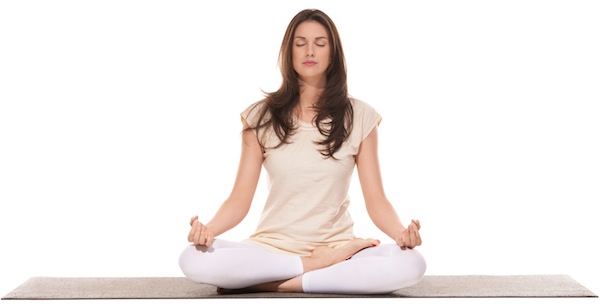
Meditation as we all know is one of the most ancient stress relieving and healing techniques used in India and now even in the Western world. It however has its roots buried in the centuries old science of medicine in India. Now one may think, meditation is only to sit with eyes closed and breathe, to be practiced by saints and yogis.

MEDITATION- the true meaning is to make peace with oneself mentally and physically.But, this is not easy as one may think and needs practice or even training for some period.

The term meditation refers to a variety of practices, such as techniques designed to promote relaxation and build internal energy or life force which is also PRANA in Sanskrit. This enables the individuals to develop love, compassion, patience, effortless single pointed concentration, thus enabling the person to enjoy the well being while engaging in any life activity.

In the recent times meditation is often suggested as a treatment to ease health concerns such as hypertension/ blood pressure, depression, anxiety, insomnia, fear and phobias, control emotions such as anger or hatred. Meditation has a calming effect on the body as well as mind. It directs awareness inward until pure awareness is achieved which is rightly described as “Being awake inside without being aware of anything except awareness itself”

Now one may ask how to achieve the state of awareness and peace? Here is how you can.

  • Sit comfortably wearing comfortable clothes.
  • Starting with your head working downwards feel the vibrations in your body.
  • Focus on your breath; follow the sensation of inhaling and exhaling. With each inhalation the tummy will blow out and with each exhalation the tummy will go back in.
  • Once you achieve this state, you will face thoughts, the key here is to not hold on to any thought. Instead make it a slide show, let all the thoughts come and go as if it is a photo gallery.
  • Once you are able to achieve this, you can begin with mantra repetition such as OM for 5- 6 times.

It has been proven that practicing meditation; has numerous benefits and accelerates the process of healing of many health conditions, as well as delay the ageing.

To highlight a few prominent benefits, let’s look further.

  • Increase immunity:

Relaxation appears to boost the immunity in recovering cancer patients. Progressive muscular relaxation when practiced daily has shown to reduce the risk of breast cancer and its recurrence. A study at Ohio state university has shown that practicing meditation and relaxation for a month boosted the immunity cells in the elderly giving them more resistance to viruses.

  • Emotional Balance:

As we discussed earlier, meditation helps to achieve control over emotions such as anger, hatred.

Emotional balance means to be free of ego. Though this is very difficult to achieve fully, meditation does help to lessen the outbursts due to ego. As the consciousness is cleansed of emotions and memories, one not only achieves a full freedom but also great balance in actions and words.

  • Increases Fertility:

It has been found that women are more likely to conceive when emotionally balanced and stress free. Being stress free also helps improve male fertility in many ways.

  • Relieves Digestive Ailments:

People who suffer anxiety related acidity, or other digestive complaints get great relief with regular meditation and breathing exercises.

Hence, it is widely recommended as an effective treatment.

  • Lowers Blood Pressure:

Similar to exercise meditation also helps to secrete “happiness hormones such as endorphins”, making the body less responsive to stress hormones. These effects are also seen with regular cardio exercise and blood pressure lowering medications as well.

  • Inflammation:

Stress; of all kinds’ leads to inflammation, which is widely related to heart disease, arthritis, asthma and many skin conditions. Practicing regular meditation can prevent and help in treating these conditions by reducing the stress response.

  • Calmness and Sleep:

The simple difference between the people who meditate and those who do not, is that for a meditative mind the thought occurs is witnessed, while for an ordinary mind, the thought occurs and is governed by ego. In case in both minds, an upsetting thought occurs, but for those who meditate it is just another thought which is seen, allowed to blossom, and let go, while in a non meditating mind, such thoughts can instigates a storm which rages on and on. This can lead to sleep disturbances. Hence meditation helps to improve sleep.

In short, Meditation is a way to celebrate being at peace with oneself and celebrating it with silence.

We hope this article helps you. For further information or guidance, reach out to our certified experts by subscribing to GOQii’s Personalised Health Coaching here.

Happy Meditating!

#BeTheForce 

July 8, 2021 By Urvi Gohil 2 Comments

Meditation: Why It Is Necessary Today!

meditationMany of us are worried about the impact of the ongoing pandemic on our elderly and physically vulnerable relatives. To top it off, the economic impact it has had around the world, right down to individuals being unable to work and ineligible for sick pay is huge. All this coupled with shortages in shops, cancellation of planned holidays and events have all caused some level of anxiety and distress. As these mental and emotional issues pile up, there’s a good chance that one might go over the edge. To avoid that, something must be done. During these trying times, there is something you can do to improve your mental and emotional wellbeing. That something is meditation! 

How Does Meditation Help? 

Taking out time to meditate can also help in so many ways:

  1. Improves Mental Health: At a time when people may be self-isolating, worrying about finances, socially distancing from loved ones, and feeling concerned about contracting the virus, meditation can help improve emotional health and can help manage depression which is exacerbated by stress.
  2. Boost Immunity: COVID-19 is highly infectious and boosting your immunity will help you fight against this pandemic. Several research studies suggest that meditation helps in positively impacting the genes involved in the infectious cycle and increases the immunity. Using regular self-hypnosis as a relaxation technique has had positive effects on Lymphocytes—a type of white blood cell which helps produce antibodies and destroy cells which could cause damage.
  3. Reduce Anxiety: Meditation involves staying in the present moment without dwelling on the past or the future and accepting your feelings and emotions as perfectly valid. This will help in reducing stress levels and thus, potentially manage the increased level of anxiety which comes from being in the middle of a pandemic like coronavirus.

How Can You Start? 

  • Use GOQii’s guided meditation feature: Click on the “+” and go to meditation. A good way to kick start if you are new to this.
  • At first, it will take effort: Do regular, short bursts and gradually build up the amount of time you spend during any one meditation session. So start slow and short.
  • Set a regular time of day: Meditation is a habit and you’re much more likely to implement it if you set a specific time of day and incorporate it into your routine.
  • Get very comfortable: Maybe light a candle or some relaxing music.
  • Have patience: It is okay. Your mind will wander and you will have all types of thoughts at first but do not stop practicing this.
  • Do it regularly: Make a habit which will stay with you always!

We hope this article helps you! For more articles on meditation, check out Healthy Reads or tune in to our yoga and meditation experts on GOQii Play. To get these tips directly from your GOQii Coach, subscribe to personalized coaching now: https://goqiiapp.page.link/bsr 

Stay home, stay safe, meditate and #BeTheForce

  • 1
  • 2
  • 3
  • …
  • 47
  • Next Page »

Search

Recent Posts

  • World Egg Day 2026: The Protein That Powers and Protects
  • When Not Eating Becomes a Disease: Understanding Anorexia Nervosa
  • 5 Common Habits That Cause Obesity (And How to Break Them)
  • 9 Hidden Benefits of Coffee You May Not Know
  • Best Foods to Support Liver Health & Reduce Fatty Liver Risk

Stay Updated

Archives

  • October 2026 (4)
  • September 2026 (5)
  • August 2026 (8)
  • July 2026 (25)
  • June 2026 (22)
  • May 2026 (20)
  • April 2026 (24)
  • March 2026 (18)
  • February 2026 (14)
  • January 2026 (14)
  • December 2025 (19)
  • November 2025 (15)
  • October 2025 (20)
  • September 2025 (6)
  • August 2025 (5)
  • July 2025 (9)
  • June 2025 (18)
  • May 2025 (16)
  • April 2025 (22)
  • March 2025 (25)
  • February 2025 (21)
  • January 2025 (25)
  • December 2024 (22)
  • November 2024 (22)
  • October 2024 (16)
  • September 2024 (22)
  • August 2024 (27)
  • July 2024 (15)
  • June 2024 (23)
  • May 2024 (26)
  • April 2024 (27)
  • March 2024 (27)
  • February 2024 (23)
  • January 2024 (21)
  • December 2023 (14)
  • November 2023 (10)
  • October 2023 (18)
  • September 2023 (20)
  • August 2023 (16)
  • July 2023 (16)
  • June 2023 (21)
  • May 2023 (20)
  • April 2023 (19)
  • March 2023 (23)
  • February 2023 (19)
  • January 2023 (15)
  • December 2022 (11)
  • November 2022 (15)
  • October 2022 (15)
  • September 2022 (12)
  • August 2022 (9)
  • July 2022 (17)
  • June 2022 (11)
  • May 2022 (10)
  • April 2022 (6)
  • March 2022 (6)
  • February 2022 (13)
  • January 2022 (11)
  • December 2021 (7)
  • November 2021 (3)
  • October 2021 (6)
  • September 2021 (3)
  • August 2021 (8)
  • July 2021 (7)
  • June 2021 (15)
  • May 2021 (16)
  • April 2021 (10)
  • March 2021 (7)
  • February 2021 (4)
  • January 2021 (4)
  • December 2020 (3)
  • November 2020 (4)
  • October 2020 (10)
  • September 2020 (3)
  • August 2020 (3)
  • July 2020 (2)
  • June 2020 (4)
  • May 2020 (10)
  • April 2020 (12)
  • March 2020 (10)
  • February 2020 (4)
  • January 2020 (4)
  • December 2019 (3)
  • November 2019 (7)
  • October 2019 (5)
  • September 2019 (4)
  • August 2019 (9)
  • July 2019 (9)
  • June 2019 (11)
  • May 2019 (4)
  • April 2019 (8)
  • March 2019 (8)
  • February 2019 (9)
  • January 2019 (8)
  • December 2018 (9)
  • November 2018 (3)
  • October 2018 (3)
  • September 2018 (5)
  • August 2018 (10)
  • July 2018 (6)
  • June 2018 (13)
  • May 2018 (8)
  • April 2018 (17)
  • March 2018 (9)
  • February 2018 (8)
  • January 2018 (15)
  • December 2017 (12)
  • November 2017 (19)
  • October 2017 (13)
  • September 2017 (15)
  • August 2017 (4)
  • July 2017 (8)
  • June 2017 (7)
  • May 2017 (6)
  • April 2017 (8)
  • March 2017 (6)
  • February 2017 (7)
  • January 2017 (9)
  • December 2016 (10)
  • November 2016 (7)
  • October 2016 (7)
  • September 2016 (7)
  • August 2016 (11)
  • July 2016 (9)
  • June 2016 (9)
  • May 2016 (12)
  • April 2016 (17)
  • March 2016 (17)
  • February 2016 (8)
  • January 2016 (6)
  • December 2015 (2)
  • November 2015 (9)
  • October 2015 (7)
  • September 2015 (9)
  • August 2015 (11)
  • July 2015 (9)
  • June 2015 (11)
  • May 2015 (9)
  • April 2015 (13)
  • March 2015 (8)
  • February 2015 (5)
  • January 2015 (12)
  • December 2014 (14)
  • November 2014 (11)
  • October 2014 (6)
  • September 2014 (13)
  • August 2014 (12)
  • July 2014 (6)
  • June 2014 (2)
  • May 2014 (7)
  • April 2014 (4)

From Burnout to Balance: How Dr. Ranjit Reclaimed His Health

Dr Ranjit Bhatt has spent years tending to others. A practising doctor in Odisha, his days were packed with patients, surgeries, and emergencies. From the outside, it looked like a life lived in service. But on the inside, something wasn’t right. “I had no … [Read More...]

From Shimla’s Slopes to Chandigarh’s Sidewalks: Surinder Kaur Bhalla’s Journey from Chaos to Control

Some journeys start with a plan. Others begin with a stumble literally. Surinder Bhalla, a government professional, born and raised in the scenic hill town of Shimla, had always lived a life of movement. “In Shimla, you walked everywhere,” she reflects. “Walking was never an exercise. It was just life.” But after shifting to Chandigarh, […]

“I’ve Challenged Myself to Live 100 Years” – The Story of Chandubhai Savani’s Second Chance at Life

At 67, most people start slowing down. Not Chandubhai Savani. A resident of Surat, Chandubhai, thought life was on track. “My life was going well till I had my bypass surgery,” he says. That surgery, back in 2021, was a wake-up call.  Medication was routine, but exercise wasn’t. His diet? What he calls ‘normal.’ “I […]

Ananda Mukherjee Health Story

From Terminal Illness To Complete Wellness! Ananda Mukherjee Health Story

As we observe World Cancer Day under the powerful theme ‘United by Unique’ (2025-2027)**, we are reminded that every individual’s journey with cancer is distinct, yet united by shared resilience, hope, and the collective fight against this disease. This theme places people at the centre of care and their stories at the heart of the […]

  • HOME
  • HEALTHY LIVING
  • FITNESS
  • HEALTHY RECIPES
  • USER STORIES
  • KARMA
  • BUY GOQii

Copyright ©2016 GOQii