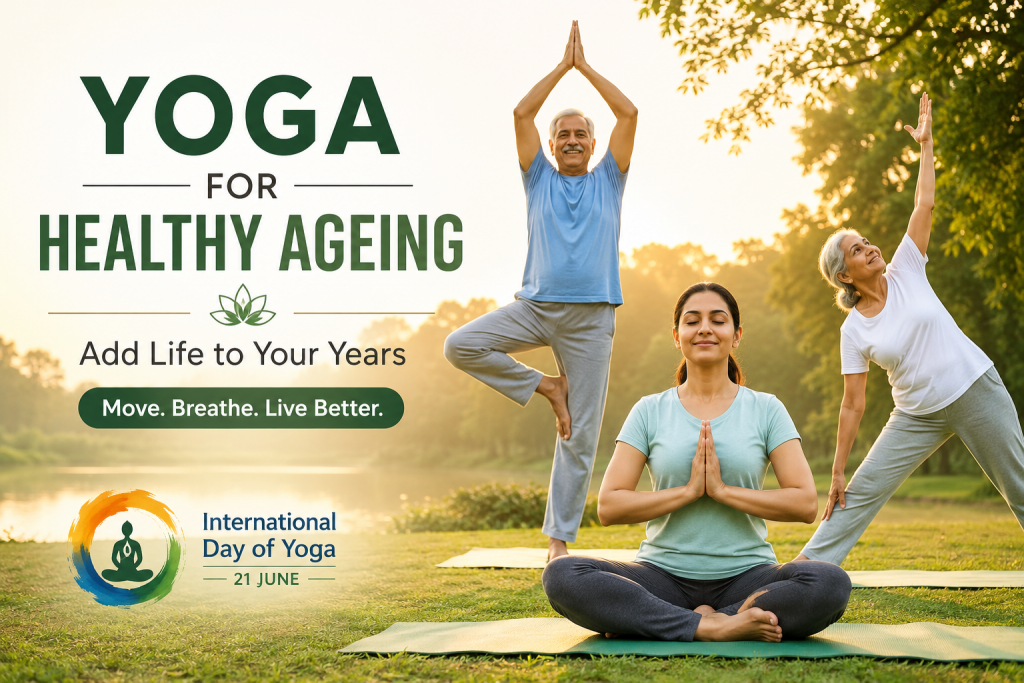
 Every year, people around the world celebrate the International Day of Yoga, highlighting the many ways yoga supports physical, mental, and emotional wellbeing. This year’s theme, “Yoga for Healthy Ageing,” is especially relevant as more people focus not just on living longer, but on living healthier.
After all, healthy ageing isn’t about adding more years to your life it’s about adding more life to your years.
As we grow older, our bodies naturally undergo changes. Muscle strength declines, joints become stiffer, balance may weaken, and recovery takes longer. While ageing is inevitable, losing your mobility and independence doesn’t have to be.
A regular yoga practice can help you stay active, flexible, and confident at every stage of life.
Why Yoga Is Good for Healthy Ageing
Yoga is much more than stretching or improving flexibility.
It combines mindful movement, controlled breathing, and relaxation techniques that work together to support your body and mind.
Practising yoga regularly may help:
- Improve flexibility and joint mobility
- Build strength and support healthy bones
- Improve balance and reduce the risk of falls
- Relieve stress and promote better sleep
- Support better posture and breathing
- Enhance focus and emotional wellbeing
Unlike high-impact workouts, yoga is gentle on the joints and can be adapted for people of different ages and fitness levels.
Four Simple Yoga Poses for Healthy Ageing
-
Tadasana (Mountain Pose)
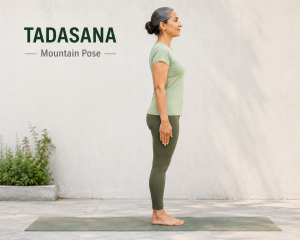
Tadasana may look simple, but it forms the foundation of many yoga postures.
Standing tall with proper alignment helps improve posture, strengthens your core, and creates greater body awareness.
How to practise:
- Stand with your feet hip-width apart.
- Keep your spine tall and shoulders relaxed.
- Distribute your weight evenly on both feet.
- Take five slow, deep breaths while maintaining good posture.
Benefits:
- Improves posture
- Enhances balance
- Builds body awareness
-
Vrikshasana (Tree Pose)
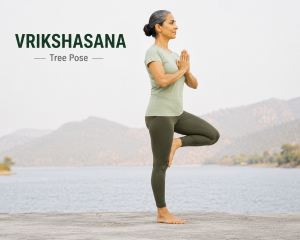
Balance naturally declines with age, increasing the risk of falls.
Tree Pose strengthens the muscles around your ankles, knees, and hips while improving stability and concentration.
How to practise:
- Stand tall and shift your weight onto one foot.
- Place the opposite foot on your ankle, calf, or inner thigh (avoid the knee).
- Bring your palms together at your chest.
- Focus on a fixed point and breathe slowly.
- Repeat on the other side.
If needed, perform the pose beside a wall or sturdy chair for support.
Benefits:
- Improves balance
- Strengthens the lower body
- Enhances focus
-
Sukhasana with a Gentle Twist
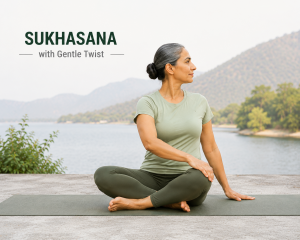
Spinal mobility is essential for maintaining good posture and performing everyday activities comfortably.
A gentle seated twist helps improve flexibility while encouraging better posture.
How to practise:
- Sit comfortably with crossed legs or on a cushion.
- Lengthen your spine.
- Gently twist to one side while breathing deeply.
- Return to the centre and repeat on the opposite side.
Benefits:
- Improves spinal mobility
- Encourages better posture
- Supports comfortable movement
-
Bhujangasana (Cobra Pose)
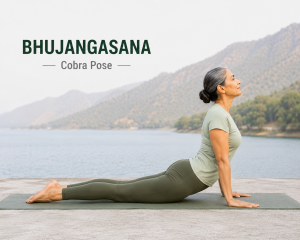
Many daily activities encourage us to lean forward, whether we’re working at a desk or looking at our phones.
Bhujangasana gently strengthens the back muscles while opening the chest.
How to practise:
- Lie on your stomach.
- Place your palms beneath your shoulders.
- Slowly lift your chest while keeping your elbows slightly bent.
- Keep your shoulders relaxed and your neck long.
- Lower gently after a few breaths.
Benefits:
- Strengthens the back
- Opens the chest
- Supports better posture
Healthy Ageing Starts Earlier Than You Think
One of the biggest misconceptions about ageing is that it’s something to think about after retirement.
In reality, healthy ageing begins much earlier.
The habits you build in your 30s, 40s, and 50s influence how active and independent you’ll be later in life.
Regular movement, nutritious eating, quality sleep, stress management, and yoga all work together to support long-term health.
Think of yoga as an investment in your future self. Every session helps build strength, flexibility, balance, and resilience that can benefit you for years to come.
Simple Ways to Make Yoga Part of Your Routine
Getting started doesn’t have to be overwhelming.
Try these simple habits:
- Begin with just 15–20 minutes a day.
- Focus on consistency rather than perfection.
- Listen to your body and avoid forcing any movement.
- Use props or a chair if needed.
- Combine yoga with mindful breathing for added relaxation.
Even a short daily practice can make a meaningful difference over time.
Ageing is a natural part of life, but staying active, independent, and confident is something we can actively work towards.
Yoga offers a simple and sustainable way to care for both your body and mind. Whether you’re just beginning your wellness journey or have been practising for years, every session contributes to better mobility, balance, strength, and overall wellbeing.
This International Day of Yoga, celebrate by taking a few moments to move, breathe, and reconnect with yourself.
Because the goal isn’t simply to live longer—it’s to live better.
Pro Tip: Make yoga a part of your everyday wellness routine by tracking your practice, activity levels, sleep, and recovery in the GOQii App. Your GOQii Coach can help you build a personalised plan that supports healthy ageing based on your fitness level, health goals, and lifestyle.
Frequently Asked Questions (FAQs)
- Is yoga suitable for older adults who have never practised before?
Yes. Yoga can be adapted for beginners and older adults. Chair yoga and modified poses are excellent starting points. If you have an existing medical condition, consult your healthcare provider before beginning.
- Can yoga help improve balance as we age?
Yes. Many yoga poses strengthen the muscles that support balance and improve body awareness, which may help reduce the risk of falls.
- How often should I practise yoga for healthy ageing?
Aim for at least 15–20 minutes most days of the week. Consistency is more beneficial than occasional long sessions.
- Is yoga enough on its own for healthy ageing?
Yoga is an excellent foundation, but it works best alongside other healthy habits such as strength training, walking, balanced nutrition, quality sleep, and regular health check-ups.
#BeTheForce
Disclaimer: This article is intended for educational and informational purposes only. It is not intended to replace professional medical advice, clinical diagnosis, or specialized physical therapy. Always consult a qualified physician or your healthcare provider before introducing a new exercise routine, especially if you are managing an underlying cardiovascular, metabolic, or musculoskeletal condition.




Leave a Reply