
GOQii

Blog

  • HOME
  • HEALTHY LIVING
  • FITNESS
  • HEALTHY RECIPES
  • USER STORIES
  • KARMA
  • BUY GOQii

March 25, 2026 By GOQii Leave a Comment

Biological Age vs. Chronological Age: How to Measure Your True Vitality

Two women of different ages running together with equal energy, illustrating how biological age can differ from chronological ageWe all celebrate birthdays, but the number of candles on your cake tells a very incomplete story about your health.

In the longevity space, we differentiate between two crucial numbers. Your chronological age is simply the exact number of years you have been alive since birth. It goes in one direction, at a constant speed, and there is absolutely nothing you can do to change it.

Your biological age, however, is the true age of your cells, organs, and tissues. Depending on your lifestyle, your biological age can be years sometimes even decades older or younger than your chronological age. The most exciting part? Unlike your chronological age, your biological age is malleable. You possess the power to slow it down, stop it, and in some cases, even reverse it.

What is Epigenetics? The Science of Cellular Ageing

To understand how biological age works, we have to look at a field of science called epigenetics.

Think of your DNA as the hardware of a computer. The genetic code you were born with cannot be fundamentally altered. Epigenetics, however, is the software. It controls how your genes are “expressed” meaning it determines which genes are turned on (like those that promote cellular repair and vitality) and which are turned off (like those that drive inflammation and disease).

Your daily behaviours act as the programmer. Every meal you eat, the quality of your sleep, your stress levels, and your daily movement all send epigenetic signals to your DNA, telling your body whether to accelerate the ageing process or slow it down.

How to Measure Your True Vitality

You cannot manage what you do not measure. So, how do we actually find out what our biological age is? Today, there are a few primary ways to calculate your true cellular vitality:

  1. Epigenetic Clocks (DNA Methylation) – This is the gold standard in longevity science. Through a simple blood or saliva test, scientists can measure chemical tags on your DNA (called methylation). This provides a highly accurate molecular snapshot of how fast your body is ageing on a cellular level.
  2. Biomarker Blood Panels – You do not always need a cutting-edge DNA test. Routine blood work can provide a fantastic estimate of your biological age. By looking at markers of inflammation (like hs-CRP), metabolic health (like HbA1c and fasting insulin), and liver function, a healthcare professional can determine if your internal organs are performing optimally for your age group.
  3. Functional Fitness Metrics – Your physical capability is a massive indicator of true vitality. Metrics like your VO2 max (how efficiently your body uses oxygen during exercise), your grip strength, and your ability to balance on one leg for 10 seconds are highly correlated with a lower biological age and a longer healthspan.

Practical Ways to Lower Your Biological Age

If you want to widen the gap between your chronological age and your biological age, your daily habits must support cellular repair.

  • Prioritise Anti-Inflammatory Nutrition: Chronic inflammation drives epigenetic ageing. Focus on a diet rich in colourful antioxidants, high-quality proteins, and healthy fats. Minimise ultra-processed foods and refined sugars, which create oxidative stress and accelerate cellular damage.
  • Build Lean Muscle Mass: Muscle is the organ of longevity. Engaging in regular resistance training not only improves your functional fitness metrics but also improves how your body processes glucose, significantly reducing your metabolic age.
  • Optimise Deep Sleep: Deep sleep is when the body does its profound cellular repair and clearing of toxins. If you are chronically sleep-deprived, your cells remain in a state of stress, which triggers epigenetic markers that speed up the ageing process. Aim for 7 to 8 hours of high-quality rest each night.

Your chronological age is just a number on a calendar. Your biological age is a reflection of your choices. Choose vitality.

#BeTheForce

Frequently Asked Questions (FAQs)

  1. What is the main difference between biological and chronological age?
    Your chronological age is the exact number of years you have been alive, which cannot be changed. Your biological age refers to the physiological condition of your cells and organs. Through healthy lifestyle habits, your biological age can actually be much younger than your chronological age.
  2. Can you really reverse your biological age?
    Yes. While you cannot stop the clock on your chronological age, emerging science in epigenetics shows that targeted lifestyle interventions such as improved nutrition, consistent exercise, stress management, and better sleep can positively alter gene expression and actually reduce your biological age over time.
  3. What is the most accurate way to measure biological age?
    The most advanced and accurate method currently available is measuring DNA methylation through an “epigenetic clock” test (usually a blood or saliva test). However, standard comprehensive blood panels and functional fitness assessments (like testing your VO2 max or grip strength) also provide highly reliable indicators of your overall cellular vitality.

Disclaimer: GOQii is committed to providing accurate, up-to-date, and comprehensive health information. This article is intended for informational purposes only and should not be used as a substitute for professional medical advice, diagnosis, or treatment. Always consult a qualified healthcare professional before starting or changing any diet or fitness programme. Individual results may vary.
January 2, 2026 By GOQii Leave a Comment

Your Body’s Real Age: Why Biological Age Matters More Than Your Birthday

Most of us are pretty familiar with our age, which we celebrate every year on our special day. Here’s an interesting thought, though: this number does not necessarily indicate how well our bodies are ageing. Two people, both aged 50, can have vastly different health profiles.



What matters most to your health over time is not the number of candles on your cake, but rather how your body is ageing on the inside. That’s where your biological age comes in.

Chronological Age vs. Biological Age

  • Chronological Age simply calculates the years you have lived since birth.
  • Biological Age takes into consideration the state of your body—how your organs, cells, and systems are functioning in relation to your actual age.

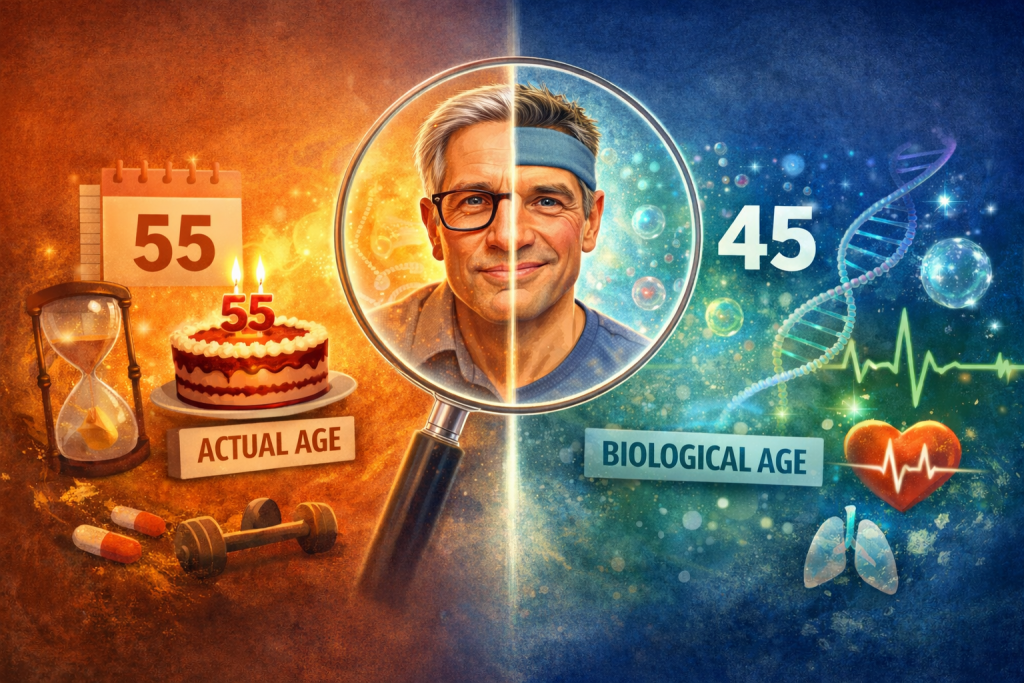
Research shows that those with a lower biological age tend to have a lower risk of chronic disease, higher energy, and a better quality of life. Your biological age can be older or younger than your real age based on factors like lifestyle, environment, and genetics. You could be 55 years old chronologically but biologically closer to 45, or the other way around.

The Ageing Clocks Scientists Use

Tools in this area include ageing clocks, which are models based on patterns in biological data to estimate your real age.

  1. Epigenetic Clocks

These measure changes to your DNA (known as methylation), a way your genes are turned on and off over time. It acts like a biological timestamp. These clocks can more accurately predict your risk for disease and mortality because they reflect how your cells respond to life stressors. A younger epigenetic age means you are ageing more slowly; an older one means your body is under significant wear and tear.

  1. VO₂ Max Age

This is your body’s maximum capacity to use oxygen during intense activity, making it a great measure of heart and lung fitness. A higher VO₂ max is linked to better metabolism, longer life, and even brain health. Regular cardio, especially exercises that challenge your heart, can significantly reduce your VO₂ max age.

  1. Grip Strength & Functional Age

One of the simplest but most reliable signs of how well you are ageing is grip strength. It correlates with muscle mass, nerve function, and overall vitality. If your grip is weaker than normal for your age, it could mean accelerated ageing. If it’s strong or improving, you are biologically younger than the average.

Why Biological Age Is More Important Than Birthday Age

Biological age predicts your health future better than your birthday. Why? Because it reflects real-time changes inside your body, not just the calendar.

It is the story your daily habits tell your cells. Everything from your meals, stress levels, sleep, and activity contributes to your biological age. That’s why platforms like GOQii are putting biological age at the centre of health tracking.

How GOQii Helps You Track & Improve Your Biological Age

GOQii’s whole ecosystem is built around this exact idea, that health is dynamic and can be improved through coaching, data, and small changes. It’s not just about logging steps or calories. It’s about helping you track how your body is really ageing and reversing that trend.

  1. GOQii Age: Your Longevity Score

Inside the GOQii app, your GOQii Age reflects how young or old your body truly is, based on key factors like:

  • Activity (steps, workouts, calories burned)
  • Sleep (duration and quality)
  • Nutrition and hydration
  • Resting heart rate and recovery
  • Stress patterns and mood

As your habits improve like better sleep or cleaner eating your GOQii Age can literally drop, showing your body is becoming biologically younger.

  1. Real-Time Coaching for Longevity Habits

GOQii’s certified health coaches analyse your data and guide you through simple, science-backed habits that can lower your biological age:

  • Strength training to maintain muscle and grip.
  • Personalised nutrition for improved metabolic age.
  • Sleep and stress strategies to reduce internal wear.

This isn’t a one-time fix. It’s a dynamic, ongoing approach rooted in real behavioural change the kind that sticks.

  1. Wearables for Deeper Insights

Wearable devices synced to the app track heart rate, sleep, steps, and powerful indicators of biological age. These numbers reflect your recovery, cardiovascular health, and resilience to stress. As you improve, your GOQii Age trends downward a visual sign your body is functioning younger.

A New Way to Think About Ageing

Ageing isn’t a countdown timer; it’s a process you can shape. Your biological age isn’t your fate, it’s your dashboard.

With tools like GOQii Age, real-time coaching, and habit tracking, you can literally watch your healthspan grow. It’s not about living forever. It’s about living younger, longer, in every possible way. For further information or guidance, reach out to our certified experts by subscribing to GOQii’s Personalised Health Coaching here.

#BeTheForce

Disclaimer: The information provided in this blog is for general awareness and educational purposes only. It is not intended to replace professional medical advice, diagnosis, or treatment. Always consult a qualified healthcare provider for personalised medical guidance or concerns related to your health. Images shown are for representation purposes only and may not depict the exact recommendations or outcomes.

Search

Recent Posts

  • 5 Healthy Smoothies to Support Weight Loss: The Power of Fiber
  • Inspired By Nature: How the Environment Shapes Your Biological Age
  • Does Sugar Really Make Kids Hyperactive? The Facts Every Parent Should Know
  • Cycling for a Greener Future: One Habit That Benefits Both You and the Planet
  • The Great Dairy Dilemma: Is Milk Driving Your Chronic Inflammation?

Stay Updated

Archives

  • June 2026 (5)
  • May 2026 (20)
  • April 2026 (24)
  • March 2026 (18)
  • February 2026 (14)
  • January 2026 (14)
  • December 2025 (19)
  • November 2025 (15)
  • October 2025 (20)
  • September 2025 (6)
  • August 2025 (6)
  • July 2025 (12)
  • June 2025 (18)
  • May 2025 (16)
  • April 2025 (22)
  • March 2025 (27)
  • February 2025 (21)
  • January 2025 (25)
  • December 2024 (22)
  • November 2024 (23)
  • October 2024 (21)
  • September 2024 (23)
  • August 2024 (30)
  • July 2024 (20)
  • June 2024 (25)
  • May 2024 (28)
  • April 2024 (27)
  • March 2024 (27)
  • February 2024 (23)
  • January 2024 (21)
  • December 2023 (14)
  • November 2023 (10)
  • October 2023 (19)
  • September 2023 (22)
  • August 2023 (18)
  • July 2023 (22)
  • June 2023 (23)
  • May 2023 (20)
  • April 2023 (19)
  • March 2023 (23)
  • February 2023 (19)
  • January 2023 (15)
  • December 2022 (11)
  • November 2022 (15)
  • October 2022 (15)
  • September 2022 (12)
  • August 2022 (10)
  • July 2022 (17)
  • June 2022 (11)
  • May 2022 (10)
  • April 2022 (6)
  • March 2022 (6)
  • February 2022 (13)
  • January 2022 (11)
  • December 2021 (7)
  • November 2021 (3)
  • October 2021 (6)
  • September 2021 (3)
  • August 2021 (8)
  • July 2021 (7)
  • June 2021 (15)
  • May 2021 (16)
  • April 2021 (10)
  • March 2021 (7)
  • February 2021 (4)
  • January 2021 (4)
  • December 2020 (3)
  • November 2020 (4)
  • October 2020 (10)
  • September 2020 (3)
  • August 2020 (3)
  • July 2020 (2)
  • June 2020 (4)
  • May 2020 (10)
  • April 2020 (12)
  • March 2020 (10)
  • February 2020 (4)
  • January 2020 (4)
  • December 2019 (3)
  • November 2019 (7)
  • October 2019 (5)
  • September 2019 (4)
  • August 2019 (9)
  • July 2019 (9)
  • June 2019 (11)
  • May 2019 (4)
  • April 2019 (8)
  • March 2019 (8)
  • February 2019 (9)
  • January 2019 (8)
  • December 2018 (9)
  • November 2018 (3)
  • October 2018 (3)
  • September 2018 (5)
  • August 2018 (10)
  • July 2018 (6)
  • June 2018 (13)
  • May 2018 (8)
  • April 2018 (18)
  • March 2018 (9)
  • February 2018 (8)
  • January 2018 (15)
  • December 2017 (12)
  • November 2017 (19)
  • October 2017 (13)
  • September 2017 (15)
  • August 2017 (4)
  • July 2017 (8)
  • June 2017 (7)
  • May 2017 (6)
  • April 2017 (8)
  • March 2017 (6)
  • February 2017 (7)
  • January 2017 (9)
  • December 2016 (10)
  • November 2016 (7)
  • October 2016 (7)
  • September 2016 (7)
  • August 2016 (11)
  • July 2016 (9)
  • June 2016 (9)
  • May 2016 (12)
  • April 2016 (17)
  • March 2016 (17)
  • February 2016 (8)
  • January 2016 (6)
  • December 2015 (2)
  • November 2015 (9)
  • October 2015 (7)
  • September 2015 (9)
  • August 2015 (11)
  • July 2015 (9)
  • June 2015 (11)
  • May 2015 (9)
  • April 2015 (13)
  • March 2015 (8)
  • February 2015 (5)
  • January 2015 (12)
  • December 2014 (14)
  • November 2014 (11)
  • October 2014 (6)
  • September 2014 (13)
  • August 2014 (12)
  • July 2014 (6)
  • June 2014 (2)
  • May 2014 (7)
  • April 2014 (4)

From “Laddu Nawin” to Fit and Fierce: How a 25-Year-Old Insurance Advisor Shed 20 Kilos and Gained His Life Back

When 25-year-old Nawin Yadav from Hyderabad walked into his office every morning, he carried more than just his files and policy papers. He had the weight of fatigue, sluggish energy, and an ever-growing belly that was becoming the butt of jokes. “People … [Read More...]

“I’ve Challenged Myself to Live 100 Years” – The Story of Chandubhai Savani’s Second Chance at Life

At 67, most people start slowing down. Not Chandubhai Savani. A resident of Surat, Chandubhai, thought life was on track. “My life was going well till I had my bypass surgery,” he says. That surgery, back in 2021, was a wake-up call.  Medication was routine, but exercise wasn’t. His diet? What he calls ‘normal.’ “I […]

From Shimla’s Slopes to Chandigarh’s Sidewalks: Surinder Kaur Bhalla’s Journey from Chaos to Control

Some journeys start with a plan. Others begin with a stumble literally. Surinder Bhalla, a government professional, born and raised in the scenic hill town of Shimla, had always lived a life of movement. “In Shimla, you walked everywhere,” she reflects. “Walking was never an exercise. It was just life.” But after shifting to Chandigarh, […]

Ananda Mukherjee Health Story

From Terminal Illness To Complete Wellness! Ananda Mukherjee Health Story

As we observe World Cancer Day under the powerful theme ‘United by Unique’ (2025-2027)**, we are reminded that every individual’s journey with cancer is distinct, yet united by shared resilience, hope, and the collective fight against this disease. This theme places people at the centre of care and their stories at the heart of the […]

  • HOME
  • HEALTHY LIVING
  • FITNESS
  • HEALTHY RECIPES
  • USER STORIES
  • KARMA
  • BUY GOQii

Copyright ©2016 GOQii
