GOQii

Blog

  • HOME
  • HEALTHY LIVING
  • FITNESS
  • HEALTHY RECIPES
  • USER STORIES
  • KARMA
  • BUY GOQii

June 3, 2025 By Ranveer Allahbadia 1 Comment

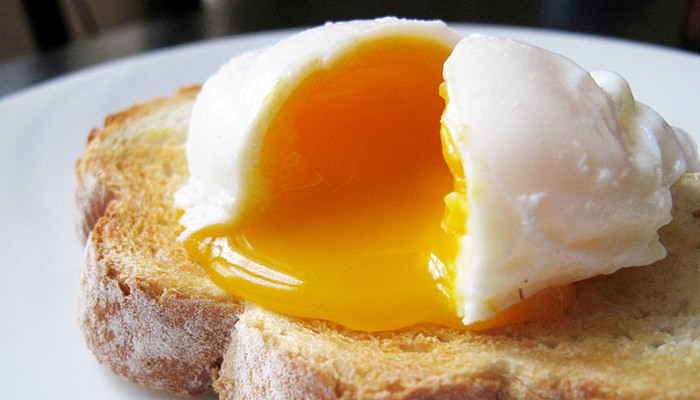
How many eggs can you eat in a day?

Firstly, forget everything you’ve read all your life. When it comes to controversial diet topics like this, people have their pre-conceived notions. So when a fitness blogger contradicts that opinion, people refuse to accept it. Therefore, I NEVER express my opinion. I only speak SCIENCE.

“EGG YOLKS INCREASE YOUR CHOLESTEROL”

Let’s consider the word cholesterol first. People throw around this word without actually even understanding the meaning of it. THE FIRST thing you need to know is that there are 2 kinds of Cholesterol – Good and Bad Cholesterol.

1)LDL

2)HDL

LDL is the BAD cholesterol – it causes heart disease and it’s what people think of first when we say the words “High cholesterol”.

LDL contributes to clogging your arteries and blood vessels

HDL is the good cholesterol. It’s the phoebe to LDL’s Ursula. And HDL actually contributes to reducing the clogging caused by LDL cholesterol.

Now coming to eggs. Eggs are an awesome source of HDL cholesterol. The FEARED “high cholesterol” egg is only going to help de-clog your arteries IF used smartly.

It’s giving you a lot of Phoebe. 70% of humans have no change in LDL or bad cholesterol levels even if they have 3-4 whole eggs a day.

The remaining 30% – diabetics, people with bad lifestyles and people who are genetically challenged respond badly.

So let’s get to the point. Should you be consuming whole eggs? Yes if you’re a normal human being without any major health issues. It should definitely be a part of your diet.

Eggs are such awesome protein sources, that they’re rated as the best natural protein in the world when it comes to being absorbed by your body.

All the proteins in the world are rated according to their “biological value” or BV.

Soya – 74

Beef – 80

Cow Milk – 91

Eggs – 100

The BV scale is created using the humble whole egg as a reference. THAT is the power of the whole egg.

According to science, it’s the best food to put on muscle mass.

And if you do any form of exercise – Yoga, Pilates, Zumba but most importantly if you do resistance training, you aren’t a normal human being. Your body is being activated often, your muscles are getting damaged often and you need to refuel them with PROTEIN. That’s the only way you get stronger.

Whether I’m bulking up or cutting to get ripped, I make sure whole eggs are a part of my diet. As a male lifter, it helps naturally increase your testosterone levels which in turn help make you stronger.

Even if you’re a woman, eggs are super crucial. Every month you lose a bit of the iron content in your blood during your periods. And one of the best sources of iron is egg yolks!

So the ground rule is that if eggs settle well in your system, have at least a couple everyday.

But if you lift, how many should you be having? So this is where the topic becomes a bit subjective. This answer is different for different people.

My ideology is that I consume everything in moderation or how well it suits my body. Eggs are such a nutritionally dense food that I recommend lifters at least to have a minimum of 4 whole eggs a day. If you can, you should definitely try experimenting and going even further.

Some people tend to get acne or bloating with eggs, so if you fall in that category don’t be afraid. Don’t go mad with your eggs but at least see where you can eat eggs comfortably. Till the point where your body and your calorie cap is accepting it.

The ground rule – eggs are a damn superfood! Nutritionally dense, superb for building muscle & above all, so delicious.

We hope this article sheds light on the benefits of including eggs in your diet and clarifies how many you can safely consume daily. How do you incorporate eggs into your meals? Share your thoughts in the comments below! For more nutritional insights and personalised health advice, check out Healthy Reads or speak to a certified expert by subscribing to GOQii’s Personalised Health Coaching here.

#BeTheForce
May 24, 2025 By GOQii Leave a Comment

One Starchy Meal a Day: Why Moderation Matters in the DIP Plan

Understanding the science behind starch, blood sugar, and sustainable change
When it comes to managing diabetes through diet, it’s not just about cutting out sugar. It’s about making strategic choices — especially when it comes to starchy carbohydrates like rice, bread, potatoes, and pasta.

The Diabetes Improvement Programme (DIP) takes a balanced, evidence-informed approach. One of its core principles is simple: limit starchy carbohydrates to just one meal a day. At first glance, this may sound restrictive — but there’s solid science behind it. And more importantly, it works.

Here’s why this one-meal rule matters — and how it can help you take meaningful control of your blood sugar and long-term health.

What Are Starchy Carbohydrates?

Starches are complex carbohydrates found in foods such as:

  • Rice, pasta, and noodles
  • Potatoes, sweet potatoes, and yams
  • Bread, crackers, and baked goods
  • Corn, peas, lentils, and beans

Although they’re often considered “slow release”, these foods can rapidly break down into glucose in the body — especially when eaten in large quantities or refined forms. This causes a rise in blood sugar levels — precisely what individuals with diabetes or insulin resistance aim to manage.

The Problem With Overdoing Starch

When starchy foods are consumed at every meal, they can:

  • Spike blood sugar levels multiple times a day
  • Increase insulin demand, placing extra strain on the pancreas
  • Lead to weight gain or make weight loss more difficult
  • Contribute to energy crashes and cravings later in the day

For those with Type 2 diabetes or prediabetes, this daily glucose rollercoaster can make management difficult and may even undo the benefits of other healthy habits.

Why One Starchy Meal Works Better

By limiting starch to just one meal per day, the DIP plan allows the body to:

  • Stabilise blood sugar levels more effectively throughout the day
  • Lower overall insulin exposure, which supports weight loss and improves insulin sensitivity
  • Improve energy levels without the post-meal slump
  • Break the dependency on carbohydrate-rich meals for satiety or satisfaction

This strategy doesn’t eliminate carbs — it simply creates a rhythm where your body has time to reset and burn fat more efficiently between meals.

It’s Not About Elimination — It’s About Moderation

Let’s be clear — starch is not the enemy. Many starchy foods are part of cultural traditions, family meals, and emotional comfort. The DIP framework respects that. By allowing starch at just one meal a day, it encourages mindful moderation rather than extreme restriction.

This flexibility helps make the plan more realistic, sustainable, and enjoyable — which is key for long-term change.

How to Make the Most of Your One Starchy Meal

If you’re choosing to include starch, here are a few tips:

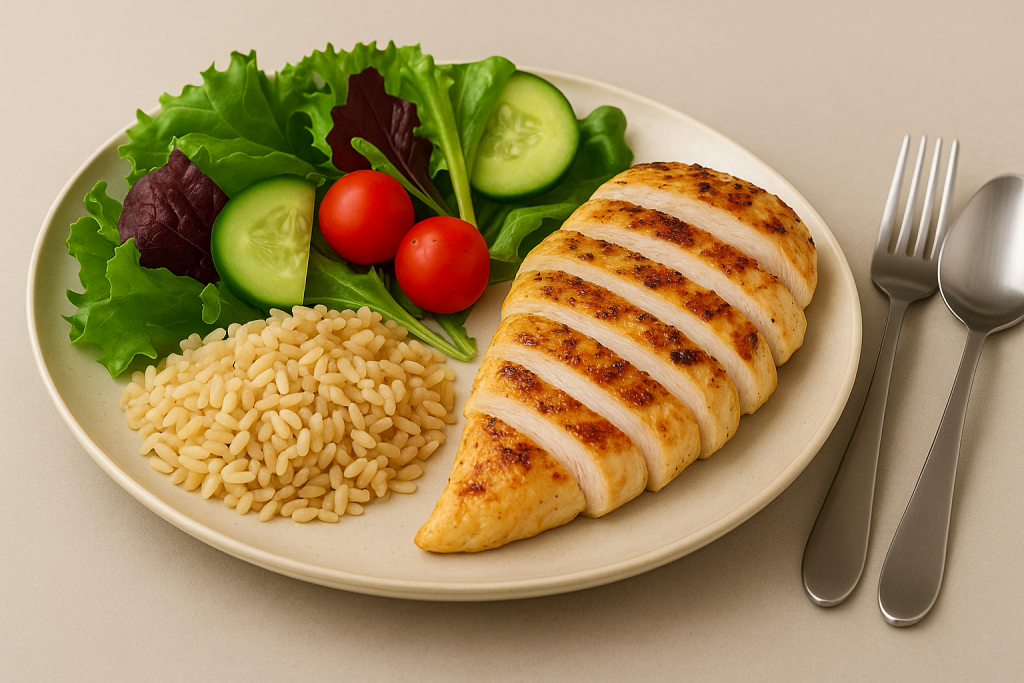
  • Pick whole, minimally processed options — such as brown rice, millet, or sweet potato
  • Mind your portions — one cup (about the size of your fist) is a helpful guide
  • Pair it with protein, fibre, and fat — this slows digestion and helps reduce glucose spikes
  • Make it the highlight, not the base — build your plate with vegetables and protein first

For example:
A lunch of grilled chicken, mixed salad, and a small portion of brown rice is more balanced than a heaping plate of pasta with little else.

Science Meets Simplicity

The concept of one starchy meal per day is backed by research in low-carb and moderate-carb interventions for Type 2 diabetes. Numerous studies show that reducing daily carbohydrate load (especially starchy carbs) improves HbA1c, supports weight loss, and enhances metabolic markers like triglycerides and insulin sensitivity.

By following this simple principle, you’re not just adopting a diet — you’re creating better metabolic conditions for your body to heal and thrive.

Small Change, Big Impact

You don’t need to give up rice forever. You don’t need to avoid bread at every meal. But choosing to have starch just once a day could be the difference between constantly battling blood sugar fluctuations and finally finding control.

This one shift — this small act of moderation — can ripple out into better energy, clearer thinking, improved lab results, and a more empowered relationship with food.

And in the end, that’s what the DIP plan is all about — progress, not perfection.

#BeTheForce

Disclaimer: The information provided in this blog is for general awareness and educational purposes only. It is not intended to replace professional medical advice, diagnosis, or treatment. Always consult a qualified healthcare provider for personalised medical guidance or concerns related to your health. Images shown are for representation purposes only and may not depict the exact recommendations or outcomes.

May 22, 2025 By GOQii Leave a Comment

Low-Carb Doesn’t Mean Low Flavour: Creative Meal Ideas for Diabetics

When most people think of a “low-carb diet,” the image that pops into their mind is usually a sad salad, a boiled egg, and a lifelong ban on anything remotely enjoyable. But here’s the reality: low-carb doesn’t have to mean low flavour — especially when it’s done right.

Whether you’re following the DIP (Diabetes Improvement Programme) or simply looking to stabilise your blood sugar through smarter food choices, it’s entirely possible to enjoy meals that are both satisfying and full of taste. You just need the right plan — and a dash of creativity.

Let’s walk through a typical day of delicious, low-carb eating that won’t leave you feeling deprived.

Breakfast: Start Your Day Right

The goal is simple — fuel up without the blood sugar spike. Think protein, healthy fats, and if you’d like, a dose of non-starchy veg.

Meal ideas:

  • Bacon or sausage with eggs — Simple, filling, and full of flavour. Add some wilted spinach or mushrooms if you like greens in the morning.
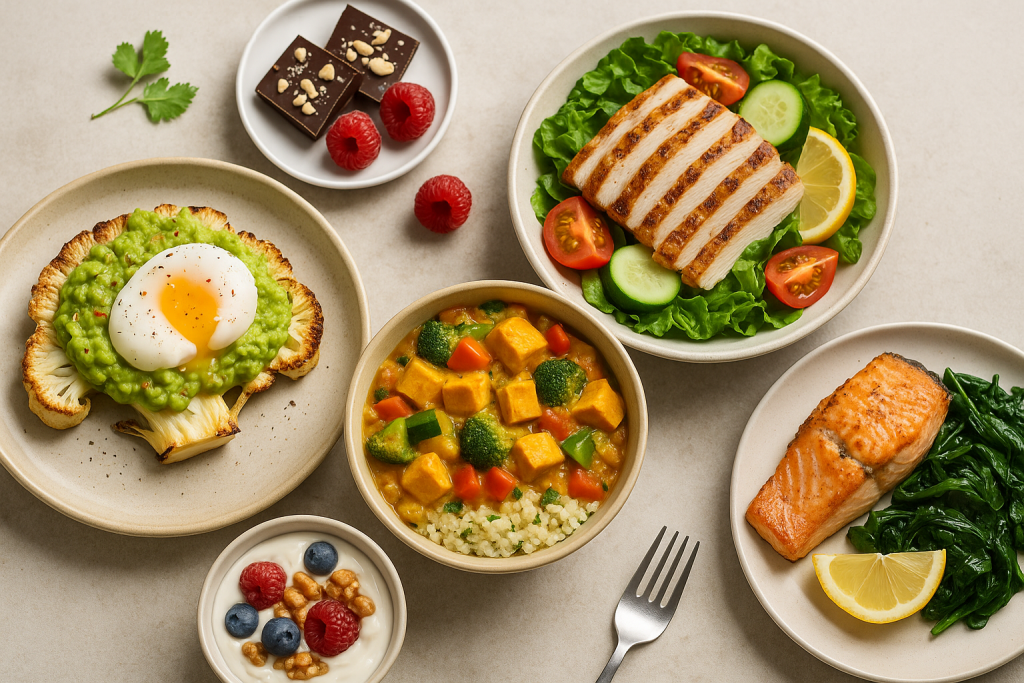
  • Avocado & egg on cauliflower toast — Cauliflower slices lightly grilled and topped with smashed avocado, chilli flakes, and a poached egg.
  • Omelette — Made with spinach, onions, and tomatoes.
  • Greek yoghurt (unsweetened) with chia seeds, crushed walnuts, and a small handful of berries.

💡 Quick tip: If you’re choosing lean protein (like egg whites), add a bit of butter or cheese to get in that much-needed fat for energy.

Lunch: Hearty & Nourishing

Lunchtime is where many fall into the bland salad trap. But not you! This is your opportunity to bring in flavour and fibre — and yes, you can still have your cup of starchy carbs if you need the energy boost.

Meal ideas:

  • Grilled chicken bowl — Marinated in olive oil, garlic, and herbs, served on a bed of leafy greens with cucumber, cherry tomatoes, and a tahini dressing.
  • Zucchini noodles with pesto and grilled chicken — Packed with fresh basil flavour and wonderfully filling.
  • Stir-fried tofu with peppers, mushrooms, and sesame seeds, served on a bed of steamed cabbage ribbons.

Portions to aim for:

  • 1 to 1½ cups of leafy salad or cooked greens
  • ½ to 1 cup of non-starchy veg
  • Up to 1 cup of starchy carbs (such as brown rice, wholewheat pasta, or roasted sweet potato), depending on your needs

Snack Smartly (Only If You Need To)

Snacking isn’t mandatory — but if hunger strikes, it’s important to choose snacks that keep your blood sugar steady without compromising taste.

Snack ideas:

  • Hummus-stuffed cucumber boats — Crunchy, refreshing, and satisfying.
  • Boiled eggs with a pinch of sea salt and pepper.
  • Cheese cubes (up to 100g per day) with olives or cherry tomatoes.
  • Pepperoni or turkey slices rolled with cream cheese.
  • A handful of unsalted nuts — Almonds, walnuts, or pistachios.

Dinner: Flavour Without the Fuss

Dinner should feel like a reward for your day — not a compromise. Choose good protein, healthy fats, and plenty of colour on your plate.

Meal ideas:

  • Low-carb veggie curry — Made with coconut milk, seasonal vegetables (think courgettes, peppers, and broccoli), and tofu or cottage cheese. Serve with cauliflower rice.
  • Grilled fish with lemon-butter sauce and sautéed greens.
  • Aubergine lasagne — Replace noodles with grilled aubergine slices, layered with tomato sauce and cheese.
  • Stuffed bell peppers with minced chicken, spices, and cheese.

Build your plate with:

  • 1 to 1½ cups of greens
  • ½ to 1 cup of non-starchy vegetables
  • Healthy fats (butter, cheese, avocado, olive oil) if your protein is lean

Sweet Endings: Dessert Without the Crash

Yes, you can still enjoy something sweet — as long as it’s carefully chosen.

Dessert ideas:

  • Dark chocolate almond bites — Melt 85% dark chocolate, mix with chopped almonds and coconut flakes, and chill in moulds.
  • Chia pudding — Made with almond milk, cinnamon, and a touch of stevia.
  • Avocado mousse — Mashed avocado with cocoa powder and stevia makes a rich, satisfying treat.

A Few Things to Remember

Here are a few DIP-aligned essentials you should aim for daily:

  • 2 cups of leafy greens — Spinach, lettuce, rocket, kale, etc.
  • 1 cup of non-starchy vegetables — Courgette, broccoli, mushrooms, peppers, etc.
  • 1 cup of starchy carbohydrates — Optional, and should be adjusted based on your energy needs.
  • 1–2 teaspoons of salt — Especially important on a low-carb plan, unless you’re on a sodium-restricted diet.

And yes — whole eggs, meat, poultry, fish, and good fats are all on the table. You’re not required to avoid the natural fats in your food. Eat until you’re full — not stuffed — and let your body guide you.

You Don’t Have to Choose Between Food and Health

Low-carb eating for diabetes management isn’t about denial — it’s about rediscovery. When you base your meals on real, whole foods and bold flavours, you’ll find there’s joy to be had in every bite.

So the next time someone says, “Isn’t that diet a bit boring?” — smile, and serve them your cauliflower toast with avocado and a perfectly poached egg.

Let the food do the talking.

#BeTheForce

Disclaimer: The information provided in this blog is for general awareness and educational purposes only. It is not intended to replace professional medical advice, diagnosis, or treatment. Always consult a qualified healthcare provider for personalised medical guidance or concerns related to your health. Images shown are for representation purposes only and may not depict the exact recommendations or outcomes.

April 24, 2025 By Luke Coutinho 1 Comment

Start Living, Stop Dieting

drink-more-waterDiets don’t work. They just don’t. You lose weight, and a few months later, it’s all back—sometimes with a little extra.



The ‘diet game’ leads to frustration, guilt, starvation, and social isolation. It begins to dominate conversations at every gathering—someone’s always talking about their weight, their new diet, or envying someone else’s transformation. And slowly, insecurity creeps in. Self-worth becomes tied to a number on the scale.

But here’s the truth: your weight doesn’t define your worth.

The Illusion of Quick Fixes

Now take a moment and really think—if it took you a year or more to gain the extra weight, is it realistic to expect a miracle fix in 3 or 6 months? The human body doesn’t work like that.

If you’re struggling with weight, the first thing to do is reflect. Think about the habits and behaviours that have crept in over the months or years:

  • Extra coffees or sugary drinks
  • Skipping workouts
  • Bigger portions
  • Frequent takeaways or dinners out
  • Mindless snacking
  • Long work hours or disrupted sleep
  • Holiday indulgences

Write it all down. Your solution is in that list. Reduce. Cut back. Add. Shift. You don’t need a specialist to tell you what’s right. Your lifestyle already holds the answers.

One Change Can Spark a Transformation

The most powerful insight from recent research is this:
Even one positive lifestyle change a month, if sustained consistently, can create a ripple effect in your overall health.

You don’t need to overhaul everything overnight. Pick one habit, build it into your routine, and let it settle before moving on to the next.

Some examples:

  • Drink more water
  • Reduce portion sizes
  • Eat fewer processed foods
  • Move your body more often
  • Sleep 7+ hours
  • Cut back on sugar or alcohol
  • Add more fruits and vegetables
  • Practise daily gratitude or breathwork
  • Keep dinner light
  • Stretch before bed

It’s not about extremes. It’s about sustainable, small shifts—ones that make you feel good, not deprived.

Ditch the Fads, Choose What Feels Right

Burning fat and building health is multi-factorial. A diet alone won’t get you there. And if you’re following something you don’t understand or believe in, you’re less likely to stick with it.

Instead, choose what resonates with you. Know your ‘why’. What truly motivates you to feel better, move more, or change the way you eat? Then build from that place—one step, one habit, one victory at a time.

Lasting health doesn’t come from quick fixes or fads—it comes from consistency, patience, and belief in yourself. Stop obsessing over the diet. Start reconnecting with your body, your choices, and your values.

You deserve to feel good in your skin, at your own pace. So start small, stay kind to yourself, and remember:

Real change comes from living—not dieting.

#BeTheForce

  • « Previous Page
  • 1
  • 2
  • 3
  • 4
  • 5
  • …
  • 66
  • Next Page »

Search

Recent Posts

  • India Leads in Longevity: GOQii Sanjeevini Named Top 40 in $101M XPRIZE
  • The Importance Of Knowing If You’re Thirsty Or Hungry
  • Best Foods To Alleviate Irritable Bowel Syndrome
  • ALL ABOUT VERTIGO!
  • PCOS and Anxiety: Discover Relief with the 54321 Technique

Stay Updated

Archives

  • December 2025 (8)
  • November 2025 (15)
  • October 2025 (20)
  • September 2025 (6)
  • August 2025 (6)
  • July 2025 (12)
  • June 2025 (18)
  • May 2025 (16)
  • April 2025 (23)
  • March 2025 (23)
  • February 2025 (22)
  • January 2025 (26)
  • December 2024 (26)
  • November 2024 (25)
  • October 2024 (22)
  • September 2024 (24)
  • August 2024 (31)
  • July 2024 (21)
  • June 2024 (26)
  • May 2024 (31)
  • April 2024 (27)
  • March 2024 (29)
  • February 2024 (26)
  • January 2024 (25)
  • December 2023 (15)
  • November 2023 (11)
  • October 2023 (20)
  • September 2023 (22)
  • August 2023 (20)
  • July 2023 (22)
  • June 2023 (24)
  • May 2023 (24)
  • April 2023 (24)
  • March 2023 (23)
  • February 2023 (20)
  • January 2023 (16)
  • December 2022 (12)
  • November 2022 (15)
  • October 2022 (15)
  • September 2022 (12)
  • August 2022 (10)
  • July 2022 (17)
  • June 2022 (11)
  • May 2022 (10)
  • April 2022 (6)
  • March 2022 (6)
  • February 2022 (13)
  • January 2022 (12)
  • December 2021 (7)
  • November 2021 (3)
  • October 2021 (6)
  • September 2021 (3)
  • August 2021 (8)
  • July 2021 (7)
  • June 2021 (15)
  • May 2021 (16)
  • April 2021 (10)
  • March 2021 (7)
  • February 2021 (4)
  • January 2021 (4)
  • December 2020 (3)
  • November 2020 (4)
  • October 2020 (10)
  • September 2020 (3)
  • August 2020 (3)
  • July 2020 (2)
  • June 2020 (4)
  • May 2020 (10)
  • April 2020 (12)
  • March 2020 (10)
  • February 2020 (4)
  • January 2020 (4)
  • December 2019 (3)
  • November 2019 (7)
  • October 2019 (5)
  • September 2019 (4)
  • August 2019 (9)
  • July 2019 (9)
  • June 2019 (11)
  • May 2019 (4)
  • April 2019 (9)
  • March 2019 (8)
  • February 2019 (9)
  • January 2019 (8)
  • December 2018 (9)
  • November 2018 (3)
  • October 2018 (3)
  • September 2018 (5)
  • August 2018 (10)
  • July 2018 (6)
  • June 2018 (13)
  • May 2018 (8)
  • April 2018 (18)
  • March 2018 (9)
  • February 2018 (8)
  • January 2018 (15)
  • December 2017 (12)
  • November 2017 (19)
  • October 2017 (13)
  • September 2017 (15)
  • August 2017 (4)
  • July 2017 (8)
  • June 2017 (7)
  • May 2017 (6)
  • April 2017 (8)
  • March 2017 (6)
  • February 2017 (7)
  • January 2017 (9)
  • December 2016 (10)
  • November 2016 (7)
  • October 2016 (7)
  • September 2016 (7)
  • August 2016 (11)
  • July 2016 (9)
  • June 2016 (9)
  • May 2016 (12)
  • April 2016 (17)
  • March 2016 (17)
  • February 2016 (8)
  • January 2016 (6)
  • December 2015 (2)
  • November 2015 (9)
  • October 2015 (7)
  • September 2015 (9)
  • August 2015 (11)
  • July 2015 (9)
  • June 2015 (12)
  • May 2015 (9)
  • April 2015 (13)
  • March 2015 (8)
  • February 2015 (5)
  • January 2015 (12)
  • December 2014 (14)
  • November 2014 (11)
  • October 2014 (6)
  • September 2014 (13)
  • August 2014 (12)
  • July 2014 (6)
  • June 2014 (2)
  • May 2014 (7)
  • April 2014 (5)

From “Laddu Nawin” to Fit and Fierce: How a 25-Year-Old Insurance Advisor Shed 20 Kilos and Gained His Life Back

When 25-year-old Nawin Yadav from Hyderabad walked into his office every morning, he carried more than just his files and policy papers. He had the weight of fatigue, sluggish energy, and an ever-growing belly that was becoming the butt of jokes. “People … [Read More...]

“I’ve Challenged Myself to Live 100 Years” – The Story of Chandubhai Savani’s Second Chance at Life

At 67, most people start slowing down. Not Chandubhai Savani. A resident of Surat, Chandubhai, thought life was on track. “My life was going well till I had my bypass surgery,” he says. That surgery, back in 2021, was a wake-up call.  Medication was routine, but exercise wasn’t. His diet? What he calls ‘normal.’ “I […]

From Shimla’s Slopes to Chandigarh’s Sidewalks: Surinder Kaur Bhalla’s Journey from Chaos to Control

Some journeys start with a plan. Others begin with a stumble literally. Surinder Bhalla, a government professional, born and raised in the scenic hill town of Shimla, had always lived a life of movement. “In Shimla, you walked everywhere,” she reflects. “Walking was never an exercise. It was just life.” But after shifting to Chandigarh, […]

Ananda Mukherjee Health Story

From Terminal Illness To Complete Wellness! Ananda Mukherjee Health Story

As we observe World Cancer Day under the powerful theme ‘United by Unique’ (2025-2027)**, we are reminded that every individual’s journey with cancer is distinct, yet united by shared resilience, hope, and the collective fight against this disease. This theme places people at the centre of care and their stories at the heart of the […]

  • HOME
  • HEALTHY LIVING
  • FITNESS
  • HEALTHY RECIPES
  • USER STORIES
  • KARMA
  • BUY GOQii

Copyright ©2016 GOQii
