GOQii

Blog

  • HOME
  • HEALTHY LIVING
  • FITNESS
  • HEALTHY RECIPES
  • USER STORIES
  • KARMA
  • BUY GOQii

August 2, 2024 By Aqsa Shaikh 3 Comments

Effects of ALCOHOL on your health..?

Effects of alcohol

Today, most of are used to late night parties – whether it’s an office party, a birthday celebration, a marriage anniversary or similar events. Partying is often seen as a way to relieve stress and enjoy ourselves.

One of the most common beverage at parties is ALCOHOL. Any celebration is often marked by the presence of beer, vodka, champagne, tequila, rum, whisky, etc., flowing like water. Some people enjoy drinking alcohol, whether it’s hard liquor or beer, while others are social drinkers who drink to enjoy and celebrate. Many drink under the guise of being stressed or overworked, which can lead to become an alcoholic.

The harmful effects of alcohol on our body and immune system are well-known, but there is still a constant desire to drink at every opportunity.

The real fact is that many people are not completely aware of the dangerous side effects of alcohol and how it can lead to addiction, which is harmful to one’s immune system and the liver.

A good immune system helps our body fight diseases and virus that enter our body. However, excessive alcohol consumption deprives the body of valuable immune-boosting nutrients, such as Vitamin A, and can impair white blood cells, which are our body’s defense against illness and disease, making them less able to kill germs.

Damage to the immune system increases with the level of alcohol consumed. For those who are addicted to alcohol, there are several immediate issues such as:

  • Slurred speech
  • Drowsiness
  • Vomiting
  • Diarrhea
  • Upset stomach
  • Headaches
  • Breathing difficulties
  • Distorted vision and hearing
  • Impaired judgment
  • Decreased perception and coordination
  • Unconsciousness
  • Anemia (loss of red blood cells)
  • Coma
  • Blackouts (memory lapses, where the drinker cannot remember events that occurred while under the influence)

LONG-TERM EFFECTS OF ALCOHOL

Binge drinking and continued alcohol use in large amounts are associated with numerous health issues and heart problems, including:

  • Unintentional injuries such as car crashes, falls, burns, drowning
  • Intentional injuries such as firearm injuries, domestic violence
  • Increased on-the-job injuries and loss of productivity
  • Increased family problems, broken relationships
  • Alcohol poisoning
  • High blood pressure, stroke, and other heart-related diseases
  • Liver disease
  • Nerve damage
  • Sexual problems
  • Permanent damage to the brain
  • Vitamin B1 deficiency, which can lead to a disorder characterized by amnesia, apathy, and disorientation
  • Ulcers
  • Gastritis (inflammation of stomach walls)
  • Malnutrition
  • Cancer of the mouth and throat

Alcohol is not just harmful to your body and its systems; it can also lead to weight gain. Research shows that calories from alcohol are “empty calories,” meaning they have no nutritional value. Most alcoholic drinks contain traces of vitamins and minerals, but not usually in amounts that significantly contribute to our diet.

Drinking alcohol also reduces the amount of fat your body burns for energy. While we can store nutrients, protein, carbohydrates, and fat in our bodies, we can’t store alcohol. So our systems want to get rid of it, and doing so takes priority. All of the other processes that should be taking place (including absorbing nutrients and burning fat) are thus interrupted due to alcohol.

Here are some common alcoholic beverage and the alcohol content:

  • Beer: 2-6% alcohol
  • Wine: 8-20% alcohol
  • Tequila: 40% alcohol
  • Rum: 40% or more alcohol
  • Brandy: 40% or more alcohol
  • Gin: 40–47% alcohol
  • Whiskey: 40–50% alcohol
  • Vodka: 40–50% alcohol 

These are some calories counts for various drinks:

  1. Beer contains 43 calories per 100 ml
  2. Wine contain 83 calories per 100 ml
  3. Tequila contains 96 calories in one jigger (shot)
  4. Rum contains 231 calories per 100 ml
  5. Brandy contains 104 calories in one jigger (shot)
  6. Gin contains 222 calories per 100grams
  7. Whisky contains 700 calories per 100 ml
  8. Vodka contains 231 calories per 100 ml

Having said all this, would you still want to consume alcohol? Think twice.

We hope this article helps you understand the effects of alcohol on your health. If you have any tips or experiences to share about managing alcohol consumption, let us know in the comments below. For more health tips and information, check out Healthy Reads or speak to a certified expert by subscribing to GOQii’s Personalised Health Coaching here.

#BeTheForce

Disclaimer: The information provided in this blog is for general awareness and educational purposes only. It is not intended to replace professional medical advice, diagnosis, or treatment. Always consult a qualified healthcare provider for personalised medical guidance or concerns related to your health.
July 31, 2024 By Anusha Subramanian 3 Comments

How to choose proper footwear?

footwear

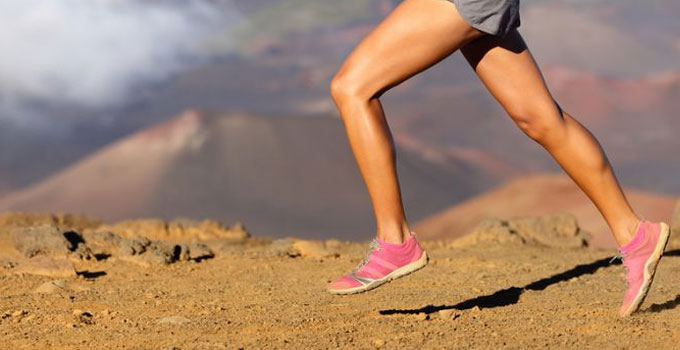
One of the most common questions asked by people before starting any type of workout regime is what shoes do we get? Imagine walking 100 km or running 42 km or hiking or trekking without proper shoes. It could just be disastrous. And history is a witness that most people back out from such challenges midway not because of lack of motivation or because they are tired. But give up largely due to foot injuries caused due to bad shoes.

Why it is important to choose the right footwear?… A very Important aspect of workout which is often neglected.

A good workout is achieved with good footwear. Bad shoes can derail all the efforts that you have put into your workouts and bring your fitness to a standstill due to injury. Strenuous outdoor workout or long distance running puts increased amount of pressure on your feet and therefore wearing the right shoes are important to prevent injury.

According to University of Illinois’ McKinley Health Centre’s note on foot type and proper footwear, foot problems are one of the most common health complaints. The high incidence of foot problems is understandable given the fact that there are 26 bones, 33 joints, 112 ligaments, and tendons, nerves, and blood vessels in the foot. It’s even more understandable when the weight of the body is considered. The force of the body weight borne by the foot increases roughly 1½ times during walking and up to 3-4 times during running. Add in 10,000 steps during a typical day while wearing ill-fitted shoes possibly, and it’s a wonder one’s feet are willing to get out of bed the next day.

A condition called Plantar Fasciitis i.e. damage and inflammation to Plantar Fascia (a connective tissue on the sole of foot forming the inner arch) is caused due to repetitive activity creating a strain on the plantar fascia.

Another common condition often faced by people is Achilles Tendonitis i.e. tissue damage and pain to Achilles Tendon caused during the contraction of the calf muscles. When the calf muscles contract some amount of tension is created on the Achilles Tendon and Wrong footwear further adds to that stress.

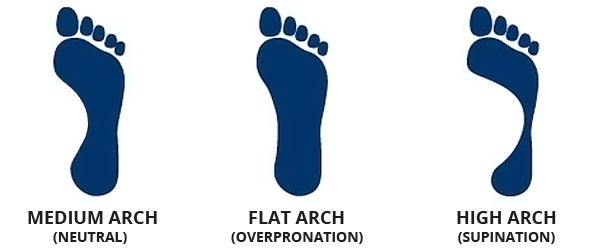
Let us now understand the three main categories of foot types :

1: Normal (Medium) Arch: If you see about half of your arch region filled in, you have the most common foot type. Usually, this means you have an arch that naturally supports your bodyweight and pronates normally under load. Some pronation or “rolling in” of the foot is desirable and acts as a natural shock absorber. Most runners with this pattern can wear just about any shoe.

2: Flat Floot (Absent curve): If the arch of your footprint is filled in, it’s likely that your foot collapses inward when you run. This acts as a shock absorber, but the additional rolling in of your foot may stress your feet and knees, adding to your injury risk. Usually, it is recommended that shoes with more stability, such as internal wedges that build up the arch side, dual-density midsoles, and supportive “posts,” or wider, more substantial midsoles be used.

3: More or High Arch: If your footprint shows little or no contact along the outside edge and you see just your heel and the ball of your foot, you have a “high” arch. Your foot may not roll in much when you run, but it doesn’t absorb much shock. We would usually recommend you use a well-cushioned shoe with little or no arch support or stability features.

three main categories of foot


Here are a few basics to keep in mind

  1. A good shoe must be very comfortable and must provide good cushion
  2. Good grip on the floor to avoid sliding or skidding
  3. It is important to understand your foot type. Visit a store that specializes in all kinds of sporting and athletic footwear. The associates there can help you find a shoe that’s appropriate for your foot type, the way you walk, and your sport.
  4. The right time to buy a shoe is in the evening when your feet are tired and there is more swelling in the feet.
  5. For Sportspersons variety of shoes are available depending on the type of sport.
  6. Running shoes have inbuilt shock absorbers, walking shoes are light weight and for Hiking one can choose low, mid or high cut shoes. High cut shoes or commonly known as Ankle shoes protects the ankles and provides more protection. And, finally, there are the cross training shoes which are suitable if you do more than one type of workouts.
  7.  One size larger than your usual shoe size is better in terms of trekking and trail running shoes.

A good shoe must support your foot, front and back and provide protection, stability, and good shock absorption.

We hope this article helps you choose the right footwear for your activities. Is there an interesting way you select your workout shoes? Let us know in the comments below. For more tips on fitness and health, check out Healthy Reads or speak to a certified expert by subscribing to GOQii’s Personalised Health Coaching here.

#BeTheForce

Disclaimer: The information provided in this blog is for general awareness and educational purposes only. It is not intended to replace professional medical advice, diagnosis, or treatment. Always consult a qualified healthcare provider for personalised medical guidance or concerns related to your health.
July 8, 2024 By Mitali Ambekar 9 Comments

Should Women Workout During Their Menstrual Cycle?

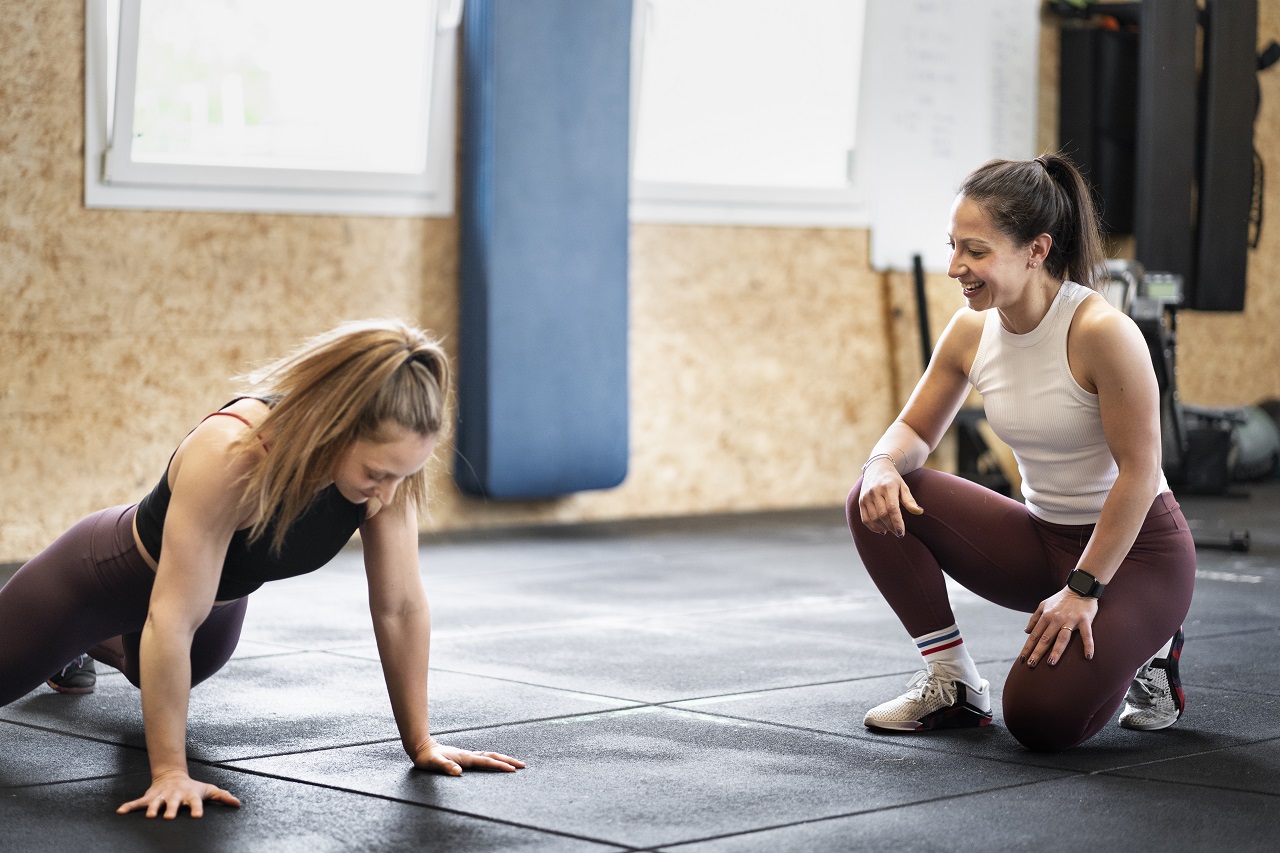
Should Women Workout During Their Menstrual Cycle?Should women workout during their menstrual cycle? It’s a question asked by most women who have either started working out, have been in sports or trekking, etc. How can a woman or girl stop working out for a span of 4-6 days, especially the ones who are active? There could be varied opinions on the same.
How Does Working Out During A Menstrual Cycle Help? 

If we put in a little logic, it does show us that a workout during their menstrual cycle would help women feel better. How is that? In general, when anyone works out, the body tends to release endorphins, the feel-good hormone and makes one feel good and happy. In the case of women, this is especially true, when the other hormones are already making her feel irritated, low on energy and weak during her periods.

Another positive is better circulation and higher metabolism – both of which will make sure that all the processes in the body are working well, thereby also making the woman’s uterine muscles relax, which otherwise are constricted during periods and can be a major cause for cramps. Better circulation can even help in relieving headaches and other small aches, which otherwise happen with iron deficiency during this phase.

Should Women Workout During Their Menstrual Cycle?Having said this, the intensity of workouts should not be very high, it should be low to moderate. Before starting off, you may not feel like doing so but, as you start with a light warm-up such as a slow walk, followed by some stretching, it will make you feel better and thus, take the workout forward slowly and steadily. In fact, light stretching will even help you get rid of congestion in the pelvic area.
When You Should Avoid Working Out

Women, who suffer severe pain and more bleeding should avoid it, as exercise can make them feel weaker and can make it very painful. Again the question pops up, why and how?

During periods, the woman’s Uterus and the veins inside are a little sensitive. Any pressure on it, be it in the form of exercise or any other activity, can cause more pain. Women who already encounter a lot of pain should avoid taking the risk of working out and should rest for 2-3 days and then get back to their routine. Failing to do so can cause more weakness with loss of blood due to excessive bleeding.

Albeit, you can do some light walks, stretching, or yoga. You can try swimming too as it equally helps in feeling fresh, light and helps easing off the pain. As a precautionary step, always remember to eat something before the workouts to get the dash of energy you need to workout.

We hope this article helps you! For more articles on Women’s Health, check out Healthy Reads. You can also download the GOQii App to keep a track of your menstrual cycle or speak to an expert by subscribing for GOQii’s Personalised Health Coaching here.

#BeTheForce

Disclaimer: The information provided in this blog is for general awareness and educational purposes only. It is not intended to replace professional medical advice, diagnosis, or treatment. Always consult a qualified healthcare provider for personalised medical guidance or concerns related to your health.

July 5, 2024 By Mrinali Dwivedi 2 Comments

Pre & Post Workout Shots You Can Try At Home

pre & post workout shotsWhether you’re working out indoors or outdoors, hydration is imperative throughout a workout and especially before and after! Here’s how you can improve your hydration game to the optimum benefits on your performance and outcomes of exercising with these pre & post workout shots! 

Pre & Post Workout Shots For Home! 

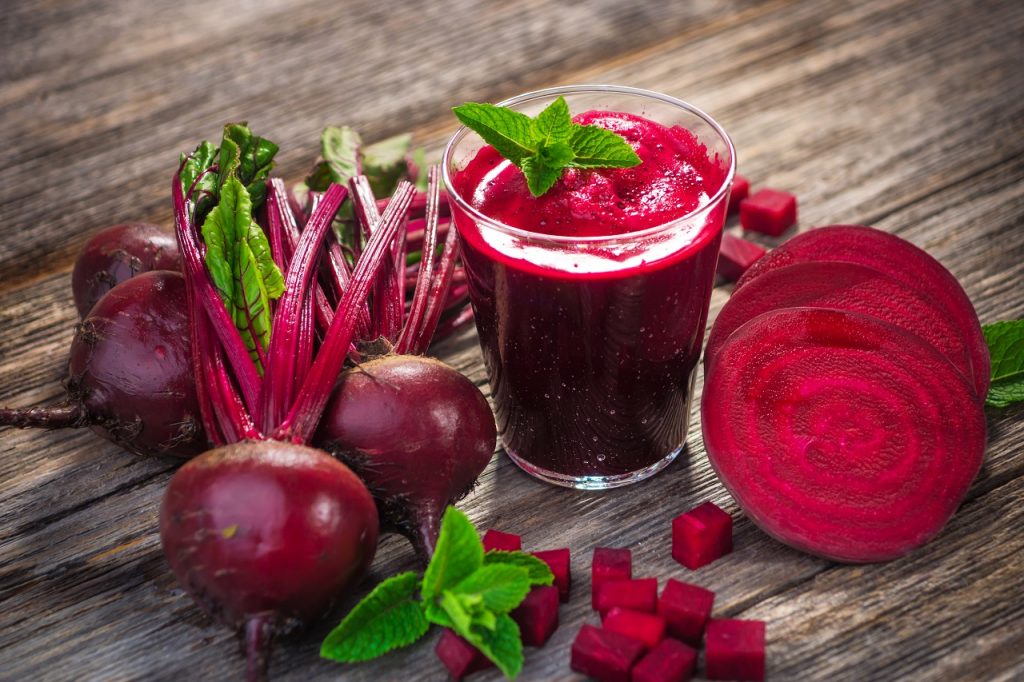
1. Shot of Beetroot Juice for Pre Workout
Beetroot Juice is a supplement with a high nitrate content, that is said to improve physical performance secondary to nitric oxide, which is a component of human blood that helps dilate your blood vessels and aid faster blood circulation, as to provide greater oxygen supply. Supplementation or dietary ingestion of nitrates is known to reduce oxygen requirements during exercise and reduce VO2 max (which indicates better stamina). In measures of time taken to reach exhaustion, beetroot juice showed an association with a fatigue delay effect and exercise performance enhancement.

A short term supplementation with beetroot juice may reduce VO2, giving an ergogenic effect, at less than or equal to VO2 max intensity that makes it possible to enable increased time-to-exhaustion. In addition to improving efficiency and performance, chronic supplementation with beetroot juice may improve cardiorespiratory performance as well. Consumption of Beetroot juice should be initiated in a period of 90 minutes before athletic effort, since the peak value of nitrates occurs within 2-3 hour after ingestion. At least 6-8 mmol of nitrate i.e. juice of 5 medium sized beetroots intake is required to observe an improvement in athletic performance.

2. Shot of Amla (Indian Gooseberry) Juice for Post Workout
Amla Juice is a reservoir of Vitamin C and essential electrolytes that are of utmost importance for post workout recovery. Post workout is an immunocompromised state where the body is concentrating more on muscle recovery and storage. This makes it imperative to supplement with immune boosting nutrients and electrolytes that may be lost due to sweating, right after a workout session.

Supplementing with amla juice has shown to reduce infection rate in athletes and heavy working out individuals. It also lowers down duration of muscle soreness significantly, which aids early mitigation of muscle cramps. Vitamin C being an antioxidant, reduces inflammation in the body, which is a common after effect of exercising. Chronic supplementation with amla juice is shown to build stronger immunity and improve gut health as well as strengthening the respiratory system.

Intake of amla juice should be initiated within 20 minutes of finishing physical activity as that is when the recovery and restorative activities of the body begin. Juice of 4 medium sized amlas ensures the supply of adequate amounts of Vitamin C and electrolytes.

We hope these pre & post workout shots help you get the most out of your exercises! Do let us know your experience in the comments below.

#BeTheForce 

Disclaimer: The information provided in this blog is for general awareness and educational purposes only. It is not intended to replace professional medical advice, diagnosis, or treatment. Always consult a qualified healthcare provider for personalised medical guidance or concerns related to your health.

  • « Previous Page
  • 1
  • …
  • 4
  • 5
  • 6
  • 7
  • Next Page »

Search

Recent Posts

  • India Leads in Longevity: GOQii Sanjeevini Named Top 40 in $101M XPRIZE
  • The Importance Of Knowing If You’re Thirsty Or Hungry
  • Best Foods To Alleviate Irritable Bowel Syndrome
  • ALL ABOUT VERTIGO!
  • PCOS and Anxiety: Discover Relief with the 54321 Technique

Stay Updated

Archives

  • December 2025 (8)
  • November 2025 (15)
  • October 2025 (20)
  • September 2025 (6)
  • August 2025 (6)
  • July 2025 (12)
  • June 2025 (18)
  • May 2025 (16)
  • April 2025 (23)
  • March 2025 (23)
  • February 2025 (22)
  • January 2025 (26)
  • December 2024 (26)
  • November 2024 (25)
  • October 2024 (22)
  • September 2024 (24)
  • August 2024 (31)
  • July 2024 (21)
  • June 2024 (26)
  • May 2024 (31)
  • April 2024 (27)
  • March 2024 (29)
  • February 2024 (26)
  • January 2024 (25)
  • December 2023 (15)
  • November 2023 (11)
  • October 2023 (20)
  • September 2023 (22)
  • August 2023 (20)
  • July 2023 (22)
  • June 2023 (24)
  • May 2023 (24)
  • April 2023 (24)
  • March 2023 (23)
  • February 2023 (20)
  • January 2023 (16)
  • December 2022 (12)
  • November 2022 (15)
  • October 2022 (15)
  • September 2022 (12)
  • August 2022 (10)
  • July 2022 (17)
  • June 2022 (11)
  • May 2022 (10)
  • April 2022 (6)
  • March 2022 (6)
  • February 2022 (13)
  • January 2022 (12)
  • December 2021 (7)
  • November 2021 (3)
  • October 2021 (6)
  • September 2021 (3)
  • August 2021 (8)
  • July 2021 (7)
  • June 2021 (15)
  • May 2021 (16)
  • April 2021 (10)
  • March 2021 (7)
  • February 2021 (4)
  • January 2021 (4)
  • December 2020 (3)
  • November 2020 (4)
  • October 2020 (10)
  • September 2020 (3)
  • August 2020 (3)
  • July 2020 (2)
  • June 2020 (4)
  • May 2020 (10)
  • April 2020 (12)
  • March 2020 (10)
  • February 2020 (4)
  • January 2020 (4)
  • December 2019 (3)
  • November 2019 (7)
  • October 2019 (5)
  • September 2019 (4)
  • August 2019 (9)
  • July 2019 (9)
  • June 2019 (11)
  • May 2019 (4)
  • April 2019 (9)
  • March 2019 (8)
  • February 2019 (9)
  • January 2019 (8)
  • December 2018 (9)
  • November 2018 (3)
  • October 2018 (3)
  • September 2018 (5)
  • August 2018 (10)
  • July 2018 (6)
  • June 2018 (13)
  • May 2018 (8)
  • April 2018 (18)
  • March 2018 (9)
  • February 2018 (8)
  • January 2018 (15)
  • December 2017 (12)
  • November 2017 (19)
  • October 2017 (13)
  • September 2017 (15)
  • August 2017 (4)
  • July 2017 (8)
  • June 2017 (7)
  • May 2017 (6)
  • April 2017 (8)
  • March 2017 (6)
  • February 2017 (7)
  • January 2017 (9)
  • December 2016 (10)
  • November 2016 (7)
  • October 2016 (7)
  • September 2016 (7)
  • August 2016 (11)
  • July 2016 (9)
  • June 2016 (9)
  • May 2016 (12)
  • April 2016 (17)
  • March 2016 (17)
  • February 2016 (8)
  • January 2016 (6)
  • December 2015 (2)
  • November 2015 (9)
  • October 2015 (7)
  • September 2015 (9)
  • August 2015 (11)
  • July 2015 (9)
  • June 2015 (12)
  • May 2015 (9)
  • April 2015 (13)
  • March 2015 (8)
  • February 2015 (5)
  • January 2015 (12)
  • December 2014 (14)
  • November 2014 (11)
  • October 2014 (6)
  • September 2014 (13)
  • August 2014 (12)
  • July 2014 (6)
  • June 2014 (2)
  • May 2014 (7)
  • April 2014 (5)

From “Laddu Nawin” to Fit and Fierce: How a 25-Year-Old Insurance Advisor Shed 20 Kilos and Gained His Life Back

When 25-year-old Nawin Yadav from Hyderabad walked into his office every morning, he carried more than just his files and policy papers. He had the weight of fatigue, sluggish energy, and an ever-growing belly that was becoming the butt of jokes. “People … [Read More...]

“I’ve Challenged Myself to Live 100 Years” – The Story of Chandubhai Savani’s Second Chance at Life

At 67, most people start slowing down. Not Chandubhai Savani. A resident of Surat, Chandubhai, thought life was on track. “My life was going well till I had my bypass surgery,” he says. That surgery, back in 2021, was a wake-up call.  Medication was routine, but exercise wasn’t. His diet? What he calls ‘normal.’ “I […]

From Shimla’s Slopes to Chandigarh’s Sidewalks: Surinder Kaur Bhalla’s Journey from Chaos to Control

Some journeys start with a plan. Others begin with a stumble literally. Surinder Bhalla, a government professional, born and raised in the scenic hill town of Shimla, had always lived a life of movement. “In Shimla, you walked everywhere,” she reflects. “Walking was never an exercise. It was just life.” But after shifting to Chandigarh, […]

Ananda Mukherjee Health Story

From Terminal Illness To Complete Wellness! Ananda Mukherjee Health Story

As we observe World Cancer Day under the powerful theme ‘United by Unique’ (2025-2027)**, we are reminded that every individual’s journey with cancer is distinct, yet united by shared resilience, hope, and the collective fight against this disease. This theme places people at the centre of care and their stories at the heart of the […]

  • HOME
  • HEALTHY LIVING
  • FITNESS
  • HEALTHY RECIPES
  • USER STORIES
  • KARMA
  • BUY GOQii

Copyright ©2016 GOQii


