GOQii

Blog

  • HOME
  • HEALTHY LIVING
  • FITNESS
  • HEALTHY RECIPES
  • USER STORIES
  • KARMA
  • BUY GOQii

October 17, 2025 By GOQii 2 Comments

Tips To Eat Smart During Diwali & Avoid Weight Gain

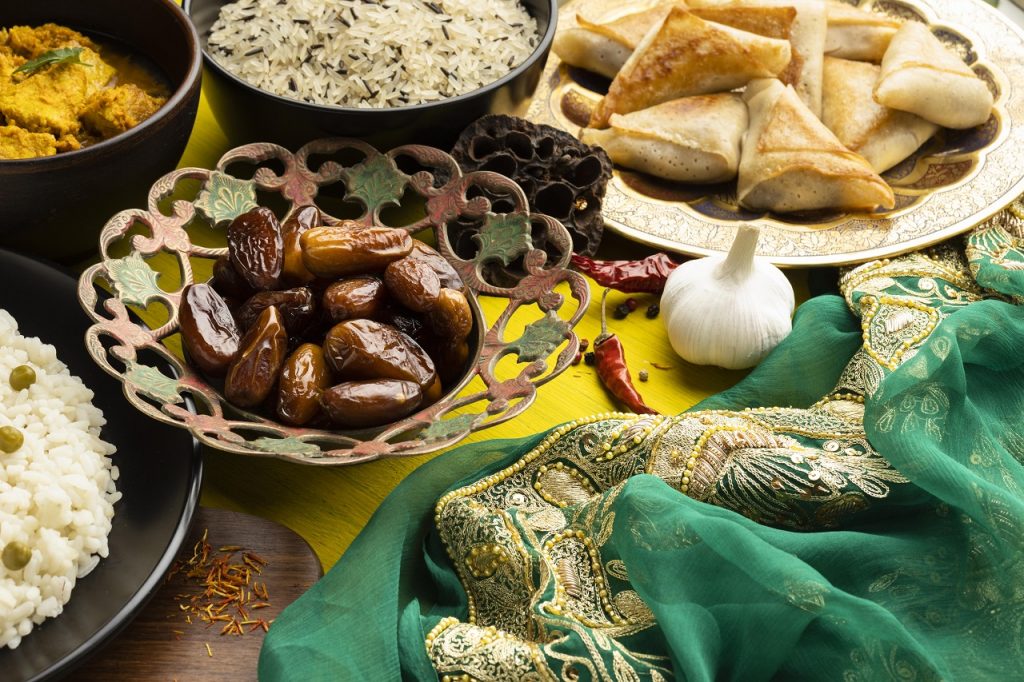
Eat Healthy During DiwaliWith the long Diwali holidays ahead of us, there are sure to be outings, guests visit and dinner parties among other celebrations. More often than not, we end up indulging in sweets and other sinful foods and then feel guilty, which in turn makes us look for easy and quick ways to shed off those extra kilos. But, the unfortunate part is that we end up resorting to all the wrong ways of shedding that extra weight which again has a YO-YO effect. But don’t worry! We got a few health tips that will help you eat smart during Diwali!

Tips To Eat Smart During Diwali 

  • If you plan to go out, don’t go on an empty stomach. Eat a small snack before you head out. Choose snacks like boiled corn, mix veggie salad, a fruit bowl, sprouts, veggie soup, yogurt with crushed nuts, whole wheat bread sandwich, etc. This will keep you full and prevent binging/overeating when you are out.
  • If one meal goes for a toss, make sure the rest of the meals are absolutely on track. For instance, if you have a dinner party, make sure your meals through the day such as breakfast, lunch and mid meals are balanced and healthier.
  • Sip water frequently throughout the day. It will keep you hydrated and will also satiate false hunger.
  • Pick healthier desserts. Choose dry fruits, fruits, kheer, phirni, shrikhand (you can make it using hung curd), dark chocolates, til or peanut chikkis, dink laddoos (gum arabic), etc. over any other sugar-loaded sweets. Sweets made out of jaggery or organic honey are good to go. Remember, we need to take care of the portions too.
  • Choose baked food items over deep fried ones.
  • Compensate: It’s true that saying “NO” when you are offered sweets by your loved ones, especially during this festive season, is going to be difficult. Don’t worry! Pick one, eat it mindfully and enjoy the eating experience. Now you know what to do next. Compensate for your extra caloric intake in your following meals. More fibre (salads, veggies), good amount of proteins and lesser carbs.
  • Go easy on the alcohol. It’s a major dehydrator and contains empty calories. Choose red wine over any other hard drinks. Sangria would be the best option here (cut fruits in red wine).
  • Be a health-conscious host. Serve snacks like dhokla, masala peanuts, unsalted nuts and dry fruits, sprout-chaat, fruit salad, idlis, baked chaklis, etc. Avoid serving soft drinks or artificial juices. Lemon water, jal jeera, flavoured milk, spiced buttermilk, fresh fruit juices, etc. would be some better options here.
  • Firecrackers are going to pollute the air. The pollutants (free radicals) have an easy access to our body as we breathe. Neutralize the free radicals by consuming adequate antioxidants through colourful fruits, berries and vegetables.
  • Last but not the least, don’t forget to work out! Workouts would kick your body’s metabolism in high gear, helping you burn calories faster. It’s best to get your workout done before going out for a party. The spiked metabolism would help you burn better when you eat at a party.

We hope you have a great Diwali and these tips help you celebrate a happier, healthier and guilt-free one! If these tips help, do let us know in the comments below.

For more on healthy living, check out Healthy Reads or get some more tips directly from a GOQii Coach by subscribing for Personalised Health Coaching here.

#BeTheForce 

Disclaimer: The information provided in this blog is for general awareness and educational purposes only. It is not intended to replace professional medical advice, diagnosis, or treatment. Always consult a qualified healthcare provider for personalised medical guidance or concerns related to your health. Images shown are for representation purposes only and may not depict the exact recommendations or outcomes.
June 27, 2025 By GOQii Leave a Comment

All You Need To Know About Visceral Fat

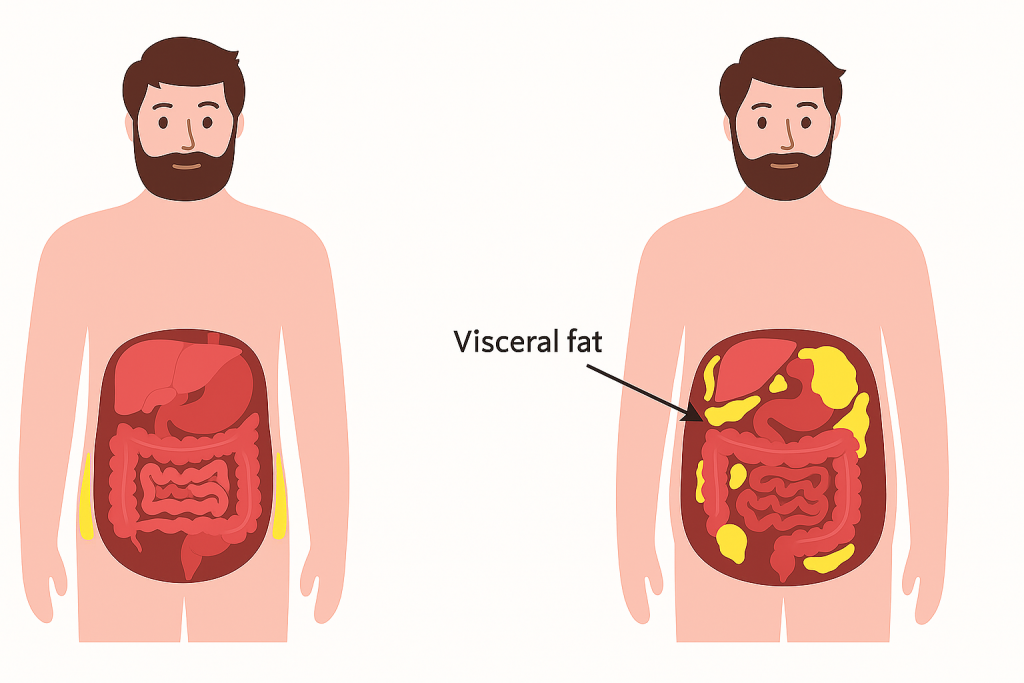
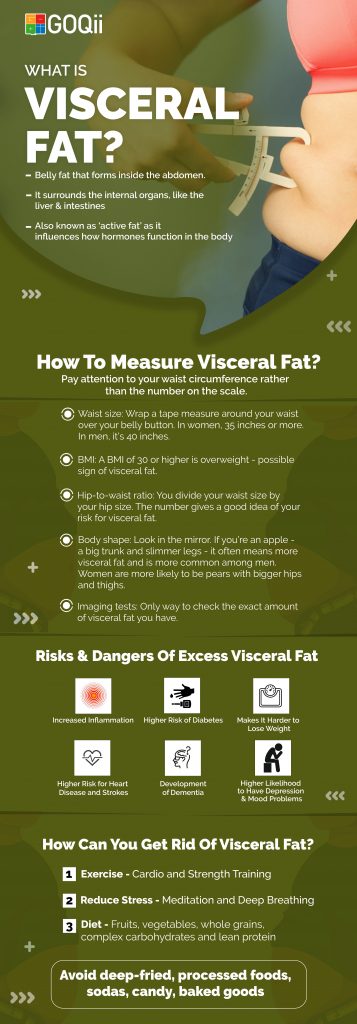
Have you come across the term visceral fat? You’ve likely heard it mentioned. It refers to the unwanted belly fat that forms deep inside the abdomen. This type of fat is considered particularly dangerous because it surrounds your vital internal organs, including the liver and intestines. It’s often referred to as active fat because it directly influences how hormones function within the body.

Why Visceral Fat Is a Concern

Visceral fat can pose a number of health risks. If you have more fat stored than your body requires, especially around the liver, heart, kidneys, pancreas, and intestines, your body becomes inflamed. This kind of fat stores inflammatory white blood cells, which is why belly fat has been linked to cognitive decline, arthritis, diabetes, and more.

The inflammatory substances generated by excess fat known as cytokines, are major contributors to heart disease and other inflammatory conditions. When the body is inflamed, the liver struggles to process cholesterol and toxins effectively, leading to plaque build-up in the arteries. Visceral fat is also associated with an increased risk of cardiovascular disease markers such as:

  • High triglycerides
  • Raised blood pressure
  • Elevated cholesterol levels

In addition, visceral fat plays a significant role in insulin resistance, increasing the risk of developing type 2 diabetes.

Refer to the image below to know more:

Visceral Fat

Lifestyle Factors That Influence Visceral Fat

While regular exercise, stress management, and a balanced diet are essential to keeping visceral fat in check, how you cook your meals also matters.

Healthier Cooking Methods:

✔️ Boiling
✔️ Steaming
✔️ Baking
✔️ Grilling

These methods help reduce excess fat in meals while preserving nutrients.

Foods That Encourage Belly Fat:

❌ Trans fats (found in some meats, dairy, deep-fried and processed foods)
❌ Sugary drinks like sodas
❌ Confectionery, baked goods, and other foods sweetened with fructose

Managing visceral fat is not just about aesthetics — it’s about protecting your long-term health. Small, sustainable changes to your eating habits, cooking style, and daily routine can go a long way in reducing this harmful fat.

To understand more about visceral fat and how to lose it effectively, connect with your GOQii Coach by subscribing to Personalised Health Coaching here. For more articles on weight loss, check out Healthy Reads.

#BeTheForce 

Disclaimer: The information provided in this blog is for general awareness and educational purposes only. It is not intended to replace professional medical advice, diagnosis, or treatment. Always consult a qualified healthcare provider for personalised medical guidance or concerns related to your health. Images shown are for representation purposes only and may not depict the exact recommendations or outcomes.

June 19, 2025 By GOQii 3 Comments

How to Burn Fat With Exercise

burning fat with exerciseDon’t be misled by the so-called fat-burning zone. This widely held belief suggests that working at a lower intensity (e.g. walking) is better for fat burning than exercising at a higher effort level (e.g. running). The reality is quite the opposite – the harder you exercise, the more calories you burn, and it’s the total calories burned that truly count when it comes to fat loss.

Choosing the Right Fat Loss Exercise

There’s no one-size-fits-all ‘ultimate’ calorie-burning activity. The energy you expend depends on the effort you apply, your skill level, duration and how consistently you do it. Choose an activity that you can stick with regularly. That means picking something you genuinely enjoy and can access easily – because no one wants their workouts to be a chore.

Exercise Larger Muscles For Greater Calorie Burn

Effective fat-burning activities engage large muscle groups – such as the thighs, glutes, chest, and back. The greater the overall muscle recruitment, the higher the calorie burn. For example, rowing – which engages the upper and lower body – burns significantly more calories than arm-only cardio machines at the gym.

Sustainable Exercise is Key

To ignite your body’s calorie furnace, your workout needs to be sustainable over time. Skipping is a brilliant cardiovascular activity, but if you only do it for a few minutes, the benefits are limited. According to the American College of Sports Medicine, aim for 20–60 minutes per session, three to five times per week. This doesn’t have to be continuous—you can break it up into manageable chunks.

Maximise Fat Burn With Interval Training

Interval training – alternating between high-effort bursts and rest – is one of the best ways to burn more calories efficiently. It boosts aerobic fitness and is time-effective. To get started, try a 2:2 work-to-rest ratio: push beyond your comfort zone during effort periods and ease off during recovery.

Weight-Bearing Activities Burn More

Exercises like walking and running, where you carry your own bodyweight, typically burn more calories than supported activities like cycling or swimming. Why? Because you’re working against gravity. That added resistance increases your energy expenditure.

Should You Exercise on an Empty Stomach?

There’s a belief that morning fasted workouts burn more fat because the body taps into fat stores for fuel. While that may be true in theory, lack of energy could reduce workout intensity or duration. It’s important to listen to your body and choose what works best for you.

The ‘After Burn’ Effect

One of the most exciting benefits of exercise is that fat burning continues even after your workout. This is known as the after burn or excess post-exercise oxygen consumption (EPOC). Research shows this effect is significantly higher after working out at 75% or more of your maximum heart rate – another reason to prioritise intensity.

Progressively Increase Intensity

To keep seeing results, you must keep progressing. This doesn’t necessarily mean pushing harder—it means increasing workload as your fitness improves. If you stay in your comfort zone, your results will plateau.

Move More Throughout the Day

Research from the Mayo Clinic shows that leaner individuals tend to move more throughout the day than those who are overweight. Their non-exercise activity thermogenesis (NEAT) – the energy burned during daily movement like standing, fidgeting, or walking – can account for up to 350 extra calories a day. So stand up, stretch, take the stairs – it all adds up!

Sample Calorie Burn Per Hour (values approximate for a 70kg adult)

Activity

Calories Burned/hour

Running (8-minute mile pace)

720–910 kcal

Swimming (continuous laps)

630–730 kcal

Uphill walking (10% incline)

590–690 kcal

Fat loss through exercise is not about gimmicks – it’s about consistency, variety, and effort. Choose activities you enjoy, aim for progression, and remember that small movements throughout the day matter too.

Did you find this article helpful? Let us know in the comments below! For more on weight loss, click here.

#BeTheForce

Disclaimer: The information provided in this blog is for general awareness and educational purposes only. It is not intended to replace professional medical advice, diagnosis, or treatment. Always consult a qualified healthcare provider for personalised medical guidance or concerns related to your health. Images shown are for representation purposes only and may not depict the exact recommendations or outcomes.

December 10, 2024 By GOQii Leave a Comment

Feeding Your Emotions? Why You Need To Stop Emotional Eating

Feeding Your Emotions? Why You Need To Stop Emotional EatingRemember the old adage – Eat to Live and not Live to Eat? We don’t always eat simply to satisfy hunger. Sometimes, we turn to food for comfort, stress relief, or as a reward. It becomes an activity we do out of habit, like nail-biting, hair twirling, or finger tapping. Recent trends show that we often turn to food in response to certain emotions. For instance, eating chocolates or sweets when we’re sad or depressed. Whether you feel angry, sad, bored, or even excited—food can act as a buffer against these emotions. But is emotional eating good for you?

Emotional eaters know it’s easier to suppress feelings with each bite rather than confront them. Unfortunately, emotional eating doesn’t solve emotional problems. It usually makes you feel worse. Afterwards, not only does the original emotional issue remain, but you also feel guilty for overeating. This compounds the problem, as you stop learning healthier ways to deal with your emotions, struggle to control your weight, and feel increasingly powerless over both food and your feelings.

Where Do You Start To Stop Emotional Eating?

Before addressing how to stop emotional eating, have you ever wondered why we turn to food when emotionally distressed? When we eat, certain chemicals are released in the body which significantly impact our emotional health. Food and mood are intricately connected. For instance, we feel sadder when hungry due to lack of neurochemicals in the brain. Through eating, we experience changes in serotonin, endorphins and dopamine levels – all of which influence mood. Sugar, for example, increases serotonin in the brain, helping us feel more balanced and stable. Anti-depressants work on a similar chemical mechanism to improve mood. So, coming back to the point – what can you do to address this?

Recognize What Triggers You To Eat Emotionally

As mentioned earlier, people eat for many reasons. Which situations, places or feelings make you turn to food for comfort? Each time you feel a craving, ask yourself, “Am I really hungry, or am I responding to something else?” If hunger isn’t the reason, identifying the real cause can be challenging.

By tracking your food intake and associated emotions regularly, you might notice patterns, such as a tendency to overeat on Mondays. Ask yourself, “What is it about Mondays that leads to overeating? Stress from getting the kids to school? Frustration over returning to work? Lack of holidays?” Notice if you tend to snack in the evenings. Is it out of boredom, loneliness, anger, sadness, anxiety, or an unhappy relationship? Once you identify your emotional eating triggers, the next step is finding healthier ways to manage your feelings.

Find Ways To Fulfill Yourself Emotionally

Understanding the cycle of emotional eating and identifying triggers is only the beginning. The next step is finding healthier alternatives to fulfill yourself emotionally.

Here are some options to try:

  • Call someone who always makes you feel better
  • Play with your kids or pets
  • Look at a favorite photo or cherished memento whenever you feel low, depressed or lonely
  • If you’re anxious, expend your energy by dancing to your favorite song or squeezing a stress ball
  • Take a brisk walk for fresh air
  • If you’re exhausted, treat yourself to a hot cup of tea, take a bath, go to a spa for a massage, or light some scented candles and wrap yourself in a warm blanket
  • Take a break or go on a weekend getaway
  • If you’re bored, read a good book, watch a show, explore the outdoors, or try an enjoyable activity like painting or playing an instrument.

Form Healthier Habits

Last step to deal emotional eating requires long term modification i.e. healthy lifestyle habits. When you’re physically strong, relaxed, and well rested, you’re able to handle the challenges that life throws at you in a better way. But, when you’re already exhausted and overwhelmed, any little hiccup has the potential to send you off the rails and straight towards the kitchen>refrigerator>food. Exercise, sleep, and other healthy lifestyle habits will help you get through difficult times without emotional eating. Make daily exercise a priority.



Physical activity does wonders for your mood and your energy levels, and it’s also a powerful stressbuster. Give yourself permission to take at least 30 minutes every day to relax, decompress, and unwind. This is your time to take a break from your responsibilities and recharge your batteries for the next day. Connect with others. Don’t underestimate the importance of close relationships and social activities. Spending time with positive people who enhance your life will help protect you from the negative effects of stress.

With an arsenal of activities like trekking, journaling, or exploring hobbies, you can gradually overcome emotional eating. Success won’t come overnight, but accepting your mistakes and moving forward is key to breaking the cycle.

If you need help dealing with emotional eating, our experts are hereto guide you. Speak to a GOQii Coach to overcome emotional eating and achieve you weight loss goals. Subscribe for Personalised Health Coaching here.

For more tips on weight loss, explore Healthy Reads. If this article helped you or someone you know, let us know your thoughts in the comments below!

#BeTheForce

  • 1
  • 2
  • 3
  • …
  • 5
  • Next Page »

Search

Recent Posts

  • Best Foods To Alleviate Irritable Bowel Syndrome
  • ALL ABOUT VERTIGO!
  • PCOS and Anxiety: Discover Relief with the 54321 Technique
  • Navigating the Maze of Nutrition: Finding Clarity Amidst Confusion
  • Get children active and keep them healthy

Stay Updated

Archives

  • December 2025 (6)
  • November 2025 (15)
  • October 2025 (20)
  • September 2025 (6)
  • August 2025 (6)
  • July 2025 (12)
  • June 2025 (18)
  • May 2025 (16)
  • April 2025 (23)
  • March 2025 (23)
  • February 2025 (22)
  • January 2025 (26)
  • December 2024 (26)
  • November 2024 (25)
  • October 2024 (22)
  • September 2024 (24)
  • August 2024 (31)
  • July 2024 (21)
  • June 2024 (26)
  • May 2024 (31)
  • April 2024 (27)
  • March 2024 (29)
  • February 2024 (26)
  • January 2024 (25)
  • December 2023 (15)
  • November 2023 (11)
  • October 2023 (20)
  • September 2023 (22)
  • August 2023 (20)
  • July 2023 (22)
  • June 2023 (24)
  • May 2023 (24)
  • April 2023 (24)
  • March 2023 (23)
  • February 2023 (20)
  • January 2023 (16)
  • December 2022 (12)
  • November 2022 (15)
  • October 2022 (15)
  • September 2022 (12)
  • August 2022 (10)
  • July 2022 (17)
  • June 2022 (11)
  • May 2022 (10)
  • April 2022 (6)
  • March 2022 (6)
  • February 2022 (13)
  • January 2022 (12)
  • December 2021 (7)
  • November 2021 (3)
  • October 2021 (6)
  • September 2021 (3)
  • August 2021 (8)
  • July 2021 (7)
  • June 2021 (15)
  • May 2021 (16)
  • April 2021 (10)
  • March 2021 (7)
  • February 2021 (4)
  • January 2021 (4)
  • December 2020 (3)
  • November 2020 (4)
  • October 2020 (10)
  • September 2020 (3)
  • August 2020 (3)
  • July 2020 (2)
  • June 2020 (4)
  • May 2020 (10)
  • April 2020 (12)
  • March 2020 (10)
  • February 2020 (4)
  • January 2020 (4)
  • December 2019 (3)
  • November 2019 (7)
  • October 2019 (5)
  • September 2019 (4)
  • August 2019 (9)
  • July 2019 (9)
  • June 2019 (11)
  • May 2019 (4)
  • April 2019 (9)
  • March 2019 (8)
  • February 2019 (9)
  • January 2019 (8)
  • December 2018 (9)
  • November 2018 (3)
  • October 2018 (3)
  • September 2018 (5)
  • August 2018 (10)
  • July 2018 (6)
  • June 2018 (13)
  • May 2018 (8)
  • April 2018 (18)
  • March 2018 (9)
  • February 2018 (8)
  • January 2018 (15)
  • December 2017 (12)
  • November 2017 (19)
  • October 2017 (13)
  • September 2017 (15)
  • August 2017 (4)
  • July 2017 (8)
  • June 2017 (7)
  • May 2017 (6)
  • April 2017 (8)
  • March 2017 (6)
  • February 2017 (7)
  • January 2017 (9)
  • December 2016 (10)
  • November 2016 (7)
  • October 2016 (7)
  • September 2016 (7)
  • August 2016 (11)
  • July 2016 (9)
  • June 2016 (9)
  • May 2016 (12)
  • April 2016 (17)
  • March 2016 (17)
  • February 2016 (8)
  • January 2016 (6)
  • December 2015 (2)
  • November 2015 (9)
  • October 2015 (7)
  • September 2015 (9)
  • August 2015 (11)
  • July 2015 (9)
  • June 2015 (12)
  • May 2015 (9)
  • April 2015 (13)
  • March 2015 (8)
  • February 2015 (5)
  • January 2015 (12)
  • December 2014 (14)
  • November 2014 (11)
  • October 2014 (6)
  • September 2014 (13)
  • August 2014 (12)
  • July 2014 (6)
  • June 2014 (2)
  • May 2014 (7)
  • April 2014 (5)

From “Laddu Nawin” to Fit and Fierce: How a 25-Year-Old Insurance Advisor Shed 20 Kilos and Gained His Life Back

When 25-year-old Nawin Yadav from Hyderabad walked into his office every morning, he carried more than just his files and policy papers. He had the weight of fatigue, sluggish energy, and an ever-growing belly that was becoming the butt of jokes. “People … [Read More...]

“I’ve Challenged Myself to Live 100 Years” – The Story of Chandubhai Savani’s Second Chance at Life

At 67, most people start slowing down. Not Chandubhai Savani. A resident of Surat, Chandubhai, thought life was on track. “My life was going well till I had my bypass surgery,” he says. That surgery, back in 2021, was a wake-up call.  Medication was routine, but exercise wasn’t. His diet? What he calls ‘normal.’ “I […]

From Shimla’s Slopes to Chandigarh’s Sidewalks: Surinder Kaur Bhalla’s Journey from Chaos to Control

Some journeys start with a plan. Others begin with a stumble literally. Surinder Bhalla, a government professional, born and raised in the scenic hill town of Shimla, had always lived a life of movement. “In Shimla, you walked everywhere,” she reflects. “Walking was never an exercise. It was just life.” But after shifting to Chandigarh, […]

Ananda Mukherjee Health Story

From Terminal Illness To Complete Wellness! Ananda Mukherjee Health Story

As we observe World Cancer Day under the powerful theme ‘United by Unique’ (2025-2027)**, we are reminded that every individual’s journey with cancer is distinct, yet united by shared resilience, hope, and the collective fight against this disease. This theme places people at the centre of care and their stories at the heart of the […]

  • HOME
  • HEALTHY LIVING
  • FITNESS
  • HEALTHY RECIPES
  • USER STORIES
  • KARMA
  • BUY GOQii

Copyright ©2016 GOQii
