GOQii

Blog

  • HOME
  • HEALTHY LIVING
  • FITNESS
  • HEALTHY RECIPES
  • USER STORIES
  • KARMA
  • BUY GOQii

September 12, 2023 By Mamta Joshi 3 Comments

Your Guide to Growing Microgreens

microgreens

Growing your own plants can be a therapeutic experience but most of us don’t have that luxury due to lack of space. What do you do then? The answer lies in microgreens! With a little effort, you can not only add new aesthetics to your home with minimum space requirement but also enhance your health and wellbeing.

What Are Microgreens?

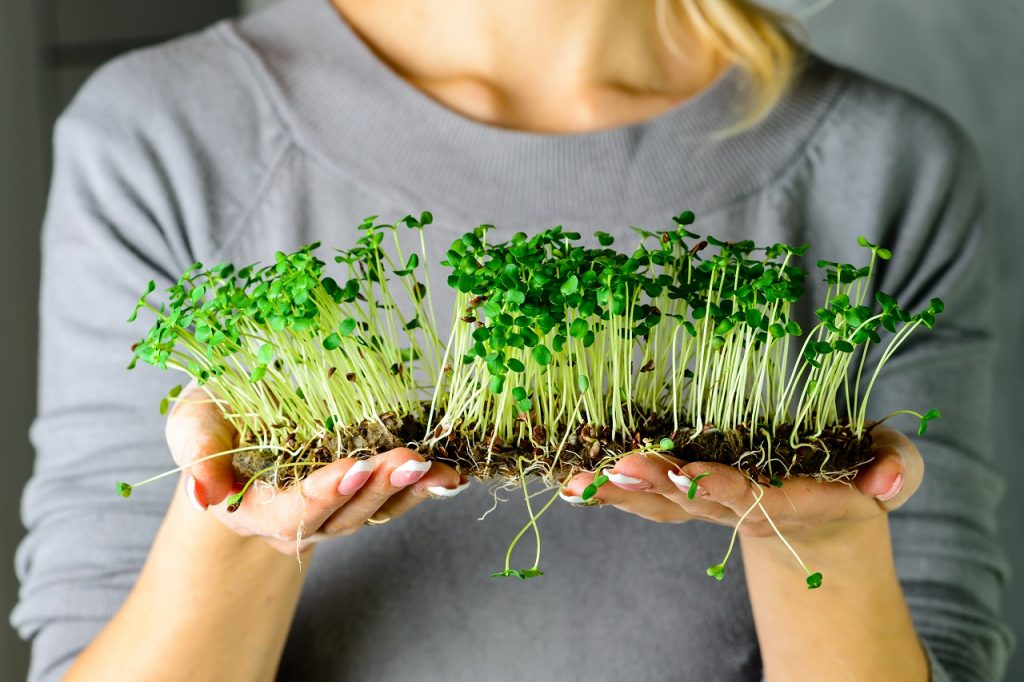
Microgreens are basically seedlings of vegetables and herbs. When they are grown up to 2-3 inches tall, they contain more nutrition than their grown up counterparts. They are harvested at a very early stage unlike mature vegetables or herbs.  Those mini nutrient dense plants are called microgreens. Microgreens, like other indoor plants, play a vital role in providing a pleasant and soothing environment one can live, work and relax within. Microgreens can be grown from any herb or vegetable.

Some commonly grown ones include:  

  • Amaranth
  • Basil
  • Broccoli
  • Coriander
  • Fenugreek
  • Fennel
  • Garlic
  • Mint
  • Mustard
  • Onion
  • Radish
  • Wheat

What Benefits Do They Provide? 

  • Microgreens contain 4 to 40 times more nutrients than their mature counterparts.
  • They are incredibly rich in nutrients such as vitamins, minerals, carotenoids, essential amino acids, enzymes, antioxidants that boost the immune system, improve cardiovascular health, and lower inflammation.
  • Expensive multivitamins, minerals and other supplements to promote health will no longer be required if we add a variety of microgreens to our regular diet. Just a few grams of microgreens can be enough to get your daily dose of essential nutrients.
  • Growing microgreens at home is inexpensive, requires less space and low attendance. More so, you reap something of high nutritional value which is free from toxic chemicals and pesticides
  • Microgreens give a distinctive flavor and can make any dish exotic.

How Do We Use Microgreens? 

There are many ways in which you can use microgreens. Some of them include: 

  1. Blending them in a smoothie 
  2. Make a soup with other veggies
  3. Use them in a salad
  4. Add to lentils in Khichdi 
  5. Use them as dressings or garnish 
  6. Add them to flour for some tasty vegetable chapati instead of a regular one 
  7. Use them in sandwiches, pizzas, burgers or tacos

How Can You Grow Them at Home?  

Growing your own microgreens isn’t a difficult ordeal. All you need is just soil, a pack of seeds, a tray or a pot or any disposable small container. 

Steps to follow: 

  1. Take a clean container or 10×20 tray and make holes in the bottom to provide proper drainage.
  2. Cover the bottom with moisturized soil or potting mix, putting 1 or 2 inches of it.
  3. Even the surface out and make sure you don’t press the soil too hard.
  4. Spread the seeds over the soil and press them gently with your fingers.
  5. Cover the seeds with another thin layer of soil. 
  6. Cover the container with a lid or plastic wrap and keep it in the shade so it can germinate. 
  7. After a couple of days, your seeds will have germinated. Take the lid off and expose it to sunlight. 
  8. Around a week after you uncover your trays, they should be ready to harvest.

They are pretty nice on pots as well as palatable on your plate. So get free of those expensive ornamental plants and get to grow these versatile ones. Growing your own plants and consuming them provides a different kind of satisfaction. 

Which microgreen are you keen on growing? Let us know in the comments below! For more guidance on growing your own microgreens ask a GOQii Coach by subscribing for Personalised Health Coaching here.

#BeTheForce  
June 18, 2023 By Neha Kapoor 5 Comments

Rise From Calorie Counting To Be Your Own Dietitian

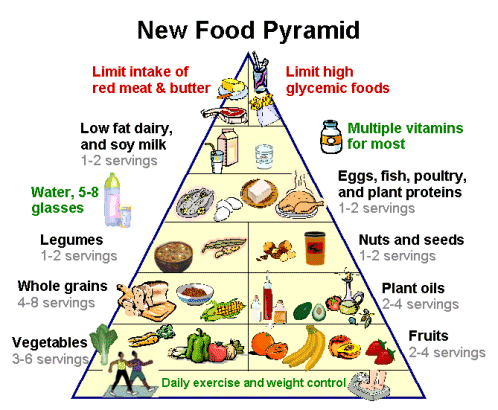
food pyramidDo you know the long kept “Secret of Diet”? Have you heard about it? In this article I would like to share it with you. It is a mantra to facilitate weight loss, regulate diabetes, hypertension and many such diseases taking good care of your immune system as well as vital organs. I am sure you must be familiar with these idioms i.e. “Food Pyramid” and “My plate”. If you are, I will be representing it from a different perspective. These are our main tools to plan a daily diet.
The Importance of Food Pyramid & My plate

The main idea behind the design of the food pyramid is to make our healthy eating experience much easier. When starting a new healthy diet, people need to know if they are consuming the right amount of the basic nutrients such as protein, fat, and carbohydrate, which is where the importance of the food pyramid and my plate comes in.

The food pyramid contains several sections of foods which are usually grouped according to their nutrient’s similarity. This actually helps you with a larger option to choose from. This way, you are not stuck to one particular food when there’s a whole world of options out there.

How To Use It? 

  1. Keeping this picture in front of you can help in making healthier choices with the number of servings you should ideally take in a day.
  2. Now next step is to understand My Plate which makes things pretty clear.

My Plate

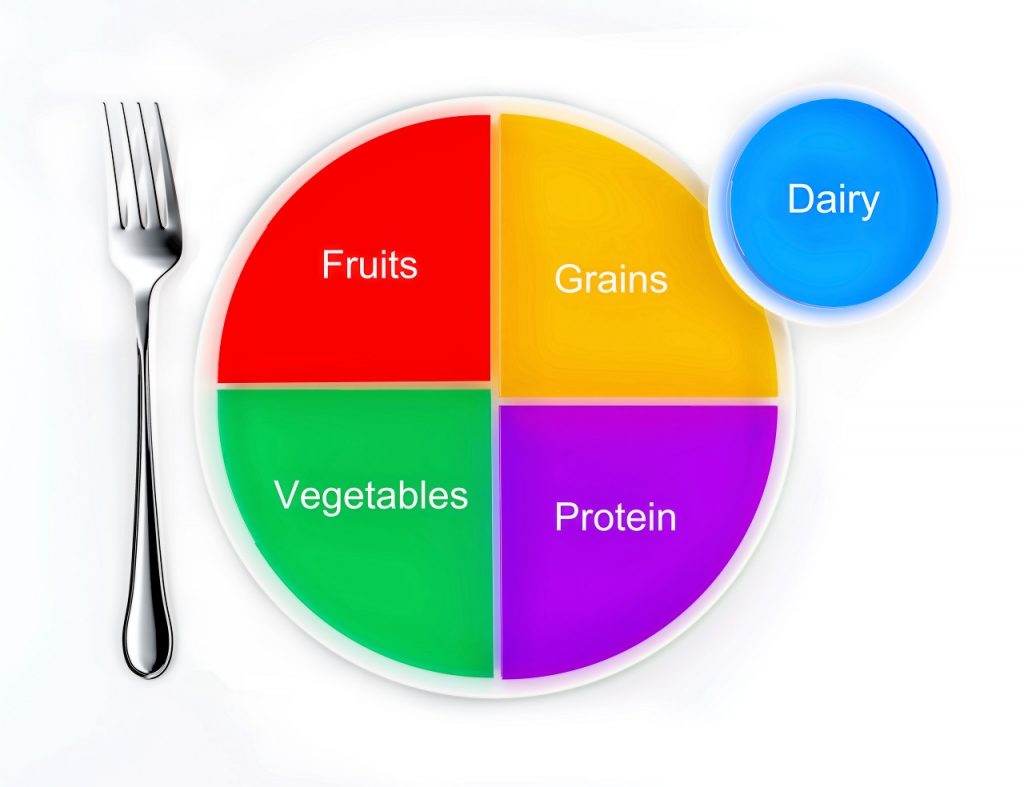
The beauty of My Plate is in using a plate icon to “measure” the relative portion sizes of what you’re eating.

  • My Plate is a food icon that serves as a powerful reminder to make healthy food choices and to build a healthy plate at mealtimes.
  • It is a visual cue that identifies the five basic food groups that are: Fruits-20%, Vegetables-30%, Protein group-20%, and grains 30% and a bowl of dairy products.

What to Put on Your Plate?

  • Eating the My Plate way means filling half your plate with vegetables and fruits, adding slightly more veggies than fruits (Due to sugar content).
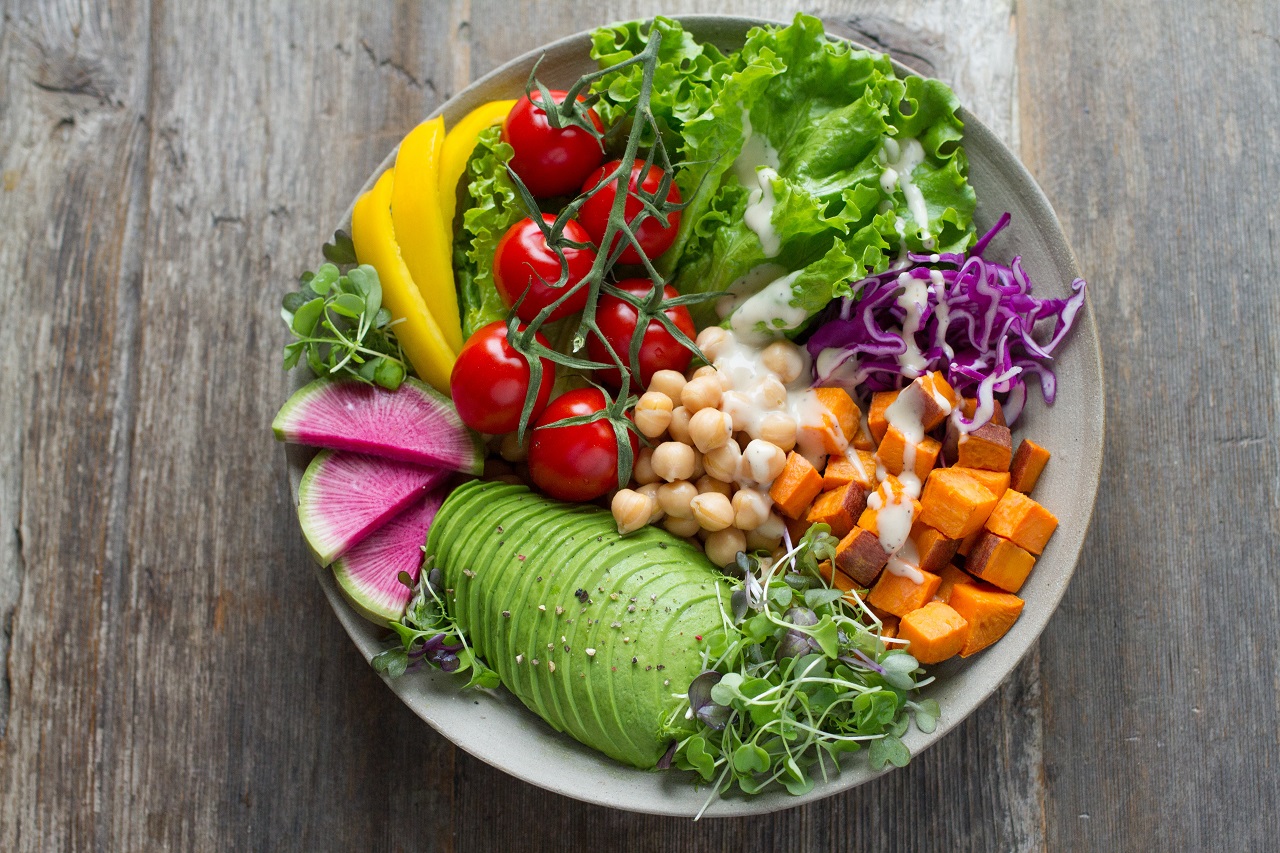
  • Go for a colourful mix. You’ll get plenty of nutrients that way.
  • You should fill the other half of your plate with lean protein and grains, using slightly more grain than protein. For instance, lean cuts of chicken and other meat, fish, beans and peas, tofu, eggs, nuts and seeds (use sparingly).
  • Whole grains should make up at least half of your grains. That means choosing brown rice instead of white rice, whole wheat flour or multigrain or millets instead refined flours for instance. If weight loss is a goal make grains 20%.
  • The My Plate icon also shows a glass of milk/ buttermilk near your “plate.” It’s a reminder to include dairy (mostly fat-free or low-fat) in your diet. A2 or organic milk is essentially chemical-free and healthier as the cows are fed grass or organically cultivated fodder. Calcium-fortified soy milk also counts.

Dietary Guidelines of My Plate

Making food choices for a healthy lifestyle can be as simple as using these tips. Use the ideas in this list to balance your calories (energy coming from food), to choose foods to eat more often, and to cut back on foods to eat less often.

  1. Enjoy your food, but eat less: Take the time to fully enjoy your food as you eat it. Eating too fast or when your attention is elsewhere may lead to eating too many calories (overeating). Pay attention to hunger and fullness cues before, during, and after meals. Use them to recognize when to eat and when you’ve had enough.
  2. Avoid oversized portions: Use a smaller plate, bowl, and glass. Portion out foods before you eat. When eating out, choose a smaller size option, share a dish, or take a part of your meal home.
  3. Foods to eat more often: Eat more vegetables, fruits, whole grains, and fat-free or 1% milk and dairy products. These foods have the nutrients you need for health – including potassium, calcium, vitamin D, and fiber. Make them the basis for meals and snacks.
  4. Make half your plate salad and vegetables: Choose red, orange, and dark-green vegetables like tomatoes, sweet potatoes, and broccoli, along with other vegetables for your meals. Add salad to meals.
  5. Switch to fat-free or low-fat (1%) milk: They have the same amount of calcium and other essential nutrients as whole milk, but fewer calories and less saturated fat.
  6. Make half your grains whole grains: To eat more whole grains, substitute a whole-grain product for a refined product-such as eating whole wheat bread instead of white bread or brown rice instead of white rice, whole wheat flour or millets instead refined ones.
  7. Foods to eat less often: Cut back on foods high in solid fats, added sugars, and salt. They include cakes, cookies, ice cream, candies, sweetened drinks, pizza, and fatty meats like ribs, sausages, bacon, and hot dogs. Use these foods as occasional treats, not everyday foods. Natural sugars like jaggery, honey, pure maple syrup are better choices.
  8. Compare sodium in foods: Use the Nutrition Facts label to choose lower sodium versions of foods like soup, bread, and frozen meals. Select canned foods labelled “low sodium,” ”reduced sodium,” or “no salt added.”
  9. Drink water instead of sugary drinks: Cut calories by drinking water or unsweetened beverages. Soda, energy drinks, and sports drinks are a major source of added sugar, and calories, in American diets.

Do give it a try and share your experience in the comments below. After getting familiar with this tool, we really don’t need any diet charts. Stick the pictures in your kitchen and plan any day meal without any hassle.

You can find more useful information on nutrition here. You can also get this information directly from an expert by subscribing to GOQii’s Personalised Health Coaching here.

#BeTheForce 

March 30, 2023 By GOQii 3 Comments

Breaking the Ramadan Fast with Healthy Bites

Ramadan Fast

The holy month of Ramadan is auspicious for the Islamic Community across the world. During this period, one practices restraint by fasting from sunrise till sunset, eating one meal before dawn i.e. the ‘suhoor’ or ‘sehri’ and breaking the fast with a meal after sunset i.e. Iftar.

While this sort of fasting comes with a plethora of health benefits, it is important to do it the right way! Balancing nutrition and exercising portion control is key to staying healthy while observing a fast during Ramadan. Here are some foods that will help you do just that!

Foods You Should Eat

  • Drinks: Ideally, the best way to break a fast is by consuming plenty of fluids to replenish your body. You can opt for smoothies, fruit juices or even water which provides hydration without extra calories or sugars. You can also opt for a soup, which is considered traditional in many Arab countries.
  • Fruits and Vegetables: Fruits provide your body with the much needed natural sugars loaded with vitamins and minerals that will boost your energy levels. In addition, adding a serving of vegetables with high fiber content will help you digest your food better and feel full for a longer period of time.
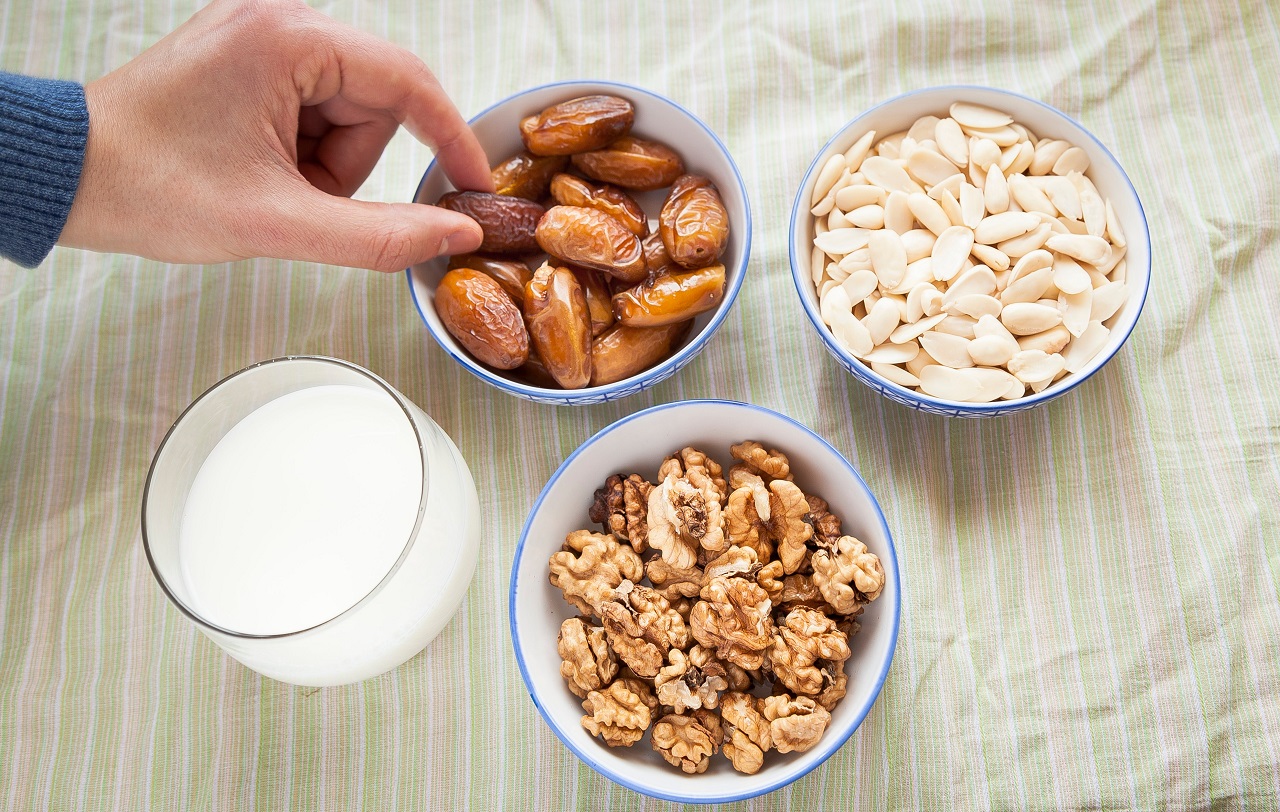
  • Dates & Dry Fruits: have been traditionally eaten to break a fast. You can follow this up with dry fruits.  You can try Jagger Bombs by WeDesi for a healthy and fun twist to dry fruits! Each Jagger Bomb contains dry fruits such as pistas, almonds, foxnuts, cashews bound with organic jaggery, gondh and pure cow ghee to give you all the essential nutrients you need while breaking a fast. You can get them at a discount from the GOQii Health Store within the GOQii App.
  • Rice & Alternatives: Brown rice, black rice, wholegrain noodles, wholegrain pasta or wholemeal bread are complex carbohydrates that provide a slow, stable and sustainable release of energy. Plus, they replenish your body with essential fibers and minerals after fasting.
  • Meat: Choose protein-rich sources such as lean meat, chicken, fish, eggs, etc. Proteins are the building blocks for healthy bones, muscles, cartilage, skin and blood. They also aid to build and repair tissues. It’s a must have when you have fasted for around 18 hours.

Foods You Should Avoid

The foods listed above will help you stay healthy during Ramadan but it is imperative to maintain caution with what you eat. Here are a few foods you can exclude from your meals.

  • Processed/Oily Foods: These contain less nutrients and more fat. This can lead to acidity, nausea, heartburn and indigestion. Consume food with lesser oil and avoid packaged or junk food at all costs.
  • Salty Foods: Avoid anything that is too salty especially during Suhoor. Salty foods increase thirst and can leave you dehydrated.
  • High-Sugar Foods: We all know by now that excess sugar in the body is stored as fat. Consuming high-sugar foods and drinks can lead to weight gain, sluggishness and fatigue.

Caution & Safety

Fasting is good but fasting the right way is equally important. Here are some things you need to watch out for while fasting during Ramadan.

  • Don’t Miss Sehri or Suhoor: Think of this as your breakfast. It is the most important meal of the day as it keeps your energy levels high throughout. This meal stores important nutrients in your body and keeps you going through the day. Skipping this meal can cause digestive discomfort, making your body sluggish. Moreso, it may compel you to overeat while breaking your fast which may lead to acidity, heartburn, bloating and weight gain.
  • If you experience dizziness, are unable to stand or feel disoriented, hydrate yourself immediately. Not doing so may lead to fainting, constipation, or splitting headaches. Dehydration can adversely affect your health.
  • Eat in Moderation: It is easy to get carried after while breaking a fast and overindulging with large portions. Avoid this and keep a constant check on your portion size. Remember to eat and not feast.
  • Limit Exercise: If you have been fasting, doing intense exercises may not be the wisest of choices. Perform extremely light workouts and don’t go overboard as your body needs to conserve energy.

What do you break your fast with? What’s your favorite meal during Ramadan? Did we miss out on anything? Do let us know in the comments below!

If you found these tips useful and want to learn more, speak to a GOQii Coach by subscribing for Personalized Health Coaching here.

#BeTheForce

March 19, 2023 By Madhu Soni 3 Comments

Healthy Summer Salads to Keep You Cool

Healthy Summer Salads to Keep You Cool

The scorching sun is shining brighter than ever! The resulting heat wave can have an impact on our health and appetite. During summers, it is important to watch what we eat. To balance the heat, we have listed a few scrumptious summer salads to help you stay cool!

1. Watermelon Feta Salad

Ingredients:

  • 1 big bowl of Watermelon cubes
  • ½ cup crumbled Feta Cheese or Paneer.
  • 1 medium bowl Cucumber cubes
  • Handful of Mint leaves
  • 1 tsp Honey and Olive oil
  • A pinch of rock salt
  • 1 tsp Lemon juice

Method:

  • For the dressing combine Honey, Lemon juice, Olive oil and rock salt
  • In a large bowl, take the Watermelon and Cucumber cubes
  • Add the finely chopped Mint leaves to it along with the dressing
  • Garnish with Feta Cheese or Paneer
  • Serve chilled

Healthy Benefits: High water content of Watermelons makes it an ideal fruit during summer. Feta Cheese is comparatively low on calories and is loaded with calcium.

2. Hung Curd Salad

Ingredients:

  • 1 cup Hung Curd
  • 1 cup Chickpeas
  • ½ cup each of Tomato, Cucumber, Onions and Bell Pepper.
  • Juice of a Lemon
  • Handful of Coriander and Mint leaves.

Method:

  • For the dressing, mix the Hung Curd, Lemon Juice, Rock Salt and Pepper
  • In a bowl, take Chickpeas, add finely chopped Tomatoes, Cucumber, Onions and Bell Pepper
  • Add the Hung Curd dressing and garnish with Coriander and Mint leaves

Healthy Benefits: Curd is an excellent probiotic. It helps in keeping stomach ailments away during summers. Chickpeas provide the much needed proteins and the veggies add a dash of freshness.

3. Mint Paneer Salad

Ingredients:

  • 200 gm Paneer
  • 1 cup thick Curd
  • Chopped Cucumber, Tomatoes and Onions
  • 1 cup Lettuce leaves and Salad leaves
  • Lemon juice and Lemon rind
  • 1 cup Bread Croutons [non fried-tossed on non-stick pan]
  • Handful Mint leaves
  • Salt and Pepper
  • Tandoori masala [store bought]

Method:

  • For the dressing, whisk half of the curd with mint leaves
  • Add Lemon juice and Lemon rind to it along with Salt and Pepper
  • Marinate the Paneer cubes in thick curd along with Tandoori masala
  • Shallow fry on a non stick pan till golden brown
  • In a large serving bowl, add roughly chopped Lettuce and Salad leaves
  • Add chopped Tomatoes, Onions and Cucumber followed by the Mint dressing and mix to coat well
  • Adjust the seasoning if required. Add the Bread Croutons and Paneer cubes.

Healthy Benefits: This is a perfect summer pot meal to cool you down. It has a good amount of fiber and proteins. The mint leaves aid digestion and take care of skin allergies during this harsh weather.

Hope you enjoy these summer salads! To make them more interesting, try adding these refreshing, low calorie summer drinks to your meal. If you’re looking for more healthy recipes, check out Healthy Reads.

You can also get these recipes from a GOQii Coach, along with meal plans tailored to your needs. All you need to do is subscribe for personalized health coaching here: https://goqiiapp.page.link/bsr

#BeTheForce 

  • « Previous Page
  • 1
  • …
  • 3
  • 4
  • 5
  • 6
  • 7
  • …
  • 10
  • Next Page »

Search

Recent Posts

  • Water Intake Pre, During and Post Workout
  • India Leads in Longevity: GOQii Sanjeevini Named Top 40 in $101M XPRIZE
  • The Importance Of Knowing If You’re Thirsty Or Hungry
  • Best Foods To Alleviate Irritable Bowel Syndrome
  • ALL ABOUT VERTIGO!

Stay Updated

Archives

  • December 2025 (9)
  • November 2025 (15)
  • October 2025 (20)
  • September 2025 (6)
  • August 2025 (6)
  • July 2025 (12)
  • June 2025 (18)
  • May 2025 (16)
  • April 2025 (23)
  • March 2025 (23)
  • February 2025 (22)
  • January 2025 (26)
  • December 2024 (26)
  • November 2024 (25)
  • October 2024 (22)
  • September 2024 (24)
  • August 2024 (31)
  • July 2024 (21)
  • June 2024 (26)
  • May 2024 (31)
  • April 2024 (27)
  • March 2024 (29)
  • February 2024 (26)
  • January 2024 (25)
  • December 2023 (15)
  • November 2023 (11)
  • October 2023 (20)
  • September 2023 (22)
  • August 2023 (20)
  • July 2023 (22)
  • June 2023 (24)
  • May 2023 (24)
  • April 2023 (24)
  • March 2023 (23)
  • February 2023 (20)
  • January 2023 (16)
  • December 2022 (12)
  • November 2022 (15)
  • October 2022 (15)
  • September 2022 (12)
  • August 2022 (10)
  • July 2022 (17)
  • June 2022 (11)
  • May 2022 (10)
  • April 2022 (6)
  • March 2022 (6)
  • February 2022 (13)
  • January 2022 (12)
  • December 2021 (7)
  • November 2021 (3)
  • October 2021 (6)
  • September 2021 (3)
  • August 2021 (8)
  • July 2021 (7)
  • June 2021 (15)
  • May 2021 (16)
  • April 2021 (10)
  • March 2021 (7)
  • February 2021 (4)
  • January 2021 (4)
  • December 2020 (3)
  • November 2020 (4)
  • October 2020 (10)
  • September 2020 (3)
  • August 2020 (3)
  • July 2020 (2)
  • June 2020 (4)
  • May 2020 (10)
  • April 2020 (12)
  • March 2020 (10)
  • February 2020 (4)
  • January 2020 (4)
  • December 2019 (3)
  • November 2019 (7)
  • October 2019 (5)
  • September 2019 (4)
  • August 2019 (9)
  • July 2019 (9)
  • June 2019 (11)
  • May 2019 (4)
  • April 2019 (9)
  • March 2019 (8)
  • February 2019 (9)
  • January 2019 (8)
  • December 2018 (9)
  • November 2018 (3)
  • October 2018 (3)
  • September 2018 (5)
  • August 2018 (10)
  • July 2018 (6)
  • June 2018 (13)
  • May 2018 (8)
  • April 2018 (18)
  • March 2018 (9)
  • February 2018 (8)
  • January 2018 (15)
  • December 2017 (12)
  • November 2017 (19)
  • October 2017 (13)
  • September 2017 (15)
  • August 2017 (4)
  • July 2017 (8)
  • June 2017 (7)
  • May 2017 (6)
  • April 2017 (8)
  • March 2017 (6)
  • February 2017 (7)
  • January 2017 (9)
  • December 2016 (10)
  • November 2016 (7)
  • October 2016 (7)
  • September 2016 (7)
  • August 2016 (11)
  • July 2016 (9)
  • June 2016 (9)
  • May 2016 (12)
  • April 2016 (17)
  • March 2016 (17)
  • February 2016 (8)
  • January 2016 (6)
  • December 2015 (2)
  • November 2015 (9)
  • October 2015 (7)
  • September 2015 (9)
  • August 2015 (11)
  • July 2015 (9)
  • June 2015 (12)
  • May 2015 (9)
  • April 2015 (13)
  • March 2015 (8)
  • February 2015 (5)
  • January 2015 (12)
  • December 2014 (14)
  • November 2014 (11)
  • October 2014 (6)
  • September 2014 (13)
  • August 2014 (12)
  • July 2014 (6)
  • June 2014 (2)
  • May 2014 (7)
  • April 2014 (5)

From “Laddu Nawin” to Fit and Fierce: How a 25-Year-Old Insurance Advisor Shed 20 Kilos and Gained His Life Back

When 25-year-old Nawin Yadav from Hyderabad walked into his office every morning, he carried more than just his files and policy papers. He had the weight of fatigue, sluggish energy, and an ever-growing belly that was becoming the butt of jokes. “People … [Read More...]

“I’ve Challenged Myself to Live 100 Years” – The Story of Chandubhai Savani’s Second Chance at Life

At 67, most people start slowing down. Not Chandubhai Savani. A resident of Surat, Chandubhai, thought life was on track. “My life was going well till I had my bypass surgery,” he says. That surgery, back in 2021, was a wake-up call.  Medication was routine, but exercise wasn’t. His diet? What he calls ‘normal.’ “I […]

From Shimla’s Slopes to Chandigarh’s Sidewalks: Surinder Kaur Bhalla’s Journey from Chaos to Control

Some journeys start with a plan. Others begin with a stumble literally. Surinder Bhalla, a government professional, born and raised in the scenic hill town of Shimla, had always lived a life of movement. “In Shimla, you walked everywhere,” she reflects. “Walking was never an exercise. It was just life.” But after shifting to Chandigarh, […]

Ananda Mukherjee Health Story

From Terminal Illness To Complete Wellness! Ananda Mukherjee Health Story

As we observe World Cancer Day under the powerful theme ‘United by Unique’ (2025-2027)**, we are reminded that every individual’s journey with cancer is distinct, yet united by shared resilience, hope, and the collective fight against this disease. This theme places people at the centre of care and their stories at the heart of the […]

  • HOME
  • HEALTHY LIVING
  • FITNESS
  • HEALTHY RECIPES
  • USER STORIES
  • KARMA
  • BUY GOQii

Copyright ©2016 GOQii