
GOQii

Blog

  • HOME
  • HEALTHY LIVING
  • FITNESS
  • HEALTHY RECIPES
  • USER STORIES
  • KARMA
  • BUY GOQii

March 21, 2026 By GOQii Leave a Comment

The Future of Longevity in India: Why Healthspan is the New Lifespan

For decades, the ultimate goal of modern medicine was simple: help people live longer. And by most metrics, we have succeeded. Thanks to advancements in medical science and technology, the average life expectancy in India has surged over the past few decades. But as we celebrate these extra years on our calendars, a new, more urgent question has emerged: Are we actually living better, or are we just taking longer to die?

This question is actively reshaping the landscape of Longevity in India. The conversation is no longer just about adding years to our lives; it is about adding life to our years. Welcome to the era where Healthspan is the new Lifespan.

The Lifespan Paradox in India

Lifespan refers to the total number of years a person is alive. Healthspan, on the other hand, refers to the period of life spent in good health, free from chronic diseases and debilitating age-related conditions.

Currently, India is facing a “Lifespan Paradox.” While we are living longer, a significant portion of our later years is often spent battling lifestyle conditions like Type 2 diabetes, cardiovascular diseases, and declining mobility. If a person lives to be 85 but spends the last 15 years managing severe chronic illnesses, their lifespan is long, but their healthspan is critically compromised.

Why Healthspan is the New Focus

The future of healthcare is shifting from reactive (treating you when you get sick) to preventive (optimizing your health so you don’t get sick in the first place). Here is why focusing on healthspan is the ultimate longevity strategy:

  • Quality over Quantity: A high healthspan means you retain your independence, cognitive function, and physical mobility well into your 70s, 80s, and beyond. It means playing with your grandchildren, traveling, and living actively, rather than being confined to hospital visits.
  • Economic Impact: Chronic disease management takes a massive financial toll on families. Maximizing healthspan reduces long-term medical costs and reliance on the healthcare system.
  • Mental and Emotional Wellbeing: Physical decline takes a heavy toll on mental health. Maintaining vitality protects against age-related depression and cognitive decline.

The Future of Longevity in India: Proactive, Not Reactive

The longevity landscape in India is undergoing a massive transformation, driven by technology and a growing awareness of preventive wellness:

  • Wearable Technology & Data: Devices like GOQii smart trackers are putting the power of continuous monitoring into the hands of the consumer. Tracking your sleep architecture, resting heart rate, and daily movement is the first step in extending your healthspan.
  • Personalised Nutrition: The one-size-fits-all diet is dead. The future is about understanding how your unique biology responds to food, focusing on blood sugar management, and preventing metabolic syndrome.
  • Focus on Muscle Mass: Sarcopenia (the age-related loss of muscle mass) is a silent healthspan killer. The fitness narrative in India is successfully shifting from just “losing weight” to building lean muscle and improving bone density through strength training.

4 Ways to Maximize Your Healthspan Today

You do not need to wait for futuristic anti-aging pills to start increasing your healthspan. The foundation is built on daily habits:

  1. Prioritize Metabolic Health: Limit refined sugars and processed foods. A stable blood sugar level is one of the strongest predictors of a long, disease-free life.
  2. Move for Mobility, Not Just Calorie Burn: Incorporate strength training to protect your joints and maintain muscle mass, alongside daily steps for cardiovascular health.
  3. Protect Your Sleep: Deep sleep is when your brain clears out toxins and your cells repair themselves. Chronic sleep deprivation directly accelerates biological aging.
  4. Manage Chronic Stress: Prolonged cortisol exposure creates systemic inflammation in the body, which is the root cause of almost all age-related diseases. Daily meditation or mindfulness is a non-negotiable longevity tool.

Frequently Asked Questions (FAQs)

What is the difference between lifespan and healthspan?
Lifespan is the total number of years you live, regardless of your health condition. Healthspan is the number of years you live in optimal health, free from chronic disease and physical decline.

Can you increase your healthspan at any age?
Yes. Whether you are 30 or 60, adopting preventive lifestyle habits such as strength training, a nutrient-dense diet, and stress managementcan immediately begin to improve your metabolic health and increase your functional years.

How is longevity tracking changing in India?
With the rise of preventive healthcare ecosystems and smart wearables, Indians can now track their biological age, heart health, and sleep quality in real-time, allowing for early interventions long before chronic diseases develop.

Are you ready to optimize your healthspan and take control of your future? For personalized guidance on nutrition, fitness, and healthy aging, consult a certified expert by subscribing to GOQii’s Personalised Health Coaching here.

#BeTheForce

Disclaimer: The information provided in this blog is for general awareness and educational purposes only. It is not intended to replace professional medical advice, diagnosis, or treatment. Always consult a qualified healthcare provider for personalised medical guidance or concerns related to your health. Images shown are for representation purposes only and may not depict the exact recommendations or outcomes.

March 20, 2026 By GOQii Leave a Comment

Beyond the Screen: How Your Digital Habits Are Impacting Your Longevity

Social media and happiness are more connected than we realise. The way you use your phone daily can influence your stress levels, sleep quality and long-term health.

On March 20th, the International Day of Happiness, the global theme “Social Media and Happiness” shifts the spotlight to something we interact with every day: our screens.

At GOQii, we believe longevity is not just about lifespan it’s about healthspan. And your digital behaviour plays a bigger role in that than most people realise.

What Are Digital Habits?

Digital habits refer to how individuals interact with smartphones, social media and digital platforms on a daily basis. These behaviours influence mental wellbeing, stress levels, sleep patterns and overall long-term health outcomes.

In simple terms, your scrolling patterns are health behaviours.

The Science: How Social Media Affects Your Brain and Body

Your brain responds to digital stimuli through hormonal signals. Depending on how you use social media, this can either support or disrupt your internal balance.

The Negative Loop: Doom Scrolling and Stress

Constant exposure to negative content, comparison and information overload triggers:

  • Increased cortisol (stress hormone)
  • Activation of the fight-or-flight response
  • Disrupted sleep cycles
  • Mental fatigue and anxiety

Over time, chronic exposure to this state contributes to:

  • systemic inflammation
  • insulin resistance
  • accelerated biological ageing

Studies have linked excessive social media use with higher stress levels and poorer sleep quality both key factors that influence long-term health outcomes.

The Positive Loop: Connection and Wellbeing

When used intentionally, digital platforms can stimulate:

  • Oxytocin (connection hormone)
  • Serotonin (mood stabiliser)

These contribute to:

  • improved emotional resilience
  • stronger immunity
  • better mental wellbeing

The impact of social media is not inherently negative it depends on how it is used.

The Longevity Link: Why Digital Habits Matter

Longevity is driven by daily behaviours.

Your digital habits directly influence:

  • how well you sleep
  • how stressed your body remains
  • how active or sedentary you are
  • how connected or isolated you feel

These are not surface-level effects. They are core drivers of healthspan.

Poor digital hygiene does not create immediate illness but over time, it compounds into measurable health risks.

3 Practical Ways to Build Healthier Digital Habits

  1. Set Boundaries: The 20-Minute Rule

Treat social media like a controlled input, not passive consumption.

  • Limit usage to intentional 15–20 minute sessions
  • Avoid scrolling before bedtime
  • Maintain a 60-minute digital cut-off before sleep

This protects sleep, one of the most critical pillars of recovery and longevity.

  1. Replace Passive Scrolling with Real Connection

Engagement is not connection.

Instead of passive actions:

  • send a voice note
  • make a phone call
  • engage in real conversations

Human connection remains one of the strongest predictors of long-term health and happiness.

  1. Curate Your Digital Environment

Your feed is your mental ecosystem.

Evaluate your content:

  • Does it trigger stress or comparison?
  • Does it inspire action or growth?

Remove what drains you. Follow what supports:

  • physical activity
  • learning
  • positive behaviour change

At GOQii, we call this “Bloom Scrolling” building a digital environment that supports growth.

Happiness, Behaviour and Healthspan

Insights from global wellbeing research consistently highlight three drivers of long-term happiness:

  • meaningful relationships
  • purpose
  • balance

Your digital habits influence all three.

What you consume daily shapes your mental state. Your mental state influences your physiology. And over time, that physiology determines your health outcomes.

Final Thought: Awareness Drives Longevity

You don’t need to eliminate social media.

You need to use it with intent.

Because longevity is not built through extreme actions. It is built through consistent daily behaviours including the ones that happen on your screen.

Today, use your device to:

  • schedule movement
  • connect with someone
  • learn something useful

Not just scroll.

Be intentional with your habits. Be aware of your inputs. Be the force of positivity online and offline.

Frequently Asked Questions

How do digital habits affect health?

Digital habits influence stress levels, sleep quality and mental wellbeing, all of which impact long-term health and longevity.

Does social media increase stress?

Excessive or negative content consumption can increase cortisol levels, leading to chronic stress and reduced recovery.

Can reducing screen time improve sleep?

Yes. Limiting screen exposure before bed supports melatonin production and improves sleep quality.

What is the best way to use social media for wellbeing?

Use social media intentionally focus on meaningful interaction, limit passive scrolling and curate positive, growth-oriented content.

#BeTheForce

January 28, 2026 By GOQii Leave a Comment

The Hidden Longevity Divide in India: How Urban Health Expectations Are Declining

The life expectancy in India has steadily increased over the years. We live longer lives compared to our past generations, and that is something to be proud of. However, a hidden reality lies beneath these figures.
The years that remain free from illness known as Healthy Life Expectancy haven’t increased at the same rate as our lifespan.

World Health Organisation (WHO) data from 2021 indicates that our healthy life expectancy at birth was approximately 58 years, a slight increase from 54 years in 2000, despite our overall life expectancy rising much faster.

The implication is clear: Urban Indians are living an increasingly larger portion of their lives afflicted by diseases. We aren’t just adding years to life; we are adding years of life with conditions like diabetes, hypertension, and cardiac issues.

To understand the forces creating this hidden divide and how to close it, let’s look at the “Four Horsemen” of urban health.

  1. Pollution: The Invisible Ager

The air pollution problem in India is vast. According to the landmark Global Burden of Disease (GBD) Study, an estimated 1.67 million deaths in India were associated with air pollution.

The effects of breathing toxic air in cities like Delhi, Mumbai, and Kolkata are not restricted to the lungs. It leads to systemic inflammation, accelerating ageing from within. It increases the risk of:

  • Heart attacks and strokes
  • Insulin resistance
  • Metabolic disturbances

Toxic air is an everyday stress factor that your body fights 24/7.

  1. The Urban Plate: Stuffed with Calories, Starved of Nutrients

The food environment in our cities has transformed. Traditional, home-cooked meals are being replaced by ultra-processed foods, sugary drinks, and industrial bakery products.

These foods interfere with your metabolism long before you see changes on the weighing scale. They cause spikes in insulin and inflammation—major drivers of Metabolic Syndrome.

In select cities, over 30% of the adult population faces metabolic syndrome (a combination of obesity, hypertension, and high cholesterol). This isn’t just a statistic; it is a warning that the disease burden looms large.

  1. The “Sitting” Epidemic

Physical inactivity is a public health crisis. Worldwide, almost 31% of adults do not fulfil the lowest standards of physical activity. In India, the urban corporate culture of long commutes and desk jobs exacerbates this.

Inactivity accelerates:

  • Glucose metabolism deterioration
  • Muscle wasting
  • Obesity

A 30-minute workout is great, but it cannot fully reverse the consequences of sitting in a chair for 10 hours. We need to move throughout the day, not just at the gym.

  1. The Reactive Trap: Late Diagnosis

The most devious aspect of this health shift is its timing. Issues like fatty liver or insulin resistance can lie latent for years before symptoms appear.

Most urban Indians visit a doctor only after symptoms develop. This “reactive approach” means we miss the golden window for early intervention and reversal.

Flipping the Script: How Digital Health Can Help

Here is where the picture stops being dark. Digital health isn’t just a tech trend; it is the tool we need to close the longevity gap.

  • Wearables & AI: Continuous Glucose Monitors (CGM) and fitness trackers make invisible patterns visible. You can see exactly how that samosa or that stressful meeting affects your body in real-time.
  • Upstream Care: We need to move from episodic care (hospital visits) to daily awareness. Postponing the progression of diabetes by even a few years can drastically improve your quality of life.

Conclusion: From “Living Longer” to “Living Well”

There is a strong urge to celebrate increased life expectancy, but a lifespan without vitality is not a success. A nation that lives longer but stays sick for longer incurs a heavy cost—both financial and physical.

Closing this gap demands broad changes: cleaner cities, better food choices, and intelligent workplaces. But it also requires you.

India’s hidden longevity divide is not inevitable. It is the consequence of choices we can change. The goal is to ensure your Healthspan (years of health) increases at the same rate as your Lifespan.

That is the point when “to live longer” will finally mean “to live well.”

Ready to close the gap and take control of your healthspan? Reach out to our certified experts by subscribing to GOQii’s Personalised Health Coaching here.

#BeTheForce

Disclaimer: The information provided in this blog is for general awareness and educational purposes only. It is not intended to replace professional medical advice, diagnosis, or treatment. Always consult a qualified healthcare provider for personalised medical guidance or concerns related to your health.

January 10, 2026 By GOQii Leave a Comment

The Longevity Bank Account: Daily Deposits, Daily Withdrawals

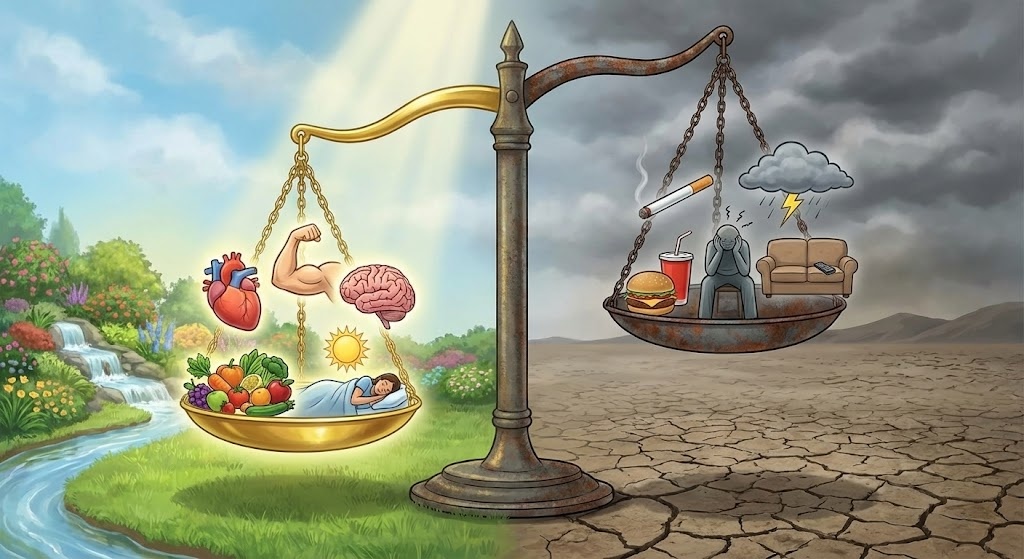
Think about your healthspan the years of your life when you are actually healthy as a bank account.



Every single day, you are making deposits or withdrawals. These aren’t financial transactions; they are biological transactions. Every choice you make influences your balance. The goal should always be to keep the account in the green and, ideally, build enough reserves so that when life gets hard, your body and mind can draw from a well-nourished, resilient foundation.

Visualising Your Longevity Bank

Your body is like a lifetime savings account. Just as early and consistent financial investments create wealth over time, your daily health habits build up (or drain) your vitality.

The beauty of this metaphor is its simplicity. Instead of chasing complex routines or fleeting wellness trends, it brings your focus back to the basics: consistency, awareness, and balance.

You don’t have to get it all right 100% of the time. But you do need to keep checking in with your account and adjusting your inputs.

Daily Deposits: What Adds to Your Longevity Bank

Here are the habits that build your resilience and energy over time. Think of these as small, consistent investments:

  • Sleep: Quality sleep is non-negotiable. It’s when your body heals, your brain resets, and your hormones rebalance. It is the most underrated superpower for health.
  • Strength Training: Muscle is your retirement fund for health. It supports balance, metabolism, bone density, and mobility—all of which are crucial as you age.
  • Fibre-Rich Foods: Colourful vegetables, legumes, and whole grains fuel your gut microbiome, reduce inflammation, and stabilise your metabolism.
  • Sunlight: A few minutes of natural morning light helps set your circadian rhythm, boost mood, and top up your vitamin D stores.
  • Community & Connection: Meaningful relationships are essential. Loneliness is now seen as a health risk comparable to smoking.

Daily Withdrawals: What Drains Your Account

These are the habits that chip away at your resilience and increase the risk of chronic issues. Not all can be avoided, but they can be managed.

  • Ultra-Processed Foods: Foods that come in packages, full of additives and low in nutrients, disrupt your gut, promote inflammation, and leave you nutritionally bankrupt.
  • Chronic Stress Spikes: Stress isn’t inherently bad, but when it becomes your baseline, it accelerates cellular ageing and hormonal imbalances.
  • Sitting for Hours: Prolonged inactivity impacts everything from heart health to mental well-being. Movement isn’t optional; it’s essential.
  • Sleep Debt: Skipping sleep may seem harmless in the short term, but the interest compounds quickly in the form of fatigue, brain fog, and immune dysfunction.

The Real Challenge: Modern Life

The world we live in makes it easy to overspend. Fast food is more accessible than fresh food. Digital life replaces face-to-face connection. Work bleeds into rest.

The trick isn’t perfection; it’s awareness. Start by identifying your biggest daily withdrawals. Then, gently balance the ledger with deposits that feel sustainable.

Balancing the Ledger: Simple Shifts

These are not grand gestures. They are small, steady contributions to your future self:

  1. Replace one processed meal a day with real, whole food.
  2. Get 15–20 minutes of natural morning light.
  3. Add two strength-training sessions a week.
  4. Treat rest like an appointment, and keep it.
  5. Reach out to someone you care about once a week.

Your Body Is a Lifetime Investment

The Longevity Bank Account isn’t just a metaphor; it’s a mindset. Every laugh, every step, every nutrient-rich meal, and every restful night of sleep is a deposit toward a richer, fuller life.

Yes, there will be withdrawals. That’s part of being human. But when your deposits are consistent and intentional, you build a buffer of health and resilience that carries you through.

Treat your body like your most valuable savings account, because that’s exactly what it is. Daily deposits. Mindful withdrawals. That’s the real secret to a life well lived.

We hope this article helps you. For further information or guidance, reach out to our certified experts by subscribing to GOQii’s Personalised Health Coaching here.

#BeTheForce

Disclaimer: The information provided in this blog is for general awareness and educational purposes only. It is not intended to replace professional medical advice, diagnosis, or treatment. Always consult a qualified healthcare provider for personalised medical guidance or concerns related to your health. Images shown are for representation purposes only and may not depict the exact recommendations or outcomes.

  • « Previous Page
  • 1
  • 2
  • 3
  • 4
  • Next Page »

Search

Recent Posts

  • 10 Everyday Habits That Could Be Hurting Your Health
  • Why Good Nutrition Matters: Benefits of Healthy Eating for a Healthy Life
  • Monsoon Health Tips: How to Boost Your Immunity During Seasonal Changes
  • Yoga for Healthy Ageing: Simple Practices to Add Life to Your Years
  • Calming Your Mind: Breathing Techniques for ADHD

Stay Updated

Archives

  • June 2026 (22)
  • May 2026 (20)
  • April 2026 (24)
  • March 2026 (18)
  • February 2026 (14)
  • January 2026 (14)
  • December 2025 (19)
  • November 2025 (15)
  • October 2025 (20)
  • September 2025 (6)
  • August 2025 (6)
  • July 2025 (11)
  • June 2025 (18)
  • May 2025 (16)
  • April 2025 (22)
  • March 2025 (27)
  • February 2025 (21)
  • January 2025 (25)
  • December 2024 (22)
  • November 2024 (23)
  • October 2024 (20)
  • September 2024 (23)
  • August 2024 (29)
  • July 2024 (20)
  • June 2024 (25)
  • May 2024 (26)
  • April 2024 (27)
  • March 2024 (27)
  • February 2024 (23)
  • January 2024 (21)
  • December 2023 (14)
  • November 2023 (10)
  • October 2023 (19)
  • September 2023 (22)
  • August 2023 (18)
  • July 2023 (21)
  • June 2023 (23)
  • May 2023 (20)
  • April 2023 (19)
  • March 2023 (23)
  • February 2023 (19)
  • January 2023 (15)
  • December 2022 (11)
  • November 2022 (15)
  • October 2022 (15)
  • September 2022 (12)
  • August 2022 (10)
  • July 2022 (17)
  • June 2022 (11)
  • May 2022 (10)
  • April 2022 (6)
  • March 2022 (6)
  • February 2022 (13)
  • January 2022 (11)
  • December 2021 (7)
  • November 2021 (3)
  • October 2021 (6)
  • September 2021 (3)
  • August 2021 (8)
  • July 2021 (7)
  • June 2021 (15)
  • May 2021 (16)
  • April 2021 (10)
  • March 2021 (7)
  • February 2021 (4)
  • January 2021 (4)
  • December 2020 (3)
  • November 2020 (4)
  • October 2020 (10)
  • September 2020 (3)
  • August 2020 (3)
  • July 2020 (2)
  • June 2020 (4)
  • May 2020 (10)
  • April 2020 (12)
  • March 2020 (10)
  • February 2020 (4)
  • January 2020 (4)
  • December 2019 (3)
  • November 2019 (7)
  • October 2019 (5)
  • September 2019 (4)
  • August 2019 (9)
  • July 2019 (9)
  • June 2019 (11)
  • May 2019 (4)
  • April 2019 (8)
  • March 2019 (8)
  • February 2019 (9)
  • January 2019 (8)
  • December 2018 (9)
  • November 2018 (3)
  • October 2018 (3)
  • September 2018 (5)
  • August 2018 (10)
  • July 2018 (6)
  • June 2018 (13)
  • May 2018 (8)
  • April 2018 (18)
  • March 2018 (9)
  • February 2018 (8)
  • January 2018 (15)
  • December 2017 (12)
  • November 2017 (19)
  • October 2017 (13)
  • September 2017 (15)
  • August 2017 (4)
  • July 2017 (8)
  • June 2017 (7)
  • May 2017 (6)
  • April 2017 (8)
  • March 2017 (6)
  • February 2017 (7)
  • January 2017 (9)
  • December 2016 (10)
  • November 2016 (7)
  • October 2016 (7)
  • September 2016 (7)
  • August 2016 (11)
  • July 2016 (9)
  • June 2016 (9)
  • May 2016 (12)
  • April 2016 (17)
  • March 2016 (17)
  • February 2016 (8)
  • January 2016 (6)
  • December 2015 (2)
  • November 2015 (9)
  • October 2015 (7)
  • September 2015 (9)
  • August 2015 (11)
  • July 2015 (9)
  • June 2015 (11)
  • May 2015 (9)
  • April 2015 (13)
  • March 2015 (8)
  • February 2015 (5)
  • January 2015 (12)
  • December 2014 (14)
  • November 2014 (11)
  • October 2014 (6)
  • September 2014 (13)
  • August 2014 (12)
  • July 2014 (6)
  • June 2014 (2)
  • May 2014 (7)
  • April 2014 (4)

From Shimla’s Slopes to Chandigarh’s Sidewalks: Surinder Kaur Bhalla’s Journey from Chaos to Control

Some journeys start with a plan. Others begin with a stumble literally. Surinder Bhalla, a government professional, born and raised in the scenic hill town of Shimla, had always lived a life of movement. “In Shimla, you walked everywhere,” she reflects. … [Read More...]

From “Laddu Nawin” to Fit and Fierce: How a 25-Year-Old Insurance Advisor Shed 20 Kilos and Gained His Life Back

When 25-year-old Nawin Yadav from Hyderabad walked into his office every morning, he carried more than just his files and policy papers. He had the weight of fatigue, sluggish energy, and an ever-growing belly that was becoming the butt of jokes. “People had even started calling me Laddu Nawin,” he says with a laugh, but […]

From Burnout to Balance: How Dr. Ranjit Reclaimed His Health

Dr Ranjit Bhatt has spent years tending to others. A practising doctor in Odisha, his days were packed with patients, surgeries, and emergencies. From the outside, it looked like a life lived in service. But on the inside, something wasn’t right. “I had no control over my schedule. I’d sleep late, eat at odd hours, […]

Ananda Mukherjee Health Story

From Terminal Illness To Complete Wellness! Ananda Mukherjee Health Story

As we observe World Cancer Day under the powerful theme ‘United by Unique’ (2025-2027)**, we are reminded that every individual’s journey with cancer is distinct, yet united by shared resilience, hope, and the collective fight against this disease. This theme places people at the centre of care and their stories at the heart of the […]

  • HOME
  • HEALTHY LIVING
  • FITNESS
  • HEALTHY RECIPES
  • USER STORIES
  • KARMA
  • BUY GOQii

Copyright ©2016 GOQii
