GOQii

Blog

  • HOME
  • HEALTHY LIVING
  • FITNESS
  • HEALTHY RECIPES
  • USER STORIES
  • KARMA
  • BUY GOQii

August 23, 2023 By GOQii 71 Comments

Dos and Don’ts of Yoga: Rules to Practicing Yoga Safely

When we asked some of our new players what their interpretation of Yoga is, their response was on the lines of ‘People twisting and turning their bodies like pretzels while chanting and sitting like a statue’. Is that what it really is? We took this question as an opportunity to explain what yoga is and what are its basic dos and don’ts.

What is Yoga?

It is a system- a holistic system of refining the body, the mind and the spirit in unison. Ultimately, it is well-being, peace and bliss. Yogic postures help strengthen the endocrine system and also bring the emotions under control through concentration and relaxation.

The ability to remain in relaxed equilibrium has an important psychological effect. For the basics on yoga and what it is, you can check out this article: Yoga for the beginners: some myths and benefits

Yogis, through their physical training, gradually learn to keep their psychological equilibrium unaltered to preserve a perfect psychological calmness in whatever environment they happen to find themselves in.

Yoga is the only way by which the highest objective in life can be attained. To decipher the great science and the benefits which it claims, it is essential to understand few basic dos and don’ts which we often tend to neglect.

What You Should Do

  • “Early to bed and early to rise makes man healthy, wealthy and wise,” is an universal adage. Yoga practitioners should go to bed early, sleep well and get up early in the morning. Next, attend to their morning routine of freshening up and begin yoga in fasting mode. It can also be practiced 1 hour after a liquid diet, 3 hours after refreshments or 5 hours after full meals.
  • One could practice it before bath but after practice one should wait for some time and then take a bath.
  • It should be practiced on a leveled floor in a room where doors and windows are kept open for air and light.
  • It is helpful in many ways to practice yoga in a place where you can receive the rays of the early morning sun.
  • One should not practice it directly on the ground, on cement or mortar floor. Instead, spread a carpet, a blanket or a clean cloth, sit on it and practice by facing east or north in the morning, west or south in the evening.
  • One should practice yoga calmly without any haste or exhaustion. If one is tired he or she should rest for a while in a comfortable posture.
  • One should try to practice it everyday, preferably at the same time.
  • While practicing yoga, one should concentrate on the practice alone and try to keep away from other thoughts.
  • During the practice of asanas, the dirt in the internal organs of the body is directed towards the urinary bladder. Soon after completion, one should pass out urine.
  • If you feel like attending nature’s call while practicing, go ahead and do it immediately. One should not hold it back forcefully for a long time. One should also not try to suppress sneezing, coughing, etc. If one feels thirsty one can drink a little water as well.
  • If one sweats during practice, he or she should slowly wipe it out either by a cloth or with the palms. It is better if it dries up automatically.
  • Pranayama should follow the asanas and meditation should follow Pranayama.
  • Always lay on your back after finishing postures. 2 to 5 minutes with relaxed breathing.
  • Movements should be slow in every case. Sudden movements should be avoided.

What You Should Avoid

  • Women should refrain from regular practice during their menses or pregnancy. However, for them there are specific set of asanas that can be performed.
  • Don’t have a full tummy while doing yoga, wait until 2 to 3 hours after large meals.
  • Don’t touch (shower) or drink water for 30 minutes after practice.
  • During illness, after operations, when there is a bandage either for sprains or fractures, one should refrain from practice. They can resume after consulting experts.
  • Don’t perform strenuous exercises after yoga.
  • One should avoid practice in unclean/smoky places and in areas with foul smell
  • Yoga should not be practiced in stormy winds either

Just knowing the asanas in its correct form along with the basic knowledge of Dos and Don’ts would add much more value to your yoga practice! If you found this article helpful, let us know your thoughts in the comments below.

To practice yoga the right way, join a live, interactive GOQii PRO class, where you’ll be guided in real time by a certified expert. Book a class from the GOQii App now! You can also find more articles on Yoga here.

#BeTheForce

August 20, 2023 By Dr. Viral Thakkar 2 Comments

Don’t Be Bitten! Fight the Mosquito Bite!

mosquitoBetaab, a 12 year old, cheerful and active boy loved playing with his friends in the evening. One fine day, he caught a fever with chills. His parents thought it was mere fever due to overexertion. However, soon the fever spiked, and he had to rush to the emergency department at the hospital. His condition was serious. He was suffering from dengue, with an extremely low platelet count.

There are numerous such cases where fever conditions are ignored, especially post monsoons. Many of us think that mosquito borne diseases will go away after the rains! This is not true. Mosquitoes breed in clean, stagnant waters.

That little flying mosquito at houses, in the parks seem harmless, but a few species from these are considered to be extremely harmful. Areas with hot & humid climatic conditions are worse affected by mosquitoes since it provides the apt atmosphere for breeding.

While it’s impossible to identify mosquitoes and their breed with naked eyes, it is best to know they can be dangerous! Having these creatures in and around your vicinity can be dangerous for your health as well.

Diseases & Symptoms

  1. Dengue: Its symptoms include high fever, rashes, headache, muscle and joint ache as well as serious bleeding in certain cases.
  2. Chikungunya: The symptoms of this disease include fever, joint pain initially followed by muscle pain, headaches, fatigue and even a rash.
  3. Malaria: is a life threatening disease that plagues 219 million people in 87 different countries every year. Symptoms are first seen a couple of weeks after the bite, and they include chilling sensations, fever and excess sweating.
  4. Japanese Encephalitis: Common in rural and agricultural areas of Asia and the west Pacific, this disease can cause brain swelling and sudden headaches. It is not a long term disease, but in the short period, may even cause high fever and disorientation. A vaccine is available, which has a 90% effectiveness rate.
  5. Zika: While the epidemic is over, you must be aware of this disturbing virus. It can cause a fever, rashes, joint pains and red eyes. All of this may be accompanied by prolonged fatigue, loss of appetite, headache and vomiting.
  6. Lymphatic Filariasis: Spread through parasitic worms on mosquitoes, this disease, also known as Elephantiasis plagues a significant number of people across the country. While a lot of the cases may be symptomless, and hard to spot, in the long run, this disease leads to extreme swelling in the legs, arms and genitals.
  7. Kala-Azar: Also known as Black Fever, this disease is carried by infected sandflies. While treatment is possible, if untreated, it can be fatal. About 5000 cases are reported every year in the subcontinent alone. Common symptoms include abdominal pain, fever, swelling of the liver, and loss of appetite.

What Can Be Done About Mosquito Bites?

mosquito

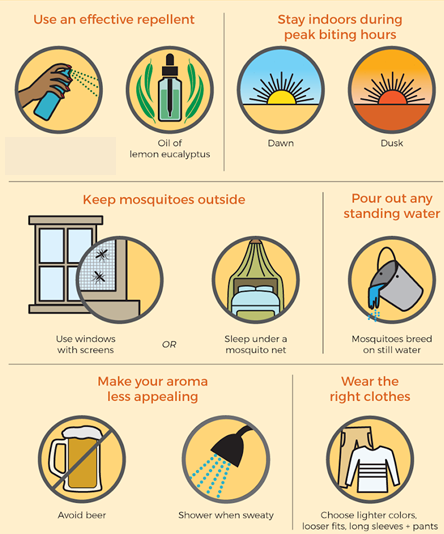
  1. Drain any long standing water: Check flower pots, gutters, bird bath, etc. Ensure there is no water collected inside or near your house. Mosquitoes breed in clean stagnant water.
  2. Many people collect water in the fear of not getting water. This collected clean water is often forgotten overtime and becomes a breeding ground for mosquitoes.
  3. Prevent mosquitoes from coming inside your house. Try using screens on windows, and nets on the bed.
  4. While you cannot stop children from playing outside, make them use the mosquito repellent.
  5. Use Natural Repellents: My grandmother swears by using mustard oil instead of a repellent. Neem oil, putting the Neem oil on a dispenser also seems to act as an excellent organic repellent. See what suits your skin!
  6. Colours, odors and other smells seem to have an impact on attracting the mosquitoes! Since we can’t change that about our bodies, it is best to wear loose, covered clothing during the high breeding seasons.
  7. Citronella mosquito repellent plant, (Citrosum plants) help repel mosquitoes. This plant grows in the form of grass and is 5 to 6 feet tall. It can be planted in the ground or can be kept in large pots.

In case if you notice a high fever along with chills, rashes/ body ache or any bleeding tendencies consult your physician for a correct diagnosis & management. Remember to hydrate yourself (or the person impacted), try to keep the body temperature low by using wet-cold packs on the forehead. While these are emergency measures, it is best to avoid getting into such a situation and taking the necessary precautions.

Prevention is the cure in such situations!

We hope this article helps you stay safe! Do share your thoughts in the comments below! For more on prevention, preventive healthcare and healthy living, check out Healthy Reads. To get guidance and motivation from experts, subscribe to GOQii’s Personalised Health Coaching here.

#BeTheForce

August 4, 2023 By Dr Darshana Salve 2 Comments

Tired All The Time? Here’s What’s Causing It!

fatigueThe alarm is set for 6 am to go for a morning walk, filled with determination to start on a routine walk from the next morning, she went to sleep early. But, like any other day, the alarm went off, but as usual, she couldn’t get out of bed. With each passing day, it got difficult to even get up for work. This happened almost for 2-3 months when Ananya realized this was not just laziness but something beyond and decided to see a doctor. Ananya described that she had no energy to wake up in the morning and felt tired and exhausted by the end of the day. Sounds familiar? Yes! This happens to many around us or even to us. This syndrome is called Fatigue.

What is Fatigue?

Fatigue is generally defined as a feeling of lack of energy and motivation that can be physical, mental or both. Fatigue is very common. Fatigue can be caused by Physical (around 60%) as well as Mental causes (40%). Unfortunately, it can also occur in normal individuals who experience intense physical or mental activity (or both).

However, in contrast to fatigue that occurs with some diseases and syndromes, normal fatigue in healthy individuals is quickly relieved in few hours to about a day when the physical or mental activity is reduced and adequate rest is taken.

What Causes It?

  • Sleep Problems: Sleep Apnea, insomnia, working in shifts or work shift changes, pregnancy, extra night hours at “work”, gadget time, etc. can cause fatigue. For such problems, including foods like nuts or milk that are rich in tryptophan (sleep inducing hormone) can help get better sleep.
  • Dysglycemia: Skipping breakfast, long gaps between meals is known to cause irregular fluctuations in sugar levels. To avoid such irregularities one must have a healthy breakfast every day preferably within one hour of waking up. Always plan for a mid-meal snack especially when the gap exceeds 5 hours.
  • Nutritional Deficiency: Eating a healthy, balanced diet (proteins, carbohydrates, fats and fiber) is an important part of maintaining good health. It can help you feel your best. Include fruits, whole grains, and protein rich foods and avoid junk food, processed/packaged food.
  • Gut Disturbances: An acidic body doesn’t allow oxygen to be absorbed and in turn causes fatigue. Gastric issues such as bloating, constipation, food sensitivity/allergy, leaky gut (gastric reflux) all create havoc in our body resulting in physical and mental fatigue. Including adequate quantity of fiber, probiotics like curd and a good intake of water keep your gut happy and healthy.
  • Caffeine Overload: Limit tea/coffee/green tea to 2 cups/day. Avoid having it post sunset and near bed time.
  • Dehydration: When dehydrated, the fluid loss causes a drop in blood volume, which makes the heart work harder to push oxygen and nutrients through the bloodstream to the brain, skin, and muscles. Maintaining a water intake to 2.5-3 litre is adequate for the majority of the population.
  • Metabolic/Endocrine causes: Vitamin D deficiency, Hypothyroidism, Diabetes, Electrolyte abnormalities, kidney disease, Liver disease can all cause varying degrees of fatigue.
  • Anemia (Iron deficiency, Vitamin B12 deficiency): It is one of the most common reasons of fatigue or tiredness in India and especially common among women.
  • Infectious Diseases: Viral infections, Hepatitis, Tuberculosis, cytomegalovirus (CMV), HIV infection, Influenza (flu), Malaria and many other infectious diseases can cause fatigue.
  • Medications: It might come as a surprise to you but many drugs like antidepressants, anti-anxiety medications, sedatives, antihistamines, steroids and even some blood pressure medications can cause fatigue.
  • Mental Health: Stress, Depression, Anxiety, Drug abuse, Alcohol abuse, eating disorders, (for example bulimia/anorexia), Grief and Bereavement are all few of the most ignored causes of fatigue. Awareness and proactive management of mental disorders is a must for living healthy.

Depending on the above reasons, the right treatment must be decided as it is important that the root cause of fatigue be treated and not just the symptom.

In the case of Ananya, on taking a proper history and some blood tests, she was found to have nutritional and Vitamin D deficiency. Once these were corrected she felt strong and active enough to start with her healthy regime.

Fatigue is a natural part of our lives, because of which we tend to ignore it and instead learn to live with it. This causes more trouble in the long run. We must look out for tell-tale signs of things we could do earlier but can’t do anymore, unrelated aches and pains or headaches and if found positive we must seek the right help. Don’t let feeling tired today ruin your attempt to feel healthy tomorrow!

If you’re looking to relax, meditate or practice yoga to ward off fatigue, ask your GOQii Coach directly by subscribing for Personalised Health Coaching here.

#BeTheForce

August 2, 2023 By Dr. Naina Sudarshan 2 Comments

5 Simple Tips to Boost Metabolism and Lose Weight

boost metabolism

Ever wondered what metabolism is and why it is so important for your health? Metabolism is the process by which the food we eat is converted into energy. Going deeper into it, every cell in our body is producing energy through the chemical process of metabolism.

At a young age, our muscle mass stores energy that can prevent unhealthy weight gain. But as we age, we lose our muscle mass, which leads to excess fat accumulation. Metabolism starts slowing down as we reach 40 up to about 5% every decade thereafter. Our challenge will be to beat the metabolic slow down which is not impossible either as long as you follow these 5 eating habits to boost metabolism.

1. Eat Your Meals on Time

Busy routines such as the early morning rush to work, busy afternoons coupled with a late dinner and unruly sleep timings throw our circadian rhythm off track. The body is balanced with our circadian rhythm and any disruption can slow the metabolism down.

Our digestive power is naturally strong during noon which is why our ancestors had lunch between 12-1pm. As the day passes and night begins, our digestion is slowed down. Eating dinner late can disturb the circadian rhythm. Many research studies have proven that disturbed circadian rhythm can impair metabolism with a raised risk of metabolic disorders and obesity. Having meals on time can address this issue.

  • Ideal breakfast time: Before 10 am
  • Ideal Lunch time: Between 12 pm – 2 pm
  • Ideal Snack time: 4 – 5 pm
  • Ideal dinner: Between 7 pm – 9 pm

2. Mindful Eating

Very often when we have to eat outside or during some special occasion, we are likely to overeat not because we are hungry but because the food looks appealing or we are distracted while eating, or we are in a bad mood.

As per research studies, mindful eating habits improved metabolism while reducing the metabolic risk factors like high blood sugar levels, low levels of HDL or high blood pressure and large waist circumference. We need to incorporate mindful eating habits in our routine. For instance:

  • Consuming food because we are hungry instead of eating out of habit
  •  Chewing food slowly and thoroughly, savouring the taste
  • Thinking about how the food with all our senses before, during and after eating can help our body and health

3. Spice up Your Metabolism

Many spices from our kitchen can be good metabolic boosters when included in our daily diet. Turmeric, Cinnamon, Jeera, Fennel, Ginger, Ajwain, Clove and Nutmeg, because of some special chemical component and their healing effect on our body, can easily jumpstart metabolism when taken in right amounts.

4. Eat Whole Grains & Protein

Including a variety of whole grains like oats, barley, rye, quinoa, ragi and bhajra, can offer us rich sources of fiber and a diet high in protein can rev up the metabolism by controlling spiking sugar levels and keep us full for a longer time. Apart from this, protein consumption can increase the metabolic rate by 15-30% by raising the thermic effect of food (TEF). Thermic effect of food is caused by the extra calories that are required by our body to digest, absorb and assimilate the food that we eat.

5. Drink Warm Water

We all know drinking plenty of water is good for the wellbeing of our body. From ancient times until recent scientific studies, it has been proven that drinking warm or hot water is one of the simplest ways to improve digestion and metabolism. Warm/hot water up to 98.6 degrees accounted for 40 per cent increase in metabolism which lasted for at least 30-40 minutes of raised metabolism after consumption of warm water. Sipping warm water throughout the day can keep your metabolism high.

Overall, making these simple changes rather than counting calories, can improve metabolism as well as boost weight loss efforts. Try incorporating them into your routine and let us know how it works!

Want more tips and tricks to boost your metabolism via exercise and nutrition? Find them here or get in touch with a GOQii Coach by subscribing for Personalised Health Coaching here.

#BeTheForce

  • « Previous Page
  • 1
  • …
  • 8
  • 9
  • 10
  • 11
  • 12
  • …
  • 19
  • Next Page »

Search

Recent Posts

  • Best Foods To Alleviate Irritable Bowel Syndrome
  • ALL ABOUT VERTIGO!
  • PCOS and Anxiety: Discover Relief with the 54321 Technique
  • Navigating the Maze of Nutrition: Finding Clarity Amidst Confusion
  • Get children active and keep them healthy

Stay Updated

Archives

  • December 2025 (6)
  • November 2025 (15)
  • October 2025 (20)
  • September 2025 (6)
  • August 2025 (6)
  • July 2025 (12)
  • June 2025 (18)
  • May 2025 (16)
  • April 2025 (23)
  • March 2025 (23)
  • February 2025 (22)
  • January 2025 (26)
  • December 2024 (26)
  • November 2024 (25)
  • October 2024 (22)
  • September 2024 (24)
  • August 2024 (31)
  • July 2024 (21)
  • June 2024 (26)
  • May 2024 (31)
  • April 2024 (27)
  • March 2024 (29)
  • February 2024 (26)
  • January 2024 (25)
  • December 2023 (15)
  • November 2023 (11)
  • October 2023 (22)
  • September 2023 (22)
  • August 2023 (20)
  • July 2023 (22)
  • June 2023 (24)
  • May 2023 (24)
  • April 2023 (24)
  • March 2023 (23)
  • February 2023 (20)
  • January 2023 (16)
  • December 2022 (12)
  • November 2022 (15)
  • October 2022 (15)
  • September 2022 (12)
  • August 2022 (10)
  • July 2022 (17)
  • June 2022 (11)
  • May 2022 (10)
  • April 2022 (6)
  • March 2022 (6)
  • February 2022 (13)
  • January 2022 (12)
  • December 2021 (7)
  • November 2021 (3)
  • October 2021 (6)
  • September 2021 (3)
  • August 2021 (8)
  • July 2021 (7)
  • June 2021 (15)
  • May 2021 (16)
  • April 2021 (10)
  • March 2021 (7)
  • February 2021 (4)
  • January 2021 (4)
  • December 2020 (3)
  • November 2020 (4)
  • October 2020 (10)
  • September 2020 (3)
  • August 2020 (3)
  • July 2020 (2)
  • June 2020 (4)
  • May 2020 (10)
  • April 2020 (12)
  • March 2020 (10)
  • February 2020 (4)
  • January 2020 (4)
  • December 2019 (3)
  • November 2019 (7)
  • October 2019 (5)
  • September 2019 (4)
  • August 2019 (9)
  • July 2019 (9)
  • June 2019 (11)
  • May 2019 (4)
  • April 2019 (9)
  • March 2019 (8)
  • February 2019 (9)
  • January 2019 (8)
  • December 2018 (9)
  • November 2018 (3)
  • October 2018 (3)
  • September 2018 (5)
  • August 2018 (10)
  • July 2018 (6)
  • June 2018 (13)
  • May 2018 (8)
  • April 2018 (18)
  • March 2018 (9)
  • February 2018 (8)
  • January 2018 (15)
  • December 2017 (12)
  • November 2017 (19)
  • October 2017 (13)
  • September 2017 (15)
  • August 2017 (4)
  • July 2017 (8)
  • June 2017 (7)
  • May 2017 (6)
  • April 2017 (8)
  • March 2017 (6)
  • February 2017 (7)
  • January 2017 (9)
  • December 2016 (10)
  • November 2016 (7)
  • October 2016 (7)
  • September 2016 (7)
  • August 2016 (11)
  • July 2016 (9)
  • June 2016 (9)
  • May 2016 (12)
  • April 2016 (17)
  • March 2016 (17)
  • February 2016 (8)
  • January 2016 (6)
  • December 2015 (2)
  • November 2015 (9)
  • October 2015 (7)
  • September 2015 (9)
  • August 2015 (11)
  • July 2015 (9)
  • June 2015 (12)
  • May 2015 (9)
  • April 2015 (13)
  • March 2015 (8)
  • February 2015 (5)
  • January 2015 (12)
  • December 2014 (14)
  • November 2014 (11)
  • October 2014 (6)
  • September 2014 (13)
  • August 2014 (12)
  • July 2014 (6)
  • June 2014 (2)
  • May 2014 (7)
  • April 2014 (5)

From “Laddu Nawin” to Fit and Fierce: How a 25-Year-Old Insurance Advisor Shed 20 Kilos and Gained His Life Back

When 25-year-old Nawin Yadav from Hyderabad walked into his office every morning, he carried more than just his files and policy papers. He had the weight of fatigue, sluggish energy, and an ever-growing belly that was becoming the butt of jokes. “People … [Read More...]

“I’ve Challenged Myself to Live 100 Years” – The Story of Chandubhai Savani’s Second Chance at Life

At 67, most people start slowing down. Not Chandubhai Savani. A resident of Surat, Chandubhai, thought life was on track. “My life was going well till I had my bypass surgery,” he says. That surgery, back in 2021, was a wake-up call.  Medication was routine, but exercise wasn’t. His diet? What he calls ‘normal.’ “I […]

From Shimla’s Slopes to Chandigarh’s Sidewalks: Surinder Kaur Bhalla’s Journey from Chaos to Control

Some journeys start with a plan. Others begin with a stumble literally. Surinder Bhalla, a government professional, born and raised in the scenic hill town of Shimla, had always lived a life of movement. “In Shimla, you walked everywhere,” she reflects. “Walking was never an exercise. It was just life.” But after shifting to Chandigarh, […]

Ananda Mukherjee Health Story

From Terminal Illness To Complete Wellness! Ananda Mukherjee Health Story

As we observe World Cancer Day under the powerful theme ‘United by Unique’ (2025-2027)**, we are reminded that every individual’s journey with cancer is distinct, yet united by shared resilience, hope, and the collective fight against this disease. This theme places people at the centre of care and their stories at the heart of the […]

  • HOME
  • HEALTHY LIVING
  • FITNESS
  • HEALTHY RECIPES
  • USER STORIES
  • KARMA
  • BUY GOQii

Copyright ©2016 GOQii