
GOQii

Blog

  • HOME
  • HEALTHY LIVING
  • FITNESS
  • HEALTHY RECIPES
  • USER STORIES
  • KARMA
  • BUY GOQii

April 9, 2025 By GOQii Leave a Comment

Sunlight & Vitamin D: Nature’s Feel-Good Formula for Health

When you think of the sun, what comes to mind? Warmth on your skin? A beautiful morning walk? Or perhaps the occasional sunburn?

What if we told you the sun is also one of the most powerful natural healers available to us?

Sunlight, in moderation, is essential—not just for mood and energy—but because it helps our bodies make Vitamin D, a key nutrient that supports your bones, immune system, and even blood sugar control. Let’s break down how you can harness the power of the sun to boost your overall health (and yes, without getting sunburnt!).

☀️ How the Sun Helps Make Vitamin D

When sunlight hits your skin, it triggers a reaction that produces vitamin D. About 80% of the vitamin D your body needs comes from this process, making sun exposure the most effective natural source.

But it’s all about balance. Too much sun can cause damage, while 10 to 30 minutes of sunlight, especially in the early morning or late afternoon, can do wonders—depending on your skin type and where you live.

✨ Bonus: Early morning light also helps regulate your body clock, which means better sleep and improved mental clarity.

🧠 Why Vitamin D Matters

Here’s what happens when your body gets enough Vitamin D:

✔️ Your immune system gets a boost – Helps fight infections more effectively
✔️ Your bones and muscles stay strong – Supports calcium absorption and muscle repair
✔️ Your mood improves – Low vitamin D has been linked to depression and low energy
✔️ You sleep better – Supports your natural sleep-wake cycle
✔️ Your blood sugar stays steadier – May improve insulin sensitivity, especially helpful for those managing diabetes

🚶‍♀️ Sun + Movement = Double the Benefits

If you’re exercising outdoors, you’re getting both physical and nutritional benefits. Walking, jogging, cycling, gardening—even 20 minutes of light activity outside can help lift your spirits while supporting vitamin D production.

So yes, that peaceful walk in the park? It’s not just good for your heart—it’s good for your bones, mood, and immunity too.

🥦 Foods That Help Top Up Vitamin D

While sunlight is your best source, some foods can help too—especially when sunshine is in short supply.

✅ Oily fish – salmon, sardines, mackerel
✅ Eggs – particularly the yolk
✅ Nuts – a great on-the-go snack
✅ Leafy greens – spinach, kale, and similar
✅ Fortified foods – plant milks, cereals (check labels)

These are nutrient-packed choices that often fit well into low-carb or blood sugar-friendly meal plans.

💊 Should You Take a Supplement?

If you live in a region with limited sunlight (especially in winter), or you spend most of your time indoors, you may struggle to get enough vitamin D naturally.

That’s where supplements can help.

Many people find that 1000 IU per day is a safe and effective amount—but always speak with your doctor or nutritionist first, especially if you have any health conditions.

🧴 A Quick Note on Safe Sun Habits

  • Start with short exposure in the morning
  • Let your skin absorb some sun without sunscreen for the first 10 minutes
  • After that, apply sunscreen, especially if staying out longer
  • Dark skin tones may need more exposure to produce the same amount of vitamin D

Vitamin D isn’t just about stronger bones or fighting colds. It’s about helping your body and mind work at their best—from better mood to stronger immunity, steadier sleep, and balanced hormones.

So, step outside. Stretch. Breathe deeply. And soak in a little bit of nature’s original health supplement.

Just 20 minutes a day could make a world of difference.

#BeTheForce

April 8, 2025 By GOQii Leave a Comment

Stress Management Techniques to Complement Any Medical Condition

Managing a medical condition such as diabetes or hypertension can be both mentally and physically taxing. Whether you’re navigating daily health challenges, recovering post-surgery, or simply feeling overwhelmed by stress, it’s essential to find ways to support your overall well-being. Incorporating relaxation techniques into your daily routine can significantly enhance your quality of life and empower you to manage your health more effectively. Here are some practical and effective strategies to help you feel stronger, healthier, and more in control, regardless of your medical condition:
 1. Tailor Your Diet to Your Mood

When you’re feeling low, it’s tempting to reach for sugary snacks. Instead, opt for protein-rich foods like lean meats, eggs, cheese, and seeds. These not only have a minimal impact on blood sugar and energy levels but also aid in the production of dopamine and serotonin—chemicals in the brain that promote feelings of well-being.

2. Embrace ‘Good Enough’

Striving for perfection in every task can lead to burnout. Recognise that doing your best is sufficient. Allowing yourself to accept ‘good enough’ frees up mental energy, enabling you to focus more on self-care.

3. Prioritise Quality Sleep

Restorative sleep is crucial for healing and overall health. Aim for 7-9 hours of quality sleep each night to help your body repair, reduce inflammation, and strengthen your immune system.

4. Soak Up Some Sunlight

Exposure to natural light, especially in the morning, can boost your mood and provide a healthy dose of vitamin D. A gentle stroll in the sunlight can also help regulate your body clock, leading to better sleep patterns.

5. Incorporate Physical Activity

Engaging in activities like yoga or deep-breathing exercises can reduce stress hormones and increase endorphins, enhancing both physical healing and mental well-being.

6. Dedicate Time to Relaxation Daily

Set aside moments each day for activities that relax you, such as listening to music, practising mindfulness, or meditating. These practices can alleviate anxiety and improve concentration.

7. Combine Music with Movement

Dancing or moving to your favourite tunes can make exercise enjoyable and uplifting. Whether it’s stretching at home or walking to a lively playlist, combining music with movement can enhance your exercise experience.

8. Plan Enjoyable Activities

Having events or tasks to look forward to can provide motivation and positivity. Arrange coffee catch-ups with friends or plan a movie night to break the routine and uplift your spirits.

9. Laugh Often

Laughter is a natural stress reliever. It reduces stress hormones, strengthens the immune system, and fosters connections with others. Share a joke, watch a comedy, or reminisce about joyful memories.

10. Explore New Hobbies

Trying something new can stimulate your mind, boost confidence, and break the monotony. Whether it’s learning a skill, experimenting with a new recipe, or picking up a hobby, novelty can elevate your mood.

11. Consider Pet Companionship

If circumstances allow, having a pet can offer companionship, structure, and unconditional love—all of which can reduce stress and enhance emotional well-being.

12. Practise Gratitude

Each day, reflect on three things you’re grateful for. This simple exercise can shift your focus from challenges to positives, fostering a more balanced and hopeful outlook.

No matter the medical condition you’re facing, managing stress can profoundly impact your health and quality of life. These strategies are not just about coping—they’re about thriving, finding joy, and empowering yourself to live fully, even amidst health challenges. Take small steps, cultivate supportive habits, and remember: you’re not alone on this journey.

#BeTheForce

Disclaimer: The information provided in this blog is for general awareness and educational purposes only. It is not intended to replace professional medical advice, diagnosis, or treatment. Always consult a qualified healthcare provider for personalised medical guidance or concerns related to your health.

April 5, 2025 By GOQii Leave a Comment

Reversing Type 2 Diabetes Through a Low-Carbohydrate Lifestyle

Type 2 diabetes is often seen as a lifelong condition, but research and real-world experience show that it can be managed—and even reversed—with the right dietary approach. One of the most effective strategies is adopting a low-carbohydrate lifestyle, which not only helps regulate blood sugar levels but also improves insulin sensitivity.
Unlike traditional high-carb diets that lead to frequent glucose spikes, a low-carb approach stabilises energy levels, reduces cravings, and supports long-term health. If you’re looking for a sustainable way to take control of your diabetes, reducing your carbohydrate intake might be the key.

Why Reduce Carbohydrates?

Carbohydrates break down into glucose in the bloodstream. For individuals with type 2 diabetes, the pancreas struggles to produce enough insulin to move glucose into cells for energy. This results in persistently high blood sugar levels, which can eventually lead to complications such as nerve damage, kidney issues, and cardiovascular disease.

By reducing carbohydrate intake to 60–130g per day, you prevent large spikes in blood glucose after meals, easing the pressure on your pancreas. Over time, this can allow your pancreatic beta cells to recover and improve insulin sensitivity, helping your body regulate blood sugar more effectively.

The Ideal Process:

  1. Carb-controlled meals → lower glucose load
  2. Less strain on pancreas → beta cells recover
  3. Improved insulin sensitivity → glucose absorbed into cells
  4. Stable, healthy blood sugar levels

Which Carbohydrates to Avoid?

Starchy foods are typically high in carbohydrates and should be limited:

  • Bread (white, whole grain, multigrain)
  • Pasta
  • Rice (white, brown, basmati)
  • Potatoes (including sweet potatoes)
  • Grains (wheat, oats, barley, corn, quinoa)

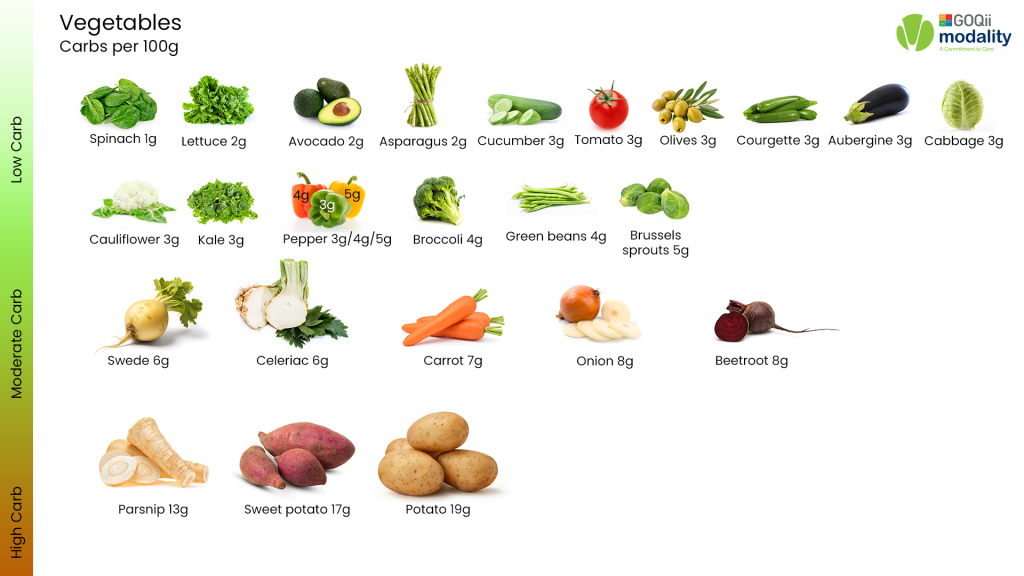
The general rule: vegetables that grow underground (e.g., potatoes, carrots) contain more carbs than those that grow above ground.

Best Low-Carb Vegetables (per 100g)

Leafy Greens
Lettuce (2g), Spinach (1g), Arugula (1.6g), Kale (3g), Swiss Chard (1.8g)

Cruciferous Vegetables
Broccoli (4g), Cauliflower (3g), Brussels Sprouts (5.1g), Cabbage (3g)

Other Non-Starchy Vegetables
Asparagus (2g), Courgette (3g), Aubergine (3g), Tomatoes (3g),
Mushrooms (3.3g), Bell Peppers (4.6g), Onions (8g), Garlic (33.1g),
Radishes (3.4g), Cucumbers (3g), Celery (3g), Green Beans (4g), Artichokes (10.5g)

Focus on nutrient-dense, high-fibre, low-carb vegetables to meet your nutritional needs while keeping carbohydrate intake low.

What Are Net Carbs?

You may come across the term “net carbs,” which refers to the total carbs minus fibre and sugar alcohols—the carbs that actually raise blood sugar.

Net Carbs = Total Carbs – Fibre – Sugar Alcohols

While this can offer a more accurate reflection of how food impacts blood glucose, we recommend focusing on total carbohydrate intake for now, as calculating net carbs can be confusing in the early stages.

Protein: An Essential Nutrient

Protein supports muscle maintenance, satiety, and metabolism. On a low-carb diet, protein should be moderate, not excessive.

Target: 1.5–2.0g per kg of body weight per day

Portion Guide:

  • Women: ~85g cooked meat/tofu, 1 cup Greek yoghurt/cottage cheese, 2 whole eggs
  • Men: ~115g cooked meat/tofu, 1 cup Greek yoghurt/cottage cheese, 2 whole eggs

Low-Carb Dairy Options

Milk (per 240 ml / 1cup):

  • Whole or Semi-Skimmed: 12g carbs
  • Unsweetened Almond Milk: 1g carbs

Cheese (30g / 1oz):

  • Cheddar: 0.4g, Brie: 0.1g, Feta: 0.8g, Cream Cheese: 0.8g

Yoghurt (170g / 6oz):

  • Full-Fat Greek: 5g, Low-Fat Greek: 7g

Cream (30ml/ 1fl oz):

  • Double Cream: 0.6g, Single Cream: 0.7g

Butter (14g / 1 tbsp):

  • Salted/Unsalted: 0.1g

Avoid flavoured yoghurts and sweetened milk which can have hidden sugars.

Alcohol on a Low-Carb Diet

You can enjoy alcohol occasionally by choosing low-carb options:

Wines (per 5oz glass):

  • Dry White (e.g., Sauvignon Blanc, Pinot Grigio): 2–4g carbs
  • Dry Red (e.g., Merlot): 2–4g carbs

Beers (per 12oz):

  • Bud Light: 4.6g, Michelob Ultra: 2.6g, Beck’s Premier Light: 3.9g, Brewdog Pale Ale: 7 g

Spirits (per 1oz):

  • Gin, Vodka, Rum, Tequila, Whisky: 0g (when consumed neat)
  • Add low-carb mixers like soda water, diet tonic, diet ginger ale

Low-Carb Cocktails:

  • Vodka Soda with lime, Gin & Diet Tonic, Whisky Ginger with diet ginger ale, Rum & Diet Coke

❗ Note: Avoid beer and cider unless opting for very light versions. Also, steer clear of sugary mixers, juices, and syrups which can add a substantial carb load to your drink.

Don’t Forget to Keep a Food Diary

Tracking what you eat helps in:

  1. Increasing awareness and mindfulness
  2. Identifying hidden sugars and carbs
  3. Tracking progress over time
  4. Identifying behavioural patterns
  5. Ensuring accountability and better food choices

You can use your phone, an app, or even a journal to keep track. Share it with your nutritionist or coach to get tailored guidance.

A low-carbohydrate lifestyle, when well-planned, can help reverse type 2 diabetes by addressing the root causes—excessive glucose and insulin resistance.

By:
✔ Lowering carbs to 60–130g per day
✔ Prioritising non-starchy vegetables and whole foods
✔ Including moderate protein and healthy fats
✔ Avoiding sugary, starchy, and processed foods
✔ Tracking food intake and blood sugar

…you can achieve stable glucose levels, improved insulin sensitivity, and potentially reduce or eliminate medication.

It’s not about perfection—it’s about consistency and sustainability. And remember: you’re not alone on this journey.

💬 Have you tried a low-carb approach to manage your diabetes or weight? Share your experience in the comments below!

#BeTheForce

April 4, 2025 By GOQii Leave a Comment

Everyday Fitness Made Easy: Walk More, Move Better with the 3–5 Method

Exercise—it’s not a bad word, and it certainly doesn’t need to be complicated or time-consuming. In fact, some of the simplest movements can deliver the greatest benefits.



By weaving daily walking and the 3–5 doorway push–pull–squat routine into your week, you can improve strength, boost energy, and enhance your overall well-being—no gym, no equipment, no excuses.

Why Walking Matters

Walking is often overlooked, but it’s one of the most effective and sustainable forms of movement. Just 20 to 30 minutes of brisk walking a day can make a world of difference to both your physical and mental health.

💡 Tip: A good walking pace is one where you’re slightly breathless but still able to hold a full conversation.

Benefits of Daily Walking:

  • Supports heart health
  • Improves mood and helps manage stress
  • Aids in weight management
  • Keeps joints mobile and muscles active
  • Promotes better sleep and digestion

Whether it’s a lap around your block, a stroll in the park, or a few laps indoors on a rainy day—it all counts. The goal is to move, not be perfect.

The 3–5 Doorway Regime: Simple Strength at Home

Fancy workout routines aren’t always necessary. The 3–5 doorway method gives you an easy, adaptable strength training solution using just your body weight and a doorway.

It’s designed around the core functional movements—push, pull, squat—the essential building blocks of strength and mobility.

This method is perfect for:

  • Beginners easing into strength training
  • Busy professionals who need a quick workout
  • Older adults looking for low-impact strength work
  • Anyone wanting to stay active at home

The 3–5 Method, Simplified:

  • Choose 3 to 5 exercises (push, pull, squat, or a mix)
  • Do 3 to 5 reps of each per set
  • Complete 3 to 5 sets in total
  • Rest for 3 to 5 minutes between sets
  • Repeat this routine 3 to 5 times a week

Feeling energetic? Push for the full 5. Low on energy? A quick 3-round session still keeps your habit going.

Suggested Doorway Exercises

✅ Push:

Doorway Push-Ups – Stand facing the doorframe, place your hands on either side, and push away from the frame as if performing a standing push-up.

✅ Pull:

Doorway Rows – Use a towel looped around a doorknob or resistance band. Hold both ends, lean back, and pull towards the door.

✅ Squat:

Bodyweight Squats – Use the doorframe for support and balance as you squat down slowly and rise back up.

These exercises are functional, joint-friendly, and easily modified based on your strength level.

Why Consistency Beats Intensity

The magic isn’t in how hard you go—it’s in how often. The real key to lifelong fitness is regularity.

✔ You don’t need 60-minute sweat sessions.
✔ You don’t need expensive gear.
✔ You just need to keep moving—most days of the week.

By starting gently and being consistent, you’ll build strength, stamina, and energy without overwhelming your body.

Movement is one of the most powerful prescriptions for long-term health. And it doesn’t have to be complicated.

By committing to daily walking and including a few minutes of strength training using the 3–5 method, you’re building a foundation for a healthier, more resilient you.

So, grab your trainers, open that doorway, and move your way to better health—one step, one rep at a time.

💬 Do you walk regularly or have a favourite home exercise? Share your routine or tips in the comments below!

#BeTheForce

  • « Previous Page
  • 1
  • 2
  • 3
  • 4
  • 5
  • 6
  • Next Page »

Search

Recent Posts

  • PCOS and Anxiety: Discover Relief with the 54321 Technique
  • Navigating the Maze of Nutrition: Finding Clarity Amidst Confusion
  • Get children active and keep them healthy
  • What Gestational Diabetes Can Do To You & Your Unborn Child
  • Breathing – A Forgotten Art

Stay Updated

Archives

  • December 2025 (4)
  • November 2025 (15)
  • October 2025 (20)
  • September 2025 (6)
  • August 2025 (6)
  • July 2025 (12)
  • June 2025 (18)
  • May 2025 (16)
  • April 2025 (23)
  • March 2025 (23)
  • February 2025 (22)
  • January 2025 (26)
  • December 2024 (26)
  • November 2024 (25)
  • October 2024 (22)
  • September 2024 (24)
  • August 2024 (31)
  • July 2024 (21)
  • June 2024 (26)
  • May 2024 (31)
  • April 2024 (27)
  • March 2024 (29)
  • February 2024 (26)
  • January 2024 (25)
  • December 2023 (15)
  • November 2023 (11)
  • October 2023 (22)
  • September 2023 (22)
  • August 2023 (20)
  • July 2023 (22)
  • June 2023 (24)
  • May 2023 (24)
  • April 2023 (24)
  • March 2023 (23)
  • February 2023 (20)
  • January 2023 (16)
  • December 2022 (12)
  • November 2022 (15)
  • October 2022 (15)
  • September 2022 (12)
  • August 2022 (10)
  • July 2022 (17)
  • June 2022 (11)
  • May 2022 (10)
  • April 2022 (6)
  • March 2022 (6)
  • February 2022 (13)
  • January 2022 (12)
  • December 2021 (7)
  • November 2021 (3)
  • October 2021 (6)
  • September 2021 (3)
  • August 2021 (8)
  • July 2021 (7)
  • June 2021 (15)
  • May 2021 (16)
  • April 2021 (10)
  • March 2021 (7)
  • February 2021 (4)
  • January 2021 (4)
  • December 2020 (3)
  • November 2020 (4)
  • October 2020 (10)
  • September 2020 (3)
  • August 2020 (3)
  • July 2020 (2)
  • June 2020 (4)
  • May 2020 (10)
  • April 2020 (12)
  • March 2020 (10)
  • February 2020 (4)
  • January 2020 (4)
  • December 2019 (3)
  • November 2019 (7)
  • October 2019 (5)
  • September 2019 (4)
  • August 2019 (9)
  • July 2019 (9)
  • June 2019 (11)
  • May 2019 (4)
  • April 2019 (9)
  • March 2019 (8)
  • February 2019 (9)
  • January 2019 (8)
  • December 2018 (9)
  • November 2018 (3)
  • October 2018 (3)
  • September 2018 (5)
  • August 2018 (10)
  • July 2018 (6)
  • June 2018 (13)
  • May 2018 (8)
  • April 2018 (18)
  • March 2018 (9)
  • February 2018 (8)
  • January 2018 (15)
  • December 2017 (12)
  • November 2017 (19)
  • October 2017 (13)
  • September 2017 (15)
  • August 2017 (4)
  • July 2017 (8)
  • June 2017 (7)
  • May 2017 (6)
  • April 2017 (8)
  • March 2017 (6)
  • February 2017 (7)
  • January 2017 (9)
  • December 2016 (10)
  • November 2016 (7)
  • October 2016 (7)
  • September 2016 (7)
  • August 2016 (11)
  • July 2016 (9)
  • June 2016 (9)
  • May 2016 (12)
  • April 2016 (17)
  • March 2016 (17)
  • February 2016 (8)
  • January 2016 (6)
  • December 2015 (2)
  • November 2015 (9)
  • October 2015 (7)
  • September 2015 (9)
  • August 2015 (11)
  • July 2015 (9)
  • June 2015 (12)
  • May 2015 (9)
  • April 2015 (13)
  • March 2015 (8)
  • February 2015 (5)
  • January 2015 (12)
  • December 2014 (14)
  • November 2014 (11)
  • October 2014 (6)
  • September 2014 (13)
  • August 2014 (12)
  • July 2014 (6)
  • June 2014 (2)
  • May 2014 (7)
  • April 2014 (5)

From “Laddu Nawin” to Fit and Fierce: How a 25-Year-Old Insurance Advisor Shed 20 Kilos and Gained His Life Back

When 25-year-old Nawin Yadav from Hyderabad walked into his office every morning, he carried more than just his files and policy papers. He had the weight of fatigue, sluggish energy, and an ever-growing belly that was becoming the butt of jokes. “People … [Read More...]

“I’ve Challenged Myself to Live 100 Years” – The Story of Chandubhai Savani’s Second Chance at Life

At 67, most people start slowing down. Not Chandubhai Savani. A resident of Surat, Chandubhai, thought life was on track. “My life was going well till I had my bypass surgery,” he says. That surgery, back in 2021, was a wake-up call.  Medication was routine, but exercise wasn’t. His diet? What he calls ‘normal.’ “I […]

From Shimla’s Slopes to Chandigarh’s Sidewalks: Surinder Kaur Bhalla’s Journey from Chaos to Control

Some journeys start with a plan. Others begin with a stumble literally. Surinder Bhalla, a government professional, born and raised in the scenic hill town of Shimla, had always lived a life of movement. “In Shimla, you walked everywhere,” she reflects. “Walking was never an exercise. It was just life.” But after shifting to Chandigarh, […]

Ananda Mukherjee Health Story

From Terminal Illness To Complete Wellness! Ananda Mukherjee Health Story

As we observe World Cancer Day under the powerful theme ‘United by Unique’ (2025-2027)**, we are reminded that every individual’s journey with cancer is distinct, yet united by shared resilience, hope, and the collective fight against this disease. This theme places people at the centre of care and their stories at the heart of the […]

  • HOME
  • HEALTHY LIVING
  • FITNESS
  • HEALTHY RECIPES
  • USER STORIES
  • KARMA
  • BUY GOQii

Copyright ©2016 GOQii
