GOQii

Blog

  • HOME
  • HEALTHY LIVING
  • FITNESS
  • HEALTHY RECIPES
  • USER STORIES
  • KARMA
  • BUY GOQii

September 11, 2023 By GOQii 9 Comments

2 Breathing Techniques For Better Sleep

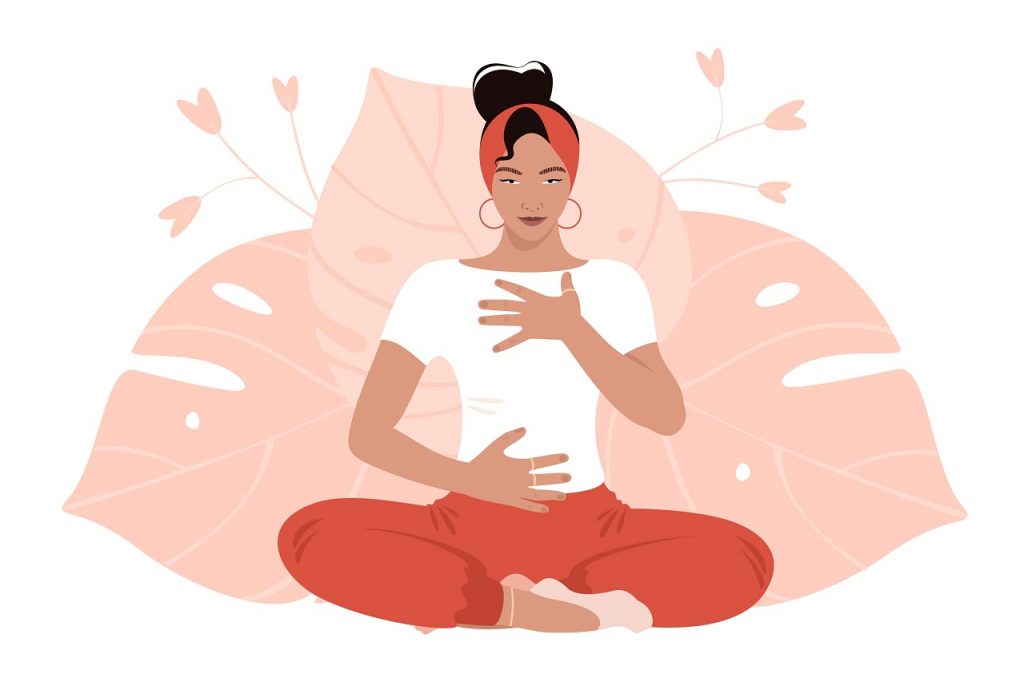
breathing techniques for better sleep

Do you have trouble getting sleep despite the fact that you are tired? Sleeping well is an art. It needs a perfect blend of healthy habits and control of mind. A clean body and mind, relaxed mood, physical exercises, and perfect dietary control are some of the basic sleep-inducing methods. However, one of the best ways to bring the body into its relaxed state is – BREATHING! How do breathing techniques for better sleep work? Let’s find out!

Breathing Techniques For Better Sleep

Breathing deeply has been proven to affect the heart, the brain, digestion, the immune system and even the expression of genes. Research has shown that breathing exercises like Pranayama can have immediate effects by altering the pH of the blood, or changing blood pressure. But, more importantly, they can be used as a method to train the body’s reaction to stressful situations and dampen the production of harmful stress hormones and help induce sleep.

Here are 2 important breathing methods to calm the mind and induce sleep naturally.

1.  The 4-7-8 Technique

How To Do It?
This process is recommended by Dr. Andrew Weil, a practitioner and teacher of integrative medicine for the last thirty years. To do this exercise, sit up in bed with your back straight or lie down on a straight back and press the tip of your tongue on the roof of your mouth right behind your front teeth. Maintaining that position, close your mouth and inhale through your nose for four counts, hold that breath for seven counts, and then exhale through your mouth around your tongue for eight counts. Repeat this pattern until you have completed four full breaths.

How It Works?
The 4-7-8 breathing technique is effective because it encourages the fast removal of carbon dioxide. Doing so equates into a better preservation of the bicarbonate pool; our reservoirs for helping maintain an appropriate pH balance. Also, it allows the lungs to become fully charged with air, allowing more oxygen into the body, which promotes a state of calm.

2. Left Nostril Breathing 

How To Do It?
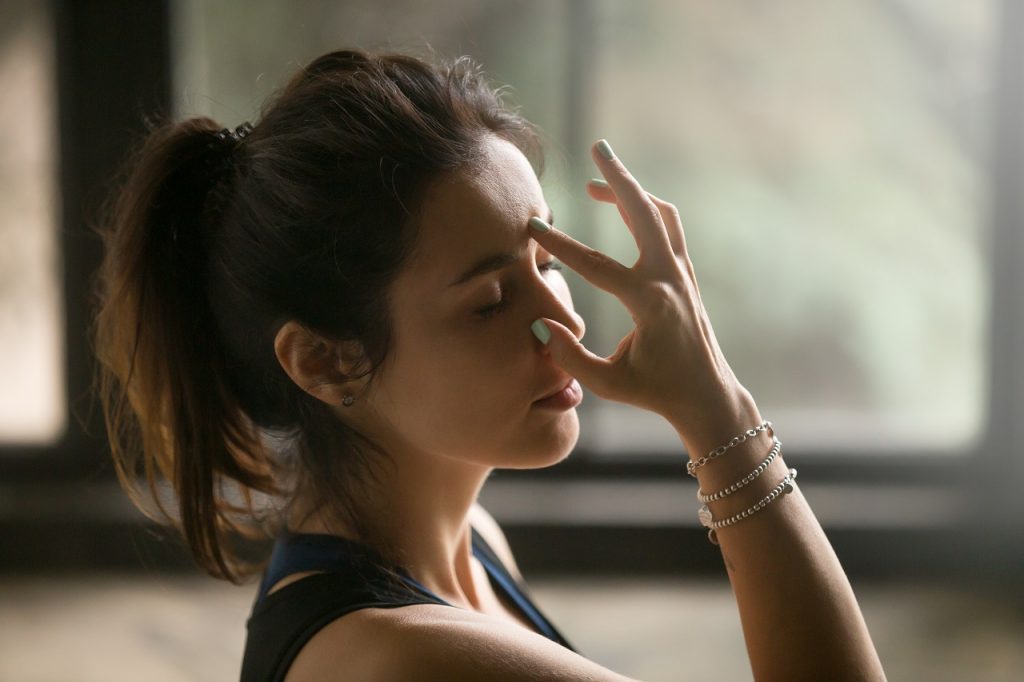
Simply take your right hand and with your fingers outstretched, block off your right nostril by putting gentle pressure on it with your right thumb.  Be sure to keep the rest of your fingers straight and pointing up. With a long, slow, deep breath, gently inhale through your left nostril.  Then, just as gently, exhale long, slowly and completely, again through the left nostril. Do this for at least 3 minutes; chances are you might doze of even before that!

How It Works?
When we’re under stress or feeling anxious, we tend to breathe mostly out of our right nostril, which is connected to our left brain. This activates our sympathetic nervous system, the channel responsible for the classic stress response – dilated pupils, increased core temperature, sweating, and increased heart rate and blood pressure. And when we start breathing through the left nostril the parasympathetic system gets activated which slows us down and helps our body automatically run its day to day jobs of digestion, elimination, sleep cycles and more.

Apart from these 2 breathing techniques for better sleep, you can also try meditation or mindfulness by just observing your breath as it goes in and as it comes out. Connecting with this rise and fall of the breath, and noticing where you feel that breath move within the body can help you begin the process of relaxing tense muscles and create a coherent heart pattern which brings an instant state of tranquil and helps you drift off to peaceful deep sleep.

We hope this article helps you sleep better! Do you meditate before you go to bed? What helps you sleep better? Leave your thoughts in the comments below! For more articles on sleep, check out Healthy Reads or you can get tips directly from a GOQii Coach by subscribing for Personalised Health Coaching here.

#BeTheForce

September 3, 2021 By Srini Leave a Comment

Breathing #3: Breath Bank

breath bank

A Tamil adage says that everyone gets a certain number of breaths deposited in their account on birth. You cannot increase or decrease it – but you can efficiently use the remaining balance and get more out of it. Do you know how to get more out of your breath? How to get a higher ROI? Let’s start with the number of breaths per minute. 

How Do You Measure The Breaths in Your Breath Bank? 

Measure the number of breaths per minute at 4 fixed time slots in a day and do it over one or two weeks and then get the average breath per minute. If the AVERAGE number is more than 12, then you are not very efficient in using your breath balance. If you are more than 18, then you are hyperventilating!

Hyperventilation depletes Co2 from your body. The interesting fact is that Co2 is critical for oxygen absorption in the cells for effective burning of the fuel. If you are hyperventilating, then there is Co2 imbalance and even though you may have a 97% oxygen saturation in your blood, the Oxygen just floats around without being effectively used in burning the fuel.

So, to use Oxygen effectively, you need a good balance of Co2 in your body. Also, as much as you hyperventilate while under stress, the other way is also true. When you hyperventilate, the body assumes you are under stress. You are chronically under stress AND you are not burning the fuel effectively… all due to a simple issue of incorrect breathing!

Slow breathing keeps the right balance between Carbon Dioxide and Oxygen in the body and remember both are needed for the efficient functioning of the body.

“Mind is the King of the senses and Breath is the King of the Mind”, says BKS Iyengar, a renowned Yoga Guru. James Nestor, says that an ideal breathing is 5.5 seconds inhale and 5.5 seconds exhale – so this is 11 seconds and your average number of breaths would also be 5.5 per minute.

Most of the religious prayers/chants/choirs were designed to make you breathe at a rate of around 5.5 to 6 per minute. Such prayer, no wonder, has magical curative powers.

You can practice slow breathing anywhere, any time and privately. Just be conscious of how you breathe! In fact, between every activity, meeting or zoom call, take 5 minutes off and practice conscious slow and deep abdominal breathing, you will do wonders in terms of your productivity.

“If you want to live, follow Eastern Medicine (Yoga, Ayurveda) and if you do not want to die, then follow Western Medicine” – Trainer Brian MacKenzie

This subject is still developing and research is still coming through under the Western Medicine and has been in practice over thousands of years in India by our Yogis.

Western breathing experts like Dr Buteyko, James Nestor and Anders Olsson, etc. have gone on record on the benefits of slow and rhythmic breathing. In fact, Dr Buteyko observes that 80% of the population is chronically hyperventilating!

Breathing is the only tool available to humans to connect to (and influence) their autonomous nervous system and therefore mind. If you develop awareness and therefore, better understanding, you can make breathing more efficient and positively impact your mind. Breathing is the MOST POWERFUL tool humans have. Fascinating isn’t it. But Simple. I average around 8 breaths per minute now and I have personally benefited significantly in terms of overall energy through the day, feeling good and less stressed. 

Practices To Help You Achieve Slow Breathing 

  • Being Conscious of breathing
  • Practicing Pranayama – Kapal Bathi, Ujjayi, Pursed lip breathing, Bhastrika
  • Breathing using the abdomen than the chest
  • Tummo ( Tibetan technique) or Wim Hof method

I am placing a customary caveat for the reader that this is not medical advice and you should consult your doctor. And unfortunately, the western medical system holds that less than 10 breaths per minute is a disease and it has to be cured.

If you want more details, medical and scientific evidence, please read more at https://breathe.ersjournals.com/content/13/4/298 

Further read books/podcasts of James Nestor, Brian Mackenzie, Rangan Chatterjee, Anders Olsson

We hope this article helps you improve your breath bank balance. For more on breathing, check out Healthy Reads. To get breathing exercises from your GOQii Coach, subscribe to personalized coaching here: https://goqiiapp.page.link/bsr  

Breathe Right & #BeTheForce 

August 27, 2021 By Srini Leave a Comment

Breathing #2: Why Is Abdominal Breathing Important?

abdominal breathing

In my previous article, I spoke about breathing through the nose. In this article, let me take it a bit deeper and speak about abdominal breathing. It is observed that many of us breathe through our chest and our breathing is therefore shallow. 

This issue compounds when you are awake, in the office, working on something important, tense, or under stress and hyperventilate. Shallow breathing compounded with hyperventilation leads to SUBOPTIMAL gas exchange. 

We take so much care about nutrition and food, but we need to know how to burn it. Same as filling Premium Petrol, as well as knowing optimal driving techniques! Unburnt or sub-optimally burnt food is responsible for weight gain, diabetes and so many chronic lifestyle illnesses. 

The goal of good nutrition is that it is absorbed well and burnt well. So, right breathing is equally, if not more, important than eating the right food. 

Take this simple test to know how you breathe

  • Lie on your back with your knees bent
  • Place one hand or a small book on your chest and the other on your stomach.
  • Breathe normally, observe what is rising – the chest or the abdomen 

Observe which is rising up and down. If it is your chest, you are shallow breathing and if it is the abdomen more than the chest, you may be closer to what is the right breathing.

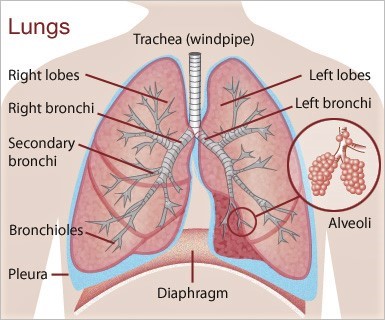
See the picture below to understand why this is important

Lungs are narrow at the top and wide at the bottom – sort of “Inverted V” shape. The blood flow at the bottom of the lungs is approx. 10 times than the top.

Most of the bunch of grapes (alveoli) which are the instruments of gas exchange (topic to be explained later) is at the bottom of the lungs. Now, if you breathe through your chest, you are leaving more than 60% of your lung’s “installed capacity” unused. 

CFOs will know that unused installed capacity is costly! Diaphragmatic breathing gives you High Return on Inhaled Air (investment)! Simple. You can observe animals breathing, for example observe a Cow – they breathe through the abdomen only. Somewhere in evolution, the modern human has forgotten the art of breathing.

The Additional Advantages Of Abdominal Breathing 

  • Abdomen movement helps the movement of lymphatic fluids – unlike the blood, there is no pump for lymphatic fluids. Only muscular movement acts as a pump
  • Abdomen movement also continuously massages the parts of stomach like liver and intestine
  • Abdominal movement makes it easy and lighter for your heart to pump blood

Shallow breathing leaves air behind in the lower parts of the lung, making it vulnerable to easy infection. So, why don’t we use the abdomen for breathing and benefit from optimal gas exchange which in turn helps in supplying efficient fuel (oxygen) to burn the food you are eating?

If you want to make diaphragmatic breathing into a habit, you can follow Conscious Breathing classes by Anders Olsson or Wim Hof method (which I follow) or from any Yoga Guru.

We hope this article on abdominal breathing helps you. Do leave your thoughts in the comments below. For more on breathing, check out Healthy Reads or get these tips directly from your GOQii Coach by subscribing to personalized coaching here: https://goqiiapp.page.link/bsr 

Breathe Right & #BeTheForce 

November 30, 2017 By Trupti Vyas (Pandya) 1 Comment

Pulse of the Mind

What if there was something you could do right at this very minute to improve how engaged, productive, and creative self at work? As it turns out, there is a way, and you’re already doing it—breathing.

When you’re stressed, people often advise you to take a deep breath — and for a good reason, a new study shows. Slowing your breathing calms you, and by now scientists have also figured out how you can relax your brain through your breathing. It has to do with your brain’s pacemaker for breathing.

Here are several different relaxation techniques that you can try and see which one works best for you. And if your favourite approach fails to engage you, or you want some variety, you’ll have alternatives. You may also find the following tips helpful, let’s start with them?

  • Alternate Nostril Breath ( Anulom Viloma)

anulom vilom-image 1

  • Sit comfortably. Place the middle finger of right hand on your forehead; your thumb rests on your right nostril, your ring & any fingers rest on the left nostril.
  • Inhale & exhale. Close the right nostril with thumb; inhale through the left nostril for a count of 5.
  • Close both nostrils; hold your breath for a count of 5.
  • Lift thumb, exhale for 5 through the right nostril.
  • Inhale through the right nostril, hold, close right nostril & exhale through the left nostril. This ends round 1.
  • Repeat for 4 more rounds.

Benefits:

  • Balances the energy of the nervous system.
  • Has a profound stilling on the mind.

Note: We breathe in two-hour cycles: the first one, then the other nostril is dominant. Prolonged breathing through one side affects our energy. This restores the proper balance.

  1. Complete Breath

active breathing-image 2

  • This breath can be done in a comfortable seated position.
  • Relax close your eyes.
  • Exhale completely. Inhale slowly & deeply through your nose. Allow your stomach to expand like a balloon. Sip your breath, filling your chest & lungs.
  • Hold your breath; exhale slowly through your nose, squeezing out all the stale air.
  • If you wish, count to maintain your rhythm; inhale for a count of 5, hold your breath for 15 and exhale for 10.
  • Repeat 5 times.

Benefits:

  • Relaxes the body & nervous system.
  • Purifies the respiratory system by expelling stale air.
  • Relieves tension & calms emotions.
  • Improves concentration.
  • Great for the complexion.
  1. Breath of Fire ( kapalabhati )

Kapal-bhati-yoga-image 3

  • Sit Comfortably. Inhale and Exhale Completely.
  • Repeat these contractions. Focus on steady, quick Breathes that Emphasize the exhalation.
  • Start with 20 consecutive breathes: increase to 3 sets of 20. Breathe normally between sets.

Benefits:

  • Purifies and aerates the entire system.
  • Recharges and warms the body.
  • Increase oxygen improves concentration.

Note: Those who practice this breath daily say they no longer get colds. One caution: If Dizziness occurs, stop and Consult a yoga teacher For Guidance.

  1. Sounding Breath ( Ujjayi )

image 4

  • Sit Comfortably.
  • Exhale completely.
  • Draw your Breath in Slowly through your nose.
  • As you inhale, slowly fill your abdomen and Lungs.
  • Contract your throat and make a soft hissing sound as you exhale, emptying your lungs completely.
  • Let your breath be long and slow.

 Benefits:

  • Calms the Body and balance the nervous system.
  • Expels stale air from Lungs, purifying the respiratory system.
  • Slow the minds, calms the emotions.

 Sufi Mother’s Breath.

image 5

  • Sit comfortably.
  • Exhale With a sigh to reset the diaphragm.
  • Breathe In through your nose for slow count 7. Hold Your Breath for a moment.
  • Breathe out through your nose for a count of 7. Hold your breath for a moment.
  • Repeat Several times.

 Benefits:-

  • Promotes a feeling of being deeply nurtured.
  • As with all Deep breathing exercises, the increased flow of oxygen and improves the complexion and cleanses the inner organs.
  1. Chin Press Breath ( Murcha Pranayam )

image 6 (1)

  • Sit comfortably with your back erect.
  • Inhale through your nose for a count of 7.
  • Lift the sternum and press your chin into your chest. Hold Your Breath for a count of 7.
  • Lift your chin away from your chest and exhale through your nose for a count of 7.
  • Repeat several times.

Benefits:-

  • Improve willpower and Concentration.
  • Stimulates the thyroid.
  • Stretches the back o the neck.
  • Promotes a sense of inner peace.
  1. Cooling Breath ( Shitali Pranayam )

image 7

  • Sit Comfortably With Your Spine straight.
  • Curl the sides of your tongue to form a straw between your lips.
  • Inhale through the mouth for a count of 7 through the opening created by your Tongue.
  • Withdraw your tongue close your mouth, and hold your breath for a count of 7.
  • Exhale through your nose for a count of 7.
  • Repeat 5 or 6 times.

Benefits:-

  • Cleanse The Body of toxins.
  • Has a calming and cooling effect
  • Relieve a variety of stomach ailments.

Practice these different breathing techniques once or twice a day. Always do it at the same time, in order to enhance the sense of ritual and to establish a habit. Try to practice at least 10–20 minutes each day. It really makes a difference!

  • « Previous Page
  • 1
  • 2

Search

Recent Posts

  • India Leads in Longevity: GOQii Sanjeevini Named Top 40 in $101M XPRIZE
  • The Importance Of Knowing If You’re Thirsty Or Hungry
  • Best Foods To Alleviate Irritable Bowel Syndrome
  • ALL ABOUT VERTIGO!
  • PCOS and Anxiety: Discover Relief with the 54321 Technique

Stay Updated

Archives

  • December 2025 (8)
  • November 2025 (15)
  • October 2025 (20)
  • September 2025 (6)
  • August 2025 (6)
  • July 2025 (12)
  • June 2025 (18)
  • May 2025 (16)
  • April 2025 (23)
  • March 2025 (23)
  • February 2025 (22)
  • January 2025 (26)
  • December 2024 (26)
  • November 2024 (25)
  • October 2024 (22)
  • September 2024 (24)
  • August 2024 (31)
  • July 2024 (21)
  • June 2024 (26)
  • May 2024 (31)
  • April 2024 (27)
  • March 2024 (29)
  • February 2024 (26)
  • January 2024 (25)
  • December 2023 (15)
  • November 2023 (11)
  • October 2023 (20)
  • September 2023 (22)
  • August 2023 (20)
  • July 2023 (22)
  • June 2023 (24)
  • May 2023 (24)
  • April 2023 (24)
  • March 2023 (23)
  • February 2023 (20)
  • January 2023 (16)
  • December 2022 (12)
  • November 2022 (15)
  • October 2022 (15)
  • September 2022 (12)
  • August 2022 (10)
  • July 2022 (17)
  • June 2022 (11)
  • May 2022 (10)
  • April 2022 (6)
  • March 2022 (6)
  • February 2022 (13)
  • January 2022 (12)
  • December 2021 (7)
  • November 2021 (3)
  • October 2021 (6)
  • September 2021 (3)
  • August 2021 (8)
  • July 2021 (7)
  • June 2021 (15)
  • May 2021 (16)
  • April 2021 (10)
  • March 2021 (7)
  • February 2021 (4)
  • January 2021 (4)
  • December 2020 (3)
  • November 2020 (4)
  • October 2020 (10)
  • September 2020 (3)
  • August 2020 (3)
  • July 2020 (2)
  • June 2020 (4)
  • May 2020 (10)
  • April 2020 (12)
  • March 2020 (10)
  • February 2020 (4)
  • January 2020 (4)
  • December 2019 (3)
  • November 2019 (7)
  • October 2019 (5)
  • September 2019 (4)
  • August 2019 (9)
  • July 2019 (9)
  • June 2019 (11)
  • May 2019 (4)
  • April 2019 (9)
  • March 2019 (8)
  • February 2019 (9)
  • January 2019 (8)
  • December 2018 (9)
  • November 2018 (3)
  • October 2018 (3)
  • September 2018 (5)
  • August 2018 (10)
  • July 2018 (6)
  • June 2018 (13)
  • May 2018 (8)
  • April 2018 (18)
  • March 2018 (9)
  • February 2018 (8)
  • January 2018 (15)
  • December 2017 (12)
  • November 2017 (19)
  • October 2017 (13)
  • September 2017 (15)
  • August 2017 (4)
  • July 2017 (8)
  • June 2017 (7)
  • May 2017 (6)
  • April 2017 (8)
  • March 2017 (6)
  • February 2017 (7)
  • January 2017 (9)
  • December 2016 (10)
  • November 2016 (7)
  • October 2016 (7)
  • September 2016 (7)
  • August 2016 (11)
  • July 2016 (9)
  • June 2016 (9)
  • May 2016 (12)
  • April 2016 (17)
  • March 2016 (17)
  • February 2016 (8)
  • January 2016 (6)
  • December 2015 (2)
  • November 2015 (9)
  • October 2015 (7)
  • September 2015 (9)
  • August 2015 (11)
  • July 2015 (9)
  • June 2015 (12)
  • May 2015 (9)
  • April 2015 (13)
  • March 2015 (8)
  • February 2015 (5)
  • January 2015 (12)
  • December 2014 (14)
  • November 2014 (11)
  • October 2014 (6)
  • September 2014 (13)
  • August 2014 (12)
  • July 2014 (6)
  • June 2014 (2)
  • May 2014 (7)
  • April 2014 (5)

From “Laddu Nawin” to Fit and Fierce: How a 25-Year-Old Insurance Advisor Shed 20 Kilos and Gained His Life Back

When 25-year-old Nawin Yadav from Hyderabad walked into his office every morning, he carried more than just his files and policy papers. He had the weight of fatigue, sluggish energy, and an ever-growing belly that was becoming the butt of jokes. “People … [Read More...]

“I’ve Challenged Myself to Live 100 Years” – The Story of Chandubhai Savani’s Second Chance at Life

At 67, most people start slowing down. Not Chandubhai Savani. A resident of Surat, Chandubhai, thought life was on track. “My life was going well till I had my bypass surgery,” he says. That surgery, back in 2021, was a wake-up call.  Medication was routine, but exercise wasn’t. His diet? What he calls ‘normal.’ “I […]

From Shimla’s Slopes to Chandigarh’s Sidewalks: Surinder Kaur Bhalla’s Journey from Chaos to Control

Some journeys start with a plan. Others begin with a stumble literally. Surinder Bhalla, a government professional, born and raised in the scenic hill town of Shimla, had always lived a life of movement. “In Shimla, you walked everywhere,” she reflects. “Walking was never an exercise. It was just life.” But after shifting to Chandigarh, […]

Ananda Mukherjee Health Story

From Terminal Illness To Complete Wellness! Ananda Mukherjee Health Story

As we observe World Cancer Day under the powerful theme ‘United by Unique’ (2025-2027)**, we are reminded that every individual’s journey with cancer is distinct, yet united by shared resilience, hope, and the collective fight against this disease. This theme places people at the centre of care and their stories at the heart of the […]

  • HOME
  • HEALTHY LIVING
  • FITNESS
  • HEALTHY RECIPES
  • USER STORIES
  • KARMA
  • BUY GOQii

Copyright ©2016 GOQii