GOQii

Blog

  • HOME
  • HEALTHY LIVING
  • FITNESS
  • HEALTHY RECIPES
  • USER STORIES
  • KARMA
  • BUY GOQii

Search Results for: yoga

January 6, 2026 By Dr. Naina Sudarshan 1 Comment

Ideal Weekly Workout Routine For Beginners

weekly workout routine for beginners

As health is among the top priorities in our life, being healthy, immune to all types of infections, diseases and getting fit are the avenues for the same now. If you’re thinking about getting fit, and as we have stepped into the new year, don’t just take up a gym membership but work on consistency and have a plan.

As per the American College of Sports Medicine recommendation, a healthy person needs at least 30 mins of exercise every day to maintain physical health, mental health, immunity, and prevent chronic diseases for all age groups. So, here’s an ideal weekly workout routine for beginners you can follow and stick to!

Get Motivated For Your Weekly Workout Routine 

Every day of the week may not go as we plan. But if we are determined to be fit, we can set aside some time for exercise every day. If you are a beginner, creating a workout schedule for every week would be a better choice than just having a vague idea about staying active every day. Find out a strong reason for yourself as to why you need to workout every day. This should be a reminder to maintain consistency in order to achieve your goal.

Getting Started On Your Weekly Workout Routine 

Beginning a workout can be confusing and intimidating as to where and how to start. Once you find out the ideal time, duration, and location for you to exercise, think about the obstacles that can come your way. Slot a backup time to avoid missing the workout.

For example, if you set a goal to walk for 30 mins, completing about 5-6k steps, and that doesn’t happen due to some unplanned situations, walk more at work, take the steps instead of the elevator, walk while you talk over the phone just to complete the intended number of steps for the day.

Here are some points to remember before you begin:

  • Start with short duration but be consistent: It can be 15-20 mins workout rather than an hour of workout at a stretch in a day. Make sure to plan your workout for at least 5 days in a week with a short term specific, measurable goal.
  • Keep a track of how your energy levels are getting better: Notice what other benefits you are getting out of exercise like improved quality of sleep, reduced stress, and increased appetite instead of just keeping a track of numbers on your weighing scale or inch loss.
  • Plan your workout: Schedule it according to your entire week’s schedule taking into consideration your work, personal life and family time, etc.
  • Choose different types of workouts: Pick activities that you are interested in and you are comfortable doing. Make a list of physical activities that you enjoy. It can be dance, running, walking, sports like football, badminton, tennis, volleyball, basketball, cricket, weight training, or yoga.

Week 1

weekly workout routine for beginnersDay 1: Cardio exercises

  • Start with 5 minutes warm-up exercises at a slow to moderate pace to slowly increase the heart rate 
  • Switch to 20 mins of cardio exercise. It can include aerobic exercises, brisk walk, interval running outside, cycling, stationary bike, swimming, Zumba or any type of dance, or any type of sport. Pay attention to your energy level and breath. You should ideally be able to talk without going out of breath while exercising to know your comfortability. People who want to do running can begin with 1 min of running and 3 mins of walking initially. 
  • Stretch for 5 mins to cool down to gradually bring down the heart rate back to normal 

Day 2: Strength training

  • Warm-up exercises for 5 Minutes 
  • Easy Strength training exercises for 25 mins: As a beginner, it’s better, to begin with, bodyweight training initially. Some of the exercises that come under this can be jumping jacks, push-ups, squats, lunges, burpees, mountain climbers, shoulder bridge, crunches, planks and reverse lunges with just one set each and about 10 repetitions each. There can be 10 seconds of rest in between each set. 
  • Cooldown workout for 5 mins

Day 3: Yoga/Dance

  • Warm-up with 5 Surya namaskars/ jumping jacks
  • Easy Standing and sitting Yoga postures or Dance of your choice for 25 mins. It’s always better to learn yoga postures through a trainer to learn about breathing patterns and the correct postures.
  • Cooldown workout for 5 mins  

Day 4: Strength training

  • Warm-up exercises for 5 Minutes 
  • Easy Strength training exercises for 25 mins. This can be repeated the same as day 2.
  • Cooldown workout for 5 mins 

Day 5: Cardio exercises

  • Warm-up exercises for 5 Minutes 
  • Easy Cardio exercise for 25 mins. This can be repeated the same as day 1. 
  • Cooldown workout for 5 mins 

Day 6: Strength training

  • Warm-up exercises for 5 Minutes 
  • Easy Strength training exercises for 25 mins. This can be repeated the same as day 2
  • Cooldown workout for 5 mins

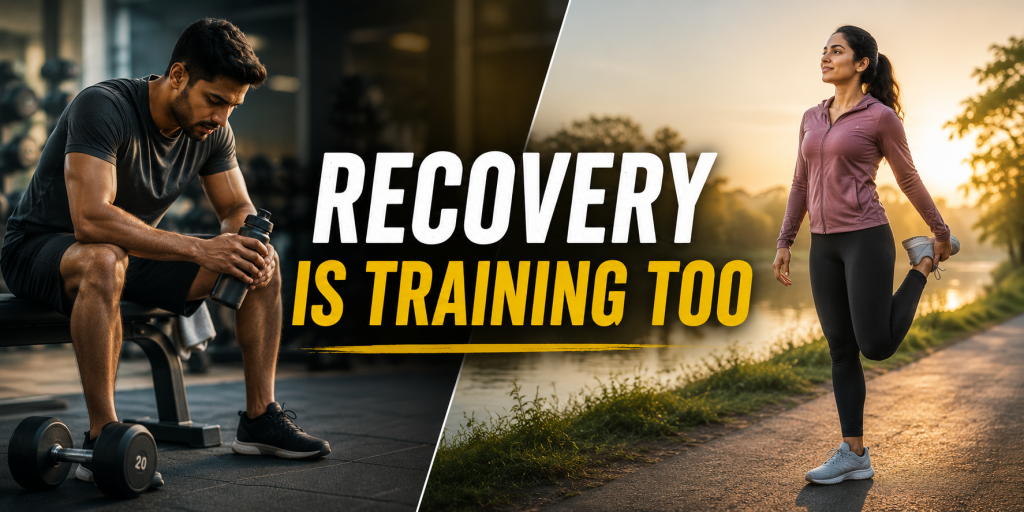
Day 7: Rest day 

Active rest, which means low-intensity exercise like stretching and casual walking, are suggested on this day to stay active, increase the blood flow to the muscles for good healing, and reduce soreness. 

Week 2

workout The routine of week 1 can be repeated on week 2 as well. People who are training for running can increase the duration of running to 3 mins of running and 1 min of walk.

  • Day 1: Cardio exercise for 25 mins with warm-up and cool down 
  • Day 2: Strength training exercise for 25 mins (15 reps of 1 set each) with warm-up and cool down
  • Day 3: Yoga, Pilates, dance, or stretching for 25 mins with warm-up and cool down
  • Day 4: Strength training exercises for 25 mins (15 reps of 1 set each) with warm-up and cool down
  • Day 5: Cardio exercise for 25 mins with warm-up and cool down
  • Day 6: Strength training exercise for 25 mins (15 reps of 1 set each) with warm-up and cool down
  • Day 7: Rest day

Week 3 and Week 4

kettlebellRepeat the same routine for week 3 while increasing the duration, speed, and intensity of the workout this week. Small changes can be made with your workout to keep it interesting. For strength training, 2 sets can be done with 12 repetitions. If you feel this routine is easy one can also try other workouts like HIIT, kettlebell, resistance band workout, and weight training depending on their energy level and comfortability. This can include exercises that involve different muscle groups of the body like shoulder, arms, chest, abdomen, back, hips, glutes, thigh, and legs. 

These workouts have to be done again with the combination of cardio workouts on alternate days with one day as a Rest day. People who are running can switch to 4 mins running and 1 min walking, if they are comfortable. The idea here is to gradually increase the intensity of the workout so that the body is getting adjusted to the workouts easily without any injuries and exhaustion. 

  • Day 1: Cardio exercise for 25 mins with warm-up and cool down 
  • Day 2: Strength training exercise for 25 mins (15 reps of 2 set each) with warm-up and cool down
  • Day 3: Yoga, Pilates, dance, or stretching for 25 mins with warm-up and cool down
  • Day 4: Strength training exercise/HIIT for 25 mins (15 reps of 2 sets each) with warm-up and cool down
  • Day 5: Cardio exercise for 25 mins with warm-up and cool down
  • Day 6: Strength training exercise  for 25 mins (15 reps of 2 sets each) with warm-up and cool down
  • Day 7: Rest day

Proper warm-up and cool-down exercises are critical here to prevent injuries and for better healing. Muscle soreness can be common during the first week of exercise. But don’t give up. You will slowly get over it as you continue the workouts. 

One needs to pay attention to their diet with good protein, complex carbs, and fibers. Not to forget good hydration and quality sleep. If you have any health conditions like heart problems, diabetes, back pain, neck pain, knee pain, vertigo, arthritis, post-COVID or balance-related issues, get the clearance from your doctor. Certain types of exercises can be contraindicated in some of the conditions. It’s always ideal to have a personal coach or fitness trainer to learn how to go about a proper exercise routine, balanced diet, and healthy lifestyle tailored for your health condition and body type. 

For any additional help on getting started from the comfort of your home, you can sign up for our live, interactive GOQii Pro Classes where our fitness experts will guide and motivate you. You can book a class now from the GOQii App. 

Hope this weekly workout routine for beginners helps you. Do let us know your thoughts in the comments below!  

#BeTheForce 

Disclaimer: The information provided in this blog is for general awareness and educational purposes only. It is not intended to replace professional medical advice, diagnosis, or treatment. Always consult a qualified healthcare provider for personalised medical guidance or concerns related to your health. Images shown are for representation purposes only and may not depict the exact recommendations or outcomes.

December 29, 2025 By GOQii Leave a Comment

Beyond the Injection: Building Healthy Habits That Work with GLP-1

A calm walking path symbolising everyday habits that support long-term health.Starting a GLP-1 medication can feel like turning a new page in your health journey. For many people, hunger feels more manageable, weight loss becomes possible, and the risk of long-term health conditions may begin to shift. But the benefits don’t come from the injection or pill alone.

Lasting health is built through the habits that surround treatment. The way you eat, move, rest, and respond to stress all shape whether early progress turns into long-term change.

GLP-1 can support the journey — but habits are what help it last.

Nourish, Don’t Just Eat

GLP-1 medications slow digestion and influence appetite, which means food choices matter even more. Heavy or greasy meals may feel uncomfortable, especially in the early weeks.

Lighter, balanced meals tend to work better. Including protein at every meal such as lentils, eggs, paneer, fish, or lean meats can help you feel fuller for longer and support muscle health. Fibre from vegetables, fruits, and whole grains supports digestion and helps keep energy levels steadier.

Staying well hydrated is equally important. Drinking enough water can support digestion and may help reduce side effects such as constipation as your body adjusts.

Move in Ways You Enjoy

While GLP-1 may support weight loss, strength, stamina, and resilience come from movement.

The most effective activity is the one you’ll return to consistently, whether that’s a brisk morning walk, yoga, cycling, swimming, or strength training at home. Movement supports metabolism, heart health, and muscle mass, and it plays an important role in how the body adapts to weight change.

It’s not about intensity or perfection. Even 30 minutes of movement most days can make a meaningful difference.

Respect Sleep

Sleep is often underestimated, yet it plays a critical role in appetite regulation, recovery, and emotional balance.

Aim for 7–8 hours of quality sleep each night. Creating simple routines, going to bed at similar times, keeping the room dark and quiet, and limiting screen use before sleep can support deeper rest.

When sleep improves, hunger hormones tend to stabilise, and the body is better able to repair and reset.

Mindfulness and Stress

Stress can quietly undermine progress, often driving emotional or mindless eating.

Simple practices such as deep breathing, journaling, or short moments of guided meditation can help bring awareness back into daily routines. Even pausing briefly before meals to check in with hunger and fullness cues can begin to change your relationship with food.

Mindfulness isn’t about control; it’s about awareness.

Where GOQii Fits In

Habits tend to stick better when there’s support.

GOQii brings personalised coaching into the picture not just to track steps or meals, but to help you understand how your body responds and how habits evolve over time. Coaches provide encouragement during slow phases, celebrate progress, and offer practical guidance when motivation dips.

Many members share that it’s not just the app it’s the presence of a real human who understands their journey that makes the difference.

The GOQii ecosystem brings together movement, nutrition, mindfulness, and preventive health, tailoring habits to individual lives and goals rather than offering one-size-fits-all advice.

The Bigger Picture

GLP-1 medication can be a powerful ally, but it’s not the whole story. Daily choices shape how far and how well the journey goes.

When nourishment, movement, rest, and mindfulness come together, medication has the best chance to support lasting change. And with the right guidance, you don’t have to navigate that journey alone.

Health isn’t just about reducing risk it’s about rebuilding energy, balance, and trust in your body. Beyond the injection lies the opportunity to create a life that feels healthier, steadier, and more sustainable.

#BeTheForce

Disclaimer: GOQii is committed to providing accurate, up-to-date, and comprehensive health information. This article is intended for informational purposes only and should not be used as a substitute for professional medical advice, diagnosis, or treatment. Always consult a qualified healthcare professional before starting or changing any medication. Individual responses to treatment may vary.

November 24, 2025 By Vandana Juneja Leave a Comment

5 Breathing Exercises To Relieve Anxiety In An Instant

breathing exercises to relieve anxiety Many individuals experience anxiety, which can have a significant impact on their lives. When feeling anxious, symptoms such as increased heart rate, shallow and rapid breathing, and heightened tension often arise. However, there are effective methods to alleviate anxiety, such as engaging in breathing exercises.

Breathing exercises are straightforward yet potent techniques that enable individuals to regulate their breathing and achieve a state of mental calmness. By directing attention to the breath, it becomes possible to slow down the heart rate, reduce blood pressure, and alleviate muscle tension. Here are a few breathing exercises that can help relieve anxiety.

1. Diaphragmatic Breathing

Also referred to as belly breathing or deep breathing, diaphragmatic breathing involves inhaling deeply into the abdomen. This technique aids in slowing down the breathing process and activating the relaxation response.

To practice diaphragmatic breathing, find a comfortable position by lying down on your back or sitting on a chair with your feet flat on the ground. Then, place one hand on your chest and place the other on your belly. Inhale slowly and deeply through your nostrils, noticing the expansion of your belly as you breathe in. Now, exhale through your mouth slowly while feeling your belly contract. Repeat this exercise for a few minutes, concentrating on your breath and the sensations in your body.

2. Box Breathing

Box breathing, also known as square breathing, involves following a pattern of inhaling for four counts, holding the breath for four counts, exhaling for four counts, and holding the breath again for four counts. This technique aids in regulating breathing and calming the mind.

To practice box breathing, assume a comfortable position with a straight back and your feet flat on the ground. Take a gradual breath in through your nostrils, ensuring a slow count to four. Hold your breath for four counts. Next, exhale through the mouth slowly for four counts. Before you inhale again, pause and hold your breath for a count of four. Repeat this exercise for a few minutes. Be sure to focus on your breath and the sensations in your body.

3. Coherent Breathing

The goal of coherent breathing is to slow down the breathing rate to five breaths per minute. This pattern of breathing helps lower heart rate and blood pressure, resulting in a calmer nervous system.

Sit comfortably and inhale through your nose, expanding your belly for a count of five. Without pausing at the top of the inhale, immediately begin exhaling to a count of six. Repeat this sequence at least five times to complete a full-minute cycle. If inhaling or exhaling for this length of time is challenging, start with a three-count and gradually increase.

4. Alternate Nostril Breathing

Also known as Nadi Shodhana in Sanskrit, alternate nostril breathing involves inhaling and exhaling through one nostril at a time to balance the flow of energy. This technique helps quiet the mind and emotions.

To practice Nadi Shodhana, sit upright in a comfortable position with a straight spine. Bring your right hand in front of your face, placing your index and middle fingers between your eyebrows for stability. During the exercise, you will block either the left or right nostril using your thumb and ring finger. Close your eyes and block the right nostril with your thumb. Inhale slowly through the left nostril for a count of four, take a brief pause, and exhale through the right nostril for a count of four. Perform this cycle for a minimum of five repetitions.

5. Victory Breath

Victory breath, also known as Ujjayi Breath, derives its name from the Sanskrit term and is often associated with the soothing sound resembling waves crashing against the shore, hence referred to as ocean breath.

To practice this technique, find a comfortable upright position with a straight spine and hands resting in your lap. Keep your mouth closed and begin by inhaling through your nose for a count of 4, gently constricting the airflow to the back of your throat during the inhale. After reaching the top of the inhale, pause for a second before exhaling. Constrict your throat slightly and exhale slowly to a count of 6. Repeat this exercise for 5-10 repetitions.

In conclusion, breathing exercises provide a simple yet effective means to manage anxiety. Through regular practice, you can develop the ability to regulate your breathing and cultivate a calm mind, ultimately promoting a sense of relaxation and ease. So, take a few moments each day to focus on your breath and embrace the numerous benefits of these powerful techniques.

If this article helped you, let us know in the comments below! Find more articles on breathwork and yoga here. You can also get these techniques and more from a GOQii Coach by subscribing for Personalised Health Coaching here.

#BeTheForce 

Disclaimer: The information provided in this blog is for general awareness and educational purposes only. It is not intended to replace professional medical advice, diagnosis, or treatment. Always consult a qualified healthcare provider for personalised medical guidance or concerns related to your health. Images shown are for representation purposes only and may not depict the exact recommendations or outcomes.

November 14, 2025 By Pradnya Shinde Leave a Comment

The Hidden Link Between Diabetes and Mental Health – And How to Break the Cycle

A concerned woman holding a glucose meter with a high blood sugar reading, symbolising the connection between diabetes and mental health.This World Diabetes Day, the theme is “Diabetes across life stages,” with a special focus on “Diabetes and Well-being.” This highlights a crucial truth: managing diabetes isn’t just about blood sugar; it’s a lifelong mental and emotional journey.

Is the fear of diabetes complications weighing you down, leaving you anxious and uncertain about your health?

Living with diabetes can feel like a full-time job. The constant blood sugar checks, meal planning, and insulin management can be overwhelming. However, what often goes unnoticed is how much diabetes affects mental health. Did you know that people with diabetes are 50% more likely to experience depression than those without it? And the connection works both ways, depression can also increase the risk of developing diabetes.

So, what’s the link? And more importantly, what can you do about it?

How Diabetes Affects Your Brain

High blood sugar doesn’t just impact your body, it affects your brain too. The hippocampus, which controls memory and emotions, is particularly vulnerable. Over time, elevated blood sugar levels can shrink brain cells, making it harder to focus, think clearly, or remember things.

But that’s not all. It can also trigger mood swings, anxiety, and even lead to depression or dementia. If you’ve been feeling foggy, forgetful, or just “off,” your blood sugar levels might be playing a bigger role than you realise.

Can Depression Lead to Diabetes?

It’s not just diabetes affecting mental health—mental health can impact diabetes too. Depression makes it harder to stay active, eat well, or take care of yourself. This, in turn, can lead to weight gain and insulin resistance, increasing the risk of type 2 diabetes.

To make things even trickier, some antidepressants can cause weight gain, making it harder to manage blood sugar. It’s a vicious cycle—similar to the classic “chicken or egg” dilemma.

The Role of Stress in All of This

Stress is the common thread linking diabetes and depression. When you’re stressed, your body releases cortisol, the “fight or flight” hormone. While short bursts of cortisol are helpful, chronic stress can raise blood sugar levels and make your body less responsive to insulin.

This is why managing stress is just as important as managing your diet or exercise routine. The good news? There are proven ways to break the diabetes-stress cycle.

Stress Through the Life Stages

This “diabetes-stress cycle” can feel different depending on your stage of life.

  • In Childhood & Teens: The stress often comes from feeling different at school, managing blood sugar during exams, or navigating social events and peer pressure.
  • In Adulthood: The pressure shifts to the workplace. This includes discreetly checking blood sugar in meetings, worrying about a hypo-glycaemic episode during a presentation, or balancing a demanding career with self-care.
  • In Older Age: The anxiety might shift to a greater focus on managing complications or fears about the future.

The good news is that the same mind-body tools can help you take control, no matter your age or environment.

How to Take Control of Your Health (Both Physical & Mental)

The key is a mind-body approach—where you care for your mental well-being just as much as your physical health. Here are two effective strategies:

  1. Move More

Exercise is one of the best natural antidepressants out there. When you work out, your body releases endorphins, the “feel-good” chemicals that boost your mood and lower stress. Plus, exercise improves insulin sensitivity, helping your body use glucose more effectively.

Even 15-30 minutes of movement a day—like walking, dancing, or yoga—can make a huge difference in both diabetes management and mental well-being.

  1. Try Cognitive Behavioural Therapy (CBT)

CBT is a type of therapy that helps you reframe negative thoughts. Studies show that when combined with exercise, CBT is more effective than medication alone for improving mental health—and it has long-term benefits.

Here’s a simple CBT trick:

  • If you find yourself thinking, “I’ll never stick to this diet,” try shifting it to, “I might struggle, but I can take it one step at a time.”
  • Small shifts in mindset can reduce stress and help you stay on track.

CBT usually involves 6 to 18 sessions with a therapist, where you’ll set goals, learn healthy coping skills, and challenge unhelpful thinking patterns. Over time, this can transform how you approach both diabetes and your overall well-being.

Dealing With Emotional Eating

Ever find yourself reaching for food when you’re stressed, bored, or feeling low? You’re not alone. Emotional eating is common—but recognising triggers is the first step in managing it.

Here’s how to keep it under control:

  • Keep healthy snacks nearby – like nuts, yoghurt, or fruit.
  • Stay hydrated – sometimes thirst feels like hunger.
  • Practise mindful eating – focus on your food, chew slowly, and avoid distractions.
  • Find other stress relievers – try deep breathing, a short walk, or listening to music.

Balanced meals with protein, healthy fats, and fibre can also help stabilise mood and reduce cravings.

Breaking the Cycle

Living with diabetes can be overwhelming, but you don’t have to do it alone. By incorporating simple strategies like exercise, CBT, and mindful eating, you can take charge of both your mental and physical health.

It’s not about being perfect—it’s about progress. Small changes, done consistently, can have a huge impact over time.

By addressing both physical and mental health, you can break the diabetes-stress cycle and regain control of your well-being. Whether it’s through movement, therapy, stress management, or better eating habits, the goal is progress—not perfection.

If you’re struggling, reach out for support—you deserve to feel your best.

What has helped you manage stress or mental health while living with diabetes? Share your experience in the comments below!

#BeTheForce

Disclaimer: The information provided in this blog is for general awareness and educational purposes only. It is not intended to replace professional medical advice, diagnosis, or treatment. Always consult a qualified healthcare provider for personalised medical guidance or concerns related to your health.

  • « Previous Page
  • 1
  • …
  • 6
  • 7
  • 8
  • 9
  • 10
  • …
  • 60
  • Next Page »

Search

Recent Posts

  • The GOQii India Fit Report 2026: Unmasking the Gender Health Divide
  • International Dance Day: Why Dancing is the Ultimate Workout for Your Body and Mind
  • Summer Health Hazards You Need To Be Aware Of (And How to Prevent Them)
  • Sitting Too Much? Here’s How It’s Shortening Your Life
  • Everything You Need to Know About Malaria

Stay Updated

Archives

  • April 2026 (24)
  • March 2026 (18)
  • February 2026 (14)
  • January 2026 (14)
  • December 2025 (19)
  • November 2025 (15)
  • October 2025 (20)
  • September 2025 (6)
  • August 2025 (6)
  • July 2025 (12)
  • June 2025 (18)
  • May 2025 (16)
  • April 2025 (22)
  • March 2025 (28)
  • February 2025 (21)
  • January 2025 (25)
  • December 2024 (22)
  • November 2024 (23)
  • October 2024 (21)
  • September 2024 (23)
  • August 2024 (30)
  • July 2024 (21)
  • June 2024 (25)
  • May 2024 (28)
  • April 2024 (27)
  • March 2024 (27)
  • February 2024 (24)
  • January 2024 (21)
  • December 2023 (14)
  • November 2023 (10)
  • October 2023 (19)
  • September 2023 (22)
  • August 2023 (18)
  • July 2023 (22)
  • June 2023 (23)
  • May 2023 (24)
  • April 2023 (19)
  • March 2023 (23)
  • February 2023 (19)
  • January 2023 (15)
  • December 2022 (11)
  • November 2022 (15)
  • October 2022 (15)
  • September 2022 (12)
  • August 2022 (10)
  • July 2022 (17)
  • June 2022 (11)
  • May 2022 (10)
  • April 2022 (6)
  • March 2022 (6)
  • February 2022 (13)
  • January 2022 (11)
  • December 2021 (7)
  • November 2021 (3)
  • October 2021 (6)
  • September 2021 (3)
  • August 2021 (8)
  • July 2021 (7)
  • June 2021 (15)
  • May 2021 (16)
  • April 2021 (10)
  • March 2021 (7)
  • February 2021 (4)
  • January 2021 (4)
  • December 2020 (3)
  • November 2020 (4)
  • October 2020 (10)
  • September 2020 (3)
  • August 2020 (3)
  • July 2020 (2)
  • June 2020 (4)
  • May 2020 (10)
  • April 2020 (12)
  • March 2020 (10)
  • February 2020 (4)
  • January 2020 (4)
  • December 2019 (3)
  • November 2019 (7)
  • October 2019 (5)
  • September 2019 (4)
  • August 2019 (9)
  • July 2019 (9)
  • June 2019 (11)
  • May 2019 (4)
  • April 2019 (8)
  • March 2019 (8)
  • February 2019 (9)
  • January 2019 (8)
  • December 2018 (9)
  • November 2018 (3)
  • October 2018 (3)
  • September 2018 (5)
  • August 2018 (10)
  • July 2018 (6)
  • June 2018 (13)
  • May 2018 (8)
  • April 2018 (18)
  • March 2018 (9)
  • February 2018 (8)
  • January 2018 (15)
  • December 2017 (12)
  • November 2017 (19)
  • October 2017 (13)
  • September 2017 (15)
  • August 2017 (4)
  • July 2017 (8)
  • June 2017 (7)
  • May 2017 (6)
  • April 2017 (8)
  • March 2017 (6)
  • February 2017 (7)
  • January 2017 (9)
  • December 2016 (10)
  • November 2016 (7)
  • October 2016 (7)
  • September 2016 (7)
  • August 2016 (11)
  • July 2016 (9)
  • June 2016 (9)
  • May 2016 (12)
  • April 2016 (17)
  • March 2016 (17)
  • February 2016 (8)
  • January 2016 (6)
  • December 2015 (2)
  • November 2015 (9)
  • October 2015 (7)
  • September 2015 (9)
  • August 2015 (11)
  • July 2015 (9)
  • June 2015 (11)
  • May 2015 (9)
  • April 2015 (13)
  • March 2015 (8)
  • February 2015 (5)
  • January 2015 (12)
  • December 2014 (14)
  • November 2014 (11)
  • October 2014 (6)
  • September 2014 (13)
  • August 2014 (12)
  • July 2014 (6)
  • June 2014 (2)
  • May 2014 (7)
  • April 2014 (4)

From “Laddu Nawin” to Fit and Fierce: How a 25-Year-Old Insurance Advisor Shed 20 Kilos and Gained His Life Back

When 25-year-old Nawin Yadav from Hyderabad walked into his office every morning, he carried more than just his files and policy papers. He had the weight of fatigue, sluggish energy, and an ever-growing belly that was becoming the butt of jokes. “People … [Read More...]

“I’ve Challenged Myself to Live 100 Years” – The Story of Chandubhai Savani’s Second Chance at Life

At 67, most people start slowing down. Not Chandubhai Savani. A resident of Surat, Chandubhai, thought life was on track. “My life was going well till I had my bypass surgery,” he says. That surgery, back in 2021, was a wake-up call.  Medication was routine, but exercise wasn’t. His diet? What he calls ‘normal.’ “I […]

From Shimla’s Slopes to Chandigarh’s Sidewalks: Surinder Kaur Bhalla’s Journey from Chaos to Control

Some journeys start with a plan. Others begin with a stumble literally. Surinder Bhalla, a government professional, born and raised in the scenic hill town of Shimla, had always lived a life of movement. “In Shimla, you walked everywhere,” she reflects. “Walking was never an exercise. It was just life.” But after shifting to Chandigarh, […]

Ananda Mukherjee Health Story

From Terminal Illness To Complete Wellness! Ananda Mukherjee Health Story

As we observe World Cancer Day under the powerful theme ‘United by Unique’ (2025-2027)**, we are reminded that every individual’s journey with cancer is distinct, yet united by shared resilience, hope, and the collective fight against this disease. This theme places people at the centre of care and their stories at the heart of the […]

  • HOME
  • HEALTHY LIVING
  • FITNESS
  • HEALTHY RECIPES
  • USER STORIES
  • KARMA
  • BUY GOQii

Copyright ©2016 GOQii