GOQii

Blog

  • HOME
  • HEALTHY LIVING
  • FITNESS
  • HEALTHY RECIPES
  • USER STORIES
  • KARMA
  • BUY GOQii

Search Results for: yoga

August 9, 2018 By Parwage Alam 196 Comments

Yoga for the beginners: Some myths and benefits

Triangle-PoseCouple of months ago I had written a blog on meditation.(http://goqii.com/blog/author/parwage/). I now follow this written piece with a blog on Yoga which is also one of the ways to get stress free in your life and relax. I have been practicing Yoga for the last 8 years and have full faith in this form of exercise. Yoga can bring about positive changes in your life if practiced well. I personally feel the ‘Power of Yoga’.
Yoga is a precious gift given to us by our elders and can be practiced to better our lives. Originated in India, almost 26,000 years ago, Yoga is believed to have evolved during the period of the ‘Sat Yuga’, also called the Golden age. The term yoga can be derived from either yujir yoga (to yoke) or yujsamadhau (to concentrate).

While Yoga originated in India today, many people across the world practice yoga. Yoga in a way is helping many to achieve their physical fitness goal. Through this blog post, I would like to talk about the myths that are attached with Yoga and the benefits of Yoga for one and all.

A strong and flexible body, glowing beautiful skin, peaceful mind, good health – whatever you may be looking for, yoga has it on offer. Yoga helps you to achieve your overall fitness level. If you do follow Yoga regularly you are not just physically fit but, also mentally and emotionally balanced.

Ten minutes of yoga during the day can be a great way to get rid of stress that accumulates daily – in body and in the mind. This will also help you to achieve your inner peace. Some of yoga asanas are effective techniques to release stress.

Some myths regarding yoga :

  1. There is only one type of yoga:Vinyasa is the most popular type of yoga right now and involves using your breath with movement. Hatha yoga is slower with more static postures. Power yoga is more strengthening and cardiovascular. These are just a sampling of the many available styles today.
  2. Yoga requires time-commitment:If you give 10 min in a day daily to yoga, you can change your life.
  3. Yoga is only for women: This is not true. It has been proven by many schools of yoga that one and all can practice Yoga
  4. You have to be extremely agile: Yes, it’s true that there are some difficult yoga positions but, that doesn’t necessarily mean that you need to be super agile to practice yoga. Most postures can be modified to fit all skill levels or you can choose a position that isn’t so hard on the body.

Benefits of Yoga:

Yoga has both physical and mental benefits to the body and mind.

Health Benefits:

Physical benefits: Yoga improves flexibility and muscle joint mobility (Moving and stretching in new ways will help you become more flexible,).

Tones, strengthens and builds muscles; corrects posture; strengthens the spine (Many yoga poses require you to support the weight of your own body in new ways, including balancing on one leg (such as in Tree Pose) or supporting yourself with your arms (such as in Downward Facing Dog). Holding poses over the course of several breaths also builds strength.

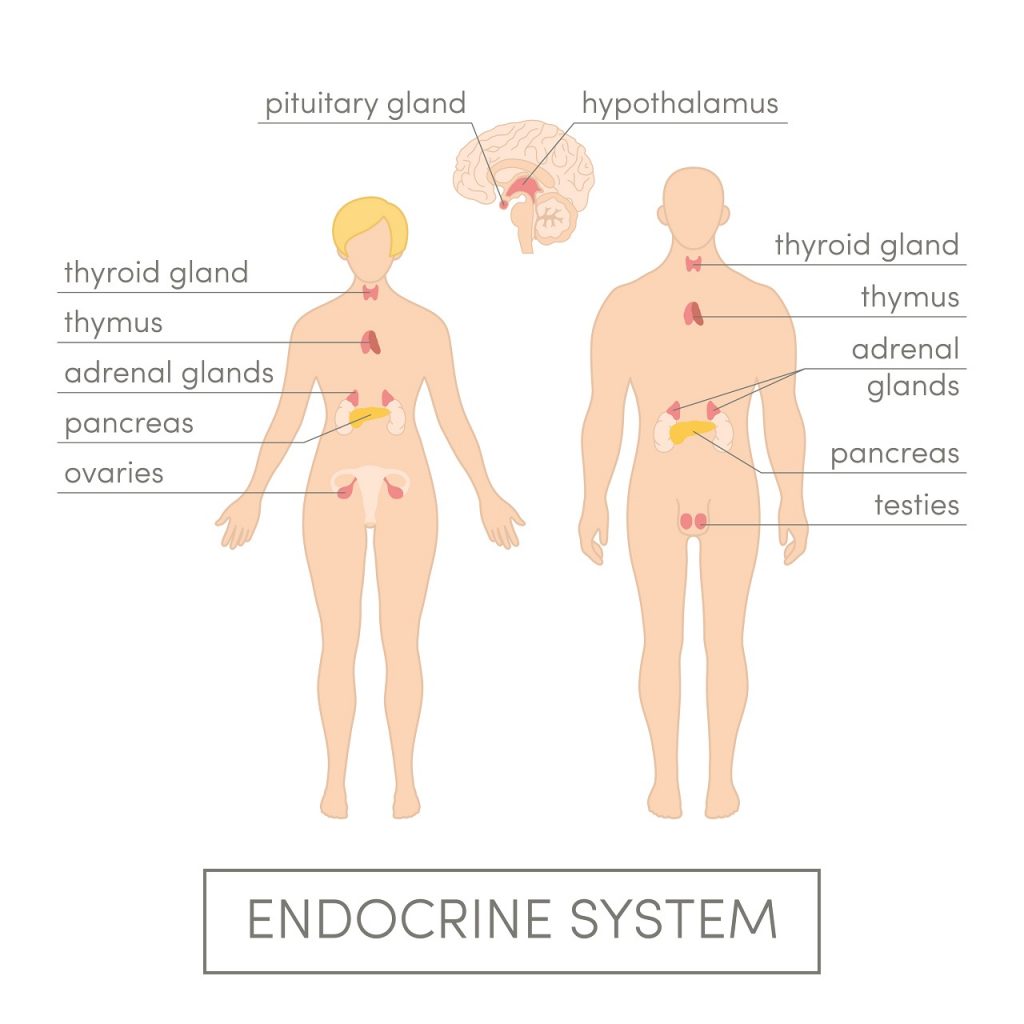
Eases back pain; improves muscular-skeletal conditions such as bad knees, tight shoulders and neck, swayback and scoliosis; increases stamina; boosts immune response; stimulates the glands of the endocrine system; creates balance and grace; improves digestion and elimination; increases circulation; improves heart conditions; improves breathing disorders; decreases cholesterol and blood sugar levels.

Mental benefits:

Mental Calmness, Stress Reduction, Body Awareness

Asanas are good for developing coordination and helps to improve your concentration levels and memory. Regular practice can enable young people to keep their natural flexibility for many years. There is no age bar for Yoga.Yoga allows each and everyone who is practicing it to retain mobility and relieve problems such as arthritis and poor circulation. During pregnancy, yoga promotes good health in both mother and the unborn child. Yoga asanas lessen the effects of problems such as overweight, backache, and depression.

Here are some Yoga Asanas for the Beginners:

Mountain Pose (Tadasana) :Stand tall with feet together, shoulders relaxed, weight evenly distributed between your soles, arms on the sides.Take a deep breath and raise your hands overhead, palms facing each other with arms straight. Reach up toward the sky with your fingertips.

Downward Facing Dog (Adhomukhasvanasana): Get on all fours with your hands and knees and shoulder-and-hips-width apart. Walk with your hands a few inches forward and spread the fingers wide, pressing the palms into mat. Curl toes under and slowly press hips toward ceiling, bringing your body into an inverted V, pressing shoulders away from ears. Feet should be hip-width apart, knees slightly bent. Hold for 3-4 full breaths.

Warrior Pose (Virabhadrasana): Stand with legs 3 to 4 feet apart, turning right foot out 90 degrees and left foot in slightly. Bring your hands to your hips and relax your shoulders, then extend arms out to the sides, palms down. Bend right knee 90 degrees, keeping the knee over the ankle; gaze out over right hand. Stay for 1 minute. Switch sides and repeat.

Tree Pose (Vriksasana): Take mountain pose. Then shift your weight onto your left leg. With your hips facing forward, place the sole of your right foot inside your left thigh and find your balance. When you’re there, take a prayer position with your hands. To kick it up a notch, reach your arms up as you would in a mountain pose. Be sure to repeat with the other side.

Bridge Pose (Setubhanda): Lie on the floor with your knees bent and directly over the heels. Place the arms on your sides, palms down. Exhale, then press feet onto the floor as you lift your hips. Clasp hands under lower back and press arms down, lifting hips until thighs are parallel to the floor, bringing chest toward chin. Hold for 1 minute.
Make it easier: Place a stack of pillows underneath your tailbone.

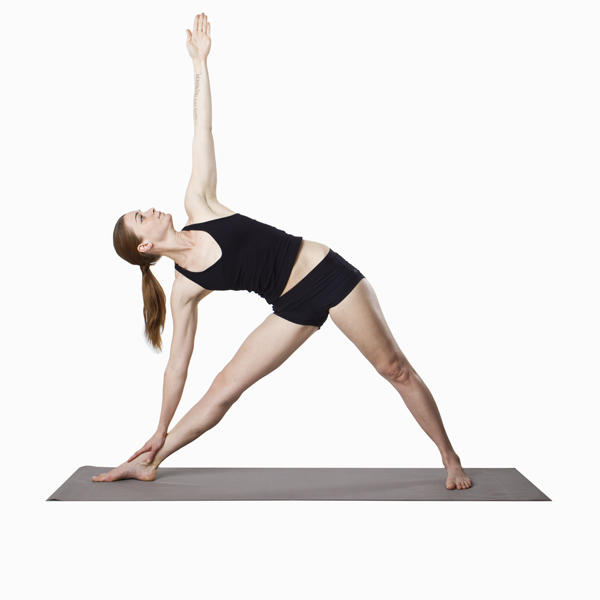
Triangle Pose (Trikonasana): Take warrior pose on your right side without lunging into your knee. Then touch the inside of your right foot with the outside of your right hand. Reach up to the ceiling with your left hand. Turn your gaze toward and pass your left hand to stretch your back. Don’t forget to repeat it on the other side.

Upward Facing Dog (Urdhvamukhasvanasana): Lie face down on the floor with your thumbs under shoulders, legs extended with the top of your feet on the floor. Tuck your hips downward as you squeeze your glutes. Keeping your shoulders down, push up and lift your chest off the ground. Relax and repeat.

Pigeon Pose (Ekapadarajakapotasana): Start in a push-up position, your palms under your shoulders. Place your left knee on the floor near your shoulders with your left heel by your right hip. Press your hands to the floor and sit back with your chest lifted. You can also lower your chest closer to the floor for a stretch. Try it on the other side.

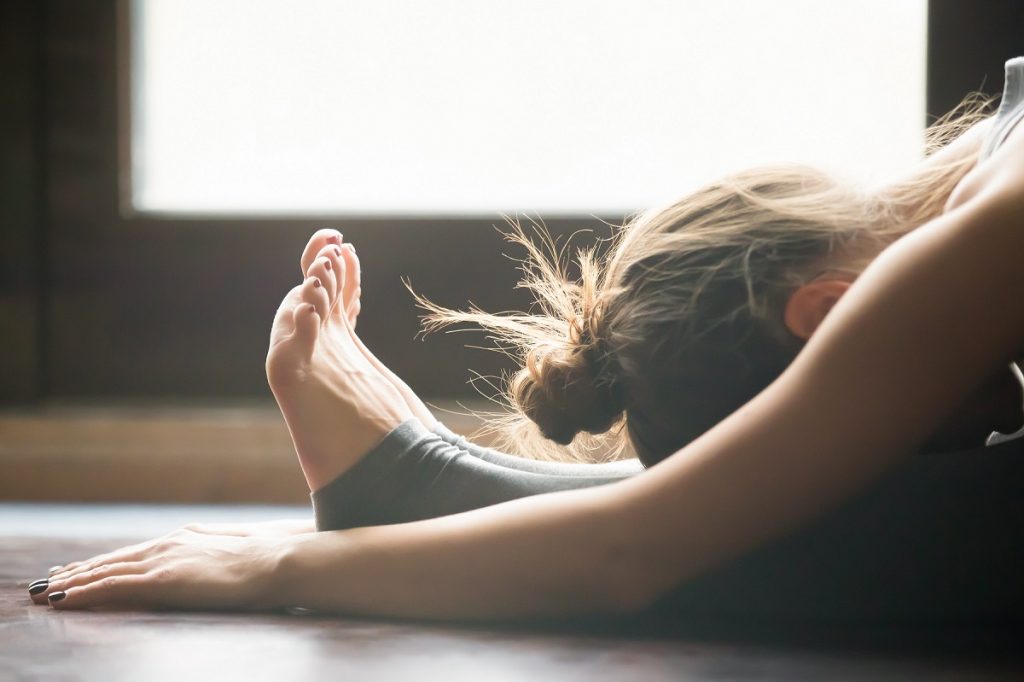
Child’s Pose (Balasana): Sit up comfortably on your heels. Roll your torso forward, bringing your forehead to rest on the bed in front of you. Lower your chest as close to your knees as you comfortably can, extending your arms in front of you. Hold the pose and breathe.

What are you waiting for, get up, plan your day and bring Yoga into your lifestyle and stay stress-free lifelong.

June 24, 2016 By Trupti Hingad 2 Comments

Best Yoga Asanas for Hypothyrodism

3

One of the biggest battle for most people is ‘Weight Loss’. 90 % of the people are stressed and spend sleepless nights over not losing weight. The question in most individual’s mind is despite doing exercise and eating right why is it that I am unable to lose weight or maintain it?

Healthy foods, controlled portion sizes, regular exercise and peaceful sleep — these are the ingredients for losing weight.

One of the reason for not being able to lose weight could also be –Hypothyroidism, a condition where your thyroid gland function is impaired. Underactive thyroid gland plays a vital role in affecting the weight reduction journey.

It’s difficult for someone with hypothyroidism to lose or maintain a healthy weight balance as T3, the active thyroid hormone is low. T3 is a powerful hormone that regulates the body’s metabolism. The most important thing you can do for weight loss and for your overall health —is to get proper treatment for your hypothyroidism.

Losing weight is never easy, but, people can control it and shouldn’t struggle to lose weight. However, making a few dietary changes and regular exercise or Yoga may help in weight loss.

Here are some of the important yoga asanas which boosts the function of your thyroid gland and helps in weight loss.

To learn more about making positive changes in life get GOQii Subscription.

1.  VIPRITKARNI:

It is a Mudra.Viprit means: reverse and karni means “by which”. Viparitakarni helps to balance the functioning of thyroid and eases the complication caused by hypoactive thyroid. This is also one of the important Asanas for thyroid disorder. This can be done for 2minutes maximum.It is also called as half shoulder stand.

Method: 

Lie down on your back. Arms alongside of the body. As you inhale bend your knees and raise the legs and buttocks. Bring the palms under your hips to support the buttocks. Elbows remain on the floor. Straighten the legs vertically upwards. Relax the muscles of feet, legs, and hips. Shoulder and neck relaxed on the mat. Breathe normal. Remain in the position for few seconds and gradually increase it to 1-2min. Exhale, bend the knees towards your forehead and slowly lower the buttocks and legs and return to the starting position.

Limitation: Avoid with High BP and dizziness

viparita_karani_mudra-184x300

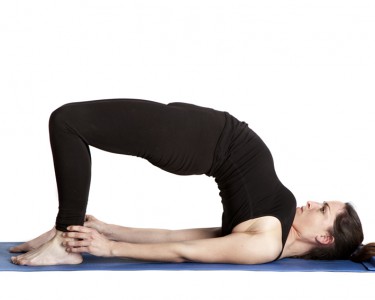
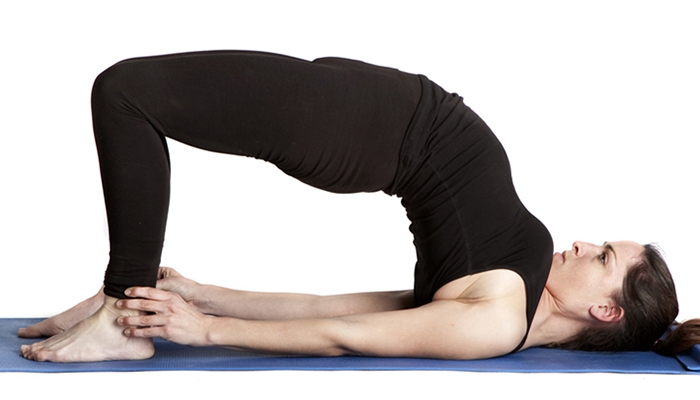
2. SETUBHANDASANA (BRIDGE POSE)

This asana provides appropriate stretch on the back and suitable massage to the neck. It helps to regulate the functions of thyroid gland thereby helpful in releasing thyroxin hormone.This can be done for 2-3 min maximum.

Lie flat on your back with arms at your sides, palms down. Bend your knees and place your feet flat on the floor. Keep your feet hip width apart, parallel to each other, and as close to the buttocks as possible. Simultaneously, press your upper arms and feet into the floor and begin lifting your hips towards the ceiling. Try to distribute your weight equally on the inside and outside of your feet.

Now, move your breastbone towards your chin, keeping your chin lifted only slightly as not to flatten the back of the neck. Firm your tailbone in towards the pubis and move your pubis slightly towards the belly. In order to keep the lower back extended, keep the knees over the ankles, perpendicular to the floor. Your buttocks should be firm, but not clasped.

Lift your hips as high as you are able without breaking position. If you are having trouble holding posture, you can clasp your hands behind your back and firm you arms into the floor, shoulder blades shifted down along the spine. Hold this pose for 5 to 15 breaths.

To come out of Bridge Pose, release on an exhalation, rolling your spine slowly down onto the floor.

Limitations: Avoid doing this pose if you are suffering from neck and back injuries.

setu-bandhasana

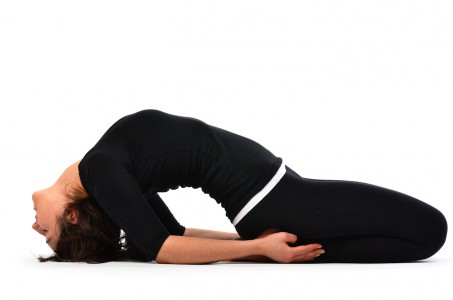
3. MATSYASANA (Fish pose):

Matsya means fish, in the final pose, the asana take the form of fish. Hence the name is Matsyasana. Matsyasana provides adequate stretching to the neck region thereby stimulate the thyroid gland. It increases blood supply to trunk and neck region.

This can be done for 1-2 minute maximum

Method:

Sit in Padmasana, lean back,using elbow and arms to help balance yourself, until your had rest comfortably on the mat and your body forms a low arc. Use a low cushion for comfort at first, if necessary. Now extend your arms and grasp your toes on either side. Breathe normal. Rest till you can hold the posture. Exhale using the support of elbow come to the original position.

Limitations: Knee joint problems, piles, dislocation of knee joints.

5732d9a9ab3cd

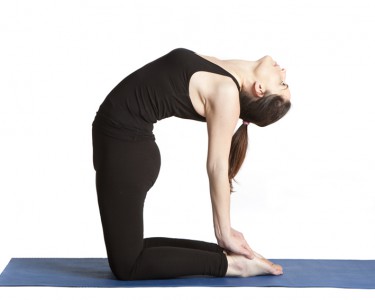
4. USTRASANA (Camel pose): This can be done maximum for 2 minutes.

Method: This asana also give stretch to the neck.

Assume a sitting posture as in kneeling. Support the body on the toes and knees and gradually lean backward, after having fixed the arms from behind, the palms to the ground, the fingers pointing outward and the thumbs towards the toes. Keep arms straight then slowly life the pelvis while taking in the breath. Press the body above the waist slowly both outward and upward, throwing the neck downward. Breathe normal. Exhaling slowly come back to original position.

Limitations: Those who have undergone any recent operation at the chest or abdomen, people with hernia problems, severe hypertension and low back must be cautious.

MG_8461-as-Smart-Object-1

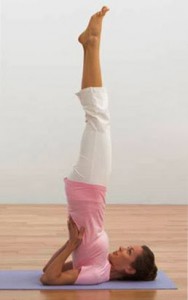
5.  SARVANGASANA (Shoulder stand pose): Sarvangasana is the most important pose to stimulate thyroid gland and control thyroxin. This is the most effective yoga pose where blood flow from legs to head region due to its inverted condition thereby helps in curing of thyroid. This can be done maximum for 3 minutes.

Method:

Lie flat on the back with the feet together, the arms by the sides, and palms flat on the ground.Using the arms as levers, raise the legs and back to a vertical position.

Bend the elbows and use the arms as props to steady the back by pressing it with the palms.The trunk and legs should extend straight up, forming a right angle with the neck, the chest pressing against the chin.

Limitations: Excess obesity, Myopia, severe spinal problems, pregnancy.

sarvangasana9

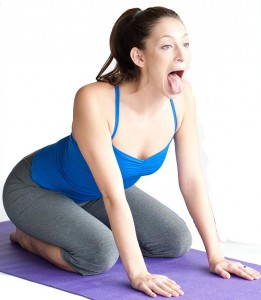
6. SIMHASANA: Simhasana or the Lion Pose resembles a squatting lion in the final pose. In Sanskrit, ‘Simha’ means ‘Lion’ and ‘asana’ means ‘pose. It is an excellent pose for thyroid gland.

Sit in the kneeling position or Vajrasana. Move the knees apart so that they make almost a right angle between them.Tuck your palms, under your thighs. The palms should face downwards and point towards the body. An alternate way is to keep the palms on the knees stretched and spread wide apart.

Bend forward slightly, resting the weight of the body on the arms.Now, tilt the head backwards. Keep the eyes wide open. Open your mouth and draw the tongue forward and downwards as much as you can.

Gaze at the space between the eyebrows with eyes wide open. This is called Bhrumadhya Drishti. In Hatha Yoga Pradeepika, an alternate gaze for the eyes is given as Nasikagra Drishti or gazing at the tip of the nose.

Breathe normally and deeply in this position. During exhalation make a sound ‘ahhh…’, to imitate the breathing of a lion with tongue outside. You may also roar like a lion, few times in this position. Relax your muscles in the back, abdomen and chest in the final position.

Remain in this final position for as long as comfortable.In some variations, the tongue can also be moved from side to side making the sound ‘ahhh…’

Limitations: For those with weak knee or ankle joints, this asana should be practiced with caution.

This can be practiced for maximum 3 minutes.

Diet is equally important and utmost care should be paid to it. I have herewith chalked out diet tips which is a mix of yogic and modern diet.

Simhasana-yoga-pose

Yogic Diet tips for thyroid disorders

  • Diet with high fiber content should be taken.
  • Avoid excess eating of fats and carbohydrates.
  • Give more and more thrust on green and leafy vegetables.
  • Focus on eating seasonal fruits.
  • Ginger greatly enhances thyroid function. Chew ginger or have ginger tea.
  • Black walnut contains iodine, which nourishes the thyroid gland.
  • Foods like curd, fish, meat, eggs, radish, and oatmeal contain good amount of iodine. So take these foods regularly to control thyroid problems
  • It is recommended that you have Gomutra (Cow urine):Its anti-inflammatory, Anti- Bacterial, antibiotic and antimicrobial. It acts as an antidote. 10-15drops can be taken on an empty stomach in the morning. It works best if taken with Ashwagandha.
  • Bask in Sun: take sunlight /sun bath between 7am -8am.
  • Have 1 tbsp cold pressed virgin Coconut oil. It improves the function of thyroid hormone
  • Take foods such as carrots, pumpkin, sprouts, spinach, wheat grass seaweeds because of its iodine content.

Thyroid diet prevention & precaution

  • Cruciferous veggies can be eaten in limited quantity and should be cooked.Non veg foods such as fish —healthy omega 3 fatty acids present in oily fishes like salmon, tuna, sardines can be eaten. Even eggs are healthy protein rich options to be taken in meals.
  • Spicy foods should by far be avoided as they are tamasic and interferes with keeping the mind calm and in a balance state which is very necessary to deal emotionally with the people having thyroid.
  • Refined and Preserved foods should be avoided to keep the weight in check.
  • Caffiene should be avoided because it hampers the healing properties of thyroid medications. 

Begin with these yoga practices and maintain your thyroid hormones function and achieve a successful weight loss. Bring on a “new you” with these yoga Asanas.

Please Note: Sarvangasana and Vipritkarni needs to practice under guidance.

October 8, 2015 By Rimjhim Chaturvedi 13 Comments

Yoga to reduce Uric acid levels and manage Gout

yogaa

Uric Acid is a chemical (waste product) produced by final oxidation (breakdown) of purines in the body, carried in the blood and excreted by the kidneys through urine. Formation of uric acid in the body is quite normal as it is a necessary substance in food metabolism. Uric acid is known to acts as an anti-oxidant and helps prevent damage to our blood vessels lining. But, higher levels of uric acid in the blood are harmful.

The level of uric acid in the blood rises mainly because either the kidneys are not working efficiently to excrete the excessive uric acid from the body or the uric acid level is too high for the normal kidneys to excrete the excess or due to both the conditions. Whatever the condition, the result is high level of uric acid in the blood.

High uric acid level may result in attacks of gout but it’s important to note that not everyone who has high uric acid gets gout and not everyone with gout has high uric acid. Uric acid levels can be reduced with the help of correct diet and exercise like walking, swimming and yoga.

Yoga can help in reducing uric acid levels in three ways:

  1. Helps in managing weight – Extra pounds add to the joint pain and you might suffer from a flare-up. Gradual weight loss is recommended because if you drop weight too quickly, purines can attack your joints. Yoga aids gradual weight loss. It also helps to maintain weight and prevent weight gain in people who are at their ideal weight.
  1. Yoga movements are gentle- on the joints, improves flexibility and circulation thus preventing uric acid crystals from depositing in the joints, removing crystals that are already deposited in the joints by mobilising and excreting them.
  1. Making you more aware of your body – This awareness can help you follow the recommended diet to prevent another painful attack.

There are quite a few Yoga Asanas which when practiced regularly can not only help in reducing uric acid but prevent uric acid crystals from depositing in the joints, removing it and help prevent a flare up. These asanas are:

  • Ardha Matsyendrasana (The Spinal Twist Pose)
  • Bhujangasana (The Cobra Pose)
  • Dhanurasana (The Bow Pose)
  • Halasana (The Plow Pose)
  • Hastashirasana (The Hand to Head Pose)
  • Januhastasana (The Hand to Knee Pose)
  • Makarasana (The Crocodile Pose)
  • Pavan mukhtasana (The Wind Relieving Pose)
  • Pranayama (Breathing technique)
  • Tadasana (The Mountain Pose)
  • Trikonasana (The Triangle Pose)
  • Uttana Padasana (The Extended leg Pose)
  • Veerasana (The Hero Pose)
  • Vriskshasana (The Tree Pose)

So, awaken the yogi in you and practice these asanas everyday and lead a pain free life by keeping your uric acid levels well within the normal range. Normal range varies from lab to lab based on the testing method used. Usually, the normal range is 3.5-7.2 mg% but some labs have up to 5.7 mg% as the upper limit.


June 26, 2015 By SNEHA CHIKHALE 2 Comments

8 Yoga poses to do before going to bed

Have you had a hectic day at work? Or is it too much of travel? Or tension in studies? When in such situations we generally end up sleeping less. It takes a long time and then we start counting the sheep (childhood memories!) to fall asleep.

Now, forget counting the Sheep or numbers. Ease your way into dreamland with these 8 yoga asanas. These yoga poses will relax your body and mind, both!

1) Supported child pose:

Holding supported child’s pose with your head rested on some pillows will help your brain and body to rest after long day. One can repeat it as many times as he wish. It is a good option for resting and relaxing.

supported child pose yoga

2) Supported downward facing dog:

It is a great yoga pose for people who are glued to their desk for all day. This position stretches out your back part of the body, particularly the hamstring group (muscles at the back of your thighs)

downward_facing_dog

3) Triangle pose:

This posture creates smooth blood flow and space in the spine. This standing pose releases the hamstring and allows extension in the spine. Using a wall will help you to hold this position with better timings.

Triangle-pose-Trikonasana1

4) Wide­ legged forward fold:

This pose is absolutely useful to calm the body and nervous system after a tiring day at work. This pose will also help open and stretch the back of the body.

Wide legged forward fold


5) Low lunge:

This pose stretches out the hip flexor group, which tend to get tight due to long periods of sitting.

Yoga-LowLunge


6) Supine bound angel pose:

This pose helps open the upper back, chest and shoulders though a mid backbend. Lying on the pillow will help with increasing the openness.

Supine bound angel pose

7) Legs up the wall:

This position tones and settles the nervous system while reducing the gravitational pressure on the heart and the legs. Hip: Use pillow under the lumbar curve to release the lower back.

Legs up the wall

8) Savasana:

To wrap up your yoga practice, finish your sequence with traditional savasana. It is a simple pose that brings total relaxation. This should be performed at the end of the yoga session, to relax your muscles.

savasana

  • « Previous Page
  • 1
  • …
  • 3
  • 4
  • 5
  • 6
  • 7
  • …
  • 60
  • Next Page »

Search

Recent Posts

  • The GOQii India Fit Report 2026: Unmasking the Gender Health Divide
  • International Dance Day: Why Dancing is the Ultimate Workout for Your Body and Mind
  • Summer Health Hazards You Need To Be Aware Of (And How to Prevent Them)
  • Sitting Too Much? Here’s How It’s Shortening Your Life
  • Everything You Need to Know About Malaria

Stay Updated

Archives

  • April 2026 (24)
  • March 2026 (18)
  • February 2026 (14)
  • January 2026 (14)
  • December 2025 (19)
  • November 2025 (15)
  • October 2025 (20)
  • September 2025 (6)
  • August 2025 (6)
  • July 2025 (12)
  • June 2025 (18)
  • May 2025 (16)
  • April 2025 (22)
  • March 2025 (28)
  • February 2025 (21)
  • January 2025 (25)
  • December 2024 (22)
  • November 2024 (23)
  • October 2024 (21)
  • September 2024 (23)
  • August 2024 (30)
  • July 2024 (21)
  • June 2024 (25)
  • May 2024 (28)
  • April 2024 (27)
  • March 2024 (27)
  • February 2024 (24)
  • January 2024 (21)
  • December 2023 (14)
  • November 2023 (10)
  • October 2023 (19)
  • September 2023 (22)
  • August 2023 (18)
  • July 2023 (22)
  • June 2023 (23)
  • May 2023 (24)
  • April 2023 (19)
  • March 2023 (23)
  • February 2023 (19)
  • January 2023 (15)
  • December 2022 (11)
  • November 2022 (15)
  • October 2022 (15)
  • September 2022 (12)
  • August 2022 (10)
  • July 2022 (17)
  • June 2022 (11)
  • May 2022 (10)
  • April 2022 (6)
  • March 2022 (6)
  • February 2022 (13)
  • January 2022 (11)
  • December 2021 (7)
  • November 2021 (3)
  • October 2021 (6)
  • September 2021 (3)
  • August 2021 (8)
  • July 2021 (7)
  • June 2021 (15)
  • May 2021 (16)
  • April 2021 (10)
  • March 2021 (7)
  • February 2021 (4)
  • January 2021 (4)
  • December 2020 (3)
  • November 2020 (4)
  • October 2020 (10)
  • September 2020 (3)
  • August 2020 (3)
  • July 2020 (2)
  • June 2020 (4)
  • May 2020 (10)
  • April 2020 (12)
  • March 2020 (10)
  • February 2020 (4)
  • January 2020 (4)
  • December 2019 (3)
  • November 2019 (7)
  • October 2019 (5)
  • September 2019 (4)
  • August 2019 (9)
  • July 2019 (9)
  • June 2019 (11)
  • May 2019 (4)
  • April 2019 (8)
  • March 2019 (8)
  • February 2019 (9)
  • January 2019 (8)
  • December 2018 (9)
  • November 2018 (3)
  • October 2018 (3)
  • September 2018 (5)
  • August 2018 (10)
  • July 2018 (6)
  • June 2018 (13)
  • May 2018 (8)
  • April 2018 (18)
  • March 2018 (9)
  • February 2018 (8)
  • January 2018 (15)
  • December 2017 (12)
  • November 2017 (19)
  • October 2017 (13)
  • September 2017 (15)
  • August 2017 (4)
  • July 2017 (8)
  • June 2017 (7)
  • May 2017 (6)
  • April 2017 (8)
  • March 2017 (6)
  • February 2017 (7)
  • January 2017 (9)
  • December 2016 (10)
  • November 2016 (7)
  • October 2016 (7)
  • September 2016 (7)
  • August 2016 (11)
  • July 2016 (9)
  • June 2016 (9)
  • May 2016 (12)
  • April 2016 (17)
  • March 2016 (17)
  • February 2016 (8)
  • January 2016 (6)
  • December 2015 (2)
  • November 2015 (9)
  • October 2015 (7)
  • September 2015 (9)
  • August 2015 (11)
  • July 2015 (9)
  • June 2015 (11)
  • May 2015 (9)
  • April 2015 (13)
  • March 2015 (8)
  • February 2015 (5)
  • January 2015 (12)
  • December 2014 (14)
  • November 2014 (11)
  • October 2014 (6)
  • September 2014 (13)
  • August 2014 (12)
  • July 2014 (6)
  • June 2014 (2)
  • May 2014 (7)
  • April 2014 (4)

From “Laddu Nawin” to Fit and Fierce: How a 25-Year-Old Insurance Advisor Shed 20 Kilos and Gained His Life Back

When 25-year-old Nawin Yadav from Hyderabad walked into his office every morning, he carried more than just his files and policy papers. He had the weight of fatigue, sluggish energy, and an ever-growing belly that was becoming the butt of jokes. “People … [Read More...]

“I’ve Challenged Myself to Live 100 Years” – The Story of Chandubhai Savani’s Second Chance at Life

At 67, most people start slowing down. Not Chandubhai Savani. A resident of Surat, Chandubhai, thought life was on track. “My life was going well till I had my bypass surgery,” he says. That surgery, back in 2021, was a wake-up call.  Medication was routine, but exercise wasn’t. His diet? What he calls ‘normal.’ “I […]

From Shimla’s Slopes to Chandigarh’s Sidewalks: Surinder Kaur Bhalla’s Journey from Chaos to Control

Some journeys start with a plan. Others begin with a stumble literally. Surinder Bhalla, a government professional, born and raised in the scenic hill town of Shimla, had always lived a life of movement. “In Shimla, you walked everywhere,” she reflects. “Walking was never an exercise. It was just life.” But after shifting to Chandigarh, […]

Ananda Mukherjee Health Story

From Terminal Illness To Complete Wellness! Ananda Mukherjee Health Story

As we observe World Cancer Day under the powerful theme ‘United by Unique’ (2025-2027)**, we are reminded that every individual’s journey with cancer is distinct, yet united by shared resilience, hope, and the collective fight against this disease. This theme places people at the centre of care and their stories at the heart of the […]

  • HOME
  • HEALTHY LIVING
  • FITNESS
  • HEALTHY RECIPES
  • USER STORIES
  • KARMA
  • BUY GOQii

Copyright ©2016 GOQii