GOQii

Blog

  • HOME
  • HEALTHY LIVING
  • FITNESS
  • HEALTHY RECIPES
  • USER STORIES
  • KARMA
  • BUY GOQii

Search Results for: weight loss

September 26, 2020 By GOQii 2 Comments

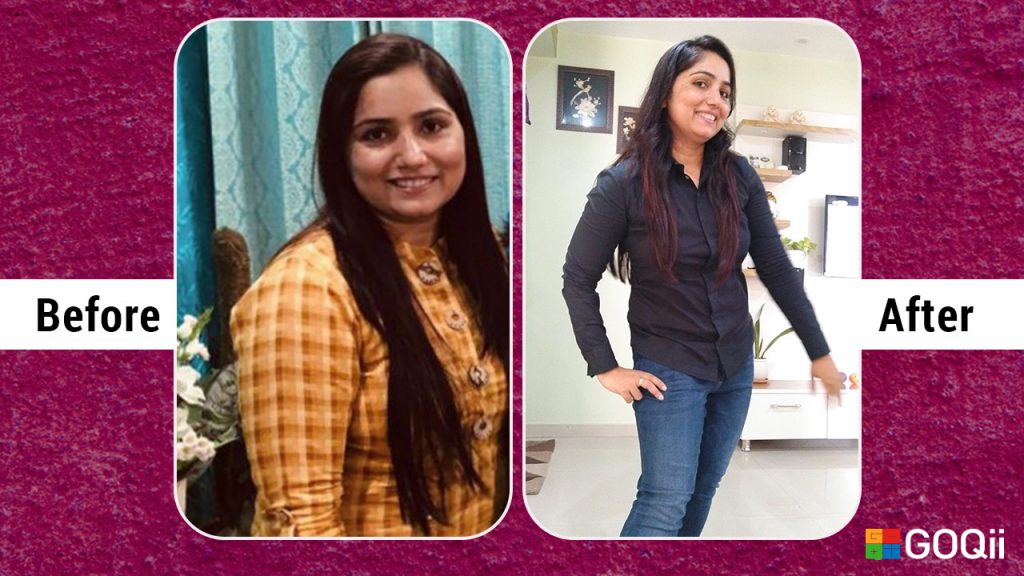
Lose Weight The Right Way – Neetu Choudhary’s Weight Loss Journey!

Neetu Choudhary

Do you struggle with losing weight? Are the odds always stacked against you and despite your best efforts, the number on the weighing scale doesn’t budge? Well, you might have a lot in common with our player Neetu Choudhary who faced similar challenges. But with the right guidance from her GOQii Coach, she was able to make a positive lifestyle change! 

Before Joining GOQii 

Neetu Choudhary always had a medium build. She dabbled with yoga and the gym to stay active and fit before marriage. However, post-marriage, due to the new home, work and the stress which came with the responsibilities of managing both, her fit and active lifestyle headed towards a downward spiral. She also had a miscarriage which further impacted her stress levels and led to weight gain. After a successful delivery, her weight had touched 82kg. She had reached a stage where she was ready to try anything to lose weight. 

Neetu Choudhary Makes The Shift! 

Neetu Choudhary was introduced to GOQii through a friend. Let’s read her story in her own words: 

“1 year ago, my weight was more than 80kg. My BMI was hovering around the obese category. Because of a C section delivery and hormonal imbalance, my weight was increasing day by day. Despite working out and dieting, I was not able to reduce my weight. I worked out 3 hours a day at the gym and my diet was only liquid without chapati or rice and I often skipped meals. 

I still remember the first call with my GOQii Coach where she told me that I am torturing my body and experimenting with it the wrong way – that’s why my metabolic rate is very low. I told her that I don’t eat anything and I’m still unable to lose weight. To this, she said that’s what the problem is! If we don’t eat right, it will affect weight. Those words hit home and from that day on, my life took a big u-turn. 

The changes that my coach introduced included: 

  • Reducing my workout time from 3 hours to 1 hour
  • Have 3 meals a day – breakfast, lunch and dinner 
  • Include yoga and meditation for better sleep and to reduce stress levels 

Additionally, she also suggested that I don’t avoid anything but only restrict the quantity for the initial stage. 

After following these changes, I began realizing that my energy levels increased and I don’t feel tired all the time. My anger levels reduced. My GOQii Coach Unnati helped me a lot during my journey and kept motivating me. She also helped me stop a few bad habits such as: 

  • Reducing my milk tea from 5 cups to just 1 
  • Doing away with processed and instant food. Now, I don’t even have biscuits in my kitchen 

Staying Fit During Lockdown 

When the world went into lockdown, I was worried about how I’ll keep my routine up but my GOQii Coach motivated and guided me to utilize this time in an effective manner. I switched to home workouts which include stair workouts, skipping, HIIT and running. I lost nearly 8kg in the lockdown itself. 

I now believe that even without a gym or skipping meals, we can still reduce weight. All you need is determination and a positive attitude. My coach said – STOP MAKING EXCUSES  and this has been my motto ever since in my personal as well as professional life!” 

What Does Neetu’s Coach Have To Say About Her? 

Coach Unnati says that, “Neetu was very determined towards her health goals, which was to lose weight, lose inches (especially belly fat). Her health concern was PCOD because of which she had gained weight and was finding it too difficult to lose. 

After learning about her daily routine, we decided to reduce the workout from 3 hours to 1 hour & in addition introduced a half an hour post dinner light walk. Workout would include variations of HIIT, Stair Climbing, Skipping Rope, Strength Training and of course a small session of Pranayama & Meditation. For food habits, we decided not to skip or eat less for any meals instead, follow intermittent fasting starting with 12/12 hours and at present following 16/8 hours very smoothly. During the eating window, we made sure her diet was rich in fiber, protein, good fats & moderate amount of carbs. Water intake was also improved by incorporating detox water.

Changes Observed:

  • Weight loss – 12 Kgs (from 82 Kgs to 70 Kgs)
  • Inch Loss – 4”
  • Belly Fat – 6”
  • Arms – 2”
  • Improved on Sleep Quality, 
  • Reduced Stress Levels 
  • Good Energy levels throughout the day.

Neetu’s Sincerity, Determination, Dedication & Consistency helped her achieve her health goals. Seeing her so motivated, motivates me too!”

Well, does this story motivate you? Remember, it is never too late to make a change. With determination, motivation and the right habits, you can reach your health goals too! For more inspiring stories, check out Healthy Reads. To subscribe to GOQii, head over to our Website or Download the App Now! 

#BeTheForce 

October 14, 2017 By Mitali Ambekar 20 Comments

Weight Loss Vs Fat Loss

weight loss vs fat loss

Who does not want to look good? Be it family functions, office dos or even a society party? There would seldom be anyone who thinks otherwise. Being fit, with a chiselled and curvaceous body fitting in the LBD with a glow on your face, playing with an awesome stamina, doing a set of proper push ups/pull ups to impress someone is natural. Burt, this is not all. Invariably the idea to look like this is more often than not accompanied by the very thought of weight loss.

I have never understood this fixation of the mind for weight loss. Why is it such a big thing to lose those extra kilos? Is it all about weight loss or looking your best in that party dress, being the most beautiful bride, a guy on the beach with a dashing personality, being awarded as the best player

YOU JUDGE!!

As a nutritionist, I am often battling these questions on weight loss. I have lots of people coming up to me with a target of losing 5-7kg in 2 months or losing that belly fat. And, to achieve this they are ready to give up on their food, gym twice a day for hours, go around running like crazy.

Let me at the outset tell you that weight loss in numbers will never give you that toned lean body and that lovely skin; it will just show you that the weight is reducing without any significant positive effect.

In order to achieve that toned lean body, you have to concentrate on losing your inches by losing that stored fat in your body. But, there is never a guarantee of weight loss.

After having battled the questions on how to lose weight, how do I get a lean and toned body, the other big question often thrown at me at the end is HOW CAN YOU SAY NO GUARANTEE of weight loss.

 Well, the answer to this question is because Body weight consists of adipose tissue and lean body mass-muscle, bones, organs, water. Of these, the Muscles are the most important part as it takes cares of your body’s calorie burning capacity. If you burn more calories you lose more fat. Therefore preserve that muscle and increase it. Muscles are dense tissue and therefore it weighs more but takes less space and gives a shape to your body.

Rather than checking on the number on the weight machine, check on what is that weight made of, the percentage of muscle versus fat in it. Start concentrating on your fat loss as that gives you a good health, happy life, more energy, more stamina and endurance so you can give in your best at work, home and LIFE. Thus, leading you to shift to a healthier lifestyle permanently!!

May 14, 2026 By GOQii Leave a Comment

The Great Summer Mango Debate: Can You Eat Mangoes While Trying to Lose Weight?

Summer in India brings soaring temperatures, afternoon cravings, and of course the king of fruits: the mango.

But for anyone trying to lose weight or manage diabetes, mango season also brings guilt.

“Are mangoes fattening?”

“Will mangoes spike my sugar?”

“Should I avoid them completely?”

These are some of the most common questions GOQii coaches receive every summer.

The good news? You do not need to give up mangoes to stay healthy.

Mangoes themselves are not the problem. Overeating them is. No single fruit causes weight gain. Weight gain happens when your total calorie intake consistently exceeds what your body burns. And when eaten mindfully, mangoes can absolutely fit into a healthy lifestyle.

In fact, mangoes are naturally rich in:

  • Vitamin C
  • Vitamin A
  • Dietary fibre
  • Antioxidants

So before you remove mangoes from your plate completely, let’s separate the myths from the facts.

Mangoes: Myth vs. Fact

The Myth The Reality
“Mangoes make you gain weight.” Mangoes are naturally fat-free and cholesterol-free. One medium mango contains roughly 150–200 calories. Weight gain happens from an overall calorie surplus—not from one fruit alone.
“People with diabetes should avoid mangoes completely.” Mangoes have a medium Glycaemic Index (GI) of around 51–56. Controlled portions can still fit into a balanced diabetic diet, especially when paired with protein or healthy fats.
“Mangoes are best eaten after meals.” Eating mangoes immediately after a heavy lunch or dinner can increase blood sugar spikes. They work better as a standalone snack.
“Aamras is as healthy as eating whole mangoes.” Juicing or blending mangoes removes much of the fibre, causing sugars to absorb faster. Whole mangoes are always the better option.

The Biggest Mango Mistake People Make

The issue is usually not the mango itself. It is:

  • Eating multiple mangoes in one sitting
  • Pairing them with heavy meals
  • Consuming sugary mango shakes or aamras regularly
  • Mindless overeating

A mango eaten mindfully is very different from a mango overload.

3 Smart Rules for Eating Mangoes the Right Way

You can absolutely enjoy mangoes this summer—as long as you eat them strategically.

  1. Practice Portion Control

This is the most important rule. Instead of eating multiple mangoes at once, stick to:

👉 ½ to 1 medium-sized mango per serving (roughly 100–150g).

This gives you the taste and nutrients without excessive sugar or calories. Portion size matters more than complete restriction.

  1. Time It Right

The worst time to eat mangoes:

  • Immediately after a heavy meal
  • Late at night

The better option:

  • Mid-morning snack
  • Afternoon snack
  • Pre-workout fuel

At these times, your body is more likely to use the natural sugars for energy.

  1. Soak Mangoes Before Eating Them

There is a reason older generations soaked mangoes before eating them. Soaking may help:

  • Reduce surface impurities
  • Lower excess heat-producing compounds
  • Improve digestion for some people

Even soaking them for 30 minutes to 1 hour can help.

Can People With Diabetes Eat Mangoes?

Yes, in moderation.

The key is portion control, timing, and pairing mangoes with protein or healthy fats. Try combining mangoes with:

  • Nuts
  • Seeds
  • Greek yogurt
  • Protein-rich snacks

This slows sugar absorption and improves blood sugar response. Managing diabetes is about balance not fear.

Note: If you have uncontrolled diabetes or insulin resistance, consult your doctor or nutritionist regarding portion sizes.

Whole Mango vs. Aamras: Which Is Better?

Whole mangoes are the healthier choice. Why? Because fibre slows sugar absorption and helps you feel fuller for longer. Aamras, juices, and shakes contain less fibre, are easier to overconsume, and can spike blood sugar much faster. Drinking calories is always easier than eating them.

You do not need to fear seasonal fruit to stay healthy. Mangoes can absolutely fit into a balanced lifestyle even during weight loss when eaten with awareness and moderation.

Health is not built through restriction alone. It is built through sustainable choices.

So yes:

👉 Enjoy the mango.

👉 Just don’t lose control around it.

You can enjoy mangoes guilt-free if you control portions, avoid overeating, eat them at the right time, and choose whole fruit over sugary preparations. Because healthy eating should feel sustainable not restrictive.

Frequently Asked Questions (FAQs)

  1. Can mangoes cause weight gain?

Not on their own. Weight gain occurs when overall calorie intake consistently exceeds calorie expenditure.

  1. Can people with diabetes eat mangoes?

Yes, in moderation. Portion control and proper food pairing can help manage blood sugar response.

  1. Is aamras healthier than whole mangoes?

No. Whole mangoes contain more fibre, which slows sugar absorption and improves satiety.

  1. What is the best time to eat mangoes?

Mid-morning or afternoon as a standalone snack is generally better than eating them after heavy meals or late at night.

  1. Should mangoes be soaked before eating?

Soaking mangoes may help reduce impurities and make them easier to digest for some people.

#BeTheForce

Disclaimer: This article is intended for educational purposes only. If you have diabetes, insulin resistance, or specific dietary restrictions, consult your doctor or a qualified nutritionist before making dietary changes.

May 2, 2026 By GOQii Leave a Comment

Metabolic Flexibility: The Key to Energy, Fat Loss, and Longevity

The human body is built like a hybrid engine, perfectly designed to run efficiently on two very different fuels. After a meal, your body burns carbohydrates (glucose) for immediate energy. However, between meals or during exercise, it is supposed to seamlessly switch gears and start burning stored fat.



This vital ability to shift between fuel sources is known as metabolic flexibility.

When this internal system works properly, your energy remains steady throughout the day, hunger becomes predictable, and healthy weight regulation happens naturally. Unfortunately, when this system gets “stuck,” the results are constant fatigue, stubborn fat gain, and relentless sugar cravings. If you are struggling with these symptoms, your body isn’t broken it is simply stuck in one mode.

Here is exactly how this fuel-switching system works, why it breaks down, and how you can fix it.

What Is Metabolic Flexibility?

Think of metabolic flexibility as your body’s internal energy thermostat.

After you eat, your body releases insulin to help your cells absorb and use glucose. A few hours later, as that food energy runs out, your insulin levels drop. This drop is the crucial signal that tells your body to tap into its fat stores to keep you going. That switch is everything.

People with high metabolic flexibility do not experience severe afternoon crashes, nor do they feel the need to constantly snack or battle “hanger” every few hours. Because their bodies can effortlessly access stored energy, they aren’t solely reliant on the food they just ate. If you are constantly exhausted, you aren’t necessarily low on energy; your body just cannot access the energy it has stored.

The Problem: Why We Get Stuck in “Sugar Mode”

Modern eating habits have largely broken this natural switch. Frequent snacking, sugary drinks, and constant daily grazing keep our insulin levels elevated from morning until night.

The biological rule here is simple: If insulin is high, your body is locked out of fat-burning mode. With no ability to flip the switch, you lose access to your stored fuel. Over time, this constant barrage of glucose causes your cells to stop responding properly to insulin. This condition, known as insulin resistance, is the foundation of most metabolic diseases. Globally, over 537 million adults live with diabetes much of it driven by this exact dysfunction. (Learn more about managing blood sugar naturally here).

Constant eating keeps your body from ever switching gears, leaving you running on a state of pure glucose dependency. Right now, your body might be like a car stuck in first gear revving hard, but going nowhere.

5 Signs of Poor Metabolic Flexibility

If your body is stuck in glucose dependency, it will send you loud, uncomfortable signals. You likely lack metabolic flexibility if you experience:

  • Frequent Energy Crashes: Feeling completely drained or shaky just two hours after eating a meal.
  • Intense Sugar Cravings: Needing quick energy fixes, like a sugary treat or caffeine, just to get through the afternoon.
  • Difficulty Losing Weight: Finding that fat loss feels disproportionately hard, even when you are trying to eat healthy.
  • Increased Abdominal Fat: Noticeably storing excess weight predominantly around your belly and internal organs.
  • Elevated Blood Markers: Receiving higher than normal fasting glucose or HbA1c levels on your routine lab tests.

How to Fix It: Teaching Your Body to Switch Gears

The good news is that you don’t need extreme diets to fix this. You simply need to give your body strategic gaps between meals and better biological signals.

  1. Stop Grazing and Create Fasting Windows

Give your digestive system the space it needs to reset. Aim for 3 to 4 solid hours between your meals without snacking. Additionally, practicing a simple 12-hour overnight fast (for example, finishing dinner at 8 PM and not eating again until 8 AM) allows your insulin levels to drop significantly so that overnight fat-burning can finally begin.

  1. Build Metabolic Sinks Through Strength Training

Your muscles act like massive “sinks” that drain excess glucose from your bloodstream. The more muscle mass you have, the more glucose you can efficiently use. Regular strength training not only improves your metabolic flexibility and reduces insulin resistance, but it directly increases your overall fat-burning capacity.

  1. Eat for Stable Blood Sugar

To prevent the sharp blood sugar spikes and crashes that keep insulin elevated, focus on building balanced meals. Prioritize high-quality protein, healthy fats, and dietary fibre. This combination slows down digestion and provides a steady, slow release of energy.

Your body is designed to run beautifully on both glucose and fat, but modern habits keep it locked into just one. You’re not tired because you lack energy; you’re tired because your body has forgotten how to access it.

By taking small steps to fix the switch like cutting out the constant snacking and building a little muscle everything changes. Your energy will stabilise, your cravings will reduce, and fat loss will become a natural byproduct of a healthy, flexible metabolism.

Stop eating around the clock. Give your body the space and time it needs to switch from burning sugar to burning fat. That is where real, sustained energy and long-term health truly comes from.

Frequently Asked Questions (FAQs)

  1. What is metabolic flexibility?
    Metabolic flexibility refers to your body’s ability to efficiently switch between burning carbohydrates (glucose) for energy after a meal, and burning stored fat for energy during periods of fasting or exercise.
  2. Why does snacking prevent fat loss?
    Constant snacking keeps your blood sugar and insulin levels chronically elevated. When insulin levels are high, the biological switch that allows your body to burn stored fat is locked, forcing your body to rely only on the food you just ate.
  3. How do I know if my metabolism is flexible?
    If you can comfortably go 4 to 5 hours between meals without feeling shaky, “hangry,” or exhausted, and your energy levels remain relatively stable throughout the day, you likely have good metabolic flexibility.

#BeTheForce

Disclaimer: This content is for educational purposes only and is not medical advice. If you are dealing with chronic fatigue, metabolic syndrome, or diabetes, consult a qualified healthcare professional before significantly changing your diet or fasting routine.

  • « Previous Page
  • 1
  • …
  • 3
  • 4
  • 5
  • 6
  • 7
  • …
  • 108
  • Next Page »

Search

Recent Posts

  • 6 Health Benefits of Playing Sports
  • Foods to Manage Blood Sugar Naturally: A Complete Guide to Better Blood Sugar Control
  • The Lazy Person’s Guide to Staying Healthy: 5 Micro-Habits That Take Less Than 2 Minutes
  • Healthy Eating: Comforting Chilli Bean Soup Recipe for the Monsoon
  • The Truth About the ‘Beer Belly’: What Alcohol Really Does to Your Metabolism

Stay Updated

Archives

  • August 2026 (8)
  • July 2026 (25)
  • June 2026 (22)
  • May 2026 (20)
  • April 2026 (24)
  • March 2026 (18)
  • February 2026 (14)
  • January 2026 (14)
  • December 2025 (19)
  • November 2025 (15)
  • October 2025 (20)
  • September 2025 (6)
  • August 2025 (6)
  • July 2025 (9)
  • June 2025 (18)
  • May 2025 (16)
  • April 2025 (22)
  • March 2025 (26)
  • February 2025 (21)
  • January 2025 (25)
  • December 2024 (22)
  • November 2024 (22)
  • October 2024 (20)
  • September 2024 (22)
  • August 2024 (27)
  • July 2024 (15)
  • June 2024 (23)
  • May 2024 (26)
  • April 2024 (27)
  • March 2024 (27)
  • February 2024 (23)
  • January 2024 (21)
  • December 2023 (14)
  • November 2023 (10)
  • October 2023 (19)
  • September 2023 (21)
  • August 2023 (16)
  • July 2023 (16)
  • June 2023 (21)
  • May 2023 (20)
  • April 2023 (19)
  • March 2023 (23)
  • February 2023 (19)
  • January 2023 (15)
  • December 2022 (11)
  • November 2022 (15)
  • October 2022 (15)
  • September 2022 (12)
  • August 2022 (9)
  • July 2022 (17)
  • June 2022 (11)
  • May 2022 (10)
  • April 2022 (6)
  • March 2022 (6)
  • February 2022 (13)
  • January 2022 (11)
  • December 2021 (7)
  • November 2021 (3)
  • October 2021 (6)
  • September 2021 (3)
  • August 2021 (8)
  • July 2021 (7)
  • June 2021 (15)
  • May 2021 (16)
  • April 2021 (10)
  • March 2021 (7)
  • February 2021 (4)
  • January 2021 (4)
  • December 2020 (3)
  • November 2020 (4)
  • October 2020 (10)
  • September 2020 (3)
  • August 2020 (3)
  • July 2020 (2)
  • June 2020 (4)
  • May 2020 (10)
  • April 2020 (12)
  • March 2020 (10)
  • February 2020 (4)
  • January 2020 (4)
  • December 2019 (3)
  • November 2019 (7)
  • October 2019 (5)
  • September 2019 (4)
  • August 2019 (9)
  • July 2019 (9)
  • June 2019 (11)
  • May 2019 (4)
  • April 2019 (8)
  • March 2019 (8)
  • February 2019 (9)
  • January 2019 (8)
  • December 2018 (9)
  • November 2018 (3)
  • October 2018 (3)
  • September 2018 (5)
  • August 2018 (10)
  • July 2018 (6)
  • June 2018 (13)
  • May 2018 (8)
  • April 2018 (17)
  • March 2018 (9)
  • February 2018 (8)
  • January 2018 (15)
  • December 2017 (12)
  • November 2017 (19)
  • October 2017 (13)
  • September 2017 (15)
  • August 2017 (4)
  • July 2017 (8)
  • June 2017 (7)
  • May 2017 (6)
  • April 2017 (8)
  • March 2017 (6)
  • February 2017 (7)
  • January 2017 (9)
  • December 2016 (10)
  • November 2016 (7)
  • October 2016 (7)
  • September 2016 (7)
  • August 2016 (11)
  • July 2016 (9)
  • June 2016 (9)
  • May 2016 (12)
  • April 2016 (17)
  • March 2016 (17)
  • February 2016 (8)
  • January 2016 (6)
  • December 2015 (2)
  • November 2015 (9)
  • October 2015 (7)
  • September 2015 (9)
  • August 2015 (11)
  • July 2015 (9)
  • June 2015 (11)
  • May 2015 (9)
  • April 2015 (13)
  • March 2015 (8)
  • February 2015 (5)
  • January 2015 (12)
  • December 2014 (14)
  • November 2014 (11)
  • October 2014 (6)
  • September 2014 (13)
  • August 2014 (12)
  • July 2014 (6)
  • June 2014 (2)
  • May 2014 (7)
  • April 2014 (4)

From Burnout to Balance: How Dr. Ranjit Reclaimed His Health

Dr Ranjit Bhatt has spent years tending to others. A practising doctor in Odisha, his days were packed with patients, surgeries, and emergencies. From the outside, it looked like a life lived in service. But on the inside, something wasn’t right. “I had no … [Read More...]

From Shimla’s Slopes to Chandigarh’s Sidewalks: Surinder Kaur Bhalla’s Journey from Chaos to Control

Some journeys start with a plan. Others begin with a stumble literally. Surinder Bhalla, a government professional, born and raised in the scenic hill town of Shimla, had always lived a life of movement. “In Shimla, you walked everywhere,” she reflects. “Walking was never an exercise. It was just life.” But after shifting to Chandigarh, […]

“I’ve Challenged Myself to Live 100 Years” – The Story of Chandubhai Savani’s Second Chance at Life

At 67, most people start slowing down. Not Chandubhai Savani. A resident of Surat, Chandubhai, thought life was on track. “My life was going well till I had my bypass surgery,” he says. That surgery, back in 2021, was a wake-up call.  Medication was routine, but exercise wasn’t. His diet? What he calls ‘normal.’ “I […]

Ananda Mukherjee Health Story

From Terminal Illness To Complete Wellness! Ananda Mukherjee Health Story

As we observe World Cancer Day under the powerful theme ‘United by Unique’ (2025-2027)**, we are reminded that every individual’s journey with cancer is distinct, yet united by shared resilience, hope, and the collective fight against this disease. This theme places people at the centre of care and their stories at the heart of the […]

  • HOME
  • HEALTHY LIVING
  • FITNESS
  • HEALTHY RECIPES
  • USER STORIES
  • KARMA
  • BUY GOQii

Copyright ©2016 GOQii