GOQii

Blog

  • HOME
  • HEALTHY LIVING
  • FITNESS
  • HEALTHY RECIPES
  • USER STORIES
  • KARMA
  • BUY GOQii

Search Results for: trail challenge

July 31, 2024 By Anusha Subramanian 3 Comments

How to choose proper footwear?

footwear

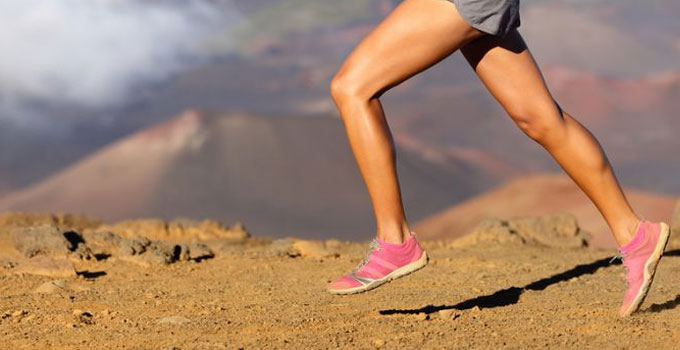
One of the most common questions asked by people before starting any type of workout regime is what shoes do we get? Imagine walking 100 km or running 42 km or hiking or trekking without proper shoes. It could just be disastrous. And history is a witness that most people back out from such challenges midway not because of lack of motivation or because they are tired. But give up largely due to foot injuries caused due to bad shoes.

Why it is important to choose the right footwear?… A very Important aspect of workout which is often neglected.

A good workout is achieved with good footwear. Bad shoes can derail all the efforts that you have put into your workouts and bring your fitness to a standstill due to injury. Strenuous outdoor workout or long distance running puts increased amount of pressure on your feet and therefore wearing the right shoes are important to prevent injury.

According to University of Illinois’ McKinley Health Centre’s note on foot type and proper footwear, foot problems are one of the most common health complaints. The high incidence of foot problems is understandable given the fact that there are 26 bones, 33 joints, 112 ligaments, and tendons, nerves, and blood vessels in the foot. It’s even more understandable when the weight of the body is considered. The force of the body weight borne by the foot increases roughly 1½ times during walking and up to 3-4 times during running. Add in 10,000 steps during a typical day while wearing ill-fitted shoes possibly, and it’s a wonder one’s feet are willing to get out of bed the next day.

A condition called Plantar Fasciitis i.e. damage and inflammation to Plantar Fascia (a connective tissue on the sole of foot forming the inner arch) is caused due to repetitive activity creating a strain on the plantar fascia.

Another common condition often faced by people is Achilles Tendonitis i.e. tissue damage and pain to Achilles Tendon caused during the contraction of the calf muscles. When the calf muscles contract some amount of tension is created on the Achilles Tendon and Wrong footwear further adds to that stress.

Let us now understand the three main categories of foot types :

1: Normal (Medium) Arch: If you see about half of your arch region filled in, you have the most common foot type. Usually, this means you have an arch that naturally supports your bodyweight and pronates normally under load. Some pronation or “rolling in” of the foot is desirable and acts as a natural shock absorber. Most runners with this pattern can wear just about any shoe.

2: Flat Floot (Absent curve): If the arch of your footprint is filled in, it’s likely that your foot collapses inward when you run. This acts as a shock absorber, but the additional rolling in of your foot may stress your feet and knees, adding to your injury risk. Usually, it is recommended that shoes with more stability, such as internal wedges that build up the arch side, dual-density midsoles, and supportive “posts,” or wider, more substantial midsoles be used.

3: More or High Arch: If your footprint shows little or no contact along the outside edge and you see just your heel and the ball of your foot, you have a “high” arch. Your foot may not roll in much when you run, but it doesn’t absorb much shock. We would usually recommend you use a well-cushioned shoe with little or no arch support or stability features.
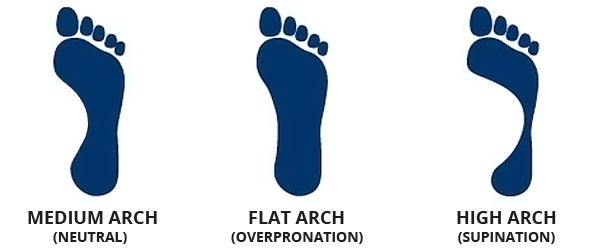
three main categories of foot


Here are a few basics to keep in mind

  1. A good shoe must be very comfortable and must provide good cushion
  2. Good grip on the floor to avoid sliding or skidding
  3. It is important to understand your foot type. Visit a store that specializes in all kinds of sporting and athletic footwear. The associates there can help you find a shoe that’s appropriate for your foot type, the way you walk, and your sport.
  4. The right time to buy a shoe is in the evening when your feet are tired and there is more swelling in the feet.
  5. For Sportspersons variety of shoes are available depending on the type of sport.
  6. Running shoes have inbuilt shock absorbers, walking shoes are light weight and for Hiking one can choose low, mid or high cut shoes. High cut shoes or commonly known as Ankle shoes protects the ankles and provides more protection. And, finally, there are the cross training shoes which are suitable if you do more than one type of workouts.
  7.  One size larger than your usual shoe size is better in terms of trekking and trail running shoes.

A good shoe must support your foot, front and back and provide protection, stability, and good shock absorption.

We hope this article helps you choose the right footwear for your activities. Is there an interesting way you select your workout shoes? Let us know in the comments below. For more tips on fitness and health, check out Healthy Reads or speak to a certified expert by subscribing to GOQii’s Personalised Health Coaching here.

#BeTheForce

Disclaimer: The information provided in this blog is for general awareness and educational purposes only. It is not intended to replace professional medical advice, diagnosis, or treatment. Always consult a qualified healthcare provider for personalised medical guidance or concerns related to your health.

June 15, 2024 By Geetika Patni 7 Comments

Mindful eating: Control portions and be wise! – Part 3


portion-control-plate

In my previous two blogs, I discussed the concept of Mindful Eating and the harmful effects of Mindless Eating. In my second blog, I explained why eating slowly is crucial to enjoy your meal fully (check it out here). Today, continuing this 5-part series on Mindful Eating, I will take you through portion control and why it is a must.

Appetite is complex and dieting is a challenge.

With every passing year, it gets more harrowing. We end up blaming the food industry, which has, over the years, increased portions per package and per serving size by whopping 2-7 times than the recommended value. Most of these take-away food products and dishes don’t fit in a healthy eating plan.

Mindful eating is the key to fix this chaos. When we can’t change anyone else (i.e. food industry), we can still change ourselves.

The art of being in present when you are eating your food is termed as Mindful Eating. Eating mindfully has tremendous benefits – you really learn to taste food and realize your real favourites and dislike, thus knowing what foods best fuel your exercise, work and leisure. If you enjoy eating or your food experience, you tend to enjoy life better. The by-product of this mindfulness is also a healthy weight loss and maintenance, and even the reversal of lifestyle disorders.

Among the many advantages of this healthy practice, my favourite one is learning to eat when hungry and stop when full, avoiding overeating at any given time. I have maintained my weight for years by effectively practicing portion control.

This is difficult, yet the easiest way to lose weight, keep it off, and moreover, it’s a lifestyle change – something that can change this whole obesity epidemic. We all struggle with food. This may be the solution to eating our favourite food, yet controlling the portions and being fair to our bodies.

portion-control-1

Portion control is easily achieved when you slow down your pace of eating. When you eat slowly, you become aware of when your stomach gets full and you also know how much to serve yourself and when to stop. Portion size and eating speed can be well explained through the famous ‘French Paradox’ which says that despite high intake of calorie-rich and fatty foods in France as compared to the US, the incidence of heart disease and overweight is relatively low in France.

It is well-documented fact that the French eat much slower than the Americans, thus ending up taking smaller portions. Sensible eating, therefore, works miraculously for the weight-watchers.

In this blog, I am sharing some good tricks and hacks that will help you prevent overeating and eliminate the need to diet ever.

When you first go through the list, pick up only 2 tasks which you can practice as your healthy habits. As you succeed, take up new ones gradually and implement them consistently to build in mindful eating approach for life.

portion-control1

Here’s how to practice portion control- 

      A) At home or for your regular eating

  1. Replace your food plates with smaller plates or use a side plate as your main plate. The food portion has grown bigger, and by choosing a small plate (law of size-metrics), you will reduce your consumption.
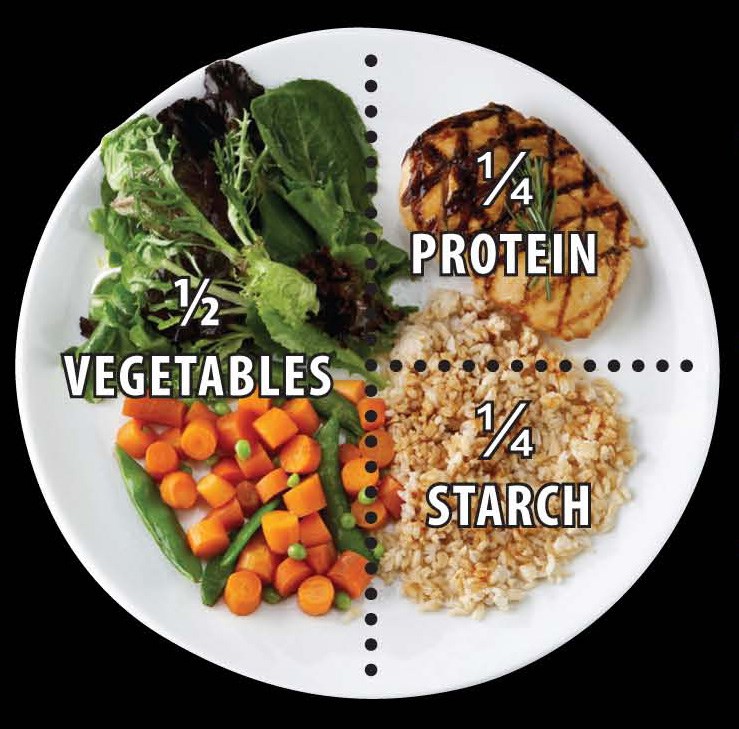
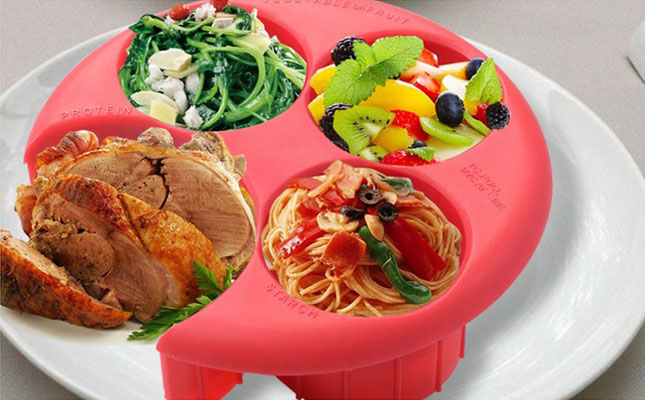
  1. Serve backwards – visualize your plate has 2 compartments. First fill up one half of it with veggies, both raw and cooked, and then serve other half of your plate with a portion of proteins (dal/curd) and carbs (rice/roti) combined. Eating veggies make you feel full, so serving it first on your plate and eating in larger portion quickly drives up the fullness quotient.
  1. Sit Down to eat- even if it is a snack. You are making your meal more organized by sitting down when dining, and this habit will prevent on-the-go munching that you may be unknowingly overdoing.
  • Deep breathe before you start your meal. This works as ‘ringing the bell’ –bringing your attention to your next to-do task, which is feeding yourself. Gently inhale through your nose, filling your chest with air, drawing your shoulder upwards, and exhale through your mouth for a little longer. Now take your first bite or sip.
  • Dine! Don’t multitask- Eating while watching TV or while fiddling with your cell phone will distract you from your meal. And distraction will lead to over consumption. Put away all gadgets while eating and you’ll be surprised that going back to your smart phone after 20 minutes is so refreshing. Plus, the added bonus of having a satisfying meal.
  • Have liquid first – A glass of water or a bowl of healthy soup. Starting your meal with fluids will fill up your belly to prevent over eating. It will irrigate the lining of your digestive tract, making your meals easier to flow down, and, probably quench your thirst, which may be the real reason behind your rumbling belly.
  • Eat slowly – to finish a meal in no less than 20 minutes. You may realize you don’t need the second helping if you eat your meals slowly.
  • Get Smart with leftovers – Because no one is judging how clean your plate is. If you are done with dinner, don’t stuff yourself just so that you don’t have to pack up the remaining food. Wrapping up remaining food is a smart way (as leftovers taste better too!) or downsizing your cooking is another idea to prevent over consumption.
  • Snack from a bowl– and not from a bag or box. You may end up eating 50% more if the snack you are having is hidden from your view. Pour a serving in a bowl and then munch.

portion-control

If you buy a bag of trail mix that reads 10 servings, divide the contents of the bag into 10 smaller bags or label it bold – ‘to be finished in 10 attempts’.

  • Out of sight-out of mouth – Keep tempting treats like chips, cookies, candies, and ice creams out of sight – high up in the kitchen cabinet or in the back line of the pantry shelf. Putting a fruit bowl, dark chocolate, dates, and nuts in the front row and within reach easily gets you to practice snacking.
  • Follow IN/OUT rule – When at home, the rule is to eat nutritious, balanced, and wholesome meals, avoiding all treats (White Sugar/breads/pasta/creamy desserts, and fried foods). When outside treat yourself to your favourite delicacies (but in moderation, lest you slip down the slope). This way you will be able to eat super healthy most of the time, and the occasional indulgences will soothe your soul.

Here are few suggestions to practice portion control outside home

When dining out –

  • Plan Ahead – Right when you start from home, put up a portion in head- “I’ll have only 2 glass of wine today”, “I’ll eat only 1 plate of pasta tonight”. When a plan is there, you only need to work on your determination during the action, so it makes sense to make a quick portion note prior to stepping out.
  • Survey the spread first (or read menu carefully) – By getting a sense of what are the foods available, you avoid heaping on excess of usual offerings because you didn’t realize earlier that the ‘can’t miss items’ were at the end of the line. So make your plate with intention and eat only what you really want to eat.
  • Order to serve your salad or soup first and entrée only after the appetizers are done with. A lot of food on the table and in sight will promote over eating.
  • Split and Share –the entrée with your dining partner. If eating alone, try doubling up your appetizer and skipping the main course altogether.
  • Indulge wisely – If you intend to end your meal with drinks or dessert, eat only half of your capability. Yes, it’s your treat meal! But a firm moderation now will prevent you from guilt trip later.
  • Split and share desserts too – or skip them totally and order yourself an unsweetened coffee/hot beverage to end the meal. Some metabolic push there! Plus you can always have a cube of dark chocolate when you reach home.
  • If Ice cream melts you away – Choose inedible dishes- say a cup over a cone, as your ice cream serving dish. Or if a cone gets you carried away, choose a kiddie, regular or sugar cone, as a waffle cone will increase your portion considerably. Avoid toppings or go for fruit based ones.
  • Tall and slim – Research says drinking from tall and slim glasses will cut down the portion of your drink by 20%, and so does avoiding exotic mixed liquor drinks. It’s that easy!
  • If you are travelling – Avoid heading to a restaurant directly. Instead take a pit stop at a fruit vendor first. A healthy snack before a meal will not spoil it, but help you portion mindfully.

Eating in moderation and compensating with a good round (or extra round) of exercising keeps one in balance. Avoid overeating and practice mindfulness – your ideal weight is just this one healthy habit away!

In my fourth blog, I shall talk about emotional eating. Very often, we find ourselves overeating or better to say indulge in mindless eating such as stress eating. Too happy indulge in over eating, too sad again indulge in over eating to feel good. The blog will take you through some pointers on how to avoid stress eating and satisfy your needs with mindfulness.

To be continued…

#BeTheForce

September 8, 2023 By Anusha Subramanian 2 Comments

“All you want to know about knees and Knee injuries and how to fix it”: Dr Anjana Laungani

Dr Anjana Laungani

Dr. Anjana Laungani

In the last decade or so people have taken to extreme sports like Running (Marathons), Ultra Marathons, Trail Running, Cycling and High Altitude Trekking. But, most are not aware of how to take care of their body or that they should go for a full body assessment to check if all is ok before they start on an extreme activity.

They do not realise that over doing these activities does not help the body in the long run. Many do it because their friends are doing it and many do it because they think this is the only way to prove to people that they are fit, not realising that over doing such extreme sports and doing it without enough knowledge can lead to fatal injuries. One of the worst injuries that people develop is knee injuries.

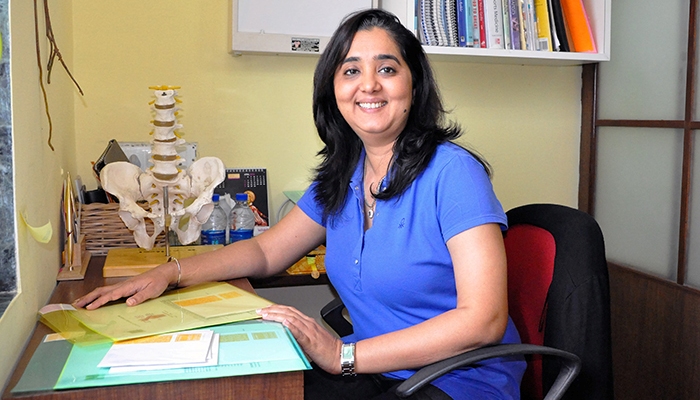
How can one avoid such injuries while training? Let us understand from Dr Anjana Laungani, a renowned physiotherapist from Mumbai who consults celebrities and has her own brand of a clinic – Physio Rehab in Mumbai tell us how people develop knee injuries and what can be done to avoid and treat such injuries.

She explains that the knee is the most common joint in the body that gets injured and one must understand why that happens. It happens because knees are in between the foot, the hip and the back. Knee sorts of gets whacked around because of any problem that might be there in the foot or in the hip or in the back.

“I call the knee the middle child syndrome, you know how in the family we have an elder child, a younger child, and a middle child gets really whacked around by them and bullied. The knee is exactly treated that way,” says Dr. Anjana.

According to her when one looks at knee injury one should also look at the foot, hip and the back. Because these could actually be the cause of the knee problems. When one is participating in extreme sports, you are not just climbing or running or walking only with your knees, the knee works as a team with the foot, the hip, and the back. This is called the Lower quadrant of the body and they have to work in synchrony with each other.

All those with knee injuries should always get themselves assessed entirety looking at how is the foot alignment. For instance, if you are flat footed you will be prone to injuries. If an individual has a hip muscle which is extremely weak especially the gluteus muscle will he develop knee problems, the risk factor is very high if the individual does not have a very good core muscle that gives him the power to run. Then all he would do is jam the weight of his body into his knee. So commonly according to Dr. Anjana only 20% of people have direct knee problems but 80% have knee problems due to other issues.

It is therefore very important to get assessed and looked at by professionals especially a physiotherapist who can do what we call as a lower limb kinetic chain assessment, these evaluations will give you a very good idea on where the problem is coming from. You need to look at foot you need to look at the hip muscles you need to look at the core muscles which could probably give problems to these areas.

Dr. Anjana says it is best when people approach physiotherapist when they do not have an injury and consult for how to avoid injuries rather than go for treatment after getting themselves injured.

Physio rehab is one such clinic where one does not have to go only when in pain. She and her team work with those who wish to improve their fitness so that they can undertake physical challenges like treks, pilgrimages, adventure holidays, overseas travel etc.

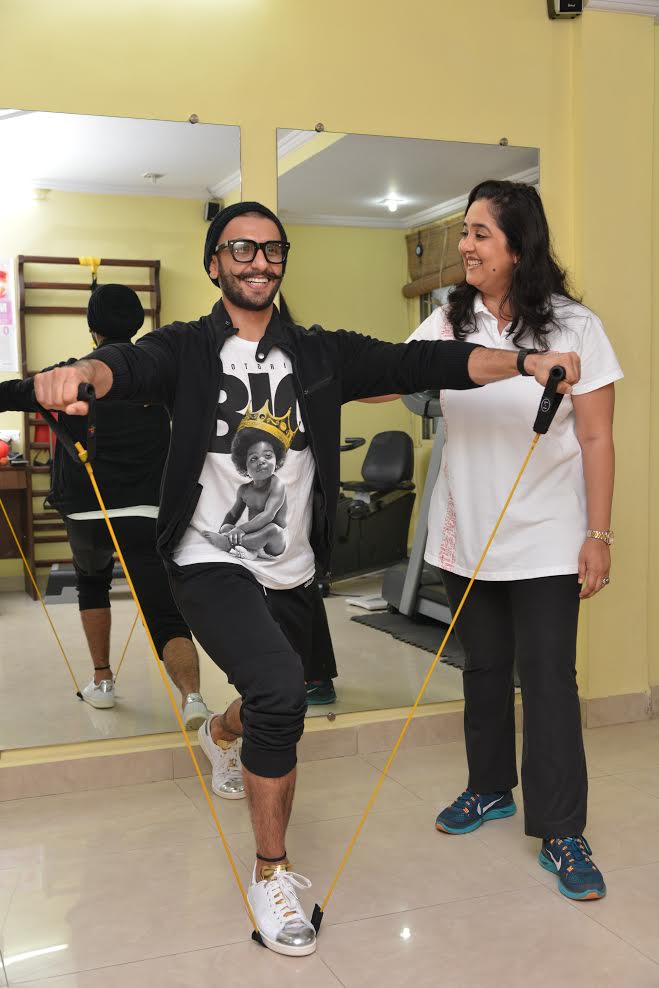
Ranveer Singh with Dr Anjana Laungani at PhysioRehab: Dr Anjana first worked with Ranveer Singh when he had suffered a back injury during the shoot of ‘Lootera’. Thereafter PhysioRehab once again came to his help when he shattered his right shoulder while doing a stunt for ‘Bajirao Mastani’. PhysioRehab helped him come back to fitness and perform all his action shots for the film.

Ranveer Singh with Dr Anjana Laungani at PhysioRehab: Dr Anjana first worked with Ranveer Singh when he had suffered a back injury during the shoot of ‘Lootera’. Thereafter PhysioRehab once again came to his help when he shattered his right shoulder while doing a stunt for ‘Bajirao Mastani’. PhysioRehab helped him come back to fitness and perform all his action shots for the film.

Dr. Anjana has practiced for over 25 years and put together this clinic as a vision to be able to provide quality, scientific physiotherapy services to the community which she thinks was lacking when she started. “I feel that physiotherapy needs to be approached in a more scientific manner, there has to be proper assessment, proper diagnosis and most importantly patient education. I think the patient first needs to understand what is it that is going on with them and actually give them a sense of responsibility,” she concludes.

July 18, 2023 By GOQii 4 Comments

Top 10 Basic Trekking Tips For Beginners

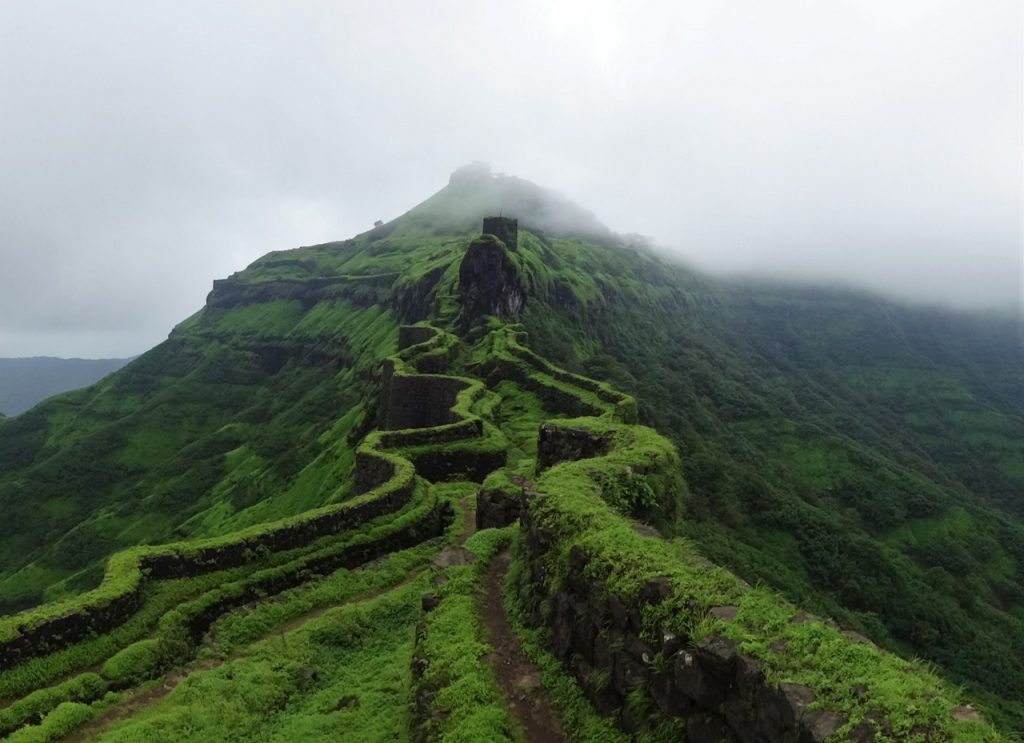
basic trekking tips for beginnersMonsoons = treks! There’s no other way to look at it. Most hiking trails and trekking landscapes light up with luscious greenery during this season. Maybe that’s why avid trekkers and nature lovers venture out to explore spaces when it rains. Now while trekking seems like a fun activity, a few bruises and muscle aches will be the least of your worries if you’re not prepared. So to ensure that you have a good trip to enjoy that beautiful scenery only trekking can bring, here are some basic trekking tips to help you out!
Basic Trekking Tips For Beginners 

1. Walk Straight: Whether you’re climbing up or making your way down, slopes can seem to be a challenge. While surmounting this challenge, make sure that you walk upright and don’t slouch or sit and climb as it can put pressure on your knees which could make the rest of the trek difficult. 

2. Stay Hydrated: When making your way to the great outdoors, make sure you carry at least 2L of water with you. Avoid gulping the water down in one go. Instead, you should sip slowly. Carrying a sipper will help!

3. Carry An Electrolyte Mix: Sweating is only natural when you perform a strenuous activity but when you sweat, you also lose some essential electrolytes. To replenish lost electrolytes, carry some salt and sugar mixed with water. An easier option is to carry Electral or Glucose which you can mix with water. Alternatively, you can also opt for this electrolyte drink available on the GOQii Health Store. You need to be careful that you sip this and do not gulp. Remember to take 2 sips of water for every 1 sip of this energy drink.

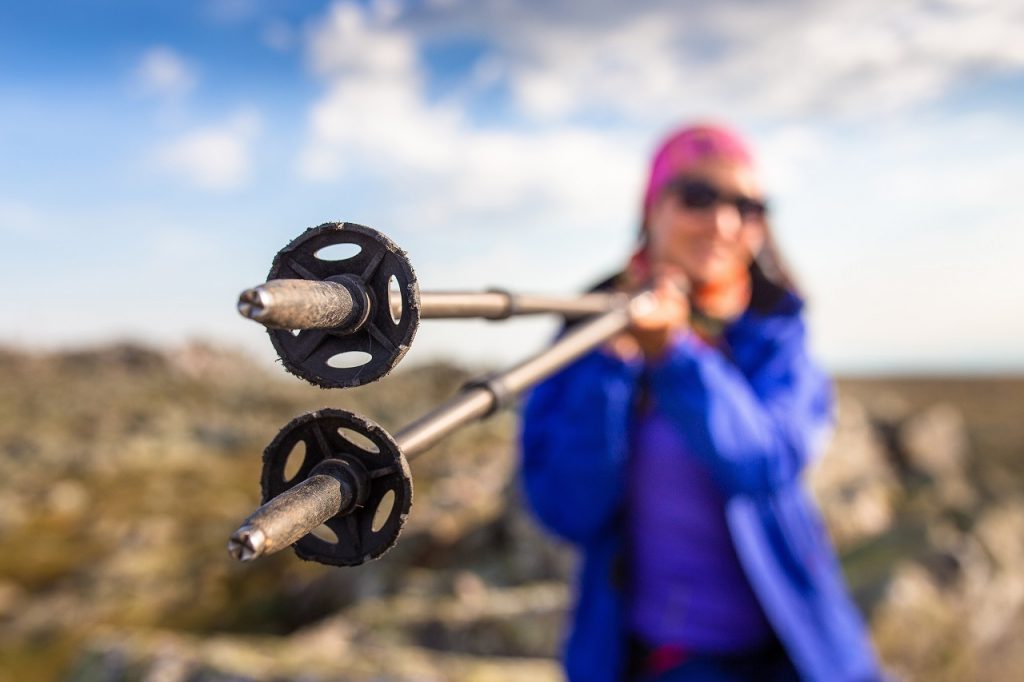
walking poles - trekking tips4. Use Walking Poles: A walking pole can easily become your best friend on a trek. It really takes the pressure off your knees when you’re climbing down and supports you well when you’re going uphill. While it might take some time to get used to it, it’s definitely worth it!
5. Avoid Sitting Immediately: If you’ve been climbing for a while, it’s only natural to take a break. But when you do take a break, avoid sitting down immediately. It may make it difficult for you to get back up. Stand and rest for a while before you make your way again. Be mindful of the number of breaks you take as well as frequent breaks will increase tiredness.

6. Fuel Your Body: Your body needs fuel to keep going. Carrying heavy meals doesn’t make sense as you want to travel light, you can opt to carry some nuts, a nutritious trail mix or a protein bar with you. These will give you the energy to keep going. Eat them in small portions when you take a break.

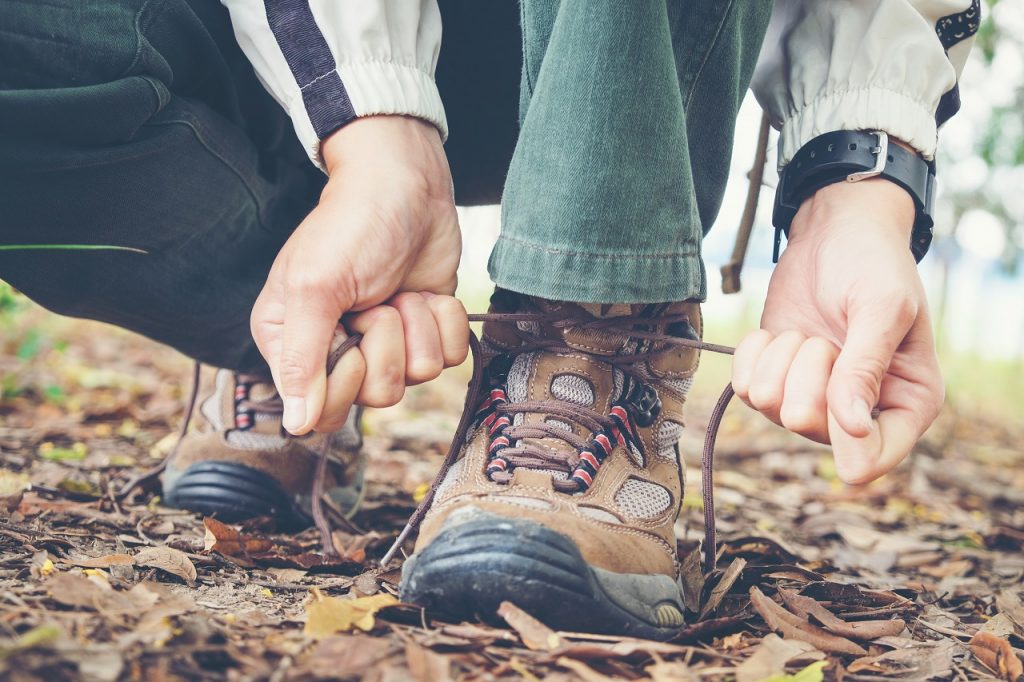
footwear trekking7. Watch Your Footwear: Even if you’re keen on doing just two treks this monsoon, it’s a good idea to invest in a good pair of shoes. Some terrains can be tricky and slippery, especially during monsoons. You need shoes that offer good grip and support you well.



8. Dress Well: A trekking trail might be the worst place you would want to show off your new dress or those awesome, trendy shorts you picked from a fancy outlet. You need to cover up! Wear a Dri Fit, full sleeve shirt and pants that cover your legs. This will protect you from insects, mosquitoes and getting scraped by thorns when you move along a dense trail. You can get some amazing Dri Fit t-shirts and Joggers from the GOQii Health Store!

9. Waterproof Yourself: If you’re planning to carry an umbrella, don’t. During a monsoon trek, leaving your belongings and yourself unprotected from a sudden rain shower would not bode well for you. Try carrying a poncho which will cover most of your body as well as your backpack.

10. Communicate: If you’re with a trekking group or you’re trekking with a group of friends, if at any point you feel uneasy, make it a point to tell your trek leader or organizer. You could put your life in danger if you continue and could ruin the experience for everyone else. It’s best to mitigate issues before they get worse. Remember that communication is key in the outdoors.

Few Things To Bear In Mind Before You Begin 

  • If it is your first time trekking, start walking now! Prepare a little by taking small hikes around your vicinity. Practice on uneven trails instead of footpaths or a park because trek trails won’t be that flat. Additionally, also work on some leg based cardio and try taking the stairs as often as you can. It will help you build some stamina and endurance before your climb.
  • Travel light. Do not carry things you do not need. Fewer the electronics the better. A trek is not a place where you will find any need for a laptop or a tab. Your cellphone, a power bank and a torch, along with other essentials mentioned above will be enough. 
  • Additionally, avoid wearing your earphones when you begin your climb. You might miss out on instruction, a cry for help or any unforeseen circumstance. Keep your eyes and ears wide open and enjoy the natural sounds and vistas you’ll only get in the midst of nature.
  • If you would like to document your adventure, it’s always nice to keep a small notepad with you to jot down your experiences and also to keep a track of the details of the place like how to get there or certain markers which will help you when you visit again. 

We hope these trekking tips help you make the most of your trek! Do let us know your thoughts in the comments below! 

Find more articles on staying healthy and fit during monsoons here. If you need any help to train or build your stamina for a trek, reach out to a GOQii Coach by subscribing for Personalised Health Coaching here.

#BeTheForce 

  • « Previous Page
  • 1
  • …
  • 5
  • 6
  • 7
  • 8
  • 9
  • …
  • 12
  • Next Page »

Search

Recent Posts

  • Best Foods To Alleviate Irritable Bowel Syndrome
  • ALL ABOUT VERTIGO!
  • PCOS and Anxiety: Discover Relief with the 54321 Technique
  • Navigating the Maze of Nutrition: Finding Clarity Amidst Confusion
  • Get children active and keep them healthy

Stay Updated

Archives

  • December 2025 (6)
  • November 2025 (15)
  • October 2025 (20)
  • September 2025 (6)
  • August 2025 (6)
  • July 2025 (12)
  • June 2025 (18)
  • May 2025 (16)
  • April 2025 (23)
  • March 2025 (23)
  • February 2025 (22)
  • January 2025 (26)
  • December 2024 (26)
  • November 2024 (25)
  • October 2024 (22)
  • September 2024 (24)
  • August 2024 (31)
  • July 2024 (21)
  • June 2024 (26)
  • May 2024 (31)
  • April 2024 (27)
  • March 2024 (29)
  • February 2024 (26)
  • January 2024 (25)
  • December 2023 (15)
  • November 2023 (11)
  • October 2023 (20)
  • September 2023 (22)
  • August 2023 (20)
  • July 2023 (22)
  • June 2023 (24)
  • May 2023 (24)
  • April 2023 (24)
  • March 2023 (23)
  • February 2023 (20)
  • January 2023 (16)
  • December 2022 (12)
  • November 2022 (15)
  • October 2022 (15)
  • September 2022 (12)
  • August 2022 (10)
  • July 2022 (17)
  • June 2022 (11)
  • May 2022 (10)
  • April 2022 (6)
  • March 2022 (6)
  • February 2022 (13)
  • January 2022 (12)
  • December 2021 (7)
  • November 2021 (3)
  • October 2021 (6)
  • September 2021 (3)
  • August 2021 (8)
  • July 2021 (7)
  • June 2021 (15)
  • May 2021 (16)
  • April 2021 (10)
  • March 2021 (7)
  • February 2021 (4)
  • January 2021 (4)
  • December 2020 (3)
  • November 2020 (4)
  • October 2020 (10)
  • September 2020 (3)
  • August 2020 (3)
  • July 2020 (2)
  • June 2020 (4)
  • May 2020 (10)
  • April 2020 (12)
  • March 2020 (10)
  • February 2020 (4)
  • January 2020 (4)
  • December 2019 (3)
  • November 2019 (7)
  • October 2019 (5)
  • September 2019 (4)
  • August 2019 (9)
  • July 2019 (9)
  • June 2019 (11)
  • May 2019 (4)
  • April 2019 (9)
  • March 2019 (8)
  • February 2019 (9)
  • January 2019 (8)
  • December 2018 (9)
  • November 2018 (3)
  • October 2018 (3)
  • September 2018 (5)
  • August 2018 (10)
  • July 2018 (6)
  • June 2018 (13)
  • May 2018 (8)
  • April 2018 (18)
  • March 2018 (9)
  • February 2018 (8)
  • January 2018 (15)
  • December 2017 (12)
  • November 2017 (19)
  • October 2017 (13)
  • September 2017 (15)
  • August 2017 (4)
  • July 2017 (8)
  • June 2017 (7)
  • May 2017 (6)
  • April 2017 (8)
  • March 2017 (6)
  • February 2017 (7)
  • January 2017 (9)
  • December 2016 (10)
  • November 2016 (7)
  • October 2016 (7)
  • September 2016 (7)
  • August 2016 (11)
  • July 2016 (9)
  • June 2016 (9)
  • May 2016 (12)
  • April 2016 (17)
  • March 2016 (17)
  • February 2016 (8)
  • January 2016 (6)
  • December 2015 (2)
  • November 2015 (9)
  • October 2015 (7)
  • September 2015 (9)
  • August 2015 (11)
  • July 2015 (9)
  • June 2015 (12)
  • May 2015 (9)
  • April 2015 (13)
  • March 2015 (8)
  • February 2015 (5)
  • January 2015 (12)
  • December 2014 (14)
  • November 2014 (11)
  • October 2014 (6)
  • September 2014 (13)
  • August 2014 (12)
  • July 2014 (6)
  • June 2014 (2)
  • May 2014 (7)
  • April 2014 (5)

From “Laddu Nawin” to Fit and Fierce: How a 25-Year-Old Insurance Advisor Shed 20 Kilos and Gained His Life Back

When 25-year-old Nawin Yadav from Hyderabad walked into his office every morning, he carried more than just his files and policy papers. He had the weight of fatigue, sluggish energy, and an ever-growing belly that was becoming the butt of jokes. “People … [Read More...]

“I’ve Challenged Myself to Live 100 Years” – The Story of Chandubhai Savani’s Second Chance at Life

At 67, most people start slowing down. Not Chandubhai Savani. A resident of Surat, Chandubhai, thought life was on track. “My life was going well till I had my bypass surgery,” he says. That surgery, back in 2021, was a wake-up call.  Medication was routine, but exercise wasn’t. His diet? What he calls ‘normal.’ “I […]

From Shimla’s Slopes to Chandigarh’s Sidewalks: Surinder Kaur Bhalla’s Journey from Chaos to Control

Some journeys start with a plan. Others begin with a stumble literally. Surinder Bhalla, a government professional, born and raised in the scenic hill town of Shimla, had always lived a life of movement. “In Shimla, you walked everywhere,” she reflects. “Walking was never an exercise. It was just life.” But after shifting to Chandigarh, […]

Ananda Mukherjee Health Story

From Terminal Illness To Complete Wellness! Ananda Mukherjee Health Story

As we observe World Cancer Day under the powerful theme ‘United by Unique’ (2025-2027)**, we are reminded that every individual’s journey with cancer is distinct, yet united by shared resilience, hope, and the collective fight against this disease. This theme places people at the centre of care and their stories at the heart of the […]

  • HOME
  • HEALTHY LIVING
  • FITNESS
  • HEALTHY RECIPES
  • USER STORIES
  • KARMA
  • BUY GOQii

Copyright ©2016 GOQii