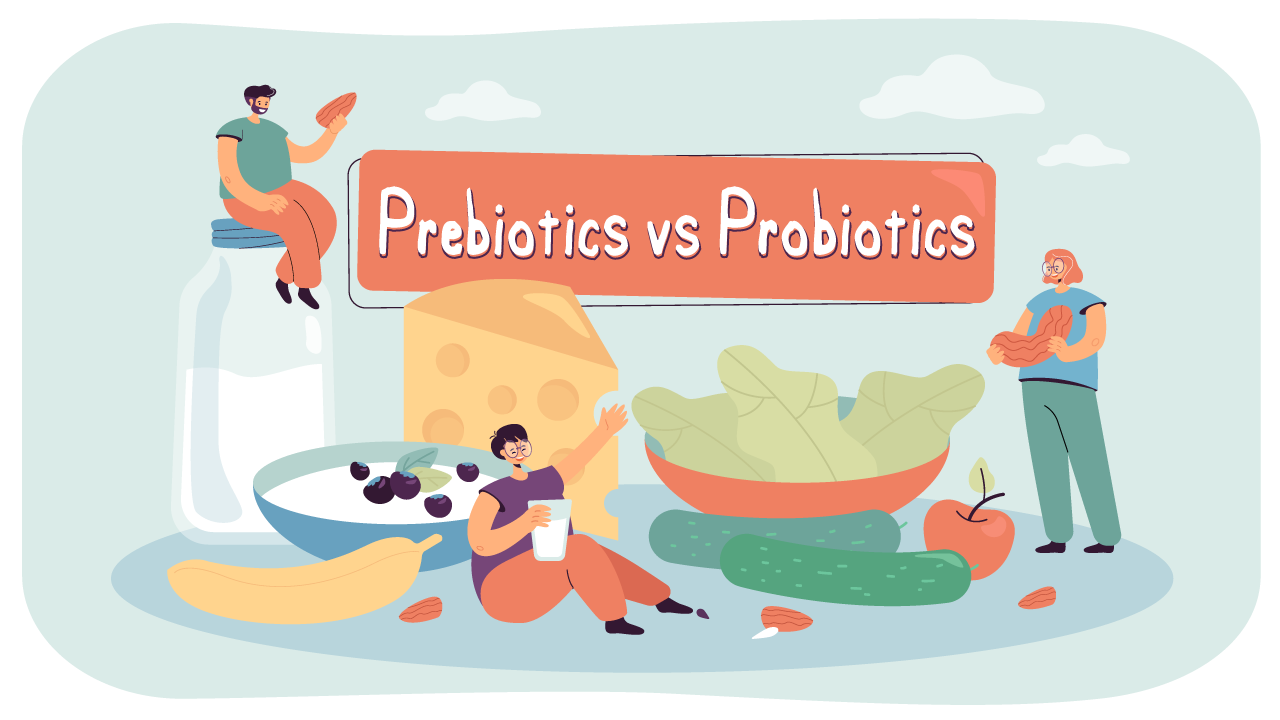
You may have heard of prebiotics and probiotics, but do you know the difference between the two? While they sound similar, prebiotics and probiotics have different roles in promoting gut health. In this article, we’ll break down the key differences between prebiotics and probiotics, and how they work together to support your digestive system.
What Are Prebiotics?
Prebiotics are a type of dietary fiber that the human body can’t digest. Instead, they serve as food for the beneficial bacteria that live in your gut, helping to promote the growth and activity of these microbes. When prebiotics are fermented by the bacteria in your gut, they produce short-chain fatty acids (SCFAs), which are important for maintaining gut health and supporting immune function.
Some examples of common prebiotics include inulin, fructooligosaccharides (FOS), and galactooligosaccharides (GOS). These are found in a variety of foods such as bananas, onions, garlic, asparagus, artichokes, whole grains, and legumes. Prebiotics are often used in conjunction with probiotics to promote a healthy balance of gut bacteria.
What Are Probiotics?
Probiotics are live bacteria and yeasts that are beneficial to your gut health. These microbes can be found in certain foods or supplements, and are also naturally present in your gut. Probiotics help to promote the growth and activity of beneficial bacteria in your gut, while also inhibiting the growth of harmful bacteria.
Some examples of common probiotics include Lactobacillus acidophilus, Bifidobacterium Lactis, and Saccharomyces Boulardii. Probiotics are often added to foods such as yogurt, kefir, and fermented vegetables, or can be taken in supplement form.
How Do Prebiotics and Probiotics Work Together?
Prebiotics and Probiotics work together to promote a healthy gut microbiome. Prebiotics provide the food that Probiotics need to thrive and multiply, while Probiotics help to balance the ratio of beneficial and harmful bacteria in your gut. By consuming both Prebiotics and Probiotics, you can support the growth of beneficial bacteria, improve digestion, and enhance immune function.
It’s worth noting that not all Probiotics and Prebiotics are created equal. Different strains of Probiotics and types of Prebiotics can have different effects on the gut microbiome, so it’s important to choose high-quality supplements such as these to improve your gut constitution.
If this article helped you, let us know your thoughts in the comments below! You can find more articles on nutrition and improving gut health here.
You can also get this information and a lot more directly from a GOQii Coach by subscribing for Personalised Health Coaching here.
#BeTheForce
 Is sugar and child behavior connected? Before we delve into that, we need to understand that a perfect balanced diet of carbs, proteins, essential fats, vitamins and minerals is important during the growing age of the child. It is an ongoing research on whether food intake is really linked to a child’s behavior and mood. Below are the effects of healthy and unhealthy eating habits on the mood and behavior of a child.
 If you’ve been looking at motivational posters on social media or your local gyms which have “go hard or go home” or “work until your muscles hurt” or “no gain without pain” or something to the effect of relating success to extreme weight training, then you’ve clearly been looking at the wrong posters. We come over so many cases where users claim that they’ve been at it in the gym for so long without ever achieving their desired result. In order to help you avoid the same fate, we’re sharing this article on muscle building mistakes!
 Amla, Amalaki or Indian Gooseberry is one of the most important part of many Ayurvedic medicines. It is a powerhouse of not just antioxidants and vitamin c, but also a good source of calcium, iron, phosphorus, carotene, vitamin B and fiber. Available for consumption in various forms like churna, juice, candies, pickles and supplements, benefits of this superfood are innumerable.


