GOQii

Blog

  • HOME
  • HEALTHY LIVING
  • FITNESS
  • HEALTHY RECIPES
  • USER STORIES
  • KARMA
  • BUY GOQii

Search Results for: sleep

July 30, 2025 By GOQii Leave a Comment

Be Sugar Smart: A Simple Shift That Changes Everything

Go Sugar-Free for a Month. Come Back Smarter. It’s not about quitting forever, it’s about learning what your body needs, when it needs it.

You don’t need a crisis to start taking care of your health. Sometimes, all it takes is one small decision, like cutting down the sugar in your chai.

If you’re tired of the energy crashes, the unexplained weight gain, or feeling like you’re always chasing your next meal, chances are sugar has more to do with it than you think.

The GOQii Sugar Smart Challenge, running from 1st to 30th August, is built around one simple idea that small, consistent actions can help you reclaim control of your health without giving up everything you love. And it starts with awareness.

It’s important to know what being Sugar Smart means.

Truth be told, everyone is well aware how sugar has quietly crept into our daily routine, not just in the obvious sweets, but in flavoured yoghurts, breakfast cereals, packaged juices, energy bars, and yes, that chai you can’t live without. We don’t even register it anymore.

Being sugar smart isn’t only about cutting sugar out completely. It’s about learning:

  • Where it hides
  • How it affects your blood sugar and insulin
  • And what you can do instead, without feeling deprived

Especially if you’re managing diabetes, dealing with insulin resistance, or struggling with weight loss, these shifts matter.

Be Sugar Smart: Keep it Simple

To be sugar smart, just turn good intentions into daily actions, through simple tasks that take minutes a day and build real habits over time.

From August 1st to 30th, participate in the challenge and complete sugar-smart activities and also get rewarded

Here are the daily activities you can indulge in and derive benefits from them 

  • Walk 6000+ Steps
    • Lowers blood sugar by helping your body use glucose more effectively.
    • Boosts insulin sensitivity, reducing the risk of insulin resistance.
    • Supports heart health and weight management with minimal effort.
    • Easy to fit into your day: short walks after meals or during breaks add up.
  • Post-Meal Walks
    • Walking after meals helps lower blood sugar by using glucose for energy before it spikes.
    • A 20-minute walk after lunch or dinner is especially helpful for those with insulin resistance or prediabetes.
    • Timing matters: Start your walk within 30 minutes of finishing your meal for best results.
    • Leads to steadier energy levels and fewer post-meal crashes or cravings.
  • Eat an Early Breakfast before 9 am
    • Helps kickstart your metabolism and supports steady energy throughout the day.
    • A balanced breakfast stabilises blood sugar and curbs overeating later.
    • Aim to eat within 30 minutes of waking to prevent energy dips and cravings.
    • Choose whole grains, protein, and healthy fats over sugary or processed options.
  • Eat Healthy and log your food
    • Food logging increases awareness of what, when, and how much you’re eating, especially sugar intake.
    • Tracking meals at least three times a day helps you stay mindful of portion sizes and added sugars.
    • Identifying eating patterns can highlight triggers for cravings or blood sugar spikes.
    • This insight empowers better choices, making it easier to cut down on sugar and build healthier habits.
  • Watch and Learn
    • Get expert insights by watching videos on managing diabetes, nutrition, fitness, and lifestyle habits.
    • Learn at your pace with short, practical videos that fit easily into your day.
    • Strengthen your knowledge about sugar control, insulin resistance, and healthy living.
    • Stay motivated by watching real coaches share tips, strategies, and science-backed guidance.
  • Practice Mindfulness
    • Just 10 minutes a day can reduce stress, improve sleep, and boost emotional resilience.
    • Lower stress means lower cortisol, which helps stabilise blood sugar levels.
    • Meditation supports overall health and can help prevent chronic conditions linked to stress.
    • Simple practices like mindful breathing in a quiet space can make a noticeable difference.
  • No Sugar Habit
    • Identify your sugar triggers, such as post-meal cravings, stress, or specific times of day.
    • Swap sugary snacks with healthier alternatives like fruits, nuts, or yoghurt.
    • Manage stress in healthier ways through exercise, meditation, or outdoor time.
    • Cut back gradually to let your taste buds adjust and reduce cravings over time.

It takes 21 days to change a habit. With the Sugar Smart Challenge, over 30 days, you’ll build habits that stick, not because they’re forced, but because they fit into your life.

Why Sugar Smart Habits Matter

Here’s what the research tells us:

  • Over 101 million Indians live with diabetes.
  • Another 25 million are pre-diabetic.
  • NFHS-5 reports that 1 in 4 Indian adults is overweight or obese.

High sugar intake, even in “healthy” forms, plays a major role in rising insulin resistance, PCOS, weight gain, and fatigue. But the good news? It’s reversible.

You don’t need extreme diets. You don’t need to give up all your favourites. You just need to know when, how much, and why.

You don’t have to be perfect to feel better. You just need to start noticing. One less sugar-laden drink. One balanced plate. One decision is not to eat on autopilot. Over time, these small wins become your new normal.

Being Sugar Smart is your chance to put knowledge into action and be rewarded for it. Speak to your coach, join the challenge by visiting the Challenge Page on the GOQii app, track your progress, and learn how to live a life where sugar doesn’t control you.

Your body’s not broken. It just needs a little less sugar and a little more support.

Let’s get smart about it.

#BeTheForce

Disclaimer: The information provided in this blog is for general awareness and educational purposes only. It is not intended to replace professional medical advice, diagnosis, or treatment. Always consult a qualified healthcare provider for personalised medical guidance or concerns related to your health. Images shown are for representation purposes only and may not depict the exact recommendations or outcomes.
July 26, 2025 By GOQii Leave a Comment

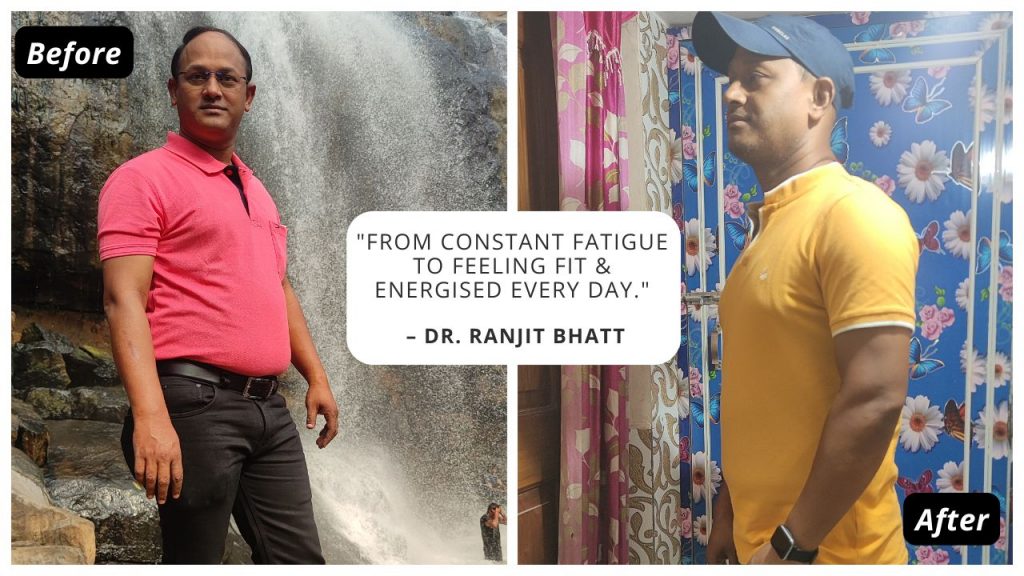
From Burnout to Balance: How Dr. Ranjit Reclaimed His Health

Dr Ranjit Bhatt has spent years tending to others. A practising doctor in Odisha, his days were packed with patients, surgeries, and emergencies. From the outside, it looked like a life lived in service. But on the inside, something wasn’t right.


“I had no control over my schedule. I’d sleep late, eat at odd hours, snack on high-calorie junk, and barely get any movement except walking up and down the hospital corridors,” he recalls.

The work never stopped. But his body did. At first, it was just fatigue. Then one day, he fainted in the operating theatre. “Not once. Twice, actually. Inside the operating theatre. That moment scared me. It made me stop and ask myself, ‘If I collapse, who’s going to help my patients?’ That thought haunted me.”

That was the turning point. Life had been trying to send him signals. Now it had finally yelled loud enough for him to listen.

A Drawer. A Watch. A Turning Point.

Around the same time in 2019, a Pharma company rep who had visited him gave him a GOQii watch. At first, it sat in a drawer. For six to 8 months, he didn’t use it. “I thought it was just another gadget. I didn’t think it would fit into my routine, or even help, to be honest,” he says with a shrug.

But curiosity eventually won. And, he decided to try it. He wore the band, downloaded the app, and started exploring. To his surprise, it wasn’t just a step counter. It helped him log his meals, track his water intake, monitor his sleep, and reflect on his daily habits. “Suddenly, I had a dashboard of my life,” he says. “I saw how little I moved, how poorly I slept.

All this while, he did not use the coach service. “I was losing weight, but I did not take note of my diet and exercise. I was not sure how to interpret the data that was on my app. I was still missing one piece, human guidance.” Bhatt says.

This is when he activated the code and availed of the coach service since 2021. “At first, I just posted what I ate. But when I started with the coach service, my coach responded to every post. She started giving me small tips. No lectures. Just practical nudges,” he says.

The Power of Coaching

The coach started with his diet. She brought about minor changes by cutting down on processed carbs, added more fibre, and encouraged him to eat at consistent times. These changes help him reduce bloating and improve his digestion. Then came the movement. Nothing fancy. Just walking for 30 minutes a day.

“It sounds simple, right? But when someone walks that journey with you, holds you accountable, and celebrates small wins, that’s when things change.”

And change they did. Over time, he dropped from 82 kilos to 68. His waist trimmed down from 34 inches to 30. His lipid profile tells the same story. Back in September 2023, his total cholesterol was sitting at 228. Today, it’s down to 189. His LDL has fallen from 151 to 131, and his triglycerides have dropped from 160 to 129.

These changes aren’t just numbers. His GOQii Health Risk Assessment score climbed from 75 to 86. His skin started glowing, his energy levels soared, and that constant fatigue? Gone.

“I sleep well now. I wake up with clarity. I no longer crash during the day. Even my patients have noticed me. Some even ask me what I’m doing differently.”

His family sees it too. His friends joke that he looks like he’s turned the clock back.

“Some of them say I look 16,” he laughs. “I tell them, if I can do it, anyone can. You just need to start.”

More Than a Transformation

Now, after seven consistent years with GOQii, Dr Ranjit isn’t just healthier, he’s a different man altogether. One who understands the value of self-care not as an indulgence, but as a responsibility.

“As doctors, we often put ourselves last. But we forget, we are the instrument. If we don’t keep ourselves sharp and well, how can we help others?”

This is more than a fitness transformation. It’s a reminder that change doesn’t always come from grand resolutions. Sometimes, it begins with listening to your own body. Sometimes, it’s as simple as saying yes to something you once ignored.

And sometimes, like in Dr Ranjit’s case, it’s a quiet moment of collapse that forces you to stand up again, this time, stronger and more mindful than ever.

Does the journey of Dr Ranjit Bhatt inspire you to begin yours? Speak to a GOQii Coach by subscribing to Personalised Health Coaching here.

For more inspiring stories, check out Healthy Reads.

#BeTheForce 

Disclaimer: The information provided in this blog is for general awareness and educational purposes only. It is not intended to replace professional medical advice, diagnosis, or treatment. Always consult a qualified healthcare provider for personalised medical guidance or concerns related to your health. Images shown are for representation purposes only and may not depict the exact recommendations or outcomes.

July 23, 2025 By Farida Gohil Leave a Comment

Late Lunching can slow Weight Loss…

Late Lunching can slow Weight Loss…
A new study suggests that if you’re trying to lose weight, it’s not just about how many calories you consume but also when you consume them. If lunch is your biggest meal of the day and you tend to eat it later, you may lose weight more slowly and lose less of it overall.

In other words, the later you eat your main meal, the harder it is to lose weight. This is the conclusion reached by researchers from Brigham and Women’s Hospital (BWH) and Tufts University in Boston (US), and the University of Murcia in Spain. Their findings were published in the International Journal of Obesity.

Frank Scheer, senior author of the study and Director of the Medical Chronobiology Program at BWH, stated:

“This is the first large-scale prospective study to demonstrate that the timing of meals predicts weight-loss effectiveness.”

He added:

“Our results indicate that late eaters displayed a slower weight-loss rate and lost significantly less weight than early eaters suggesting that the timing of large meals could be an important factor in a weight-loss programme.”

Why This Study Matters

While there is significant evidence from animal studies linking meal timing to weight regulation, there has been limited data in humans. That’s what made this study so compelling.

The researchers analysed data from 420 overweight individuals enrolled in a 20-week weight-loss programme in Murcia, Spain. Here, lunch is typically the main meal of the day, accounting for about 40% of total daily calorie intake.

Participants had an average age of 42, and the group was evenly split between men and women. About half were “early eaters” (lunch before 3 PM) and half were “late eaters” (lunch after 3 PM).

Key Findings

  • Early eaters lost significantly more weight than late eaters.
  • Late eaters experienced a slower rate of weight loss and showed lower insulin sensitivity a known risk factor for type 2 diabetes.
  • These differences were not explained by:
    • Total calorie intake
    • Energy expenditure
    • Appetite-regulating hormones (leptin and ghrelin)
    • Sleep duration
    • Presence of the “clock gene” (linked to weight management difficulty)

Interestingly, while breakfast and dinner timings made little difference, the study found that:

  • Late eaters tended to be “evening types”
  • They ate smaller breakfasts
  • They were more likely to skip breakfast altogether

What This Means for You

According to lead author Marta Garaulet, Professor of Physiology at the University of Murcia:

“Timing of food intake may play a significant role in humans. Weight-loss programmes should consider not only calorie intake and macronutrient distribution, but also the timing of food.”

This study focused on a Mediterranean-style diet where lunch is the main meal. In countries like the UK or US where snacking contributes up to 25% of daily calories applying these findings directly may be more complex.

If you’re struggling to lose weight, consider when you’re eating, not just what or how much. Eating your main meal earlier in the day could improve your metabolic health and help you shed kilos more effectively.

Want to learn more about nutrition and fat loss? Browse Healthy Reads. Or get personalised guidance from a GOQii Coach by subscribing here.

#BeTheForce 

Disclaimer: The information provided in this blog is for general awareness and educational purposes only. It is not intended to replace professional medical advice, diagnosis, or treatment. Always consult a qualified healthcare provider for personalised medical guidance or concerns related to your health. Images shown are for representation purposes only and may not depict the exact recommendations or outcomes.

July 17, 2025 By Hardika Vira Leave a Comment

More Common Reasons For Not Losing Belly Fat

More Common Reasons For Not Losing Belly FatIn a previous article, we looked at some common mistakes people make when trying to lose belly fat. Here, we’ll explore some more reasons which can make it difficult for an individual to lose that stubborn fat. As mentioned before, losing belly fat that has built up over the years is no easy feat, and certain habits can make the journey even more challenging. Let’s look at them!

Reasons Why You’re Not Losing Belly Fat 

  1. Lack of Sleep: Sleep deprivation or disturbed sleep not only adds to physical and mental stress but also affects your food choices. For instance, you might end up reaching for junk food or simple carbs when you are unable to sleep well. Crucial processes for fat loss, muscle growth and recovery actually happen while you’re in a deep sleep. Now you can likely relate to why people with high-stress levels tend to gain weight over time, even when their portions are controlled. Aiming for 7-9 hours of quality sleep per night is very important.
  2. Extreme Calorie Restriction or Starvation: In my practice as a dietitian, I have come across many people who starve themselves to lose weight, especially belly fat. This is one of the worst things you can do to your body. When your body finally gets food after a long period of restriction, its first instinct is to store as many calories as possible in the form of fat, conserving energy instead of burning it. Eating small, frequent meals and avoiding long periods without food can help keep your metabolism active.
  3. Consuming Fruits at Night or Directly After Meals: Most people think that eating fruit at night is healthy and light on the stomach. However, fruits are a source of natural sugars (carbohydrates) that provide energy. At night, our bodies are typically less active and our metabolism naturally slows down. Thus, unused calories are more likely to get stored as fat. Similarly, having fruit immediately after a main meal increases the overall carbohydrate load of that meal and any excess carbs can be converted into fat. It’s better to enjoy fruit as a mid-meal snack, ideally before the evening, or as a great way to start your day and kick-start your metabolism.
  4. Sweets/Desserts Straight After Meals: Sweets such as ice cream, pudding, cake or chocolates are laden with sugar. Eating them right after a meal is a bad idea, as it can contribute to more fat deposition. That doesn’t mean you should not enjoy sweets and desserts. You can enjoy them as a mid-meal snack. If you can, it’s even better to enjoy these treats during the first half of the day. If you are a person who cannot do without a sweet treat after meals, opt for a small square of dark chocolate (over 70% cocoa) or other naturally sweetened options like a date or a small nut-and-seed bar.
  5. Dehydration: Consuming too little water or having an increased intake of diuretics like coffee, some teas and fizzy drinks can contribute to dehydration. In a state of dehydration, your cells and organs cannot function at their optimal level, and your metabolism can slow down. This results in the body using less energy and unused calories are more likely to be converted into fat, often stored around the midsection. When you drink less water, toxins are not flushed out of the system efficiently, which can affect organ function and further reduce your body’s metabolic rate. Aim to drink at least 2.5–3 litres (around 85–100 fl oz) of water daily. Choosing hydrating fluids like lemon water, vegetable juices, buttermilk and coconut water over sugary, caffeinated drinks will help you hydrate and rejuvenate your cells.

While you might be making these common mistakes without realising their impact, you now have a better idea of what needs to be done! By making these small changes to your lifestyle, you can make a significant difference and work towards your health goals.

We hope this article helps you on your journey to losing belly fat and maintaining healthy weight. Let us know your thoughts in the comments below!

For more articles on weight loss, check out Healthy Reads or get the right advice, tailored to your goals, from an expert, by subscribing for GOQii’s Personalised Health Coaching here.

#BeTheForce

Disclaimer: The information provided in this blog is for general awareness and educational purposes only. It is not intended to replace professional medical advice, diagnosis, or treatment. Always consult a qualified healthcare provider for personalised medical guidance or concerns related to your health. Images shown are for representation purposes only and may not depict the exact recommendations or outcomes.

  • « Previous Page
  • 1
  • …
  • 13
  • 14
  • 15
  • 16
  • 17
  • …
  • 132
  • Next Page »

Search

Recent Posts

  • 4 Reasons Why Affirmations Are Not Working For You
  • The Social Side of GLP-1: Navigating “Food Culture” and Peer Pressure
  • Leaky Gut: Symptoms and Causes
  • Muscle Is Your Insurance Policy: Why Strength Predicts Lifespan More Than Cardio
  • The Fiber Gap: Managing Digestion on GLP-1 Therapy

Stay Updated

Archives

  • March 2026 (1)
  • February 2026 (14)
  • January 2026 (14)
  • December 2025 (19)
  • November 2025 (15)
  • October 2025 (20)
  • September 2025 (6)
  • August 2025 (6)
  • July 2025 (12)
  • June 2025 (18)
  • May 2025 (16)
  • April 2025 (22)
  • March 2025 (23)
  • February 2025 (22)
  • January 2025 (25)
  • December 2024 (22)
  • November 2024 (23)
  • October 2024 (21)
  • September 2024 (24)
  • August 2024 (30)
  • July 2024 (21)
  • June 2024 (26)
  • May 2024 (31)
  • April 2024 (27)
  • March 2024 (29)
  • February 2024 (25)
  • January 2024 (21)
  • December 2023 (15)
  • November 2023 (11)
  • October 2023 (19)
  • September 2023 (22)
  • August 2023 (18)
  • July 2023 (22)
  • June 2023 (24)
  • May 2023 (24)
  • April 2023 (23)
  • March 2023 (23)
  • February 2023 (19)
  • January 2023 (15)
  • December 2022 (11)
  • November 2022 (15)
  • October 2022 (15)
  • September 2022 (12)
  • August 2022 (10)
  • July 2022 (17)
  • June 2022 (11)
  • May 2022 (10)
  • April 2022 (6)
  • March 2022 (6)
  • February 2022 (13)
  • January 2022 (11)
  • December 2021 (7)
  • November 2021 (3)
  • October 2021 (6)
  • September 2021 (3)
  • August 2021 (8)
  • July 2021 (7)
  • June 2021 (15)
  • May 2021 (16)
  • April 2021 (10)
  • March 2021 (7)
  • February 2021 (4)
  • January 2021 (4)
  • December 2020 (3)
  • November 2020 (4)
  • October 2020 (10)
  • September 2020 (3)
  • August 2020 (3)
  • July 2020 (2)
  • June 2020 (4)
  • May 2020 (10)
  • April 2020 (12)
  • March 2020 (10)
  • February 2020 (4)
  • January 2020 (4)
  • December 2019 (3)
  • November 2019 (7)
  • October 2019 (5)
  • September 2019 (4)
  • August 2019 (9)
  • July 2019 (9)
  • June 2019 (11)
  • May 2019 (4)
  • April 2019 (8)
  • March 2019 (8)
  • February 2019 (9)
  • January 2019 (8)
  • December 2018 (9)
  • November 2018 (3)
  • October 2018 (3)
  • September 2018 (5)
  • August 2018 (10)
  • July 2018 (6)
  • June 2018 (13)
  • May 2018 (8)
  • April 2018 (18)
  • March 2018 (9)
  • February 2018 (8)
  • January 2018 (15)
  • December 2017 (12)
  • November 2017 (19)
  • October 2017 (13)
  • September 2017 (15)
  • August 2017 (4)
  • July 2017 (8)
  • June 2017 (7)
  • May 2017 (6)
  • April 2017 (8)
  • March 2017 (6)
  • February 2017 (7)
  • January 2017 (9)
  • December 2016 (10)
  • November 2016 (7)
  • October 2016 (7)
  • September 2016 (7)
  • August 2016 (11)
  • July 2016 (9)
  • June 2016 (9)
  • May 2016 (12)
  • April 2016 (17)
  • March 2016 (17)
  • February 2016 (8)
  • January 2016 (6)
  • December 2015 (2)
  • November 2015 (9)
  • October 2015 (7)
  • September 2015 (9)
  • August 2015 (11)
  • July 2015 (9)
  • June 2015 (12)
  • May 2015 (9)
  • April 2015 (13)
  • March 2015 (8)
  • February 2015 (5)
  • January 2015 (12)
  • December 2014 (14)
  • November 2014 (11)
  • October 2014 (6)
  • September 2014 (13)
  • August 2014 (12)
  • July 2014 (6)
  • June 2014 (2)
  • May 2014 (7)
  • April 2014 (5)

From “Laddu Nawin” to Fit and Fierce: How a 25-Year-Old Insurance Advisor Shed 20 Kilos and Gained His Life Back

When 25-year-old Nawin Yadav from Hyderabad walked into his office every morning, he carried more than just his files and policy papers. He had the weight of fatigue, sluggish energy, and an ever-growing belly that was becoming the butt of jokes. “People … [Read More...]

“I’ve Challenged Myself to Live 100 Years” – The Story of Chandubhai Savani’s Second Chance at Life

At 67, most people start slowing down. Not Chandubhai Savani. A resident of Surat, Chandubhai, thought life was on track. “My life was going well till I had my bypass surgery,” he says. That surgery, back in 2021, was a wake-up call.  Medication was routine, but exercise wasn’t. His diet? What he calls ‘normal.’ “I […]

From Shimla’s Slopes to Chandigarh’s Sidewalks: Surinder Kaur Bhalla’s Journey from Chaos to Control

Some journeys start with a plan. Others begin with a stumble literally. Surinder Bhalla, a government professional, born and raised in the scenic hill town of Shimla, had always lived a life of movement. “In Shimla, you walked everywhere,” she reflects. “Walking was never an exercise. It was just life.” But after shifting to Chandigarh, […]

Ananda Mukherjee Health Story

From Terminal Illness To Complete Wellness! Ananda Mukherjee Health Story

As we observe World Cancer Day under the powerful theme ‘United by Unique’ (2025-2027)**, we are reminded that every individual’s journey with cancer is distinct, yet united by shared resilience, hope, and the collective fight against this disease. This theme places people at the centre of care and their stories at the heart of the […]

  • HOME
  • HEALTHY LIVING
  • FITNESS
  • HEALTHY RECIPES
  • USER STORIES
  • KARMA
  • BUY GOQii

Copyright ©2016 GOQii


