GOQii

Blog

  • HOME
  • HEALTHY LIVING
  • FITNESS
  • HEALTHY RECIPES
  • USER STORIES
  • KARMA
  • BUY GOQii

Search Results for: running

January 28, 2024 By Ranveer Allahbadia 3 Comments

Kickstart Your Fitness Journey: The First Step to a Flat Stomach and a New You

loose-belly-fat

Long before candy crush, iPads & McDonalds came into existence there was a time when apes had just evolved into an intelligent, NEW species. Apes evolved to become the apex predator. This new species could “out run” any other animal and was known to hunt down its prey by doing exactly that – Chasing it till it gives up. That’s precisely what human bodies are meant to do. In our most natural form we are built to run gigantic distances, hunt mammoths and throw weapons to kill our prey.

A child born in 10,000BC grew up hunting and climbing trees. Humans born any time after World War II are spoilt by technology, luxuries and wrong food. Fortunately for us, a sudden wave has come our way. People all over the world are embracing ‘BEING FIT’. And “being fit” is all about drifting towards our more primal selves.

Being fit isn’t as hard as people think it is. The only thing people need help with is a road map.

The one single substance keeping us away from attaining our maximum potential is sugar.

Sugar is a substance that activates the same parts of your brain that get activated by consuming addictive drugs like cocaine. But, unlike addictive drugs, you don’t buy sugar in shady lanes, you buy it in general stores. Any 10 year old can walk up to his local general store and purchase what is essentially a drug. This is why sugar is the single most dangerous food out there. It is a legal substance that can do as much harm as cigarettes or cocaine.

If you were wondering where YOUR journey in fitness should start – It should begin with Sugar. Eliminate this ENEMY and embrace a new you. Eliminating sugar from your diet can do wonders in the long term. With just this one change, I guarantee that you will drop those extra kilos and move towards that flat stomach you’ve always wanted.

When you eliminate all kinds of sugar, there are two main villains you are eliminating. Firstly liquid sugars in the form of fizzy (aerated) drinks. Secondly and more importantly – all desserts. Desserts are made of the 3 devil foods – sugar, refined carbs and unhealthy fats. And all these 3 ingredients destroy your body in different ways.

There is literally nothing worse you can put into your system than that simple dessert after dinner. In fact, for anyone who is overweight, I guarantee you it’s not the snacks between meals, the alcohol or the excess meat consumption – it’s the dessert that’s keeping them fat.

How you look depends primarily on what you eat. The kind of exercise you do will just hasten and enhance the process towards getting fit. And, for anyone with a sedentary lifestyle, remember these 5 words – ‘something is better than nothing’.

As I’ve always maintained – Fitness isn’t deadlifting a 100 kg or running marathons. Fitness is doing the smallest things to ensure that your body is better today than it was yesterday.

Do the minimal – walk around for 20 minutes every day, take the stairs instead of the lift, if you have the time then try your hand at free body movements like push-ups and sit-ups. But, above all just keep your body active.

The combination of a zero sugar diet and an active lifestyle is the key to long term health. This is the bare minimum you owe to your body. It’s about time we make our bodies do what they were created to do.

Take that first step!

We believe this article has empowered you with the fundamental steps to initiate your path towards a healthier and revitalized version of yourself. Should you find this information valuable, feel free to share your feedback in the comments section. Explore more insightful articles on holistic well-being at Healthy Reads. For personalised assistance and expert guidance, consider subscribing to GOQii’s Personalised Health Coaching here.

#BeTheForce

January 18, 2024 By Deepanshu Sharma 2 Comments

Carbo-Loading: All You Need To Know!

Carbo LoadingAt some point or the other, we have come across the term Carbo-Loading. While there are some people who know what it is, there are people who are unaware about this helpful hack. Carbo-Loading is the process of ‘loading’ your body’s muscles with excess glycogen. Glycogen is the energy source derived from eating carbohydrates and Carbo-Loading when done well, can lead to improvement in performance of endurance athletes.


What is Carbo-Loading?

In detail, Carbo-Loading means eating excess carbohydrates to fill the muscles with glycogen while also lowering your activity levels 3-4 days before the event.

Glycogen is the fuel which powers our body when we exercise. The carbohydrates that we eat are broken down to make glycogen, which is stored in the muscles to provide energy while exercising. The main aim of Carbo-Loading is to ensure that muscles have larger energy stores so that they don’t tire easily. Just like a car with a full tank would run longer, similarly, glycogen loaded muscles will perform longer.

Who needs Carbo-Loading?

Carbo-Loading helps athletes who compete in endurance events such as running over 10 kms, triathlons, treks, etc. Since the body already has enough glycogen stored in the muscles, it can perform short exercises with like weight training or jogging at sustained energy levels. It is the endurance runs which makes us use all our resources. This is where the extra glycogen can help to avoid cramps, prevent fatigue and keep one going till the finish line.

How to Carbo-Load?

Now this is the most important part. If done correctly, you will surely reap the benefits. If done incorrectly, it won’t help you much. It may even lead to feeling heavy before the marathon and even vomiting. You usually start 3-4 days before the event. It is recommended to start with 5 gm carbohydrates per kg body weight. You can increase it to 7-8 gm from your second attempt at Carbo-Loading.

4 Days Before the Event: You are eat the same number of calories as before but 60-70% of it should come from carbohydrates. Mostly complex carbs.

3 & 2 Days Before the Event: Eat more of simple carbs. They will provide instant energy! It is important to avoid processed forms of these simple carbs (like biscuits, rusk).

1 Day Before the Event: Almost all the carbohydrate calories should come from simple carbs one day before the event. Your last dinner before the event should be at least 12 hours prior to the race. The dinner should be heavy, made entirely of simple carbs, with little fats and proteins.

Before the Event: 2-3 hours before the event, eat a light and easy simple carb snack and also keep it for eating during the race.

Some Simple Carbs: Banana, milk, curd, honey, white bread, white rice, potato

Some Complex Carbs: Chapati, pulses, brown rice, sweet potato, green leafy vegetables, apples

Few Tips to Remember During Carbo-Loading

  • As it involves eating a high carb diet, people with diabetes and other medical problems which restrict the consumption of carbohydrates should consult their doctors before starting
  • Perform only light exercise when starting Carbo-Loading and rest the entire day before the event
  • Avoid adding new foods to your routine
  • Avoid eating fiber rich foods as they will give a feeling of satiety
  • Eat a moderate amount of fats and proteins
  • On all days of Carbo-Loading, eat 5-6 meals instead of eating only three to avoid a feeling of heaviness
  • After the event, have a carb-only meal to replenish the glycogen stores
  • Eat some salty snacks after the event (preferably salted nuts)
  • Drink lots of water during and after Carbo-Loading

Effects of Carbo-Loading

  • You will see a slight weight gain but it will only be due to the body retaining excess water. This weight will be gone in 1-2 days after the event
  • Expect a little stomach discomfort in this phase. It will not bother you much if you divide the total calories into 5-6 meals for the day

Have any questions about Carbo-Loading? Ask a GOQii Coach by subscribing for Personalised Health Coaching here.

#BeTheForce

January 6, 2024 By GOQii Leave a Comment

Marathon Countdown: A 2-Week Preparation Guide for Runners

As the countdown to marathon day enters its final two weeks, the anticipation and excitement build for seasoned runners. This critical phase is not just about physical preparation but also mental readiness and strategic planning. It’s a time to reflect on the rigorous training, fine-tune the final details, and set the stage for a successful race day. For the experienced marathoner, these last two weeks are about balancing rest with readiness, nourishment with energy, and anticipation with focus. This guide provides essential tips to help experienced runners make the most of this crucial period, ensuring they arrive at the starting line in peak condition, both physically and mentally. Here are few things to keep in mind

Final Training Adjustments: Now is the time to taper. Reduce your mileage, but maintain a moderate intensity in your runs. This reduction helps in muscle recovery and energy conservation for the big day.

Nutrition Focus: Carbohydrate loading becomes key. Increase your intake of carbs to maximize energy reserves. Maintain a balanced diet with proteins and essential vitamins, particularly antioxidants, to aid in muscle recovery.

Strength and Core Work: Continue with lighter strength training, emphasizing core stability. This helps maintain form and efficiency during the marathon, especially in the later miles.

Hydration Strategy: Prioritize hydration, increasing water intake in the final week. Practice your hydration strategy during shorter runs to avoid discomfort or surprises during the marathon.

Gear Optimization: Double-check your gear. Ensure your running shoes are in good condition and your race outfit is comfortable and familiar.

Mental Preparation: Visualize the race, from start to finish. Plan your pacing strategy and think about how you’ll handle potential challenges.

Medical Check-Up: If you have any lingering injuries or health concerns, consult with a healthcare provider as a precaution.

Enjoy the Journey: Remember the hard work and dedication that brought you here. Enjoy these final days of preparation and look forward to the rewarding experience of the marathon.

Race Day Approach: Trust in your training and experience. Stay focused, but also take in the experience. Marathons are as much about the journey as they are about the finish line.

As you approach the culmination of your marathon journey, remember that these last two weeks are as much about mental preparation as they are about physical readiness. Trust in the training that has brought you this far and focus on fine-tuning your strategy to peak on race day. Embrace the taper, focus on your nutrition, and fine-tune your gear. Most importantly, keep your spirits high and your goals in sight. The marathon is a testament to your dedication, resilience, and passion for running. Let the excitement of the race propel you forward, and may your experience be as rewarding as the effort you’ve invested. Here’s to a successful and memorable marathon – you’re ready to shine!

#BeTheForce

January 4, 2024 By Trishala Chopra 3 Comments

How much cardio should you do?


cardio exercise


CARDIO- The only form of exercise which has grabbed everybody’s attention and why not, almost all the common activities are a form of cardiovascular exercise.

Whenever I ask someone about what exercise you do throughout the day- their reply is mostly WALKING. Hours of walking sometimes.

So, what does cardio include?

  • Walking (As already mentioned above)
  • Running
  • Swimming
  • Cycling
  • Aqua-aerobics
  • Aerobics
  • Zumba
  • Rowing
  • Boxing

I have seen people concentrating only on cardio exercises for years without any change in their routine. Some people consider themselves to be fit with simply walking.

Fitness is measured by different things and not just your overall structure.

As a part of your fitness routine, these 3 components are very important which is as follows: –

  • Cardiovascular exercises
  • Strength training exercises
  • Flexibility exercises

None of the components can be skipped.

All these 3 components are very important for a proper fitness regime.

The question which I always get is (which also became an idea to write this article) how much cardio should I do?

And my answer is (Always), you should actually ask how much of these 3 components I should do?

Well, I will be covering all these 3 components in 3 separate articles so for now, I will be concentrating on cardio.

So, going back to the question which I always get, I wish I had an answer to that which could be as simple as

Do 60 minutes a day or maybe 150 minutes a week!

But being a healthcare professional, I cannot give a generic answer.

In fact, that question has no specific answer.

The amount of cardio which should be done completely depends upon these 4 factors: – (Ps: – Please read all the factors before you come to a conclusion for yourself)

cardio ex1

(1) It depends on what you are aiming at.

Well, not everybody needs weight loss! Some people might be looking for muscle gain while someone else might need to run a marathon.

So, does that mean all of them will be doing 150 minutes of cardio per week?

Definitely not!

Along with the aim, you also need to know about your metabolism.

Metabolism is the rate at which your body needs calories while resting.

So, for a person who wants to lose weight will probably be needing a lot of cardio but for someone who wants to build muscle- the amount of cardio which you require completely depends on your metabolism. If you have a fast metabolism then you don’t need any cardio but if your metabolism is slow then you need to do some amount of cardio.

Someone who is into different sports like shot put or powerlifting or sprinting might require very little cardio.

Why am I targeting these 2 categories first?

It is because losing weight and gaining muscles are totally different things to talk about. For your body as well, it becomes a very confusing state because the body cannot do 2 things simultaneously. However, with proper training, it does become possible sometimes.

Then, what about fat loss? How much cardio should one do?

If losing weight is your only goal then it is okay to put your focus more on cardio and neglect the muscle gain part.

You just work on not losing muscles while you are losing your fat.

This can be achieved by 2 times a week strength training and adequate proteins in your diet.

What If someone is a marathoner? How much cardio should one do?

It also includes a good amount of cardio and minimum strength training but flexibility here is very important. It can all be divided throughout the week with a focus more on cardio and other endurance sports.

Although I don’t like putting anything in a restricted way I guess I can do with sharing some guidelines about the first factor which I have discussed in brief above so that it becomes easier for everyone to understand.

  • Building muscle + Fast metabolism = No cardio
  • Building muscle + Slow metabolism = 2-4 days per week with about 20-30 minutes every day.
  • Losing fat = 5-6 times per week with about 45-60 minutes every day
  • Marathoner= 4-6 times per week with about 30-60 minutes every day

*This is very generic; the requirement might differ in each person but this can be used as a guideline to work upon.

(2) State of your hormones

Well, the most common problem which most of us are facing is WEIGHT GAIN or UNABLE TO LOSE THE EXISTING WEIGHT which ultimately makes you hit the gym and your trainer will suggest you do cardio. He or she will decide the plan and everyone blindly follows that plan. But, do you think everybody needs exactly the same amount of cardio?

When your weight becomes a problem the hormone which comes into the picture is CORTISOL.

Cortisol is a hormone which is released all the time in the body but most commonly it reaches its peak under extreme stress. When the stress is often short-term like some assignment to complete or some exams to give then the graph of cortisol keeps fluctuating but when the stress becomes long term which goes on for months and years then the gland which produces cortisol is adrenal glands that starts burning out which means there won’t be enough cortisol which is produced. Well, none of this is good. Neither LOW nor HIGH. Everything goes well in balance.

So now that was about the theory, let’s understand how to practically apply it.

Symptoms of cortisol imbalance: –

  • Rapid weight gain
  • Muscle weakness
  • Chronic fatigue
  • Mood swings
  • Anxiety
  • Depression
  • Confusion
  • Insomnia
  • Fluctuating sugar levels


How to know about your cortisol imbalance?

  • It is important to do a stress test first and then go for the lab reports and get your 8 am cortisol checked.
  • Visit an endocrinologist with your reports.

 How much cardio should you do if your cortisol levels are not up to the mark?

  • Under 60% of your maximal heart rate.

How to calculate your maximal heart rate?

  • 220 – your age= maximal heart rate

For example: –

Person who is 40 years of age,

220-40= 180 (Maximal heart rate)

60% of 180 = 108 beats per minute.

  • You should not cross 108 beats per minute while doing cardio in any case.
  • You must strictly monitor it and get yourself a personal trainer/coach who can help you understand this.

Why are we discussing cortisol imbalance and what is the reason behind reducing your cardio activities in such cases?

treadmill-2581437_640

  • All the exercise puts the body into some stress. This stress can affect stimulation of different hormones.
  • When you do steady cardio like a treadmill or cycling your body increases cortisol and reduces other hormones like growth hormone.
  • When you do interval training your body increases cortisol and growth hormone
  • When you do strength training with moderate repetition and sets your body increases growth hormone and cortisol by a small margin.
  • When you do strength training with heavy repetition and sets your body increases testosterone (Which is mostly seen in bodybuilders)

I have given you an in-depth reason here so that you can understand that doing cardio under any stress will increase the complication even more and will do no good to your body.

So before getting into intense workouts, check your cortisol levels.

If everything is okay then you can do the cardio as discussed above.

(3) Depends on your intensity

Whenever I try getting the history about exercises, I get to hear this very often: –

” I do cardio for about 1 and half hours in the gym but I am not getting any results “

” I walk for about 2 hours a day, one hour in the morning and one hour in the evening but I don’t think it is helping”

Well, the basic point to this is,

YOUR DURATION DOESN’T MATTER.

WHAT MATTERS IS- YOUR INTENSITY.

You can work out for just like 15 minutes and still get the same effect as you might get it from longer duration.

Since a couple of months, I often see people talking about high-intensity workouts, low-intensity workouts. I was actually very curious to know their definition of these workouts. I was actually very surprised to know that out of 10 people not even 2 of them knew what exactly it is. They were talking about it because they read it on the internet or their trainer told or something else. You don’t need to be a doctor or personal trainer or a certified health expert. You as a common man to have the rights to know, after all, you are the one who is actually, going to follow that advice. Well, writing this article in this depth is just for everyone to understand the basics behind all the theories which are coming up.

So, coming back to the theory behind intensity.

What is a low-intensity workout?

  • Under 60% of your maximal heart rate (How to calculate it is mentioned above) is a low-intensity workout.
  • These intensity workouts will not increase the endurance but do have relaxation benefits.

What is moderate intensity workout?

  • In between 60-85% of your maximal heart rate is moderate intensity workout.
  • This is a basic workout if your goal is to lose fats.
  • Start with 3-4 times per week and for 30-45 minutes
  • This is just about cardio however in this routine strength training is also required which will be covered in the upcoming article.

What is a high-intensity workout?

  • Anything above 85% of your maximal heart rate is high-intensity workout
  • This can be maintained only for about 1-4 minutes before your speed drops and then gradually goes ahead.
  • Start with 2-3 times per week for about 20 minutes.
  • This course will include proper strength training also which will be covered in upcoming article

Note: – High-intensity workout is not suggested for anybody who has not done any cardio exercises for past 4 months, for someone who has serious cardiac issues. Please consult your doctor before getting into these kinds of workout. Inform your coach and coaches too can take this as a basic part of history taking.

(4) Depends upon how well your response to cardio exercises.

  • As I mentioned in the beginning of the article, every individual is different and there is no same answer to HOW MUCH CARDIO YOU SHOULD DO?
  • It all depends on your responses which can vary from person to person
  • I can simply guess that maybe you require this much workout but I am never sure about it unless I check the response for minimum 15 days.

My players always ask me that why do I give the workouts for 15 days and then think so much for the next set of workouts. Sometimes it so happens that I refuse to change the workout and make then repeat it for 15 days. I know it’s annoying, like very annoying but it is better than any serious injury. Unless I am sure about the responses and progress I do not go ahead in case of workouts.

This article only gives you insights about CARDIO but your workout routine is incomplete with strength training and flexibility.

My next blog is HOW MUCH STRENGTH TRAINING YOU NEED TO DO?.

We hope this article helps you. For further information or guidance, reach out to our certified experts by subscribing to GOQii’s Personalised Health Coaching here.

#BeTheForce

  • « Previous Page
  • 1
  • …
  • 11
  • 12
  • 13
  • 14
  • 15
  • …
  • 53
  • Next Page »

Search

Recent Posts

  • Best Foods To Alleviate Irritable Bowel Syndrome
  • ALL ABOUT VERTIGO!
  • PCOS and Anxiety: Discover Relief with the 54321 Technique
  • Navigating the Maze of Nutrition: Finding Clarity Amidst Confusion
  • Get children active and keep them healthy

Stay Updated

Archives

  • December 2025 (6)
  • November 2025 (15)
  • October 2025 (20)
  • September 2025 (6)
  • August 2025 (6)
  • July 2025 (12)
  • June 2025 (18)
  • May 2025 (16)
  • April 2025 (23)
  • March 2025 (23)
  • February 2025 (22)
  • January 2025 (26)
  • December 2024 (26)
  • November 2024 (25)
  • October 2024 (22)
  • September 2024 (24)
  • August 2024 (31)
  • July 2024 (21)
  • June 2024 (26)
  • May 2024 (31)
  • April 2024 (27)
  • March 2024 (29)
  • February 2024 (26)
  • January 2024 (25)
  • December 2023 (15)
  • November 2023 (11)
  • October 2023 (22)
  • September 2023 (22)
  • August 2023 (20)
  • July 2023 (22)
  • June 2023 (24)
  • May 2023 (24)
  • April 2023 (24)
  • March 2023 (23)
  • February 2023 (20)
  • January 2023 (16)
  • December 2022 (12)
  • November 2022 (15)
  • October 2022 (15)
  • September 2022 (12)
  • August 2022 (10)
  • July 2022 (17)
  • June 2022 (11)
  • May 2022 (10)
  • April 2022 (6)
  • March 2022 (6)
  • February 2022 (13)
  • January 2022 (12)
  • December 2021 (7)
  • November 2021 (3)
  • October 2021 (6)
  • September 2021 (3)
  • August 2021 (8)
  • July 2021 (7)
  • June 2021 (15)
  • May 2021 (16)
  • April 2021 (10)
  • March 2021 (7)
  • February 2021 (4)
  • January 2021 (4)
  • December 2020 (3)
  • November 2020 (4)
  • October 2020 (10)
  • September 2020 (3)
  • August 2020 (3)
  • July 2020 (2)
  • June 2020 (4)
  • May 2020 (10)
  • April 2020 (12)
  • March 2020 (10)
  • February 2020 (4)
  • January 2020 (4)
  • December 2019 (3)
  • November 2019 (7)
  • October 2019 (5)
  • September 2019 (4)
  • August 2019 (9)
  • July 2019 (9)
  • June 2019 (11)
  • May 2019 (4)
  • April 2019 (9)
  • March 2019 (8)
  • February 2019 (9)
  • January 2019 (8)
  • December 2018 (9)
  • November 2018 (3)
  • October 2018 (3)
  • September 2018 (5)
  • August 2018 (10)
  • July 2018 (6)
  • June 2018 (13)
  • May 2018 (8)
  • April 2018 (18)
  • March 2018 (9)
  • February 2018 (8)
  • January 2018 (15)
  • December 2017 (12)
  • November 2017 (19)
  • October 2017 (13)
  • September 2017 (15)
  • August 2017 (4)
  • July 2017 (8)
  • June 2017 (7)
  • May 2017 (6)
  • April 2017 (8)
  • March 2017 (6)
  • February 2017 (7)
  • January 2017 (9)
  • December 2016 (10)
  • November 2016 (7)
  • October 2016 (7)
  • September 2016 (7)
  • August 2016 (11)
  • July 2016 (9)
  • June 2016 (9)
  • May 2016 (12)
  • April 2016 (17)
  • March 2016 (17)
  • February 2016 (8)
  • January 2016 (6)
  • December 2015 (2)
  • November 2015 (9)
  • October 2015 (7)
  • September 2015 (9)
  • August 2015 (11)
  • July 2015 (9)
  • June 2015 (12)
  • May 2015 (9)
  • April 2015 (13)
  • March 2015 (8)
  • February 2015 (5)
  • January 2015 (12)
  • December 2014 (14)
  • November 2014 (11)
  • October 2014 (6)
  • September 2014 (13)
  • August 2014 (12)
  • July 2014 (6)
  • June 2014 (2)
  • May 2014 (7)
  • April 2014 (5)

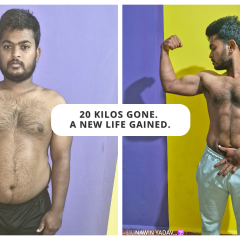
From “Laddu Nawin” to Fit and Fierce: How a 25-Year-Old Insurance Advisor Shed 20 Kilos and Gained His Life Back

When 25-year-old Nawin Yadav from Hyderabad walked into his office every morning, he carried more than just his files and policy papers. He had the weight of fatigue, sluggish energy, and an ever-growing belly that was becoming the butt of jokes. “People … [Read More...]

“I’ve Challenged Myself to Live 100 Years” – The Story of Chandubhai Savani’s Second Chance at Life

At 67, most people start slowing down. Not Chandubhai Savani. A resident of Surat, Chandubhai, thought life was on track. “My life was going well till I had my bypass surgery,” he says. That surgery, back in 2021, was a wake-up call.  Medication was routine, but exercise wasn’t. His diet? What he calls ‘normal.’ “I […]

From Shimla’s Slopes to Chandigarh’s Sidewalks: Surinder Kaur Bhalla’s Journey from Chaos to Control

Some journeys start with a plan. Others begin with a stumble literally. Surinder Bhalla, a government professional, born and raised in the scenic hill town of Shimla, had always lived a life of movement. “In Shimla, you walked everywhere,” she reflects. “Walking was never an exercise. It was just life.” But after shifting to Chandigarh, […]

Ananda Mukherjee Health Story

From Terminal Illness To Complete Wellness! Ananda Mukherjee Health Story

As we observe World Cancer Day under the powerful theme ‘United by Unique’ (2025-2027)**, we are reminded that every individual’s journey with cancer is distinct, yet united by shared resilience, hope, and the collective fight against this disease. This theme places people at the centre of care and their stories at the heart of the […]

  • HOME
  • HEALTHY LIVING
  • FITNESS
  • HEALTHY RECIPES
  • USER STORIES
  • KARMA
  • BUY GOQii

Copyright ©2016 GOQii