GOQii

Blog

  • HOME
  • HEALTHY LIVING
  • FITNESS
  • HEALTHY RECIPES
  • USER STORIES
  • KARMA
  • BUY GOQii

Search Results for: muscle

June 3, 2015 By Ashwinkumar Rahate 2 Comments

It’s important to know the types of sets in weight training

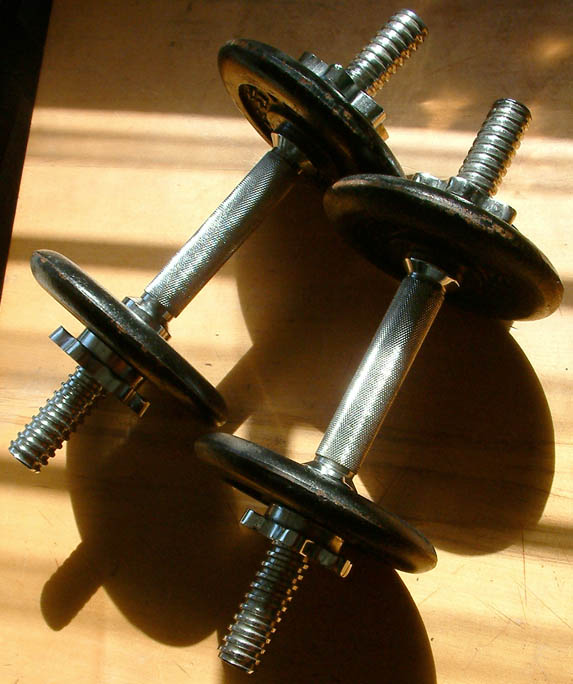
TwoDumbbells

While doing weight training we perform sets of each exercise. The set refers to the several repetitions of the exercises and repetitions refer to the number of times you perform a specific exercise. While, designing the weight training program it is very essential to decide how many sets and the repetitions.

Following are the different types of sets

  • Straight Sets:

This type of sets is usually performed by the beginners. In this type, the sets and the repetitions are reaming the same. There is no change in lifting the weight as well.

The example of the Straight Set is performing 3 sets with 15 repetitions of a particular exercise. There is no change in lifting weight.

  • Compound Sets :

Compound sets refer to targeting two exercises with the same muscle group. Example of Compound set is performing bench press dumbbells with dumbbells fly. Bench press dumbbells will target the Pectorals major while dumbbells fly focuses on the sternum pectorals.

  • Supersets:

Supersets means paring 2 exercise that work opposite muscle groups. The example of the superset is Dumbbells Chest presses followed by lats pull down. Here the Chest and the back are the opposite muscle group.

  • Tri Sets

Three different exercises performed back to back without any pause is known as a Tri sets.

The example of the Tri set is Bench Press followed by the dumbbells fly and push ups.

  • Drop Sets

In the drop set method the trainee starts with the heavy weights with low repetitions after that reduce or drop the weight and perform the repetitions (reps) till failure. For example the trainee may start peck fly with 200 lbs with 5 reps. In the next round 180 Lbs with 8 reps, The next round 150 Lbs with 10reps. The next round 130 Lbs with 12 reps. And the last round 100 labs with 10 reps.

  • Giant Sets

A series of 4 to 6 exercises done with little or no rest between movements and a rest period of 2-3 minutes between sets, often performed on either 2 opposite muscle groups like biceps and triceps or on a single body part.

Example: 

Giant Set for the Chest:

  1. Incline Barbell Press (4 to 6 Reps)
  2. Decline Barbell Press (4 to 6 Reps)
  3. Machine Chest Press (4 to 6 Reps)
  4. Peck Deck Fly (4 to 6 Reps)
  5. Floor Dips (4 to 6 Reps)
  • Pyramid Sets

It refers to the starting the first set with the lighter weight with more repetition. Gradually the trainee increases the weight and lower the reps. The rest between the sets depend on individual goal.

For Example:

Performing Leg Press

1st Set for 100 Lbs with 15 reps

2nd Set for 150 Lbs with 12 reps

3rd Set for 200 Lbs with 10 reps

4th Set for 250 Lbs with 8 reps

5th Set for 300 Lbs with 6 reps

6th Set for 350 Lbs with 4 reps

  • Reverse Pyramid Sets:

It is just opposite of pyramid sets. It refers to the starting the first set with the heavier weight with less repetition. Gradually, the trainee reduces the weight and increases the reps. The, rest between the sets depends on individual goals.

For Example 

Performing Leg Extension

1st Set for 200 Lbs with 5 reps

2nd Set for 180 Lbs with 8 reps

3rd Set for 150 Lbs with 10 reps

4th Set for 120 Lbs with 12 reps

5th Set for 100 Lbs with 15 reps

6th Set for 80 Lbs with 18 reps

These are all different types of sets which are used in weight training program. We can choose the type of the set as per the Goal.
June 2, 2015 By Mohammed Tufail Qureshi Leave a Comment

WORKOUTS IN A 10 SQUARE FEET AREA


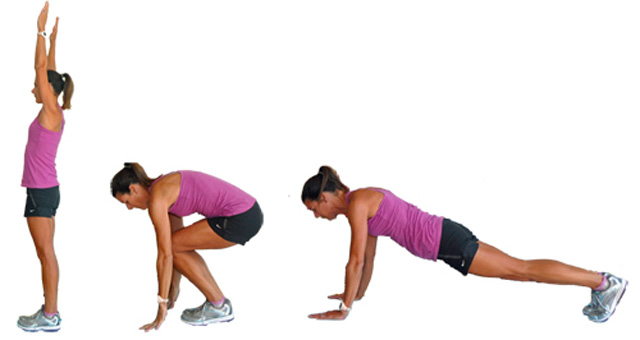
burpeeOne of the biggest reasons for not exercising is largely due to lack of time and not being able to make it to the gym. Reasons could be varied such as dislike to visit the gym and lift weights, especially for women. Well, it’s not necessary for you to go to the gym, you can work out at your own home, office cabin or at any place which is just no more than 10 square feet in measurement.

Yes , you heard it right. You can do your complete body workout in just 10 square feet area. Let’s have a detailed look at the different types of training you can do in a little place.

  1. You can do aerobic (cardio) exercises with your own body weight and also with a very basic equipment like a skipping rope.

You can do exercises like jumping jacks, mountain climbers, burpees, high knees, spot jogging, spot jumping, hot feets etc. These are few of the very basic and effective exercises to raise your heart beat up and build cardio vascular strength. Per session you can select 3-4 exercise as a part of the session and can do each exercise for 15-20 seconds and then take 5-10 seconds of rest between each exercise.

  1. You can do strength training with your own body weight or basic equipment like resistance tube or a pair of dumbells or barbells. You can do free hand body weight exercises like squats, jump squats, wall squats, push-ups, supported push-ups (on your knees), tricep dips on a chair or on the floor, leg raises , lunges, leg extensions on chair. Also with a pair of dumbbell or barbells or with resistance band you can do bicep curls , triceps extensions, shoulder presses, rowing , squats, lunges etc.
  2. You can do a specific core workout session which includes exercises to be done for lower back and abs. Core session is extremely important. Exercises like back extension, superman raises , child pose, cat & camel thrust , pelvic raises will strengthen and stretch your lower back. On the other hand, exercises like crunches, bicycle crunches, leg raises, scissor kicks, flutter kicks, planks, side planks etc. will work on your abdominal muscles.
  3. You can do stretching exercises, yoga, power yoga and different types of breathing exercises. Stretching exercises, Yoga, power yoga and breathing exercises will improve your flexibility and burn fats as well. Yes, that’s right. Oxygen burns fats, so the more you focus on breathing exercises the more you burn fat and keep your cells healthy by providing oxygen to your body.

These are the exercises which you can do in a very small place like 10 square feet area and, can still focus on your overall fitness by improving strength, stamina and flexibility. You can plan it well according to your schedule and do each of these variety exercises at least once in a week.

June 1, 2015 By Vrushali Athavle 1 Comment

Protein is not just about quantity. It’s also about quality

protien-rich-foods
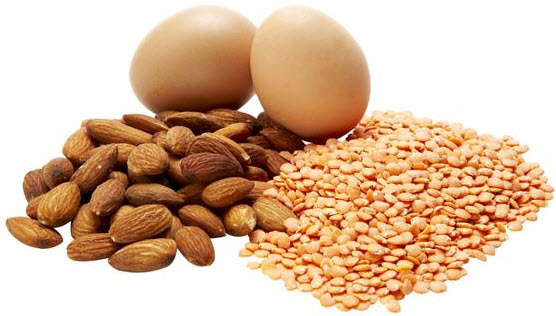
Every weight loss or weight gain programme talks about PROTEINS. They are the building blocks for growth and repair of muscle tissues of tendons, organs and skin. Proteins are made out of smaller molecules called amino acids which are linked together like beads on a string.

Some of these amino acids can be produced by the body and are called non essential amino acids, while some cannot be produced by the body and we need to get them from our foods. These are called the essential amino acids.

The protein requirement of each individual varies based on their intensity of workouts, medical conditions, height and ideal body weight.  Before, we jump into the calculation of protein requirement, let’s first check out how to select the best protein out of the 3 major sources of proteins namely 1) Animal sources (chicken, fish, eggs, milk & milk products), 2) Plant sources (legumes, nuts, seeds and cereals) and 3) various Supplementary protein powders available in the market as protein shakes. This blog basically has two sections.

1) Protein Selection and 2) Protein Calculation

Section 1: Protein selection

Two things we need to consider while selecting your proteins source:

  1. Complete or incomplete proteins:

* Animal proteins are considered complete proteins as they contain all essential amino

acids required by our body.

*Plants sources are classified as incomplete proteins as they contain only few essential

amino acids.

* Supplementary powders have most of the essential amino acids.

  1. Bioavailability of proteins.

      Bio-availability represents the percentage of how much our bodies can make use of certain  protein sources. Animal proteins have better bioavailability than plant proteins. Supplementary proteins have highest % of bioavailability. It is important to note here that at a go our body can absorb only 15 to 20 gms of protein.

Section 2: Protein Calculation:

Calculate your protein intake by this formula:

  • Person with sedentary lifestyle, Protein intake= Ideal body weight in kgs (multiply by) 0.8 gm
  • Person with moderate workout, Protein intake= Ideal body weight in kgs (multiply by) 1 gm
  • Person with moderate to intense workouts, Protein intake= Ideal body weight in kgs (multiply by) 1.5 gm

Note:  Consult your trainer/nutritionist/doctor while calculating this protein amount as your medical conditions and intensity of workouts also need to be considered.

To consume this amount of protein, we would want to divide this intake of protein into 5-6 meals over the course of the day.

Managing this protein intake is a bit difficult for vegetarians. Even for individual who consume non-veg and take up heavy workouts, just the thought of eating six chicken breasts a day or eight egg whites in each meal can seem like a daunting task. An alternative to this is to ingest 1 or 2 scoops of protein powders in the form of a protein shake.

Conclusion:  Protein is not just about quantity. It’s also about quality. Protein intake needs to be wisely planned. Good sources of protein include high quality proteins like egg, chicken, fish, skimmed milk and soy. Red meat, egg yolk and high fat milk products are rich in saturated fats and hence should be avoided. Whole pulses, sprouts and daals(lentils)  should be consumed in combination with a cereal to make the amino acid profile complete. For eg: Roti with Daal/Rice with Rajma/Khichadi.

If required protein powders can be included. Natural source of protein is the best but, due to day to day constraints of making and eating them, you may need to add the protein supplement into your diet. Getting all your protein from powders is not the best idea, as it could potentially restrict your intake of vitamins and minerals from other foods. Selection of protein powder will be discussed in my next blog. Stay tuned!

May 25, 2015 By Anushree Ashtekar Leave a Comment

Red Signal to Excess-Part 2 – Moderation is key to Good health

eat in moderation

In Part 1, we saw how good things in excess can adversely affect our health. In this follow up blog, I talk of bad things in excess, which is also not right.

Let’s take a look at some of these bad things in excess and how it could be detrimental to our health.

1) Excessive consumption of junk/processed foods: Fast food means food that can be made and served quickly. These junk foods are mostly processed, containing large amounts of refined carbohydrates, added refined sugars, added salt (sodium) and bad quality fats. They are high on calories but, minimal on nutritional value. Eating junk/processed foods instead of fresh, whole, nutritious food has many adverse effects on the body. Junk foods and drinks are packed with refined sugars which cause insulin spike gradually leading to insulin resistance and Type- 2 diabetes.

The empty calories just go easily go into the body fat store leading to obesity which can further give rise to severe health issues like heart problems, respiratory problems, etc. The trans fats in the junk foods, increase the LDL cholesterol levels and subsequently decrease the HDL cholesterol levels. Lot of salt (sodium) causes water retention, high blood pressure and enlarged heart muscle. Too much sugars cause acidity which destroy the tooth enamel causing dental cavities. MSG (Monosodium Glutamate) found in processed foods create stomach distress. Some of the artificial colors and preservatives used in processed foods are found to be carcinogenic (cancer causing). Drinking too much of soda can leach calcium out of the bones making them soft and brittle. Also, the aluminium soda cans are inwardly lined with an epoxy resin called bisphenol A (BPA) which protects the metal can from the reaction of acids in the sodas. This BPA is found to be disrupting normal hormone functioning that can lead to obesity, diabetes and reproductive cancers.

2) Excessive alcohol consumption: It is no big secret that alcohol consumption has no good effects but, chronic heavy drinking has many bad effects. Researchers have found alcohol to be linked to more than 60 diseases. Alcohol can cause liver cirrhosis. Alcohol is empty calories so, can cause unwanted fat storage in the body. Alcohol disturbs the working of the sympathetic nervous system leading to high blood pressure, heart problems, stroke and kidney disease. Heavy drinking can cause gastritis (stomach irritation), inflammation of pancreas, decrease in immunity, nerve damage (alcoholic neuropathy). As people age, their brains shrink but, heavy drinking can cause faster brain shrinking leading to memory loss and other symptoms of dementia. Depressed people drink to ‘feel good’ but, in fact, drinking leads to further depression. Alcohol can aggravate the condition of gout. It can worsen the condition of an epileptic and cause seizures even in non-epileptic individuals. Chronic heavy drinking can lead to cancer of the mouth, esophagus, liver, breast, and colorectal region.

3) Excessive cigarette smoking/tobacco chewing: Nicotine is a highly addictive drug that alters the brain chemistry making it both, physically and psychologically addictive. According to AHA (American Heart Association), nicotine causes short-term rise in heart-rate, blood flow and blood pressure which, in a long term, can cause cardiovascular complications. Carbon monoxide in cigarette smoke causes fat buildup in arteries leading to hardening of the arterial walls (atherosclerosis). Tobacco smoking and chewing, both, can lead to oral and lung cancers. Smoking/chewing tobacco can also cause tissue damage in various organs of the body and dental diseases.

4) Excessive Tea/Coffee drinking: We all wish to have a cup of tea/coffee to kick-start our day. It’s not too bad to drink tea and coffee. It is the too much drinking that is the concern.

Caffeine is a natural stimulant found in coffee, tea, chocolate, yerba mate and certain herbal teas. Caffeine is generally a very safe stimulant. It improves alertness and is a mood enhancer. Usually, it is 200-300 mg of coffee that can be safely consumed per day (roughly 3 cups) but, this differs from person to person, depending on their own ‘caffeine sensitivity’. Too much coffee consumption can lead to symptoms like irritability, nervousness, headache, dizziness, insomnia, fever, increased heart-rate, increased thirst, stomach upset and muscle tremors. Same is the case with teas. A cup of hot tea in the morning will boost your energy for the day where as a cup of herbal tea at night will help you relax. Tea contains lesser amount of caffeine than coffee but, there are side effects of having too much of it.

Drinking too many cups of tea in a day can lead to symptoms like restlessness, anxiety, disturbed sleep, skeletal fluorosis (a painful bone condition), yellow pigmentation of the teeth. Green tea is no less. Though healthy, if had too much, it can worsen the condition in people suffering from high blood pressure, anxiety and stomach ulcers.

5) Excessive stress: In this fast paced world, stress is become an inevitable part of our lifestyle. Our body reacts/adjusts to outward changes with physical, mental and emotional responses. This response amounts to stress. Stress is a part of our daily, normal lives. Our body is designed to feel and react to 2 kinds of stress; positive and negative stress. Positive stress is the one where the body prepares itself for a ‘fight or flight’ mode. Negative stress is the one in which the body is continuously facing challenges, without time for rest and recovery. As a result, stress related tensions build up. A person going through stress for a very long time without relief, can enter a stage called as ‘distress’. This distress is indicated by many physical symptoms like fatigue, headache, dizziness, disturbed sleep patterns, high blood pressure, stomach upsets. Stress plays a role in aggravating medical conditions like diabetes, blood pressure, heart problems, depression, asthma, anxiety, skin problems, gastrointestinal disorders, Obesity, Alzheimer’s disease. In many cases, chronic, untreated stress can also lead to accelerated ageing and premature death.

Lastly, I would like to end by saying, “too much of anything, is good for nothing”.

  • « Previous Page
  • 1
  • …
  • 100
  • 101
  • 102
  • 103
  • 104
  • …
  • 113
  • Next Page »

Search

Recent Posts

  • Water Intake Pre, During and Post Workout
  • India Leads in Longevity: GOQii Sanjeevini Named Top 40 in $101M XPRIZE
  • The Importance Of Knowing If You’re Thirsty Or Hungry
  • Best Foods To Alleviate Irritable Bowel Syndrome
  • ALL ABOUT VERTIGO!

Stay Updated

Archives

  • December 2025 (9)
  • November 2025 (15)
  • October 2025 (20)
  • September 2025 (6)
  • August 2025 (6)
  • July 2025 (12)
  • June 2025 (18)
  • May 2025 (16)
  • April 2025 (23)
  • March 2025 (23)
  • February 2025 (22)
  • January 2025 (26)
  • December 2024 (26)
  • November 2024 (25)
  • October 2024 (22)
  • September 2024 (24)
  • August 2024 (31)
  • July 2024 (21)
  • June 2024 (26)
  • May 2024 (31)
  • April 2024 (27)
  • March 2024 (29)
  • February 2024 (26)
  • January 2024 (25)
  • December 2023 (15)
  • November 2023 (11)
  • October 2023 (20)
  • September 2023 (22)
  • August 2023 (20)
  • July 2023 (22)
  • June 2023 (24)
  • May 2023 (24)
  • April 2023 (24)
  • March 2023 (23)
  • February 2023 (20)
  • January 2023 (16)
  • December 2022 (12)
  • November 2022 (15)
  • October 2022 (15)
  • September 2022 (12)
  • August 2022 (10)
  • July 2022 (17)
  • June 2022 (11)
  • May 2022 (10)
  • April 2022 (6)
  • March 2022 (6)
  • February 2022 (13)
  • January 2022 (12)
  • December 2021 (7)
  • November 2021 (3)
  • October 2021 (6)
  • September 2021 (3)
  • August 2021 (8)
  • July 2021 (7)
  • June 2021 (15)
  • May 2021 (16)
  • April 2021 (10)
  • March 2021 (7)
  • February 2021 (4)
  • January 2021 (4)
  • December 2020 (3)
  • November 2020 (4)
  • October 2020 (10)
  • September 2020 (3)
  • August 2020 (3)
  • July 2020 (2)
  • June 2020 (4)
  • May 2020 (10)
  • April 2020 (12)
  • March 2020 (10)
  • February 2020 (4)
  • January 2020 (4)
  • December 2019 (3)
  • November 2019 (7)
  • October 2019 (5)
  • September 2019 (4)
  • August 2019 (9)
  • July 2019 (9)
  • June 2019 (11)
  • May 2019 (4)
  • April 2019 (9)
  • March 2019 (8)
  • February 2019 (9)
  • January 2019 (8)
  • December 2018 (9)
  • November 2018 (3)
  • October 2018 (3)
  • September 2018 (5)
  • August 2018 (10)
  • July 2018 (6)
  • June 2018 (13)
  • May 2018 (8)
  • April 2018 (18)
  • March 2018 (9)
  • February 2018 (8)
  • January 2018 (15)
  • December 2017 (12)
  • November 2017 (19)
  • October 2017 (13)
  • September 2017 (15)
  • August 2017 (4)
  • July 2017 (8)
  • June 2017 (7)
  • May 2017 (6)
  • April 2017 (8)
  • March 2017 (6)
  • February 2017 (7)
  • January 2017 (9)
  • December 2016 (10)
  • November 2016 (7)
  • October 2016 (7)
  • September 2016 (7)
  • August 2016 (11)
  • July 2016 (9)
  • June 2016 (9)
  • May 2016 (12)
  • April 2016 (17)
  • March 2016 (17)
  • February 2016 (8)
  • January 2016 (6)
  • December 2015 (2)
  • November 2015 (9)
  • October 2015 (7)
  • September 2015 (9)
  • August 2015 (11)
  • July 2015 (9)
  • June 2015 (12)
  • May 2015 (9)
  • April 2015 (13)
  • March 2015 (8)
  • February 2015 (5)
  • January 2015 (12)
  • December 2014 (14)
  • November 2014 (11)
  • October 2014 (6)
  • September 2014 (13)
  • August 2014 (12)
  • July 2014 (6)
  • June 2014 (2)
  • May 2014 (7)
  • April 2014 (5)

From “Laddu Nawin” to Fit and Fierce: How a 25-Year-Old Insurance Advisor Shed 20 Kilos and Gained His Life Back

When 25-year-old Nawin Yadav from Hyderabad walked into his office every morning, he carried more than just his files and policy papers. He had the weight of fatigue, sluggish energy, and an ever-growing belly that was becoming the butt of jokes. “People … [Read More...]

“I’ve Challenged Myself to Live 100 Years” – The Story of Chandubhai Savani’s Second Chance at Life

At 67, most people start slowing down. Not Chandubhai Savani. A resident of Surat, Chandubhai, thought life was on track. “My life was going well till I had my bypass surgery,” he says. That surgery, back in 2021, was a wake-up call.  Medication was routine, but exercise wasn’t. His diet? What he calls ‘normal.’ “I […]

From Shimla’s Slopes to Chandigarh’s Sidewalks: Surinder Kaur Bhalla’s Journey from Chaos to Control

Some journeys start with a plan. Others begin with a stumble literally. Surinder Bhalla, a government professional, born and raised in the scenic hill town of Shimla, had always lived a life of movement. “In Shimla, you walked everywhere,” she reflects. “Walking was never an exercise. It was just life.” But after shifting to Chandigarh, […]

Ananda Mukherjee Health Story

From Terminal Illness To Complete Wellness! Ananda Mukherjee Health Story

As we observe World Cancer Day under the powerful theme ‘United by Unique’ (2025-2027)**, we are reminded that every individual’s journey with cancer is distinct, yet united by shared resilience, hope, and the collective fight against this disease. This theme places people at the centre of care and their stories at the heart of the […]

  • HOME
  • HEALTHY LIVING
  • FITNESS
  • HEALTHY RECIPES
  • USER STORIES
  • KARMA
  • BUY GOQii

Copyright ©2016 GOQii


