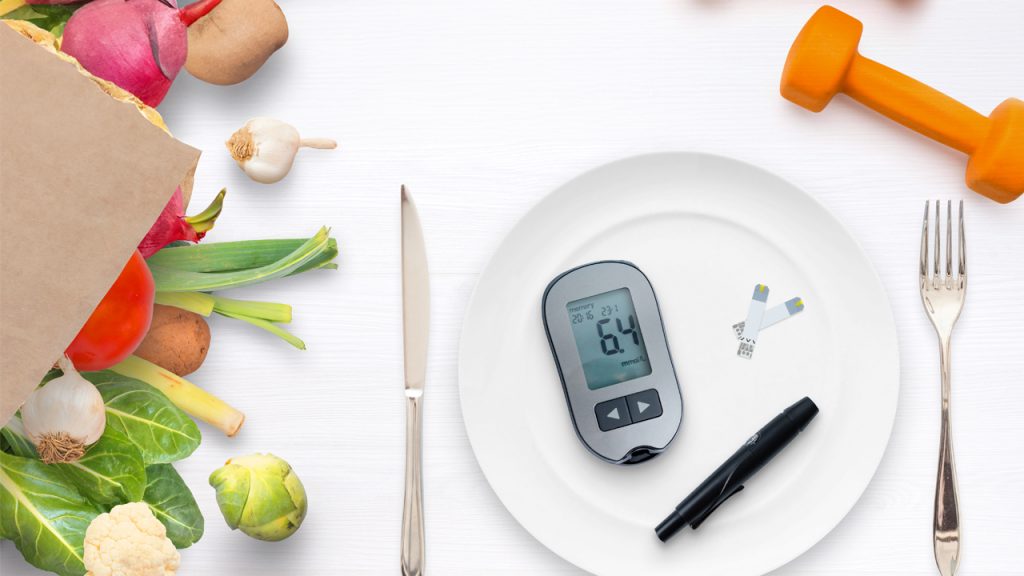
 Type 2 diabetes is often seen as a lifelong condition, but research and real-world experience show that it can be managed—and even reversed—with the right dietary approach. One of the most effective strategies is adopting a low-carbohydrate lifestyle, which not only helps regulate blood sugar levels but also improves insulin sensitivity.
Unlike traditional high-carb diets that lead to frequent glucose spikes, a low-carb approach stabilises energy levels, reduces cravings, and supports long-term health. If you’re looking for a sustainable way to take control of your diabetes, reducing your carbohydrate intake might be the key.
Why Reduce Carbohydrates?
Carbohydrates break down into glucose in the bloodstream. For individuals with type 2 diabetes, the pancreas struggles to produce enough insulin to move glucose into cells for energy. This results in persistently high blood sugar levels, which can eventually lead to complications such as nerve damage, kidney issues, and cardiovascular disease.
By reducing carbohydrate intake to 60–130g per day, you prevent large spikes in blood glucose after meals, easing the pressure on your pancreas. Over time, this can allow your pancreatic beta cells to recover and improve insulin sensitivity, helping your body regulate blood sugar more effectively.
The Ideal Process:
- Carb-controlled meals → lower glucose load
- Less strain on pancreas → beta cells recover
- Improved insulin sensitivity → glucose absorbed into cells
- Stable, healthy blood sugar levels
Which Carbohydrates to Avoid?
Starchy foods are typically high in carbohydrates and should be limited:
- Bread (white, whole grain, multigrain)
- Pasta
- Rice (white, brown, basmati)
- Potatoes (including sweet potatoes)
- Grains (wheat, oats, barley, corn, quinoa)
The general rule: vegetables that grow underground (e.g., potatoes, carrots) contain more carbs than those that grow above ground.
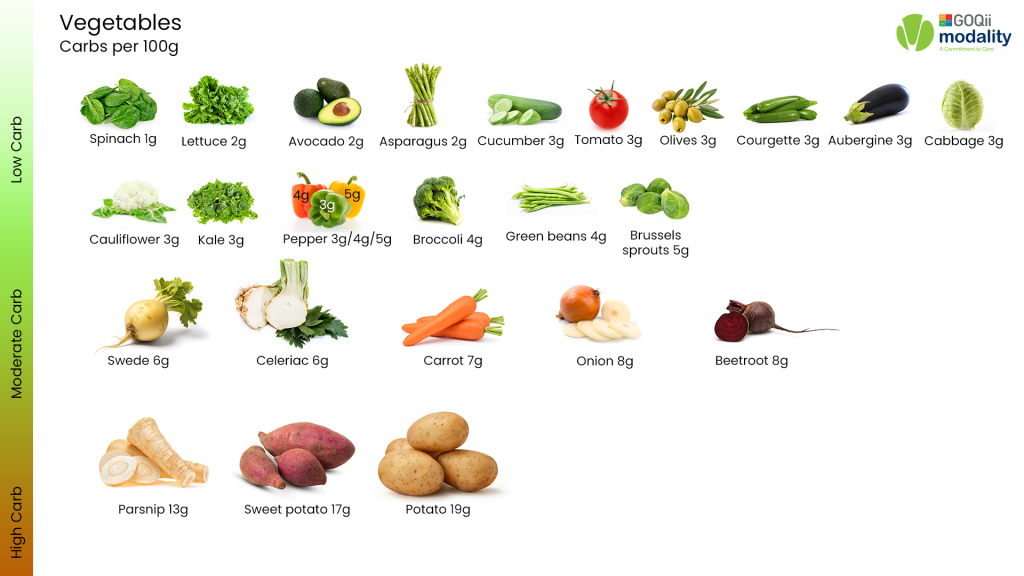
Best Low-Carb Vegetables (per 100g)
Leafy Greens
Lettuce (2g), Spinach (1g), Arugula (1.6g), Kale (3g), Swiss Chard (1.8g)
Cruciferous Vegetables
Broccoli (4g), Cauliflower (3g), Brussels Sprouts (5.1g), Cabbage (3g)
Other Non-Starchy Vegetables
Asparagus (2g), Courgette (3g), Aubergine (3g), Tomatoes (3g),
Mushrooms (3.3g), Bell Peppers (4.6g), Onions (8g), Garlic (33.1g),
Radishes (3.4g), Cucumbers (3g), Celery (3g), Green Beans (4g), Artichokes (10.5g)
Focus on nutrient-dense, high-fibre, low-carb vegetables to meet your nutritional needs while keeping carbohydrate intake low.
What Are Net Carbs?
You may come across the term “net carbs,” which refers to the total carbs minus fibre and sugar alcohols—the carbs that actually raise blood sugar.
Net Carbs = Total Carbs – Fibre – Sugar Alcohols
While this can offer a more accurate reflection of how food impacts blood glucose, we recommend focusing on total carbohydrate intake for now, as calculating net carbs can be confusing in the early stages.
Protein: An Essential Nutrient
Protein supports muscle maintenance, satiety, and metabolism. On a low-carb diet, protein should be moderate, not excessive.
Target: 1.5–2.0g per kg of body weight per day
Portion Guide:
- Women: ~85g cooked meat/tofu, 1 cup Greek yoghurt/cottage cheese, 2 whole eggs
- Men: ~115g cooked meat/tofu, 1 cup Greek yoghurt/cottage cheese, 2 whole eggs
Low-Carb Dairy Options
Milk (per 240 ml / 1cup):
- Whole or Semi-Skimmed: 12g carbs
- Unsweetened Almond Milk: 1g carbs
Cheese (30g / 1oz):
- Cheddar: 0.4g, Brie: 0.1g, Feta: 0.8g, Cream Cheese: 0.8g
Yoghurt (170g / 6oz):
- Full-Fat Greek: 5g, Low-Fat Greek: 7g
Cream (30ml/ 1fl oz):
- Double Cream: 0.6g, Single Cream: 0.7g
Butter (14g / 1 tbsp):
- Salted/Unsalted: 0.1g
Avoid flavoured yoghurts and sweetened milk which can have hidden sugars.
Alcohol on a Low-Carb Diet
You can enjoy alcohol occasionally by choosing low-carb options:
Wines (per 5oz glass):
- Dry White (e.g., Sauvignon Blanc, Pinot Grigio): 2–4g carbs
- Dry Red (e.g., Merlot): 2–4g carbs
Beers (per 12oz):
- Bud Light: 4.6g, Michelob Ultra: 2.6g, Beck’s Premier Light: 3.9g, Brewdog Pale Ale: 7 g
Spirits (per 1oz):
- Gin, Vodka, Rum, Tequila, Whisky: 0g (when consumed neat)
- Add low-carb mixers like soda water, diet tonic, diet ginger ale
Low-Carb Cocktails:
- Vodka Soda with lime, Gin & Diet Tonic, Whisky Ginger with diet ginger ale, Rum & Diet Coke
❗ Note: Avoid beer and cider unless opting for very light versions. Also, steer clear of sugary mixers, juices, and syrups which can add a substantial carb load to your drink.
Don’t Forget to Keep a Food Diary
Tracking what you eat helps in:
- Increasing awareness and mindfulness
- Identifying hidden sugars and carbs
- Tracking progress over time
- Identifying behavioural patterns
- Ensuring accountability and better food choices
You can use your phone, an app, or even a journal to keep track. Share it with your nutritionist or coach to get tailored guidance.
A low-carbohydrate lifestyle, when well-planned, can help reverse type 2 diabetes by addressing the root causes—excessive glucose and insulin resistance.
By:
✔ Lowering carbs to 60–130g per day
✔ Prioritising non-starchy vegetables and whole foods
✔ Including moderate protein and healthy fats
✔ Avoiding sugary, starchy, and processed foods
✔ Tracking food intake and blood sugar
…you can achieve stable glucose levels, improved insulin sensitivity, and potentially reduce or eliminate medication.
It’s not about perfection—it’s about consistency and sustainability. And remember: you’re not alone on this journey.
💬 Have you tried a low-carb approach to manage your diabetes or weight? Share your experience in the comments below!
#BeTheForce
 Polycystic Ovary Syndrome (PCOS) is more common than you might think. Affecting 1 in 10 women of reproductive age globally, it’s a hormonal condition that can often go undiagnosed for years—leaving many to silently struggle with irregular periods, weight gain, acne, or mood swings, without truly knowing why.
 World Water Day 2025 is a timely reminder of the value water holds in our lives—not just globally, but personally. While this year’s theme focuses on glacier preservation, we often overlook a key question: Are we drinking water in the best possible way for our health?
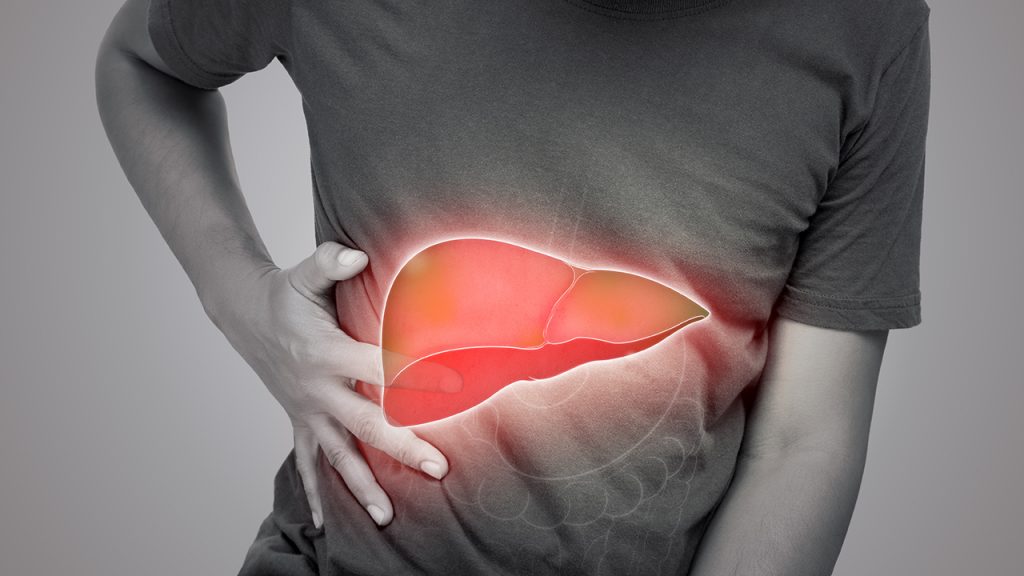 Understanding Fatty Liver


