GOQii

Blog

  • HOME
  • HEALTHY LIVING
  • FITNESS
  • HEALTHY RECIPES
  • USER STORIES
  • KARMA
  • BUY GOQii

Search Results for: menstrual

May 15, 2018 By Dr. Viral Thakkar 9 Comments

Strong as a Diamond! Vajrasana  

VAJRASANA_YOGA

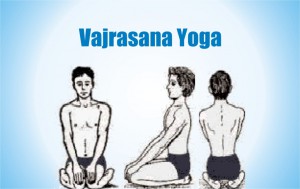
Ever wondered why zen masters sit on their knees? Karate and other martial arts masters also to sit in that “uncomfortable” position- the ‘vajrasana’.  Vajrasana is a kneeling pose; vajra is a Sanskrit word meaning diamond or thunderbolt. Asana means pose. This diamond pose is also called Adamantine Pose.

Usually, breathing exercises like Pranayama, Kapalabhati, and Anulon Vilom are done sitting in this position. Many masters also prefer this position for meditation.
vajrasana

This is how you do it..

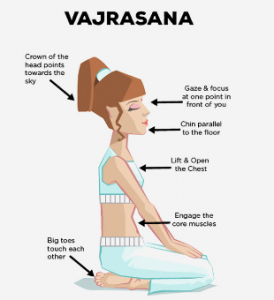
 Kneel down, stretching your lower legs backwards and keeping them together. Your big toes should touch each other.

  1. Gently lower your body such that your buttocks are resting on your heels and your thighs on your calf muscles.
  2. Place your hands on your knees, and set your gaze forward with your head absolutely straight.
  3. Turn your attention to your breathing. Be fully aware of how you breathe and carefully observe as you inhale and exhale.
  4. You could close your eyes to concentrate on your breathing and to calm your mind.

As a beginner, when you assume this position, it is likely that your legs will pain. If this happens, all you need to do is undo the asana, and stretch your legs forward. You can try to stay in vajrasana for a minimum of 5 to 10 minutes and extend the time as per your comfort.

Work slowly and gradually on bettering the strength of the lower back muscles before you go deeper into the pose or increasing the duration. Once the lower back is strengthened, the strain on the breath is decreased. Also, do not push yourself more than your body can take, the benefits of the pose are minimized.

This asana is one of the few asanas which can and should be practised post a meal since it promotes proper digestion.

While this is one of the easiest and safest asanas to practice, however, keep the following in mind:

  1. Do not practice this asana if you have a knee problem or have undergone surgery in your knees recently; Or if you have intestinal ulcers, hernia, or any other problems related to the large or small intestine. If you are very keen, seek advice from your doctor/ yoga practitioner.
  2. If you are pregnant, keep your knees slightly apart to avoid putting pressure on your abdomen.
  3. If you are suffering from any spinal column ailments on the lower vertebrae, it is best to avoid this pose.

 Practice this asana because

  1. It improves digestion. It regulates blood circulation in the lower pelvic region. Sitting on your legs reduces the blood flow in the legs and increases it in the digestive area, therefore increasing the efficiency of the digestive system. Better digestion prevents GERD- Gastro-Esophageal Reflux Disease and acidity.
  2. With the regular practice of vajrasan one can get relief from constipation and flatulence.
  3. It strengthens the back and relieves patients suffering from lower back problems and sciatica.
  4. It strengthens the pelvic muscles too. It positively impacts the urinary and reproductive systems.

According to Ayurveda, one of the major nerves in the human body is also named Vajra Nadi (Nadi means nerve). Vajra Nadi is connected with the genitourinary system which is responsible for regulating sexual energy in human body. Hence practising this yoga pose for an extended duration of time may make a person control his/her sexual energy for spiritual aims.

  1. It strengthens muscles and nerves almost curing varicose pains.
  2. It helps to ease out labour pains and also reduces menstrual cramps. It is a safe asana to perform during pregnancy.
  3. This asana is one of the best ones to assume when you wish to go into a meditative state since it is an upright pose.
  4. According to Ayurvedic Sciences, there are marm points in our body. These points impact different parts of the body when we assume different positions. While sitting in vajrasana, katikatarun marm is stimulated. This impacts the spine and stomach releasing the pain in the spine and improves digestion.

Make a habit to practice this asana at least post your meals and become ‘diamond’ strong!


February 21, 2018 By Trupti Hingad 3 Comments

Best Home Remedies for Ailments

natural-home-made-remedies

In my career as a nutritionist, I have come across three main issues that most people suffer from and these are Diabetes, Hypothyroid, and Acidity.

The reason for these issues to develop is only one—Unhealthy Lifestyle. But, unfortunately, while most are aware of this close to 90% are unable to make lifestyle changes and thus end up getting medicines as recommended by their doctors.

Popping pills seem easier than to bring about a lifestyle change and arrest the issue at the initial stages. Things get difficult when the results are not as expected and are slow. This is precisely when one starts searching for some natural remedies from natural foods.

I am listing down certain good home remedies which actually use natural food and cure your issues, help you get fit with proper healthy lifestyle.

Best home remedies for treating diabetes

  1. Mix 1/2tsp Turmeric + 1tsp Aamla (Gooseberry) powder+1/2tbsp Methi (Fenugreek) seeds powder in a half glass of water and take daily morning on empty stomach. (good for retinopathy)
  2. 1tbsp Methi (Fenugreek) seeds soaked overnight in ½ cup water and chew it next day in the morning empty stomach.
  3. Dry seed powder of Jamun (Balck Berry) fruits have to be used -1tsp twice or thrice daily with lukewarm water
  4. Take 40-80ml of decoction of banyan tree bark. Boil 20gm of bark in 4 cups of water, reduce till 1 cup and then drink daily.
  5. Using Tejpatta (Bay Leaf) in food helps to bring sugar levels under control.
  6. Juice of Karela (Bitter gourd) -20ml daily should be taken in morning. Bittergourd help diabetics with insulin secretion, glucose oxidation and other processes.
  7. Soak Ladyfingers (Okra) in water overnight and then drink that water on an empty stomach to control diabetes.
  8. Paneer Ka Phool” is also known as Rennet, is a kind of Indian flower very effective to control diabetes. You have to put 8-10 pieces of flower in a glass of water and soak it the whole night. In the morning squeeze the flower & filter it & and then have it. Its taste is not so good but effective. Regular use will give you the best results. First, try only 5 flowers, then gradually increase to 8-12.

Home remedies for thyroid

  1. Use cold pressed coconut oil as it contains medium chain TG, which improves thyroid function.
  2. Take 2 tbsp of Apple Cider vinegar, mix little honey and drink this solution daily.
  3. Omega 3 rich compounds like fish oil, fish oil supplements, flaxseeds, chia seeds reduce thyroid.
  4. Licorice Herb: The use of Licorice herb helps to promote balance within the thyroid gland and also promote more energy levels in the body –keeping fatigue at bay. It contains triterpenoid glycyrrhetinic acid which may aid in stopping the growth of more invasive thyroid cancer cells.
  5. Evening Primrose oil: This herb is full of Amino acids and these acids are critical for optimal thyroid health. They aid in improving thyroid function and alleviate the symptoms of an underactive thyroid, such as heavy menstrual periods and hair loss. Just a tablespoon a day is the general recommendation to decrease inflammation and promote thyroid health.
  6. Ginseng: This herb helps to improve underactive thyroid and it can also address the fatigue that is associated with it. It is best to take one dose prior to lunch and another prior to breakfast–about 100-200mg each time.
  7. Black walnut: This contains a high dose of iodine which is helpful for an underactive thyroid. You can have one –two of this nut.

Home remedies for acidity

  1. Mix one tsp of baking soda in a glass of fresh water and drink.
  2. After a meal pops up a piece of chewing gum for 30 min to relieve heartburn.
  • Natural antacid—full ripen banana acts as a buffer against acid reflux
  1. Sipping a cup of ginger water lukewarm, soothes your tummy and acts as an acid buffer.
  2. Being alkaline in nature, chewing 1 tsp of good quality yellow mustard helps to relieve acidity.
  3. Chamomile tea flavoured with honey or lemon is a very good remedy.
  • 1tbsp of Apple cider vinegar with a glass of water acts as a great antacid.

NOTE: These all remedies can be used with your current medications.

Let’s bring our natural food remedy into practice and keep levels under control along with practising a healthy lifestyle.

May 23, 2017 By Azra Faizan 22 Comments

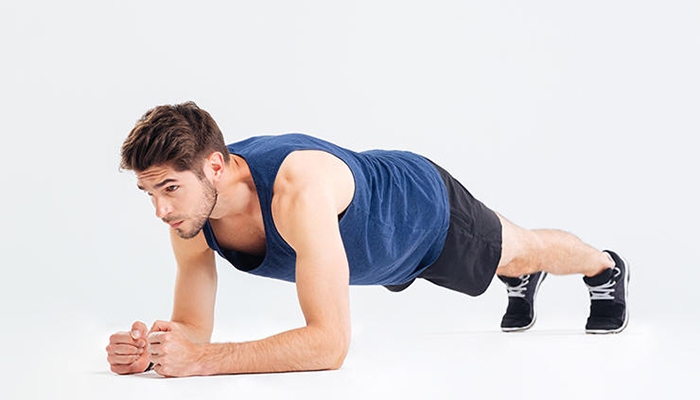
Why you need to strengthen your core?

plank-variations

‘You need to work on strengthening the core’

‘Why not start with some core strengthening exercises’

How often have you heard this line from a fitness trainer/doctor/health coach??

Now, how many of you know exactly what the core is??  My guess would be ‘we have a general idea, though not sure’

So let me try and explain first, what ‘the core’ is…

I do not want to bore you with the scientific names of the muscles consisting of the core, which I’m sure nobody would understand and everybody would just scroll over.

So to make it simple, the core of the body is broadly considered to be the torso.

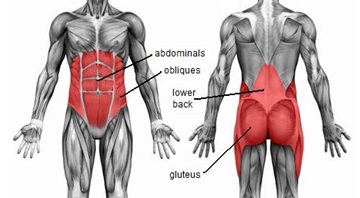
It is a complex series of muscles, extending far beyond your abs, including everything besides your arms and legs. The major muscles of the core reside in the area of the belly and the mid and lower back, and peripherally include the hips, the shoulders and the neck.

Untitled

It is incorporated in almost every movement of the human body. Functional movements are highly dependent on this part of the body, and lack of core muscular development can result in a predisposition to injury.

The core forms a sturdy central link between your upper and lower body. Much like the trunk of a tree, core muscles need to be strong yet flexible. A weak or inflexible core drains power from many movements and can make it downright difficult to do some.

Functions:

  1. Contains and protects the internal organs –You will notice that this part of your body (core) doesn’t have many bones, except for the spine and some floating ribs, yet it contains many important internal organs that need to be kept safe and sound. Without the bony structure to rely on, the entire area needs to be wrapped up tightly to maintain the integrity of its contents. So I like to think of our core musculature as a tightly wrapped package protecting the internal organs.
  1. Ensures greater mobility of the spine and trunk –Because of the way our core musculature is organized, it allows a great range of movement in the trunk. It allows us to bend forward, backwards, sideways, twist and do combinations of those.
  • Stabilizes the top part of the body over the bottom part- the core determines to a large part a person’s posture. In all, the human anatomy is built to take force upon the bones and direct autonomic force, through various joints, in the desired direction. The core muscles align the spine, ribs, and pelvis of a person to resist a specific force, whether static or dynamic.
  1. Controls the pelvic-lumbar relationship – The core is used to stabilize the thorax and the pelvis during dynamic movement and it also provides internal pressure to expel substances such as urine (continence),feces, air, vomit and also for labor and childbirth in women,

Core Stability:

In essence, core stability means ‘stability of the spine’, ‘core strength’ is the ability to support your spine and keep your body stable and balanced.  It is the strength that allows you to perform manual tasks safely and effectively in everyday life.

There are “five different components of core stability: strength, endurance, flexibility, motor control, and function”. Without motor control and function, the other three components are useless, like a fish flopping out of water no matter how strong you are or how much endurance you have.

I like to believe that core strength is as vital as most of the major organs in the body, let me tell you why –

  • Muscular tone helps blood circulate more effectively once it’s pumped from your heart. Core muscles are no exception, and when your core is strong you can notice an improvement in blood circulation.
  • Core stability promotes healthierdigestion. The digestive system contains a lot of blood vessels and when the core area is stagnant, the whole digestive system may feel more sluggish too. You may see increased bloating, discomfort, and indigestion associated with meals. The digestive system also contains a large and essential part of the immune system. Core strength can help support your body’s immunity too as it rounds out healthy digestion and circulation.
  • Because the diaphragm is located near the core, core strength promotes deeper and higher quality breathing.
  • Because the pelvis is located near the core, women may find relief from cramps and PMS around the menstrual cycle after strengthening core muscles. Women use their core muscles during labor and delivery too, and having a strong core, help in an easier labor.
  • Finally, the physical balance that comes from supporting your core can extend to yourmental-emotional health as well. Physical balance promotes a sense of calm, steadiness, and support.

How to Measure your core strength –

Let’s end with a fun activity!!

Let’s all of us measure our core strength, this way even people with regular exercise (including me) will know where we stand and how much further we need to work for a strong core..

Core Muscle Strength & Stability Test was designed by Brian Mackenzie, a senior athletics coach with UK Athletics, the United Kingdom’s National Governing body for Track and Field Athletics.

Preferably use a mat for performing this test, to get accurate results.

  1. Position a stop watch where you can easily see it
  2. Start in the Plank Exercise Position (elbows on the ground)
    Hold for 60 seconds
  3. Lift your right arm off the ground, Hold for 15 seconds
  4. Return your right arm to the ground and lift the left arm off the ground, Hold for 15 seconds
  5. Return your left arm to the ground and lift the right leg off the ground, Hold for 15 seconds
  6. Return your right leg to the ground and lift the left leg off the ground, Hold for 15 seconds
  7. Lift your left leg and right arm off the ground. Hold for 15 seconds
  8. Return you left leg and right arm to the ground
  9. Lift your right leg and left arm off the ground, Hold for 15 seconds
  10. Return to the Plank Exercise Position (elbows on the ground), Hold this position for 30 seconds

Results

  • Good Core Strength
    If you can complete the test fully, you have good core strength.
  • Poor Core Strength
    if you cannot complete the test fully, your core strength needs improvement.
    Poor core strength results in unnecessary torso movement and swaying during all other athletic movements. People with poor core strength are  more likely to suffer from back injuries, and the likelihood of other peripheral injuries also increases in those with a weak core

This results in wasted energy and poor biomechanics.

If you are unable to complete the test practice the routine three or four times each week until you improve.

By comparing your results over time, you will note improvements or declines in core strength.

February 17, 2017 By Dr Darshana Salve 2 Comments

Blood should circulate – Donate Blood!

blood-donation

We only understand the importance of blood donation when someone close to us is in need of it. A few days back my cousin contacted me to know the availability of blood for her friend’s father who met with an accident. Unfortunately, we lost him due to excess blood loss. We know of this incident because it’s a dear friend’s father but, on a daily basis there are so many such cases where there is loss of death due to non-availability of blood.

Statistics show that roughly every year in India there are 234 million major operations, 63 million trauma-induced surgeries, 31 million cancer-related procedures and 10 million pregnancy related complications which require blood transfusions.

Apart from these there are also disorders like sickle cell anemia, thalassemia and hemophilia that require repeated blood transfusions.

One of the main reasons for lack of blood is, many people are skeptical about blood donation. They have fears of contracting infections during blood donation, fear of the needle or feeling weak after blood donation. Human body approximately has 4.7-5.5 L of blood, out of it only 350/ 450 ml of blood is withdrawn during blood donation drives and it takes only a day or two to replenish the fluid volume in the body and three months for the regeneration of red cells to donate more blood.

There is no substitute for human blood. Blood cannot be manufactured – it can only come from
volunteer donors like you and me. One blood donation can save 3 lives. But, unfortunately only 1 % of volunteer donors come forward to donate blood and majority of the blood donation comes from replacement donors.

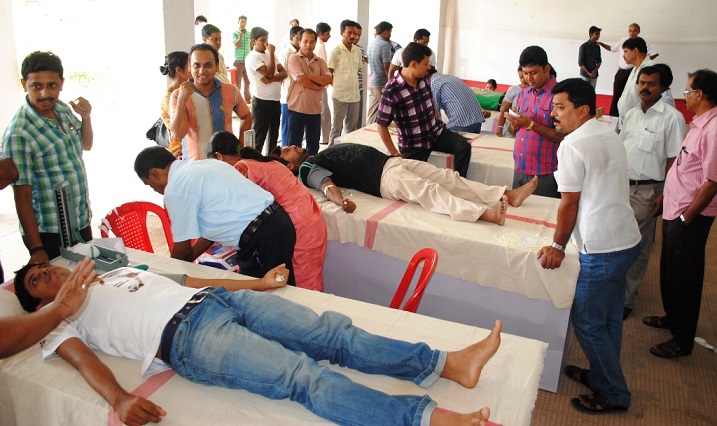
Blood Donation Camp

Replacement donors are friends and relatives of a patient who donate blood as replacement for the blood given to the patient.

At times, these replacement donors (friends and relatives) are more likely to harm the recipients by hiding or overlooking the many don’ts of donation.

Though voluntary self-referral to donate without citing reasons is widely accepted, replacement donors rarely adhere to it either to hide their high-risk behavior or due to pressure to meet the immediate demand for certain units of blood. As a result, the prevalence of HIV, hepatitis B, and hepatitis C is much higher among family donors when compared to voluntary donors, according to a 2012 study published in the Asian Journal of Transfusion Science.

Donation of safe blood can be achieved only when replacement donors are replaced by healthy volunteer donors to meet ‘over 95 per cent of blood requirement’. This can be done through increased awareness, providing appropriate facilities for people to donate blood, and improved donor retention.

While donating blood always be truthful about your health status!

Do not donate blood if you have any of these conditions

  • Cold / fever in the past 1 week.
  • Under treatment with antibiotics or any other medication.
  • Cardiac problems, hypertension, epilepsy, diabetes (on insulin therapy), history of cancer, chronic kidney or liver disease, bleeding tendencies, venereal disease etc.
  • Major surgery in the last 6 months.
  • Vaccination in the last 24 hours.
  • Miscarriage in the last 6 months or have been pregnant / lactating in the last one year.
  • Had fainting attacks during last donation.
  • Have regularly received treatment with blood products.
  • Shared a needle to inject drugs/ have history of drug addiction.
  • Had sexual relations with different partners or with a high risk individual.
  • Tested positive for antibodies to HIV.
  • If you are Underweight ( below 50 KGs)

Pregnancy and Menstrual Cycle

  • Females should not donate blood during pregnancy and lactation.
  • Females should not donate blood if they are having heavy menstrual flow or menstrual cramps.

Do donate blood if…

  • You are between age group of 18-60 years.
  • Weight is 50 kgs or more.
  • Hemoglobin is 12.5 gm% minimum.
  • Last blood donation was 3 months earlier.
  • You are healthy and have not suffered from malaria, typhoid or other transmissible disease in the recent past.

It’s time that we take up the responsibility to do voluntary blood donation. Donate Blood without waiting for a call.

  • « Previous Page
  • 1
  • …
  • 10
  • 11
  • 12
  • 13
  • 14
  • …
  • 16
  • Next Page »

Search

Recent Posts

  • 4 Reasons Why Affirmations Are Not Working For You
  • The Social Side of GLP-1: Navigating “Food Culture” and Peer Pressure
  • Leaky Gut: Symptoms and Causes
  • Muscle Is Your Insurance Policy: Why Strength Predicts Lifespan More Than Cardio
  • The Fiber Gap: Managing Digestion on GLP-1 Therapy

Stay Updated

Archives

  • March 2026 (1)
  • February 2026 (14)
  • January 2026 (14)
  • December 2025 (19)
  • November 2025 (15)
  • October 2025 (20)
  • September 2025 (6)
  • August 2025 (6)
  • July 2025 (12)
  • June 2025 (18)
  • May 2025 (16)
  • April 2025 (22)
  • March 2025 (23)
  • February 2025 (22)
  • January 2025 (25)
  • December 2024 (22)
  • November 2024 (23)
  • October 2024 (21)
  • September 2024 (24)
  • August 2024 (30)
  • July 2024 (21)
  • June 2024 (26)
  • May 2024 (31)
  • April 2024 (27)
  • March 2024 (29)
  • February 2024 (25)
  • January 2024 (21)
  • December 2023 (15)
  • November 2023 (11)
  • October 2023 (19)
  • September 2023 (22)
  • August 2023 (18)
  • July 2023 (22)
  • June 2023 (24)
  • May 2023 (24)
  • April 2023 (23)
  • March 2023 (23)
  • February 2023 (19)
  • January 2023 (15)
  • December 2022 (11)
  • November 2022 (15)
  • October 2022 (15)
  • September 2022 (12)
  • August 2022 (10)
  • July 2022 (17)
  • June 2022 (11)
  • May 2022 (10)
  • April 2022 (6)
  • March 2022 (6)
  • February 2022 (13)
  • January 2022 (11)
  • December 2021 (7)
  • November 2021 (3)
  • October 2021 (6)
  • September 2021 (3)
  • August 2021 (8)
  • July 2021 (7)
  • June 2021 (15)
  • May 2021 (16)
  • April 2021 (10)
  • March 2021 (7)
  • February 2021 (4)
  • January 2021 (4)
  • December 2020 (3)
  • November 2020 (4)
  • October 2020 (10)
  • September 2020 (3)
  • August 2020 (3)
  • July 2020 (2)
  • June 2020 (4)
  • May 2020 (10)
  • April 2020 (12)
  • March 2020 (10)
  • February 2020 (4)
  • January 2020 (4)
  • December 2019 (3)
  • November 2019 (7)
  • October 2019 (5)
  • September 2019 (4)
  • August 2019 (9)
  • July 2019 (9)
  • June 2019 (11)
  • May 2019 (4)
  • April 2019 (8)
  • March 2019 (8)
  • February 2019 (9)
  • January 2019 (8)
  • December 2018 (9)
  • November 2018 (3)
  • October 2018 (3)
  • September 2018 (5)
  • August 2018 (10)
  • July 2018 (6)
  • June 2018 (13)
  • May 2018 (8)
  • April 2018 (18)
  • March 2018 (9)
  • February 2018 (8)
  • January 2018 (15)
  • December 2017 (12)
  • November 2017 (19)
  • October 2017 (13)
  • September 2017 (15)
  • August 2017 (4)
  • July 2017 (8)
  • June 2017 (7)
  • May 2017 (6)
  • April 2017 (8)
  • March 2017 (6)
  • February 2017 (7)
  • January 2017 (9)
  • December 2016 (10)
  • November 2016 (7)
  • October 2016 (7)
  • September 2016 (7)
  • August 2016 (11)
  • July 2016 (9)
  • June 2016 (9)
  • May 2016 (12)
  • April 2016 (17)
  • March 2016 (17)
  • February 2016 (8)
  • January 2016 (6)
  • December 2015 (2)
  • November 2015 (9)
  • October 2015 (7)
  • September 2015 (9)
  • August 2015 (11)
  • July 2015 (9)
  • June 2015 (12)
  • May 2015 (9)
  • April 2015 (13)
  • March 2015 (8)
  • February 2015 (5)
  • January 2015 (12)
  • December 2014 (14)
  • November 2014 (11)
  • October 2014 (6)
  • September 2014 (13)
  • August 2014 (12)
  • July 2014 (6)
  • June 2014 (2)
  • May 2014 (7)
  • April 2014 (5)

From “Laddu Nawin” to Fit and Fierce: How a 25-Year-Old Insurance Advisor Shed 20 Kilos and Gained His Life Back

When 25-year-old Nawin Yadav from Hyderabad walked into his office every morning, he carried more than just his files and policy papers. He had the weight of fatigue, sluggish energy, and an ever-growing belly that was becoming the butt of jokes. “People … [Read More...]

“I’ve Challenged Myself to Live 100 Years” – The Story of Chandubhai Savani’s Second Chance at Life

At 67, most people start slowing down. Not Chandubhai Savani. A resident of Surat, Chandubhai, thought life was on track. “My life was going well till I had my bypass surgery,” he says. That surgery, back in 2021, was a wake-up call.  Medication was routine, but exercise wasn’t. His diet? What he calls ‘normal.’ “I […]

From Shimla’s Slopes to Chandigarh’s Sidewalks: Surinder Kaur Bhalla’s Journey from Chaos to Control

Some journeys start with a plan. Others begin with a stumble literally. Surinder Bhalla, a government professional, born and raised in the scenic hill town of Shimla, had always lived a life of movement. “In Shimla, you walked everywhere,” she reflects. “Walking was never an exercise. It was just life.” But after shifting to Chandigarh, […]

Ananda Mukherjee Health Story

From Terminal Illness To Complete Wellness! Ananda Mukherjee Health Story

As we observe World Cancer Day under the powerful theme ‘United by Unique’ (2025-2027)**, we are reminded that every individual’s journey with cancer is distinct, yet united by shared resilience, hope, and the collective fight against this disease. This theme places people at the centre of care and their stories at the heart of the […]

  • HOME
  • HEALTHY LIVING
  • FITNESS
  • HEALTHY RECIPES
  • USER STORIES
  • KARMA
  • BUY GOQii

Copyright ©2016 GOQii