GOQii

Blog

  • HOME
  • HEALTHY LIVING
  • FITNESS
  • HEALTHY RECIPES
  • USER STORIES
  • KARMA
  • BUY GOQii

Search Results for: liver

March 6, 2017 By Luke Coutinho 2 Comments

Lifestyle Change: Key to Good Health

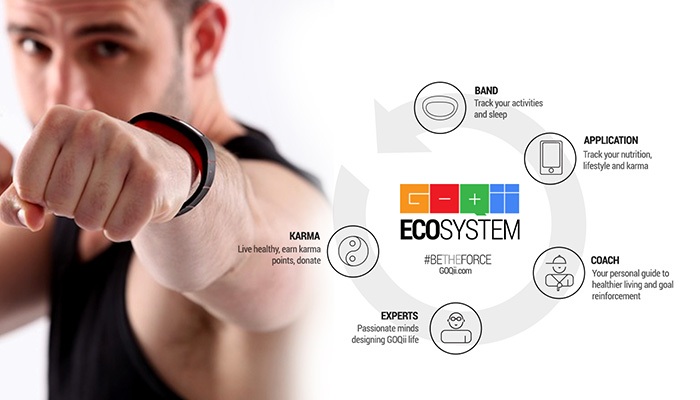
GOQiiEcosystem

If there is any solution that has ever worked with any of my patients or clients over the last 10 years, it’s a lifestyle change. Be it cancer, weight loss, or just feeling better about one’s self, a lifestyle change has always provided the most effective and sustainable result.

Restrictive diets have never worked, in fact, they lead to collateral damage like depression, frustration, yo-yo and a feeling of deprivation. If you are eating an ice-cream or chocolate, eat it with love, enjoy it, or don’t eat it at all. GOQii’s coaches will coach you to do just that. They will coach you to eat mindfully, they will help you set up goals, encourage great habits and break down the bad ones.People have started measuring their worth with the wrong scale. The weighing scale dictates to people for beautiful or healthy they are or should be, and that’s so wrong.

The GOQii dream is to change the world. There are millions of people out there, struggling with their health and lifestyle. Most are lost and have no clue what’s right and what they should do to be healthy and fit. It doesn’t help that there is so much information and research out there that just confuses us even more.

The GOQii eco-system is designed out of passion and with an intention to change people lives, make a difference, add value and evoke change in people. It’s based on simplicity and believes that motivation is the energy for action. We can do anything when we are motivated. GOQii ties in Karma, ‘giving back to our communities, it’s such a self-fulfilling feeling when you know you can give back to society through an action that is making you healthier. This ecosystem ties in all of this and more.

Our coaches come from diverse backgrounds of nutrition, sports, fitness and other fields and go through a comprehensive training on behavior, nutrition, fitness and motivation. Our training material is designed by experts from Stanford University and Yale and delivered by professional trainers.

As an individual, there are only a handful of people I can professionally help in a day. Through GOQii, we can reach out to millions. Research today has proved that even if the unhealthiest person makes as little as one lifestyle change in a month, they are on the road to rejuvenation and better health.
February 17, 2017 By Dr Darshana Salve 2 Comments

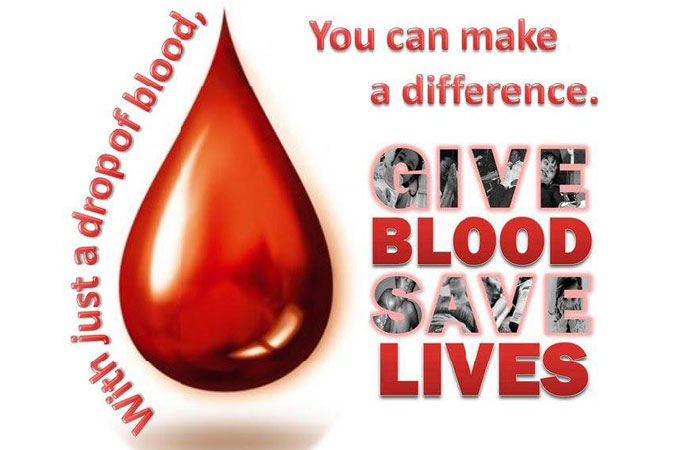
Blood should circulate – Donate Blood!

blood-donation

We only understand the importance of blood donation when someone close to us is in need of it. A few days back my cousin contacted me to know the availability of blood for her friend’s father who met with an accident. Unfortunately, we lost him due to excess blood loss. We know of this incident because it’s a dear friend’s father but, on a daily basis there are so many such cases where there is loss of death due to non-availability of blood.

Statistics show that roughly every year in India there are 234 million major operations, 63 million trauma-induced surgeries, 31 million cancer-related procedures and 10 million pregnancy related complications which require blood transfusions.

Apart from these there are also disorders like sickle cell anemia, thalassemia and hemophilia that require repeated blood transfusions.

One of the main reasons for lack of blood is, many people are skeptical about blood donation. They have fears of contracting infections during blood donation, fear of the needle or feeling weak after blood donation. Human body approximately has 4.7-5.5 L of blood, out of it only 350/ 450 ml of blood is withdrawn during blood donation drives and it takes only a day or two to replenish the fluid volume in the body and three months for the regeneration of red cells to donate more blood.

There is no substitute for human blood. Blood cannot be manufactured – it can only come from
volunteer donors like you and me. One blood donation can save 3 lives. But, unfortunately only 1 % of volunteer donors come forward to donate blood and majority of the blood donation comes from replacement donors.

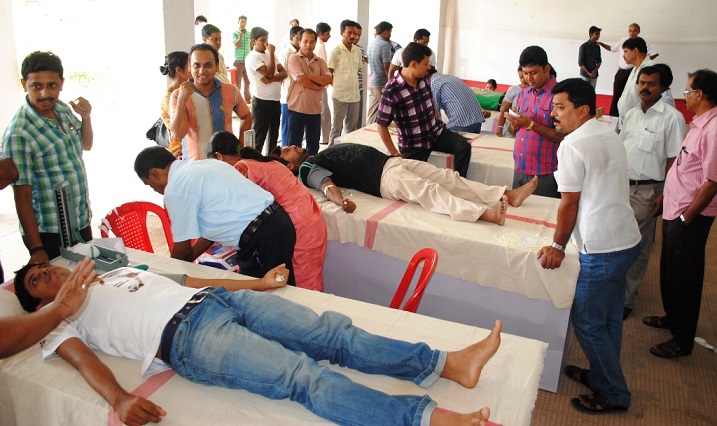
Blood Donation Camp

Replacement donors are friends and relatives of a patient who donate blood as replacement for the blood given to the patient.

At times, these replacement donors (friends and relatives) are more likely to harm the recipients by hiding or overlooking the many don’ts of donation.

Though voluntary self-referral to donate without citing reasons is widely accepted, replacement donors rarely adhere to it either to hide their high-risk behavior or due to pressure to meet the immediate demand for certain units of blood. As a result, the prevalence of HIV, hepatitis B, and hepatitis C is much higher among family donors when compared to voluntary donors, according to a 2012 study published in the Asian Journal of Transfusion Science.

Donation of safe blood can be achieved only when replacement donors are replaced by healthy volunteer donors to meet ‘over 95 per cent of blood requirement’. This can be done through increased awareness, providing appropriate facilities for people to donate blood, and improved donor retention.

While donating blood always be truthful about your health status!

Do not donate blood if you have any of these conditions

  • Cold / fever in the past 1 week.
  • Under treatment with antibiotics or any other medication.
  • Cardiac problems, hypertension, epilepsy, diabetes (on insulin therapy), history of cancer, chronic kidney or liver disease, bleeding tendencies, venereal disease etc.
  • Major surgery in the last 6 months.
  • Vaccination in the last 24 hours.
  • Miscarriage in the last 6 months or have been pregnant / lactating in the last one year.
  • Had fainting attacks during last donation.
  • Have regularly received treatment with blood products.
  • Shared a needle to inject drugs/ have history of drug addiction.
  • Had sexual relations with different partners or with a high risk individual.
  • Tested positive for antibodies to HIV.
  • If you are Underweight ( below 50 KGs)

Pregnancy and Menstrual Cycle

  • Females should not donate blood during pregnancy and lactation.
  • Females should not donate blood if they are having heavy menstrual flow or menstrual cramps.

Do donate blood if…

  • You are between age group of 18-60 years.
  • Weight is 50 kgs or more.
  • Hemoglobin is 12.5 gm% minimum.
  • Last blood donation was 3 months earlier.
  • You are healthy and have not suffered from malaria, typhoid or other transmissible disease in the recent past.

It’s time that we take up the responsibility to do voluntary blood donation. Donate Blood without waiting for a call.

February 2, 2017 By Dr. Viral Thakkar 6 Comments

Surya Namaskar-The 12 Commandments of Sun!

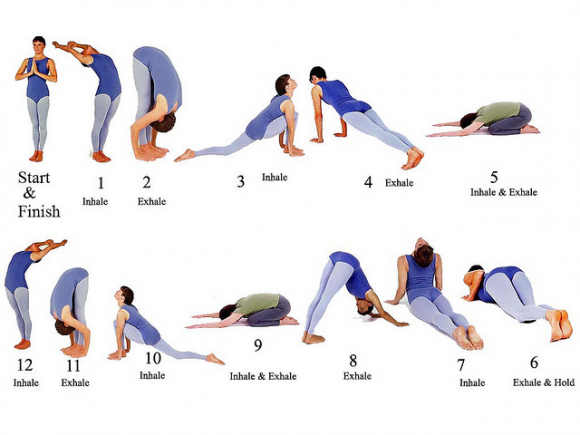
surya-namaskarAvinash, 40 years is hypertensive, diabetic and obese. He has a hectic lifestyle that involves lots of travel. His dietary habits are ill-disciplined and there is no physical activity. He visited me to tell him a mantra which can be followed easily and anywhere for his health. There are many people like Avinash who are concerned about their health but a busy lifestyle is a huge road-block to pursue anything. For such people the practice of Surya Namaskar- Sun Salutation is an ideal habit to inculcate. It is a dynamic exercise which can be done by anyone, at any age and the time required to practise this is not more than 10-15minutes.



Sun is the basic source of energy on the basis of which everyone exists. The importance of sun and the energy it provides is revered in various traditions. The energy of the sun has tremendous healing power, if tapped in the right way the results are miraculous in physical and mental ailments.

  1. Pranamasan- Stand erect with feet together. Join the palms together in front of the chest in a ‘namaste’ pose. Usually your hands will fall around your heart. Inhale and exhale slowly and gradually. This posture helps to induce a state of relaxation, calmness, gratitude and love.
  1. Hastauttanasana- Join your hands together again, inhaling stretch both arms above the head, palms facing upward. Arch the back and stretch the whole body backwards. This posture stretches the chest and the abdomen and lifts the energy to the upper parts of the body propelled by inhalation. It is an excellent stretch for the back muscles making it stronger.
  1. Padahastasana – Bend the body down while exhaling and keep the spine straight. Keep the legs straight and perpendicular to the ground. The knees should ideally be straight; don’t force yourself, but try to touch your feet. In due course you will!

This posture impacts the abdominal organs- liver, kidneys, pancreas, adrenals, uterus and ovaries. The power of digestion increases and female disorders such as prolapse and menstrual irregularities are relieved. A healthy flow of blood is sent to the spinal nerves as they are stretched and toned. The hamstring muscles at the back of the thigh and calf muscles are stretched and toned.

  1. Ashwa Sanchalanasana – While inhaling, extend the left leg back and drop the knee to the ground. The right knee is bent and kept between the hands and the right foot placed flat on the ground. Lift the spine and open the chest. Concentrate at the eyebrow center. This posture tones the abdominal organs and gives flexibility to the leg muscles during stretching. It is a balancing posture because the spine lengthens upwards while the hands are grounded.
  1. Parvatasana (Mountain posture)- On the exhalation bring the right leg back to join with the left leg. Simultaneously raise the buttocks and lower the head between the arms, so that the body forms a triangle with the floor and you look like a mountain! Try to place the heels flat on the ground.

This posture strengthens the nerves and muscles in the arms and legs, stretches the calf muscles and Achilles’ tendons and makes the spine straight and taut. It relieves varicose veins and tones spinal nerves. Parvatasana pulls up all the abdominal, pelvic and side muscles, stretches the spine and ribs, loosens the hips, stretches and exercises the usually inactive waist zone and helps to reduce a fat, flabby and protruding abdomen. It also aids correct breathing.

  1. Ashtanga Namaskara – Exhaling gently drop both knees to the ground and slowly slide the body down at an angle as you bring the chest and chin to the ground. All eight limbs – toes, knees, chest, hands and chin touch the floor. The buttocks are kept up. You can hold your breath. This posture develops the chest and strengthens arms. It sends additional blood to this area helping to rejuvenate the nerves. It works and improves the muscles of all the 8 limbs involved.
  1. Bhujangasana- On the inhalation, lower the hips while pushing the chest forward and upward with the hands, until the spine is fully arched and the head is facing up. The knees and lower abdomen remain above the floor. This pose expands the all organs of the chest and abdomen, relieving many ailments such as asthma, constipation, indigestion, kidney and liver problems. It is very helpful in relieving tension in the back muscles and spinal nerves.

From here on, you will do the poses in a reverse action.

  1. Parvatasana (Mountain posture) Exhale and get back to posture 5
  1. Ashwa Sanchalanasana- Inhale and swing the right leg forward between the hands. The left leg remains back. Resume posture 4. 
  1. Padahastasana (Hand to foot posture)- Exhaling, bring the left foot forward. Join both legs and resume posture 3
  1. Hastauttanasana (Raised arm posture)- Inhale, raise the trunk up and bend backward. Resume posture 2
  1. Pranamasana (Salutation posture)- Straighten the body and bring your hands in front of the chest. Resume posture 1.

These simple set of 12 exercise postures ensures that you begin your day with a bang! As a Doctor who understands the science of human body, I believe these set of exercises are a boon. Every posture in Surya Namaskar has a corresponding effect on our internal organs as described above. For best results, one should practise these steps with deep inhalation and exhalation. You can also do each pose quickly and have 2-3 cycles of Namaskar, but for best results, take deep breaths- 5-8 for each pose.

It is not only beneficial for the physical body, but it leads to mental and spiritual growth if done regularly. In ancient literature even Patanjali describes it as a complete exercise- involving every muscle, joint and organs. It balances all the systems of human body- it rejuvenates the cells of the body leading to an ideal health state. The above mentioned benefits are just a few of the huge list of advantages.

Salute the Sun! Salute your Health!

Surya Namaskar is a set of 12 poses (steps), if performed in sequence every day with correct breathing is the best gift one can give to one’s own self. Ideally, these poses should be done empty stomach, at the time or just before sunrise. I will introduce you to each of these poses and the significance of each.

January 29, 2017 By Dr Manali Rao Leave a Comment

Pregnancy and Depression

562668-depression-in-preg


The most wonderful time in a woman’s life is during her pregnancy. It’s a miraculous time when a little prince or princess is growing within us and for the first time in our life we are unconditionally in love with this little unknown being. We cherish every pain that we go through during these 9months. It’s as if all your happiness, your desires revolve around the yet to be born baby.


It’s a magical time. Or so everyone says. But, is it so for every pregnant woman out there?? Everyone expects the expectant mother to always be happy all the time. Pregnant woman is also told how she is not supposed to be crying or throwing tantrums or thinking negative. Well, believe me, this is easier said than done. Yes, the mother is happy, nobody could possibly be as happy as her. She is the one carrying the baby for 9 Months in her womb remember! And, yes she’s happy that she has made the entire family happy by this great news.

But,most forget that to-be-mothers are also human!!! So what’s wrong if she’s a little anxious! What’s wrong if she doesn’t feel elated every single moment of the day! What’s wrong if she weeps for some silly reason! What’s wrong if she gets upset or fusses over little things! Just because she is pregnant, it doesn’t mean she’s not a normal human any more right??!!!

Most women end up feeling guilty for being sad or upset during pregnancy! Why so?? Well, thanks to the expectations of everyone around them. They get a sense of fear towards their unborn child. They become increasingly unsure of their parenting abilities.Nobody is a perfect parent. We all learn through mistakes. Why do people forget that? Fear of the unknown is obvious. But, the unknown isn’t always bad right??

These thoughts precisely has led me to write this blog on Pregnancy and depression.

Depression during pregnancy also known as antepartum depression, and depression after delivery known as postpartum depression is a mood disorder just like clinical depression. All women experience depression and anxiety at some point of their pregnancy. During pregnancy, a woman’s body goes through many changes be it physical/mental/emotional. Hormonal changes occur during pregnancy and all these lead to mood swings which are perfectly normal during pregnancy. So when do we actually worry and differentiate between the normal pregnancy symptoms or symptoms of actual depression.

Here are few symptoms to look out for:

  1. Feeling sad and anxious all the time
  2. Loss of interest in activities
  3. Not pursuing hobbies anymore
  4. Sleeping too little or too much
  5. Feeling of hopelessness or worthlessness or guilt
  6. Thoughts of death or suicidal tendencies
  7. Inability to concentrate
  8. Withdrawal from family and friends
  9. Crying spells
  10. Recurring nightmares

Risk factors:

  • Troubled family life
  • Lack of emotional support from the family especially spouse
  • Past history of clinicaldepression
  • Family history of clinicaldepression
  • Any persisting or past psychiatric illness
  • Miscarriage in the past
  • Conception post infertility treatment
  • Any medical condition Or past illness

Apart from antepartum depression a woman can also go through Postpartum depression (PPD).
Many new moms experience the “postpartum baby blues” after childbirth, which commonly include mood swings, crying spells, anxiety, difficulty in sleeping, difficulty bonding with your baby, fear that you are not a good mother and even thoughts of harming yourself or your baby. Baby blues typically begin within the first two to three days after delivery, and may last for up to two weeks. It can affect both parents.

How does one overcome depression??

  1. Family’s support, understanding, love and care can work wonders especially the attention of your spouse. Everyone should understand that a woman goes through so many changes duringpregnancyand that the symptoms vary from one person to another. Some women may have a hassle free pregnancy, while others may not and understanding this is most important. Nobody will fake any ailment. So if a woman says she has some trouble, be it a simple backache or a headache or excessive nausea vomiting, trust her that she does.
  2. Indulgein hobbies: Indulge in activities that make you happy. If you are inclined to sketching, singing or any other hobby try pursuing these hobbies during your pregnancy and that can keep you calm and happy.
  3. Do not hesitate to seek help. Many families still think seeking help means either you are weak or something is wrong with you. And most conclude you have either gone crazy or have lost your senses, it is certainly not so. Any person may experiencedepression. That does not make the woman crazy. It’s just a phase of life. Like every other problem women have to fight it and overcome the same.
  4. Eathealthy. Nutritious diet is most important along with folic acid/iron/calcium supplements duringpregnancy.
  5. Sightseeing – going out and getting some fresh air with your spouse even if its just for walks can always cheer you up.
  6. Rest -Yes it is very important to be active to ensure normal delivery and lesser complications. But at the same time getting ample amount of rest is equally important.

Management:

Instead of jumping to drugs as the first line of treatment we must try CBT (Cognitive Behavioral Therapy) accompanied by support of the family, healthy diet, meditation and making sure the mother incorporates hobbies in her everyday routine.

Don’t ever think twice to seek help. Ignore the stigma that the society has shown towards depression during pregnancy. It’s no one’s fault. It can happen to anyone. What’s important is to recognize the symptoms, remain strong, face it and overcome the same.


  • « Previous Page
  • 1
  • …
  • 50
  • 51
  • 52
  • 53
  • 54
  • …
  • 62
  • Next Page »

Search

Recent Posts

  • The Sleep-Metabolism Connection: Why Rest is Your Best GLP-1 Partner
  • Accelerate Action for Your Health: Why Self-Care Matters This International Women’s Day
  • 4 Reasons Why Affirmations Are Not Working For You
  • The Social Side of GLP-1: Navigating “Food Culture” and Peer Pressure
  • Leaky Gut: Symptoms and Causes

Stay Updated

Archives

  • March 2026 (3)
  • February 2026 (14)
  • January 2026 (14)
  • December 2025 (19)
  • November 2025 (15)
  • October 2025 (20)
  • September 2025 (6)
  • August 2025 (6)
  • July 2025 (12)
  • June 2025 (18)
  • May 2025 (16)
  • April 2025 (22)
  • March 2025 (23)
  • February 2025 (22)
  • January 2025 (25)
  • December 2024 (22)
  • November 2024 (23)
  • October 2024 (21)
  • September 2024 (24)
  • August 2024 (30)
  • July 2024 (21)
  • June 2024 (26)
  • May 2024 (31)
  • April 2024 (27)
  • March 2024 (29)
  • February 2024 (25)
  • January 2024 (21)
  • December 2023 (15)
  • November 2023 (11)
  • October 2023 (19)
  • September 2023 (22)
  • August 2023 (18)
  • July 2023 (22)
  • June 2023 (24)
  • May 2023 (24)
  • April 2023 (23)
  • March 2023 (23)
  • February 2023 (19)
  • January 2023 (15)
  • December 2022 (11)
  • November 2022 (15)
  • October 2022 (15)
  • September 2022 (12)
  • August 2022 (10)
  • July 2022 (17)
  • June 2022 (11)
  • May 2022 (10)
  • April 2022 (6)
  • March 2022 (6)
  • February 2022 (13)
  • January 2022 (11)
  • December 2021 (7)
  • November 2021 (3)
  • October 2021 (6)
  • September 2021 (3)
  • August 2021 (8)
  • July 2021 (7)
  • June 2021 (15)
  • May 2021 (16)
  • April 2021 (10)
  • March 2021 (7)
  • February 2021 (4)
  • January 2021 (4)
  • December 2020 (3)
  • November 2020 (4)
  • October 2020 (10)
  • September 2020 (3)
  • August 2020 (3)
  • July 2020 (2)
  • June 2020 (4)
  • May 2020 (10)
  • April 2020 (12)
  • March 2020 (10)
  • February 2020 (4)
  • January 2020 (4)
  • December 2019 (3)
  • November 2019 (7)
  • October 2019 (5)
  • September 2019 (4)
  • August 2019 (9)
  • July 2019 (9)
  • June 2019 (11)
  • May 2019 (4)
  • April 2019 (8)
  • March 2019 (8)
  • February 2019 (9)
  • January 2019 (8)
  • December 2018 (9)
  • November 2018 (3)
  • October 2018 (3)
  • September 2018 (5)
  • August 2018 (10)
  • July 2018 (6)
  • June 2018 (13)
  • May 2018 (8)
  • April 2018 (18)
  • March 2018 (9)
  • February 2018 (8)
  • January 2018 (15)
  • December 2017 (12)
  • November 2017 (19)
  • October 2017 (13)
  • September 2017 (15)
  • August 2017 (4)
  • July 2017 (8)
  • June 2017 (7)
  • May 2017 (6)
  • April 2017 (8)
  • March 2017 (6)
  • February 2017 (7)
  • January 2017 (9)
  • December 2016 (10)
  • November 2016 (7)
  • October 2016 (7)
  • September 2016 (7)
  • August 2016 (11)
  • July 2016 (9)
  • June 2016 (9)
  • May 2016 (12)
  • April 2016 (17)
  • March 2016 (17)
  • February 2016 (8)
  • January 2016 (6)
  • December 2015 (2)
  • November 2015 (9)
  • October 2015 (7)
  • September 2015 (9)
  • August 2015 (11)
  • July 2015 (9)
  • June 2015 (12)
  • May 2015 (9)
  • April 2015 (13)
  • March 2015 (8)
  • February 2015 (5)
  • January 2015 (12)
  • December 2014 (14)
  • November 2014 (11)
  • October 2014 (6)
  • September 2014 (13)
  • August 2014 (12)
  • July 2014 (6)
  • June 2014 (2)
  • May 2014 (7)
  • April 2014 (4)

From “Laddu Nawin” to Fit and Fierce: How a 25-Year-Old Insurance Advisor Shed 20 Kilos and Gained His Life Back

When 25-year-old Nawin Yadav from Hyderabad walked into his office every morning, he carried more than just his files and policy papers. He had the weight of fatigue, sluggish energy, and an ever-growing belly that was becoming the butt of jokes. “People … [Read More...]

“I’ve Challenged Myself to Live 100 Years” – The Story of Chandubhai Savani’s Second Chance at Life

At 67, most people start slowing down. Not Chandubhai Savani. A resident of Surat, Chandubhai, thought life was on track. “My life was going well till I had my bypass surgery,” he says. That surgery, back in 2021, was a wake-up call.  Medication was routine, but exercise wasn’t. His diet? What he calls ‘normal.’ “I […]

From Shimla’s Slopes to Chandigarh’s Sidewalks: Surinder Kaur Bhalla’s Journey from Chaos to Control

Some journeys start with a plan. Others begin with a stumble literally. Surinder Bhalla, a government professional, born and raised in the scenic hill town of Shimla, had always lived a life of movement. “In Shimla, you walked everywhere,” she reflects. “Walking was never an exercise. It was just life.” But after shifting to Chandigarh, […]

Ananda Mukherjee Health Story

From Terminal Illness To Complete Wellness! Ananda Mukherjee Health Story

As we observe World Cancer Day under the powerful theme ‘United by Unique’ (2025-2027)**, we are reminded that every individual’s journey with cancer is distinct, yet united by shared resilience, hope, and the collective fight against this disease. This theme places people at the centre of care and their stories at the heart of the […]

  • HOME
  • HEALTHY LIVING
  • FITNESS
  • HEALTHY RECIPES
  • USER STORIES
  • KARMA
  • BUY GOQii

Copyright ©2016 GOQii