GOQii

Blog

  • HOME
  • HEALTHY LIVING
  • FITNESS
  • HEALTHY RECIPES
  • USER STORIES
  • KARMA
  • BUY GOQii

Search Results for: heart health

June 28, 2023 By Bhumi Mehta 3 Comments

Yoga Therapy To Fight Viral Infections

yoga therapyGet ready to boost your immunity and conquer those pesky viral infections! Monsoons and the ever-changing weather can leave us feeling drained and vulnerable to sore throats, colds, and fevers. But fret not! Yoga Therapy comes to the rescue with its comprehensive approach.

How Does Yoga Therapy Help? 

Yoga Therapy works on five different levels i.e. Physical Body, Energy Body, Mental, Intellectual, Emotional and Spiritual level. Let’s explore how it helps you! 

1. Physical Body

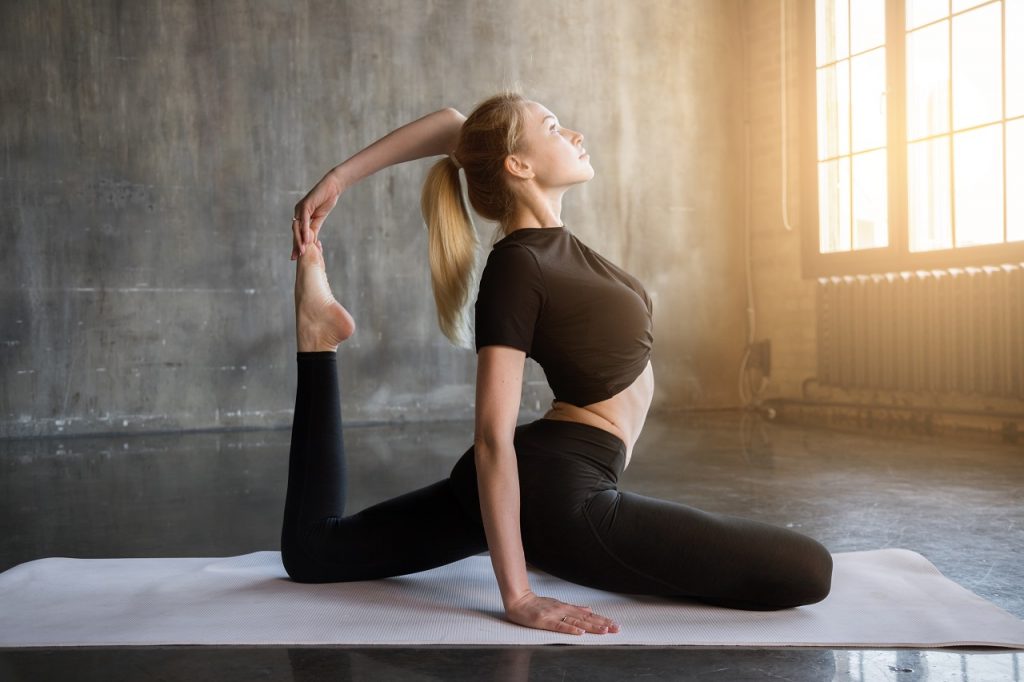
Here are some Yoga Asanas you can practice to remove the physical symptoms of the infection.

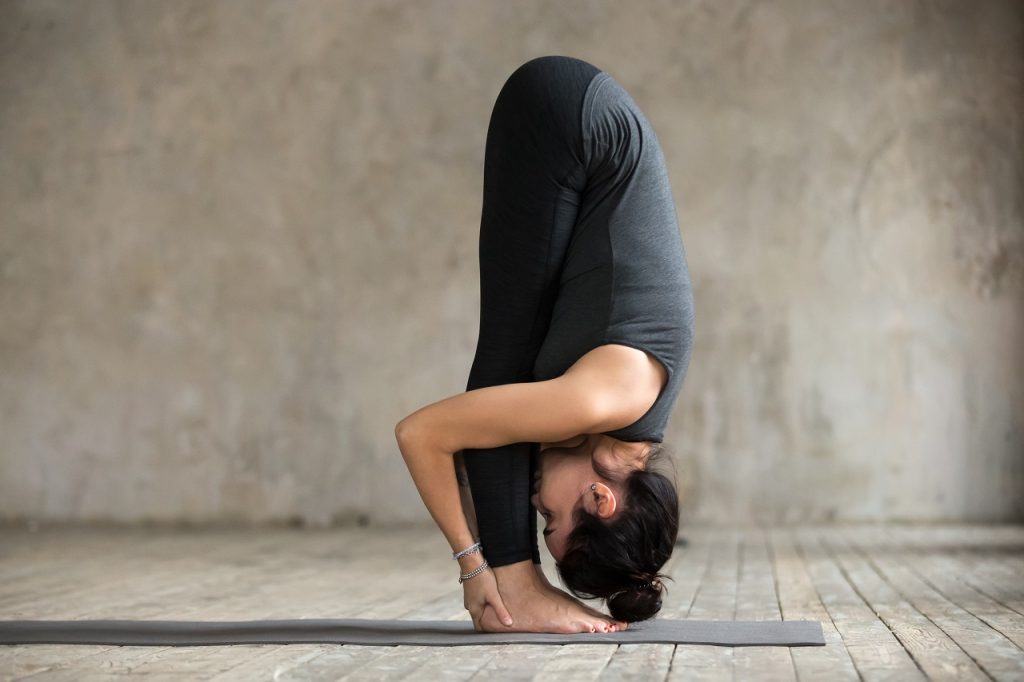
A. Uttanasanayoga therapyHelps in clearing out the sinus passages, thereby clearing out blockages and allowing for more complete breathing. It invigorates the nervous system and relieves stress and tension.
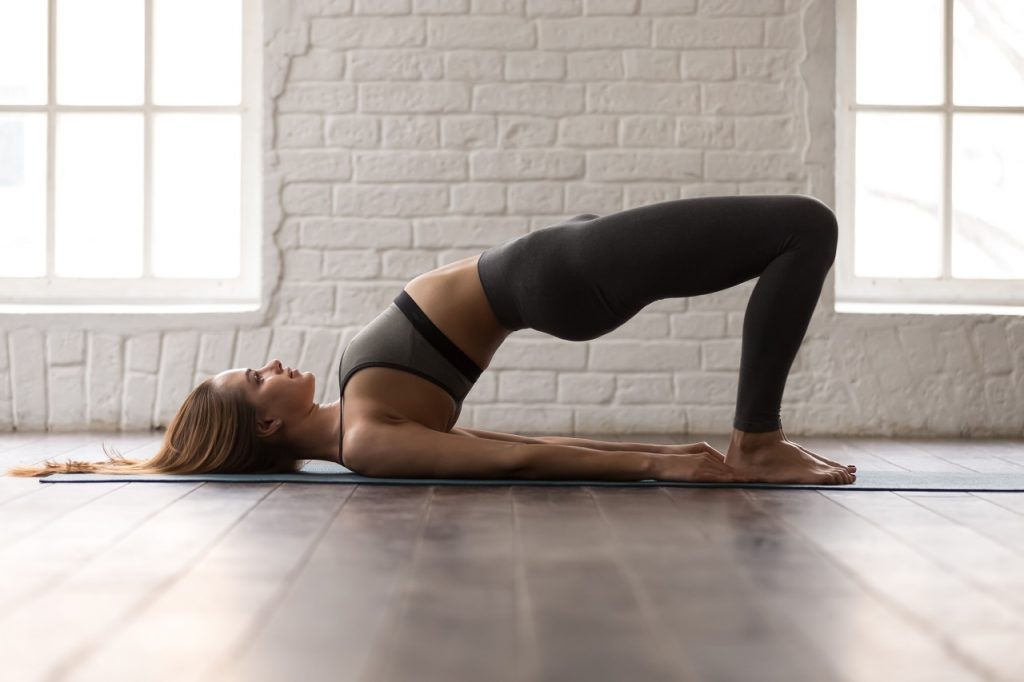
B. SetubandhaasanaOpens up the chest. It also sends fresh blood to the head, which helps open up the sinuses further. This asana also activates the thymus glands, one of the main organs of the immune system.
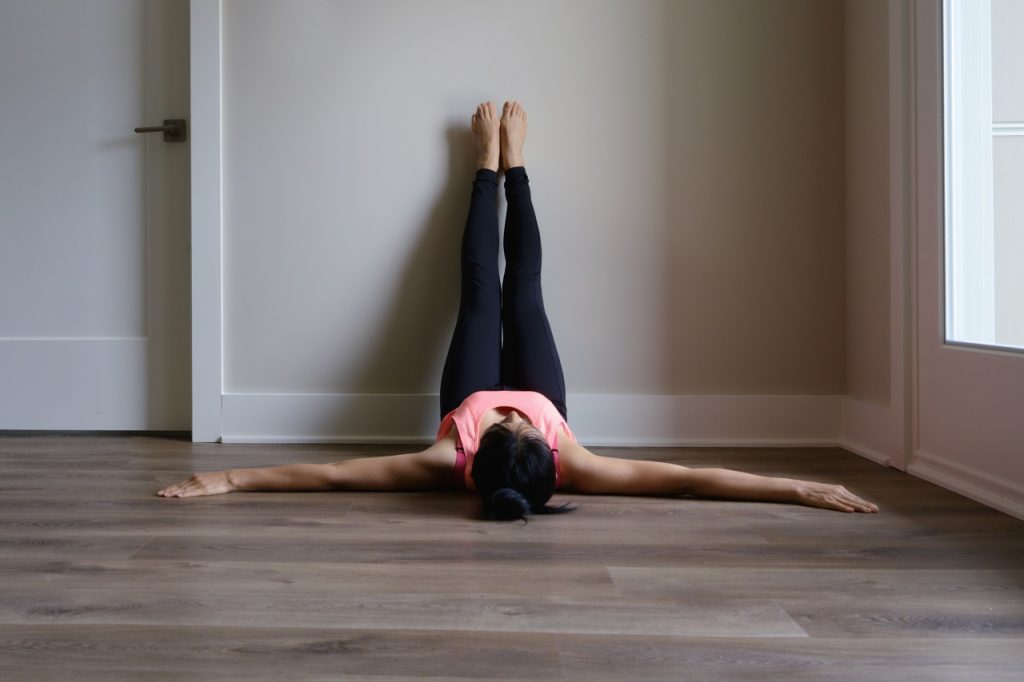
C. Viparit Karni The Legs Up the Wall Pose is a great pose to practice to counter respiratory ailments. When you practice this asana, you might find relief from headaches or backaches that accompany a cold. Practicing this asana calms the mind and makes you strong as your body deals with the cold and helps in reducing fatigue, which usually follows common cold. This asana helps the immune cells to move through your body.
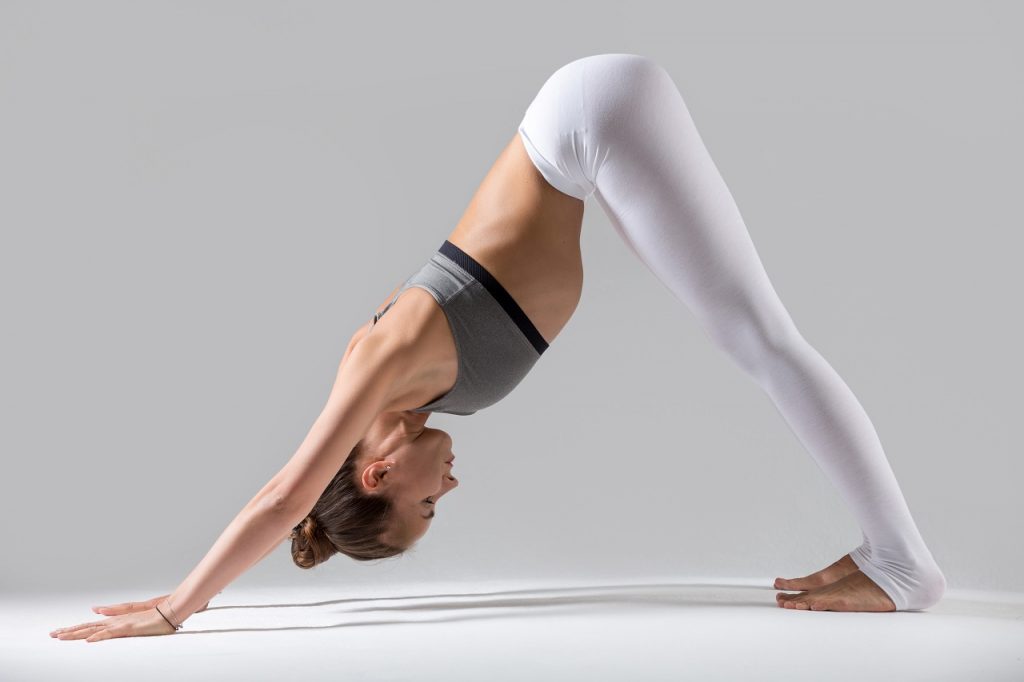
D. Adho Mukha SvanasanaIn this asana, your heart is placed higher than the head. There is a reverse pull of gravity that happens when you do that, and this aids in the proper circulation of the lymph and the blood. The mild inversion allows a free flow of white blood cells throughout the body and also helps to drain out the sinuses.
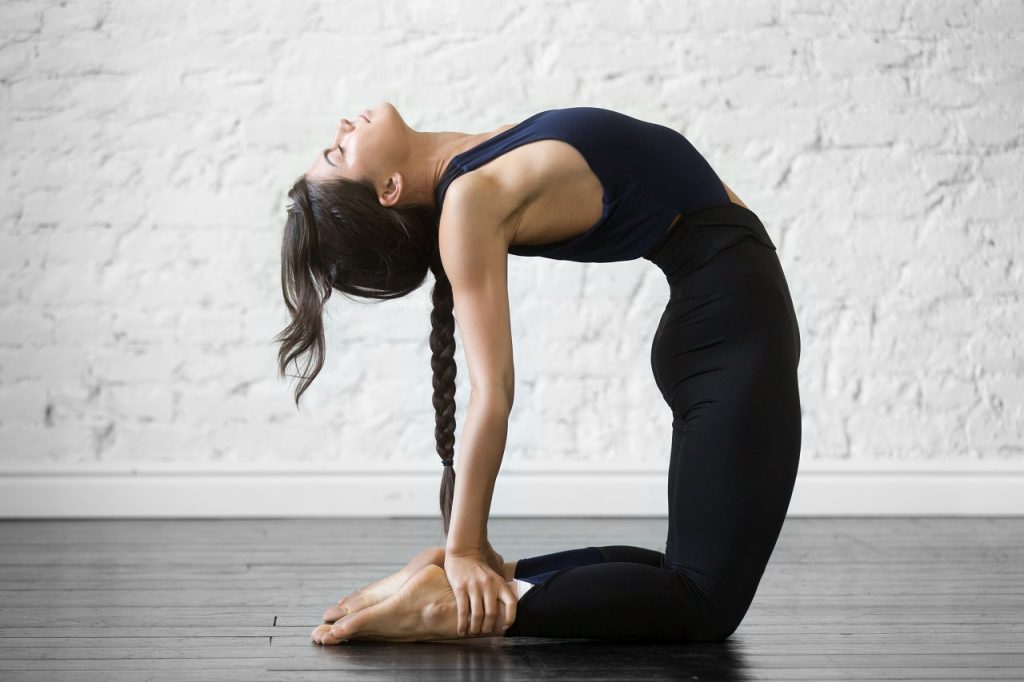
E. Ustrasana This asana opens up the chest and clears out all the passages. It is essential to try and breathe as much as you can while you are in this pose. This will help open up all the blocked areas that are causing the cold.
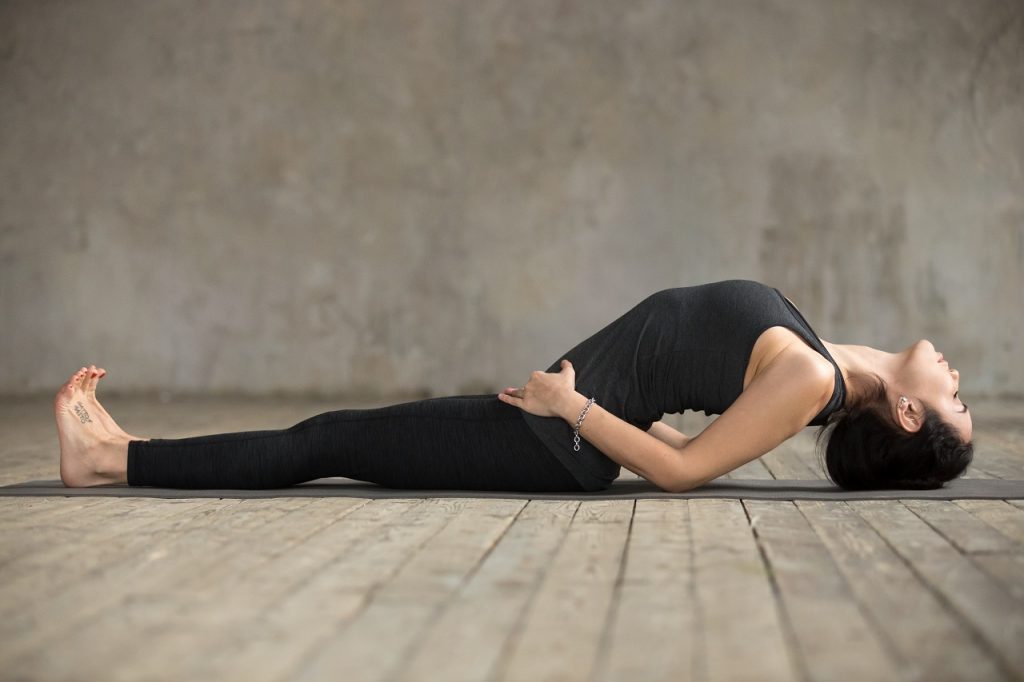
F. Matsyasana When you assume this asana, your chest is raised and your throat is opened up. This improves your breathing and might help alleviate a cold. During colds, one can support the upper thoracic back with a cushion, bolster, or yoga blocks, aiding optimal recovery.
2. Energy Body

Pranayama is practiced to eliminate mucus and any agitations in breathing. Practices for this are as follows:

  • Kapalbhati Pranayama: Helps unclog the respiratory tract. Improves blood circulation and uplifts the mind. 2-3 rounds twice a day gives you renewed energy to combat common cold.
  • Bhastrika Pranayama: Involves forceful exhalation that aids in clearing the nasal passage.
  • Nadi Shodhan Pranayama: Helps open up a blocked nose. It also facilitates better flow of oxygen to the lungs and keeps your mind calm and peaceful.
  • Ujjayi Pranayama: Helps increase lung capacity, as well as releases toxins with each exhalation.

3. Mental Level

Simple Dhyana Meditation is practiced to keep one relaxed in the physically stressful time. Just sitting in a quiet place with closed eyes for a few minutes and meditating can help boost the immune system and help fight any kind of infection.

4. Intellectual Level

Observing part of the self while practicing Yoga increases the awareness of self. This awareness eliminates agitations of mind, which brings self love and compassion

  • Shavasana: This is a deep resting pose. Sometimes, when you have a cold, all you need to do is to rest your body. It energizes it and helps it fight better against the cold-causing viruses. It shifts the focus on oneself, and increases awareness, which helps relax the mind and body.

5. Spiritual Level

Mediation, Prayers and Chanting can help you boost your immunity and keep you mentally strong during the time when the body is suffering with an infection.

Practicing the yoga therapy based module for viral infections not only strengthens the immune system of the body, but it also improves mental health, which is very important to heal and recover. Staying strong mentally helps our body fight any infection better. Yoga Therapy works on our overall health. It gives one a strong body, a strong mind and a strong spirit to overcome most things. 

If this article helped you, let us know in the comments below. Find more articles on Yoga here. You can also practice yoga safely under the guidance of an expert by joining a live, interactive GOQii PRO class. Book a class now through the GOQii App.

#BeTheForce  
June 16, 2023 By Trupti Vyas (Pandya) 17 Comments

Healing Hands: 5 Hand Yoga Mudras To The Rescue

hand yogaEveryone knows about yoga and the benefits it can bring to your life. This ancient form of exercise started in India and has reached far and wide across the world. Since the pandemic, we’re always looking for new ways to be fit and active, given that health has now become a priority. I have a few ways on how we can be more active during the day and that’s Hand Yoga!

The importance of specific hand position is common in spiritual and healing arts tradition. India is home to perhaps the largest collection of such hand gestures. The Sanskrit word Mudra means gesture. These Hand gestures (Mudras) stimulates the flow of vital energy in unique ways, affecting organs, glands and nervous system of the body. Such gestures are mainly used while doing yoga postures (Asanas), Pranayama (breathing practices) and Meditation.

5 Hand Yoga Mudras & Their Benefits

The importance of specific hand position is common in spiritual and healing arts tradition. India is home to perhaps the largest collection of such hand gestures. The Sanskrit word Mudra means gesture. These Hand gestures (Mudras) stimulates the flow of vital energy in unique ways, affecting organs, glands and nervous system of the body. Such gestures are mainly used while doing yoga postures (Asanas), Pranayama (breathing practices) and Meditation.

1. Jnana/Gyan Mudra

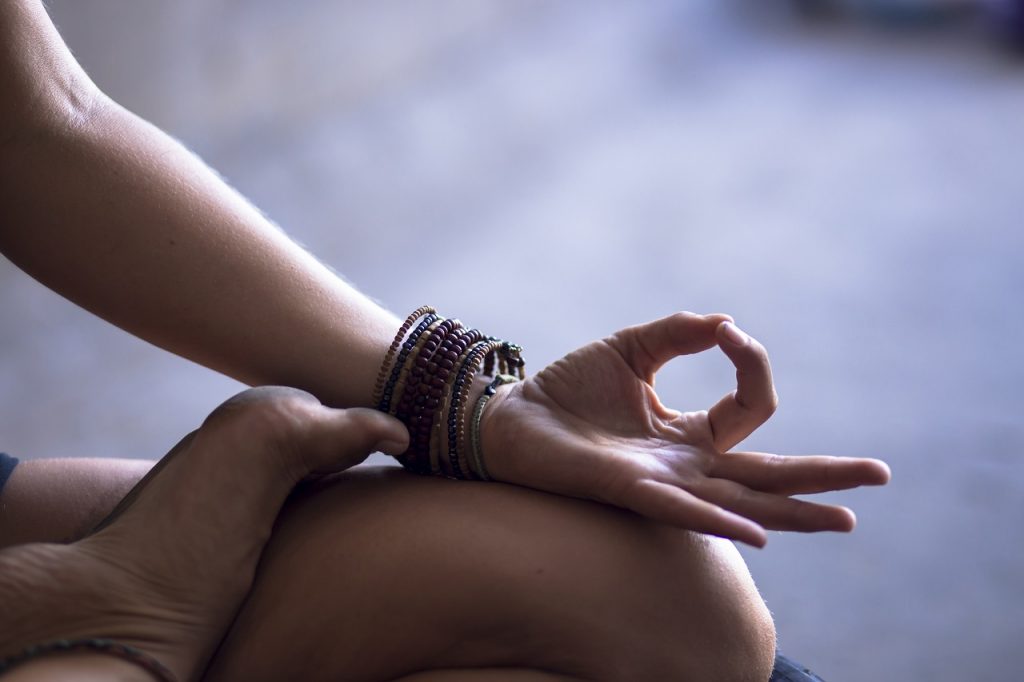
hand yoga mudrasIn this Mudra, the thumb and index finger are touching and form a circle. The other three fingers are stretched casually. The palms are facing upwards. This Hand Yoga Mudra is known as the gesture of knowledge and wisdom. The Index Finger symbolizes the ego that is beaten by the universal wisdom, which is represented by thumb.
Benefits: 

  • Stimulates brain functions, the sense of touch and harmonizes the nervous system.
  • Calms the soul gives inner peace, promotes concentration as well as memory and helps in insomnia and depression.

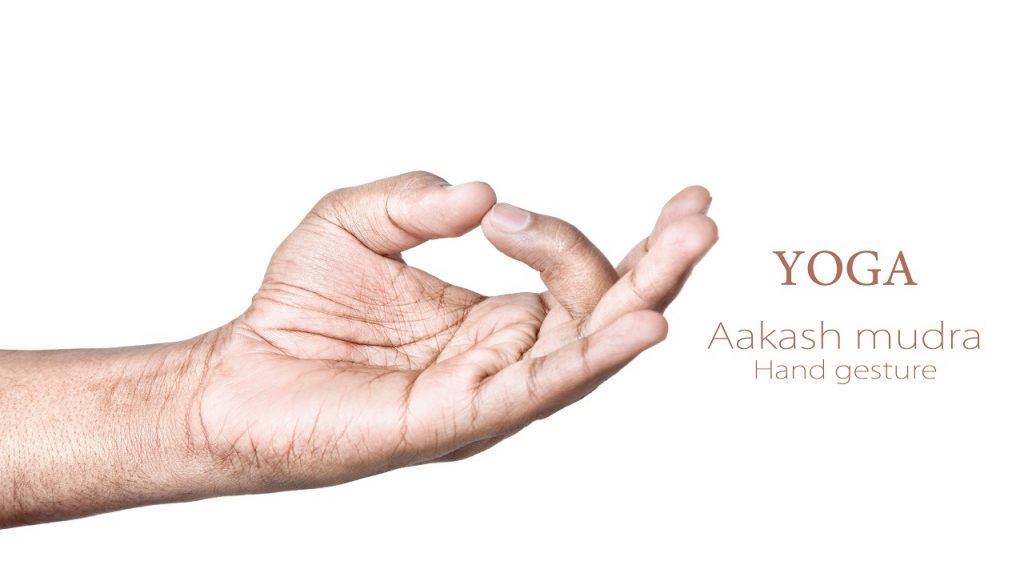
2. Aakash Mudra

To perform this, the thumb and middle finger are brought together. The other fingers are casually stretching. Aakash stands for the element of room or ether.
Benefit:

  • It helps overcome obstacles and blockades related to stress in personal or professional life.
  • It also helps with heart diseases, toothache, a stiff jaw, ear ache and weight regulation, strengthening bones, intuition and awareness are strengthened and feeling and thoughts are cleansed.

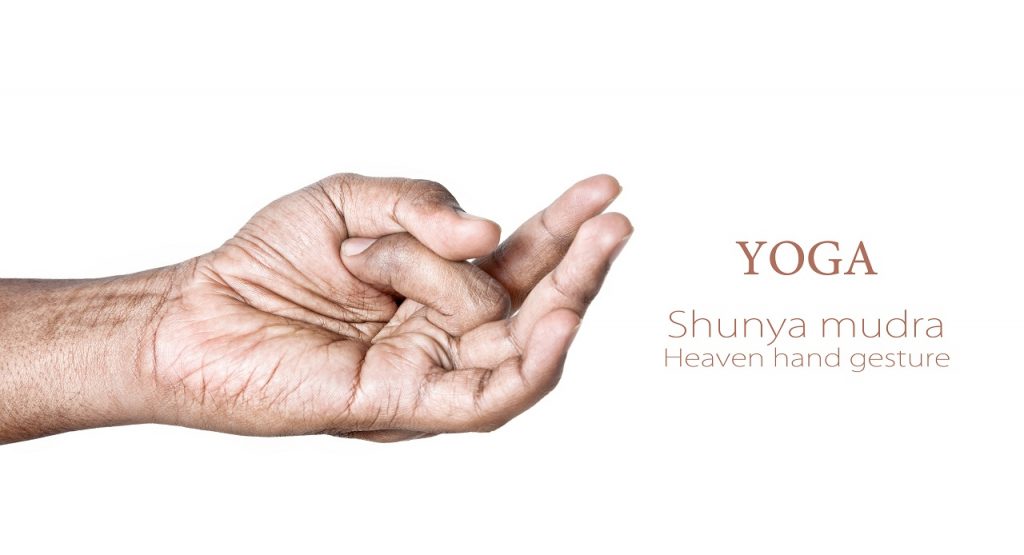
3. Shunya Mudra

In this Hand Yoga Mudra, you bend your middle finger until it touches the ball below the thumb. The thumb performs light pressure on the middle finger. The other fingers are stretched. Put your hands, palms facing up, on your thighs. Sunya Means “sky” or “zero”.
Benefits

  • It has a healing effect on the ear area and helps with different issues such as ear aches, ringing in ears.
  • It can help with imbalance, dizziness, travel sickness, sea sickness and nausea brought by movement.
  • It helps in healing throat and nose infections.   

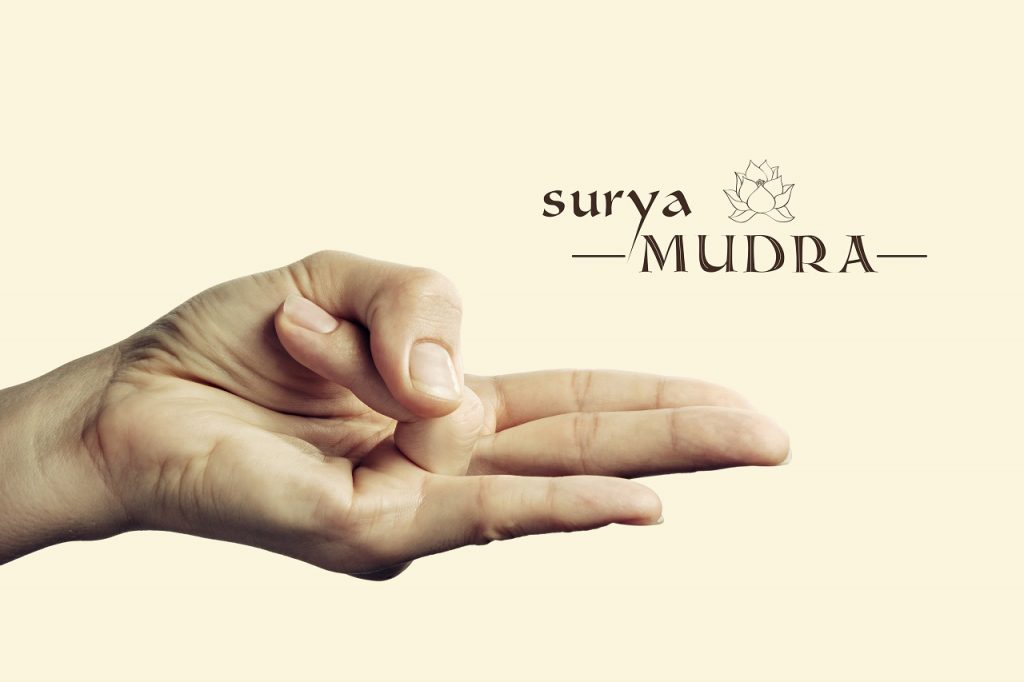
4. Surya Mudra

It is formed by folding the ring finger so that it touches the lower end of the thumb. The thumb pushes the ring finger slightly down and other fingers are casually stretched upwards. Surya Mudra activates the fire  element of the body.
Benefits

  • It activates metabolism, therefore, suited for people who want to lose body fat/weight and improve their cholesterol levels.
  • It helps heal cold by creating warmth inside the body.
  • It helps in strengthening the eyes and improves eyesight.

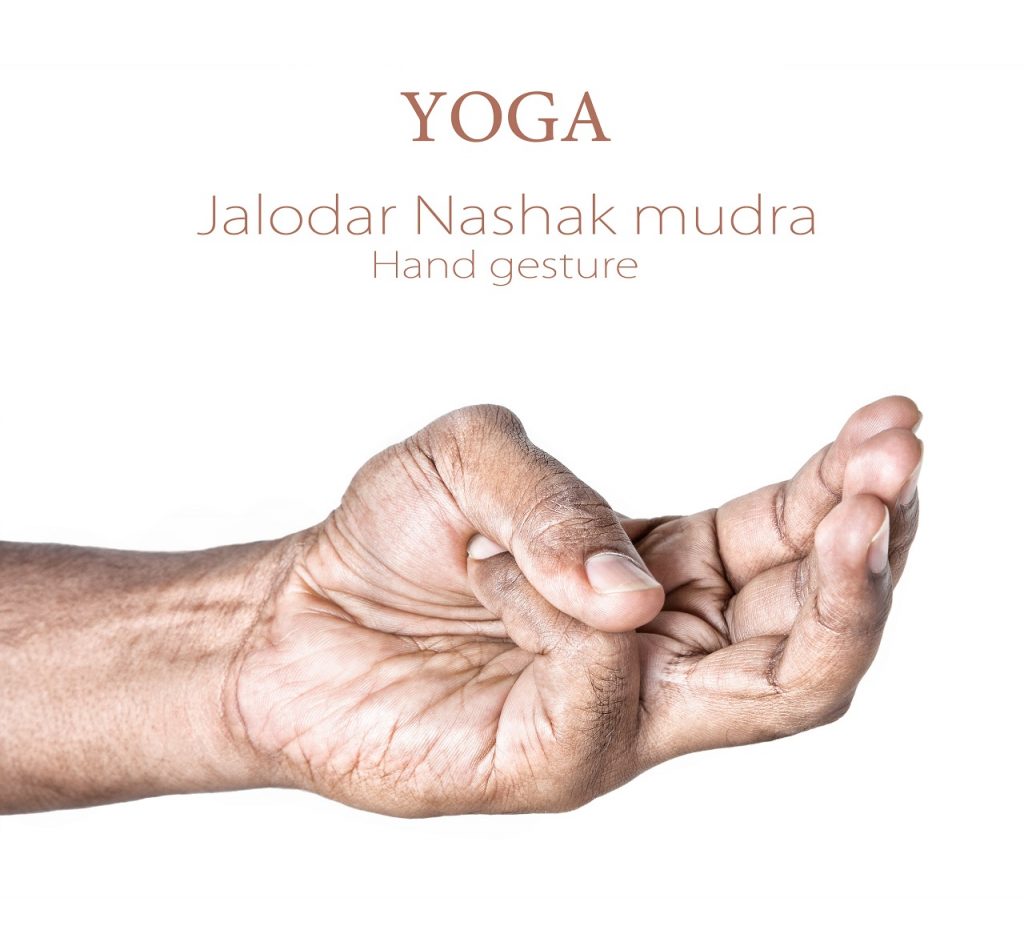
5. Jalodar Nashak Mudra

To perform this, the small finger is bent towards the thumb. The thumb pushes the small finger slightly down. The name of this hand gesture (Mudra) is made up of from three words Jal for “water”, Udar for “ stomach”and Nashak for “finish”. The small finger represent the water element.
Benefits: It reduces excess water in the body. Swelling, excessive salivation, watering eyes, runny nose and heavy periods are all reduced.

Apart From these 5 main Hand Yoga Mudras, the other important ones are Dhanyi Mudra – which is a classical mediation gesture where hands lay causally in your lap which gives feeling of contentment and Atmanjali or Namaskar which symbolizes gratefulness or respect which leads to inner balance.

You can try these Hand Yoga Mudras anywhere, at any time. Just relax and be gentle. Activating the energy in your hands will in turn activate the corresponding energy in the rest of your body and evoke a sense of overall vitality. If you are new to yogic practices, then these Hand Yoga Mudras will be a great way to start practicing.

If this article helped you, let us know in the comments below! You can find more articles on yoga here. You can also join our live, interactive sessions on GOQii PRO where you will be guided in real time by an expert. Book a class now from the GOQii App.

#BeTheForce

June 14, 2023 By Dr. Viral Thakkar 2 Comments

Is Blood Donation Really That Important?

blood donationPriyanka struggled to get blood for her father who was undergoing a surgery. The blood bank did not have her father’s blood type. As things got tougher, she tried to get in touch with other blood banks but none of them had it. In fact, she was ready to pay, but the blood banks did not have the blood type! Time was running out. She also started getting in touch with her friends but to no avail. Her friends all refused to donate blood due to their preconceived notions and myths.


Due to the shortage of blood, within a few hours, Priyanka lost her father. While she was inconsolable, what shattered her completely was the fact that in India, a country with such a large population, she could not garner enough blood for him, even though every human possesses it.

Timely, affordable access to screened blood is essential to the provision of safe surgical care. This depends on three key aspects:

  • Adequate volume of blood supply
  • Safe protocols for blood donation and transfusion
  • Appropriate regulation to ensure safe, equitable and sustainable distribution.

Different medical procedures require different components of blood. However, due to the lack of facilities, much of it goes to waste. Many low-income and middle-income countries experience a deficit in these categories, particularly in rural areas. This is coupled with lack of donor awareness and information.

The WHO recommends that the blood requirement of 1% of a country’s population be used as a ballpark estimate of its blood needs. By this measure, India was short of 1.9 million units of blood according to the data presented on March 2018.

One requires blood transfusions in various emergencies like women with complications during childbirth, anemia, accidents, complex medical surgeries, patient with thalassemia, sickle cell disease  or it is also used to make clotting factors for people with hemophilia. Among other issues coupled with low donor rate, the blood banks in India face a crisis of blood almost every year.

Physical Benefits of Blood Donation

1. Lower Risk of Heart Disease:  Blood donation may lower the risk of heart disease and heart attack since it reduces the blood’s viscosity. It also significantly lowers the total cholesterol and low-density lipoprotein cholesterol, protecting against cardiovascular disease.  Researchers note this is consistent with findings in other studies which found that blood donors had a lower risk of heart disease and heart attack.

According to a study, donating blood regularly may also lower iron stores which may reduce the risk of heart attack. The risk of heart attacks increase when the body stores a lot of iron.

2. Donating blood is an opportunity to get a basic health checkup done for free since the technician checks your:

  • Pulse
  • Blood pressure
  • Body temperature
  • Hemoglobin levels

This is an insight into your health! The blood is also checked for:

  • Hepatitis C
  • HIV
  • West Nile virus
  • Syphilis
  • Trypanosoma cruzi

Psychological Benefits

Donating blood has a feel good factor. It tends to improve one’s emotional well being. Hence, it might have an impact on stress reduction and providing a sense of belonging

Side Effects of Donating Blood

Post donating blood, one might feel

  • Nauseous, lightheaded or dizzy after donating blood. This usually settles in a  few minutes
  • There might be slight bleeding at the site of the pick, or you might develop a bruise. I believe it is all good since it is for a wonderful cause!

However, get in touch with a doctor or your blood center if you:

  • Still feel lightheaded, dizzy, or nauseous after drinking, eating, and resting
  • Develop a raised bump or continue bleeding at the needle site
  • Experience arm pain, numbness, or tingling

Where to Donate Blood

I personally suggest citizens to donate blood at a blood bank or nearby government run tertiary health centers. Otherwise, get in touch with Red Cross centers near your house and donate! Avoid donating at generic blood camps since one is not sure of the storage procedures. But ensure that you do donate!

People’s lives are usually at stake just because of myths people have on donating blood. Priyanka’s friends, even though educated, did not understand the importance of blood donation! Donating blood is giving the gift of life. As a human being, it is the duty of every person to donate blood at least once a year as a service to mankind! The decision to donate your blood can save a life, or even several if your blood is separated into its components — red cells, platelets and plasma — which can be used individually for patients with specific conditions.

June 9, 2023 By Mamta Joshi 4 Comments

What Is The Circadian Rhythm Diet & How Does It Help?

circadian rhythm diet

Have you heard about the Circadian Rhythm Diet or the 7am to 7pm diet and the recommended dietary habits & restrictions it involves? Surprisingly, there are no dos and don’ts on eating. It’s  all about when you should eat. The basic idea of this diet is to reset meal timings to the same one as our ancestors i.e. between sunrise and sunset – basically scheduling meals during daylight hours. 

Circadian Rhythm Diet also known as Body Clock Diet is basically a form of time restricted eating plan where we eat in sync with the body’s internal clock which gets regulated by change within the environment, mainly, light and darkness, and are controlled by a small area in the middle of the brain. This can affect metabolism, hunger, sleep, body temperature and other bodily functions.

The hormone cortisol, also known as the “get up and go” hormone is linked with body metabolism and hence weight. It rises and falls during the course of the day.  If someone eats when metabolism is at peak, calories consumed would be utilized well and not deposited as fat. On the other hand, food eaten at the wrong time may lead to weight gain.

Circadian rhythm is a natural, internal process that regulates the sleep-wake cycle and repeats every 24 hours and can be divided into 2 phases:

  1. Eating and metabolizing phase: Metabolism is high when cortisol is at its peak and slow when cortisol levels are down. The body releases cortisol naturally twice per day: once in the early morning and later in the evening and at that time, the stomach too is ready with the right amount of hormones and digestive enzymes and even good gut microbes to digest the food. So for health benefits eat with the Sun. In response to daylight, cortisol rises, insulin sensitivity increases and melatonin decreases, making one feel active and energized. Cortisol supports thyroid function and metabolism, and contributes to the energy needed  to complete daily tasks.
  2. Resting  and healing phase: When the sun sets, the body naturally wants to wind up and prepare for sleep. The sleep inducing hormone melatonin rises up, while cortisol and insulin sensitivity reduces. So food consumed later at night when cortisol levels are decreasing is more likely to be stored as fat.

As soon as one finishes dinner, the body slowly gets slow on metabolism, the body clock resets, going into repair and rejuvenation mode so that damaged cells can be repaired and replaced with healthy new cells and allergy causing chemicals or pathogens cannot attack the body. Thus, late night munching leads to weight gain and it disrupts the body’s natural healing mechanism too. 

Highlights Of The Circadian Rhythm Diet 

  1. Eat during daylight.
  2. Have breakfast and lunch as the biggest meals of the day, and dinner, the smallest.
  3. Have about 75% of nutrition before 3 pm
  4. Do not eat anything post dinner.

Benefits Of This Diet 

  1. Helps maximize weight loss efforts
  2. Reduces the risk of obesity
  3. Improves digestive health
  4. Improves metabolism
  5. Improves sleep, mood and energy levels
  6. Reduces inflammation in the body
  7. Lowers the risk of type-2 diabetes and cardiovascular disease
  8. Promotes longevity 

Those who schedule their meals between 12 hours (7 am to 7 pm) might have a much better circadian rhythm and health unlike those who delay dinner and eat within 15-16 hours (7am to 11pm or more). After 12-16 hours of fasting when we have the next meal i.e. breakfast – the body gets enough time to heal/repair as required. Don’t eat anything post dinner as the body enters the healing and rejuvenation mode. Compounds that encourage the inflammatory response rise at night. This is likely because the body is better at fighting infections while it is at rest, and energy can be poured into the effort, rather than into other functions like metabolism.

Even if the food choice & calorie consumed is the same, those who eat during daylight have better health than those who delay. Food at the wrong time can disturb the internal clock and break the metabolic balance in our body, and that can push us towards disease. Biological rhythms are meant to protect us. Disturbing this rhythm can lead to weight gain, hormonal issues, mental health issues, metabolic diseases like type -2 diabetes and heart problems. 

So do give this Circadian Rhythm Diet a go and let us know what you feel in the comments below! We hope this article helps you. For more informative articles such as this, check out Healthy Reads or you can get this information directly from a GOQii Coach by subscribing for personalized health coaching here.

#BeTheForce 

  • « Previous Page
  • 1
  • …
  • 89
  • 90
  • 91
  • 92
  • 93
  • …
  • 136
  • Next Page »

Search

Recent Posts

  • Healthy Eating: Vegetable Stuffed Ragi Paratha
  • Sustaining the “GLP-1 Glow”: Nutrition for Skin and Tissue Elasticity
  • Nutritional Deficiencies That Can Cause Hair Loss (And How to Fix Them)
  • The Recovery Gap: Sleep Debt, Overwork and Silent Burnout Are Ageing You Faster
  • Sleep Well, Live Better: Lifestyle Habits That Improve Sleep Quality

Stay Updated

Archives

  • March 2026 (10)
  • February 2026 (14)
  • January 2026 (14)
  • December 2025 (19)
  • November 2025 (15)
  • October 2025 (20)
  • September 2025 (6)
  • August 2025 (6)
  • July 2025 (12)
  • June 2025 (18)
  • May 2025 (16)
  • April 2025 (22)
  • March 2025 (23)
  • February 2025 (22)
  • January 2025 (25)
  • December 2024 (22)
  • November 2024 (23)
  • October 2024 (21)
  • September 2024 (24)
  • August 2024 (30)
  • July 2024 (21)
  • June 2024 (26)
  • May 2024 (31)
  • April 2024 (27)
  • March 2024 (27)
  • February 2024 (25)
  • January 2024 (21)
  • December 2023 (15)
  • November 2023 (11)
  • October 2023 (19)
  • September 2023 (22)
  • August 2023 (18)
  • July 2023 (22)
  • June 2023 (24)
  • May 2023 (24)
  • April 2023 (23)
  • March 2023 (23)
  • February 2023 (19)
  • January 2023 (15)
  • December 2022 (11)
  • November 2022 (15)
  • October 2022 (15)
  • September 2022 (12)
  • August 2022 (10)
  • July 2022 (17)
  • June 2022 (11)
  • May 2022 (10)
  • April 2022 (6)
  • March 2022 (6)
  • February 2022 (13)
  • January 2022 (11)
  • December 2021 (7)
  • November 2021 (3)
  • October 2021 (6)
  • September 2021 (3)
  • August 2021 (8)
  • July 2021 (7)
  • June 2021 (15)
  • May 2021 (16)
  • April 2021 (10)
  • March 2021 (7)
  • February 2021 (4)
  • January 2021 (4)
  • December 2020 (3)
  • November 2020 (4)
  • October 2020 (10)
  • September 2020 (3)
  • August 2020 (3)
  • July 2020 (2)
  • June 2020 (4)
  • May 2020 (10)
  • April 2020 (12)
  • March 2020 (10)
  • February 2020 (4)
  • January 2020 (4)
  • December 2019 (3)
  • November 2019 (7)
  • October 2019 (5)
  • September 2019 (4)
  • August 2019 (9)
  • July 2019 (9)
  • June 2019 (11)
  • May 2019 (4)
  • April 2019 (8)
  • March 2019 (8)
  • February 2019 (9)
  • January 2019 (8)
  • December 2018 (9)
  • November 2018 (3)
  • October 2018 (3)
  • September 2018 (5)
  • August 2018 (10)
  • July 2018 (6)
  • June 2018 (13)
  • May 2018 (8)
  • April 2018 (18)
  • March 2018 (9)
  • February 2018 (8)
  • January 2018 (15)
  • December 2017 (12)
  • November 2017 (19)
  • October 2017 (13)
  • September 2017 (15)
  • August 2017 (4)
  • July 2017 (8)
  • June 2017 (7)
  • May 2017 (6)
  • April 2017 (8)
  • March 2017 (6)
  • February 2017 (7)
  • January 2017 (9)
  • December 2016 (10)
  • November 2016 (7)
  • October 2016 (7)
  • September 2016 (7)
  • August 2016 (11)
  • July 2016 (9)
  • June 2016 (9)
  • May 2016 (12)
  • April 2016 (17)
  • March 2016 (17)
  • February 2016 (8)
  • January 2016 (6)
  • December 2015 (2)
  • November 2015 (9)
  • October 2015 (7)
  • September 2015 (9)
  • August 2015 (11)
  • July 2015 (9)
  • June 2015 (12)
  • May 2015 (9)
  • April 2015 (13)
  • March 2015 (8)
  • February 2015 (5)
  • January 2015 (12)
  • December 2014 (14)
  • November 2014 (11)
  • October 2014 (6)
  • September 2014 (13)
  • August 2014 (12)
  • July 2014 (6)
  • June 2014 (2)
  • May 2014 (7)
  • April 2014 (4)

From “Laddu Nawin” to Fit and Fierce: How a 25-Year-Old Insurance Advisor Shed 20 Kilos and Gained His Life Back

When 25-year-old Nawin Yadav from Hyderabad walked into his office every morning, he carried more than just his files and policy papers. He had the weight of fatigue, sluggish energy, and an ever-growing belly that was becoming the butt of jokes. “People … [Read More...]

“I’ve Challenged Myself to Live 100 Years” – The Story of Chandubhai Savani’s Second Chance at Life

At 67, most people start slowing down. Not Chandubhai Savani. A resident of Surat, Chandubhai, thought life was on track. “My life was going well till I had my bypass surgery,” he says. That surgery, back in 2021, was a wake-up call.  Medication was routine, but exercise wasn’t. His diet? What he calls ‘normal.’ “I […]

From Shimla’s Slopes to Chandigarh’s Sidewalks: Surinder Kaur Bhalla’s Journey from Chaos to Control

Some journeys start with a plan. Others begin with a stumble literally. Surinder Bhalla, a government professional, born and raised in the scenic hill town of Shimla, had always lived a life of movement. “In Shimla, you walked everywhere,” she reflects. “Walking was never an exercise. It was just life.” But after shifting to Chandigarh, […]

Ananda Mukherjee Health Story

From Terminal Illness To Complete Wellness! Ananda Mukherjee Health Story

As we observe World Cancer Day under the powerful theme ‘United by Unique’ (2025-2027)**, we are reminded that every individual’s journey with cancer is distinct, yet united by shared resilience, hope, and the collective fight against this disease. This theme places people at the centre of care and their stories at the heart of the […]

  • HOME
  • HEALTHY LIVING
  • FITNESS
  • HEALTHY RECIPES
  • USER STORIES
  • KARMA
  • BUY GOQii

Copyright ©2016 GOQii

