GOQii

Blog

  • HOME
  • HEALTHY LIVING
  • FITNESS
  • HEALTHY RECIPES
  • USER STORIES
  • KARMA
  • BUY GOQii

Search Results for: fat

January 19, 2016 By Ananya Bhattacharya 4 Comments

My Love for ‘Ghee’ and its 14 benefits

ghee_040312114403_041212010245

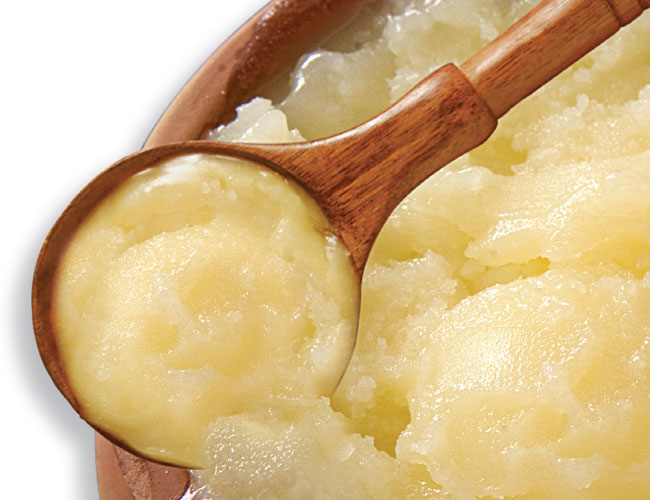
Whenever I close my eyes and recollect my childhood or pregnancy happiness’ I feel that amazing smell of Ghee, the pure, unadulterated, smooth and delicious ghee or better known as Clarified butter largely made out of Cow’s milk.

I still remember my childhood days when my mom used to fry Luchis also called Poories–Indian fried Wheat bread in ghee and I simply relished it the divine smell of ghee. And I equally relish Indian sweets made in pure claified butter. Even our lentils used to be tempered with ghee, rotis with ghee spread on them, ghee with steaming hot rice, ghee to top the veggies, ghee ke laddoos……. the list is never ending.

I grew up having loads of clarified butter, but it’s only when I did my Masters in Food & nutrition that I got a clearer view on ghee or clarified butter and my love for it.

Being a Nutritionist & a mom of two young kids, I have always been posed with the question how is it that I give my kids food with so much ghee? Well the fact is that Ghee is safe to have and that it has several nutritional benefits

Before we come to the benefits let’s look at some facts and what science says

FACTS

Ayurveda says

Among the four kinds of fat namely Gritha (ghee), Taila (oil), Vasa (fat), Majja (bone marrow) Ayurveda considers GHEE as the best among these. According to Ayurveda, ghee made from cow’s milk promotes memory, intellect and digestion. It also promotes healing of wounds, keeps the skin lustrous and maintains immunity.

Science says 

Modern science has discovered that ghee is rich in antioxidants. The fats in ghee aid absorption of fat-soluble vitamins and minerals from other foods, strengthening the immune system. Ghee is also rich in butyric acid, a fatty acid with anti-viral properties, which is believed to prevent cancers and tumours.

Recent research has also detected presence of linoleic acid in ghee. Linoleic acid retards the growth of some cancers and protects us from heart disease. This acid is often lacking in a vegetarian diet.

According to B S Raheja, the ex-director of All India Institute of Diabetes, the present epidemics of diabetes, heart disease and some cancers is due to not including ghee in our diets.

Benefits of Ghee

  • Ghee is a source of beta carotene and vitamins A, D, E, and K. Beta carotene and vitamin E are vital antioxidants. Vitamin A is naturally present in ghee, which is lacking in other edible oils.
  • Ghee has no milk solids, lactose or sugars. These get separated out when the butter is made into ghee, so it’s good for lactose intolerant people too
  • Organic ghee has no additives, preservatives, oxidized cholesterol or trans-fatty acids that clog arteries.
  • Ghee is highly stable and does not go rancid even at room temperature.
  • Clarified butter has a very high smoke point than butter but lesser than oil—it does not burn at high cooking temperatures. So it’s always better to cook in ghee than butter as butter burns very easily
  • Ghee is primarily saturated fat. One tablespoon of ghee provides 14g of saturated fat, 28mg of cholesterol and roughly 120 calories.
  • Ghee is useful for both external and internal use. Because ghee helps to increase immunity, that subtle essence of tissue that is responsible for life, radiant health, vigour, longevity and overall well being.
  • Slows down ageing process by adding a minimum of ghee to your food everyday.
  • It also removes toxins from body & mind.
  • Ghee is beneficial in promoting growth and development in children. It also improves memory and concentration power.
  • Ghee has its healing properties. If used directly on cuts, wounds or burns, it has powerful healing action. It can be used to cure gangerine . ulcers etc.
  • Pure ghee has anti-oxidant properties which promotes healthy metabolism and aids weight loss(when used in a moderation)
  • Intake of Ghee reduces the cholesterol both in the serum & intestine by triggering an increased secretion of biliary lipids.
  • Ghee is good for nerves & brains. It helps control eye pressure and is beneficial to glaucoma patients.

January 18, 2016 By Anusha Subramanian 1 Comment

GOQii Stories of Positivity and Progression

Hemant Kejriwal, participated in an 8 km run in February 2015

Hemant Kejriwal, participated in an 8 km run in February 2015

Beginning this week you will read success stories of GOQii users in this space. These are stories of people who thought it would be impossible for them to give up old habits and embrace new habits for the better. When heard of their success stories we were encouraged to share these stories with a larger community who can get inspired by them to bring positivity in their lives.

Our first story is about Hemant Kejriwal who from leading a sedentary lifestyle is now an energetic and active young man within just 15 months. Let’s find out how he managed

From being highly inactive to running 8 kms a day

Hemant Kejriwal, a 39-year-old Start-up Entrepreneur from Mumbai had tried and failed many times to get energetic and active. “Till the time I was in school and college I was energetic and active. But, slowly as work life took over I started leading a sedentary lifestyle. Though, I had my flirtatious flings with the gyms. I would spend loads on membership but would never go regularly as I would be bored. Finally, I was warned by my wife to stop wasting money on gyms,” says Hemant.  “I knew I wanted to be energetic through the day but, I was unable to do so. I did not know how to get started with this,” he adds.

Hemant did what a lot of people do and vowed to get healthy and active in 2015. But, again he kept trying on his own. He would as a routine wake up at 4.30 am or 5 am and not step out of the house for a walk or run but sit down with his laptop and work. Then drive to his work place which was less than a kilometer (0.6 mile) from his house. “I knew I was leading an unhealthy life. I had put on a lot of weight, weighed 103 kgs and did not have enough energy to pull along through the day.”

During this time, he got to know from friends about GOQii. He decided to go in for a band that came with a personal coach. In Oct 2014 he signed up with GOQii and got a band and made a commitment. “My Goal was to be energetic through the day. For me feeling energetic was more important than looking good,” says Hemant.

Soon after I started interacting with my coach Hardika, I got on to the right track. I realised that ‘staying active’, above all else, was key. Within 4 months I had lost 9 kgs. The focus however was not so much on losing weight as much as it was getting fit overall – building strength, stamina, flexibility & agility.

And precisely that happened. From a XXL size shirt, Hemant within 4 months could start wearing a XL size shirt. From not walking even a kilometer or (0.6 mile) or (1000 steps) in an entire day, Hemant had soon got down to running 8 kms a day before even getting to work His best he says was being able to swim 2.5 km (50 laps) in one ago within 6 months of getting on to GOQii. “This was a huge milestone achieved by me after almost 20 years,” he asserts.

Talking about the changes he says: “I started by walking 5 km early in the morning (which gradually increased to 8 km) & adding another 3-4 km during the day. Then I focused on increasing my speed. And shifted to swimming in the summers,” Hemant says. Above all, his water consumption which was less than even a liter a day is consistently over 3 liters a day, now.

Being a health food enthusiast, there has been no significant dietary changes. But there were large gaps between meals & not enough protein. He corrected all of this, and his pre-post workout meals thanks to his coach.

For Hemant, the healthy lifestyle has helped his productivity at work and he says he has become a better husband and a better father.

Hemant sums it up by saying in the last 15 months since he got on to the GOQii ecosystem, he has had a more holistic wellbeing thanks to the active lifestyle he has been leading.

What does his Coach Hardika have to say?

Hemant has been a dedicated player over the last 15 months. Prior to getting on to the GOQii ecosystem he was highly inactive. Over a period we have been able to control these issues. I am happy that he could swim 50 laps at one go which was his goal.

Sporty and dedicated, Hemant has always been ready to take up any challenges that I have been giving. He has got very active. Within six months he was able to move from an XXL size to XL size shirt. I have sent him a GOQii Tshirt, a size smaller with a note: “I am happy with your progress and the way you are losing inches. I am sure you will need to change your wardrobe, so this is a contribution from my end which we will fit by end of this year”.  He is motivated to work towards leading a better and healthy lifestyle and we are going to rock it!

‘Want to get featured here? Click Here to tell us your story.’

December 13, 2015 By Parwage Alam 2 Comments

The Best Post-Run Recovery Foods

healthy_food_zps7b67d197

All athletes plan their routine, in terms of their exercise, nutrition; practice sessions all of this is done to get the best results from his/her body. While you might get the expected results with your performance but, that certainly does not mean that your body is also getting the expected nutrition. In fact, some of the best athletes and more recently we have come across cases of regular marathon runners fainting or blacking out during the run or after the run. This situation occurs due to nutrition imbalance in body.

To be healthy we have to take care of our meals throughout the day. Similarly, we have to take care of our post run meals as well to recover our body. By eating the right foods at right times your body will recover and be able to perform the way you want it to. So if you are a runner or planning to run you need to be aware of what exactly you should be eating before, during and after your running events. This is important so that you are able to keep your body in optimal condition.

So let’s understand more about this.

  1. Some basics before your run: If you are planning to jog no longer than 40 or 50 minutes at a relaxed pace, a glass of water might be all that’s needed ahead of time—provided you have had a decent dinner the night before. But, if the previous night’s meal wasn’t filling or if you ate it early, downing some orange juice or a banana will replace glycogen stores in your muscles to wave off sluggishness. If you’re heading out in the afternoon, have a snack with about 50 grams of carbs in it—like yogurt and a granola bar—an hour or two before hand
  2. Post run, our body requires lot of different nutrition, so let’s divide into different category – PROTEIN, CARBS, ELECTROLYTES AND ANTIOXIDANTS.
  • Protein: Protein is the best resource to repair your body. It repairs muscle damage, diminishes the effects of cortisol—the so-called “stress” hormone that breaks down muscle—and, when taken with carbohydrates it speeds your body’s ability to replenish its glycogen stores, your all-important energy source for those long runs during marathon season. So post run your Protein ratio should be 1:4 which means 1 gram of protein for every 4 gram of CARBS
  • Carbs: Carbohydrates or carbs as is known commonly are body’s main fuel source, and are stored as glycogen in the muscles and liver, so eating carbs shortly after your workout helps optimize your body’s recovery. And it is during this time that your muscles are most receptive to rebuilding your glycogen reserves.
  • Electrolytes and Antioxidants: Electrolytes are minerals in our blood and other body fluids like Calcium, Chloride, Magnesium, Phosphorous, Potassium, Sodium, etc that carry an electric charge. It also affects the percentage of water in our body, the acidity of our blood (pH), our muscle functionality, and other important processes. While running, we sweat a lot and we lose electrolytes when we sweat. So we really have to replace our sweat by drinking fluids that contain electrolytes.

The techniques we can use

The fastest recovery techniques post training is rehydration, glycogen resynthesis and protein and antioxidant supplementation. These techniques replenish our muscle fuel supplies, hasten the repair of muscle damage and combat free radical formation in our cells.

Having said all of the above now it’s time for me to provide you with some resources for the post recovery foods that can help to replenish your body with the vital nutrients discussed above.

At first you start restoring the fluids in the body after your long run – the quick fixes for this are sports drink, lemon water or some plain water. However, the recovery process does not stop here so we have some specific foods that can help you to restore your body in recovery.

  • Salmon
  • Cherries
  • Kale
  • Oatmeal
  • Greek yogurt
  • Banana
  • Skim Milk
  • Chicken
  • Hummus
  • Green Tea
  • Tomatoes
  • Lean beef
  • Turkey breast
  • Sports/Energy bar
  • Whole-Wheat Pasta
  • Berries
  • Fruit Juice
  • Low-fat cottage cheese
  • Eggs
  • Almonds or other nuts
  • Vegetables

Its recommended to have your post run meal within an hour or so, but incase if it is not possible then you can go for the following options, which will help you to sustain for some time:

  • Have an apple which will give you some energy and raise your glucose level to sustain.
  • Protein bars, Protein shake with the combination of milk or water, whatever is convenient for you.
  • Banana is really good option to get quick energy.
  • Have Bread with some peanut butter.
  • My Favorite – Chocolate Milkshake.
  • Hummus and carrots
  • Some Greek yogurt.

As we love running and it’s a part of our lifestyle, routine and our health journey, so we really need to take care of the hard impact of it on our body. To continue our journey with running and healthy lifestyle we need to give appropriate rest and relaxation after every run and make sure that our body recovers completely after a every rigorous workout/running.


November 30, 2015 By Hetal Chheda 2 Comments

Lactose Intolerance among children and food substitutes that help

mothers-giving-infants-solid-food-too-early-130325

Lactose Intolerance is a bigger problem than the letters in the word itself. Now this is a condition in which the body has a hard time digesting milk sugar (lactose), a natural sugar found in milk and dairy products.

There is an enzyme called lactase which is produced in the small intestine. This breaks down the sugar lactose present in milk and other dairy products. Kids who are lactose intolerant have less or no production of this enzyme LACTASE.

How will a little baby or a toddler explain that, ‘Mom, I can’t digest your breast feed or the top milk that you are feeding me’. Along with the child it is too much of a challenge firstly for the mother that her child cannot digest milk. Milk is usually the food for first 6 months in any child’s life.

WHAT ARE THE SYMPTOMS

  1. Unexplained crying,
  2. Abdominal/Lower belly pain
  3. Loose or foamy stools/diarrhea
  4. Gurgling sound in the tummy
  5. nausea,
  6. bloating,
  7. flatulence

STEPS TO BE TAKEN

  1. ELIMINATE

Parents should systematically eliminate milk and other dairy products from their child’s diet. Avoidance is the best treatment.

  1. REINTRODUCE

The dairy products like yogurt and cheese can be reintroduced overtime. The symptoms post introduction should be noticed. If there is no problem other milk products and diluted milk can be introduced. If there are negative symptoms then stop immediately.

  1. UNDERSTAND

Some kids can tolerate small amounts of milk products or certain types of milk products without problems while others cannot tolerate even little.

HOW TO MEET THE CALCIUM REQUIREMENTS

A big challenge for people whose kids are lactose-intolerant is learning how to eat to avoid discomfort and to get enough calcium for healthy bones.

Although it is definitely possible for children to get the calcium they need for strong bones without dairy.

Broccoli, brussels sprouts, dried figs, and sardines are among the most calcium-rich non-dairy foods, Other foods that contain good amount of calcium are Tofu, sesame seeds, ragi, almonds, Moong, kidney beans, urad dal, Chana, Amaranth and curry leaves.

Try and add one of these food items in every meal.

LITERAL MILK SUBSTITUTES FOR OVER 6 MONTH OLDS

  • YOGURT

If a child is lactose intolerant, there are chances that he/she is partially intolerant and in some cases may be able to digest yogurt. This is because yogurt has active bacterial cultures and also has less lactose as compared to milk. Yogurt may cause less bloating because much of the lactose has already been broken down by its ‘good’ bacteria.

  • SOY MILK

The immediate option for a child with lactose intolerance is soy milk. Some kids may reject it initially due to its taste but eventually get used to it. Do not opt for the flavoured versions instead go for natural.

However, if your child has a milk allergy which is different from lactose intolerance he or she may also be allergic to soy milk. Avoid using soy milk as a substitute for anyone with a milk allergy.

  • OTHER KINDS OF MILK

Goat, sheep, cow and Buffalo milk doesn’t help a child’s symptom because all milk from mammals contains lactose. However, for kids who don’t enjoy drinking soy milk there are some more options. Almond milk, which is loaded with magnesium and vitamin E. Rice milk, has almost no saturated fat and plenty of vitamin B12. Coconut milk, tastes creamy like cow’s milk. Other vegetable milks include oat and cashew. The only drawback is that these milks don’t work well with cooking.

·         CHEESE

Fermented cheeses have less lactose than other dairy products so a child may be able to tolerate them. It is a very good source of calcium and protein as well.  Examples of hard or aged cheeses that are low in lactose are Swiss, Parmesan, and blue cheese. Now days, it is easy to find these cheese in metro cities.

INFANTS

For infants with lactose intolerance, formulas that contain no lactose can be used. Similac is an example of a milk-based formula that contains corn-syrup solids rather than lactose as its carbohydrate calorie source. Many soy-protein formulas also do not contain lactose and are suitable for lactose intolerant infants.

HIDDEN LACTOSE FOODS-WATCHOUT

If the child craves for ice cream parents generally substitute with sherbet. Ready-made sherbet does contain some dairy, but it’s a low-lactose food, Sherbet is a good example of a hidden source of lactose because you probably don’t think of it as a dairy product.

Other hidden sources of lactose include ready to eat soups, salad dressings, and processed breakfast foods. There is always a way out. A child can grow very normally without having milk in his/her diet. A mother will just have to substitute by providing foods rich in proteins and calcium that can completely substitute milk.

  • « Previous Page
  • 1
  • …
  • 174
  • 175
  • 176
  • 177
  • 178
  • …
  • 199
  • Next Page »

Search

Recent Posts

  • Best Foods To Alleviate Irritable Bowel Syndrome
  • ALL ABOUT VERTIGO!
  • PCOS and Anxiety: Discover Relief with the 54321 Technique
  • Navigating the Maze of Nutrition: Finding Clarity Amidst Confusion
  • Get children active and keep them healthy

Stay Updated

Archives

  • December 2025 (6)
  • November 2025 (15)
  • October 2025 (20)
  • September 2025 (6)
  • August 2025 (6)
  • July 2025 (12)
  • June 2025 (18)
  • May 2025 (16)
  • April 2025 (23)
  • March 2025 (23)
  • February 2025 (22)
  • January 2025 (26)
  • December 2024 (26)
  • November 2024 (25)
  • October 2024 (22)
  • September 2024 (24)
  • August 2024 (31)
  • July 2024 (21)
  • June 2024 (26)
  • May 2024 (31)
  • April 2024 (27)
  • March 2024 (29)
  • February 2024 (26)
  • January 2024 (25)
  • December 2023 (15)
  • November 2023 (11)
  • October 2023 (22)
  • September 2023 (22)
  • August 2023 (20)
  • July 2023 (22)
  • June 2023 (24)
  • May 2023 (24)
  • April 2023 (24)
  • March 2023 (23)
  • February 2023 (20)
  • January 2023 (16)
  • December 2022 (12)
  • November 2022 (15)
  • October 2022 (15)
  • September 2022 (12)
  • August 2022 (10)
  • July 2022 (17)
  • June 2022 (11)
  • May 2022 (10)
  • April 2022 (6)
  • March 2022 (6)
  • February 2022 (13)
  • January 2022 (12)
  • December 2021 (7)
  • November 2021 (3)
  • October 2021 (6)
  • September 2021 (3)
  • August 2021 (8)
  • July 2021 (7)
  • June 2021 (15)
  • May 2021 (16)
  • April 2021 (10)
  • March 2021 (7)
  • February 2021 (4)
  • January 2021 (4)
  • December 2020 (3)
  • November 2020 (4)
  • October 2020 (10)
  • September 2020 (3)
  • August 2020 (3)
  • July 2020 (2)
  • June 2020 (4)
  • May 2020 (10)
  • April 2020 (12)
  • March 2020 (10)
  • February 2020 (4)
  • January 2020 (4)
  • December 2019 (3)
  • November 2019 (7)
  • October 2019 (5)
  • September 2019 (4)
  • August 2019 (9)
  • July 2019 (9)
  • June 2019 (11)
  • May 2019 (4)
  • April 2019 (9)
  • March 2019 (8)
  • February 2019 (9)
  • January 2019 (8)
  • December 2018 (9)
  • November 2018 (3)
  • October 2018 (3)
  • September 2018 (5)
  • August 2018 (10)
  • July 2018 (6)
  • June 2018 (13)
  • May 2018 (8)
  • April 2018 (18)
  • March 2018 (9)
  • February 2018 (8)
  • January 2018 (15)
  • December 2017 (12)
  • November 2017 (19)
  • October 2017 (13)
  • September 2017 (15)
  • August 2017 (4)
  • July 2017 (8)
  • June 2017 (7)
  • May 2017 (6)
  • April 2017 (8)
  • March 2017 (6)
  • February 2017 (7)
  • January 2017 (9)
  • December 2016 (10)
  • November 2016 (7)
  • October 2016 (7)
  • September 2016 (7)
  • August 2016 (11)
  • July 2016 (9)
  • June 2016 (9)
  • May 2016 (12)
  • April 2016 (17)
  • March 2016 (17)
  • February 2016 (8)
  • January 2016 (6)
  • December 2015 (2)
  • November 2015 (9)
  • October 2015 (7)
  • September 2015 (9)
  • August 2015 (11)
  • July 2015 (9)
  • June 2015 (12)
  • May 2015 (9)
  • April 2015 (13)
  • March 2015 (8)
  • February 2015 (5)
  • January 2015 (12)
  • December 2014 (14)
  • November 2014 (11)
  • October 2014 (6)
  • September 2014 (13)
  • August 2014 (12)
  • July 2014 (6)
  • June 2014 (2)
  • May 2014 (7)
  • April 2014 (5)

From “Laddu Nawin” to Fit and Fierce: How a 25-Year-Old Insurance Advisor Shed 20 Kilos and Gained His Life Back

When 25-year-old Nawin Yadav from Hyderabad walked into his office every morning, he carried more than just his files and policy papers. He had the weight of fatigue, sluggish energy, and an ever-growing belly that was becoming the butt of jokes. “People … [Read More...]

“I’ve Challenged Myself to Live 100 Years” – The Story of Chandubhai Savani’s Second Chance at Life

At 67, most people start slowing down. Not Chandubhai Savani. A resident of Surat, Chandubhai, thought life was on track. “My life was going well till I had my bypass surgery,” he says. That surgery, back in 2021, was a wake-up call.  Medication was routine, but exercise wasn’t. His diet? What he calls ‘normal.’ “I […]

From Shimla’s Slopes to Chandigarh’s Sidewalks: Surinder Kaur Bhalla’s Journey from Chaos to Control

Some journeys start with a plan. Others begin with a stumble literally. Surinder Bhalla, a government professional, born and raised in the scenic hill town of Shimla, had always lived a life of movement. “In Shimla, you walked everywhere,” she reflects. “Walking was never an exercise. It was just life.” But after shifting to Chandigarh, […]

Ananda Mukherjee Health Story

From Terminal Illness To Complete Wellness! Ananda Mukherjee Health Story

As we observe World Cancer Day under the powerful theme ‘United by Unique’ (2025-2027)**, we are reminded that every individual’s journey with cancer is distinct, yet united by shared resilience, hope, and the collective fight against this disease. This theme places people at the centre of care and their stories at the heart of the […]

  • HOME
  • HEALTHY LIVING
  • FITNESS
  • HEALTHY RECIPES
  • USER STORIES
  • KARMA
  • BUY GOQii

Copyright ©2016 GOQii