GOQii

Blog

  • HOME
  • HEALTHY LIVING
  • FITNESS
  • HEALTHY RECIPES
  • USER STORIES
  • KARMA
  • BUY GOQii

Search Results for: yoga

November 6, 2026 By GOQii Leave a Comment

This Dhanteras, Invest in Your Health

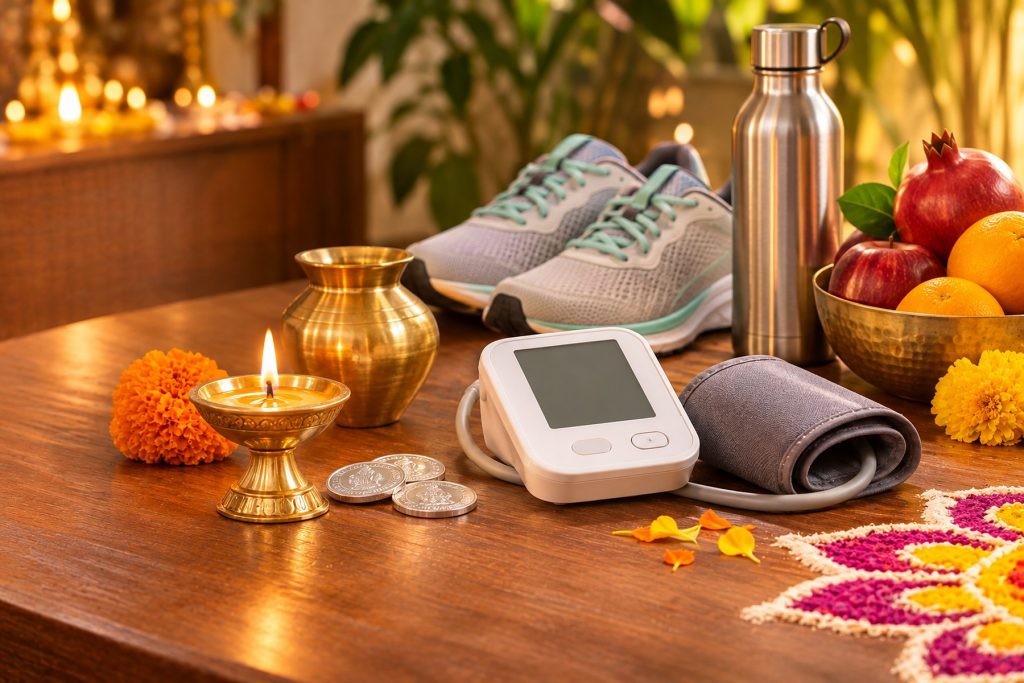
Dhanteras, which falls on Friday 6 November this year, is the day millions of families buy gold, silver, utensils or something new for the home, as a sign of prosperity for the year ahead. But the festival has another meaning that’s easy to forget. It honours Lord Dhanvantari, revered as the physician of the gods and associated with Ayurveda, a reminder that good health is the real wealth.

So this Dhanteras, alongside the coins and kitchenware, why not invest in your health too? It doesn’t have to cost much. Some of the best investments are a few routine tests, a handful of genuinely useful health buys, and habits that cost nothing at all.

At a glance

  • The best returns come from prevention: catching high blood pressure, raised blood sugar or high cholesterol early, before they cause problems.
  • Book the check-ups you’re due for: blood pressure, blood sugar, cholesterol and age-appropriate cancer screening.
  • Buy wisely: a validated upper-arm blood pressure monitor, good walking shoes or a water bottle can be worth more than expensive gadgets or supplements.
  • The free habits matter most: walking, sleep, home-cooked food, staying tobacco-free and time with people you love.
  • Give health as a gift: a check-up voucher, a fruit basket or an activity tracker can go further than another box of sweets.

1. Invest in check-ups

Many of the conditions that lead to heart attacks, strokes and kidney disease, such as high blood pressure, type 2 diabetes and high cholesterol, cause no symptoms for years. A simple test is often the only way to know. And in India, the numbers are large: the national ICMR–INDIAB study found that over 11% of adults have diabetes, 15.3% have prediabetes and 35.5% have high blood pressure, and many don’t know it.

Checks most adults should keep up to date:

Check Who and how often (typical guidance)
Blood pressure Every adult, at least once a year from your 30s, more often if it’s raised
Blood sugar (fasting glucose or HbA1c) From age 30, or earlier if you’re overweight or diabetes runs in your family; repeat every 1–3 years depending on your results
Cholesterol (lipid profile) Every few years from your 20s or 30s, more often if raised or if heart disease runs in your family
Weight and waist Once or twice a year at home or at the doctor
Cancer screening Cervical, breast and bowel screening at the ages your doctor or national programme advises; a mouth check if you use tobacco
Eyes and teeth Regular dental check-ups; an eye test every couple of years, and yearly if you have diabetes

Indians tend to develop diabetes and heart disease at younger ages and at lower body weights than many other populations, so starting checks in your 30s, or earlier with a family history, makes sense.

Where to get them:

  • Government health centres: Ayushman Arogya Mandirs and other government facilities offer screening for adults aged 30 and above for blood pressure, diabetes and oral, breast and cervical cancer.
  • Your employer or health insurance: many company health plans and insurance policies include a free annual check-up. It’s worth checking your policy before you pay for one.
  • Diagnostic labs: most offer home sample collection, which makes it easier to get tests done for older parents.
  • A tax benefit: under the old tax regime, payments for preventive health check-ups for yourself and your family can be claimed under Section 80D, up to ₹5,000 within the overall 80D limit, and even cash payments count. Check with your tax adviser for your situation.

A word on “full-body” packages: big check-up packages with dozens of tests aren’t always better. Unnecessary tests, such as cancer markers or scans in people without symptoms, can cause false alarms and worry. Ask your doctor which tests suit your age and history.

2. Health buys that are worth the money

If you’re shopping this Dhanteras anyway, these purchases can earn their keep:

  • A validated, upper-arm blood pressure monitor. Home readings help you and your doctor spot and manage high blood pressure. The British Heart Foundation advises choosing an independently validated, upper-arm monitor with a cuff that fits snugly, sit quietly with your back supported, and take two readings a few minutes apart.
  • Steel or clay cookware and a good non-stick pan, which let you cook with less oil. Steel and brass utensils are a traditional Dhanteras buy anyway.
  • Comfortable walking shoes. If they get you walking every day, they’re the best fitness equipment you’ll buy.
  • An activity tracker or step counter, if you’ll actually use it. A 2025 review in The Lancet Public Health found that about 7,000 steps a day, compared with 2,000, was linked to a much lower risk of early death, heart disease and dementia. Many of us need the nudge: a Lancet Global Health study found that nearly half of Indian adults (49.4%) weren’t active enough in 2022, rising to 57% among women.
  • A reusable water bottle to help you drink more water and fewer sugary drinks.
  • A digital thermometer and a basic first-aid kit, especially if you have children or older parents at home.
  • For diabetes: a glucometer, if your doctor wants you to check your sugar at home.

Think twice before spending on:

  • Multivitamins and “immunity boosters” for healthy adults. The US Preventive Services Task Force found insufficient evidence that multivitamins prevent heart disease or cancer, and it recommends against beta-carotene and vitamin E supplements. Take supplements only for a specific need your doctor has identified.
  • Detox kits, “fat-burning” products and miracle gadgets that promise quick results.
  • Expensive equipment you won’t use. A treadmill that becomes a clothes rack is no investment.

3. Free habits with the best returns

The biggest health “investments” cost nothing, and like a good savings plan, they pay off when you keep them up.

  • Move every day. The WHO recommends at least 150 minutes of moderate activity a week, such as brisk walking, plus muscle-strengthening on two days. Short bouts count too.
  • Sleep 7–9 hours. Regular sleep supports your weight, mood, blood sugar and immunity.
  • Eat mostly home-cooked food, with plenty of vegetables, fruit, pulses and whole grains, and less salt, sugar and fried food.
  • Stay tobacco-free, and drink less alcohol, or none.
  • Manage stress. A few minutes of slow breathing each day can help; try these breathing exercises to relieve anxiety.
  • Stay connected. Time with family and friends, which festivals are all about, is good for your mental and physical health.

This Diwali season, our guide to maintaining a healthy lifestyle during Diwali has more ideas for enjoying the festivities without overdoing it.

4. Give the gift of health

The Diwali gifting season is a chance to share health, not just sweets:

  • A health check-up voucher for parents or grandparents
  • A fruit and dry-fruit basket instead of another box of mithai
  • Homemade, lighter snacks, such as our baked and air-fried namkeen
  • A blood pressure monitor for an older relative, with a promise to help them use it
  • Walking shoes, a yoga mat or an activity tracker for someone trying to get fitter
  • Your time: a family walk, an evening without screens, or a promise to accompany a parent to their check-up

The bottom line

Dhanteras celebrates prosperity, and there’s no greater wealth than good health. This year, alongside the gold and the new utensils, book the check-up you’ve been putting off, buy something that helps you look after yourself, and commit to one free habit, like a daily walk, that will pay you back for years. That’s an investment worth making.

Pro Tip: Use the GOQii App to track your steps, sleep and blood pressure readings in one place, and set reminders for your next check-up. Your GOQii Personalised Health Coach can help you turn your Dhanteras resolution into a habit that lasts.

Frequently asked questions

What is the health significance of Dhanteras?

Dhanteras honours Lord Dhanvantari, revered as the physician of the gods and associated with Ayurveda. It’s a good reminder that health is the greatest wealth, and a natural time to invest in check-ups and healthy habits.

What health check-ups should I get every year?

Most adults should check their blood pressure at least once a year and keep up with blood sugar and cholesterol tests every few years, more often if results are borderline. Add age-appropriate cancer screening, dental check-ups and eye tests. Your doctor can tailor this to your age and family history.

Is a full-body check-up package worth it?

Not always. Large packages often include tests that aren’t needed for healthy people and can cause false alarms. It’s usually better to ask your doctor which tests suit your age, risk factors and family history.

Which blood pressure monitor should I buy for home use?

Choose an independently validated monitor that measures at the upper arm, with a cuff that fits your arm snugly. Take readings sitting quietly with your back supported and your arm resting on a table.

Should I buy multivitamins for my family?

Most healthy people who eat a varied diet don’t need a multivitamin. There’s insufficient evidence that multivitamins prevent heart disease or cancer. Take supplements only if your doctor finds a specific need, such as low vitamin D, B12 or iron.

How many steps a day should I aim for?

Around 7,000 steps a day is linked to a much lower risk of early death and heart disease than 2,000 steps, and more is generally better. The WHO recommends at least 150 minutes of moderate activity a week.

What are good health gifts for Diwali?

A health check-up voucher, a fruit or dry-fruit basket, homemade lighter snacks, a blood pressure monitor for older relatives, or walking shoes and an activity tracker all make thoughtful gifts.

#BeTheForce

Disclaimer: The information provided in this blog is for general awareness and educational purposes only. It is not intended to replace professional medical advice, diagnosis, or treatment. Always consult a qualified healthcare provider for personalised medical guidance or concerns related to your health.
November 4, 2026 By Vandana Juneja Leave a Comment

5 Breathing Exercises To Relieve Anxiety In An Instant

breathing exercises to relieve anxiety Your heart is racing, your chest feels tight and your thoughts won’t slow down. Whether it’s before a presentation, in a crowded room or lying awake at 3 am, anxiety often shows up in the body first, and one of the first things it changes is your breathing. It becomes fast, shallow and high in the chest.

The good news is that breathing is one part of the stress response you can consciously control. Slowing it down is a simple, free tool you can use anywhere. It won’t make anxiety vanish instantly, and it isn’t a substitute for treatment when anxiety is severe, but it can help you feel steadier, and research suggests regular practice brings modest benefits. Here are five techniques to try, how to do them properly, and when to seek more help.

At a glance

  • Breathing exercises can help: a meta-analysis of randomised trials found breathwork was linked to small-to-medium reductions in stress and anxiety.
  • Five minutes a day is enough to start: in a Stanford trial, 5 minutes of daily breathing practice for a month improved mood and reduced anxiety.
  • Slow, long out-breaths are the common thread in most calming techniques.
  • Practise when calm, so the skill is there when you need it.
  • It’s a tool, not a cure: if anxiety is persistent or disrupts daily life, talk to a doctor. In India, Tele-MANAS (14416) offers free support around the clock.

How breathing affects anxiety

When you feel threatened, your body’s stress response speeds up your heart and breathing to prepare you for action. Anxiety can switch on this response even when there’s no real danger, and fast, shallow breathing can then make you feel dizzy, tingly or short of breath, which feeds the worry.

Slow breathing, especially with a long, unhurried out-breath, is thought to calm this response by engaging the body’s “rest and digest” system. It also gives your mind a simple, steady thing to focus on.

What the research says:

  • A 2023 meta-analysis in Scientific Reports, covering randomised trials with 785 adults, found that breathwork was linked to lower stress, anxiety and depression than control groups. The effects were small to medium, and many studies had limitations.
  • In a Stanford study of 111 healthy adults, 5 minutes a day of controlled breathing for a month improved mood and reduced anxiety a little more than mindfulness meditation. A technique called cyclic sighing worked best.
  • In a larger 2023 trial of 400 adults, slow “coherent” breathing helped no more than a placebo breathing exercise. Both groups improved, which suggests that taking regular, calm time to breathe and focus may matter more than the exact counting pattern.

In short, breathing exercises are a safe, useful self-help tool for everyday stress and anxiety. They work best when practised regularly, and they don’t promise instant results.

5 breathing exercises to try

Sit or lie comfortably, loosen tight clothing and, if you like, close your eyes. Breathe gently; the aim is slow and comfortable, never forced. If you feel dizzy or light-headed at any point, stop and breathe normally.

1. Belly (diaphragmatic) breathing

The foundation for every other technique, and the one the NHS recommends for stress.

  1. Place one hand on your chest and one on your belly.
  2. Breathe in gently through your nose, letting your belly rise while your chest stays fairly still. Counting from 1 to 5 can help.
  3. Breathe out gently through your mouth, again counting to 5 if it helps.
  4. Repeat for at least 5 minutes.

Best for: everyday practice, and as a warm-up for the others.

2. Cyclic sighing (the double-inhale sigh)

The technique that performed best in the Stanford study.

  1. Breathe in through your nose until your lungs feel comfortably full.
  2. Take a second, short sip of air through your nose to top them up.
  3. Breathe out slowly and fully through your mouth, longer than the in-breath.
  4. Repeat for about 5 minutes.

Best for: a quick reset when you feel tense; a couple of rounds can take the edge off.

3. Box breathing (4-4-4-4)

Used by athletes and in high-pressure jobs to stay steady. Imagine tracing the four sides of a square.

  1. Breathe in through your nose for a count of 4.
  2. Hold gently for 4.
  3. Breathe out through your mouth for 4.
  4. Hold for 4, then repeat for 3–5 minutes.

If the holds feel uncomfortable, shorten them or leave them out. Best for: focus before a stressful task, such as an exam, interview or presentation.

4. Longer out-breath (4-6 breathing)

A simple way to slow your breathing to around six breaths a minute.

  1. Breathe in gently through your nose for a count of 4.
  2. Breathe out slowly through your mouth or nose for a count of 6, as if blowing gently through a straw.
  3. Continue for 5 minutes. As it gets easier, you can try in for 5 and out for 7.

Best for: winding down in the evening or settling before sleep.

5. Alternate nostril breathing (nadi shodhana)

A traditional yoga pranayama practice that many people find calming and centring.

  1. Sit upright. Rest your left hand on your lap.
  2. Close your right nostril with your right thumb and breathe in slowly through the left.
  3. Close the left nostril with your ring finger, release the thumb and breathe out through the right.
  4. Breathe in through the right, close it, and breathe out through the left. That’s one round.
  5. Continue for 5–10 rounds, breathing slowly and without straining.

Skip it if your nose is blocked. Best for: a calm start to the day, or as part of a yoga or meditation routine.

Who should take care

  • Holding the breath (as in box breathing) isn’t advised in pregnancy, or if you have a heart condition, uncontrolled high blood pressure, or a lung condition such as COPD, unless your doctor says it’s fine. Simply leave the holds out.
  • Fast or forceful breathwork, such as rapid hyperventilation practices, can cause dizziness or fainting and isn’t recommended for anxiety without guidance.
  • If breathing exercises make you more anxious, which can happen when you focus on your breath, try counting, gentle movement or grounding (naming things you can see and hear) instead.

Making it a habit

Breathing exercises work best as a skill you’ve practised, not just an emergency button. Learning a technique when you’re already panicking is hard; using one you’ve practised daily is much easier.

  • Pick one technique and practise it for 5 minutes a day for a few weeks. In the Stanford study, the benefits of cyclic sighing grew with each day of practice.
  • Attach it to something you already do, such as after brushing your teeth, before checking your phone in the morning, or during your commute (with eyes open!).
  • Use it in the moment: a few rounds before a meeting, after a difficult call, or when you can’t sleep.
  • Combine it with other habits that ease anxiety: regular exercise, enough sleep, less caffeine and alcohol, and time with people you trust. Physical activity in particular can lift mood; read more on how exercise impacts mental health.

When breathing exercises aren’t enough

Everyday worry and nerves are part of life. But for some people, anxiety becomes constant and hard to control. The NHS describes generalised anxiety disorder as anxiety that affects daily life, often with poor sleep, restlessness, trouble concentrating and physical symptoms such as a racing heart.

Speak to a doctor if:

  • anxiety is affecting your work, studies, relationships or sleep
  • you’re having panic attacks, or avoiding places and situations because of anxiety
  • you’re relying on alcohol or other substances to cope
  • you’ve been feeling low or hopeless as well

Anxiety is common and treatable. Talking therapies such as cognitive behavioural therapy (CBT), and sometimes medicines, help most people. Breathing techniques can work well alongside treatment.

Free, confidential support:

  • India: Tele-MANAS, 14416 or 1-800-891-4416, 24 hours a day
  • UK: your GP, or self-refer to NHS Talking Therapies; call 111 for urgent advice
  • US: call or text 988 for the Suicide & Crisis Lifeline

Get emergency help if you have chest pain, severe breathlessness or fainting. These can feel like panic but need checking, especially if you’ve never had them before. And if you’re thinking about harming yourself, contact emergency services or a crisis line straight away.

Worry can also get in the way of other health goals; read our guide on how worry affects weight loss and what helps.

The bottom line

Your breath is always with you, which makes it one of the simplest tools you have for managing anxiety. Slow belly breathing, cyclic sighing, box breathing, a longer out-breath and alternate nostril breathing can all help you feel calmer. They won’t switch anxiety off instantly, but practised for a few minutes each day, they can make tense moments easier to ride out. If anxiety is persistent or overwhelming, you don’t have to manage it alone: reach out for professional support.

Pro Tip: Set a daily reminder in the GOQii App for a 5-minute breathing break, and track your sleep and mood alongside it to see what helps. Your GOQii Personalised Health Coach can help you build calming routines into busy days.

Frequently asked questions

Do breathing exercises really help anxiety?

They can. Research suggests breathwork leads to small-to-medium reductions in stress and anxiety, especially with regular practice. They’re a helpful self-help tool, but not a replacement for treatment if anxiety is severe or persistent.

What is the best breathing exercise for anxiety?

There’s no single best one. Techniques with a slow, long out-breath, such as belly breathing, cyclic sighing and 4-6 breathing, are good places to start. In one Stanford study, cyclic sighing improved mood the most.

How quickly do breathing exercises work?

Some people feel calmer within a few minutes, but effects vary. The biggest benefits come from practising for about 5 minutes a day over several weeks.

What is cyclic sighing?

It’s a breathing technique where you breathe in through your nose, take a second short breath in to fill your lungs, then breathe out slowly through your mouth. Repeat it for about 5 minutes.

What is box breathing?

Box breathing means breathing in for 4 counts, holding for 4, breathing out for 4 and holding for 4, then repeating. Leave out the holds if they feel uncomfortable, or if you’re pregnant or have a heart or lung condition.

Can breathing exercises stop a panic attack?

Slow breathing can help you ride out a panic attack and feel more in control, but it may not stop one completely. If you have frequent panic attacks, speak to a doctor, as effective treatments are available.

When should I see a doctor about anxiety?

See a doctor if anxiety is constant, hard to control, or affects your sleep, work or relationships, or if you have panic attacks. In India, you can call Tele-MANAS on 14416 for free, confidential support at any time.

#BeTheForce

Disclaimer: The information provided in this blog is for general awareness and educational purposes only. It is not intended to replace professional medical advice, diagnosis, or treatment. Always consult a qualified healthcare provider for personalised medical guidance or concerns related to your health.

October 27, 2026 By GOQii 1 Comment

Overcome Worry: The Biggest Obstacle to Weight Loss

You’ve been eating better and moving more for three weeks, and the scale has barely moved. A colleague who started at the same time has already lost five kilos. You lie awake running the numbers, skip your walk the next morning because “what’s the point”, and reach for biscuits at 4 pm. Sound familiar?

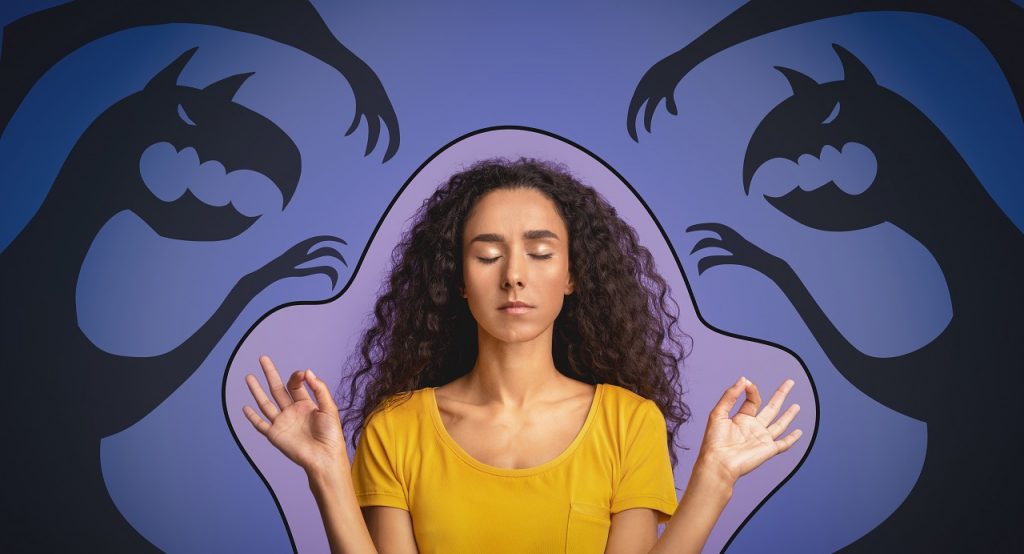
For many people, the hardest part of losing weight isn’t knowing what to eat. It’s the worry that comes with it: worry about slow progress, about slipping up, about how you compare with others. That worry doesn’t just feel bad. It can disturb sleep, nudge you towards comfort eating and make it harder to keep going with the habits that actually work.

The good news is that worry is something you can learn to manage. Here’s how it gets in the way, and what helps.

At a glance

  • Worry and weight are linked through behaviour: stress and worry can affect what you eat, how well you sleep and whether you stay active.
  • Poor sleep adds up: in trials, people ate about 385 extra calories a day when their sleep was cut short.
  • Slow is normal: losing about 0.5–1 kg a week is a healthy pace, and even a 5% loss can improve blood pressure, cholesterol and blood sugar.
  • Be kind to yourself after a slip: self-compassion is linked with better eating habits than self-criticism.
  • Give worry a time slot: setting aside a short “worry time” each day is a simple, evidence-informed way to stop it taking over.
  • Get help if worry is constant: anxiety that affects daily life is treatable. In India, Tele-MANAS (14416) offers free, confidential support.

How worry gets in the way of weight loss

Overcome worry - obstacle to weight lossWorry on its own doesn’t add kilos. What it does is change the everyday behaviours that weight depends on. Here are the main ways it shows up.
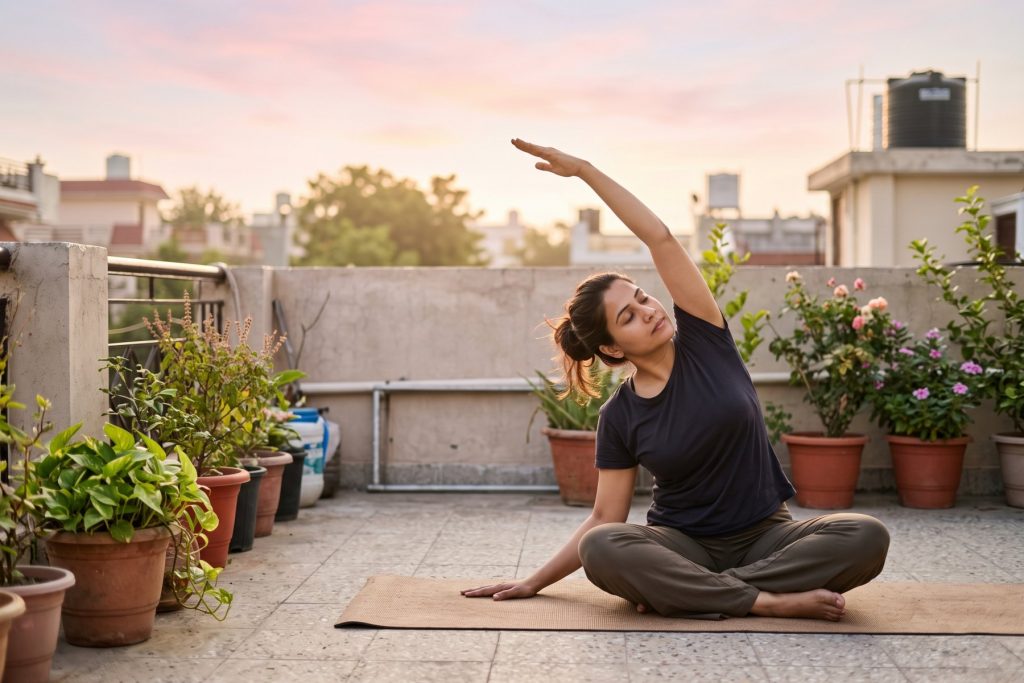
1. It pushes you towards comfort food

When stress becomes ongoing, many people find their eating shifts towards quick, tasty, energy-dense foods, often without real hunger. The effect varies a lot between people: some eat more under stress, others less. We explain the science, and how to tell physical hunger from emotional hunger, in our guide to how stress triggers unhealthy eating habits.

2. It steals your sleep

A busy mind at bedtime is one of the most common reasons people struggle to sleep, and the NHS lists stress and anxiety among the main causes of insomnia. Short sleep matters for weight: a review of sleep-restriction trials found people ate about 385 more calories a day when their sleep was cut short, with no matching increase in the energy they burned. Over weeks, that can quietly undo your efforts.

3. It makes slow progress feel like failure

Weight loss is rarely a straight line. Your weight can go up and down from day to day with water, salt, hormones and what you ate the night before, even when you’re doing everything right. If you expect a smooth drop, these normal fluctuations can feel like proof that nothing is working, and that’s often when people give up.

The US Centers for Disease Control and Prevention notes that people who lose weight gradually, at about 1–2 pounds (roughly 0.5–1 kg) a week, are more likely to keep it off. It also points out that even modest weight loss can improve blood pressure, cholesterol and blood sugar. A 5% loss, such as 4 kg for someone who weighs 80 kg, is a meaningful result.

4. It turns into comparison

Comparing your progress with a friend’s, or with transformation photos online, ignores everything that makes your body different: age, sex, starting weight, sleep, stress, medicines, health conditions and more. The only fair comparison is with where you were a month or three months ago.

5. It feeds all-or-nothing thinking

“I’ve had a samosa, so today’s ruined” is a familiar thought. Worry and guilt about a slip can make it more likely to snowball into a lost day or week. One meal doesn’t undo weeks of good habits, but the reaction to it sometimes does.

8 ways to worry less and keep going

overcome worry - gratitude

1. Give your worries a time slot

Instead of fighting worried thoughts all day, set aside 15–20 minutes at the same time each day as “worry time”. When a worry pops up outside that slot, jot it down and tell yourself you’ll deal with it later. In a small trial of people with work stress, postponing worries to a set time helped reduce anxiety and physical symptoms. Simply writing worries down also seemed to help. The research is early, but the method is simple and low-risk.

2. Empty your head before bed

If your mind races at night, spend five minutes in the evening writing down what’s on your mind and one small next step for each item. Keep the same wake-up time every day, and go to bed only when you feel sleepy, as the NHS recommends. Better sleep makes everything else easier, including food choices.

3. Be honest, not harsh, about your habits

The original version of this article asked a good question: are you being honest with yourself about your food, exercise and eating out? Keeping track is one of the habits most consistently linked with weight loss. A systematic review of 22 studies found a consistent link between self-monitoring (logging food, activity or weight) and weight loss, although the studies had limitations. The point of tracking is information, not judgement.

4. Watch the trend, not the day

If daily weigh-ins send you into a spin, weigh yourself at the same time once or twice a week and look at the trend over a month. Also track things you control and that change faster than the scale: steps, sleep, vegetables eaten, how your clothes fit, your energy levels.

5. Set goals for actions, not just outcomes

“Lose 10 kg” is out of your direct control. “Walk 30 minutes on five days” or “have dal and sabzi at dinner instead of takeaway” is not. Action goals give you a win every day, which leaves less room for worry. Planning ahead helps too: our meal-prep guide makes healthy lunches the easy option on busy days.

6. Treat slip-ups with self-compassion

Being kind to yourself after a slip isn’t letting yourself off the hook. A review of 20 studies found that programmes building self-compassion improved eating behaviour in most of the studies that measured it, and weight loss in about half, though the authors note the evidence is still limited. In practice: notice the slip, remind yourself that everyone has them, and get back on track at the next meal, not next Monday.

7. Count what’s going well

Noting a few things you’re grateful for each day, a practice the original article recommended, can lift your mood and help relationships. Be realistic about what it can do, though: a review of 27 studies found only a small effect on anxiety and depression, so it’s a good habit rather than a treatment. You could also note one thing your body did well that day, like climbing the stairs more easily.

8. Build in time to switch off

A yoga class, a breathing practice, a walk without your phone or a regular day off from screens all give your mind a break from problem-solving. Regular movement can also lift your mood; read more in how exercise impacts mental health. Choose something you enjoy enough to repeat; consistency matters more than the method.

When worry needs more support

Everyday worry is part of life. But for some people, worry becomes constant and hard to switch off. The NHS describes generalised anxiety disorder as stress or worry that affects daily life and is difficult to control, often alongside:

  • difficulty sleeping
  • feeling restless, irritable or finding it hard to concentrate
  • tiredness and tension
  • stomach problems, palpitations or feeling dizzy
  • low mood

Anxiety is common and treatable, and talking therapies such as cognitive behavioural therapy (CBT) can help. If this sounds like you, speak to your doctor. In India, you can also call Tele-MANAS on 14416 or 1-800-891-4416, the government’s free mental health helpline, available 24 hours a day.

It’s also worth getting support if worry about food or weight is starting to take over: for example, if you feel out of control around food, eat large amounts in secret, or find yourself skipping meals and feeling guilty after eating. These can be signs of an eating problem, and a doctor can help you find the right support.

Finally, if you’ve made steady changes for a few months and your weight isn’t changing at all, or it’s rising without an obvious reason, see your doctor. Some health conditions, such as an underactive thyroid or PCOS, and some medicines can affect weight. Ruling these out can take a lot of worry off your mind.

The bottom line

Worry can’t be wished away, but it doesn’t have to run your weight-loss journey. Expect progress to be slow and uneven, compare yourself only with yourself, protect your sleep, and treat slip-ups as information rather than failure. Small, steady habits, kept up with patience, will take you further than any amount of worrying about the scale.

Pro Tip: Use the GOQii App to log your meals, steps and sleep, so you can see your trends over weeks instead of judging yourself on a single day. Your GOQii Personalised Health Coach can help you set realistic, action-based goals and keep you going when progress feels slow.

Frequently asked questions

Can worry and stress stop you from losing weight?

Worry doesn’t directly add weight, but it can make weight loss harder. Ongoing stress can lead to comfort eating, poor sleep and less activity, and these behaviours can slow progress. Managing worry helps you stick with the habits that work.

Does lack of sleep cause weight gain?

Short sleep is linked with eating more. In a review of sleep-restriction trials, people ate about 385 more calories a day when their sleep was cut short. Getting enough sleep regularly supports your weight-loss efforts.

Why am I not losing weight even though I’m eating well?

Weight naturally goes up and down from day to day with water, salt and hormones, so short-term changes can be misleading. Look at your trend over several weeks. If your weight hasn’t changed at all after a few months of consistent changes, speak to your doctor, as some conditions and medicines can affect weight.

How fast should I expect to lose weight?

A gradual pace of about 0.5–1 kg (1–2 pounds) a week is considered healthy, and people who lose weight gradually are more likely to keep it off. Even losing 5% of your body weight can improve blood pressure, cholesterol and blood sugar.

What is “worry time” and does it work?

Worry time means setting aside 15–20 minutes at a fixed time each day to think about your worries, and postponing them until then. Early research suggests that postponing or writing down worries can reduce anxiety symptoms. It’s a simple technique that’s worth trying.

How do I stop feeling guilty after overeating?

Treat it as a normal slip rather than a failure. Notice what happened, remind yourself that everyone has off days, and return to your usual eating at the next meal. Research suggests that self-compassion is linked with healthier eating habits than self-criticism.

When should I get help for worry or anxiety?

If worry is constant, hard to control and affects your sleep, work or relationships, speak to your doctor. Anxiety is treatable. In India, you can call Tele-MANAS on 14416 or 1-800-891-4416 for free, confidential support at any time.

#BeTheForce

Disclaimer: The information provided in this blog is for general awareness and educational purposes only. It is not intended to replace professional medical advice, diagnosis, or treatment. Always consult a qualified healthcare provider for personalised medical guidance or concerns related to your health.

October 21, 2026 By GOQii Leave a Comment

How Exercise Impacts Mental Health

Regular exercise is one of the most reliable ways to protect your mental health. It can lift your mood, ease stress and anxiety, help you sleep, and lower your risk of depression, and you don’t need a gym to get the benefits.


Most of us know the feeling: a brisk walk after a tense day, and the mind feels a little clearer. That isn’t just a pleasant side effect. Large reviews of hundreds of studies now show that physical activity has a real, measurable effect on depression, anxiety and stress.

This guide explains what the research shows, why movement helps the mind, how much and what kind of exercise to aim for, and how to start when you’re feeling low. It also covers what exercise can’t do, and when to get support.

Exercise and mental health at a glance

  • Even a little helps. People doing half the recommended activity had an 18% lower risk of depression than those doing none.
  • It eases existing symptoms. Walking, jogging, yoga and strength training all reduced depression symptoms in trials.
  • Any type counts. Choose something you enjoy enough to keep doing.
  • Short, regular sessions work. Aim for about 150 minutes a week, but start smaller if you need to.
  • It works alongside treatment, not instead of it. If you have depression or anxiety, keep talking to your doctor or therapist.

What the evidence shows

The World Health Organization states that physical activity reduces symptoms of depression and anxiety, enhances brain health, and can improve overall well-being, and lists better sleep and thinking among its benefits. Three large reviews show how strong that evidence is.

Study What it looked at What it found
Pearce et al., JAMA Psychiatry, 2022 15 studies, 191,000 adults followed over time Half the recommended activity was linked to an 18% lower risk of depression, and the full recommendation to 25% lower.
Noetel et al., BMJ, 2024 218 trials, 14,170 people with depression Walking or jogging, yoga and strength training gave moderate reductions in depression symptoms, with more benefit at higher intensity.
Singh et al., British Journal of Sports Medicine, 2023 97 reviews, over 1,000 trials and 128,000 people Exercise improved depression, anxiety and psychological distress across many groups. Resistance training helped depression most; yoga and mind–body exercise helped anxiety most.

The research has limits. Many trials are small, and people know whether they are exercising, which can affect results. But the overall direction is clear and consistent: moving more is good for the mind.

What it can help with

  • Low mood and depression: both lowering the risk and easing symptoms, especially mild to moderate depression.
  • Anxiety and stress: many people feel calmer after exercise, and regular activity can reduce anxiety over time.
  • Sleep: being active during the day can help you fall asleep and sleep better.
  • Focus and memory: regular activity supports brain health and thinking skills.
  • Self-esteem: reaching small goals and feeling stronger can build confidence.

Why exercise helps your mind

Scientists are still working out exactly how exercise helps mental health. It is probably a mix of effects on the brain, the body and daily life.

  • Feel-good chemicals. Harder exercise releases endorphins, behind the well-known “runner’s high”. But most of the lasting benefit comes from regular, moderate activity.
  • A healthier brain. Regular activity triggers growth factors that help nerve cells form new connections, including in the hippocampus, an area involved in mood that is often smaller in people with depression.
  • A calmer stress response. Regular exercise may help your body handle stress better, so that over time you feel less tense day to day.
  • Better sleep. Being active during the day tends to improve sleep, and good sleep is closely tied to mood.
  • A sense of achievement. Finishing a walk or lifting a little more than last week gives you small wins, which matter most when you’re feeling low.
  • Time with others and outdoors. A walking group, a game of badminton or a yoga class adds social contact and fresh air, both good for wellbeing.

The benefits build over time. Harvard Health notes that most people begin to feel better a few weeks after starting, so it’s worth sticking with it even if the first sessions feel hard.

How much exercise, and what kind?

The WHO recommends adults get at least 150 minutes of moderate activity a week, such as brisk walking, and adds that any amount is better than none. That target is also a good aim for mental health, but the research shows benefits start well below it.

Type Examples Good for
Walking or jogging Brisk walks, jogging, cycling, swimming Depression and mood; one of the most effective types in trials, and the easiest to start
Yoga and mind–body Yoga, tai chi, pilates Anxiety and stress; also rated among the most acceptable by participants
Strength training Bodyweight exercises, resistance bands, weights Depression; strength training showed some of the biggest benefits
Dance and sport Zumba, garba, badminton, football Mood and social connection; fun makes it easier to keep going

Tips for getting the most out of it

  • Pick what you’ll actually do. The best exercise for your mental health is the one you keep doing.
  • Push a little, when you can. Trials found that more vigorous exercise tended to give bigger benefits. Brisk enough that you can talk but not sing is a good level.
  • Go outside when possible. A walk in a park or green space adds fresh air and daylight.
  • Make it social. Walking with a friend or joining a group adds company and helps you show up.

Getting started when you’re feeling low

When your mood is low, even a short walk can feel like a lot. That’s normal, and it’s why starting small matters more than starting big.

  1. Start with 5–10 minutes. A short walk around the block or 10 minutes of stretching is a real start. The NHS notes that even a brisk 10-minute walk can clear your mind and help you relax.
  2. Tie it to something you already do. Walk after your morning chai, or stretch before bed.
  3. Lower the bar on hard days. On a bad day, putting on your shoes and stepping outside counts.
  4. Plan it, don’t wait for motivation. Mood often improves after you move, not before. Put it in your calendar like any other appointment.
  5. Bring someone along. A friend, family member or walking group makes it easier to show up and adds company.
  6. Notice how you feel afterwards. A quick note of your mood before and after can show you the difference over a few weeks.
  7. Build up slowly. Add a few minutes each week until you’re closer to 30 minutes on most days.

Pair it with other habits that protect your mind

Exercise works best alongside other everyday habits. Regular sleep, a few minutes of daily meditation, and noticing when stress drives your eating all support your mental health too.

What exercise can’t do, and when to get help

Exercise is a powerful tool, but it isn’t a cure-all. It works best alongside professional care, not instead of it. In the UK, for example, NICE recommends group exercise as one treatment option for less severe depression, usually guided by a trained practitioner. The authors of the large reviews above also see exercise as complementing therapy and medicines, not replacing them.

  • Don’t stop prescribed medicines without talking to your doctor, even if you start feeling better.
  • See a doctor or mental health professional if low mood, worry or loss of interest lasts more than two weeks, or affects your work, sleep, eating or relationships.
  • Talk to someone if exercise starts to feel compulsive, for example if you feel unable to miss a session, or it’s tied to strict rules about food or weight.

Free support in India

Tele-MANAS, the Government of India’s mental health helpline, is free, open 24 hours a day and available in around 20 languages. Call 14416 or 1800-891-4416.

If you or someone you know is thinking about suicide or self-harm, or is in immediate danger, call 112 or go to the nearest hospital emergency department straight away.

The bottom line

Exercise is one of the simplest, cheapest and best-supported ways to look after your mental health. It can lower your risk of depression, ease low mood, anxiety and stress, and help you sleep and think more clearly. You don’t need a gym or a long workout: a brisk walk, a yoga session or a few bodyweight exercises all count. Start small, choose something you enjoy, and keep going. And if you’re struggling, reach out for support alongside it.

Pro Tip: Use the GOQii App to track your steps, workouts and sleep, and note how you feel each day to see how movement affects your mood over time. Your GOQii Personalised Health Coach can help you build an activity routine that fits your life and keeps you motivated on harder days.

Frequently Asked Questions (FAQs)

  1. Can exercise help with depression?

Yes. Large reviews of trials show that exercise such as walking, jogging, yoga and strength training reduces depression symptoms. It works best alongside professional care, not as a replacement for it.

  1. How much exercise do I need for my mental health?

The WHO recommends at least 150 minutes of moderate activity a week, but benefits start well below that. People doing half that amount had an 18% lower risk of depression than those doing none.

  1. What type of exercise is best for anxiety?

Any regular activity can help. In one large review, yoga and other mind–body exercise showed the biggest benefits for anxiety. Walking is also an easy, effective place to start.

  1. How soon will I feel the benefits?

Many people feel calmer or more positive straight after a session. Longer-lasting improvements in mood usually take a few weeks of regular activity.

  1. Can exercise replace antidepressants or therapy?

No. Exercise is a valuable part of treatment, but you shouldn’t stop prescribed medicines or therapy without talking to your doctor. Many people use exercise alongside them.

  1. I have no energy when I’m low. How do I start?

Start very small, such as a 5–10 minute walk, and plan it rather than waiting until you feel motivated. Mood often improves after you move. Bringing a friend along can help you show up.

  1. Where can I get help for my mental health in India?

Tele-MANAS, the government’s free mental health helpline, is open 24 hours a day on 14416 or 1800-891-4416. In an emergency, or if you are thinking about harming yourself, call 112 or go to the nearest hospital.

#BeTheForce

Disclaimer: The information provided in this blog is for general awareness and educational purposes only. It is not intended to replace professional medical advice, diagnosis, or treatment. Always consult a qualified healthcare provider for personalised medical guidance or concerns related to your health.

  • « Previous Page
  • 1
  • …
  • 5
  • 6
  • 7
  • 8
  • 9
  • …
  • 66
  • Next Page »

Search

Recent Posts

  • How to Improve Sleep Quality Naturally: 12 Science-Backed Tips for Better Sleep
  • Post-Diwali Reset: Getting Back on Track Without Crash Diets
  • Diwali Safety: First Aid for Burns and Firecracker Injuries, and Protecting Your Lungs from Smoke
  • Cancer Screening: Which Tests You Need and When
  • This Dhanteras, Invest in Your Health

Stay Updated

Archives

  • November 2026 (10)
  • October 2026 (23)
  • September 2026 (5)
  • August 2026 (8)
  • July 2026 (24)
  • June 2026 (22)
  • May 2026 (20)
  • April 2026 (24)
  • March 2026 (18)
  • February 2026 (14)
  • January 2026 (14)
  • December 2025 (19)
  • November 2025 (14)
  • October 2025 (17)
  • September 2025 (6)
  • August 2025 (5)
  • July 2025 (9)
  • June 2025 (18)
  • May 2025 (16)
  • April 2025 (22)
  • March 2025 (25)
  • February 2025 (21)
  • January 2025 (25)
  • December 2024 (21)
  • November 2024 (21)
  • October 2024 (15)
  • September 2024 (22)
  • August 2024 (27)
  • July 2024 (14)
  • June 2024 (23)
  • May 2024 (26)
  • April 2024 (27)
  • March 2024 (27)
  • February 2024 (23)
  • January 2024 (21)
  • December 2023 (14)
  • November 2023 (10)
  • October 2023 (18)
  • September 2023 (20)
  • August 2023 (16)
  • July 2023 (16)
  • June 2023 (21)
  • May 2023 (20)
  • April 2023 (19)
  • March 2023 (23)
  • February 2023 (19)
  • January 2023 (15)
  • December 2022 (11)
  • November 2022 (15)
  • October 2022 (15)
  • September 2022 (12)
  • August 2022 (9)
  • July 2022 (17)
  • June 2022 (11)
  • May 2022 (10)
  • April 2022 (6)
  • March 2022 (6)
  • February 2022 (13)
  • January 2022 (11)
  • December 2021 (7)
  • November 2021 (3)
  • October 2021 (6)
  • September 2021 (3)
  • August 2021 (8)
  • July 2021 (7)
  • June 2021 (15)
  • May 2021 (16)
  • April 2021 (10)
  • March 2021 (7)
  • February 2021 (4)
  • January 2021 (4)
  • December 2020 (3)
  • November 2020 (4)
  • October 2020 (10)
  • September 2020 (3)
  • August 2020 (3)
  • July 2020 (2)
  • June 2020 (4)
  • May 2020 (10)
  • April 2020 (12)
  • March 2020 (10)
  • February 2020 (4)
  • January 2020 (4)
  • December 2019 (3)
  • November 2019 (7)
  • October 2019 (5)
  • September 2019 (4)
  • August 2019 (9)
  • July 2019 (9)
  • June 2019 (11)
  • May 2019 (4)
  • April 2019 (8)
  • March 2019 (8)
  • February 2019 (9)
  • January 2019 (8)
  • December 2018 (9)
  • November 2018 (3)
  • October 2018 (3)
  • September 2018 (5)
  • August 2018 (10)
  • July 2018 (6)
  • June 2018 (13)
  • May 2018 (8)
  • April 2018 (17)
  • March 2018 (9)
  • February 2018 (8)
  • January 2018 (15)
  • December 2017 (12)
  • November 2017 (19)
  • October 2017 (13)
  • September 2017 (15)
  • August 2017 (4)
  • July 2017 (8)
  • June 2017 (7)
  • May 2017 (6)
  • April 2017 (8)
  • March 2017 (6)
  • February 2017 (7)
  • January 2017 (9)
  • December 2016 (10)
  • November 2016 (7)
  • October 2016 (7)
  • September 2016 (7)
  • August 2016 (11)
  • July 2016 (9)
  • June 2016 (9)
  • May 2016 (12)
  • April 2016 (17)
  • March 2016 (17)
  • February 2016 (8)
  • January 2016 (6)
  • December 2015 (2)
  • November 2015 (9)
  • October 2015 (7)
  • September 2015 (9)
  • August 2015 (11)
  • July 2015 (9)
  • June 2015 (11)
  • May 2015 (9)
  • April 2015 (13)
  • March 2015 (8)
  • February 2015 (5)
  • January 2015 (12)
  • December 2014 (14)
  • November 2014 (11)
  • October 2014 (6)
  • September 2014 (13)
  • August 2014 (12)
  • July 2014 (6)
  • June 2014 (2)
  • May 2014 (7)
  • April 2014 (4)

From Burnout to Balance: How Dr. Ranjit Reclaimed His Health

Dr Ranjit Bhatt has spent years tending to others. A practising doctor in Odisha, his days were packed with patients, surgeries, and emergencies. From the outside, it looked like a life lived in service. But on the inside, something wasn’t right. “I had no … [Read More...]

From Shimla’s Slopes to Chandigarh’s Sidewalks: Surinder Kaur Bhalla’s Journey from Chaos to Control

Some journeys start with a plan. Others begin with a stumble literally. Surinder Bhalla, a government professional, born and raised in the scenic hill town of Shimla, had always lived a life of movement. “In Shimla, you walked everywhere,” she reflects. “Walking was never an exercise. It was just life.” But after shifting to Chandigarh, […]

“I’ve Challenged Myself to Live 100 Years” – The Story of Chandubhai Savani’s Second Chance at Life

At 67, most people start slowing down. Not Chandubhai Savani. A resident of Surat, Chandubhai, thought life was on track. “My life was going well till I had my bypass surgery,” he says. That surgery, back in 2021, was a wake-up call.  Medication was routine, but exercise wasn’t. His diet? What he calls ‘normal.’ “I […]

Ananda Mukherjee Health Story

From Terminal Illness To Complete Wellness! Ananda Mukherjee Health Story

As we observe World Cancer Day under the powerful theme ‘United by Unique’ (2025-2027)**, we are reminded that every individual’s journey with cancer is distinct, yet united by shared resilience, hope, and the collective fight against this disease. This theme places people at the centre of care and their stories at the heart of the […]

  • HOME
  • HEALTHY LIVING
  • FITNESS
  • HEALTHY RECIPES
  • USER STORIES
  • KARMA
  • BUY GOQii

Copyright ©2016 GOQii

