GOQii

Blog

  • HOME
  • HEALTHY LIVING
  • FITNESS
  • HEALTHY RECIPES
  • USER STORIES
  • KARMA
  • BUY GOQii

May 1, 2024 By Neha Sharma Leave a Comment

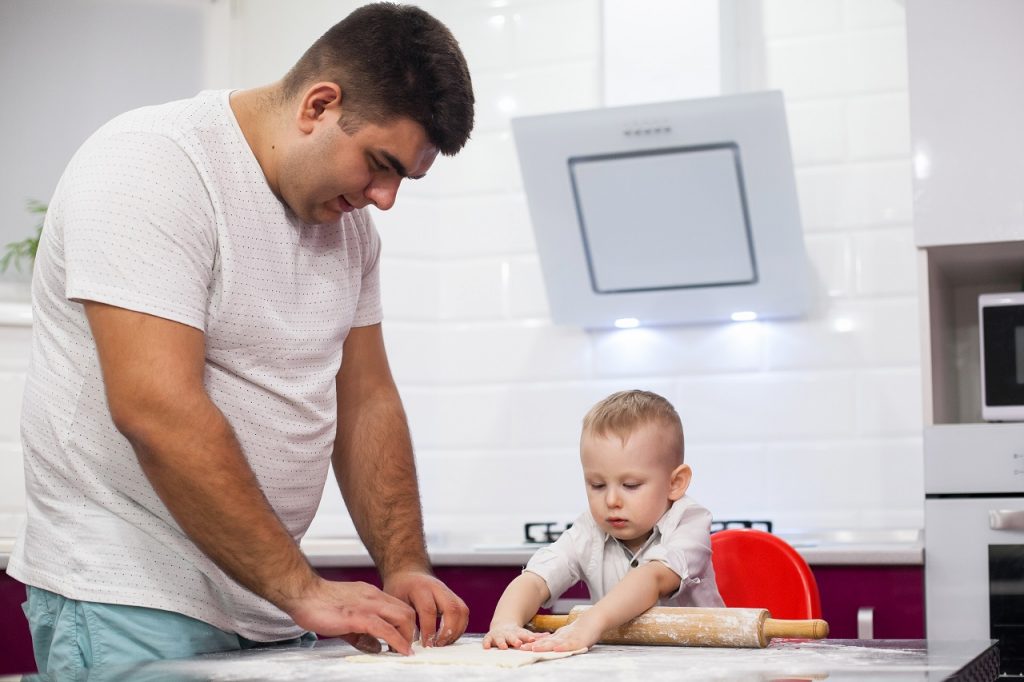
Healthy Recipes For Kids: Healthy Twist On Pizza & Rolls

healthy recipes for kids

There is a saying that “In all this world, there is nothing so beautiful as a happy child,” by L. Frank Baum. We can define happiness in many terms but for a child, a healthy child is the happiest one. Healthy eating is very important for the overall growth and development of a child. Albeit, it is not a one off process, it has to develop from early childhood. It protects children from many chronic diseases, builds immunity and keeps them happy and healthy in the long run. Aspects of healthy eating for children are not different from adults. Both need the right nutrients in the right quantities. Keeping that in mind, here are some healthy recipes for kids with a twist! 

Healthy Recipes For Kids

1. Healthy Pizza 

What You Will Need For Dough: 

  • Wheat flour – 150 gm
  • Boiled & mashed Spinach – 50 gm
  • Boiled & mashed beetroot – 50 gm
  • Oil – 2 tsp
  • Salt – ½ tsp

For dressing:

  • Hung curd – 50 gm
  • Tomato sauce – 50 gm
  • Mixed herbs – 1 tsp
  • Grated carrot – 50 gm
  • Chopped capsicum – 50 gm
  • Boiled chopped corns – 50 gm
  • Finely chopped pieces of Cottage cheese – 100 gm

Method of Preparation

  1. Prepare two dough, one of spinach & other of beetroot by rolling out slightly two big & thick chapattis. These chapatis can be baked or can be cooked like normal one but partially.
  2. Spread one layer of fresh hung curd and one layer of tomato sauce over it.
  3. Spread all the veggies one by one in an interesting manner that appeals to kids.
  4. Sprinkle mixed herbs, salt and some cheese on top of it.
  5. Now this chapati pizza can be cooked/baked in a kadai or an oven for 4-5 min.
  6. Enjoy hot with hung curd sauce or tomato sauce.

2. Tangy Protein Rolls 

What You Will Need:

  • Overnight soaked Moong Dal – 100 gm
  • Rice Flour – 2 tsp
  • Boiled potato – 2 in no.
  • Boiled & mashed peas – 50 gm
  • Cottage cheese – 100 gm
  • Grated carrot – 100 gm
  • Finely chopped capsicum (all colors) – 100 gm
  • Finely chopped onion – 50 gm
  • Cumin seeds – ½ tsp
  • Mustard seeds – ½ tsp
  • Curry leaves – 6-7 in no.
  • Sesame seeds – 1 tsp
  • Dry mango powder – ½ tsp
  • Grated fresh coconut – 1-2 tsp
  • Chopped Cashew and raisins – 1 tsp
  • Tomato sauce – 2-3 tsp
  • Salt – ½ tsp
  • Oil – 2-3 tsp

Method of preparation:

  1. Grind soaked moong daal to a coarse paste and add rice flour and after mixing well, keep it aside for 5-10 min.
  2. In a pan add oil, cumin & mustard seeds, curry leaves and chopped onion. Sauté for a while till it becomes slightly pink in color.
  3. Add all the veggies one by one, dry mango powder, salt, grated coconut, sesame seeds, chopped nuts and properly mix all the ingredients for 2-3 mins.
  4. Roll out the veggie mixture in the form of hotdogs.
  5. Make chilla out of moong dal mixture and put one veggie hot dog in between, apply some tomato sauce and roll out the chilla and it’s ready to curb evening hunger pangs! 

Health Benefits Of These Recipes 

  • These are homemade and are absolutely safe for kids.
  • Pizza is junk and consists of blank calories but this one is super healthy as it consists of many colorful veggies, provides vitamins & minerals and wheat flour chapati with spinach & beetroot is always a healthy option!
  • In spite of many sauces, if hung curd and tomato sauce is used, it is absolutely good for health.
  • Moong Dal cheela & Sesame Seeds are rich in protein. Sesame seeds support bone health and when stuffed with healthy filling, there is nothing more perfect than this.
  • These recipes satisfy the kids’ emotional part as they are colorful and look exactly what they want from the outside.

We hope you enjoy these Healthy Recipes For Kids. Do try them out, upload your pics on social media or the GOQii Arena and tag us! For more healthy recipes, check out Healthy Reads or tune in to cooking sessions on GOQii Play. 

To get more advice on recipes, nutrition and diet tips for kids, subscribe to GOQii Personalised Health Coaching here. 

#BeTheForce

April 30, 2024 By Hetal Chheda Leave a Comment

Why and how much should your child sleep?

toddler-sleep-routine

More often than not people do not consider sleep as an o important activity for good health. But, in reality sleep is a powerful tool that keeps your mind alert and calm. This is true for both elders as well as kids. Sleep should be considered as important as food.

Did you know that if you sleep well you can increase/build your brainpower just as you build muscles when you are weightlifting.

In this blog however, I am talking of how important is sleep for kids and how much they should sleep to be healthy.

Good sleep habits in kids help in;

  • Good health
  • Growth
  • Mental function.

BENEFITS OF SLEEP FOR KIDS

  • Increases concentration: Well slept kids are more receptive and interactive. These kids have good attention span and learn the most. Overall they become calmer, attentive, observant and also socially active.
  • Reduces behaviour problems: Sleep lets your entire body rest. Lack of rest makes kids hyperactive, fatigued, physically impulsive and agitated.
  • Reduces childhood obesity risk: Kids who don’t sleep enough are at higher risk for childhood obesity. Some researches prove that kids who slept only for an hour (Yes, Just an hour) they had increased their risk of obesity by 80 percent. This happens because the hormones that control hunger are directly related to sleep quality; with too little rest the appetite turns itself on and remains on.
  • Releases growth hormone: Quality sleep releases growth hormones. This hormone helps in normal growth and other bodily and brain development.
  • Increases Immunity: Kids who sleep well do not fall sick very often

HOW MUCH SLEEP IS NORMAL?

  • Toddlers – 12 hours till the age of three
  • Four to six – 10½ to 11½ hours
  • Six to Twelve – 10 hours
  • Teenagers – 8 to 9 hours

FOODS THAT WILL HELP YOUR CHILD SLEEP BETTER

  • Dairy products: Dairy products produce the hormone serotonin that makes you feel sleepy. So foods like milk, cottage cheese, yogurt and cheese helps kids sleep better.
  • Bananas: Bananas are another easy bedtime snack option. Researchers conclude that bananas contain melatonin, as well as serotonin, which helps to calm you and regulate your sleep cycles. They also contain magnesium and potassium, both of which are muscle relaxers.
  • Oatmeal: Oats have an extremely high concentration of melatonin. A warm serving of oatmeal may help your toddler feel full and enjoy a longer duration of sleep.

SLEEP TIPS FOR CHILDREN

  • Introduce good sleep habits right from the start
  • Create an environment that helps the child to sleep. Keep the lights minimum, room cool and quit.
  • Make sure that there is no TV or computer switched on which will distract sleep
  • Avoid caffeine
  • Put your child to bed at the same time on all days

Encourage importance of sleep in your children at an early age. This will help your child be happy, social and intelligent. The best part is you yourself might get some good deep sleep.

If you found this information helpful, we’d love to hear your thoughts in the comments below. To explore more insights on children’s health, check out Healthy Reads or for further information or guidance, reach out to our certified experts by subscribing to GOQii’s Personalised Health Coaching here.

#BeTheForce
October 30, 2023 By Hetal Chheda 1 Comment

Everyday foods for Memory and Concentration

Relax!!! You are not the only one. We all cruise in the same boat. These are common concerns that every parent faces.

The key to concentration, memory and intelligence to a great extent depends on the food that a child eats. It is very vital that a child’s food be balanced and most of us fail to understand this.

We come across a variety of food items on a daily basis and also practically use them in our own kitchen. But, we barely know of its potent usages.

Yes, some of the responses to the curious questions above are in our very own kitchen. Let us explore the foods that help our kids concentrate and intensify their memory.

ALMONDS:

These little brown coloured ovals also called ‘Badam’ is preferably the world’s healthiest food stuff. Almond is generally rich in proteins. Protein helps repair brain cells and boosts cognitive functions. Almonds contain the mineral Zinc which acts as an antioxidant in the body that competes against the free radicals which otherwise attack and breakdown brain cells.

Vitamin B6 and E promote brain health and also slackens the ageing of brain cells; which eventually harms the memory. Omega-3 and Omega-6 fatty acids present in almonds upsurge intellectual levels. Magnesium promotes the strengthening of brain nerves.

RED ONION:

Red Onions have decent levels of anthocyanin and quercetin. Researchers propose that flavonoids including the anthocyanin’s have the ability to prevent age-related brain impairment. It also enhances memory. Anthocyanin inhibits neuro-inflammation, activating synaptic signalling, and improving blood flow to the brain. This makes it an excellent memory food.

A 2005 study by Hokkaido Tokai University scientists concluded that di-n-propyl trisulphide, a sulphur compound found in onions, improves memory impairment.

INDIAN GOOSEBERRY:

Indian gooseberry, popularly known as Amla is a fantastic brain food. We all have memories of our parents feeding us chyawanprash (prepared using Amla) as they believed Amla increases memory. Our Indian beliefs do have some scientific evidences that prove them right.

The antioxidants present in Amla fights against the free radicals in the body which otherwise attack and breakdown brain cells. Vitamin-C content of Amla in it helps in the production of norepinephrine, a neurotransmitter which improves brain activity. The iron content in Amla facilitates oxygen transportation, preventing brain degeneration.

WATER:

Yes, water. It is an absolute surprise!

Brain gets its electrical energy from water which keeps the brain functions going including thought and memory. Water is also needed for the production of hormones and neurotransmitters in the brain. Now, when you provide enough water to your brain you will be able to think faster, be more focused, and experience greater clarity and creativity. Daily hydration is required for optimal brain function as brain cannot store water.

FATTY FISH:

Brain requires essential fatty acids like Omega 3 and Omega 6 fatty acids. We need to include it in our regime as the body cannot process these acids. Fatty fish as the name suggests is filled with good fats – Omega 3 and Omega 6. Including fatty fish in the diet can boost the memory function by 15 percent. The fish highest in omegas include salmon, mackerel, sardines, rainbow trout, and albacore tuna. If you don’t like fish or eat it rarely, consider taking a fish oil supplement.

Gift your child with good and balanced nutrition and see the healthier them; booming in all facets of life. For more articles and guidance explore our Healthy Reads or speak to a certified expert by subscribing to GOQii’s Personalised Health Coaching here.

#BeTheForce
September 16, 2023 By Shehnaz Shaikh 3 Comments

Do Children Need Exercise and Nutritional Care?

exercise and nutrition for childrenExercise/Physical activity is important for everyone, but more so for children and adolescents as it plays a key role in the development of their personality. Hence, it has increasingly become important to encourage a healthy lifestyle among them. Having said this how much children need to exercise depends on age.



Why Is Exercise Important For Children & Adolescents?

Exercise for children is important for both their physical and mental well-being. By staying physically active, children and adolescents can reduce the risk of stress, depression and other mental health issues. Physical activity can also help teenagers maintain a positive body image because physical activity is beneficial to the human body.

How Does Exercise Benefit Children?

  • It improves immunity
  • Helps in building better focus
  • It helps in strengthening the lungs and the cardiovascular system
  • Keeps the children in a happy mood due to the release of feel-good hormones called endorphins
  • Helps in maintaining good brain health and also helps in enhancing memory
  • Decreases the risk of developing certain diseases, including obesity, type 2 diabetes, and high blood pressure in later years
  • Helps in maintaining a healthy weight
  • Exercise can help children of all ages and can prevent weak bones (osteoporosis) in later years by strengthening bones and joints
  • Helps in performing well in sports

How Long Should Children Exercise For?

Children and adolescents should do 60 minutes or more of physical activity each day. Children and adolescents are often active in short bursts of time rather than for sustained periods of time, and these short bursts can add up to meet physical activity needs. Physical activities for children and adolescents should be developmentally-appropriate, fun, and offer variety.

Having a balanced exercise routine is good. let’s take a look at 

The three parts of a balanced exercise routine are Aerobic exercise, strength training and flexibility training.

  1. Aerobic exercises

Aerobic exercises increase the heart rate and breathing rate. When you give your heart and lungs this kind of workout regularly, they get stronger. Aerobic exercises should be fun and easy exercises for children that they will love to engage in. Some of the aerobic exercises that your children will enjoy include Swimming, Skating, Cycling, Jogging, Dancing, Skipping, Football, etc. Some team sports that provide a great aerobic workout are basketball, hockey, rowing, cricket and badminton.

  1. Strength Training

Go for exercises that strengthen bones and muscles. Experts recommend that children and adolescents, ages 6 to 17, should get at least one hour of moderate to high-intensity aerobic exercise every day. Strength-training activities that build muscle should also be part of a 60-minute exercise routine on at least three days of the week.

Young people ages 13 to 17 should do a variety of moderate to vigorous physical activity for 60 minutes each day. Along with aerobic exercises like running, jogging, fast walking, circuit training, one should also include sit-ups, push-ups, lunges and squats.

Some of the Exercises Include: 

  1. Lunges: Children can improve their balance and strengthen their legs with some lunges
  2. Squats: are the best for building quads, hamstrings, and glutes, and they help to strengthen your child’s lower back as well
  3. Push-ups: can also be done on the knees or on the feet, according to the child’s ability. Don’t worry if they don’t have the form right initially

Encourage your child to Warm up before exercise and cool down after exercise to prevent muscle soreness and injury.

Warm up before exercise: Warming up before exercise prevents injury by softening the muscles and making them supple. Some warm-up exercises you can do are:

  • Slow jogging or walking
  • Stretching all the muscles they’re going to use (hold each and stretch for 8 to 10 seconds, but never until it hurts)

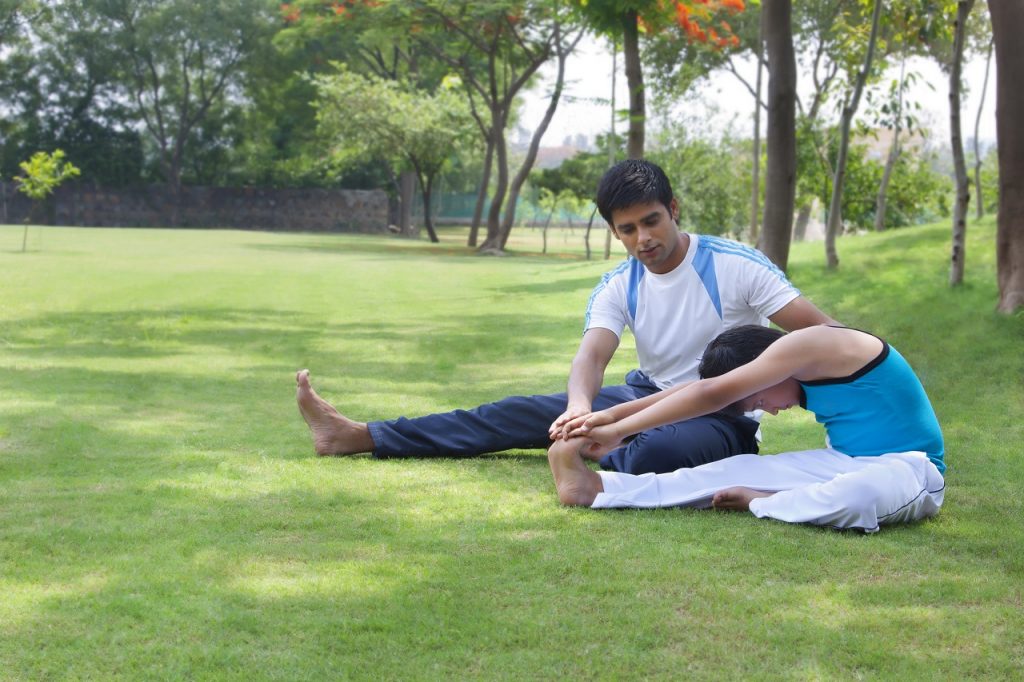
Cool down after exercise: Cooling down after high-intensity exercise is important for relaxing and softening the muscles. Cool down or ballistic stretch begins to lower the heart rate, improves flexibility and will speed up recovery from a workout.

Some Cool Down Examples Include: 

  1. Hamstring Stretch: The stretch helps Hamstring muscles that are on the back of the thigh 2
  2. Side Lunge: This stretch works the inner thighs
  3. Calf Stretch: This stretch feels good after running or walking.
  4. Butterfly Stretch: Children are usually quite adept to the butterfly stretch and it relaxes them well after a good physical activity.

Nutrition is Equally Important When You Exercise 

While exercise is very important, nutrition is equally important for children and adolescents to lead an active and healthy life.

Children who eat healthy, well-balanced meals and snacks will get the nutrients needed to perform well in sports. Kids and teens who play a sport that can involve 1½ to 2 hours or more of activity in a day, in particular, may need to consume more balanced nutrition to keep up with increased energy and fluid demands.

We trust that this article on exercise and nutrition for children assists you in making informed decisions about your child’s health. Do let us know your thoughts in the comments below. For more on Kid’s Health check out Healthy reads. To get expert advice, speak to a GOQii Coach by subscribing for Personalised Health Coaching here.

  • « Previous Page
  • 1
  • 2
  • 3
  • Next Page »

Search

Recent Posts

  • Navigating the Maze of Nutrition: Finding Clarity Amidst Confusion
  • Get children active and keep them healthy
  • What Gestational Diabetes Can Do To You & Your Unborn Child
  • Breathing – A Forgotten Art
  • The Incredible Benefits Of Milk You Might Not Know

Stay Updated

Archives

  • December 2025 (3)
  • November 2025 (15)
  • October 2025 (20)
  • September 2025 (6)
  • August 2025 (6)
  • July 2025 (12)
  • June 2025 (18)
  • May 2025 (16)
  • April 2025 (23)
  • March 2025 (23)
  • February 2025 (22)
  • January 2025 (26)
  • December 2024 (26)
  • November 2024 (25)
  • October 2024 (22)
  • September 2024 (24)
  • August 2024 (31)
  • July 2024 (21)
  • June 2024 (26)
  • May 2024 (31)
  • April 2024 (27)
  • March 2024 (29)
  • February 2024 (26)
  • January 2024 (25)
  • December 2023 (15)
  • November 2023 (11)
  • October 2023 (22)
  • September 2023 (22)
  • August 2023 (20)
  • July 2023 (22)
  • June 2023 (24)
  • May 2023 (24)
  • April 2023 (24)
  • March 2023 (23)
  • February 2023 (20)
  • January 2023 (16)
  • December 2022 (12)
  • November 2022 (15)
  • October 2022 (15)
  • September 2022 (12)
  • August 2022 (10)
  • July 2022 (17)
  • June 2022 (11)
  • May 2022 (10)
  • April 2022 (6)
  • March 2022 (6)
  • February 2022 (13)
  • January 2022 (12)
  • December 2021 (7)
  • November 2021 (3)
  • October 2021 (6)
  • September 2021 (3)
  • August 2021 (8)
  • July 2021 (7)
  • June 2021 (15)
  • May 2021 (16)
  • April 2021 (10)
  • March 2021 (7)
  • February 2021 (4)
  • January 2021 (4)
  • December 2020 (3)
  • November 2020 (4)
  • October 2020 (10)
  • September 2020 (3)
  • August 2020 (3)
  • July 2020 (2)
  • June 2020 (4)
  • May 2020 (10)
  • April 2020 (12)
  • March 2020 (10)
  • February 2020 (4)
  • January 2020 (4)
  • December 2019 (3)
  • November 2019 (7)
  • October 2019 (5)
  • September 2019 (4)
  • August 2019 (9)
  • July 2019 (9)
  • June 2019 (11)
  • May 2019 (4)
  • April 2019 (9)
  • March 2019 (8)
  • February 2019 (9)
  • January 2019 (8)
  • December 2018 (9)
  • November 2018 (3)
  • October 2018 (3)
  • September 2018 (5)
  • August 2018 (10)
  • July 2018 (6)
  • June 2018 (13)
  • May 2018 (8)
  • April 2018 (18)
  • March 2018 (9)
  • February 2018 (8)
  • January 2018 (15)
  • December 2017 (12)
  • November 2017 (19)
  • October 2017 (13)
  • September 2017 (15)
  • August 2017 (4)
  • July 2017 (8)
  • June 2017 (7)
  • May 2017 (6)
  • April 2017 (8)
  • March 2017 (6)
  • February 2017 (7)
  • January 2017 (9)
  • December 2016 (10)
  • November 2016 (7)
  • October 2016 (7)
  • September 2016 (7)
  • August 2016 (11)
  • July 2016 (9)
  • June 2016 (9)
  • May 2016 (12)
  • April 2016 (17)
  • March 2016 (17)
  • February 2016 (8)
  • January 2016 (6)
  • December 2015 (2)
  • November 2015 (9)
  • October 2015 (7)
  • September 2015 (9)
  • August 2015 (11)
  • July 2015 (9)
  • June 2015 (12)
  • May 2015 (9)
  • April 2015 (13)
  • March 2015 (8)
  • February 2015 (5)
  • January 2015 (12)
  • December 2014 (14)
  • November 2014 (11)
  • October 2014 (6)
  • September 2014 (13)
  • August 2014 (12)
  • July 2014 (6)
  • June 2014 (2)
  • May 2014 (7)
  • April 2014 (5)

From “Laddu Nawin” to Fit and Fierce: How a 25-Year-Old Insurance Advisor Shed 20 Kilos and Gained His Life Back

When 25-year-old Nawin Yadav from Hyderabad walked into his office every morning, he carried more than just his files and policy papers. He had the weight of fatigue, sluggish energy, and an ever-growing belly that was becoming the butt of jokes. “People … [Read More...]

“I’ve Challenged Myself to Live 100 Years” – The Story of Chandubhai Savani’s Second Chance at Life

At 67, most people start slowing down. Not Chandubhai Savani. A resident of Surat, Chandubhai, thought life was on track. “My life was going well till I had my bypass surgery,” he says. That surgery, back in 2021, was a wake-up call.  Medication was routine, but exercise wasn’t. His diet? What he calls ‘normal.’ “I […]

From Shimla’s Slopes to Chandigarh’s Sidewalks: Surinder Kaur Bhalla’s Journey from Chaos to Control

Some journeys start with a plan. Others begin with a stumble literally. Surinder Bhalla, a government professional, born and raised in the scenic hill town of Shimla, had always lived a life of movement. “In Shimla, you walked everywhere,” she reflects. “Walking was never an exercise. It was just life.” But after shifting to Chandigarh, […]

Ananda Mukherjee Health Story

From Terminal Illness To Complete Wellness! Ananda Mukherjee Health Story

As we observe World Cancer Day under the powerful theme ‘United by Unique’ (2025-2027)**, we are reminded that every individual’s journey with cancer is distinct, yet united by shared resilience, hope, and the collective fight against this disease. This theme places people at the centre of care and their stories at the heart of the […]

  • HOME
  • HEALTHY LIVING
  • FITNESS
  • HEALTHY RECIPES
  • USER STORIES
  • KARMA
  • BUY GOQii

Copyright ©2016 GOQii
