GOQii

Blog

  • HOME
  • HEALTHY LIVING
  • FITNESS
  • HEALTHY RECIPES
  • USER STORIES
  • KARMA
  • BUY GOQii

November 22, 2024 By Urvi Gohil 1 Comment

Your Guide For A Happy Gut: Say bye to bloating, acidity and heartburn

Gut health Your body is constantly communicating with you. Very small episodes of acidity, bloating, indigestion, etc. says a lot about your lifestyle and overall health. Are you paying attention? It is important for us to know that about 70% of the immune system is located in our gut and the gut absorbs nutrients that support body functions from energy production to hormone balance, skin health to mental health and toxin & waste elimination too.

So how can you keep your gut healthy? Well, follow this guide for a happy gut to stay healthy!

Easy Guide For A Happy Gut 

  1. Fennel Seeds or Saunf: These seeds have antispasmodic, anti-inflammatory properties and promote the production of gastric enzymes. It works wonderfully against indigestion, bloating, acidity, heartburn post meals and constipation too. Just add 1 tbsp of raw seeds to the water bottle you carry to office or have 1 glass of fennel seed water post meals to take care of such symptoms.
  2. Basil Seeds: They work well in relieving constipation, bloating, naturally detox your body and help regulate smooth bowel movements. It works as a natural coolant. You can have a glass of milk with basil seeds few hours before bed time, or make a drink with water, honey and basil seeds and have it in mid-morning, or just make a habit of soaking it for 2-3 hours and drinking the water in the morning.
  3. Fenugreek Seeds: These are rich in fiber and antioxidants, and help in enhancing bowel movement. Take a tsp of fenugreek seeds and soak it in 1 cup of water at night and have it in the morning with a glass of lukewarm water if you have long term problems of constipation, indigestion or heartburn. *People experiencing severe acidity should avoid this.
  4. Lemon Ginger Water: This will help strengthen the digestive system and prevent indigestion, nausea, heartburn and bloating. Take a glass of lukewarm water, add 1 tsp of lemon juice and 1 tsp of ginger juice in it. This will work best for bloating post meals or occasional bloating post heavy meals.
  5. Apple Cider Vinegar: The unfiltered, unpasteurized and raw mother Apple Cider Vinegar has live micro-organisms and help to work towards heartburn & GI stress. A dilution of Apple Cider Vinegar before a meal can help you stimulate acid secretion and reduce gut symptoms. Also, having a tbsp of ACV in 300 ml water in the morning can also help in the same.
  6. Water: Is the body’s basic requirement! A constant supply of water is necessary to replenish the fluids lost through activities such as respiration, perspiration, urination, regulating body temperature, digesting food, etc. Try to drink at least 2-2.5L of water throughout the day and it is the answer to all your digestive issues.
  7. Vegetables & Fruits: Having 1 portion of vegetables in every meal is the best way to help your gut digest the food well and have enough nutrients. Plus, the fiber from them helps to ease bowel movement and acts as food for micro-organisms. Fruits are best to go for in mid meals to add more soluble fiber and get rid of acidity and bloating.
  8. Physical Activity: No escape here. Being physically active for 30-45mins is the answer to good health and a happy gut. Exercise gets your heart pumping and increases blood flow and oxygen circulation throughout the body. Blood and oxygen are necessary to aid digestion and keep the intestinal muscles healthy. So for constipation, bloating, acidity, heartburn, etc. including some walking, cycling, yoga, etc. will give you better results.
  9. No Sugar: Processed sugar, refined flour, fried and processed food should be avoided as they are not good for your gut microbes.

Just follow these simple tips for a happy gut! If this article helped you, let us know your thoughts in the comments below. You can find more articles like this on Gut Health here. If you want expert advice or further guidance on improving digestive or gut health, speak to a GOQii Coach by subscribing for Personalised Health Coaching here.

#BeTheForce

Disclaimer: The information provided in this blog is for general awareness and educational purposes only. It is not intended to replace professional medical advice, diagnosis, or treatment. Always consult a qualified healthcare provider for personalised medical guidance or concerns related to your health.

October 15, 2024 By Dhwani Bagadia 1 Comment

Leaky Gut: Symptoms and Causes

leaky gutThe gut is considered to be the “Gateway to Health”. It consists of approximately 80% of the immune system. 95% of “serotonin”, the “feel-good” hormone, is also produced in the Gut. Healing and improving your gut is of the utmost importance to lead a healthy and happy life. Your gut is responsible for stomach conditions, pain and even eagerness. Poor gut health can cause various issues such as a Leaky Gut.

A Leaky Gut is one of the most puzzling illnesses/diseases to be diagnosed and to get treated. It is a very puzzling disease or illness majorly due to the gut having a very extensive and complex structure. “There is still so much science that proceeds with finding newly developed methods, where the gut can have an impact on the health of the heart to brains being young and active,” says Dr. Alessio Fasano, Director of the Center for Celiac Research and Treatment with Harvard-affiliated Massachusetts General Hospital.

What is Leaky Gut?

The digestive system is where food is broken down and nutrients are absorbed. It also plays a major role in safeguarding your body from detrimental or dangerous substances. The intestinal walls act as a barrier/hurdle to check what is passing into the bloodstream, to be carried to different organs of the body.

Water and nutrients are passed into and out of the small holes (tight junctions) in the walls of the intestine when obstructing the movement of detrimental substances. Intestinal Permeability is defined as an easy passage of the substances through the walls of the intestine. When the small holes (tight junction) of the intestinal wall become loose, the permeability of the gut increases and results in bacteria and toxins passing from the gut into the bloodstream. This event is termed as “Leaky Gut”.  

Due to Leaky Gut, toxins and bacteria enter the blood-stream, resulting in inflammation and activating a reaction from the immunity. Proponents declare that it is one of the major causes of several medical conditions such as chronic fatigue syndrome, migraine, multiple sclerosis, fibromyalgia, food sensitivities, thyroid abnormalities, mood swings, skin conditions, and autism.

Many Health-care professionals say that an increase in the permeability of the intestine occurs in a few chronic diseases. It is a challenge to calculate the strength of an individual’s gut barrier, so it becomes difficult to identify whether a person has a leaky gut and what impact it will have on the body.

Symptoms to Watch Out For

As per Dr. Leo Galland, the director of the Foundation for Integrated Medicine, the symptoms below could indicate a Leaky Gut.

  • Digestive issues such as chronic diarrhea, constipation, gas or bloating or IBS (Irritable Bowel Syndrome)
  • Nutritional Deficiencies such as anemia, omega-3 fatty acids, vitamin deficiencies
  • Excess weight, obesity, diabetes
  • Poor immunity such as frequent cold, flu, and infection. Auto-immune disease such as rheumatoid arthritis, lupus, celiac disease or chron’s disease, Hashimoto’s thyroiditis
  • Brain: Headaches, brain fog and memory loss and Depression/Eagerness/ADHD (Attention Deficient Hyperactive Disorder)
  • Excessive tiredness or fatigue
  • Rashes on skin such as acne, eczema
  • Cravings for refined carbs or sugar
  • Bones: Arthritis or Joint Pain and Osteoporosis
  • Seasonal Allergies or Asthma
  • Imbalance in the hormones such as PMS or PCOD i.e. Pre-menstrual Syndrome and Polycystic Ovarian Syndrome
  • Diagnosis of candida overgrowth
  • Food Allergies, food sensitivities or intolerances

What Causes a Leaky Gut?

There are several factors that can cause a Leaky Gut. Gluten, food, infection and toxins being a few of them. The following factors can also be considered.

  • Food Sensitivities, Candida or yeast over-growth, Parasites, Medications and Drugs
  • Excessive sugar intake and other un-healthy food affect the barrier of the wall of the intestine
  • Non-steroidal anti-inflammatory drugs (NSAID’s): Excess and too much use of NSAID’s like ibuprofen leads to leaky gut due to an increase in the wall of intestinal permeability
  • Excess alcohol intake may also cause intestinal permeability
  • Nutritional Deficiencies: Deficiencies of Vitamins such as A, D and Zinc result in increases intestinal permeability
  • Inflammation: Can also result in the leaky gut
  • Stress: Excess Stress also results in gastro-intestinal disorder, leading to leaky gut
  • Poor Gut Condition: There is a mix of good and harmful bacteria which are almost in millions in the gut. If the balance of the good and harmful bacteria is affected, it can affect the intestinal wall.
  • Yeast Overgrowth: Natural existence of yeast is there in the gut, but excess growth of yeast can lead to leaky gut

Stay tuned and stay healthy. For more topics on Gut Health, click here. If you’re experiencing any of the above symptoms, consult a doctor or speak to our experts for lifestyle changes that will help you heal. 

#BeTheForce

Disclaimer: The information provided in this blog is for general awareness and educational purposes only. It is not intended to replace professional medical advice, diagnosis, or treatment. Always consult a qualified healthcare provider for personalised medical guidance or concerns related to your health.

September 24, 2024 By Falguni Bhojak 2 Comments

5 Yoga Asanas To Relieve Bloating and Gas

Relieve BloatingMost of us feel bloated after a heavy meal or when we have some digestive problems or when we are stressed out. There is a feeling of fullness and tightness in the abdomen which may cause abdominal pain. Practising yoga improves digestion by increasing blood flow to your digestive tract and twisting poses compress and massage your internal organs, which help relieve bloating and gas. 

Poses To Aid Digestion and Relieve Bloating 

Try the yoga asanas below to help improve digestion and relieve bloating: 

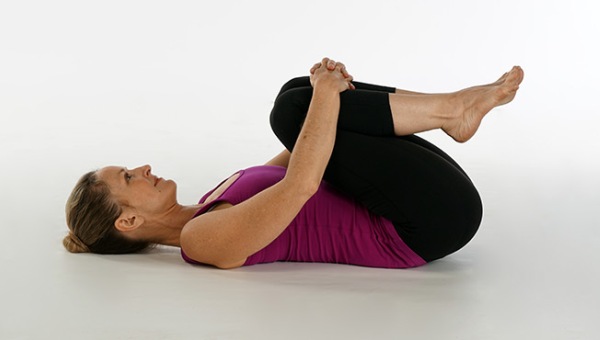
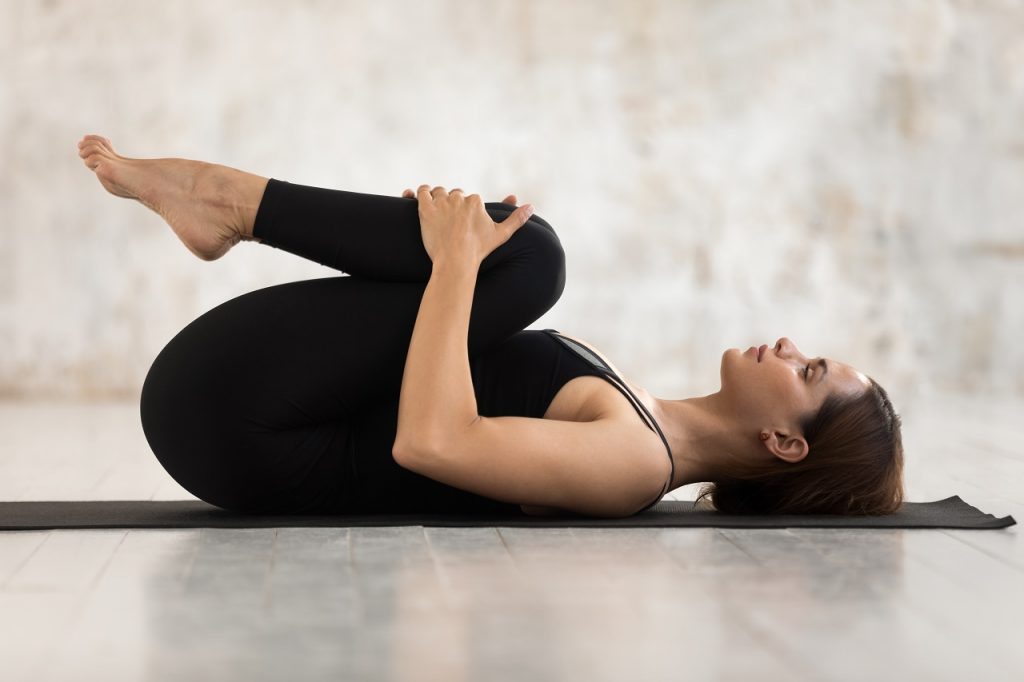
1. Apanasana
This asana is also known as the ‘wind relieving pose’. It not only helps to release the build-up of gas and improve digestion but also helps in detoxifying the entire system.Apanasana

  • Lie down on your back and place your hands on the knees
  • As you exhale, hug your knees to your chest
  • Rock your knees from side to side to maximize stretch
  • Do this for five to ten breaths and release your knees
  • When you inhale, loosen your grip to allow your legs to move away from your stomach 

2. Supta Matsyendrasana
Also known as the Spinal Twist, this pose is great for digestion as it helps your blood flow through your body, especially your gut.Supta Matsyendrasana

  • Lying on your back, bring your arms out to the sides with the palms facing down in a T position. Bend the right knee and place the right foot on the left knee
  • Exhale and drop the right knee over to the left side of your body, twisting the spine and lower back
  • Gently push your right knee using your left hand to touch the ground
  • Make sure your right arm is extended out to the side at shoulder height
  • Breathe and hold for 6-10 breaths
  • To release, inhale and roll the hips back to the floor, and exhale the leg back down to the floor. Repeat the same process on the other side.

3. Malasana
Also known as the Garland Pose, it is good for digestion as it helps you release all the gas out of your system that is blocking your intestines from functioning normally.  Malasana Relieve Bloating

  • Begin in the Mountain Pose (Tadasana), with your feet slightly wider than hip distance apart
  • Bend your knees deeply, sinking down until your hips are lower than your knees, a few inches off the floor
  • Bring your palms together at heart center and wedge your elbows one at a time, to the inside of your knees
  • Push your elbows into your knees to open your hips and gently press the inside of your knees into your elbows
  • Stay in this pose for 30 seconds to a minute
  • To get out of the pose, either sit back onto your buttocks or push back up to standing

4. Setu Bandha Sarvangasana
Also known as the Bridge Pose, it will open up your gut, allowing blood to flow smoothly and subsequently, will help relieve bloating and pain. Setu Bandha Sarvangasana

  • Lying on your back, place your feet flat on the floor
  • Fold your knees and keep your feet hip distance apart on the floor, 10-12 inches from your pelvis, with knees and ankles in a straight line
  • Keep your arms beside your body, palms facing down
  • On inhalation, press the back of your shoulders and your feet into the floor and lift your hips up
  • Lengthen your tailbone, slide your shoulder blades down your back and keep your neck neutral
  • Keep your bottom firm up in this pose; Keep your thighs and feet parallel
  • Hold the pose at the top for 30 seconds each time before releasing
  • To come out of the pose, release the arms and roll your spine down while breathing out

5. Chakravakasana
This pose, also known as the Cat-Cow Stretch, helps relieve bloating by stretching and contracting the abdomen with each motion.Chakravakasana

  • Keep your hands and knees in the table pose, and your spine neutral
  • First begin with the Cow Pose by inhaling as you drop your belly towards the mat. Lift your chin and chest, and look up towards the ceiling
  • As you exhale, come into the Cat Pose while rounding your spine outward, tucking in your tailbone, and drawing your pubic bone forward
  • Release your head toward the floor, but don’t force your chin to your chest
  • Inhale as you come back into the Cow Pose and exhale as you return to the Cat Pose
  • Hold each pose for a breath before moving into the other one. Do this for 15-20 breaths

We hope these yoga asanas help you relieve bloating, gas and any other associated pains. Before you begin any yoga practice, do consult your doctor, physician or personal trainer. Kindly ensure that you perform these asanas under proper guidance if you’re a beginner. 

For more on yoga, check out Healthy Reads or speak to a certified expert by subscribing to GOQii’s Personalised Health Coaching here.

#BeTheForce 
Disclaimer: The information provided in this blog is for general awareness and educational purposes only. It is not intended to replace professional medical advice, diagnosis, or treatment. Always consult a qualified healthcare provider for personalised medical guidance or concerns related to your health.

August 6, 2024 By Trupti Hingad 2 Comments

Learn about your Poop and Gut Health

bowel-health

Most of us wake up and proceed to the loo. Over a period of time, this becomes a habit and we just do it blindly!

Have you ever noticed or given a thought about how is your bowel movement?

What does your poop say about your health? This may sound like a joke, but you can actually learn a lot about your health from your daily poop.

Hippocrates says…ALL DISEASE BEGINS IN THE GUT. So, we want to be sure that what’s coming out of the gut looks good.

Let’s understand more about it.

Three things to look for:

  1. FREQUENCY
  2. FORM
  3. COLOR

Frequency: Best bowel movement: It’s best to have at least one complete bowel movement a day. This should leave you feeling like you’ve fully emptied your bowels.

If you are having 2-3 bowel movements in the day then you may have a faster metabolism or good robust bacteria or it depends on the quantity of food you eat.

Going to the bathroom more than three times a day may suggest you’re approaching the diarrhoea zone.

So, having a clear bowel movement once a day daily is must as it’s one of our body’s greatest ways to eliminate toxins, acids and other stuff.

FORM: When our poops are properly formed, it ensures that we have digested and assimilated the nutrients from our food and are eliminating acids and toxins properly.

The BRISTOL CHART helps to categorize and gauge our bowel movements well:
Bristol-Stool-Chart-What-Your-Poop-Says-About-Your-Health-Mama-Natural-1024x576

Image Credit: mamanatural-mamanatural.netdna-ssl.com

Type 1: Separate hard lumps, like little balls (hard to pass)

Type 2: Sausage-shaped, but lumpy (lack of fibre and hydration)

Type 3: Like a sausage but with cracks on its surface

Type 4: Like a sausage or snake, smooth and soft

Type 5: Soft blobs with clear cut edges (passed easily)

Type 6: Fluffy pieces with ragged edges, a mushy stool

Type 7: Watery, no solid pieces. Entirely liquid

Where do you fall on this chart?

If you are between 1-3 then it shows that your diet lacks the right amount of fibre, bacteria are missing and there is nothing to retain water. This is a sign of constipation. The lumps are hard and abrasive and may sometimes lead to anorectal bleeding.

If you are at Type 4, then you are right, It’s nice tubular shape. Think long bananas that don’t break apart when you flush. The Perfect poop comes out with ease, smells more like super-ripe fruit than something terrible and you barely need to wipe.

If you are between 5-7—then you have diarrhoea. This may also give rise to malabsorption as there is no proper assimilation of nutrients.

If your stool is too LOOSE, SOFT, watery, MUSHY then – it indicates a lack of fibre and thus you can go for BRAT Diet.(Banana, rice, apple and toast). These foods have qualities like tannins that can actually help firm up a stool for better bowel movements.

If you find your stool is TOO HARD or infrequent, add more of soluble fibre and add magnesium-rich foods to your diet. Magnesium draws water into the bowel, making the stool softer and easier to eliminate. It also relaxes the muscles in the intestinal wall, which helps with constipation.

Apples and Pears are also wonderful – two a day will keep things moving. Yoga and abdominal massage are great tools. Another trick you can try is to drop 1 drop of Peppermint essential oil into your toilet and sit down. It will stimulate your bowels and often result in a movement.

If your poop…Floats instead of sinks- You have excess gas in your digestive tract. “If you’ve been eating lots of beans, sprouts, cabbage, or very large meals, it’s perfectly normal for stool to float because of gas, and it’s not a cause for concern. However, if floaters become more common for you or you spot an oil-slick appearance, it could mean something is preventing your body’s ability to absorb fats from food. For instance, inflammation or an infection in your pancreas could prevent you from producing enough digestive enzymes. A food allergy or infection could be damaging the lining of your intestines that’s affecting absorption, too.

What does Colour indicate?

Believe it or not, colour matters!  We want our stool to be a nice medium – to dark-brown colour (Think milk chocolate). Poop is normally brown. The colour is the result of what you eat and how much bile is in your stool. Bile is a fluid your liver makes to digest fats. It starts out as a yellowish green colour. But as the pigments that give bile its colour travel through your digestive system, they go through chemical changes and turn brown.

Black Poop: If your stool is black, it could be a sign of blood in your upper GI tract.

Yellow poop: This shade is also normal for many people. It’s common for babies, especially those who breastfeed. But if you have yellow poop that looks greasy and smells very bad, it may have too much fat. That could be a sign your body isn’t digesting food properly.

Green poop: If you have green poop for many days, the colour of your food may not be to blame. It’s likely that your meal moved through your gut too quickly, so the fat digesting bile didn’t have time to turn brown. It could be from fat malabsorption or liver or gallbladder stress.

PS NOTE: Keep in mind if you eat certain foods or food dyes your stool colour may change. For example, if you eat lots of beets, your stools could take on a reddish hue. And eating tonnes of leafy greens may explain why your poop is green but this colour change is temporary.

White Poop: Medicines for diarrhoea like bismuth sub-salicylate can sometimes cause pale or clay coloured poop. A more serious cause is a lack of bile in your stool. As bile gives its brown colour

Bright red: If it’s bright red, the blood likely comes from the lower part of your digestive tract. It could be due to inflammation in the colon, haemorrhoids, diverticular disease or tumour.

So, where do your poops fall on the Bristol Stool Chart? Do you have an to oy tips or practices to optimise your daily poop? Share them in the comments below. For more health-related content, explore Healthy Reads or for further guidance speak to a certified expert by subscribing to GOQii’s Personalised Health Coaching here.

#BeTheForce

Disclaimer: The information provided in this blog is for general awareness and educational purposes only. It is not intended to replace professional medical advice, diagnosis, or treatment. Always consult a qualified healthcare provider for personalised medical guidance or concerns related to your health.

  • « Previous Page
  • 1
  • 2
  • 3
  • 4
  • 5
  • Next Page »

Search

Recent Posts

  • Navigating the Maze of Nutrition: Finding Clarity Amidst Confusion
  • Get children active and keep them healthy
  • What Gestational Diabetes Can Do To You & Your Unborn Child
  • Breathing – A Forgotten Art
  • The Incredible Benefits Of Milk You Might Not Know

Stay Updated

Archives

  • December 2025 (3)
  • November 2025 (15)
  • October 2025 (20)
  • September 2025 (6)
  • August 2025 (6)
  • July 2025 (12)
  • June 2025 (18)
  • May 2025 (16)
  • April 2025 (23)
  • March 2025 (23)
  • February 2025 (22)
  • January 2025 (26)
  • December 2024 (26)
  • November 2024 (25)
  • October 2024 (22)
  • September 2024 (24)
  • August 2024 (31)
  • July 2024 (21)
  • June 2024 (26)
  • May 2024 (31)
  • April 2024 (27)
  • March 2024 (29)
  • February 2024 (26)
  • January 2024 (25)
  • December 2023 (15)
  • November 2023 (11)
  • October 2023 (22)
  • September 2023 (22)
  • August 2023 (20)
  • July 2023 (22)
  • June 2023 (24)
  • May 2023 (24)
  • April 2023 (24)
  • March 2023 (23)
  • February 2023 (20)
  • January 2023 (16)
  • December 2022 (12)
  • November 2022 (15)
  • October 2022 (15)
  • September 2022 (12)
  • August 2022 (10)
  • July 2022 (17)
  • June 2022 (11)
  • May 2022 (10)
  • April 2022 (6)
  • March 2022 (6)
  • February 2022 (13)
  • January 2022 (12)
  • December 2021 (7)
  • November 2021 (3)
  • October 2021 (6)
  • September 2021 (3)
  • August 2021 (8)
  • July 2021 (7)
  • June 2021 (15)
  • May 2021 (16)
  • April 2021 (10)
  • March 2021 (7)
  • February 2021 (4)
  • January 2021 (4)
  • December 2020 (3)
  • November 2020 (4)
  • October 2020 (10)
  • September 2020 (3)
  • August 2020 (3)
  • July 2020 (2)
  • June 2020 (4)
  • May 2020 (10)
  • April 2020 (12)
  • March 2020 (10)
  • February 2020 (4)
  • January 2020 (4)
  • December 2019 (3)
  • November 2019 (7)
  • October 2019 (5)
  • September 2019 (4)
  • August 2019 (9)
  • July 2019 (9)
  • June 2019 (11)
  • May 2019 (4)
  • April 2019 (9)
  • March 2019 (8)
  • February 2019 (9)
  • January 2019 (8)
  • December 2018 (9)
  • November 2018 (3)
  • October 2018 (3)
  • September 2018 (5)
  • August 2018 (10)
  • July 2018 (6)
  • June 2018 (13)
  • May 2018 (8)
  • April 2018 (18)
  • March 2018 (9)
  • February 2018 (8)
  • January 2018 (15)
  • December 2017 (12)
  • November 2017 (19)
  • October 2017 (13)
  • September 2017 (15)
  • August 2017 (4)
  • July 2017 (8)
  • June 2017 (7)
  • May 2017 (6)
  • April 2017 (8)
  • March 2017 (6)
  • February 2017 (7)
  • January 2017 (9)
  • December 2016 (10)
  • November 2016 (7)
  • October 2016 (7)
  • September 2016 (7)
  • August 2016 (11)
  • July 2016 (9)
  • June 2016 (9)
  • May 2016 (12)
  • April 2016 (17)
  • March 2016 (17)
  • February 2016 (8)
  • January 2016 (6)
  • December 2015 (2)
  • November 2015 (9)
  • October 2015 (7)
  • September 2015 (9)
  • August 2015 (11)
  • July 2015 (9)
  • June 2015 (12)
  • May 2015 (9)
  • April 2015 (13)
  • March 2015 (8)
  • February 2015 (5)
  • January 2015 (12)
  • December 2014 (14)
  • November 2014 (11)
  • October 2014 (6)
  • September 2014 (13)
  • August 2014 (12)
  • July 2014 (6)
  • June 2014 (2)
  • May 2014 (7)
  • April 2014 (5)

From “Laddu Nawin” to Fit and Fierce: How a 25-Year-Old Insurance Advisor Shed 20 Kilos and Gained His Life Back

When 25-year-old Nawin Yadav from Hyderabad walked into his office every morning, he carried more than just his files and policy papers. He had the weight of fatigue, sluggish energy, and an ever-growing belly that was becoming the butt of jokes. “People … [Read More...]

“I’ve Challenged Myself to Live 100 Years” – The Story of Chandubhai Savani’s Second Chance at Life

At 67, most people start slowing down. Not Chandubhai Savani. A resident of Surat, Chandubhai, thought life was on track. “My life was going well till I had my bypass surgery,” he says. That surgery, back in 2021, was a wake-up call.  Medication was routine, but exercise wasn’t. His diet? What he calls ‘normal.’ “I […]

From Shimla’s Slopes to Chandigarh’s Sidewalks: Surinder Kaur Bhalla’s Journey from Chaos to Control

Some journeys start with a plan. Others begin with a stumble literally. Surinder Bhalla, a government professional, born and raised in the scenic hill town of Shimla, had always lived a life of movement. “In Shimla, you walked everywhere,” she reflects. “Walking was never an exercise. It was just life.” But after shifting to Chandigarh, […]

Ananda Mukherjee Health Story

From Terminal Illness To Complete Wellness! Ananda Mukherjee Health Story

As we observe World Cancer Day under the powerful theme ‘United by Unique’ (2025-2027)**, we are reminded that every individual’s journey with cancer is distinct, yet united by shared resilience, hope, and the collective fight against this disease. This theme places people at the centre of care and their stories at the heart of the […]

  • HOME
  • HEALTHY LIVING
  • FITNESS
  • HEALTHY RECIPES
  • USER STORIES
  • KARMA
  • BUY GOQii

Copyright ©2016 GOQii