GOQii

Blog

  • HOME
  • HEALTHY LIVING
  • FITNESS
  • HEALTHY RECIPES
  • USER STORIES
  • KARMA
  • BUY GOQii

January 4, 2024 By Trishala Chopra 3 Comments

How much cardio should you do?


cardio exercise


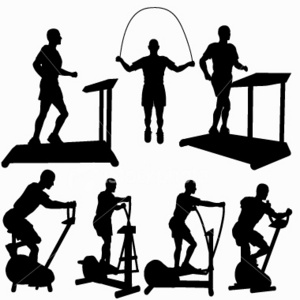
CARDIO- The only form of exercise which has grabbed everybody’s attention and why not, almost all the common activities are a form of cardiovascular exercise.

Whenever I ask someone about what exercise you do throughout the day- their reply is mostly WALKING. Hours of walking sometimes.

So, what does cardio include?

  • Walking (As already mentioned above)
  • Running
  • Swimming
  • Cycling
  • Aqua-aerobics
  • Aerobics
  • Zumba
  • Rowing
  • Boxing

I have seen people concentrating only on cardio exercises for years without any change in their routine. Some people consider themselves to be fit with simply walking.

Fitness is measured by different things and not just your overall structure.

As a part of your fitness routine, these 3 components are very important which is as follows: –

  • Cardiovascular exercises
  • Strength training exercises
  • Flexibility exercises

None of the components can be skipped.

All these 3 components are very important for a proper fitness regime.

The question which I always get is (which also became an idea to write this article) how much cardio should I do?

And my answer is (Always), you should actually ask how much of these 3 components I should do?

Well, I will be covering all these 3 components in 3 separate articles so for now, I will be concentrating on cardio.

So, going back to the question which I always get, I wish I had an answer to that which could be as simple as

Do 60 minutes a day or maybe 150 minutes a week!

But being a healthcare professional, I cannot give a generic answer.

In fact, that question has no specific answer.

The amount of cardio which should be done completely depends upon these 4 factors: – (Ps: – Please read all the factors before you come to a conclusion for yourself)

cardio ex1

(1) It depends on what you are aiming at.

Well, not everybody needs weight loss! Some people might be looking for muscle gain while someone else might need to run a marathon.

So, does that mean all of them will be doing 150 minutes of cardio per week?

Definitely not!

Along with the aim, you also need to know about your metabolism.

Metabolism is the rate at which your body needs calories while resting.

So, for a person who wants to lose weight will probably be needing a lot of cardio but for someone who wants to build muscle- the amount of cardio which you require completely depends on your metabolism. If you have a fast metabolism then you don’t need any cardio but if your metabolism is slow then you need to do some amount of cardio.

Someone who is into different sports like shot put or powerlifting or sprinting might require very little cardio.

Why am I targeting these 2 categories first?

It is because losing weight and gaining muscles are totally different things to talk about. For your body as well, it becomes a very confusing state because the body cannot do 2 things simultaneously. However, with proper training, it does become possible sometimes.

Then, what about fat loss? How much cardio should one do?

If losing weight is your only goal then it is okay to put your focus more on cardio and neglect the muscle gain part.

You just work on not losing muscles while you are losing your fat.

This can be achieved by 2 times a week strength training and adequate proteins in your diet.

What If someone is a marathoner? How much cardio should one do?

It also includes a good amount of cardio and minimum strength training but flexibility here is very important. It can all be divided throughout the week with a focus more on cardio and other endurance sports.

Although I don’t like putting anything in a restricted way I guess I can do with sharing some guidelines about the first factor which I have discussed in brief above so that it becomes easier for everyone to understand.

  • Building muscle + Fast metabolism = No cardio
  • Building muscle + Slow metabolism = 2-4 days per week with about 20-30 minutes every day.
  • Losing fat = 5-6 times per week with about 45-60 minutes every day
  • Marathoner= 4-6 times per week with about 30-60 minutes every day

*This is very generic; the requirement might differ in each person but this can be used as a guideline to work upon.

(2) State of your hormones

Well, the most common problem which most of us are facing is WEIGHT GAIN or UNABLE TO LOSE THE EXISTING WEIGHT which ultimately makes you hit the gym and your trainer will suggest you do cardio. He or she will decide the plan and everyone blindly follows that plan. But, do you think everybody needs exactly the same amount of cardio?

When your weight becomes a problem the hormone which comes into the picture is CORTISOL.

Cortisol is a hormone which is released all the time in the body but most commonly it reaches its peak under extreme stress. When the stress is often short-term like some assignment to complete or some exams to give then the graph of cortisol keeps fluctuating but when the stress becomes long term which goes on for months and years then the gland which produces cortisol is adrenal glands that starts burning out which means there won’t be enough cortisol which is produced. Well, none of this is good. Neither LOW nor HIGH. Everything goes well in balance.

So now that was about the theory, let’s understand how to practically apply it.

Symptoms of cortisol imbalance: –

  • Rapid weight gain
  • Muscle weakness
  • Chronic fatigue
  • Mood swings
  • Anxiety
  • Depression
  • Confusion
  • Insomnia
  • Fluctuating sugar levels


How to know about your cortisol imbalance?

  • It is important to do a stress test first and then go for the lab reports and get your 8 am cortisol checked.
  • Visit an endocrinologist with your reports.

 How much cardio should you do if your cortisol levels are not up to the mark?

  • Under 60% of your maximal heart rate.

How to calculate your maximal heart rate?

  • 220 – your age= maximal heart rate

For example: –

Person who is 40 years of age,

220-40= 180 (Maximal heart rate)

60% of 180 = 108 beats per minute.

  • You should not cross 108 beats per minute while doing cardio in any case.
  • You must strictly monitor it and get yourself a personal trainer/coach who can help you understand this.

Why are we discussing cortisol imbalance and what is the reason behind reducing your cardio activities in such cases?
treadmill-2581437_640

  • All the exercise puts the body into some stress. This stress can affect stimulation of different hormones.
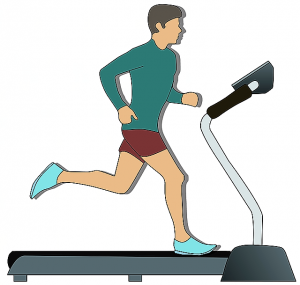
  • When you do steady cardio like a treadmill or cycling your body increases cortisol and reduces other hormones like growth hormone.
  • When you do interval training your body increases cortisol and growth hormone
  • When you do strength training with moderate repetition and sets your body increases growth hormone and cortisol by a small margin.
  • When you do strength training with heavy repetition and sets your body increases testosterone (Which is mostly seen in bodybuilders)

I have given you an in-depth reason here so that you can understand that doing cardio under any stress will increase the complication even more and will do no good to your body.

So before getting into intense workouts, check your cortisol levels.

If everything is okay then you can do the cardio as discussed above.

(3) Depends on your intensity

Whenever I try getting the history about exercises, I get to hear this very often: –

” I do cardio for about 1 and half hours in the gym but I am not getting any results “

” I walk for about 2 hours a day, one hour in the morning and one hour in the evening but I don’t think it is helping”

Well, the basic point to this is,

YOUR DURATION DOESN’T MATTER.

WHAT MATTERS IS- YOUR INTENSITY.

You can work out for just like 15 minutes and still get the same effect as you might get it from longer duration.

Since a couple of months, I often see people talking about high-intensity workouts, low-intensity workouts. I was actually very curious to know their definition of these workouts. I was actually very surprised to know that out of 10 people not even 2 of them knew what exactly it is. They were talking about it because they read it on the internet or their trainer told or something else. You don’t need to be a doctor or personal trainer or a certified health expert. You as a common man to have the rights to know, after all, you are the one who is actually, going to follow that advice. Well, writing this article in this depth is just for everyone to understand the basics behind all the theories which are coming up.

So, coming back to the theory behind intensity.

What is a low-intensity workout?

  • Under 60% of your maximal heart rate (How to calculate it is mentioned above) is a low-intensity workout.
  • These intensity workouts will not increase the endurance but do have relaxation benefits.

What is moderate intensity workout?

  • In between 60-85% of your maximal heart rate is moderate intensity workout.
  • This is a basic workout if your goal is to lose fats.
  • Start with 3-4 times per week and for 30-45 minutes
  • This is just about cardio however in this routine strength training is also required which will be covered in the upcoming article.

What is a high-intensity workout?

  • Anything above 85% of your maximal heart rate is high-intensity workout
  • This can be maintained only for about 1-4 minutes before your speed drops and then gradually goes ahead.
  • Start with 2-3 times per week for about 20 minutes.
  • This course will include proper strength training also which will be covered in upcoming article

Note: – High-intensity workout is not suggested for anybody who has not done any cardio exercises for past 4 months, for someone who has serious cardiac issues. Please consult your doctor before getting into these kinds of workout. Inform your coach and coaches too can take this as a basic part of history taking.

(4) Depends upon how well your response to cardio exercises.

  • As I mentioned in the beginning of the article, every individual is different and there is no same answer to HOW MUCH CARDIO YOU SHOULD DO?
  • It all depends on your responses which can vary from person to person
  • I can simply guess that maybe you require this much workout but I am never sure about it unless I check the response for minimum 15 days.

My players always ask me that why do I give the workouts for 15 days and then think so much for the next set of workouts. Sometimes it so happens that I refuse to change the workout and make then repeat it for 15 days. I know it’s annoying, like very annoying but it is better than any serious injury. Unless I am sure about the responses and progress I do not go ahead in case of workouts.

This article only gives you insights about CARDIO but your workout routine is incomplete with strength training and flexibility.

My next blog is HOW MUCH STRENGTH TRAINING YOU NEED TO DO?.

We hope this article helps you. For further information or guidance, reach out to our certified experts by subscribing to GOQii’s Personalised Health Coaching here.

#BeTheForce
December 9, 2023 By Trishala Chopra 1 Comment

Are you breathing properly?

breathing technique

Before I start with the article, I want my readers to try this.

Let’s do a quick breathing test.

– Keep your hands free.

– Keep one hand on your chest, one had on your belly.

– Start breathing naturally.

– Which hand is moving more?

Hand on the belly or Hand on the chest?

Do this test without reading ahead because it is important to do this without knowing the interpretation of the test.

Which hand was moving more?

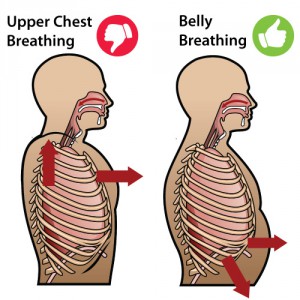
If it’s your belly than its right way! That’s how one should breathe.

If it’s your chest than its alarming, you might be inviting health issues!

If you are not breathing properly, you might not feel good. In this busy world, breathing which is perhaps the only important thing, if we don’t do that properly then it’s a cause for concern. None of us is consciously breathing which is what is leading to health issues!

I have come across this very often. Every 3rd person I know is having stiffness. Some part of the body is stiff (a Few years back, this was my case too!).

Are you having neck stiffness?

Is your back, shoulder, hamstrings, lower back tight/stiff?

Do you have that constant urge to stretch your body to get rid of that stiffness?

Stretching your muscles will definitely give you temporary relief but not for too long. The stiffness will come back in few hours sometimes even in two minutes. There are many therapies which help you in dealing with stiffness but it won’t be a permanent solution.

Why is it so? Because you are not addressing the root cause of the problem!

What is the root cause? Your improper breathing technique

There are many other causes of stiffness but the most basic one is improper breathing technique.

How does your improper breathing affect your stiffness/tightness?

Let’s do a practical (Helps in better understanding!)

Keep your hands free!

Put your one hand on your neck and one hand on your chest.

Start breathing from your chest consciously.

Do you feel that your neck muscles are contracting when you are breathing from your chest?

Now do one thing,

Put your one hand on your neck and one hand on your belly.

Start breathing from your belly consciously.

Do you feel anything on your neck muscles? Probably not because there is hardly any contraction because there is hardly any muscle tension in that place.

Not just the neck, similar reactions happen in your chest muscles, shoulders, lower back and to some extent even in the hamstrings. If you continuously breathe through your chest, those muscles will shorten, and you will get this chronic feeling of stiffness in your body.

You can stretch your tight muscles every day with different stretching exercises but until you correct the way you breathe, any corrective efforts which you take for getting rid of the stiffness will be useless, and at the end you will not be able to get rid of that sensation of tightness/stiffness which you keep getting in your body throughout the day.

Stiffness is just once such effect of poor breathing. Poor breathing can also lead to lower back pain, weight plateau, poor endurance, low energy throughout the day and some digestive issues.

What’s the solution? How to breathe properly?

Well, the solution is not as complicated as you might think.

Here is what you have to do:

  • Lie down for 5 minutes (this can be done first thing when waking up, or as you are lying in bed before you fall asleep or whenever you feel it is possible) put one hand on the belly and the other hand on your chest. Simply focus on making the hand on the belly move and keep the hand on the chest as steady as possible.
  • Point 1 should be done every day for at least 3 times a day daily for at least 3 weeks. After 3 weeks, you should naturally be breathing into your stomach by default.
  • It also helps if you set yourself little reminders throughout the day, like a little message on your iPhone/Android that asks you at regular intervals “how is my breathing?”

This trick has helped me definitely, try it out for yourself!

Try this for 3 weeks, and let me know what you feel! Would be happy to receive your comments! Share your experience!

For more informative articles such as this, check out Healthy Reads or you can get this information directly from a GOQii Coach by subscribing for Personalised Health Coaching here.

#BeTheForce

July 31, 2023 By Trishala Chopra 12 Comments

Ice Therapy or Heat Therapy: Which One Should You Use?

heating-pad-heat-therapy-joint

Whether you run a marathon or go for a trek, you come back with some amount of soreness of the muscles. There’s a possibility of soreness even after a strenuous gym workout. When some of my players experience minor aches and pains, I often tell them to “drink lots of water and stretch“. Apart from drinking water and stretching, there are 2 routes which are commonly used for pain relief:

  • Cryotherapy or Ice therapy
  • Thermotherapy or Heat therapy

Which therapy you use, depends on the situation and the kind of pain/injury. Let’s go over some markers which might be useful to you.

Ice Therapy: What Happens When You Do It?

Our body has skin receptors which pick up different sensations that include touch, pressure, pain and temperature. If you look in to these skin receptors, you will find out that the body has more cold receptors than heat receptors.

When you use ice therapy or apply ice, your skin activates the cold receptors and they block the sensation of pain. After an injury, the area might be red and swollen. Applying ice will help in reducing or preventing the inflammatory response. Ice causes vasoconstriction (narrowing of blood vessels) which reduces blood flow temporarily.

How Do You Use It? 

  • Ice packs (frozen packets): These are the best and most portable option as it will adapt and mold to the body part accordingly
  • Ice in a towel: You can also hold ice in a towel and apply it on the injury. The towel will provide additional compression
  • Using a light cloth: If you have sensitive skin, keep a barrier between the skin and ice. A thin cloth or light cotton one can help

When Should You Use Ice Therapy 

You can use ice therapy under the scenarios mentioned below:

1. If the injury is sudden and acute: Ice therapy will help in preventing swelling and will provide relief from the pain by reducing the blood flow to that area.

For example: If you sprain your ankle during a marathon, trekking or while working out in the gym, apply a pack of ice to reduce the swelling. The sooner you apply the ice, the better.

2. Soft tissue injuries: Applying ice after a strenuous workout will help in relieving the muscle soreness and aid the recovery process.

Try using ice therapy 4 times a day for 2 days. If the pain persists, you should visit your doctor or physiotherapist.

When Should You Avoid Using Ice Therapy?

“Ice is good, but not always!” Below are scenarios where ice therapy might make your situation worse.

  • Avoid applying ice on open wounds
  • If you are a high B.P patient, avoid ice therapy on the shoulder and near the neck region. It will raise the systolic and diastolic pressure because of decrease in blood flow
  • Do not apply ice before a workout but if your workout consist of stretches, then apply ice for healing the acute injury
  • If you have issues with blood circulation
  • If you have stiff joints, applying ice will increase the stiffness
  • If the pain becomes chronic i.e. more than 72 hours, it is not a good option as now ice is not needed to stop the blood flow
  • If you have a persistent lower back pain, ice therapy won’t work.

How Long Should You Continue With Ice Therapy?

You need to be careful about the icing duration as excess of icing might cause pain due to lack of blood flow. If you have sensitive skin, applying ice directly to the skin might not be a good option.

  • For a minor post workout injury, 15min is the most optimal time
  • To deal with acute soft tissue injury, 10min session is optimal
  • Deeper the injury, longer the icing time. For example, hamstring injury might need longer icing time then an injury on the finger

Heat Therapy: What Happens When You Do It? 

Like Ice therapy, heat therapy is also used for relieving pain and aids the healing process. When you apply heat to the injury, unlike ice therapy which first causes vasoconstriction and then vasodilation, heat therapy directly causes vasodilation which increases the blood flow to the injured part.

How Do You Use It? 

  • Whole body heat therapy: This includes steam, sauna or a jacuzzi which can be used to relax your entire body
  • Heat packs: Applying a heat pack without direct contact to the injured part is a great way to aid the healing process.

When Should You Use Heat Therapy?

  • You can use heat therapy for chronic pain. After 72 hours, once the injury has crossed the acute stage and the inflammation is reduced, heat can be giving to aid the healing process.
  • Heating can reduce your stiffness as well because it increases the blood flow to the stiff part making it more flexible.

When Should You Avoid Heat Therapy?

  • Do not apply heat to a fresh injury. This can cause increase of blood flow which can increase the inflammation.
  • Never apply heat to the places where it is swollen. Only ice should be used till the swelling reduces.

How Long Should You Continue With Heat Therapy?

  • 18-20 mins is the most optimal time for a heat therapy session. Please note that this doesn’t remain the same for all as it entirely depends on the type of heating method used.
  • It is advisable to keep a barrier between the skin and the heat pack to avoid direct contact and feel a burning sensation.
  • Comfort level is very important in heat therapy sessions. You should get optimal heat, excess of it might make you uncomfortable. 

These are the basics about Ice and Heat therapy. It should help anyone who is working out or running a marathon or goes for a trek very often. So, the next time before reaching out to any painkillers or pain relief ointments, reach out to the things mentioned in this article! But if you are not sure about your injury, it is always better to speak with your coach, doctor or any physiotherapist.

If this article helped you, let us know your thoughts in the comments below. Find more articles on fitness here.

Still not sure whether you should use ice therapy or heat therapy? Speak to one of our experts by subscribing to GOQii’s Personalised Health Coaching here.

#BeTheForce

July 17, 2023 By Trishala Chopra 1 Comment

Effects Of Different Medications On Exercise

Effects of Different Medications on Exercise Either you or somebody you know might be on some kind of long term medications! I am not talking about somebody who takes an aspirin or a paracetamol or some antipyretic. When I say long term medications, I am talking about cholesterol, blood pressure and blood sugar lowering drugs. When a patient usually gets on any of these drugs there are high chances that they are on them forever!



Each one of these medications has a tremendous impact on the body which comes as a blow if you’re an exercise person! Every medication has a different set of action, so here are some points for you to keep in mind.

1. Cholesterol Medications

The most commonly used cholesterol medication is statin. The generic names of these drugs available are usually Rosuvastatin, Atorvastatin, Fluvastatin, Lovastatin, Pravastatin, Simvastatin and Pitavastatin.

Note: To check which statin is your medication, check behind the tablet. If it is not mentioned, check it on the company’s site

Effects Of Cholesterol Medications On Exercise 

Statins deplete CoEnzyme Q10 in the body, which is very important for muscles to produce energy. This will affect your strength training routine and your post strength training recovery will be slow. It might also lead to rhabdomyolysis which means muscle death – it is definitely not good.

What Can You Do?

  • The first thing which you should always try is getting off statins as soon as possible with some changes in your diet and exercise routine. You can ask your coach to help you with this! Let your doctor change your medicines and your coach can guide you with the diet and exercise routine.
  • While you are on a statin, you should always try a gradual progress. Do not rush into any kind of exercise routine. Give your body enough time to get adapted.
  • Take longer recovery time. Instead of having a 1-day gap between your strength training schedules, you can take a 2 day gap which will give your muscles more time to recover. You can do light workouts on the day when you don’t plan to do strength training.

2. Beta Blockers

This is a group of medications is used to lower high blood pressure. The most commonly used beta blockers are atenolol, bisoprolol, propranolol and metroporolol.

Note: To check which beta blocker is your medication, check behind the tablet. Salt name is always mentioned. If in case it is not mentioned, check it on the company’s website.

Effects Of Beta Blockers On Exercise

People who are on beta blockers see that their heart rate is always less no matter what form of exercise they do. Maintaining a proper heart rate during different activities is very important for having good cardiac health. People taking beta blockers witness that their heart rate after a sprint and after moderate jogging is exactly the same. In fact, this shouldn’t be the case. It has to be more while sprinting than jogging.

What Can You Do?

  • Instead of checking your heart rate for your exercise progress, start checking your exertion timing
  • If you start panting very soon, note that time. Work on your stamina and then go ahead. Beta blockers will always keep your heart rate low.

3. ACE Inhibitors

These are another set of medications which are used to lower high blood pressure. The most commonly used ACE Inhibitors are fosinopril, lisinopril, quinapril.

Note: To check which ACE Inhibitor is your medication, check behind the tablet. Salt name is always mentioned. If in case it is not mentioned, check it on the company’s website.

Effects Of ACE Inhibitors On Exercise 

There are 2 types of people – One who has high blood pressure and is not taking any medication and another one who has high blood pressure and is on either a Beta Blocker or an ACE Inhibitor.

If the person without the medication exercises, his blood pressure will come down automatically post exercise. This is called as post exercise hypotension.

This even happens with someone who is on blood pressure medication, but then it can go really very low! That’s the reason people feel dizzy, shaky, nauseous, and experience blurred vision post exercise. Sometimes, the person can faint as well.

What Can You Do? 

  • For obvious reasons, you cannot skip the medications and neither can you skip your workout but you can definitely manage it
  • For people on BP medications, you should cool down a bit longer than an average person. Instead of a 5-minute cooldown, do a 10-minute cooldown
  • Use your tracker effectively. For example, if your heart rate is 140 beats per minute- Post workout it can drop to 110 which is ok. After another minute it might fall further to 90. Hold on. Breathe it. Stretch yourself. Your targeted heart beat should be only 10% more than your RHR (Resting Heart Rate) which is around 60-70 beats per minute.

4. Blood Sugar Lowering Medications

There are different blood sugar lowering medications which affect the body in different ways. Either they increase the insulin function or remove excess sugar out through urine or they decrease the amount of carbohydrate absorption in the body.

For a non-diabetic person, while exercising, there are different hormonal fluctuations which happen. Adrenaline is released followed by a surge in cortisol levels and these hormones raise blood sugar levels. To bring this down, pancreas secretes another hormone called insulin which brings the elevated sugars down. So, the fluctuation is not seen, whereas this is not the case in people with diabetes.

Some medications can cause hypoglycemia (Blood sugars below 70) in diabetics.

What Can You Do? 

  • In this case, nothing can be done apart from monitoring
  • Check your blood sugar levels before exercising, middle of the exercise and post workout
  • Keep half a glass of fruit juice or 1 glass of milk with you always! If the sugar drops, please consume either of the two.
  • Do strength training, reduce your carbohydrates, add enough proteins to your routine and ask your doctor to reduce your medication.

If this article helped, let us know in the comments below. You can find more articles on fitness here.

If you need help or have any queries regarding the information above, drop us a comment or speak to a certified expert directly by subscribing to GOQii’s Personalised Health Coaching here.

#BeTheForce

  • « Previous Page
  • 1
  • 2
  • 3
  • 4
  • 5
  • …
  • 7
  • Next Page »

Search

Recent Posts

  • Navigating the Maze of Nutrition: Finding Clarity Amidst Confusion
  • Get children active and keep them healthy
  • What Gestational Diabetes Can Do To You & Your Unborn Child
  • Breathing – A Forgotten Art
  • The Incredible Benefits Of Milk You Might Not Know

Stay Updated

Archives

  • December 2025 (3)
  • November 2025 (15)
  • October 2025 (20)
  • September 2025 (6)
  • August 2025 (6)
  • July 2025 (12)
  • June 2025 (18)
  • May 2025 (16)
  • April 2025 (23)
  • March 2025 (23)
  • February 2025 (22)
  • January 2025 (26)
  • December 2024 (26)
  • November 2024 (25)
  • October 2024 (22)
  • September 2024 (24)
  • August 2024 (31)
  • July 2024 (21)
  • June 2024 (26)
  • May 2024 (31)
  • April 2024 (27)
  • March 2024 (29)
  • February 2024 (26)
  • January 2024 (25)
  • December 2023 (15)
  • November 2023 (11)
  • October 2023 (22)
  • September 2023 (22)
  • August 2023 (20)
  • July 2023 (22)
  • June 2023 (24)
  • May 2023 (24)
  • April 2023 (24)
  • March 2023 (23)
  • February 2023 (20)
  • January 2023 (16)
  • December 2022 (12)
  • November 2022 (15)
  • October 2022 (15)
  • September 2022 (12)
  • August 2022 (10)
  • July 2022 (17)
  • June 2022 (11)
  • May 2022 (10)
  • April 2022 (6)
  • March 2022 (6)
  • February 2022 (13)
  • January 2022 (12)
  • December 2021 (7)
  • November 2021 (3)
  • October 2021 (6)
  • September 2021 (3)
  • August 2021 (8)
  • July 2021 (7)
  • June 2021 (15)
  • May 2021 (16)
  • April 2021 (10)
  • March 2021 (7)
  • February 2021 (4)
  • January 2021 (4)
  • December 2020 (3)
  • November 2020 (4)
  • October 2020 (10)
  • September 2020 (3)
  • August 2020 (3)
  • July 2020 (2)
  • June 2020 (4)
  • May 2020 (10)
  • April 2020 (12)
  • March 2020 (10)
  • February 2020 (4)
  • January 2020 (4)
  • December 2019 (3)
  • November 2019 (7)
  • October 2019 (5)
  • September 2019 (4)
  • August 2019 (9)
  • July 2019 (9)
  • June 2019 (11)
  • May 2019 (4)
  • April 2019 (9)
  • March 2019 (8)
  • February 2019 (9)
  • January 2019 (8)
  • December 2018 (9)
  • November 2018 (3)
  • October 2018 (3)
  • September 2018 (5)
  • August 2018 (10)
  • July 2018 (6)
  • June 2018 (13)
  • May 2018 (8)
  • April 2018 (18)
  • March 2018 (9)
  • February 2018 (8)
  • January 2018 (15)
  • December 2017 (12)
  • November 2017 (19)
  • October 2017 (13)
  • September 2017 (15)
  • August 2017 (4)
  • July 2017 (8)
  • June 2017 (7)
  • May 2017 (6)
  • April 2017 (8)
  • March 2017 (6)
  • February 2017 (7)
  • January 2017 (9)
  • December 2016 (10)
  • November 2016 (7)
  • October 2016 (7)
  • September 2016 (7)
  • August 2016 (11)
  • July 2016 (9)
  • June 2016 (9)
  • May 2016 (12)
  • April 2016 (17)
  • March 2016 (17)
  • February 2016 (8)
  • January 2016 (6)
  • December 2015 (2)
  • November 2015 (9)
  • October 2015 (7)
  • September 2015 (9)
  • August 2015 (11)
  • July 2015 (9)
  • June 2015 (12)
  • May 2015 (9)
  • April 2015 (13)
  • March 2015 (8)
  • February 2015 (5)
  • January 2015 (12)
  • December 2014 (14)
  • November 2014 (11)
  • October 2014 (6)
  • September 2014 (13)
  • August 2014 (12)
  • July 2014 (6)
  • June 2014 (2)
  • May 2014 (7)
  • April 2014 (5)

From “Laddu Nawin” to Fit and Fierce: How a 25-Year-Old Insurance Advisor Shed 20 Kilos and Gained His Life Back

When 25-year-old Nawin Yadav from Hyderabad walked into his office every morning, he carried more than just his files and policy papers. He had the weight of fatigue, sluggish energy, and an ever-growing belly that was becoming the butt of jokes. “People … [Read More...]

“I’ve Challenged Myself to Live 100 Years” – The Story of Chandubhai Savani’s Second Chance at Life

At 67, most people start slowing down. Not Chandubhai Savani. A resident of Surat, Chandubhai, thought life was on track. “My life was going well till I had my bypass surgery,” he says. That surgery, back in 2021, was a wake-up call.  Medication was routine, but exercise wasn’t. His diet? What he calls ‘normal.’ “I […]

From Shimla’s Slopes to Chandigarh’s Sidewalks: Surinder Kaur Bhalla’s Journey from Chaos to Control

Some journeys start with a plan. Others begin with a stumble literally. Surinder Bhalla, a government professional, born and raised in the scenic hill town of Shimla, had always lived a life of movement. “In Shimla, you walked everywhere,” she reflects. “Walking was never an exercise. It was just life.” But after shifting to Chandigarh, […]

Ananda Mukherjee Health Story

From Terminal Illness To Complete Wellness! Ananda Mukherjee Health Story

As we observe World Cancer Day under the powerful theme ‘United by Unique’ (2025-2027)**, we are reminded that every individual’s journey with cancer is distinct, yet united by shared resilience, hope, and the collective fight against this disease. This theme places people at the centre of care and their stories at the heart of the […]

  • HOME
  • HEALTHY LIVING
  • FITNESS
  • HEALTHY RECIPES
  • USER STORIES
  • KARMA
  • BUY GOQii

Copyright ©2016 GOQii
