GOQii

Blog

  • HOME
  • HEALTHY LIVING
  • FITNESS
  • HEALTHY RECIPES
  • USER STORIES
  • KARMA
  • BUY GOQii

About Dr Ashwin Nanda

With 10 years of experience behind him as a general practitioner, Dr. Ashwin Nanda has over the years moved away from just prescribing medication to his patients to getting them to adopt a healthier lifestyle by focusing on nutrition and wellness. According to him this line of treatment has realized better results and satisfaction among his patients diagnosed with lifestyle diseases. Lifestyle to him means leading a quality life to be it at work or at home with family and friends. Personally, too he leads a healthy lifestyle by exercising regularly, eating mindfully and meditating.

March 1, 2025 By Dr Ashwin Nanda 2 Comments

Tension or HYPERTENSION

hypertensionI can’t count how many times in my 12 years of medical practice a patient with just a headache has eventually been diagnosed with high blood pressure (hypertension). Whenever a patient complains of a headache, I always make it a point to check their blood pressure (BP), as it is a very common symptom of fluctuating BP. This often presents around the temples but can also be felt at the back of the head (occipital region).

What is Blood Pressure?

The pressure exerted by the column of blood flowing in the arteries once it has been pumped by the heart is called systolic (higher value) blood pressure. Diastolic (lower value) BP refers to the resistance in the arteries, which is always present due to their elastic tone.

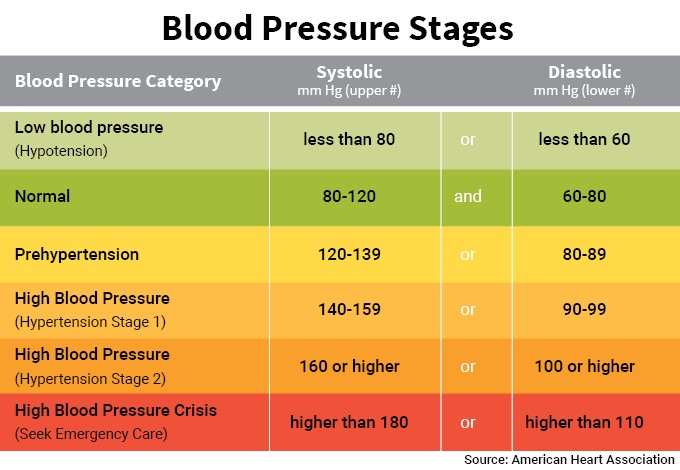
Blood Pressure Categories:

  • Normal: Up to 120/80 mmHg
  • Pre-Hypertensive: 130/90 to 140/90 mmHg
  • Hypertension: Above 140/90 mmHg

A person is diagnosed with high BP if three readings taken on separate days are consistently high.
BP - HypertensionSigns & Symptoms of Hypertension

If I have to look for signs of high BP, these symptoms should raise suspicion

  1. Headache
  2. Feeling of tiredness.
  3. Difficulty breathing
  4. Heaviness in the eyes / blurred vision.
  5. Irritability
  6. Severe cases: Heart attack or haemorrhagic stroke

What Causes High BP?

High BP is common in adults over 50 but is increasingly being diagnosed in younger people due to poor lifestyle choices, such as:

  • Lack of sleep—Irregular sleep cycles disrupt the circadian rhythm.
  • High salt intake—Excess salt from processed foods, snacks, pickles, and sauces.
  • Smoking—Nicotine constricts blood vessels, increasing BP.
  • Obesity—Being overweight adds strain to the heart.
  • Lack of exercise—Sedentary lifestyle leads to poor heart health.
  • Stress—From chaotic city traffic, financial strain, and work pressure.
  • Other Causes: BP can also rise due to secondary conditions like thyroid disorders and narrowing of arteries supplying the kidneys (Renal Artery Stenosis).

Why is it Important to Maintain Normal BP?

Persistently high BP damages the internal lining of blood vessels, gradually affecting the brain, kidneys, and eyes. This can lead to serious complications such as:

  • Stroke (brain damage due to reduced blood flow)
  • Kidney failure
  • Hypertensive retinopathy (damage to the eyes)

All of these complications can be prevented by keeping BP within the normal range.

Managing High BP Naturally
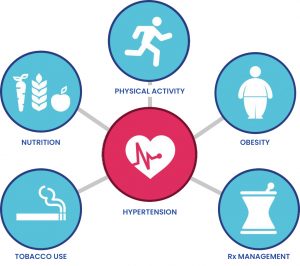
Since lifestyle choices are the single most important factor in controlling BP, here’s how you can manage hypertension without medication:

  • Sleep Better:
    • Aim to sleep by 11 PM and wake up by 6-7 AM to regulate your circadian rhythm.
    • Avoid using screens before bedtime to improve sleep quality.
  • Diet Adjustments:
    • Reduce salty foods such as crisps, salted nuts, pickles, and processed sauces.
    • Eat more potassium-rich foods like bananas, spinach, and lentils.
  • Exercise Regularly:
    • Engage in 45 minutes of brisk walking, 30 minutes of swimming or cycling, or 30 minutes of aerobics at least 5 days a week.
    • Strength training also helps improve circulation and heart health.
  • Manage Your Weight: 
    • If overweight, aim to lose 1-2 kg per month until you reach a healthy BMI (Body Mass Index) of 25.
  • Reduce Stress: 
    • Practise deep breathing or meditation daily.
    • Set realistic personal and professional goals to avoid unnecessary stress.
  • Stay Socially Connected:
    • Engage in social activities and maintain a healthy support system. A positive social life can improve mental health and reduce stress-induced BP spikes.

When to Consider Medication?

If lifestyle modifications do not lower BP within 6 months, it’s time to consult a doctor to explore medical options.

Additionally, if hypertension is caused by an underlying condition (such as thyroid disease or renal artery stenosis), treating the root cause can help normalise BP.

Even the word HyperTENSION (high BP) has ‘TENSION’ in it! Managing stress and adopting healthier lifestyle choices can significantly improve your heart health.

Have you successfully managed your BP through lifestyle changes? Share your experiences in the comments below!

#BeTheForce

Disclaimer: The information provided in this blog is for general awareness and educational purposes only. It is not intended to replace professional medical advice, diagnosis, or treatment. Always consult a qualified healthcare provider for personalised medical guidance or concerns related to your health.
October 24, 2024 By Dr Ashwin Nanda 5 Comments

Organ Donation – Gift of Life

Lead -organ-donationA decade ago as a medical student, I had come across a blind man selling torches in the local trains. I asked him just out of curiosity the reason for his blindness to which he replied that he lost his sight in childhood after an accident which permanently damaged the blood supply to the retinas. He then went on to ask why I brought up the question and when I told him I was studying to be a doctor, he smiled and said, “I have a question for you”? I anticipated, he would want to know about recent advances in medicine that could probably restore his sight. But, I was wrong, instead, his question was different. His question was whether he could still donate his eyes. I was absolutely overwhelmed when he asked this. That is the day when I realized one can lose his eyesight but, still have a vision. With a sense of respect for him, I explained to him that his corneas could indeed be donated after his demise.
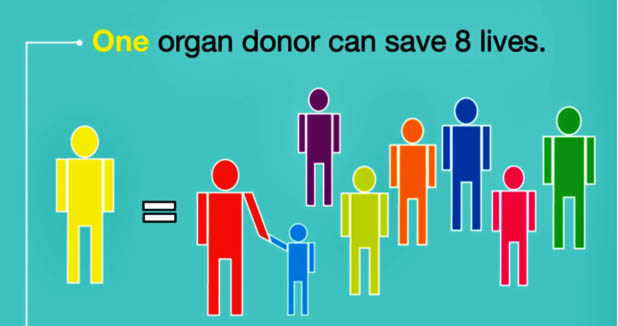
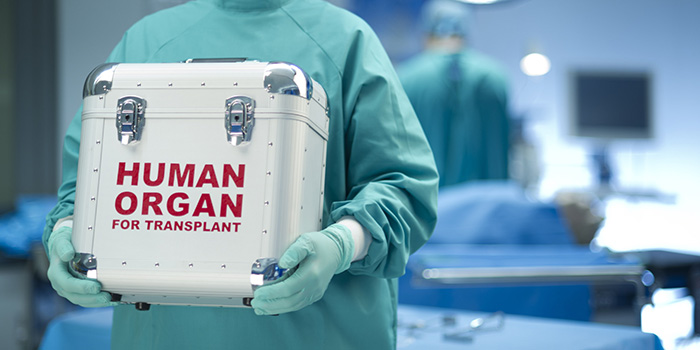
Organ transplantation is a marvelous procedure of modern medicine which helps the recipient gets a new lease of life. The only issue is, untimely demise of a loved one plunges the family and friends in so much grief that donating the deceased person’s organ doesn’t come to mind most times. It takes a mighty heart to brush aside the sorrow and take the step of organ donation, to give the gift of life to someone when you have lost a loved one.

one-organ-donor-eight-lives

Organ donation is permitted by law after a person is declared brain dead. A brain dead person has no chance of revival as all his brain activity has stopped permanently and completely. The medical fraternity follows very strict standards laid down by the Transplantation of Human Organs Act, 1994 to determine if someone is brain dead or not.

In India, it takes 4 well qualified doctors to declare brain death before a person’s organs can be harvested. The biggest hesitation in organ donation is that the body will be disfigured. The surgeon makes a single neat incision from top of the chest to the navel and after organ harvesting, it is stitched professionally and the body is handed back in the most dignified state. The organ/organs are stored in cooled containers with special preservative fluid.

Organ donation from brain dead individuals in India is very less compared to Europe and US. Live donor numbers are increasing steadily since it is possible for a relative to survive on a single kidney and even the left lobe of liver can be donated by a live donor as the liver regenerates.

2 lakh corneas are needed annually in India but only 50,000 donations happen. 5 lakh people die annually waiting for a lifesaving organ. Presumed consent for organ donation is used to increase the pool of potential donors in countries such as Austria, Belgium, Czech Republic, Finland, France, Greece, Hungary, Israel, Italy, Luxembourg, Norway, Poland, Slovenia, Spain, Sweden, Singapore and Turkey. After the death of the individuals the state becomes the custodian of the dead body, who take out the organs for transplant. Spain has the highest rate of organ donation at 36 / million. India is at 0.26/million only.

organ-donation-Image 1 (1)

Who, What and How Can you donate?

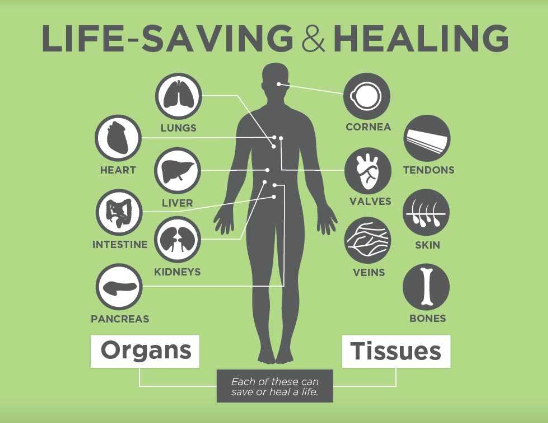
1) Kidneys, Heart, Lungs, Liver, Small Bowel and Pancreas can be donated for transplant. Tissues that can be donated include eyes, heart valves, bone, skin, veins and tendons.

2) Every healthy person can donate. Old age is not a deterrent to donation. Person’s physical condition, not age, which is the deciding factor. Organs and tissue from people in their 70s and 80s have also been transplanted successfully.

3) Specialist health care professionals decide in each case which tissue and organs are suitable.

4) Your near and dear ones should be aware of your will to donate your organs. In case of your untimely demise they can inform concerned authorities to harvest your viable organs.

5) Kidneys, liver, heart need to be harvested within 6 hours of death whereas corneas within 12 hrs.

organ donation

“Green corridor” is the term used when a lane from the airport to the hospital where the organ recipient is waiting is kept totally vacant for speedy transport of the organ by the doctor who has retrieved it from a donor in another city. The city traffic police officers go all out to ensure a smooth transit with zero stoppage. The nobleness of organ donation is highlighted by the efforts put in by them to help the cause.

Organ donation is easier said than done. This article is an attempt to increase awareness about this cause so that we all can create the mindset to be willing to donate organs. All religions promote this practice since extending life is considered an act of God.

So let’s pledge our organs and live even after we are gone.

Here are a few websites through which you can register and pledge your organs

www.mohanfoundation.org/

http://www.transplantindia.com/

http://www.organindia.org/

#BeTheForce

October 11, 2017 By Dr Ashwin Nanda Leave a Comment

The Bipolar Journey

bipolar (1) (1)

In 2013, the celebrity world across the world was shocked when they heard that Catherine Zeta-Jones of Mask of Zorro, ‘Chicago’ and ‘Ocean’s Twelve’ fame declared she was suffering from ‘Bipolar II disorder’ and had checked into a hospital for treatment. There were a lot of discussions in media related to Bipolar Disorder- a kind of mood disorder which even the elite cannot escape away from if it grips them.

Similarly, I had a patient named Jalaj (name changed) who was detected with bipolar mood disorder. He got to know of his condition in a fairly unpleasant way. It began with him having trouble in his married life due to his unexplained aggression. Initially, his parents and wife were apprehensive to consult a psychiatrist because they considered seeking help for mental health a taboo. They thought he was stressed due to the financial burden. But, eventually, when his behaviour got worse, they consulted a psychiatrist who after diagnosing declared him to be ‘Bipolar’. His family, wife and friends stood by him in his trying times and he recovered in 6 months without medication. Unfortunately, most of us consider taking anti-depressants to be a sign of mental weakness.

When fights and Jalaj’s behaviour went out of control, it was on the insistence of his wife that the family consulted a shrink for professional help. On taking Jalaj’s history, the psychiatrist found that he had suffered a bout of depression 4 years ago also which was his first episode. He was 20 years old then.

Bipolar mood disorder typically starts in early adult life, between 18 to 22 years of age. Jalaj’s first episode of depression was also for no obvious reason. His wife Dimple reported that during the two years of their married life she did feel he had a lot of mood fluctuations. These mood fluctuations are called cyclothymic mood changes in medical terminology. The person swings between a mildly good and mildly low mood throughout the day and entire life. When his father came to know of his son’s diagnosis he confirmed that Jalaj’s grandfather was also bipolar. He used to have the bout of depression every 3 years and recover from it in 6 months. Bipolar Disorder is strongly hereditary and runs in families.

Let’s understand what is Bipolar?

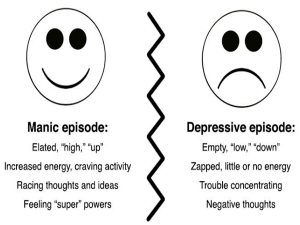
A person afflicted with bipolar mood disorder goes from mild depression into moderate and then severe depression followed by a return to normal state for few months and then goes into mild mania and then hypomania in a cyclical and periodic manner throughout adult life. The word BIPOLAR means having two extremes which are poles apart. The medical reason is that the neurotransmitters serotonin, dopamine and norepinephrine fluctuate for no explainable reason. Hence it’s a chemical imbalance.

5% of world population is estimated to be bipolar. Impulsiveness is another hallmark feature of a bipolar. They hardly think before doing most things. When in an excessive happy mode, a bipolar tends to go on a buying spree. A bipolar person is also prone to aggression, alcohol, smoking and drug addiction, hypersexuality or promiscuous behaviour in mania phase.

Bipolar image 2 (2) (1)

Treatment

Treatment for Bipolar is psychiatric counselling and regular medication to control mood swings. Jalaj was counselled by a psychiatrist who made him understand that if he doesn’t take medication he will be jeopardizing his family life and career. Bipolars need daily and regular medication to function normally. The medicines called mood stabilizers prevent the mood fluctuations and prevent mania and depression.

Jalaj takes medication as prescribed and follows up with the shrink once every 3 months. Thankfully he is leading a happy married life again and Dimple also understands what he goes through and is able to counsel him. Daily meditation also helps Jalaj deal with his mood fluctuations. 8 hrs of sound sleep is essential on a daily basis for him so that he does not lose his sanity.

It is critical that bipolars’ take treatment because there are chances of attempting suicide during a major depressive phase. Many bipolar utilize the hypomania phase to be more creative and productive and achieve professional stardom. In a way, they turn it into a gift. Bipolar can be well controlled and one can lead a healthy life. On a lighter note, a bipolar person has a happening life with lots of ups and downs.


September 9, 2017 By Dr Ashwin Nanda 17 Comments

Know all about Dengue and Chikungunya and how to prevent it

Dengue and Chikungunya

Chikungunya and Dengue have created havoc in the capital city of Delhi and certain other parts of the country. The death toll from the two vector-borne diseases has been climbing every day even as the number of affected people crossed 2,800. It has been reported that according to the National Vector Borne Disease Control Programme (NVBDCP), the number of chikungunya cases in Delhi had spiked to over 2000 till September 11 as fever clinics in the city continue to be swamped with patients.

The World Health Organisation has said that in recent years, globalisation of travel and trade, unplanned urbanisation and environmental challenges including climate change has had a “significant” impact on transmission of vector-borne diseases.

However, the key to averting such an adverse outcome is timely diagnosis and appropriate monitoring along with supportive care.

Let me begin with the basics about dengue and chikungunya…….the culprit for both is the Aedes aegypti mosquito and hence a person can be infected with both diseases simultaneously by its bite. Viruses are the cause of both problems, which enter the mosquito when it bites a human suffering from dengue or chikungunya.

The most likely time for this mosquito to bite is 2 hrs after sunrise and 2 hrs before sunset but, probability of a bite occurring is anytime during daylight hours. So it’s active during the time when most of us are also likely to be outdoors.

Chikungunya begins with sudden onset of high fever, ranging from 101 to 105 degree Fahrenheit accompanied by severe pain in joints. Other symptoms like chills, headache, fatigue, abdominal pain, nausea, vomiting, diarrhea, reduced appetite and conjunctivitis can also be seen. Rash occurs typically on day 2 or 3 when the fever has subsided along with itching.

The Complete Blood Count (CBC) may show reduction in the total White cell count and platelet count, though neither are severe nor life threatening. IgM (Immunoglobulin M) antibody against Chikungunya can be detected in blood after 5 days till months after onset of symptoms. Joint pains and stiffness can last for weeks or months and can be distressing.

Treatment involves paracetamol to control fever, although NSAIDS (Non-Steroidal Anti Inflammatory Drugs like Brufen and diclofenac) may be needed to reduce fever and joint pains as paracetamol may not suffice. Ice compress on the joints can reduce pain. Ensuring water intake of at least 3 liters/day for adults is a must to counter the dehydration resulting from high fever. Antihistamines reduce the rash and itching. Extreme joint pains get relieved by oral steroids.

Dengue is equally dangerous and spreading. According to New Johns Hopkins Bloomberg School of Public Health’s research finds that the Dengue virus is the most rapidly spreading virus transmitted by mosquitoes and is a major source of illness in the tropics and subtropics, infecting as many as 400 million people annually.

Dengue symptoms are no different from Chikungunya. Both have similar onset with high grade fever (102 to 105 degree fahrenheit), headaches especially behind the eyes, back pain, muscle & joint pains, weakness. Rash can also occur. Cold and cough, vomiting and diarrhoea may accompany other symptoms. The diagnosis can be done through blood tests like Dengue NS1 which comes positive during first 3 days of fever & Dengue IgM which is detected from 5th to 7th day from onset of fever.

Treatment of uncomplicated dengue is same as chikungunya. Hospitalization is a must in worsened abdominal pain & vomiting, significant fall in blood pressure, breathlessness and platelet count going lower than 30,000. Platelet transfusions may be needed along with fluid infusion.

There are no antiviral medicines yet for dengue and chikungunya. Prevention of mosquito bites is the easiest way of avoiding these diseases, wearing full length shirts & trousers helps, applying mosquito repellent & using mosquito nets goes a long way in avoiding bites.

The Aedes aegypti mosquito breeds in stagnant fresh water which is avoidable by disposing used plastic bottles & discarded tyres properly. Pooling in plant trays and coolers also needs to be prevented. Also one should cover water containers that can be mosquito breeding grounds.

  • 1
  • 2
  • Next Page »

Search

Recent Posts

  • Navigating the Maze of Nutrition: Finding Clarity Amidst Confusion
  • Get children active and keep them healthy
  • What Gestational Diabetes Can Do To You & Your Unborn Child
  • Breathing – A Forgotten Art
  • The Incredible Benefits Of Milk You Might Not Know

Stay Updated

Archives

  • December 2025 (3)
  • November 2025 (15)
  • October 2025 (20)
  • September 2025 (6)
  • August 2025 (6)
  • July 2025 (12)
  • June 2025 (18)
  • May 2025 (16)
  • April 2025 (23)
  • March 2025 (23)
  • February 2025 (22)
  • January 2025 (26)
  • December 2024 (26)
  • November 2024 (25)
  • October 2024 (22)
  • September 2024 (24)
  • August 2024 (31)
  • July 2024 (21)
  • June 2024 (26)
  • May 2024 (31)
  • April 2024 (27)
  • March 2024 (29)
  • February 2024 (26)
  • January 2024 (25)
  • December 2023 (15)
  • November 2023 (11)
  • October 2023 (22)
  • September 2023 (22)
  • August 2023 (20)
  • July 2023 (22)
  • June 2023 (24)
  • May 2023 (24)
  • April 2023 (24)
  • March 2023 (23)
  • February 2023 (20)
  • January 2023 (16)
  • December 2022 (12)
  • November 2022 (15)
  • October 2022 (15)
  • September 2022 (12)
  • August 2022 (10)
  • July 2022 (17)
  • June 2022 (11)
  • May 2022 (10)
  • April 2022 (6)
  • March 2022 (6)
  • February 2022 (13)
  • January 2022 (12)
  • December 2021 (7)
  • November 2021 (3)
  • October 2021 (6)
  • September 2021 (3)
  • August 2021 (8)
  • July 2021 (7)
  • June 2021 (15)
  • May 2021 (16)
  • April 2021 (10)
  • March 2021 (7)
  • February 2021 (4)
  • January 2021 (4)
  • December 2020 (3)
  • November 2020 (4)
  • October 2020 (10)
  • September 2020 (3)
  • August 2020 (3)
  • July 2020 (2)
  • June 2020 (4)
  • May 2020 (10)
  • April 2020 (12)
  • March 2020 (10)
  • February 2020 (4)
  • January 2020 (4)
  • December 2019 (3)
  • November 2019 (7)
  • October 2019 (5)
  • September 2019 (4)
  • August 2019 (9)
  • July 2019 (9)
  • June 2019 (11)
  • May 2019 (4)
  • April 2019 (9)
  • March 2019 (8)
  • February 2019 (9)
  • January 2019 (8)
  • December 2018 (9)
  • November 2018 (3)
  • October 2018 (3)
  • September 2018 (5)
  • August 2018 (10)
  • July 2018 (6)
  • June 2018 (13)
  • May 2018 (8)
  • April 2018 (18)
  • March 2018 (9)
  • February 2018 (8)
  • January 2018 (15)
  • December 2017 (12)
  • November 2017 (19)
  • October 2017 (13)
  • September 2017 (15)
  • August 2017 (4)
  • July 2017 (8)
  • June 2017 (7)
  • May 2017 (6)
  • April 2017 (8)
  • March 2017 (6)
  • February 2017 (7)
  • January 2017 (9)
  • December 2016 (10)
  • November 2016 (7)
  • October 2016 (7)
  • September 2016 (7)
  • August 2016 (11)
  • July 2016 (9)
  • June 2016 (9)
  • May 2016 (12)
  • April 2016 (17)
  • March 2016 (17)
  • February 2016 (8)
  • January 2016 (6)
  • December 2015 (2)
  • November 2015 (9)
  • October 2015 (7)
  • September 2015 (9)
  • August 2015 (11)
  • July 2015 (9)
  • June 2015 (12)
  • May 2015 (9)
  • April 2015 (13)
  • March 2015 (8)
  • February 2015 (5)
  • January 2015 (12)
  • December 2014 (14)
  • November 2014 (11)
  • October 2014 (6)
  • September 2014 (13)
  • August 2014 (12)
  • July 2014 (6)
  • June 2014 (2)
  • May 2014 (7)
  • April 2014 (5)

From “Laddu Nawin” to Fit and Fierce: How a 25-Year-Old Insurance Advisor Shed 20 Kilos and Gained His Life Back

When 25-year-old Nawin Yadav from Hyderabad walked into his office every morning, he carried more than just his files and policy papers. He had the weight of fatigue, sluggish energy, and an ever-growing belly that was becoming the butt of jokes. “People … [Read More...]

“I’ve Challenged Myself to Live 100 Years” – The Story of Chandubhai Savani’s Second Chance at Life

At 67, most people start slowing down. Not Chandubhai Savani. A resident of Surat, Chandubhai, thought life was on track. “My life was going well till I had my bypass surgery,” he says. That surgery, back in 2021, was a wake-up call.  Medication was routine, but exercise wasn’t. His diet? What he calls ‘normal.’ “I […]

From Shimla’s Slopes to Chandigarh’s Sidewalks: Surinder Kaur Bhalla’s Journey from Chaos to Control

Some journeys start with a plan. Others begin with a stumble literally. Surinder Bhalla, a government professional, born and raised in the scenic hill town of Shimla, had always lived a life of movement. “In Shimla, you walked everywhere,” she reflects. “Walking was never an exercise. It was just life.” But after shifting to Chandigarh, […]

Ananda Mukherjee Health Story

From Terminal Illness To Complete Wellness! Ananda Mukherjee Health Story

As we observe World Cancer Day under the powerful theme ‘United by Unique’ (2025-2027)**, we are reminded that every individual’s journey with cancer is distinct, yet united by shared resilience, hope, and the collective fight against this disease. This theme places people at the centre of care and their stories at the heart of the […]

  • HOME
  • HEALTHY LIVING
  • FITNESS
  • HEALTHY RECIPES
  • USER STORIES
  • KARMA
  • BUY GOQii

Copyright ©2016 GOQii