 Fatigue, weakness, and pale skin are often dismissed as simple exhaustion or a busy lifestyle. But for millions of people worldwide, these are the silent, everyday symptoms of an inherited genetic blood disorder: Thalassaemia.
Observed globally on May 8th, International Thalassaemia Day is dedicated to raising awareness about this condition, honoring the resilience of patients, and advocating for equitable access to quality healthcare.
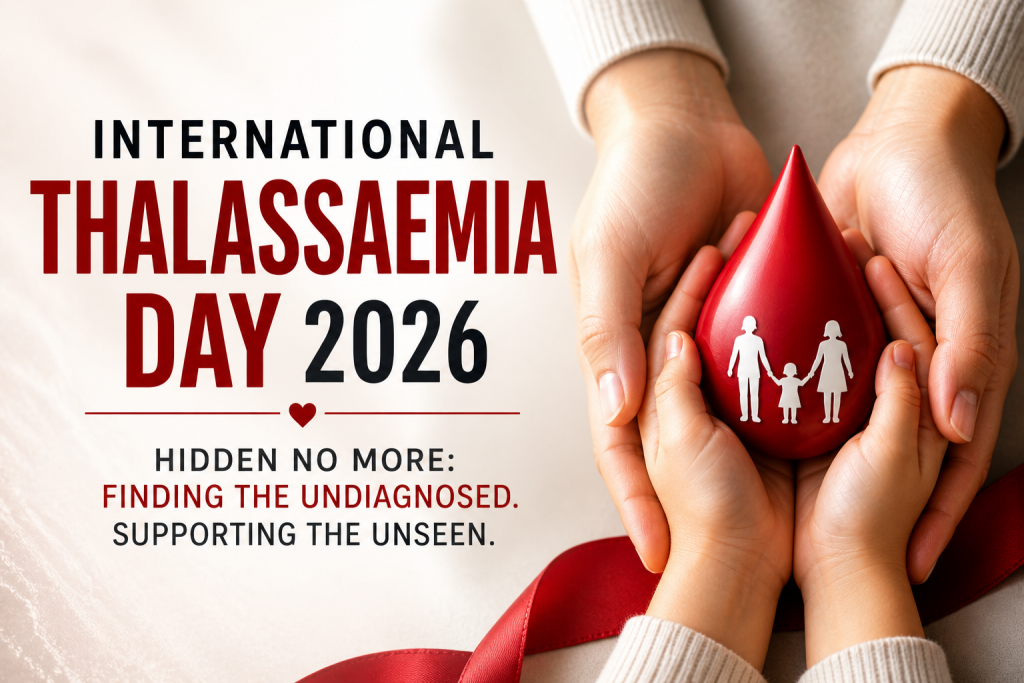
This year, the Thalassaemia International Federation (TIF) has announced a powerful 2026 theme: “Hidden No More: Finding the Undiagnosed. Supporting the Unseen.” Here is what you need to know about the 2026 campaign, the importance of early diagnosis, and how we can collectively support those living with this condition.
What is Thalassaemia?
Thalassaemia is a genetic blood disorder that affects the body’s ability to produce normal hemoglobin, the protein in red blood cells that carries oxygen throughout the body. When the body cannot produce enough healthy hemoglobin, it leads to the destruction of red blood cells, resulting in mild to severe anemia.
The condition is generally categorized into two main types:
- Thalassaemia Minor (Trait): Individuals carry the genetic trait but often experience no symptoms or only mild anemia.
- Thalassaemia Major: A severe form where individuals inherit the defective gene from both parents. This requires lifelong medical care, including regular blood transfusions and iron chelation therapy.
Why the 2026 Theme Matters
The 2026 theme, “Hidden No More,” shines a crucial light on the gaps in global healthcare.
-
Finding the Undiagnosed
Millions of people unknowingly carry the Thalassaemia trait (Thalassaemia Minor). Because the symptoms are either absent or very mild, it remains “hidden.” The danger arises when two individuals with the trait have a child, leading to a 25% chance the child will be born with Thalassaemia Major.
Pre-marital and pre-conceptual genetic screening typically a simple blood test called Hb Electrophoresis is the most effective way to identify carriers and make informed family planning decisions.
-
Supporting the Unseen
Living with Thalassaemia Major is a full-time commitment. Patients spend countless hours in hospitals receiving blood transfusions, which are essential for survival but can lead to severe iron overload in vital organs like the heart and liver. “Supporting the unseen” means advocating for better, more affordable treatment options, comprehensive mental health support, and robust public healthcare infrastructure for these warriors.
How to Support Your Health with Thalassaemia
While medical treatment is non-negotiable, lifestyle plays a highly supportive role in managing the condition safely and effectively.
- Strictly Managed Nutrition: Unlike typical anemia, people with Thalassaemia (especially those receiving transfusions) must often actively avoid iron-rich foods and Vitamin C supplements. Vitamin C drastically increases iron absorption, which can lead to toxic iron overload in the heart and liver. Always work with a clinical hematologist and nutritionist to build a safe, customized, low-iron meal plan.
- Prioritize Mental Health: The emotional toll of managing a lifelong chronic illness, frequent hospital visits, and needle fatigue is immense. Supporting the “unseen” means taking care of the mind just as much as the body. Finding community support, practicing daily meditation, and actively managing stress are critical components of long-term care.
- Gentle Movement: While heavy exertion may cause extreme fatigue, light, low-impact activity helps maintain bone density (which can weaken due to bone marrow expansion in Thalassaemia) and cardiovascular health. Taking short, gentle walks can boost endorphins without overtaxing the body.
How You Can Help: Become a Lifeline
You do not need to be a doctor to save a life. Blood donation is the absolute lifeline for Thalassaemia Major patients, who typically require transfusions every 2 to 4 weeks. By becoming a regular, voluntary blood donor, you are directly supporting the “unseen” individuals fighting this disorder every single day.
Thalassaemia is a lifelong journey, but with the right awareness, timely diagnosis, and consistent medical care, individuals can lead fulfilling lives. This International Thalassaemia Day, let’s pledge to break the silence. Get screened, encourage your loved ones to do the same, and consider donating blood to support the community.
Need guidance on managing a chronic condition through balanced nutrition and lifestyle changes? Subscribe for Personalised Health Coaching directly from a GOQii Coach in the GOQii App for expert, one-on-one support.
Frequently Asked Questions (FAQs)
- What is the theme for International Thalassaemia Day 2026?
The 2026 theme is “Hidden No More: Finding the Undiagnosed. Supporting the Unseen,” which focuses on diagnosing hidden carriers and supporting patients who require lifelong care.
- How is Thalassaemia diagnosed?
Thalassaemia is diagnosed through specific blood tests, primarily a Complete Blood Count (CBC) and a Hemoglobin Electrophoresis test, which evaluates the types and amounts of hemoglobin in the blood.
- Can Thalassaemia be completely cured?
Currently, the only potential cure for severe Thalassaemia is a bone marrow or stem cell transplant from a compatible donor (usually a sibling). However, this procedure carries significant risks. For most, it is a manageable condition through regular blood transfusions and iron chelation therapy.
#BeTheForce
Disclaimer: This article is intended for educational and informational purposes only and should not be considered a substitute for professional medical advice, diagnosis, or treatment. Always consult with your doctor, hematologist, or a qualified healthcare provider regarding specific medical conditions, genetic testing, and treatment protocols.




Leave a Reply