
GOQii

Blog

  • HOME
  • HEALTHY LIVING
  • FITNESS
  • HEALTHY RECIPES
  • USER STORIES
  • KARMA
  • BUY GOQii

Archives for February 2024

February 16, 2024 By Sonal Pradhan 5 Comments

Healthcare for Children During Exams

Exam time is quite a stressful ordeal for students and parents alike. Wouldn’t a successful examination without the stress be great? Healthy habits can build that foundation for you! Just follow these simple yet important parameters and it will help you and your kids during exams!

1. Nutrition During Exams

Though a good practice to maintain at all times, healthy eating assumes greater significance during exams. Food fuels the mind and body. The quality of food you eat largely determines your overall health and mental acuity.

  • Eat Smaller, Frequent Meals
    If you feed your child a large meal, then he/she will experience a dip in energy and the alertness to study for hours on end. Small meals provide a steady supply of energy to the exam fatigued brain. Keep a steady supply of glucose (energy) throughout the day. This will ensure that your child is focused during study time as well as the exam. Avoid keeping long gaps between meals.
    Opt for healthy snacks such as fresh fruit, popcorn, fruit scones, dried fruit, yogurt or nuts. This will keep your child going throughout the day. They are a better option than cakes, biscuits, chocolates and sweets. The refined sugars in these products will only give your child a ‘sugar rush’ after eating them but will leave them feeling flat and in a bit of a slump shortly afterwards.
  • Food For The Brain
    Vitamin B strengthens brain functioning. Good food sources of Vitamin B are meats (red meat, poultry, fish), eggs and dairy products (milk, cheese), Legumes (beans, lentils), seeds and nuts (sunflower seeds, almonds), whole grains (brown rice, barley, millet), dark leafy vegetables (broccoli, spinach), fruits (citrus fruits, avocados, bananas).
  • Omega 3 Fats
    You may have heard the mention of Omega-3 fats as heart-protective. However, they also play an important role in memory, concentration, and relieving depression. Omega 3 has been shown to help brain function and increase concentration. It also helps to improve your immune system when your body and mind are stressed. To get your omega-3 fats, you can eat oily fish like salmon, mackerel, tuna, halibut and trout. You can also give flax, chia, melon and sunflower seeds to your kids.
  • Avoid Junk and Oily Foods
    Junk and oily foods slow your body down. Be sure to avoid it. Include good quality proteins such as fish, eggs, milk products, sprouts, etc. Munch fruits and vegetables in between as to keep going for long hours.
  • Never Skip Meals During Exams
    Simply put, your brain needs the energy from food to work efficiently. Your child needs to keep his/her mental focus on the exam and not on hunger. A light meal before the exam will ensure that your child has the energy to pull through the long exam hours. A meal that includes wholegrain carbohydrates will suffice but ensure that it is in small portions. This is to avoid feeling too lethargic or sleepy.

2. Sleep During Exams

To function on an exam day, your child does not only need the energy that comes from nutrition but also the energy that comes from adequate sleep. Sleep deprivation can bring in several health repercussions, especially when coupled with stress. Adequate sleep ensures that your child can recall all the information he/she has worked so hard to learn. Sleep also leaves room to absorb new information that he/she may read. Students preparing for their exams should get at least 6-8 hours of sleep every night to maintain good mental and physical health.

Avoid caffeine-containing drinks late at night. A milky or herbal drink such as chamomile tea can ensure a calm and good night’s sleep.

3. Hydration During Exams

It is important to stay hydrated. Not just during exams but all the time. Dehydration can make a person feel lethargic, irritable and tired. Worst of all, it affects concentration. This affects an individual’s ability to focus, study or perform. Do not wait till your child is thirsty. If you wait till he/she is thirsty, it means his/her body is already a little dehydrated. Even mild dehydration can lead to tiredness, headaches, reduced alertness and diminished concentration.

Keep a glass of liquid (fruit juice, coconut water, water) within easy reach while studying and ensure your child has a bottle of water with him/her during the exam. Aim for 1.5 to 2L of fluid per day.

4. Managing Stress During Exams

Unmanaged stress can cause sleep disruption, headaches, poor concentration, and over consumption of junk food. All of these can contribute to impaired test performance. While stress is inevitable, finding appropriate ways to deal with it is the key to staying healthy during exams.

Being active is one of the best things your child can do to stay sane during exam week. Exercising releases endorphins, which make you feel happy and reduce stress. Physical activity is an effective tool to improve academic performance. Exercise also helps in improving memory and thinking ability for students by increasing oxygen flow to the brain. To help relieve stress, clear mind and lift mood, break up study with short bursts of exercise. Your child could go for a jog, a swim, a cycle, or even just walk to your local shop. Listening to music can also create a positive and productive environment by elevating mood and encouraging your child to study more effectively for a longer period of time.

To sum everything up – your child needs to eat well-balanced, healthy meals regularly. He/She needs to drink plenty of water to avoid dehydration. A well-ventilated room, regular breaks and sound sleep will ensure that your child performs at his/her best during the exams!

Was this article helpful? Let us know in the comments below!

#BeTheForce
February 15, 2024 By Kusum Soni Leave a Comment

Do Grains Cause a Leaky Gut?

leaky gut

If you’re suffering from chronic diarrhea, constipation, gas or bloating coupled with a poor immune system, your issue might be more than something to do with ‘what you ate last night’. There’s a fair chance that you might be suffering from a leaky gut.

What is a Leaky Gut?

A Leaky Gut, as the word suggests, literally means that the gut/intestine is leaking. Technically, the permeability of intestinal mucosa increases and as a result, a protein called Zonulin and consequently bacteria, toxins, digestive metabolites, and bacterial toxins leak into the bloodstream.

This increases the toxic build-up in the body which manifests itself on the skin, colon, hormones, lungs, liver, lymph and kidneys in the form of bloating, diarrhea and constipation. Autoimmune response could include rheumatoid arthritis, lupus, Celiac disease, migraines, a weak immune system and hormonal imbalances, etc.

The exact cause of a Leaky Gut is not known, but potential causes include a poor diet, chronic stress, toxin overload and imbalances in the gut microbiome or dysbiosis.

The Role of Grains in Increasing Gut Permeability 

Dietary guidelines advise one to eat adequate amounts of (whole) grain products per day and are promoted as the fiber-rich foundation of a healthy diet. The question is, are grains really necessary as a part of our diet or can they be harmful?

Yes, grains are the main source of our energy for daily activities, brain function and even supply us with Vitamins B Complex and minerals like Zinc, Chromium, Iron, Calcium, Magnesium and Manganese, etc. that boost numerous biochemical reactions taking place in our body every moment. Having said that, grains & legumes also contain certain anti-nutritional compound/chemicals which can make them inflammatory and can affect some people.

What are the Anti-Nutritional Compounds in Grains? 

1. Gluten
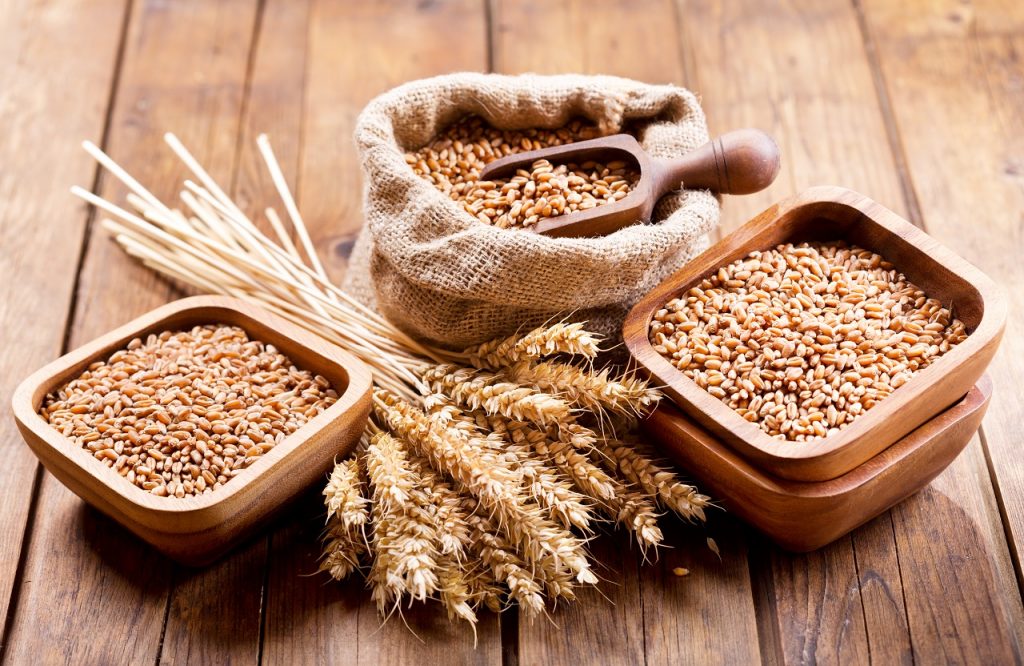
Gluten is the main structural protein complex of grains like Wheat, Rye and Barley. They are incredibly widespread in modern diets due to the increased intake of processed/refined flour food products such as bread, cakes, pastries, sauces, ready meals and breakfast cereals.

Research has shown that a person with gluten sensitivity, ingesting gluten significantly increases intestinal permeability immediately after the consumption. Studies have shown that the daily consumption of wheat products and other related cereal grains could contribute to the manifestation of chronic inflammation and autoimmune diseases.

Both in vitro and in vivo studies demonstrate that gliadin, by releasing Zonulin and wheat germ agglutinin can both increase intestinal permeability and activate the immune system and have also been confirmed in human studies.

2. Lectins
Grains have different types of lectins but all are not harmful. The harmful ones are Agglutinins and Prolamins. Agglutinins are a natural insecticide to protect crops from insects. But to get a higher yield of crop, grains are genetically modified (GM) to produce more of their natural insecticides which in turn make the grain inflammatory.

Prolamins are also not easily digested and most grains contain a Prolamin similar in structure to gluten. For example, Orzenin in rice or Avenin in oats or Gliadins in wheat.

3. Phytates and Phytic Acid
Phytates and Phytic Acid in the seeds of grains inhibits digestion and absorption of certain minerals (specifically zinc, iron, and calcium) by binding with them in the gut. These are vital for our immune system to function properly. Usually, a small amount of Phytates in diet does not cause a problem, as long as you’re getting adequate nutrients from the rest of your food. But mineral deficiencies may result when grains form the staple diet.

How Can You Manage a Leaky Gut? 

  1. Go for gluten-free grains like bajra, rice, maize, and gluten-free oats. Even ‘gluten-free food products available in the market contain some food additives, food preservatives, some amount of fibre and added sugar which can further damage the gut lining. So, beware and read the nutritional label!
  2. Go for non-GMO and heirloom varieties of seeds that are passed down from generation to generation. Make sure to soak grains overnight in water mixed with a little bit of lemon juice or apple cider vinegar, sprout and slow cook them. These methods also activate Phytase, an enzyme present in the plant that breaks down Phytates.
  3. Don’t rush through your food, chew it slowly and thoroughly so that small particles of food can be well digested and absorbed in the intestine.
  4. Adopt an anti-inflammatory eating plan. Include plenty of colourful, fresh fruit and vegetables, seeds, soaked nuts, plant protein such as beans and lentils and oily fish. At the same time, exclude sugar, processed foods, red meat and alcohol. Fermented foods can replenish natural gut bacteria. Try curd, fermented pickle, sauerkraut, kefir or kombucha.
  5. Vegetables from the nightshade family (Solanaceae) like tomatoes, peppers, eggplant (brinjal) and potatoes, are high in lectins that can damage the gut lining. They don’t even breakdown while cooking. So those with autoimmune diseases should avoid these vegetables as well.

If grains are the staple food, they may obstruct digestion and contribute to a leaky gut. For those with autoimmune diseases or gluten sensitivity, it would be wise to completely exclude grains, pseudo-grains, legumes and nightshades. Also avoid nuts and seeds if they cause any inflammation. Once the intestinal gaps heals, medicines are reduced or stopped and there are no symptom, you may have these foods once in a while.

Medically, Leaky Gut Syndrome is a hypothetical, unrecognized condition.

We hope this article helps you! Do leave your thoughts and questions in the comments below! For further guidance speak to a certified expert by subscribing to GOQii’s Personalised Health Coaching here.

#BeTheForce 

February 14, 2024 By Hetal Chheda 3 Comments

Self Love can help achieve Health Goals

How many of us can take compliments gracefully? A compliment certainly makes one’s day and I am sure it is true for most of us. It feels so great when someone just tells you how beautiful/handsome or how good you look. Any kind of compliment rejoices one.

The strongest desire and a positive thought do replace the need for such complements, I strongly believe is SELF LOVE. It is that magical key ingredient that makes you reach your health goals easily. It can be weight loss, staying fit, gain muscle mass or sleep better.

What is SELF LOVE?

Self-love is about loving each quality within you, be it good or bad. You may be fat or thin, dark or fair; who cares, just live your dream. Self-approval is something that we all require. Remove the negativity and bring in positive thoughts about yourself. And above all, you should feel good about yourself.

How SELF-LOVE helps us achieve the health goals?

With this special ingredient called self-love health goals can be achieved easily. Yes, you heard me right. Health goals and self-love complement each other.

We all know the power of law of attraction when it comes to money, home or children. This law of attraction also works for achieving your health goals like weight loss, running a marathon, exercising daily or just drinking enough water.

Just bring in positive thoughts.

Negative thoughts camouflage your belief system thinking it to be true and manifest itself into reality. Insecurity, irresponsibility, fear, stress, anxiety, desperation to lose weight fast and inferiority complex cause obesity unknowingly.

Negative thoughts and comments from others also lead to decrease in confidence level and broken self-esteem. How much ever we diet or workout, we do not get the desired result unless the importance of law of attraction is understood and practiced.

Self-Analysis – Ask these questions to yourself

  • Does your belief work on what people say?
  • Do you need others to praise you?
  • Do you get upset when you don’t find the right size of clothes for yourself
  • Do you lack will power to start your most desired goals?
  • Do you face difficulty in chasing your dreams?
  • Do you feel bad when you can’t eat that sweet lying in your refrigerator?
  • Do you wish to run a marathon but hold on due to lack of stamina or an underlying heart problem?

If your answer is YES to most of the questions above, then we surely lack SELF LOVE.

Steps to follow and conquer the world.

Law of attraction steps to reach the goals: SELF LOVE

  1. Be patient and optimistic. This is the key towards great health.
  2. Eliminate negativity around you.
  3. Consistently eat healthy and exercise.
  4. Don’t feel guilty if you reveal to everyone that you are eating less and avoiding sweets. Simply say, I am trying to make healthy changes.
  5. Don’t read too many weight loss stories or ask anyone their story of weight loss. This will just make you desperate and negative.
  6. Dress/Suit up and don’t forget to praise yourself. When you say, ‘My tummy is too big or I have double chin’ you are insulting your body·
  7. Be confident when you socialise. You confidence can overcome all the flaws.
  8. Take out at least 30-45 mins every day for yourself in doing some recreational activity like exercising, reading, shopping etc.
  9. Meditation eliminates negative thoughts from mind. Try and indulge in it for 5-10 minutes.
  10. Always visualise yourself beautiful/ handsome, leaner, toned and very happy.
  11. Jot down your goals in Present Tense like: I am 65 kgs and look gorgeous with this weight, I am running every day to become thin (Not lose weight, lose is a negative word)

It is very important for us to understand that true happiness lies in self-love and self-approval, all the desired goals become easy to achieve then. You love yourself; the world will love you back. It is important to love yourself to achieve the desired health goals…..do not wait for other’s approval


February 13, 2024 By Trishala Chopra 2 Comments

Strength Training for Runners: A Comprehensive Guide

Strength training

Dear marathoners/runners, I am sure this blog is going to catch your attention! Do read the article, and I would be happy to answer your questions!

Well, not just runners though! Whether you are a runner or cyclist or if you plan any endurance sport, strength training becomes very important. Everybody wants to be good at the sport they play, so this article will help give you some insights about various topics with regard to strength training.

 In this blog, I shall take you through four main aspects namely

  • What is an endurance sport?
  • Why is strength training and its importance for an endurance sport?
  • If strength training is important, how much is too much or how much is ideal?
  • Which exercises should be included in strength training protocol?

All I knew was running is endurance. I knew of more examples but what exactly is endurance I couldn’t really get through. It’s over time that I learnt what endurance training means. Endurance training uses your aerobic system as opposed to your anaerobic system.

Aerobic system:- Body uses oxygen to produces energy

Anaerobic system:- Body does not use oxygen to produce energy

So why is strength training important for any endurance sport?

I come across runners who say, “I run 5k, 10k and 21k which takes a lot of energy, why should I put exact PRESSURE on my body?”

Here are 3 benefits of doing strength training from runners’ perspective!

  • Your pace will improve, you can run faster!

Your speed matters a lot when it comes to any marathons! What determines your speed?

  • Stride length
  • Stride Frequency

If you are a runner, it is important for you to know that stride length means how long is your step and stride frequency relates to how many steps you take per minute/second.

So the technical formula here is,

 Speed= Stride length x Stride frequency.

But, what does this have to do with strength training? Well, to improve your speed/pace you have to take longer strides and of course faster strides

How to take longer strides?

  • Forcing your legs to the ground.

How to put more force?

  • For this, your legs should be strong.

How to make your legs stronger?

  • By doing strength training.

 So, this shows that strength training is required to help runners run faster!

(2)  With Strength training, your endurance will get better!

“How can strength training make endurance better? Endurance training will make endurance better right?” Well, the answer is that strength training and endurance training both are required and helps in increasing the endurance but the mechanism used is different.

Let me take you through some technicalities but in a way, you will understand. Are you aware of maximal aerobic capacity? Maximal aerobic capacity means the maximum rate of inhaling oxygen by your body during any exercise. Maximal aerobic capacity is also called as VO2max.

Your VO2max is made up of 2 components: Central and peripheral

Central component= Heart

Peripheral component= Muscle

  VO2max = Q x (a – Vo2 difference)

Here is the complete breakup

Q is the Cardiac output

The cardiac output means how much blood your heart is able to pump per minute. This covers your central component

(a – Vo2 difference) where a is arteries and v is veins and this means that the difference between the oxygen in your arteries and veins.

Smaller the difference, more the endurance!

In simple words, it is the ability of your body to extract the oxygen from the blood. This covers your peripheral component

The reason why I have discussed this in depth is, because endurance training works on the central component which is the heart but the peripheral component which are the muscles is ignored. To get the maximum endurance it is important for your peripheral component to be strong and strength training here helps. High repetitions (reps) helps in pumping your peripheral component.

Hence, to improve your endurance you should do strength training.

(3) Strength training helps reduce injury risks!

Runners, I am sure you can relate to this! More kms to run, more risk of injuries! When I say injuries here I am talking about overuse injuries.

What is overuse injuries?

  • Your muscles, tendons and bones have a restriction to work.
  • When you cross that restriction, you tend to injure your muscles, tendons and bones.
  • Then post injury either you take a break from your routine or you do some other exercises.

Once the injury is done, we cannot do much about it but as the old adage goes – ‘Prevention is better than cure! Strength training helps in increasing the tolerance of your tissues to work which reduces the risk of overuse injuries and helps you train better

If strength training is important, how much is too much or how much is ideal?

There are 3 main points here which everyone should understand. Strength training of runners completely depends upon,

  • Distance
  • The phase of training (current phases and upcoming phases)
  • Goal

 (1) Distance

  • Greater the distance to be covered, shorter is the strength training requirement.
  • For e.g., if you are running for 5k you need to do more strength training then someone who runs a 21k.
  • Goal strength training of a runner and the adaptability of the stress is completely different from all the other sports/events
  • A 5K runner needs about 65% of endurance training and 35% of strength training and for a runner who is planning to run 21k needs about 80% of endurance training and 20% of strength training.

Just because the proportion of strength training is less, it does not mean that we can skip it. As discussed above, strength training is equally important too.

(2) Phase of training (current phases and upcoming phases)

  • Training phase depends on your competition date
  • For example, your endurance training is lesser when your competition is about 3 months away which is the perfect time to concentrate on strength training.
  • Closer the competition, higher is the endurance training.

For example,

When competition is far away then do 2-4 sets 2-3 times per week

When competition is near then do 1-2 sets 1-2 times per week

Variations in between are always accepted.

(3) Goal

Every runner has a period where there are no marathons. This is called as “off-season”. You might be running very little so this gives you a chance to recover the lost muscle during the endurance period.

Most people are of the notion that strength training is only done to gain muscle mass or get those big biceps, chest and arms but that’s not true. I have mentioned above that strength training for everyone depends upon the goal they want to achieve.

Runners might be thinking that strength training will make them gain weight which will make it difficult for them to run but that’s not true at all. Protocol for runners’ strength training only depends upon their goal and not a generic plan which is followed.

When I talk about a goal for runners, during their off-season phase strength training can be done 3-4 times per week. Whenever the competition period comes near, strength training can be done 1-2 times per week and strength training will only be used to minimize muscle loss.

During endurance training, muscle loss is bound to happen but when you strength train the muscle loss will be reduced. The focus of adding strength training is, to only slow down the process of muscle loss or maintain muscle during the competition phase.

How does this muscle loss happen?

As I mentioned, your body has limited capacity to adapt to things. Either it can be endurance training or strength training. For an endurance athlete, adapting to endurance training is more important than strength training but a blend of both of these is important. Cardio and strength training are 2 opposite goals. While in cardio you burn muscles, strength training helps in building muscles. More endurance means more muscle loss, strength training helps in maintaining those muscles

Finally, which exercises should be included in strength training protocol?

I have been with athletes for a year now where I have seen that maximum of my athletes don’t train their legs or they avoid doing them. They often tell me that running in itself is a good exercise for legs so why should we add additional training?

Well, most of the runners have them but that’s not true. Runners have good endurance in their legs but that doesn’t mean that they are strong.

We have covered a lot of endurance and strength training. Now let me come to exercises that are important. Runners you don’t need to do lots of exercises but few major ones are important.

Focus on these lower body exercises first-

  • Level 1 Squats
  • Level 2 Lunges
  • Level 3 can be with deadlifts

Just as lower body exercises are a must, upper body exercises are also a must and should not be ignored. Well, your upper body counter-balances your lower body.

I am not sure if anybody has noticed but when you move your right leg ahead, your left arm goes ahead. If your upper body is not having enough strength then it can reduce the lower body force to coordinate with your upper body. Your lower body is definitely stronger than your upper body but if the imbalance increases, the performance of runners can be affected.

Focus on these upper body exercises first,

  • Level 1 pushups
  • Level 2 pull-ups
  • Head press

We hope this comprehensive guide empowers you to enhance your running performance through effective strength training. Share your thoughts or ask your questions in the comments below. For personalised guidance, speak to a certified expert by subscribing to GOQii’s Personalised Health Coaching here.

#BeTheForce

  • « Previous Page
  • 1
  • 2
  • 3
  • 4
  • 5
  • 6
  • 7
  • Next Page »

Search

Recent Posts

  • PCOS and Anxiety: Discover Relief with the 54321 Technique
  • Navigating the Maze of Nutrition: Finding Clarity Amidst Confusion
  • Get children active and keep them healthy
  • What Gestational Diabetes Can Do To You & Your Unborn Child
  • Breathing – A Forgotten Art

Stay Updated

Archives

  • December 2025 (4)
  • November 2025 (15)
  • October 2025 (20)
  • September 2025 (6)
  • August 2025 (6)
  • July 2025 (12)
  • June 2025 (18)
  • May 2025 (16)
  • April 2025 (23)
  • March 2025 (23)
  • February 2025 (22)
  • January 2025 (26)
  • December 2024 (26)
  • November 2024 (25)
  • October 2024 (22)
  • September 2024 (24)
  • August 2024 (31)
  • July 2024 (21)
  • June 2024 (26)
  • May 2024 (31)
  • April 2024 (27)
  • March 2024 (29)
  • February 2024 (26)
  • January 2024 (25)
  • December 2023 (15)
  • November 2023 (11)
  • October 2023 (22)
  • September 2023 (22)
  • August 2023 (20)
  • July 2023 (22)
  • June 2023 (24)
  • May 2023 (24)
  • April 2023 (24)
  • March 2023 (23)
  • February 2023 (20)
  • January 2023 (16)
  • December 2022 (12)
  • November 2022 (15)
  • October 2022 (15)
  • September 2022 (12)
  • August 2022 (10)
  • July 2022 (17)
  • June 2022 (11)
  • May 2022 (10)
  • April 2022 (6)
  • March 2022 (6)
  • February 2022 (13)
  • January 2022 (12)
  • December 2021 (7)
  • November 2021 (3)
  • October 2021 (6)
  • September 2021 (3)
  • August 2021 (8)
  • July 2021 (7)
  • June 2021 (15)
  • May 2021 (16)
  • April 2021 (10)
  • March 2021 (7)
  • February 2021 (4)
  • January 2021 (4)
  • December 2020 (3)
  • November 2020 (4)
  • October 2020 (10)
  • September 2020 (3)
  • August 2020 (3)
  • July 2020 (2)
  • June 2020 (4)
  • May 2020 (10)
  • April 2020 (12)
  • March 2020 (10)
  • February 2020 (4)
  • January 2020 (4)
  • December 2019 (3)
  • November 2019 (7)
  • October 2019 (5)
  • September 2019 (4)
  • August 2019 (9)
  • July 2019 (9)
  • June 2019 (11)
  • May 2019 (4)
  • April 2019 (9)
  • March 2019 (8)
  • February 2019 (9)
  • January 2019 (8)
  • December 2018 (9)
  • November 2018 (3)
  • October 2018 (3)
  • September 2018 (5)
  • August 2018 (10)
  • July 2018 (6)
  • June 2018 (13)
  • May 2018 (8)
  • April 2018 (18)
  • March 2018 (9)
  • February 2018 (8)
  • January 2018 (15)
  • December 2017 (12)
  • November 2017 (19)
  • October 2017 (13)
  • September 2017 (15)
  • August 2017 (4)
  • July 2017 (8)
  • June 2017 (7)
  • May 2017 (6)
  • April 2017 (8)
  • March 2017 (6)
  • February 2017 (7)
  • January 2017 (9)
  • December 2016 (10)
  • November 2016 (7)
  • October 2016 (7)
  • September 2016 (7)
  • August 2016 (11)
  • July 2016 (9)
  • June 2016 (9)
  • May 2016 (12)
  • April 2016 (17)
  • March 2016 (17)
  • February 2016 (8)
  • January 2016 (6)
  • December 2015 (2)
  • November 2015 (9)
  • October 2015 (7)
  • September 2015 (9)
  • August 2015 (11)
  • July 2015 (9)
  • June 2015 (12)
  • May 2015 (9)
  • April 2015 (13)
  • March 2015 (8)
  • February 2015 (5)
  • January 2015 (12)
  • December 2014 (14)
  • November 2014 (11)
  • October 2014 (6)
  • September 2014 (13)
  • August 2014 (12)
  • July 2014 (6)
  • June 2014 (2)
  • May 2014 (7)
  • April 2014 (5)

From “Laddu Nawin” to Fit and Fierce: How a 25-Year-Old Insurance Advisor Shed 20 Kilos and Gained His Life Back

When 25-year-old Nawin Yadav from Hyderabad walked into his office every morning, he carried more than just his files and policy papers. He had the weight of fatigue, sluggish energy, and an ever-growing belly that was becoming the butt of jokes. “People … [Read More...]

“I’ve Challenged Myself to Live 100 Years” – The Story of Chandubhai Savani’s Second Chance at Life

At 67, most people start slowing down. Not Chandubhai Savani. A resident of Surat, Chandubhai, thought life was on track. “My life was going well till I had my bypass surgery,” he says. That surgery, back in 2021, was a wake-up call.  Medication was routine, but exercise wasn’t. His diet? What he calls ‘normal.’ “I […]

From Shimla’s Slopes to Chandigarh’s Sidewalks: Surinder Kaur Bhalla’s Journey from Chaos to Control

Some journeys start with a plan. Others begin with a stumble literally. Surinder Bhalla, a government professional, born and raised in the scenic hill town of Shimla, had always lived a life of movement. “In Shimla, you walked everywhere,” she reflects. “Walking was never an exercise. It was just life.” But after shifting to Chandigarh, […]

Ananda Mukherjee Health Story

From Terminal Illness To Complete Wellness! Ananda Mukherjee Health Story

As we observe World Cancer Day under the powerful theme ‘United by Unique’ (2025-2027)**, we are reminded that every individual’s journey with cancer is distinct, yet united by shared resilience, hope, and the collective fight against this disease. This theme places people at the centre of care and their stories at the heart of the […]

  • HOME
  • HEALTHY LIVING
  • FITNESS
  • HEALTHY RECIPES
  • USER STORIES
  • KARMA
  • BUY GOQii

Copyright ©2016 GOQii