GOQii

Blog

  • HOME
  • HEALTHY LIVING
  • FITNESS
  • HEALTHY RECIPES
  • USER STORIES
  • KARMA
  • BUY GOQii

December 23, 2025 By GOQii Leave a Comment

How to Survive Festive Celebrations Without the Extra Pounds: A Low-Carb Guide for Healthier Living

Festive celebrations like Christmas, Easter, birthdays, or long weekends are often filled with joy, family, and… food. Lots of it. But while these occasions are meant to be enjoyed, they also tend to lead to unwanted weight gain with many people putting on an average of 7lbs during festive periods, which can take months to lose, if it comes off at all.

This year, instead of undoing all your hard work, you can celebrate mindfully and still stay on track with your health goals. Whether you’re following a health programme or simply trying to eat better, here are some practical ways to enjoy the festivities without the guilt.

  1. Stick to Your Plan – You Shouldn’t Feel Hungry

One of the best things about a low-carb, higher fat and protein approach is that it keeps you feeling full and satisfied. This means you’re less likely to snack on sweets and pastries just because they’re in front of you. Let your eating plan be your guide.

  1. Make Your Home a Trigger-Free Zone

If you know certain foods are your weakness, don’t bring them home. It’s much easier to avoid temptation when it’s not staring you in the face every time you open the cupboard. Stock your kitchen with foods that support your goals and ditch the rest.

  1. Shop Smart

Never go shopping hungry that’s when impulse buys happen. Head to the supermarket with a plan, a full stomach, and a clear idea of what you need.

  1. Be Work-Snack Savvy

Celebrations at work can turn into snack fests. Tins of biscuits, free cakes, sandwich platters it all adds up. Take your food so you’re not caught off-guard. If sandwiches are on offer, ditch the bread and enjoy the filling.

Boiled eggs (if they’re available!) are a brilliant, protein-packed snack to keep on hand.

  1. Plan Well When Eating Out

If you’re heading to a restaurant or someone else’s home, look at the menu ahead of time or think through your food choices before you go. Commit to your plan in advance, and stick to it once you’re there.

  1. Embrace Low-Carb Festive Foods

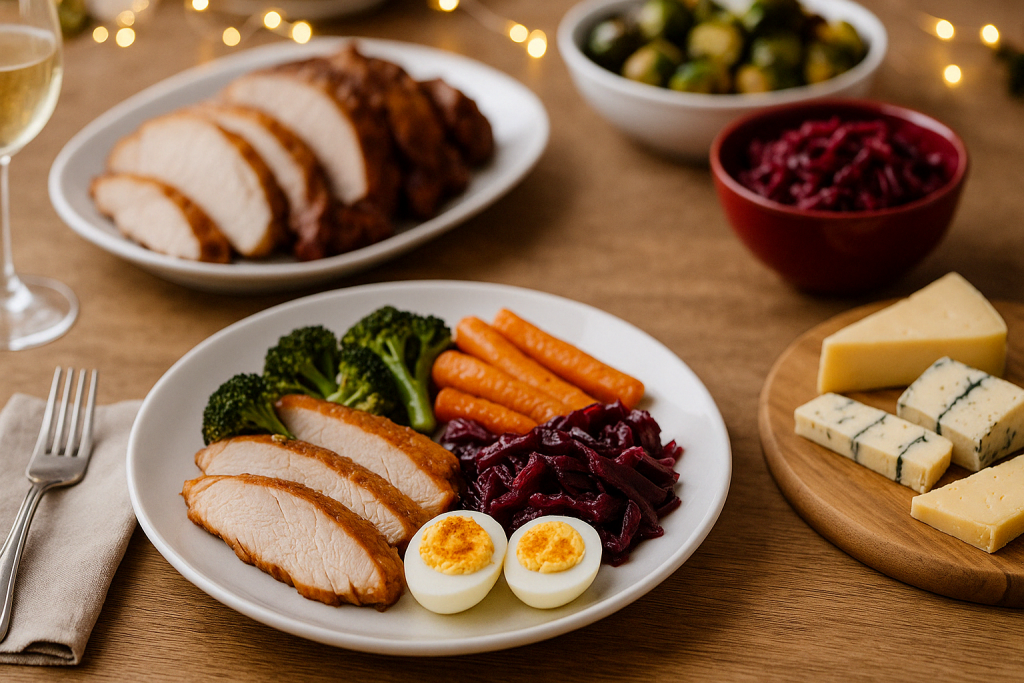
Great news—many celebration foods are naturally low in carbohydrates. You can still enjoy:

  • Smoked salmon
  • Roast meats like turkey or lamb
  • Eggs (devilled or boiled)
  • Roasted vegetables
  • Red cabbage and sprouts (especially with bacon!)
  • Cheese boards with options like stilton or cheddar

Let others know you’re eating low-carb most people will be supportive, and it helps avoid awkward explanations at the table.

  1. If You’re Having a Big Meal, Make It Your Only Meal

If you know you’ll be indulging in a large festive lunch or dinner, let that be your main meal of the day. Skip the extra nibbles before and after quality over quantity wins every time.

  1. Move More During the Break

Holidays often mean time off work, so use it to your advantage. Even a 20-minute walk after meals can help balance blood sugar levels and aid digestion. It’s also a great opportunity to connect with family, and friends, or simply enjoy some fresh air.

  1. Handle Cravings with Intention

Cravings will come. Here’s how to manage them:

  • Have a glass of water or herbal tea
  • Take a short walk or stretch
  • Still hungry? Opt for a meal rich in protein and healthy fats

Often, just pausing and doing something else helps you realise the craving will pass.

  1. Lean on Your Support System

Use tools like the GOQii app to message your coach, or reach out to a supportive friend or family member. A few encouraging words can help you stay focused and avoid emotional eating.

  1. If You Slip, Reset Right Away

A moment of indulgence doesn’t mean the whole celebration is ruined. The most important thing is to get back on track with your next meal, don’t wait until Monday or after the holidays. Progress isn’t about being perfect, it’s about being consistent.

Festive celebrations are meant to be joyful, but that joy doesn’t have to come at the cost of your health. With a little preparation, awareness, and self-compassion, you can enjoy the food, fun, and family time while staying true to your goals.

This Christmas or any special occasion, celebrate with intention, savour every bite, and remind yourself how far you’ve come. Healthy habits don’t take holidays, but they can make holidays even better.

#BeTheForce

Disclaimer: The information provided in this blog is for general awareness and educational purposes only. It is not intended to replace professional medical advice, diagnosis, or treatment. Always consult a qualified healthcare provider for personalised medical guidance or concerns related to your health. Images shown are for representation purposes only and may not depict the exact recommendations or outcomes.
December 23, 2025 By GOQii Leave a Comment

How to Use Mounjaro: Essential Guidelines for Your Weekly Dose

Starting a new injectable medication can raise many questions, especially in the first few weeks. From understanding the routine to knowing where to find reliable guidance, clarity plays a key role in building confidence.

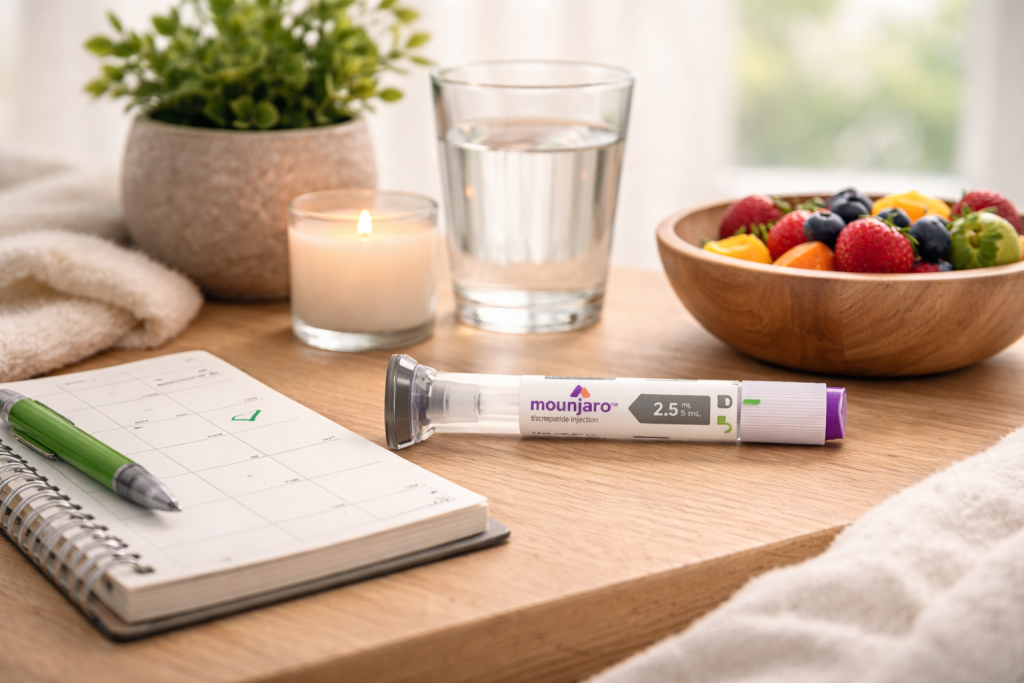
Mounjaro is prescribed as part of a structured treatment plan and is designed to be administered once a week using a prefilled pen. While the device itself is intended to be user-friendly, learning how it is typically used should always begin with guidance from your doctor, pharmacist, and the manufacturer’s official instructions.

Below is an overview of how Mounjaro is commonly administered, along with important considerations to keep in mind as you build it into your weekly routine.

How Mounjaro Is Typically Used

Mounjaro is administered as an injection just under the skin (subcutaneous injection).

Before starting treatment, your doctor or pharmacist will demonstrate how to use the pen correctly. You should not begin Mounjaro without professional instruction.

According to the drug manufacturer, using the Mounjaro pen generally follows a simple, step-based process.

Manufacturer-Recommended Usage Overview

As outlined by the manufacturer, using a Mounjaro pen typically involves:

  • Choosing an appropriate injection site
  • Removing the pen’s base cap (the pen is single-use and does not require preparation or mixing)
  • Placing the pen flat against the skin and unlocking it
  • Pressing and holding the button until the injection is complete

During the injection, two clicks are usually heard. The first indicates that the injection has started, and the second confirms that it is complete. Holding the pen in place briefly helps ensure the full dose is delivered.

For detailed instructions and a visual demonstration, patients are advised to refer to the manufacturer’s official website before their first injection.

Where Mounjaro Is Administered

Mounjaro is injected just beneath the skin and is commonly administered in:

  • The abdomen (stomach area)
  • The thigh
  • The upper arm

Rotating injection sites from week to week may help minimise discomfort and reduce the risk of skin irritation.

Using Mounjaro with Other Medications

If insulin is also part of your treatment plan, Mounjaro may be administered during the same session.

Healthcare professionals generally advise that:

  • Both injections can be given in the same general area (such as the abdomen)
  • The exact same spot should be avoided
  • Leaving a few inches between injection sites supports proper absorption

Your doctor or pharmacist can provide personalised guidance on site rotation if needed.

The Bigger Picture

Mounjaro is a prescription medication used to support blood sugar management in adults with Type 2 Diabetes and is increasingly prescribed as part of weight management care. It is taken once a week using a prefilled pen.

At GOQii, we believe medication is just one part of a broader health journey. Long-term progress particularly for metabolic health and weight-related goals is best supported when treatment is paired with informed nutrition choices, regular movement, quality sleep, and sustainable habits.

This is where personalised coaching plays an important role, helping individuals translate treatment into everyday routines that can be maintained over time.

If you have questions about using Mounjaro, always speak with your doctor or pharmacist, or refer directly to the manufacturer’s official resources.

#BeTheForce

Disclaimer
GOQii is committed to providing accurate, up-to-date, and comprehensive information. This article is for informational purposes only and is not a substitute for professional medical advice. Always consult your doctor or another qualified healthcare professional before starting or changing any medication. Drug information may change over time and may not include all possible uses, directions, precautions, warnings, interactions, or adverse effects.

August 7, 2025 By GOQii Leave a Comment

Hypertension and Obesity: Connecting the dots

Hypertension and Obesity: Connecting the dotsYou’ve been taking your blood pressure tablets for years. You rarely miss a dose. Yet, every time you check, those numbers stubbornly stay high.
Ideally, an individual’s blood pressure should be around 120/80 mmHg. But yours? It hovers around 140/90 mmHg or higher. Some days, it’s only within a normal range because of the medication. Sounds familiar?

Now, imagine this: You visit your doctor, expecting yet another tweak in your prescription, but instead, they ask about something else, your weight. You sigh, thinking, Not again. But what if your weight is playing a bigger role in your hypertension than you realise?

Many of us focus on treating hypertension with medication alone, but what if the missing link is something else something closer to home, like the extra pounds we carry? Let’s connect the dots between hypertension and obesity and uncover why tackling this could be the key to managing both conditions.

What is Hypertension? And Its Biggest Triggers

Hypertension occurs when the pressure inside your blood vessels runs too high, putting extra strain on your heart. It’s often called the silent killer because, most of the time, there are no obvious symptoms until you check your blood pressure. And if left unchecked? It can quietly pave the way for heart disease, stroke, and kidney problems.

What causes it? Some factors, like genetics and ageing, are beyond our control. But others such as lack of exercise, too much salt, excessive alcohol consumption, and obesity are within our reach.

Here’s the game-changer: while you can’t turn back time or change your genetics, you can take charge of your weight. Obesity and hypertension are deeply connected and tackling one can be the key to controlling the other.

Are You Obese? Here’s How to Find Out

We often associate obesity with being “overweight”, but not all extra weight is a problem. A few extra kilos won’t necessarily harm you. However, when excess fat starts affecting your health, that’s when it turns into obesity a condition that raises the risk of hypertension, heart disease, diabetes, and more.

How to Check If You’re Obese

  • Body Mass Index (BMI):

✔ BMI = Weight (kg) ÷ Height (m²)

✔ A BMI over 30 is classified as obese.

  • Waist Circumference:

✔ Men: Over 102 cm (40 inches)

✔ Women: Over 88 cm (35 inches)

Note: For people of Middle Eastern or Asian descent, some health experts recommend lower cutoff points (e.g., >90 cm for men, >80 cm for women) due to different body compositions. It’s best to discuss your personal risk with your doctor.

If you fall into these categories, it’s time to take action.

How Obesity Raises Your Blood Pressure

Obesity isn’t just about carrying extra weight it puts your entire cardiovascular system under strain, making it harder for your heart to function properly. Here’s how:

  • Clogged Arteries & Increased Pressure: Excess weight raises cholesterol levels, leading to plaque build-up in the arteries. This narrows blood vessels, forcing the heart to work harder resulting in high blood pressure.
  • More Weight = More Work for Your Heart: Your heart has to pump blood for your entire body. The more weight you carry, the harder it has to work, increasing blood pressure levels.
  • Insulin Resistance & Nerve Overload: Obesity can lead to insulin resistance, which raises insulin levels in your blood. This triggers nerve activity in the brain, causing blood pressure to rise.
  • Kidneys Under Pressure: Excess belly fat compresses your kidneys, making it harder for them to flush out waste and excess fluid. More fluid = higher blood pressure.
  • Stress Hormones & Water Retention: Being overweight often raises cortisol (the stress hormone). High cortisol leads to more salt and water retention, which in turn leads to higher blood pressure.
  • Inflammation & Poor Heart Health: Obesity fuels chronic inflammation, which damages blood vessels and increases oxidative stress one of the main drivers of high blood pressure.

The bottom line? Obesity is a major driver of hypertension, affecting your entire body. But here’s the good news—you can take control and reduce your risk!

How to Control Hypertension & Lose Weight Naturally

Eat Smart, Stay Healthy

The key to weight loss? Burn more calories than you consume. This is called a calorie deficit.

  • Control Your Portions: Eating smaller meals helps keep calorie intake in check.
  • Choose Low-Calorie Foods: Load up on vegetables, lean protein, and whole grains.

Boost Your Metabolism with Protein

Protein is one of the most essential nutrients for weight loss because it helps burn more calories and keeps you full for longer.

  • Include lean meats, fish, eggs, dairy, soy, lentils, and legumes.
  • Reduce refined carbohydrates like white flour and sugary foods, which lead to fat accumulation.

Ditch the Sugar Trap

Fast food and sugary snacks contribute to insulin resistance, a major factor in high blood pressure.

  • Processed foods contain hidden sugars, so check labels and choose whole, natural foods.

Less Salt, Less Weight, Better Blood Pressure

Reducing salt intake can help with weight loss and blood pressure control.

  • Processed foods, ready meals, and salty snacks add excess sodium, leading to bloating and water retention.
  • Opt for fresh, home-cooked meals whenever possible.

Finding the Right Diet for You

Intermittent fasting, keto, low-carb, or plant-based diets can all be effective—but not every diet suits everyone.

  • Consult a nutritionist or your doctor before making major dietary changes to find what works best for your body.

Get Moving – Exercise Regularly

One of the best ways to lose weight and lower blood pressure is simple: move more!

    • Aim for at least 30 minutes of activity per day.
    • Try brisk walking, cycling, swimming, dancing, or strength training.
    • Start small, stay consistent – every little movement counts!

Think of it like this: Imagine carrying a 10-pound backpack all the time sounds exhausting, right? That’s what obesity does to your body. At first, moving more might feel tough, but your stamina will build, and every step will get easier. One pound at a time.

Manage Stress & Sleep Well

Lack of sleep and high stress levels contribute to weight gain & high blood pressure.

  • Prioritise 7-9 hours of quality sleep.
  • Practise mindfulness, deep breathing, or yoga.
  • Limit screen time before bed.

Take Charge of Your Health Today

Now you know the secret: losing weight is one of the most effective ways to manage blood pressure. The best part? It all starts with two things eating better and moving more. Set your target weight, make a plan, and start today. Your future self will thank you! 

If you’re currently on blood pressure medication, don’t stop it abruptly.Instead, use this blog as a guide to complement your medical care, and talk to your doctor before making any major lifestyle or diet changes.

#BeTheForce

Disclaimer: The information provided in this blog is for general awareness and educational purposes only. It is not intended to replace professional medical advice, diagnosis, or treatment. Always consult a qualified healthcare provider for personalised medical guidance or concerns related to your health. Images shown are for representation purposes only and may not depict the exact recommendations or outcomes.

August 2, 2025 By Anusha Subramanian Leave a Comment

Why Resistance Training Matters More Than Ever on GLP-1 Therapy

Starting GLP-1 therapy can feel like a breakthrough. After years of battling weight, countless diets, and the exhausting cycle of losing and regaining weight, medications like semaglutide and liraglutide often offer something many people have never experienced before: a sense of control. Hunger fades, cravings quieten, and for once, weight starts to come down steadily. It’s not an exaggeration to say it can feel life-changing.



But here’s something most people aren’t told when they start: while the kilos may be dropping, not all that weight loss is necessarily fat. You could also be losing something your body desperately needs muscle. And this is where resistance training becomes a game-changer.

So, What’s Happening When You’re on GLP-1 Medications?

These drugs work by slowing digestion and helping you feel fuller for longer, which naturally leads to eating less. This calorie deficit drives the weight loss. But here’s the catch: when your body receives fewer calories, it doesn’t always discriminate. Yes, it burns fat but unless you’re actively working to protect it, your body may also start breaking down lean muscle for energy.

And that’s a problem worth paying attention to. Losing muscle is bad news for your metabolism, your strength, and your long-term health.

Why You Must Focus on Muscle While Losing Fat

Muscle is metabolically active tissue. Simply put:

  • It helps you burn more calories, even at rest
  • It supports posture, mobility, and everyday function
  • It protects against injury as you age
  • It’s essential for healthy ageing and longevity

When you lose weight with GLP-1 medications without strength training, your body may sacrifice muscle as well as fat. Over time, this can slow your metabolism making further weight loss harder and weight maintenance even tougher.

What Is Resistance Training?

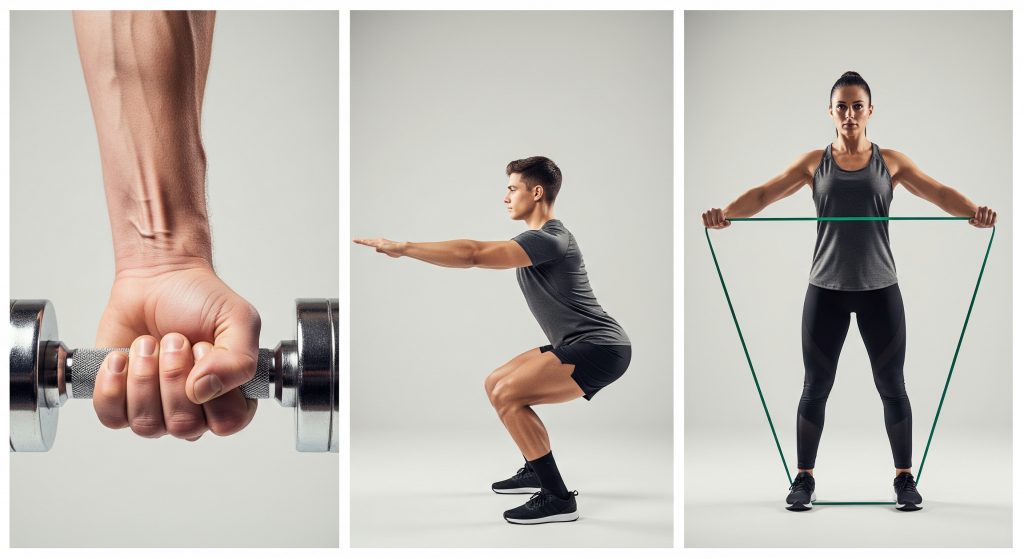
Resistance training is all about giving your muscles a reason to stay. Every time you challenge them with weights, bands, or just your bodyweight your body gets the message: muscle matters. It says, “Don’t burn this muscle. I need it.”

That’s why resistance training is so important, especially when you’re eating less. It helps your body burn fat while preserving lean mass. Think of it as the ideal partner to your GLP-1 medication.

But What If the Gym Isn’t Your Thing?

No worries. You don’t need fancy equipment or a gym membership to start building strength. Here’s how to integrate resistance training into your week:

  • Use your bodyweight

Squats, lunges, push-ups, and glute bridges are effective — and require no equipment.

  • Grab a resistance band

Lightweight, portable, and surprisingly powerful for full-body workouts.

  • Get creative


Use water bottles, backpacks, or heavy books in place of weights. Try bicep curls, shoulder presses, or loaded squats.

  • Keep it short
    Two to three sessions a week, just 15–20 minutes each, is enough to signal your body to retain muscle.

You don’t need to train like a bodybuilder. You just need to move your muscles regularly.

Benefits of Resistance Training on GLP-1 Therapy

Here’s why strength training even at home matters during your GLP-1 journey:

  • Preserves lean muscle mass
  • Prevents metabolic slowdown
  • Improves body composition (think firm and toned, not just smaller)
  • Boosts insulin sensitivity and blood sugar control
  • Enhances mood, energy, and mental clarity

Start small. Stay consistent. Focus on progress, not perfection. With resistance training, you’re not just losing weight — you’re gaining strength and long-term resilience.

Move to Protect Your Muscles

GLP-1 medications can help you lose weight but resistance training ensures you lose fat, not strength.

So if you’re on GLP-1 therapy, remember:

  • Prioritise protein
  • Move your muscles
  • Celebrate non-scale victories

Because in the long run, preserving muscle is what will keep your metabolism strong, your body capable, and your health thriving.

#BeTheForce

Disclaimer: The information provided in this blog is for general awareness and educational purposes only. It is not intended to replace professional medical advice, diagnosis, or treatment. Always consult a qualified healthcare provider for personalised medical guidance or concerns related to your health. Images shown are for representation purposes only and may not depict the exact recommendations or outcomes.

  • « Previous Page
  • 1
  • 2
  • 3
  • 4
  • 5
  • …
  • 16
  • Next Page »

Search

Recent Posts

  • The Sleep-Metabolism Connection: Why Rest is Your Best GLP-1 Partner
  • Accelerate Action for Your Health: Why Self-Care Matters This International Women’s Day
  • 4 Reasons Why Affirmations Are Not Working For You
  • The Social Side of GLP-1: Navigating “Food Culture” and Peer Pressure
  • Leaky Gut: Symptoms and Causes

Stay Updated

Archives

  • March 2026 (3)
  • February 2026 (14)
  • January 2026 (14)
  • December 2025 (19)
  • November 2025 (15)
  • October 2025 (20)
  • September 2025 (6)
  • August 2025 (6)
  • July 2025 (12)
  • June 2025 (18)
  • May 2025 (16)
  • April 2025 (22)
  • March 2025 (23)
  • February 2025 (22)
  • January 2025 (25)
  • December 2024 (22)
  • November 2024 (23)
  • October 2024 (21)
  • September 2024 (24)
  • August 2024 (30)
  • July 2024 (21)
  • June 2024 (26)
  • May 2024 (31)
  • April 2024 (27)
  • March 2024 (29)
  • February 2024 (25)
  • January 2024 (21)
  • December 2023 (15)
  • November 2023 (11)
  • October 2023 (19)
  • September 2023 (22)
  • August 2023 (18)
  • July 2023 (22)
  • June 2023 (24)
  • May 2023 (24)
  • April 2023 (23)
  • March 2023 (23)
  • February 2023 (19)
  • January 2023 (15)
  • December 2022 (11)
  • November 2022 (15)
  • October 2022 (15)
  • September 2022 (12)
  • August 2022 (10)
  • July 2022 (17)
  • June 2022 (11)
  • May 2022 (10)
  • April 2022 (6)
  • March 2022 (6)
  • February 2022 (13)
  • January 2022 (11)
  • December 2021 (7)
  • November 2021 (3)
  • October 2021 (6)
  • September 2021 (3)
  • August 2021 (8)
  • July 2021 (7)
  • June 2021 (15)
  • May 2021 (16)
  • April 2021 (10)
  • March 2021 (7)
  • February 2021 (4)
  • January 2021 (4)
  • December 2020 (3)
  • November 2020 (4)
  • October 2020 (10)
  • September 2020 (3)
  • August 2020 (3)
  • July 2020 (2)
  • June 2020 (4)
  • May 2020 (10)
  • April 2020 (12)
  • March 2020 (10)
  • February 2020 (4)
  • January 2020 (4)
  • December 2019 (3)
  • November 2019 (7)
  • October 2019 (5)
  • September 2019 (4)
  • August 2019 (9)
  • July 2019 (9)
  • June 2019 (11)
  • May 2019 (4)
  • April 2019 (8)
  • March 2019 (8)
  • February 2019 (9)
  • January 2019 (8)
  • December 2018 (9)
  • November 2018 (3)
  • October 2018 (3)
  • September 2018 (5)
  • August 2018 (10)
  • July 2018 (6)
  • June 2018 (13)
  • May 2018 (8)
  • April 2018 (18)
  • March 2018 (9)
  • February 2018 (8)
  • January 2018 (15)
  • December 2017 (12)
  • November 2017 (19)
  • October 2017 (13)
  • September 2017 (15)
  • August 2017 (4)
  • July 2017 (8)
  • June 2017 (7)
  • May 2017 (6)
  • April 2017 (8)
  • March 2017 (6)
  • February 2017 (7)
  • January 2017 (9)
  • December 2016 (10)
  • November 2016 (7)
  • October 2016 (7)
  • September 2016 (7)
  • August 2016 (11)
  • July 2016 (9)
  • June 2016 (9)
  • May 2016 (12)
  • April 2016 (17)
  • March 2016 (17)
  • February 2016 (8)
  • January 2016 (6)
  • December 2015 (2)
  • November 2015 (9)
  • October 2015 (7)
  • September 2015 (9)
  • August 2015 (11)
  • July 2015 (9)
  • June 2015 (12)
  • May 2015 (9)
  • April 2015 (13)
  • March 2015 (8)
  • February 2015 (5)
  • January 2015 (12)
  • December 2014 (14)
  • November 2014 (11)
  • October 2014 (6)
  • September 2014 (13)
  • August 2014 (12)
  • July 2014 (6)
  • June 2014 (2)
  • May 2014 (7)
  • April 2014 (4)

From “Laddu Nawin” to Fit and Fierce: How a 25-Year-Old Insurance Advisor Shed 20 Kilos and Gained His Life Back

When 25-year-old Nawin Yadav from Hyderabad walked into his office every morning, he carried more than just his files and policy papers. He had the weight of fatigue, sluggish energy, and an ever-growing belly that was becoming the butt of jokes. “People … [Read More...]

“I’ve Challenged Myself to Live 100 Years” – The Story of Chandubhai Savani’s Second Chance at Life

At 67, most people start slowing down. Not Chandubhai Savani. A resident of Surat, Chandubhai, thought life was on track. “My life was going well till I had my bypass surgery,” he says. That surgery, back in 2021, was a wake-up call.  Medication was routine, but exercise wasn’t. His diet? What he calls ‘normal.’ “I […]

From Shimla’s Slopes to Chandigarh’s Sidewalks: Surinder Kaur Bhalla’s Journey from Chaos to Control

Some journeys start with a plan. Others begin with a stumble literally. Surinder Bhalla, a government professional, born and raised in the scenic hill town of Shimla, had always lived a life of movement. “In Shimla, you walked everywhere,” she reflects. “Walking was never an exercise. It was just life.” But after shifting to Chandigarh, […]

Ananda Mukherjee Health Story

From Terminal Illness To Complete Wellness! Ananda Mukherjee Health Story

As we observe World Cancer Day under the powerful theme ‘United by Unique’ (2025-2027)**, we are reminded that every individual’s journey with cancer is distinct, yet united by shared resilience, hope, and the collective fight against this disease. This theme places people at the centre of care and their stories at the heart of the […]

  • HOME
  • HEALTHY LIVING
  • FITNESS
  • HEALTHY RECIPES
  • USER STORIES
  • KARMA
  • BUY GOQii

Copyright ©2016 GOQii



