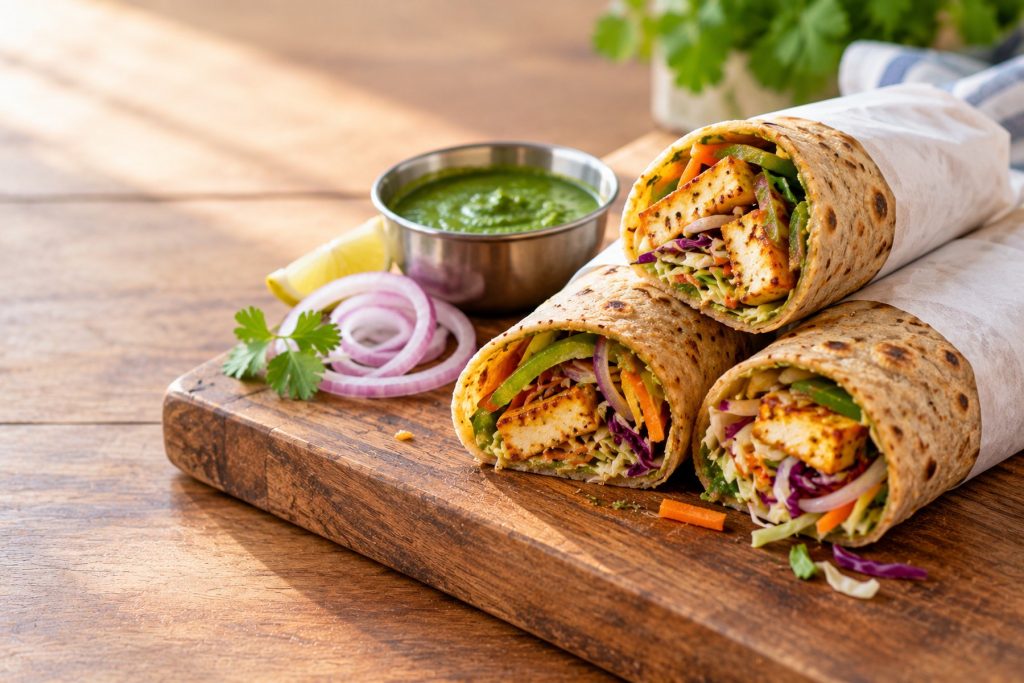
 The kathi roll started life as Kolkata street food: a flaky, often fried paratha wrapped around skewered fillings. This home version keeps the flavour and the fun, but swaps the paratha for whole wheat chapatis (leftovers work perfectly) and fills them with a colourful mix of vegetables and spiced paneer. It takes about 25 minutes, packs well for lunch, and is the kind of meal both children and adults happily eat.
At a glance
- Makes: 3 rolls (serves 3 as a light meal, or 2 with a side salad)
- Time: about 10 minutes to prep and 15 minutes to cook
- Why it works: whole wheat chapati and vegetables bring fibre; paneer and curd bring protein and calcium.
- Use up leftovers safely: chapatis that were refrigerated within 2 hours and are a day or two old are ideal. Warm them on a tawa so they fold without cracking.
- Keep the salt in check: the chutney and chaat masala are already salty, so taste before adding more.
- Easy swaps: tofu for a dairy-free roll, egg for a classic Kolkata-style roll, or ragi or jowar rotis for a millet twist.
Vegetable and paneer kathi roll recipe
- Makes: 3 rolls | Prep: 10 minutes | Cook: 15 minutes
Ingredients
For the filling
- 150 g paneer, cut into thin strips or crumbled (about 1 cup)
- 1 medium onion, thinly sliced (keep a quarter aside, raw, for topping)
- 1 medium carrot, cut into thin strips
- 1 medium capsicum, thinly sliced
- 1 cup shredded cabbage
- 1 medium tomato, deseeded and sliced
- 2 tsp oil
- 1 tsp ginger-garlic paste
- ½ tsp turmeric (haldi)
- ½–1 tsp red chilli powder, to taste
- ½ tsp garam masala
- 1 tsp roasted cumin (jeera) powder
- Salt, to taste (go easy: see the tip below)
- A squeeze of lemon
For the spread and assembly
- 3 whole wheat chapatis (leftover or fresh)
- 3 tbsp mint-coriander chutney
- 3 tbsp thick curd (hung curd works best)
- ½ tsp chaat masala
Method
- Make the spread. Mix the chutney and curd in a small bowl. Don’t add salt yet; the chutney usually has enough.
- Cook the vegetables. Heat the oil in a wide pan on medium heat. Sauté the ginger-garlic paste for 30 seconds, then add the onion and cook for 2–3 minutes until soft. Add the carrot, capsicum and cabbage and stir-fry for 3–4 minutes, so they soften but keep some crunch.
- Add the spices and paneer. Stir in the tomato, turmeric, chilli powder, garam masala and cumin powder. Cook for a minute, then add the paneer and toss gently for 2–3 minutes until heated through. Taste, add a little salt only if needed, and finish with a squeeze of lemon.
- Warm the chapatis. Heat each chapati on a hot tawa for 20–30 seconds on each side so it’s soft and pliable.
- Spread a third of the chutney-curd mix over each chapati. Spoon a third of the filling in a line slightly off-centre, top with a few raw onion slices and a pinch of chaat masala.
- Roll and serve. Fold in the bottom edge, then roll tightly. Wrap the lower half in butter paper or foil to hold it together. Serve warm, with extra chutney or a salad on the side.
What makes this a healthier kathi roll
Whole wheat instead of a fried paratha
Street-style kathi rolls are usually made with a layered paratha cooked in plenty of oil, often with maida. Using a whole wheat chapati keeps the fibre of the whole grain and cuts out most of the added fat, while still giving you a soft, foldable wrap.
A good dose of vegetables
Each roll carries roughly half a cup of cooked vegetables, plus raw onion. Carrots provide beta-carotene, which the body converts to vitamin A; capsicum, tomato and lemon add vitamin C; and cabbage and onion add fibre. Cooking the vegetables only until tender-crisp, and adding raw onion and lemon at the end, helps keep more of the vitamin C, which is sensitive to heat.
Protein from paneer and curd
Paneer is one of the most useful vegetarian protein sources in Indian kitchens, with about 18–20 g of protein per 100 g, based on Indian food composition data. The 150 g in this recipe gives each roll around 9 g of protein from paneer alone, with a little more from the curd and chapati. Protein and fibre together help make a meal more filling than a plain chapati or a vegetable wrap on its own.
Paneer is also a good source of calcium, but full-fat paneer is high in saturated fat, at around 13–15 g per 100 g. That’s no reason to avoid it, but it’s worth keeping the portion moderate and choosing low-fat paneer, made from toned milk, if you’re watching your cholesterol or weight.
Watch the salt
Indians eat on average about 11 g of salt a day, more than twice the WHO limit of 5 g. In this recipe, the chutney, chaat masala and any salt in the filling all add up, so we’ve kept added salt optional. Taste first and add a pinch only if it’s needed.
If you have diabetes
The chapati is the main source of carbohydrate here; the vegetables, paneer and curd around it slow things down and make it a more balanced meal than a roll made with maida or potato filling. One roll with a salad or a bowl of dal is a sensible portion for most people, but needs vary, so check with your doctor or dietitian how it fits your plan.
Swaps and variations
- Dairy-free: use firm tofu instead of paneer, and a thick plant-based yoghurt or extra chutney instead of curd.
- Egg kathi roll: cook a thin omelette on the tawa, lay the chapati on top for a few seconds so it sticks, then fill and roll. This is closer to the classic Kolkata egg roll.
- More plant protein: add a handful of boiled chana, rajma or steamed moong sprouts to the filling. Pulses add both protein and fibre; read more in why pulses are good for you.
- Millet twist: use ragi or jowar rotis. They’re more fragile, so warm them gently and roll loosely.
- Extra greens: stir a handful of chopped spinach or methi into the filling at the end.
- Lighter paneer: use low-fat paneer, or swap half the paneer for crumbled tofu.
Leftover chapatis and lunchboxes: keep it safe
- Leftover chapatis: cool them and put them in the fridge within 2 hours of cooking, as food safety authorities advise for leftovers, and use them within a day or two, while they’re still soft and fresh. Warm them on a tawa before rolling.
- For the lunchbox: let the filling cool, then pack it separately from the chapatis and spread, and roll at lunchtime to avoid a soggy wrap. Paneer and curd are perishable, so use an insulated box or an ice pack if the lunch will sit for more than a couple of hours, especially in warm weather. Our meal-prep guide has more ideas for packing healthy lunches.
- Making ahead: the filling keeps in the fridge for a day. Reheat it until it’s steaming hot all the way through.
Who should take care
- Milk allergy: paneer and curd are dairy, so use the tofu swap.
- Young children: cut the roll into smaller pieces and go easy on the chilli.
- High blood pressure or kidney disease: keep the salt, chaat masala and salty chutney to a minimum, and follow any diet advice from your doctor.
- Gluten: whole wheat chapatis contain gluten. For coeliac disease, use rotis made from certified gluten-free millet flour.
The bottom line
A kathi roll doesn’t have to be a once-in-a-while street-food treat. Made with whole wheat chapatis, plenty of vegetables, a sensible amount of paneer and a light hand with the salt, it’s a balanced, filling meal that turns yesterday’s chapatis into today’s lunch.
Pro Tip: Use the GOQii App to log your meals and see whether you’re getting enough protein and vegetables across the day. Your GOQii Personalised Health Coach can help you adapt family favourites like this one to your goals, from weight management to blood sugar control.
Frequently asked questions
Is a paneer kathi roll healthy?
It can be. A version made with a whole wheat chapati, plenty of vegetables, a moderate amount of paneer and little added oil and salt is a balanced meal with fibre, protein and calcium. Street-style rolls made with fried, maida-based parathas and heavy sauces are much higher in fat and salt.
How much protein is in a paneer kathi roll?
Paneer has about 18–20 g of protein per 100 g. In this recipe, 150 g of paneer across three rolls gives each roll around 9 g of protein from paneer, plus a little more from the curd and chapati. Adding chana or sprouts to the filling increases it further.
Can I use leftover chapatis?
Yes, leftover chapatis work well. Refrigerate them within 2 hours of cooking, use them within a day or two, and warm them on a tawa before rolling so they’re soft and don’t crack.
Is a kathi roll good for weight loss?
A homemade roll like this one can fit into a weight-loss plan, as fibre and protein help make a meal filling. Keep to one or two rolls, choose low-fat paneer if you like, and go easy on the oil and creamy sauces.
Can people with diabetes eat a kathi roll?
Most people with diabetes can include a roll like this in a balanced meal plan. The chapati is the main carbohydrate, so keep to one roll with a salad or dal, and check with your doctor or dietitian how it fits your plan.
How do I keep a kathi roll from getting soggy in a lunchbox?
Deseed the tomato, let the filling cool completely, and pack the filling, spread and chapatis separately. Roll them just before eating. Use an insulated box or ice pack, as paneer and curd are perishable.
What can I use instead of paneer?
Firm tofu works well for a dairy-free roll. You can also use eggs, boiled chana or rajma, steamed sprouts, or a mix of paneer and tofu.
#BeTheForce
Disclaimer: The information provided in this blog is for general awareness and educational purposes only. It is not intended to replace professional medical advice, diagnosis, or treatment. Always consult a qualified healthcare provider for personalised medical guidance or concerns related to your health.
 Today, let’s look at an extremely flexible recipe where you can use the veggies of your choice or based on what is available with you. These Golden Vegetable Bites will take a little time, but they’re definitely worth the wait. Here’s your go-to Golden Vegetable Bites that are fit for a snack as well as a meal.