GOQii

Blog

  • HOME
  • HEALTHY LIVING
  • FITNESS
  • HEALTHY RECIPES
  • USER STORIES
  • KARMA
  • BUY GOQii

February 27, 2026 By Dhwani Bagadia 1 Comment

Leaky Gut: Symptoms and Causes

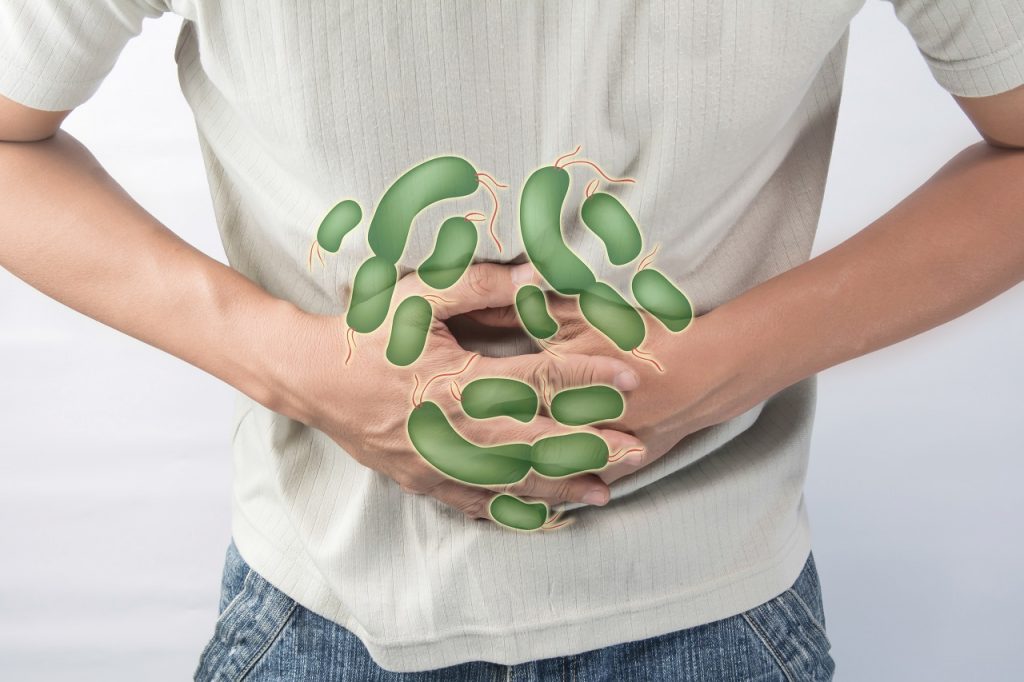
leaky gutThe gut is considered to be the “Gateway to Health”. It consists of approximately 80% of the immune system. 95% of “serotonin”, the “feel-good” hormone, is also produced in the Gut. Healing and improving your gut is of the utmost importance to lead a healthy and happy life. Your gut is responsible for stomach conditions, pain and even eagerness. Poor gut health can cause various issues such as a Leaky Gut.

A Leaky Gut is one of the most puzzling illnesses/diseases to be diagnosed and to get treated. It is a very puzzling disease or illness majorly due to the gut having a very extensive and complex structure. “There is still so much science that proceeds with finding newly developed methods, where the gut can have an impact on the health of the heart to brains being young and active,” says Dr. Alessio Fasano, Director of the Center for Celiac Research and Treatment with Harvard-affiliated Massachusetts General Hospital.

What is Leaky Gut?

The digestive system is where food is broken down and nutrients are absorbed. It also plays a major role in safeguarding your body from detrimental or dangerous substances. The intestinal walls act as a barrier/hurdle to check what is passing into the bloodstream, to be carried to different organs of the body.

Water and nutrients are passed into and out of the small holes (tight junctions) in the walls of the intestine when obstructing the movement of detrimental substances. Intestinal Permeability is defined as an easy passage of the substances through the walls of the intestine. When the small holes (tight junction) of the intestinal wall become loose, the permeability of the gut increases and results in bacteria and toxins passing from the gut into the bloodstream. This event is termed as “Leaky Gut”.  

Due to Leaky Gut, toxins and bacteria enter the blood-stream, resulting in inflammation and activating a reaction from the immunity. Proponents declare that it is one of the major causes of several medical conditions such as chronic fatigue syndrome, migraine, multiple sclerosis, fibromyalgia, food sensitivities, thyroid abnormalities, mood swings, skin conditions, and autism.

Many Health-care professionals say that an increase in the permeability of the intestine occurs in a few chronic diseases. It is a challenge to calculate the strength of an individual’s gut barrier, so it becomes difficult to identify whether a person has a leaky gut and what impact it will have on the body.

Symptoms to Watch Out For

As per Dr. Leo Galland, the director of the Foundation for Integrated Medicine, the symptoms below could indicate a Leaky Gut.

  • Digestive issues such as chronic diarrhea, constipation, gas or bloating or IBS (Irritable Bowel Syndrome)
  • Nutritional Deficiencies such as anemia, omega-3 fatty acids, vitamin deficiencies
  • Excess weight, obesity, diabetes
  • Poor immunity such as frequent cold, flu, and infection. Auto-immune disease such as rheumatoid arthritis, lupus, celiac disease or chron’s disease, Hashimoto’s thyroiditis
  • Brain: Headaches, brain fog and memory loss and Depression/Eagerness/ADHD (Attention Deficient Hyperactive Disorder)
  • Excessive tiredness or fatigue
  • Rashes on skin such as acne, eczema
  • Cravings for refined carbs or sugar
  • Bones: Arthritis or Joint Pain and Osteoporosis
  • Seasonal Allergies or Asthma
  • Imbalance in the hormones such as PMS or PCOD i.e. Pre-menstrual Syndrome and Polycystic Ovarian Syndrome
  • Diagnosis of candida overgrowth
  • Food Allergies, food sensitivities or intolerances

What Causes a Leaky Gut?

There are several factors that can cause a Leaky Gut. Gluten, food, infection and toxins being a few of them. The following factors can also be considered.

  • Food Sensitivities, Candida or yeast over-growth, Parasites, Medications and Drugs
  • Excessive sugar intake and other un-healthy food affect the barrier of the wall of the intestine
  • Non-steroidal anti-inflammatory drugs (NSAID’s): Excess and too much use of NSAID’s like ibuprofen leads to leaky gut due to an increase in the wall of intestinal permeability
  • Excess alcohol intake may also cause intestinal permeability
  • Nutritional Deficiencies: Deficiencies of Vitamins such as A, D and Zinc result in increases intestinal permeability
  • Inflammation: Can also result in the leaky gut
  • Stress: Excess Stress also results in gastro-intestinal disorder, leading to leaky gut
  • Poor Gut Condition: There is a mix of good and harmful bacteria which are almost in millions in the gut. If the balance of the good and harmful bacteria is affected, it can affect the intestinal wall.
  • Yeast Overgrowth: Natural existence of yeast is there in the gut, but excess growth of yeast can lead to leaky gut

Stay tuned and stay healthy. For more topics on Gut Health, click here. If you’re experiencing any of the above symptoms, consult a doctor or speak to our experts for lifestyle changes that will help you heal. 

#BeTheForce

Disclaimer: The information provided in this blog is for general awareness and educational purposes only. It is not intended to replace professional medical advice, diagnosis, or treatment. Always consult a qualified healthcare provider for personalised medical guidance or concerns related to your health.
February 25, 2026 By GOQii Leave a Comment

The Fiber Gap: Managing Digestion on GLP-1 Therapy

One of the most remarkable things about GLP-1 therapy is how it slows down “gastric emptying.” This is the magic behind the feeling of fullness it keeps food in your stomach longer, sending a constant signal to your brain that you are satisfied. However, a slower stomach means your digestive tract needs a different kind of support to keep things moving.
In the world of nutrition, fiber is usually the hero. But when your system is moving at a slower pace, not all fiber is your friend. This is what we call the “Fiber Gap.”

Soluble vs. Insoluble: Know the Difference

On a standard diet, we are told to eat lots of “roughage” think raw kale, bran, and heavy seeds. This is insoluble fiber. It’s like a broom that sweeps through your system. However, when digestion is slowed by GLP-1, too much “broom” can lead to bloating, gas, and discomfort.

Instead, you need to prioritize soluble fiber. This type of fiber dissolves in water to create a gel-like substance. It’s much gentler on a slow-moving gut and helps maintain a healthy microbiome without causing a “traffic jam” in your intestines.

Closing the Gap Safely

To keep your gut happy while on GLP-1 therapy, follow these digestive guidelines:

  • Peeled and Cooked: Raw vegetable skins can be tough to break down. Try peeling your apples and carrots, and steam your greens instead of eating them raw. This “pre-digests” the fiber, making it easier for your stomach to handle.
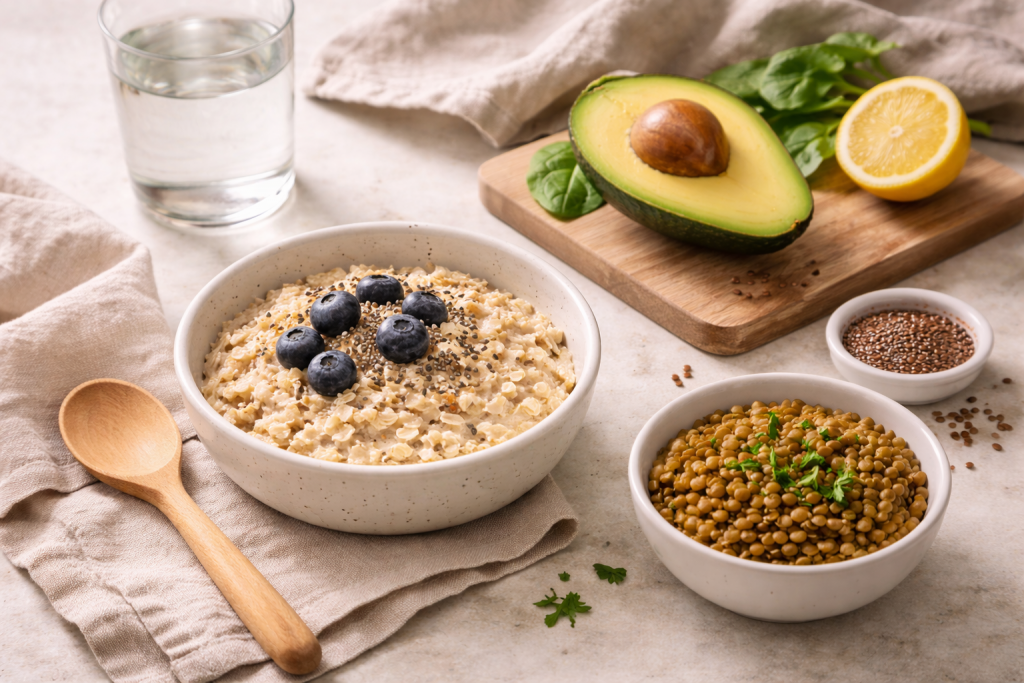
  • Focus on the “Gel” Builders: Incorporate oats, chia seeds, lentils, and avocados. These provide soluble fiber that moves smoothly through the digestive tract.
  • The Hydration Equation: Fiber is a sponge. If you eat fiber without drinking enough water, it will sit in your gut and harden. For every extra gram of fiber you add, make sure you’re adding an extra glass of water.
  • Natural Movement: Gentle movement, like a 15-minute post-meal walk, works in tandem with fiber to encourage “peristalsis” the natural contractions of your intestines.

Tip: If you experience significant slowing, try adding a tablespoon of ground flaxseeds to your morning yogurt. It’s a gentle, natural way to bridge the fiber gap without the bloat.

#BeTheForce

Disclaimer: GOQii is committed to providing accurate, up-to-date, and comprehensive health information. This article is intended for informational purposes only and should not be used as a substitute for professional medical advice, diagnosis, or treatment. Always consult a qualified healthcare professional before starting or changing any medication. Individual responses to treatment may vary.

February 4, 2026 By Shazia Sadruddin Leave a Comment

Unleashing the Power of Polyphenols: A Vital Ally for Cancer Survivors

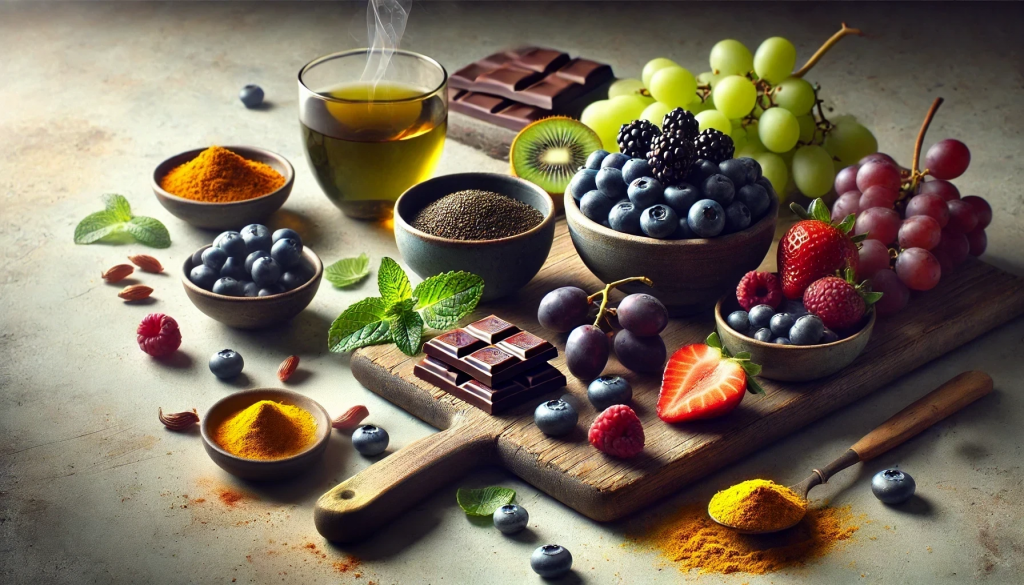
Imagine if the foods you love could shield you from cancer and aid in your recovery. Enter polyphenols, a family of over 8,000 plant compounds found in fruits, green and black tea, coffee, red wine, chocolate, and seeds. These natural substances have demonstrated remarkable potential in cancer treatment, especially after conventional therapies, by minimizing side effects and enhancing their effectiveness.
Polyphenols: Nature’s Cancer Combatants

Polyphenols exhibit both chemo preventive and chemotherapeutic effects, helping to prevent and potentially treat cancer. Here’s how:

  1. Suppressing Tumor Formation and Angiogenesis: Polyphenols can inhibit the growth of new blood vessels that feed tumors.
  2. Preventing Metastasis: They can reduce the spread of cancer cells.
  3. Triggering Apoptosis: Polyphenols can induce programmed cell death in cancer cells.
  4. Regulating Immune Responses: They can enhance the body’s natural defense mechanisms.
  5. Protecting Healthy Cells: Polyphenols safeguard cells from harmful free radicals.

Key Polyphenols in Cancer Treatment

Most studies focus on individual substances within the polyphenol family, each with unique anticancer properties:

  • Resveratrol: Found in grapes and red wine, resveratrol is linked to the suppression of glucose uptake, metastasis, and the induction of apoptosis in cancer cells.
  • EGCG (Epigallocatechin Gallate): Found in green tea, EGCG can regulate cancer cell growth, metastasis, and angiogenesis by altering various biological processes.
  • Curcumin: Found in turmeric, curcumin suppresses cell growth and angiogenesis, halts cell cycle progression in tumor cells, and triggers apoptosis across different cancer models.

The Role of Polyphenols in Cancer Survivors

Polyphenols play several crucial roles in supporting cancer survivors:

  1. Antioxidant Properties: By neutralizing free radicals, polyphenols reduce oxidative stress, protecting cellular integrity and supporting overall health in cancer survivors.
  2. Anti-inflammatory Benefits: Chronic inflammation is a risk factor for cancer progression and recurrence. Polyphenols’ anti-inflammatory properties help mitigate this risk, improving overall health.
  3. Modulation of Cell Signaling Pathways: Polyphenols influence cell signaling pathways involved in cancer progression, inhibiting those that lead to cell proliferation and metastasis while promoting those that induce apoptosis.
  4. Immune System Support: Some polyphenols enhance the immune system’s ability to fight off cancer cells, maintaining a robust defense against potential cancer cells and other diseases.
  5. Improved Gut Health: Polyphenols promote beneficial bacteria growth and inhibit harmful bacteria, crucial for a healthy gut microbiome and a strong immune system, especially important for those with compromised immune systems due to cancer treatments.

Incorporating Polyphenols into Your Diet

While the benefits of polyphenols are promising, they should be part of a balanced diet and healthy lifestyle. Cancer survivors should aim to consume a variety of polyphenol-rich foods, as whole foods provide a complex mix of nutrients and bioactive compounds that work synergistically.

Practical Tips

  • Enjoy a cup of green tea daily: Packed with EGCG (epigallocatechin-3-gallate, a major catechin found in green tea) it’s a delicious and healthy way to support your health.
  • Add berries to your meals: Rich in various polyphenols, they’re a versatile and tasty addition to breakfast, smoothies, or desserts.
  • Incorporate turmeric into your cooking: Spice up your dishes while reaping the benefits of curcumin.

A balanced and varied diet, along with a healthy lifestyle, is key to maximizing the benefits of polyphenols and supporting long-term health and well-being. Have you noticed any benefits from including polyphenol-rich foods in your diet? Share your story in the comments below!

We hope this article helps you. For further information or guidance, reach out to our certified experts by subscribing to GOQii’s Personalised Health Coaching here.

#BeTheForce

Disclaimer: The information provided in this blog is for general awareness and educational purposes only. It is not intended to replace professional medical advice, diagnosis, or treatment. Always consult a qualified healthcare provider for personalised medical guidance or concerns related to your health.

February 2, 2026 By GOQii Leave a Comment

The Longevity Plate: A Guide to Assembling a Functional Diet at 80 Years Old

Most dietary advice seems to be fixated on labels: “keto”, “vegan”, “paleo”, “low fat”, “high protein”, “clean eating.”



But let’s be honest. If your actual aim in eating better is to be 80 years old and still be able to climb stairs, carry groceries, get up from the floor, and travel with confidence, then you must look at food through another filter.

Longevity food isn’t about looking like you’re following a strict plan on Instagram. It is about defending two things that ageing takes first: Muscle Mass and Metabolic Flexibility.

The meal that helps you accomplish that objective is not deserving of a name. It is deserving of a structure.

Here are the 5 Non-Negotiables for a longevity plate. These can be incorporated into an everyday Indian diet without turning your kitchen into a laboratory.

  1. Protein Target: Your “Retirement Fund”

Past middle age, muscle tissue has a purpose that reaches beyond strength. It is your glycogen storehouse, your stabiliser, and your protector against frailty. Older people actually need more protein than the standard recommendations.

While studies suggest at least 1.0 to 1.2 g/kg/day for those over 65, it should be higher if you are physically active.

Make It Practical:

  • Target a protein intake of 25 to 35 grams in a major meal most days.
  • Do not flood the dinner plate. Distribute protein throughout the day to send your body the repeated signal to build muscle.

Indian Plate Examples:

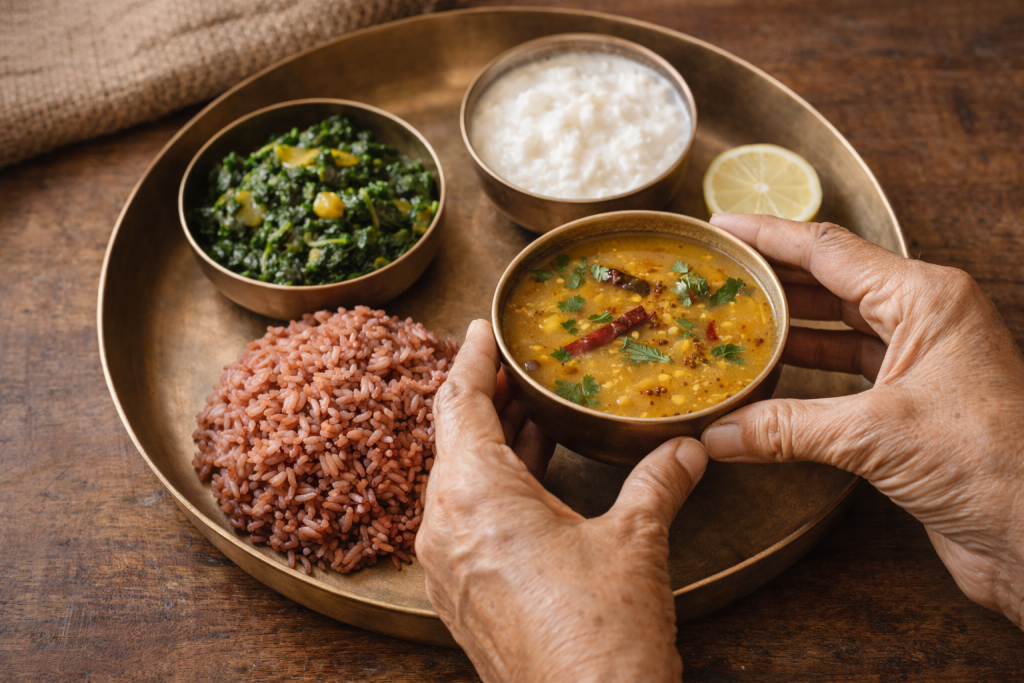
  • Dal + Curd: Add a bowl of sabzi and top with a tsp of roasted seeds or peanuts.
  • Paneer or Tofu Bhurji: Mix with veggies and have with one roti.
  • Eggs: Scrambled with sautéed greens and a serving of sprouts.
  • Non-Veg: Fish or chicken with plenty of curry veggies; go easy on the rice/roti.
  1. Colour Variety: Micronutrients Run the System

To make a longevity plate look like it’s had a life, you must include greens, reds, oranges, and purple foods. Colour is a shortcut for diversity in nutrients—polyphenols, carotenoids, and folate—that support your heart, brain, and immune system.

Make It Practical:

  • Aim for 3 colours in a single meal (not just in a week).
  • Use what is local and seasonal. It is less expensive and more nutritious.

Indian Plate Examples:

  • Palak or methi, tomato, and carrots in one mixed sabzi.
  • Beetroot raita with cucumber and sautéed capsicum.
  • Vegetable sambar with drumstick, pumpkin, and brinjal.
  • Fruits: Berries are great, but so are Guava, Amla, Jamun, and Pomegranate.
  1. Slow Carbs: Stable Sugar Protects Your Future Self

Carbs don’t make you fat. Fast, refined carbs are the problem. They act like sugar in your system, forcing insulin levels on a rollercoaster ride. Harvard guidelines specifically recommend whole grains over refined ones to prevent rapid blood sugar spikes.

Make It Practical:

  • Choose one slow carb per meal, NOT five sources of carbs in one sitting.
  • This is not calorie counting. This is glycaemic common sense.

Better Slow Carb Choices:

  • Millets (Jowar, Bajra, Ragi), Brown Rice, Quinoa, or Oats.
  • Legumes: Chana, Rajma, Lobia, and Lentils (these count as both protein and slow carbs!).
  • Sweet potato instead of white bread/aloo when you can.
  1. Anti-Inflammatory Spices: Managing the “Background Noise”

Low-grade chronic inflammation is associated with almost every age-related disease. Spices won’t replace medical treatment, but they are the simplest, most powerful daily “input” you can make.

Curcumin (in Turmeric) has been clinically proven to fight oxidative stress.

Make It Practical:

  • Consume Turmeric + Black Pepper + Fat (ghee/oil) regularly. The pepper helps absorption by 2000%.
  • Think of spices as everyday protective maintenance, not just flavour.

Easy Additions:

  • Ginger-Garlic paste in generous amounts for curries.
  • Cinnamon in your morning oats or curd bowl.
  • Jeera, Ajwain, Hing for digestion.
  1. Fermented Foods: Train Your Gut

If you wish to age well, you must have a gut that is resilient to stress, antibiotics, and travel. A Stanford Medicine study revealed that a high-fermented-food diet increased microbiome diversity and reduced inflammation.

Make It Practical:

  • Add a little bit a day. You don’t need a massive “cleanse.”
  • “Fermented food is not about a trend. It is about resilience.”

Indian Friendly Options:

  • Curd, Chaas, Lassi (without added sugar).
  • Idli & Dosa batter (properly fermented).
  • Kanji: The traditional tangy probiotic drink made from black carrots/beetroot and mustard seeds.

Putting It All Together: The Check-In

Do this quick check at each main meal:

  1. Where is my Protein?
  2. Where are my Colours?
  3. What is my Slow Carb (and is it portioned)?
  4. Did I add Spices?
  5. Where is the Fermented part?

You will notice something: This method crowds out ultra-processed foods without you having to fight yourself.

Eat For Capability, Not Control

The biggest nutrition myth is that ageing is controlled by willpower. It is controlled by systems.

The Longevity Plate is a system you can replicate in any city, any cuisine, and at any price range. Put that plate together most days of the week, and you’re not just eating for the next weigh-in. You’re eating for the “You” at 80 who still has a life to live.

Need help building a diet plan that fits your lifestyle? Reach out to our certified experts by subscribing to GOQii’s Personalised Health Coaching here.

#BeTheForce

Disclaimer: The information provided in this blog is for general awareness and educational purposes only. It is not intended to replace professional medical advice, diagnosis, or treatment. Always consult a qualified healthcare provider for personalised medical guidance or concerns related to your health.

  • 1
  • 2
  • 3
  • …
  • 9
  • Next Page »

Search

Recent Posts

  • 4 Reasons Why Affirmations Are Not Working For You
  • The Social Side of GLP-1: Navigating “Food Culture” and Peer Pressure
  • Leaky Gut: Symptoms and Causes
  • Muscle Is Your Insurance Policy: Why Strength Predicts Lifespan More Than Cardio
  • The Fiber Gap: Managing Digestion on GLP-1 Therapy

Stay Updated

Archives

  • March 2026 (1)
  • February 2026 (14)
  • January 2026 (14)
  • December 2025 (19)
  • November 2025 (15)
  • October 2025 (20)
  • September 2025 (6)
  • August 2025 (6)
  • July 2025 (12)
  • June 2025 (18)
  • May 2025 (16)
  • April 2025 (22)
  • March 2025 (23)
  • February 2025 (22)
  • January 2025 (25)
  • December 2024 (22)
  • November 2024 (23)
  • October 2024 (21)
  • September 2024 (24)
  • August 2024 (30)
  • July 2024 (21)
  • June 2024 (26)
  • May 2024 (31)
  • April 2024 (27)
  • March 2024 (29)
  • February 2024 (25)
  • January 2024 (21)
  • December 2023 (15)
  • November 2023 (11)
  • October 2023 (19)
  • September 2023 (22)
  • August 2023 (18)
  • July 2023 (22)
  • June 2023 (24)
  • May 2023 (24)
  • April 2023 (23)
  • March 2023 (23)
  • February 2023 (19)
  • January 2023 (15)
  • December 2022 (11)
  • November 2022 (15)
  • October 2022 (15)
  • September 2022 (12)
  • August 2022 (10)
  • July 2022 (17)
  • June 2022 (11)
  • May 2022 (10)
  • April 2022 (6)
  • March 2022 (6)
  • February 2022 (13)
  • January 2022 (11)
  • December 2021 (7)
  • November 2021 (3)
  • October 2021 (6)
  • September 2021 (3)
  • August 2021 (8)
  • July 2021 (7)
  • June 2021 (15)
  • May 2021 (16)
  • April 2021 (10)
  • March 2021 (7)
  • February 2021 (4)
  • January 2021 (4)
  • December 2020 (3)
  • November 2020 (4)
  • October 2020 (10)
  • September 2020 (3)
  • August 2020 (3)
  • July 2020 (2)
  • June 2020 (4)
  • May 2020 (10)
  • April 2020 (12)
  • March 2020 (10)
  • February 2020 (4)
  • January 2020 (4)
  • December 2019 (3)
  • November 2019 (7)
  • October 2019 (5)
  • September 2019 (4)
  • August 2019 (9)
  • July 2019 (9)
  • June 2019 (11)
  • May 2019 (4)
  • April 2019 (8)
  • March 2019 (8)
  • February 2019 (9)
  • January 2019 (8)
  • December 2018 (9)
  • November 2018 (3)
  • October 2018 (3)
  • September 2018 (5)
  • August 2018 (10)
  • July 2018 (6)
  • June 2018 (13)
  • May 2018 (8)
  • April 2018 (18)
  • March 2018 (9)
  • February 2018 (8)
  • January 2018 (15)
  • December 2017 (12)
  • November 2017 (19)
  • October 2017 (13)
  • September 2017 (15)
  • August 2017 (4)
  • July 2017 (8)
  • June 2017 (7)
  • May 2017 (6)
  • April 2017 (8)
  • March 2017 (6)
  • February 2017 (7)
  • January 2017 (9)
  • December 2016 (10)
  • November 2016 (7)
  • October 2016 (7)
  • September 2016 (7)
  • August 2016 (11)
  • July 2016 (9)
  • June 2016 (9)
  • May 2016 (12)
  • April 2016 (17)
  • March 2016 (17)
  • February 2016 (8)
  • January 2016 (6)
  • December 2015 (2)
  • November 2015 (9)
  • October 2015 (7)
  • September 2015 (9)
  • August 2015 (11)
  • July 2015 (9)
  • June 2015 (12)
  • May 2015 (9)
  • April 2015 (13)
  • March 2015 (8)
  • February 2015 (5)
  • January 2015 (12)
  • December 2014 (14)
  • November 2014 (11)
  • October 2014 (6)
  • September 2014 (13)
  • August 2014 (12)
  • July 2014 (6)
  • June 2014 (2)
  • May 2014 (7)
  • April 2014 (5)

From “Laddu Nawin” to Fit and Fierce: How a 25-Year-Old Insurance Advisor Shed 20 Kilos and Gained His Life Back

When 25-year-old Nawin Yadav from Hyderabad walked into his office every morning, he carried more than just his files and policy papers. He had the weight of fatigue, sluggish energy, and an ever-growing belly that was becoming the butt of jokes. “People … [Read More...]

“I’ve Challenged Myself to Live 100 Years” – The Story of Chandubhai Savani’s Second Chance at Life

At 67, most people start slowing down. Not Chandubhai Savani. A resident of Surat, Chandubhai, thought life was on track. “My life was going well till I had my bypass surgery,” he says. That surgery, back in 2021, was a wake-up call.  Medication was routine, but exercise wasn’t. His diet? What he calls ‘normal.’ “I […]

From Shimla’s Slopes to Chandigarh’s Sidewalks: Surinder Kaur Bhalla’s Journey from Chaos to Control

Some journeys start with a plan. Others begin with a stumble literally. Surinder Bhalla, a government professional, born and raised in the scenic hill town of Shimla, had always lived a life of movement. “In Shimla, you walked everywhere,” she reflects. “Walking was never an exercise. It was just life.” But after shifting to Chandigarh, […]

Ananda Mukherjee Health Story

From Terminal Illness To Complete Wellness! Ananda Mukherjee Health Story

As we observe World Cancer Day under the powerful theme ‘United by Unique’ (2025-2027)**, we are reminded that every individual’s journey with cancer is distinct, yet united by shared resilience, hope, and the collective fight against this disease. This theme places people at the centre of care and their stories at the heart of the […]

  • HOME
  • HEALTHY LIVING
  • FITNESS
  • HEALTHY RECIPES
  • USER STORIES
  • KARMA
  • BUY GOQii

Copyright ©2016 GOQii
